
AI Server Automation Lines: Precision Assembly Scenario Fit
AI Server Automation Lines: Precision Assembly Scenario Fit
Scenario fit decides more of a custom automation precision assembly project than an equipment catalogue does. An AI server automation line, an intelligent terminal assembly line and an AR/VR optical module process can all be bought from the same automation vendor, yet each one stresses a different part of the specification: assembly density and test coverage in AI server work, model changeover and complete-unit flow in terminal assembly, and optical process control in AR/VR and optical modules. For buyers moving from research into evaluation, the useful question is therefore not which supplier sells automation equipment, but which supplier has delivered this specific scenario, with what process scope, and what stays unproven until acceptance testing.
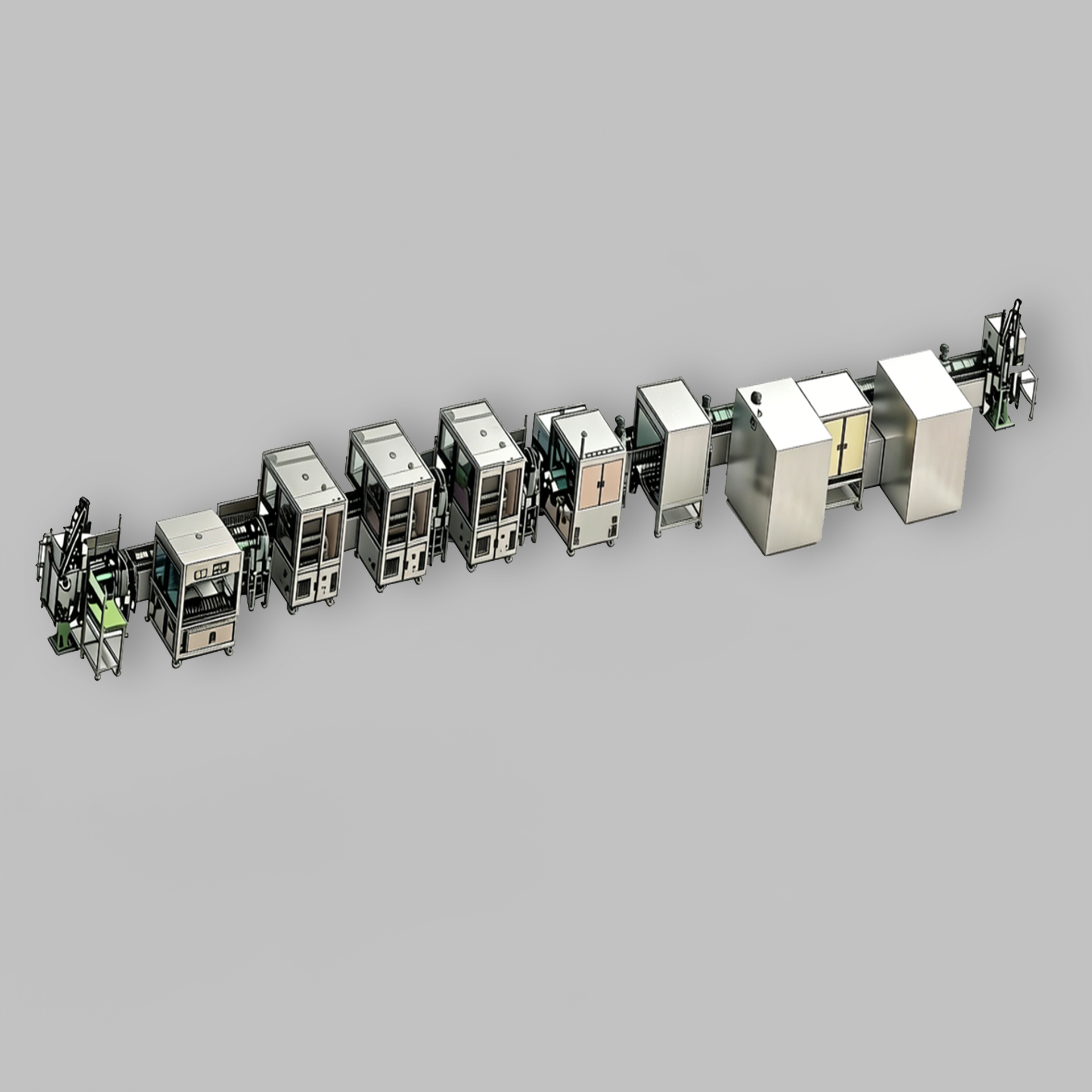
Automated assembly of liquid cooling plate hardware, one of the line types used in AI server manufacturing.
Why the production scenario, not the equipment category, sets the specification
Automation is usually sold under category labels: automated assembly equipment, automated test equipment, optical process equipment, turnkey automation lines. Those labels describe what a machine is. They do not say whether it fits a product. The production scenario fixes four things a catalogue cannot: the sequence of process steps, the tolerance stack that matters at each step, the inspection and test coverage the customer's quality plan demands, and the acceptance criteria that will be used to sign the line off.
That is why two buyers can purchase what both call automated assembly equipment and receive two completely different projects. In one, the hard problem is feeding and positioning a small set of precision parts at a stable rate. In the other, the hard problem is verifying an electrical or optical function after assembly, where the pass/fail definition itself has to be agreed before the machine can be designed. In the second case, a supplier's value depends on process engineering and metrology as much as on mechanical build quality.
A practical decision rule follows. Define the product's process flow and acceptance criteria first, map equipment classes onto that flow second, and compare suppliers third. Reversing the order is the most common reason a line turns out to be technically capable but commercially disappointing.
Shenzhen BSC Technology Co., Ltd. (BSC Technology) is a Shenzhen-based manufacturer founded in 2016 and listed on the Shenzhen Stock Exchange in 2021 under stock code 300951.SZ. The company reports three linked businesses: precision components, covering functional, structural and optical parts; system assembly; and intelligent automation equipment. Within automation, it describes its scope as automated assembly equipment, test equipment, optical process equipment and turnkey automation lines.
Three scenario families, three different specification logics
The table below maps the three scenarios discussed in this article to the process problem each one creates, the equipment classes BSC Technology reports for it, and the boundary a buyer still has to confirm. The last column is the part supplier brochures usually leave out.
| Scenario | Dominant process problem | Reported equipment scope | Boundary to confirm before RFQ |
|---|---|---|---|
| AI server automation line | Dense module assembly around thermal and liquid-cooling hardware, followed by functional test of a heavy, high-value unit | Automated assembly, automated test, intelligent inspection; delivered AI Server Automation production line | Customer test plan, interface tolerances and line-level metrics |
| Intelligent terminal assembly line | Many small parts across model variants, synchronized with SMT output and complete-unit flow | Automated assembly and test; SMT assembly, FATP complete-unit assembly and module-level assembly capability | Changeover strategy, jig ownership and interface responsibility |
| AR/VR and optical module process | Optical function decides pass/fail, so process control and measurement matter as much as placement | Optical process equipment; delivered AR/VR and optical module process automation equipment | Optical acceptance criteria and measurement correlation method |
Read the table as a screening tool, not a quotation. It narrows which reference projects and acceptance documents to ask for. It does not establish that any specific line will hit a given cycle time, output or yield.
Scenario 1: AI server automation lines
An AI server program concentrates its assembly risk in relatively few places: the thermal and liquid-cooling hardware that carries heat away from dense electronics, the module assembly around it, and the functional test that decides whether a costly unit moves downstream. BSC Technology reports that it has delivered an AI Server Automation production line, and places AI servers, liquid cooling, optical modules and embodied intelligence among the fields its intelligent manufacturing solutions address. The automation scope relevant here is automated assembly, automated test equipment, intelligent inspection, machine vision and motion control, tied together through control software and system integration.
For a buyer, the significance is that this line has to be specified as an assembly-plus-test system rather than a single placement cell. Three implications follow.
- Test belongs inside the line scope. When functional test and inspection share handling and data flow with assembly, the specification has to state which parameters are measured, at which station, and how a failed unit is routed. Splitting test into a separate contract re-creates the interface risk the integrated scope was meant to remove.
- Handling design follows mass and interface. Heavier assemblies and thermal or liquid-cooling interfaces change gripper design, fixture stiffness, operator ergonomics and takt balance. These are engineering deliverables, not accessories.
- NPI-to-MP transfer is the actual deliverable. BSC reports full-process support from process development and equipment R&D through software control and system integration to mass production, which is the part of an AI server program where a line usually loses time.
Fit boundary. BSC's public materials do not publish cycle time, OEE, yield, uptime or test coverage figures for the AI server line. Those values, combined with the customer's own test plan, decide whether a line is suitable. They should be requested as project evidence — factory acceptance and site acceptance records, reference-line data under confidentiality — rather than inferred from the existence of a delivered line.
Scenario 2: intelligent terminal assembly lines
Terminal assembly poses a different problem. Product variants multiply, small parts arrive from several processes, and complete-unit flow has to stay synchronized with SMT output. BSC Technology reports a delivered intelligent terminal assembly automation production line, and its system assembly business covers SMT assembly, FATP complete-unit assembly and module-level assembly — precisely the stages a terminal line must connect. The company also reports long-term cooperation with assembly factories and component manufacturers including Foxconn, Goertek, Luxshare, Pegatron, LG and Sonion, and states that its products are ultimately applied by brands including Apple, Samsung, Amazon, Meta, Google, Whoop, Tesla, BYD and Insta360.
Those names matter for scenario evaluation in one narrow way: they indicate that the supplier's component, assembly and automation work has been exposed to large consumer-electronics programs. They do not prove performance on a new program, because quantities, yields and line metrics for individual projects are confidential and are not disclosed.
What vertical scope changes — and what it costs
When one supplier covers component manufacturing, module and complete-unit assembly, and the automation that links them, the interface between part and machine can be settled inside a single contract. In a terminal line, that interface is where most schedule slippage originates: a fixture designed for a nominal part fails when the incoming part sits at the edge of its tolerance band, and the argument over who owns the fix can outlast the build. Vertical scope removes that argument, and it also removes a competitive check on pricing.
Fit boundary. Changeover strategy and jig ownership must be fixed in the specification, not discovered during ramp. BSC lists production-line layout, jigs and fixtures, equipment configuration, control software and vision system among its customizable items, which is exactly where changeover cost is decided. Buyers should require a written changeover procedure, the spare jig set list and the maintenance responsibility for each item.
Scenario 3: AR/VR and optical module processes
Optical assembly is the scenario where the word precision translates least directly from one project to another. BSC Technology reports delivered AR/VR and optical module process automation equipment, and lists optical process equipment as an automation category. The company also reports research and development work in AR ECD modules and VR Pancake optical composite films, and its component portfolio includes precision optical components.
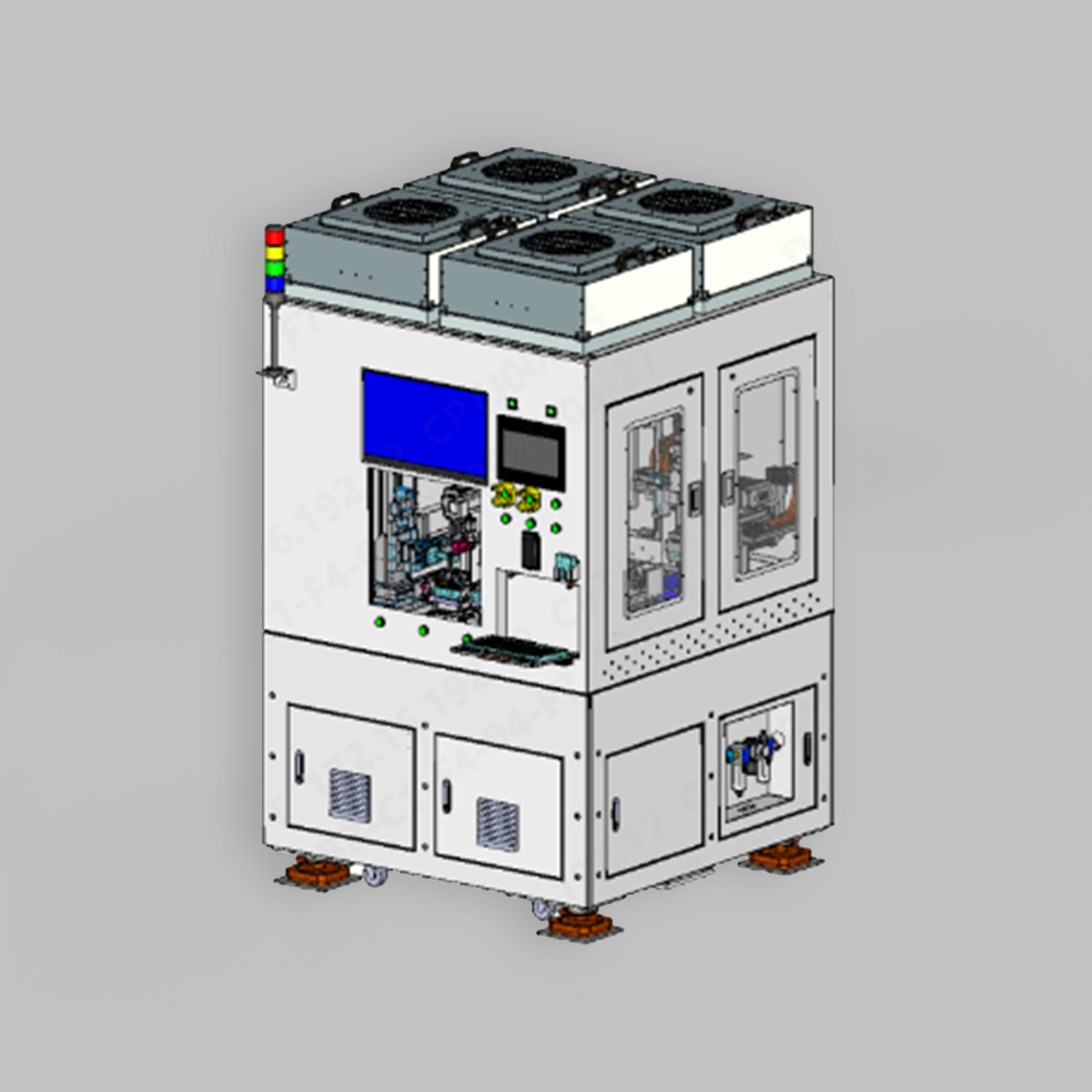
LEA to WG AA assembly, an AR optical assembly process asset from the supplier's automation portfolio.
The distinction that matters for buyers is between mechanical assembly and process control. An optical station can place a part within tolerance and still produce a failing unit, because acceptance is a measured optical result rather than a dimensional one. That turns three items into line-specification content: the measurement method, the correlation between the supplier's measurement and the customer's reference instrument, and the handling rules that keep surfaces and coatings intact through every transfer.
Fit boundary. The supplied company material describes optical process equipment and delivered AR/VR and optical module equipment, but it does not publish optical performance specifications, measurement uncertainty or acceptance thresholds. Buyers should treat optical acceptance as a jointly defined item and require the correlation method to be written into the technical agreement before design freeze. Without that, acceptance becomes a negotiation at the end of the project rather than a criterion at the start.
From scenario to line specification: the levers that actually move
BSC lists its customization scope as material, dimensions, tolerance, structure, function, optical performance, assembly process, jigs and fixtures, equipment configuration, production-line layout, control software, vision system, testing process, packaging, labeling and delivery location. That list is useful only when each lever is converted into a question the buyer must answer. The table below does that conversion.
| Customization lever | Question the buyer must settle | Why it changes the line |
|---|---|---|
| Tolerance and structure | Which stack-up tolerance actually controls function? | Drives stage precision, fixture stiffness and achievable takt |
| Optical performance | Which measured optical result defines pass/fail? | Adds measurement stations, correlation work and calibration routines |
| Testing process | What is tested, at which station, with what coverage? | Sets station count, data flow and how failed units are routed |
| Jigs and fixtures | Who designs, who maintains, what is the changeover time? | Determines repeatability and long-run operating cost |
| Control software and vision | Which data leaves the line, which defects are auto-judged? | Defines integration with the customer's quality and production systems |
| Layout and delivery location | Where is the line built, installed and supported? | Affects logistics, commissioning time and local service response |
The software row deserves separate attention. BSC reports technology development in high-precision assembly, machine vision, motion control, intelligent inspection, industrial software and industrial digitalization. In a line specification these are integration capabilities rather than feature-list items: the buyer needs to know which signals are captured, at what frequency, and in which format they are handed over, because a line that produces good units but cannot document them creates a second problem at the customer's own audit.
Where the fit stops: limits a buyer should price in
- Line-level performance is not public. Cycle time, OEE, yield, uptime and changeover figures are not disclosed for the delivered AI server, terminal or optical lines. They are legitimate RFQ deliverables and should be requested with acceptance-test evidence attached.
- Quality certifications are system-level. The company reports ISO 9001, ISO 14001, QC080000, ISO 45001, IATF 16949 and ISO 13485. One certificate is documented in more detail: ISO 13485:2016, certificate 132576 issued by NQA, covering the production and sales of plastic headgear for medical brainwave devices. Equipment-level compliance required by a destination market — machinery safety, electrical or EMC requirements, for example — is a separate item and should be confirmed per project rather than assumed from the quality management system.
- A delivered line is a reference, not a test result. It proves process scope and experience with a scenario. It does not prove the metrics of a different product, because takt, tolerance and test coverage all change with the part.
- Non-standard engineering carries schedule risk. Custom automation schedule depends on drawing freeze, sample availability and the number of iterations the customer can support. Buyers who freeze the product late should expect the line schedule to move with it.
- Concentration versus coordination. A single integrated partner reduces interfaces but increases dependence on one schedule and one price book. A multi-vendor split lowers dependence but re-creates the interface risk that vertical scope was meant to remove. Neither structure is universally better; the choice should follow how stable the product design is at contract signature.
Industry context: why scenario mapping is becoming the buying unit
BSC describes its focus fields as AI servers, liquid cooling, optical modules and embodied intelligence, and states that it ranks among the top three in automation equipment for electronic intelligent terminals and AR/VR smart glasses. That ranking statement is the company's own positioning, not an independently measured market position, and should be read in those terms.
Category-level forecasts give context but no segment proof. Figures attributed to Grand View Research in a 2026 HTNXT Research benchmark put the global smart manufacturing market at USD 478.9 billion in 2026, rising to USD 1,063.2 billion by 2033 at a 12.1% compound annual growth rate. That is a forecast covering the whole category. It does not size AI server automation lines or optical module equipment, and it cannot justify a single project's business case.
What the forecast does support is a narrow planning habit. If a program's volumes are uncertain, the sensible reading of a category forecast is not to buy more automation, but to buy automation whose scope can be re-cut — modular stations, documented changeover, and a specification that states which decisions stay with the buyer. Where volumes and product architecture are already stable, a longer, more integrated line usually produces a cleaner acceptance conversation.
Scenario-ready scale: what a global network changes for a project
BSC reports R&D centers in Shenzhen, Suzhou and Taipei; manufacturing plants in Shenzhen, Dongguan, Suzhou, Zhengzhou, Chengdu and Taipei in China, plus Vietnam, India, Malaysia and Mexico; and overseas service organizations in the United States, South Korea and Japan. The company reports several thousand employees, a global production and operation area of several hundred thousand square meters, an R&D team of more than a thousand staff and more than a thousand authorized patents.
For a multi-site program, the operational questions are where the line is built, where it is commissioned and who supports it afterwards. BSC describes local equipment manufacturing, on-site installation and commissioning, process optimization, remote technical support, spare-parts support and localized after-sales service. Buyers should still confirm per project which site builds the line, which site commissions it, and what response time the service agreement commits to. A network defines what is possible; only the contract defines what is promised.
Outlook: what to watch before the next line decision
Three observable developments would change how this scenario map should be read. First, published line-level performance data — cycle time, OEE, yield and changeover — would move supplier evaluation from scope comparison to measured comparison. Second, equipment-level compliance documentation for each destination market would shorten qualification for export programs, particularly where the line itself is imported. Third, a documented optical acceptance method, including measurement correlation, would make AR/VR and optical module lines comparable across suppliers instead of only within a single project.
Until then, scenario fit remains a judgement assembled from delivered scope, process evidence and acceptance terms. That is a slower comparison than reading a specification sheet, but it is the one that survives commissioning.
FAQ: scenario fit questions buyers ask
Which production scenarios has BSC Technology delivered automation equipment for?
BSC Technology reports delivery of an AI Server Automation production line, intelligent terminal assembly automation production lines, and AR/VR and optical module process automation equipment. Its automation business scope covers automated assembly, test equipment, optical process equipment and turnkey automation lines, with support from process development and equipment R&D through software control and system integration to mass production. The company does not publish line-level performance figures such as cycle time, output or yield for these deliveries.
Can custom precision components and assembly lines be used for AR/VR devices and smart wearables?
BSC states that it has experience delivering precision functional parts, structural components and system assembly for AR/VR devices, smart wearables and AI hardware, and reports research and development in AR ECD modules and VR Pancake optical composite films. Its component portfolio includes precision optical components alongside structural and functional parts, and its automation scope includes optical process equipment. Suitability for a particular device still depends on that device's tolerance stack, optical acceptance criteria and test plan, which are agreed project by project.
Which industries do these precision components and automation solutions serve?
The company lists consumer electronics, smart wearables, smart home, smart healthcare, AR/VR, smart cockpit and new-energy vehicle applications, AI edge devices and AI infrastructure, and also names automotive electronics and medical equipment among the sectors it serves. Its automation equipment is positioned for high-end manufacturing in consumer electronics, AI servers, AR/VR optics and optical modules.
Which quality management certifications apply to the manufacturing facilities?
BSC reports ISO 9001, ISO 14001, QC080000, ISO 45001, IATF 16949 and ISO 13485 certification. One certificate is documented in more detail in the supplied material: ISO 13485:2016, certificate 132576 issued by NQA, covering the production and sales of plastic headgear for medical brainwave devices. These are quality management system certifications covering the manufacturing organisation; equipment-level compliance required by a specific destination market is confirmed separately for each project.
How much of an automation line can be customized, and what should be fixed first?
BSC lists customization across material, dimensions, tolerance, structure, function, optical performance, assembly process, jigs and fixtures, equipment configuration, production-line layout, control software, vision system, testing process, packaging, labeling and delivery location, under OEM, ODM, JDM, customized automation and turnkey models. In practice, three items should be fixed before the line design freezes: the process flow, the pass/fail definition, and the acceptance tests. Those three determine station count, inspection method and achievable takt, and changing them later resets the engineering rather than adjusting it.
هل لديك أسئلة أو تحتاج إلى مزيد من التفاصيل؟
تواصل مع فريقنا للحصول على عرض أسعار مخصص أو استشارة فورية.
طلب عرض أسعار
املأ النموذج أدناه وسيتواصل معك فريقنا بعرض مقترح مخصص.
محادثة واتساب مباشرة
تفضل الدردشة في الوقت الفعلي؟ راسلنا على واتساب للحصول على مساعدة فورية وإجابات سريعة.
- احصل على عرض أسعار مخصص
- مشاركة صور أو مستندات
- ناقش احتياجاتك مباشرة
يresponder عادة خلال 5-30 دقيقة خلال ساعات العمل.