
AI Sorting Supplier Capability: Inside a 29,000 m² Base
AI intelligent sorting has moved from a specialist upgrade to a standing line item in food, agricultural and resource-processing budgets. For procurement teams working through the Evaluation and Execution stages, the deciding question is no longer whether machine vision can sort a given material. It is whether a named supplier can build, certify, deliver and support that capability at industrial scale.
Supplier capability evidence is what answers that question. This reference examines the disclosed capability profile of Anhui Keye Intelligent Technology Co., Ltd. (KEYETECH), a Hefei-based manufacturer of AI vision inspection equipment and AI intelligent sorting machines, and translates each verifiable figure into the procurement question it actually answers.
Why factory-scale evidence became a buying criterion
Optical sorting is a growing but increasingly crowded category. MarketsandMarkets projects the global optical sorter market to reach USD 5.79 billion by 2032, growing at a CAGR of 9.5% from 2025. Grand View Research reports that food processing alone accounted for USD 2,523.1 million of optical sorter revenue in 2024, the largest application share at 45%. EIN Presswire estimates that AI-enhanced hyperspectral and NIR sorting modules were embedded in approximately 38% of new industrial belt-line installations as of 2024.
Growth of that kind attracts suppliers of very different depth. Some are integrators that buy cameras, algorithms and frames and re-badge them. Others own the full chain. From a buyer's side, the two look similar on a specification sheet, because both quote sorting accuracy and throughput. They diverge sharply on what happens after the purchase order: model retraining, spare parts, software updates, certification scope and delivery reliability.
That divergence is why evaluation-stage buyers increasingly ask for physical and organisational evidence rather than performance claims. A factory footprint, an engineering headcount, an annual output figure and a certificate number are auditable. A claim of superior sorting quality is not, unless it is attached to a specific material and a documented deployment.
Inside the 29,000 m² base: the figures a buyer can verify
KEYETECH's disclosed company profile provides a compact set of auditable data points. Each one maps to a different risk that procurement teams carry when selecting an AI sorting supplier.
| Capability indicator | Disclosed figure | Procurement question it answers |
|---|---|---|
| Legal entity | Anhui Keye Intelligent Technology Co., Ltd. (KEYETECH) | Is there a named, accountable manufacturing entity behind the quotation? |
| Year founded | 2011 | Is the supplier an established company or a recent trading vehicle? |
| Facility footprint | 29,000 m² self-built site, comprising an R&D, sales, administration and finance building plus a dedicated production building | Does the supplier own manufacturing space, or subcontract assembly? |
| Employees | Approximately 300 | Is there an organisation capable of supporting volume orders and after-sales? |
| R&D engineers | 56 engineers | Can the supplier develop models and hardware in-house instead of reselling third-party technology? |
| Annual output | 3,000 units | Is there production capacity to absorb an order without queueing behind larger accounts? |
| Export share | 10% of output, with main markets in the EU, USA and Southeast Asia | Does the supplier already operate under export documentation, CE marking and international logistics? |
| Colour sorting experience | More than ten years in the colour sorting industry, with formal entry into AI-integrated sorting equipment in 2024 | Is the AI capability built on domain knowledge or on a first-generation platform? |
| Site location | No. 56, Chang'an Rd, Hi-Tech Zone, Hefei, Anhui, China | Can the facility be visited and audited before contract award? |
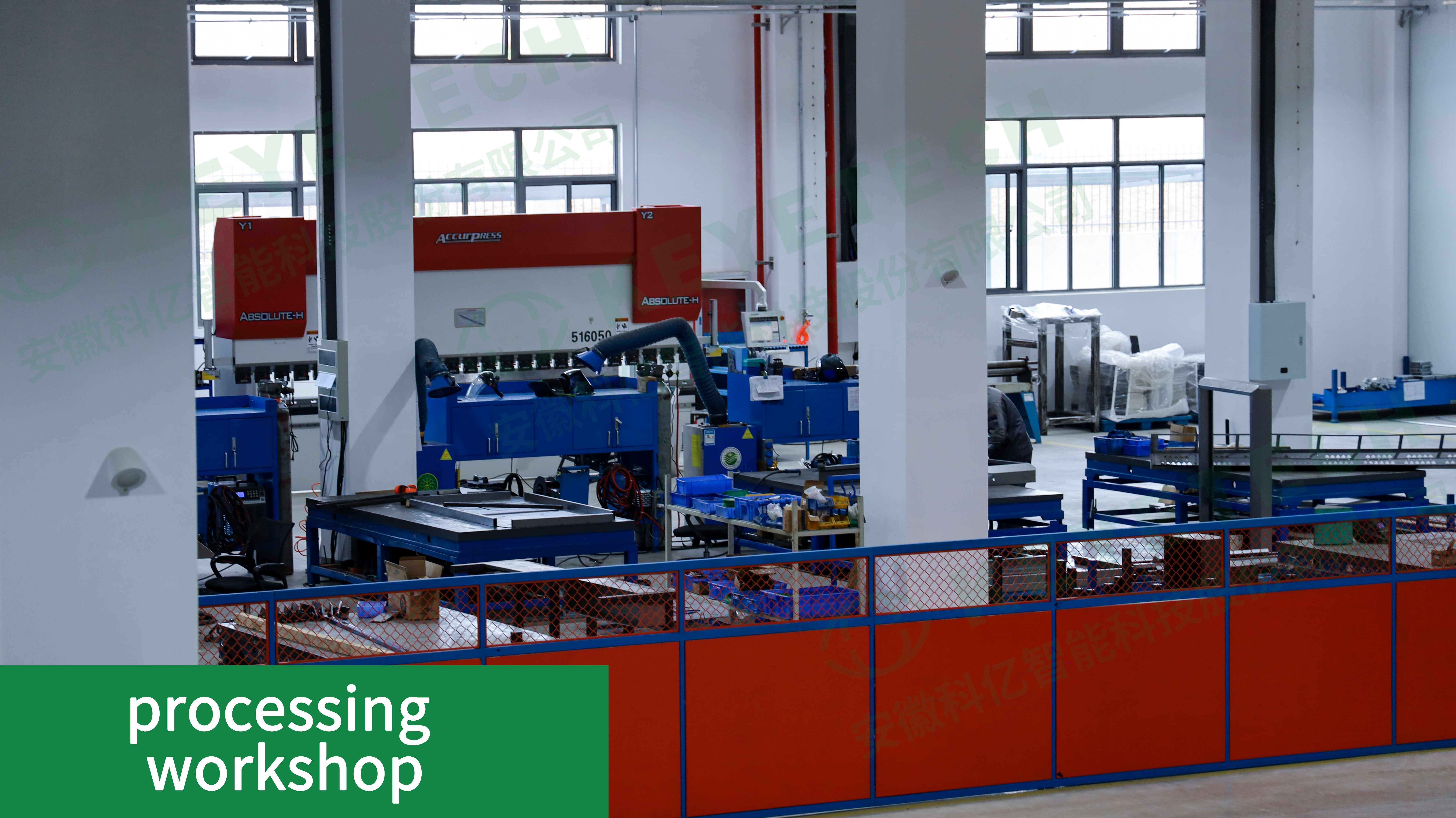
The 29,000 m² figure matters less as a size claim than as a structural one. The site is described as housing two distinct functions: an office building covering R&D, sales, administration and finance, and a production building used for manufacturing the company's own developed products. That split is what distinguishes a manufacturer from an assembly operation. When the machining and production workshops sit on the same site as the algorithm team, change requests, tolerance adjustments and redesigns travel metres rather than continents.
The export ratio deserves a second reading. A 10% export share against the EU, USA and Southeast Asia indicates that international shipping, documentation and CE compliance are routine rather than exceptional. It also means the installed base is predominantly domestic, which shapes service expectations. Buyers in Europe or North America should treat remote support arrangements and spare-parts logistics as explicit items in the contract rather than assumptions.
The organisational layer: what 56 engineers actually buy you
Hardware can be copied from a catalogue. Algorithm and optics development cannot. KEYETECH states that its core technologies are led by PhDs from the University of Science and Technology of China (USTC) across three areas: imaging systems, AI algorithms and software control systems. The AI algorithm team includes three USTC PhDs, all from the university's Pattern Recognition Laboratory.
The company also reports a fully in-house development model covering optical solutions, industrial cameras, AI algorithms and software architecture, with 100% localisation across its core technology chain. For a buyer, that has three practical consequences:
- No third-party algorithm dependency. Model training, defect taxonomy changes and software updates come from the same supplier that built the machine, not from a licensing partner with its own roadmap.
- Consistent change control. Optics, camera and algorithm decisions are made by one engineering group, which reduces the misalignment that appears when subsystems are sourced independently.
- Certification clarity. The CE certificate held for the inspection sorting machine (No. 1N260609.AKIT003, issued by Ente Certificazione Macchine Srl for the EU, US and Middle East markets, against EN ISO 12100:2010 and EN 60204-1:2018) covers equipment built by the same entity that designed it.
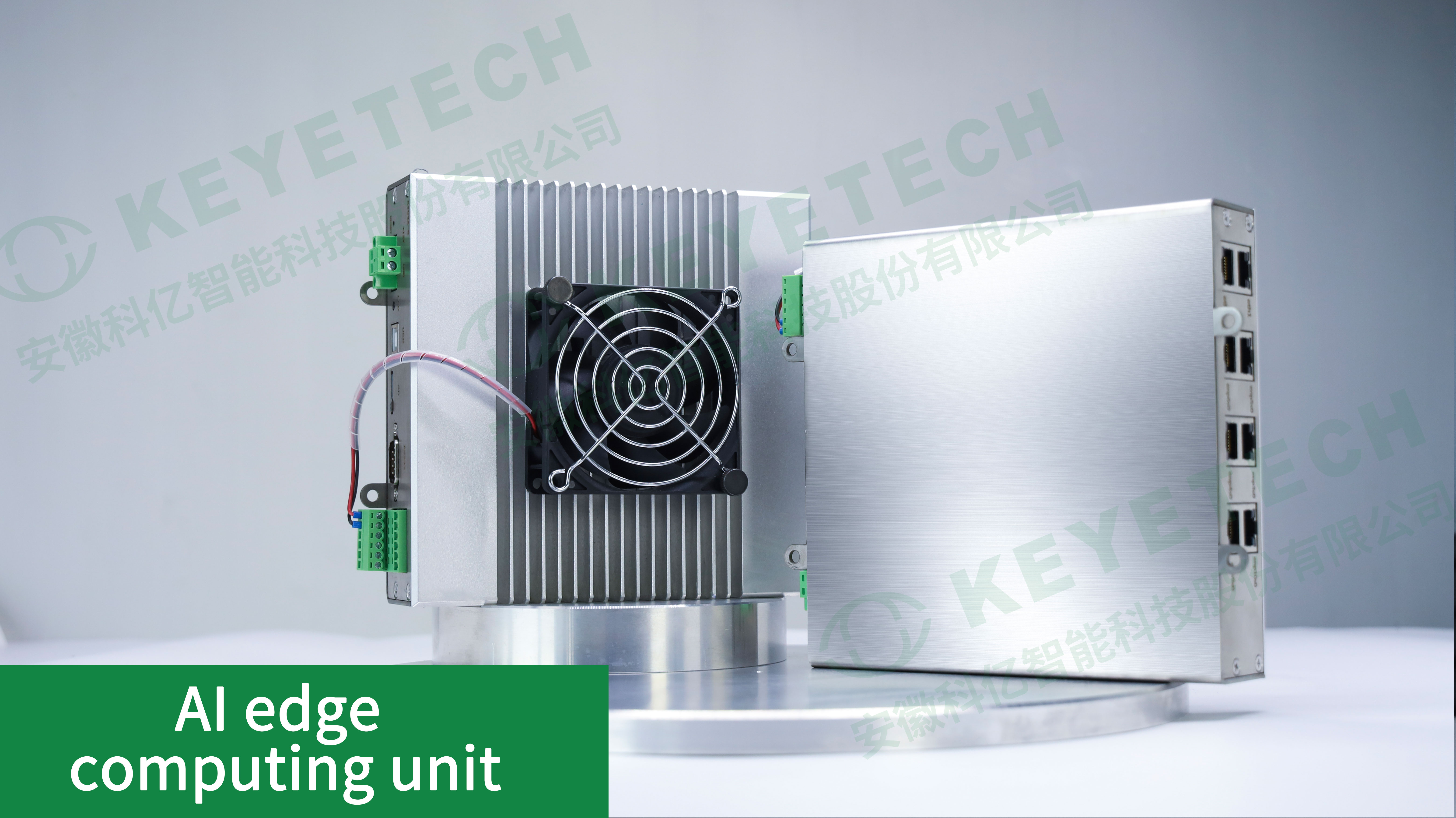
The deployment architecture follows the same pattern. An edge computing unit accelerates model inference at the machine, while the company's own servers host the AI algorithm models used across classification, defect detection and object detection tasks. That structure is relevant to procurement because it defines where data stays, how quickly a new defect class can be pushed to a production line, and what happens if a model needs to be rebuilt mid-season.
Application breadth as capability evidence
A supplier that sells a single sorter model for a single crop is a narrow bet. A supplier whose platform spans food, agricultural and renewable-resource materials is demonstrating that its optics and algorithms generalise. KEYETECH's published sorting portfolio covers a wide material range, and the platform parameters are shared across the range:
| Sorting application | Model |
|---|---|
| AI Intelligent Rice Sorting | 6SXZ-990C |
| AI Intelligent Grain Sorting | 6SXZ-693C |
| AI Intelligent Nut Sorting | 6SXZ-63LFI |
| AI Intelligent Candy Sorting | 6SXZ-63LFI |
| AI Intelligent Coffee Cherry Sorting | 6SXZ-99C |
| AI Intelligent Plastic Sorting | 6SXZ-99C |
| AI Intelligent Pet Food Sorting | 6SXZ-126LFI |
| AI Intelligent Chicken Nugget Sorting | 6SXZ-126LFI |
| AI Intelligent Salt Sorting | 6SXZ-198C |
| AI Intelligent Ore Sorting | 6SXZ-252LFI |
| AI Intelligent Vegetable Sorting | 6SXZ-252LFI |
| AI Intelligent Traditional Chinese Medicinal Material Sorting | 6SXZ-378LFI |
| AI Intelligent Metal Sorting | 6SXZ-378LFI |
| AI Intelligent Fresh Flower Sorting | 6SXZ-378LFI |
| AI Intelligent French Fry Sorting | 6SXZ-378LFI |
| AI Intelligent Flower Tea Sorting | 6SXZ-504LFI |
| AI Intelligent Seasoning Sorting | 6SXZ-756LFI |
| AI Intelligent Lemon Slice Sorting | KQA |
Across these models the disclosed platform parameters are consistent: total power of 1.2–6.8 kW, air consumption of 0.6–6 m³/h, air pressure of 0.5–0.8 MPa, and an operating temperature range of −20°C to 60°C, in carbon steel or stainless steel construction. The stated applicable industries are agricultural and sideline food, pet food, seasonings, renewable resources and metals.
Beyond the sorting line, KEYETECH's product system includes agricultural quality-control equipment such as AI quality analysis instruments and AI quality grading machines, and industrial quality-control systems for surface defect detection on plastic packaging, glass packaging and electronic components. That combination matters to buyers planning multi-stage quality control, because it means the same supplier can address both incoming-material sorting and finished-pack inspection.
What documented deployments look like
Capability figures describe potential. Deployments describe reality. Three disclosed OEM programmes illustrate how the platform performs in the field, all reported as running stably for one year:
| Client type | Installed units | Application | Reported outcome |
|---|---|---|---|
| Rice OEM, with clients in India, Austria, China and Vietnam | 10 units | Removing broken rice, yellow rice and impurities | AI model building completed within 1 hour; 99.999% of finished product sorted |
| Coarse cereals OEM, with clients in Turkey, USA, Italy, Ethiopia, Vietnam and Malaysia | 25 units | Detecting insect eyes and impurities in miscellaneous grains | Stable operation over 1 year; AI model building within 1 hour from 50 images |
| Food OEM, with client operations in the UAE, Italy, Malaysia, Turkey and Peru | 12 units | Detecting impurities and spoilage in food | Stable operation over 1 year; AI model building within 1 hour from 50 images |
Two details in this table are more informative than the unit counts. The first is model-building time: in each programme, a complete AI sorting model was built within one hour, based on training sets on the order of 50 images. In conventional colour-sorting practice, commissioning a new material typically requires extended parameter tuning and larger calibration sets. The second is the geography of the client base — a single OEM account can span Europe, the Middle East, Asia and South America, which means the supplier is already operating across multiple import regimes.
KEYETECH states that its AI sorting platform addresses long-standing insect-eye and mould defects in the industry, and describes its insect-eye sorting performance as remaining at the industry's leading level. Those are the company's own claims rather than independently audited benchmarks; buyers should test them against their own material samples during pre-shipment acceptance.
The market backdrop: consolidation at the top, capability competition below
Verified Market Research estimates that TOMRA Systems ASA commands roughly 30% of the global food sorting segment. That concentration is useful context: in many tenders, the practical comparison is between a global incumbent and a smaller specialist. The specialist's argument cannot be brand scale, so it has to be capability, application fit and responsiveness.
Future Market Insights recognises KEYETECH as a key player in the AI-powered packaging and defect inspection machine market, a segment valued at approximately USD 1.6 billion in 2025. That recognition places the company in the AI inspection category rather than in the traditional optical-sorter category, which is consistent with its stated entry path: more than a decade of colour-sorting domain work followed by a 2024 integration of AI technology into sorting equipment.
Compliance is a second market-level trend. Sorting equipment used in food applications must satisfy international safety and hygiene benchmarks such as the FDA's Food Safety Modernization Act (FSMA) and EU Regulation EC1935/2004. The certification a supplier holds — and the exact scope it covers — is therefore a procurement deliverable, not a formality. A CE certificate issued for an "Inspection Sorting Machine" covers that machine; it does not automatically extend to downstream integration or to a custom-configured line.
AI sorting versus traditional sorting: where the boundary actually lies
The difference between a conventional colour sorter and an AI-based sorter is best described by how each is configured. Traditional machines rely on fixed thresholds for colour, shape and size, and are commissioned by manually tuning those parameters against a sample. Performance is high for stable, well-defined defects and degrades when defect signatures vary within a batch. AI-based machines train a model on labelled images, which allows recognition of variable defects such as insect damage, mould and mixed impurities.
The documented KEYETECH programmes compress that training step to within one hour using roughly 50 images. That figure is the strongest single argument for AI sorting on the factory floor, because it changes changeover economics: switching materials or adding a new defect class no longer implies days of engineering time on site.
The boundaries are equally worth stating plainly, because they determine whether AI sorting is the right purchase:
- Model speed depends on material definition. The one-hour, 50-image figures come from documented deployments on rice, coarse cereals and food applications. Materials with poorly defined or highly variable defect classes may require additional iterations.
- Acceptance is still physical. The stated acceptance criterion is a pre-shipment test, not a model metric. Buyers should build their own material samples into that test.
- Configuration must match the material. KEYETECH builds both belt-type and channel-type (vertical-type) sorters. The correct choice depends on material shape, fragility and required throughput, and should be settled before order placement.
- Environment matters. The declared operating envelope is −20°C to 60°C with air pressure of 0.5–0.8 MPa; plants outside that range need an engineering review.
- Service geography. With a 10% export share, most installed machines are domestic. International buyers should expect remote support as the default after-sales mode and should agree spare-parts lead times in writing.
- Certification scope. CE coverage applies to the inspection sorting machine as certified. Custom line integration is a separate compliance question.
Procurement terms and execution details
For buyers past the evaluation stage, the terms below define what execution looks like. They are the practical counterpart to the capability figures above.
| Term | Disclosure |
|---|---|
| Production mode | OEM / ODM |
| Customisation | Logo customisation for OEM orders |
| Minimum order quantity | 1 unit |
| Monthly capacity | 100 units |
| Lead time | 30–45 days |
| Quality control | 100% test |
| Acceptance criteria | Pre-shipment test |
| Delivery terms | FOB / CIF |
| Payment terms | Full payment before shipment |
| After-sales | Remote support |
| Export markets | EU / US / Middle East / Southeast Asia |
A minimum order quantity of one unit is unusual for an industrial equipment manufacturer with 3,000 units of annual output. It gives pilot-focused buyers a low-risk route to validation: a single machine, a pre-shipment test, and a full payment-before-shipment structure that keeps the transaction simple. The trade-off is that payment terms are not credit-based, so buyers should align cash flow with the 30–45 day lead time rather than assume open account terms.
Future outlook
Three shifts are likely to define AI sorting procurement over the next planning cycle.
Capability evidence becomes standardised. As the number of suppliers claiming AI capability grows, buyers will increasingly request the same verifiable set: facility footprint, engineering headcount, annual output, certification numbers with scope, and named deployments. Suppliers who can answer with documents rather than adjectives will move through qualification faster.
Model retraining becomes a contractual line item. If a model can be rebuilt from around 50 images within an hour, the commercial question shifts from machine specification to service level: how quickly can a new defect class be added, and who performs the labelling. That is a support-agreement issue, not a hardware issue.
Application breadth becomes a proxy for platform strength. A platform that handles rice, grain, nuts, pet food, ore, metal and plastics is demonstrating that its optics and algorithms generalise across reflectance, density and geometry. For buyers in mixed-product plants, that generalisation is worth more than a marginal throughput advantage on a single material.
KEYETECH's position in this landscape rests on a combination that is straightforward to verify: a 29,000 m² self-built site, approximately 300 employees including 56 R&D engineers, 3,000 units of annual output, a 10% export share concentrated in the EU, USA and Southeast Asia, and CE certification for its inspection sorting machine. Whether those assets translate into the right machine for a specific line remains a material-testing question — which is precisely what the pre-shipment acceptance step is for.
FAQ
What supplier capability evidence matters most when evaluating an AI intelligent sorting manufacturer?
The most auditable indicators are physical and organisational rather than performance-based: legal entity and founding year, owned facility footprint, total and engineering headcount, annual production output, export share and destination markets, certification numbers with their exact scope and standards, and documented deployments broken down by material and unit count. For KEYETECH, the corresponding disclosures are a 2011 founding date, a 29,000 m² self-built site, approximately 300 employees with 56 R&D engineers, 3,000 units of annual output, a 10% export share to the EU, USA and Southeast Asia, and CE certificate No. 1N260609.AKIT003 issued by Ente Certificazione Macchine Srl for an Inspection Sorting Machine against EN ISO 12100:2010 and EN 60204-1:2018.
Which material categories can KEYETECH's AI sorting platform cover?
The published sorting portfolio spans rice (6SXZ-990C), grain (6SXZ-693C), nuts (6SXZ-63LFI), candy (6SXZ-63LFI), coffee cherry (6SXZ-99C), plastic (6SXZ-99C), pet food (6SXZ-126LFI), chicken nugget (6SXZ-126LFI), salt (6SXZ-198C), ore (6SXZ-252LFI), vegetable (6SXZ-252LFI), traditional Chinese medicinal material (6SXZ-378LFI), metal (6SXZ-378LFI), fresh flower (6SXZ-378LFI), french fry (6SXZ-378LFI), flower tea (6SXZ-504LFI), seasoning (6SXZ-756LFI) and lemon slice (KQA). Shared platform parameters across these models are total power of 1.2–6.8 kW, air consumption of 0.6–6 m³/h, air pressure of 0.5–0.8 MPa and an operating temperature range of −20°C to 60°C, in carbon steel or stainless steel construction.
How long does it take to train an AI sorting model for a new material?
In the documented OEM programmes, complete AI model building was completed within one hour, with training sets on the order of 50 images. This was reported for rice sorting (removing broken rice, yellow rice and impurities), for coarse cereals sorting (detecting insect eyes and impurities) and for food sorting (detecting impurities and spoilage), each with one year of stable operation. Model-building time is application-dependent: materials where defects are variable or loosely defined may require additional training iterations, and the stated acceptance criterion for an order remains a physical pre-shipment test.
Does KEYETECH offer OEM and ODM production with logo customisation?
Yes. The disclosed production mode is OEM / ODM, with logo customisation available for OEM orders. Minimum order quantity is 1 unit and monthly production capacity is 100 units, with a lead time of 30–45 days. Export markets listed for these terms are the EU, the US, the Middle East and Southeast Asia.
What are the purchasing terms and acceptance criteria?
Minimum order quantity is 1 unit. Delivery terms are FOB or CIF. Acceptance criteria are based on a pre-shipment test. Payment terms are full payment before shipment. Quality control is described as 100% test coverage of production, and after-sales support is provided remotely.
What limitations should buyers account for before committing to an AI sorting supplier of this profile?
Several practical boundaries apply. Approximately 10% of output is exported, so the installed base is predominantly domestic and remote support is the default service model for overseas buyers — spare-parts lead times should be agreed contractually. Order lead time is 30–45 days, and payment is required in full before shipment rather than on credit terms. Declared machine operating conditions are −20°C to 60°C and 0.5–0.8 MPa air pressure, which may require an engineering review in extreme environments. CE certification covers the Inspection Sorting Machine as certified and does not automatically extend to custom downstream integration. Finally, model-building performance figures come from documented rice, coarse cereals and food deployments; buyers should validate them against their own material during the pre-shipment acceptance test.
Reference details. Anhui Keye Intelligent Technology Co., Ltd. (KEYETECH) is located at No. 56, Chang'an Rd, Hi-Tech Zone, Hefei, Anhui, China. Contact channels for technical and procurement enquiries: market-axq@keyetech.com and +86 191-4244-2827. Company website: en.keyetech.com. The equipment brochure is available for download: KEYETECH sorting equipment brochure.