
ANSI Grade 1 Electronic Cylindrical vs Tubular Lever Locks
ANSI Grade 1 Electronic Cylindrical vs Tubular Lever Locks
Commercial door locks are usually chosen long before anyone decides how people will get through them. By the time an electronic lever lock reaches the door schedule, the frame is set, the preparation is fixed and the remaining question is narrower: can the chosen platform be supported by evidence at handover? That is the point at which an ANSI Grade 1 electronic cylindrical lock and an electronic tubular lever lock stop being interchangeable.
This comparison sets two TOPTEK platforms for bored-door preparation against each other: the TKAMSL5000 ANSI Grade 1 commercial electronic cylindrical lock and the TKAMSL6000 American-standard electronic tubular lever lock. Both provide electronic entry, mechanical key override and mechanical inside egress. They differ in credential model, documented test status, door preparation envelope, monitoring capability and in what a buyer must verify before the first door is drilled.
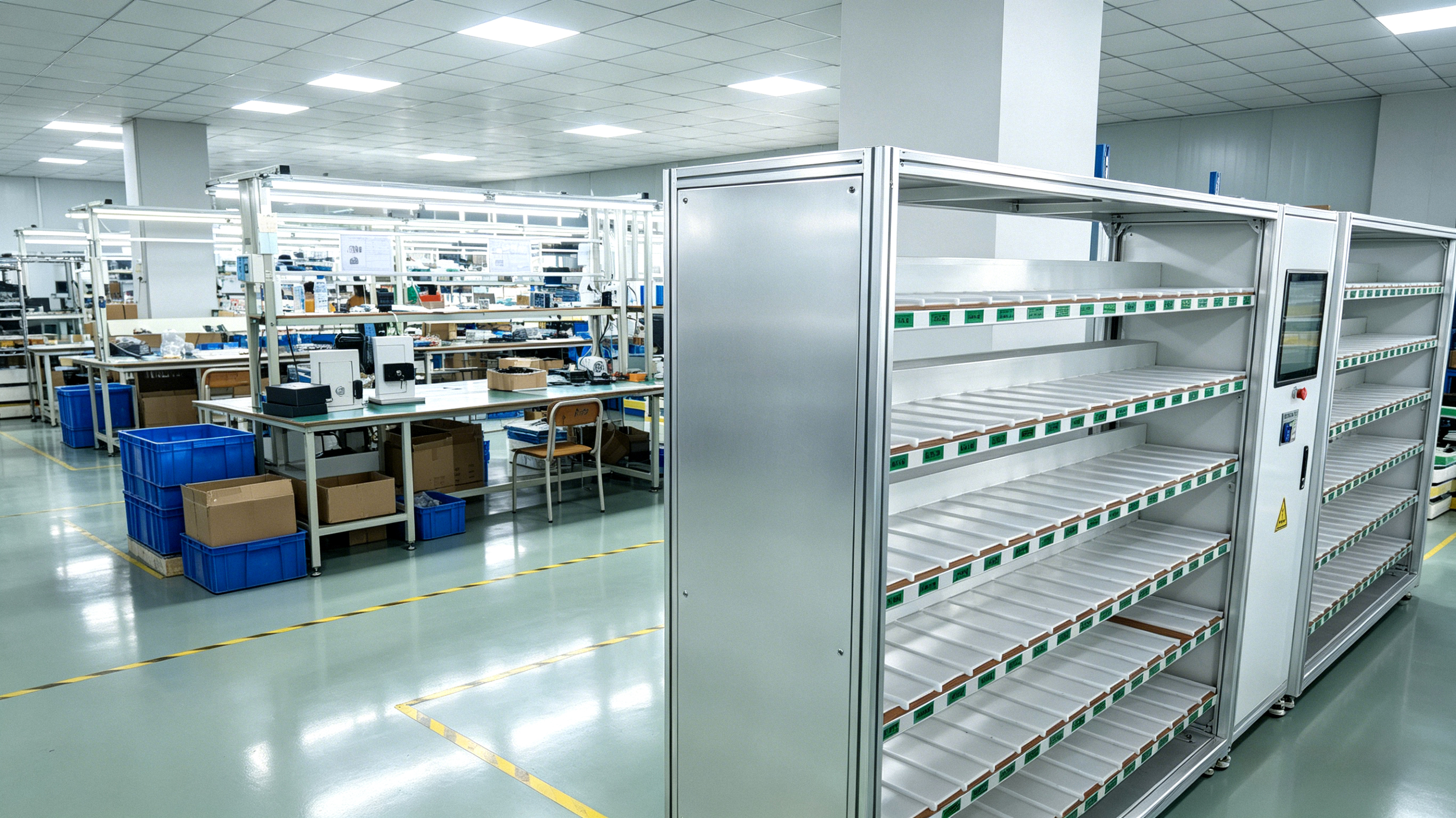
Electronic lock assembly: the mechanical platform and the electronics package are specified together, not selected separately at the end of a project.
The short answer before the detail
Select the cylindrical ANSI Grade 1 platform when the specification calls for a documented Grade 1 mechanical classification, when entry should work from a PIN without a network, app or cloud account, and when facilities staff need to add or delete users at the door. Select the tubular platform when occupants should not touch a keypad at all, when wearable or NFC credentials match the user group, and when the mechanical requirement is Grade 2 rather than Grade 1.
The rest of this comparison explains what sits behind that short answer, including one limitation that changes how the tubular platform should be written into a specification.
Platform A: TOPTEK TKAMSL5000 electronic cylindrical lock
TKAMSL5000 combines a heavy-duty cylindrical mechanism with a zinc-alloy housing, a physical PIN keypad, local user programming and a mechanical key override. Three facts define its position in a specification.
- Documented status. The approved configuration has passed ANSI/BHMA A156.2 Grade 1 mechanical testing and three-hour fire testing within the tested door assembly.
- Standalone administration. Approximately 300 user PINs can be managed directly at the door without internet, an app or a cloud connection. Interior passage control allows authorised staff to keep outside entry unlocked when required, while mechanical inside egress remains available independently of battery power.
- Serviceable keying. SFIC options simplify core replacement and mechanical key management, so a rekey does not require replacing the complete lockset.
TOPTEK states that engineering attention went to latch, lever, return mechanism and clutch durability, plus component placement intended to address cold-side condensation and freezing risk. Recorded specification data includes a 2-1/8 in. (53.98 mm) cross bore, backset options of 2-3/8 in. (60.33 mm) and 2-3/4 in. (69.85 mm), field-reversible handing and AA battery power.
Platform B: TOPTEK TKAMSL6000 electronic tubular lever lock
TKAMSL6000 pairs a tubular mechanical lock with configurable BLE wearable proximity access, NFC fob access and SFIC mechanical key override. The exterior lever free-spins when locked, the inside lever provides mechanical free egress, and the no-keypad exterior keeps the door face visually quiet — a detail that matters in senior living and multifamily settings where a keypad reads as institutional.
Depending on the electronics package, options include privacy control, door-position sensing, independent inside and outside lever-rotation detection and USB-C emergency power. Recorded configuration data covers an exterior escutcheon of approximately 163.95 × 71.4 mm, an adjustable 60/70 mm backset, 44–54 mm door thickness, a TOPTEK E590 latch with approximately 13 mm throw and 4 AA batteries. A 57 mm door-thickness extension remains an engineering option under evaluation.
The boundary matters: TOPTEK describes the platform as designed to meet ANSI/BHMA A156.2 Grade 2 mechanical requirements and UL 10C fire-test requirements, records the fire-test target as a minimum of 20 minutes, and states that test-report status is pending update. Recorded design targets include lever operating force at or below 5 lbf (approximately 22.2 N), an NFC reading distance of roughly 3 cm and a battery service life of 10–12 months under a defined usage and electronics profile. These are targets, not completed certification, and they should be presented that way in any submittal.
Side-by-side comparison
| Criterion | TKAMSL5000 (electronic cylindrical) | TKAMSL6000 (electronic tubular) |
|---|---|---|
| Mechanical classification | ANSI/BHMA A156.2 Grade 1, passed by the approved configuration | ANSI/BHMA A156.2 Grade 2 stated as a design target; report pending |
| Fire evidence | Three-hour fire testing within the tested door assembly | UL 10C design target of at least 20 minutes; report pending |
| Entry credential | Physical PIN keypad, approximately 300 local PINs | BLE wearable proximity and NFC fob |
| Exterior interface | Keypad plus mechanical key override | No keypad; free-spinning lever when locked; SFIC key override |
| Inside egress | Mechanical, independent of battery power | Mechanical free egress through the inside lever |
| Door preparation | 2-1/8 in. cross bore; 2-3/8 in. or 2-3/4 in. backset | Adjustable 60/70 mm backset; 44–54 mm door thickness |
| Handing | Field-reversible | Not stated for this platform in the supplied material |
| Power | AA batteries, quantity and endurance per final model | 4 AA batteries; design objective 10–12 months |
| Monitoring options | Passage control and status feedback at the door | Optional door-position sensing, independent lever-rotation detection, privacy control |
| Best-fit projects | Offices, staff entrances, workshops, service rooms, education, shared residential | Senior living, independent and assisted living, apartments, multifamily |
| Main constraint | Requires on-site PIN administration discipline | Electronic evidence package still to be completed |
What the grading difference does and does not mean
Grade 1 and Grade 2 are not a marketing ladder; in this comparison they describe two different states of documentation. The TKAMSL5000 statement refers to mechanical testing passed by the approved configuration. The TKAMSL6000 statement refers to a mechanical design criterion the platform is intended to meet, alongside a fire-test target recorded with the report pending.
For a buyer that distinction has a practical consequence. A door schedule that specifies ANSI Grade 1 has already excluded the tubular platform at the classification level, whatever its other advantages. A schedule that specifies Grade 2 or better, with electronic entry and no keypad, can accept the tubular platform — provided the specification, submittal and fire-door approval are written against a status the supplier can support at delivery, not against an anticipated one.
One shortcut is worth resisting. TOPTEK's Grade 2 mechanical cylindrical leverset TKAMCL2000 carries a catalogue declaration of over 500,000 operating cycles, while the Grade 1 TKAMCL5000 is catalogued at over 100,000 cycles. Those figures come from separate product declarations for different product types and do not show that the Grade 2 product is more durable. A durability comparison requires figures generated under the same test criteria.
Credential model: keypad discipline versus no-touch entry
Credential choice decides who the lock is pleasant to use and who it is not. A PIN keypad suits staff entrances, workshops, service rooms and shared residential areas where users can be trained once; the entry method lives in the user's head, so there is no fob to lose. The trade-off is administration: someone must add and delete codes, manage passage mode and respond to low-battery warnings. TKAMSL5000 retains stored codes and settings through battery replacement and applies a temporary lockout after repeated incorrect PIN entries.
A wearable or NFC credential suits occupied residential buildings and care environments, where the same person uses the same door many times a day and a free-spinning exterior lever avoids both a code to remember and a keypad to read at close range. The trade-off sits with the operator, because every credential becomes an asset to issue, revoke and account for. A recorded NFC reading distance of about 3 cm indicates a deliberate tap rather than a long-range read, which reduces accidental unlocks but also sets an expectation about how users present the credential.
Neither model is safer by construction: a PIN can be shared and a fob can be handed over. What changes is the recovery path. Mechanical key override exists on both platforms, and SFIC cores on either allow an authorised locksmith to re-core without replacing the lockset.
Door preparation and retrofit risk
Preparation is where electronic lock projects lose time. TKAMSL5000 uses a 2-1/8 in. (53.98 mm) cross bore with a 2-3/8 in. or 2-3/4 in. backset and field-reversible handing, which fits doors prepared to the familiar North American bored pattern and reduces the chance that a mixed delivery of left- and right-hand doors strands the wrong stock on site.
TKAMSL6000 uses an adjustable 60/70 mm backset and covers 44–54 mm door thickness with an exterior escutcheon of roughly 163.95 × 71.4 mm. The adjustable backset helps where a door has already been bored, but the escutcheon footprint and thickness range still have to be checked against the actual leaf, and the 57 mm door-thickness extension remains an engineering option under evaluation.
Neither platform is a drop-in for a mortise lock preparation. Moving from a mortise case to either lever platform changes the door preparation, the strike and the trim, and that work belongs in the programme rather than in the variation account.
Power, monitoring and power-loss behaviour
Both platforms are battery-powered, which removes the need for a wired power transfer into the leaf for ordinary operation — a genuine simplification where no door loop or electric hinge exists. The difference is what the electronics report.
TKAMSL5000 contributes administrative rather than diagnostic value: local PIN management, passage control, low-battery and status feedback at the door, and inside mechanical egress that does not depend on battery condition. TKAMSL6000 offers optional door-position sensing, independent inside and outside lever-rotation detection and privacy control, with USB-C emergency power as an optional provision subject to the approved circuit design. TOPTEK also states that remote monitoring, low-battery reporting and fleet-management functions depend on the final electronics and software package, so the monitoring story should be confirmed against the ordered configuration rather than inferred from the platform description.
Battery life needs the same discipline. The 10–12 month figure for TKAMSL6000 is a design objective under a defined usage and electronics profile; actual endurance depends on standby consumption, BLE scanning, NFC reading, unlocking frequency, battery type, temperature and firmware settings. TKAMSL5000's battery quantity and endurance are specified for the final model. Comparing running cost means holding access frequency and communication settings constant, then reading the two figures side by side.
Key management after handover
Electronic entry rarely removes mechanical keying; it changes who holds a key. Both platforms accept SFIC cores, so an authorised change of mechanical keying can happen without replacing the lockset — most relevant in buildings with tenants, contractors or care staff whose access rights change on a schedule.
Where a structured hierarchy is needed, TOPTEK's cylinder range covers Euro-profile, American mortise, key-in-knob, SFIC, Scandinavian round and oval, and Australian oval formats, with keyed-alike, master key and construction key systems available. For its EN 1303-tested Euro-profile cylinders, TOPTEK documents approved key charts supporting up to five master-key levels, subject to the approved chart. Format similarity does not create compatibility: a master key plan has to be engineered as one system across the formats actually ordered.
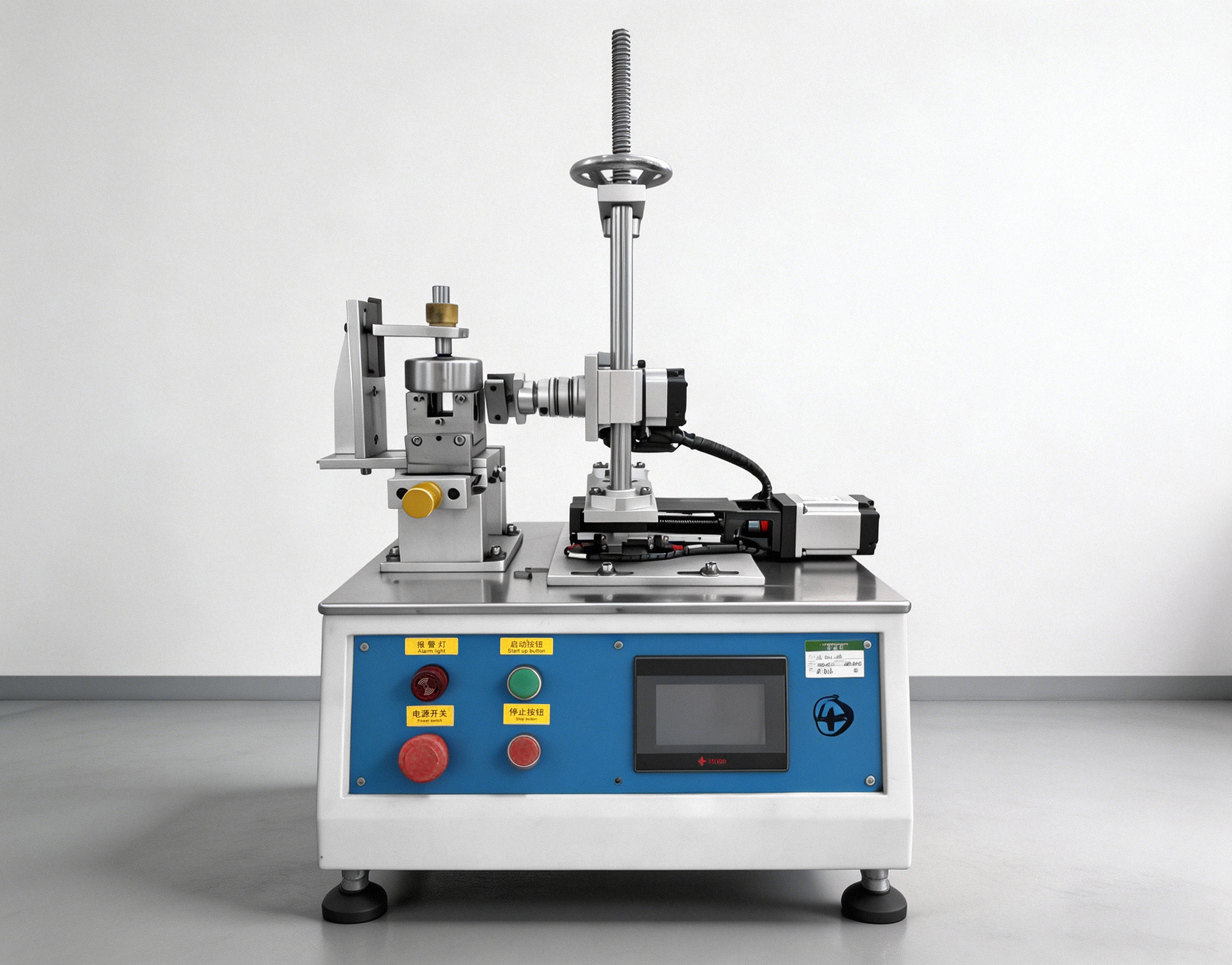
Cylinder endurance testing: key management and rekey planning are part of the lock selection, not an after-sales detail.
Total installed cost: what belongs in the comparison
A matched quotation is the only valid price comparison, and for these platforms "matched" means more than the lock. For TKAMSL5000 the package is the lock, cylinder or SFIC core, keying, batteries, installation and service, with no network controller, gateway or cloud subscription required for ordinary PIN access. For TKAMSL6000 the package adds wearable and NFC credentials, any required gateway or software, credential issuing and revocation, and ongoing support, while avoiding a dedicated wired power transfer where the site adopts the battery configuration.
TOPTEK's guidance is to compare total installed cost on equivalent functions and quantities, and to include tooling, electronics integration and testing costs in any OEM or ODM quotation. Neither platform carries a published price-parity or percentage-saving claim, and any saving should be established through matched quotations rather than inferred from the credential type.
Where the mechanical versions still fit
Electronic entry is not automatically right for every door. The mechanical ANSI Grade 1 cylindrical leverset TKAMCL5000 offers a free-wheeling clutch, two-sided spindle support, independent return springs on both sides, concealed fixing, optional through-bolts, a reversible stainless-steel deadlatch and a six-pin solid-brass cylinder with optional interchangeable cores. The mechanical tubular privacy and passage leversets TKAUP6000RR and TKAUP6100RR use solid precision-cast SUS304 stainless-steel levers with a 28° lever rotation, a Ø53 mm rose and a 60 mm backset, and are catalogued at 500,000 operating cycles as manufacturer-reported figures.
That is the fit boundary: a door with no credential requirement, no audit need and no operator to manage PINs or fobs is better served by a mechanical lock, because electronics add cost and a maintenance task without adding control. The electronic platforms earn their place where entry has to be revocable without rekeying the building.
Application fit by door type
Offices, workshops, service rooms and staff entrances. The cylindrical PIN platform fits: staff can be added or removed at the door, passage mode keeps a busy internal door open during working hours, and no credential hardware has to be issued. Door preparation, thickness and template still need confirming against the installation drawing for aluminium, steel and timber doors.
Senior living, independent living, assisted living, apartments and multifamily housing. The tubular platform fits where residents carry a wearable or tap an NFC fob, where the exterior lever free-spins when locked, and where the door face should not present a keypad. TOPTEK positions it for new doors and retrofit projects where preparation, backset, thickness, strike position and trim clearances match the approved configuration.
Healthcare and memory care. Both platforms require a project-specific decision about the appropriate access and egress function rather than an assumption based on the product family; TOPTEK states this explicitly for the tubular platform.
Fire doors. Neither platform's electronic capability substitutes for doorset evidence. The three-hour result for TKAMSL5000 applies within the tested door assembly, while the UL 10C figure for TKAMSL6000 is a recorded design target with the report pending. Fire-door use is limited to the approved lock and door assembly in both cases.
Why the decision surfaces at the door schedule stage
The lock is one of the last items priced and one of the first to constrain the opening. By the time a team compares cylindrical and tubular platforms, the door construction, thickness, preparation and fire strategy are normally fixed, which leaves three variables: the credential occupants can use, the evidence the project can accept and the administrative workload the operator can carry. Framing the comparison around those variables produces a faster and more defensible decision than comparing mechanisms feature by feature — and it explains why two projects with near-identical door schedules can end up with different platforms.
What to verify before ordering
- Confirm the required mechanical classification in the door schedule and check whether the platform's status is a passed test or a design target at the time of submittal.
- Match cross bore, backset, door thickness, escutcheon footprint and handing to the actual leaf, not to a typical detail.
- Decide who administers credentials, how they are issued and revoked, and what happens after a staff change or a resident move-out.
- Confirm the exact monitoring signals fitted to the ordered variant, because door position, latch, deadbolt and request-to-exit are separate signals.
- Verify battery type, expected replacement interval and the warning method at the door.
- Check fire-door evidence against the complete assembly, including lock, trim, strike and door construction, and agree the keying plan and core format before production.
Outlook after handover
The specification does not end at commissioning. On the tubular platform, options that read as advantages during design — door-position sensing, lever-rotation detection, privacy control — become configurations that must be documented, supported and replaced consistently across a building. Test-report status has a lifecycle too: a design target later supported by a completed report changes what the platform can be specified for, and a submittal written today should record the status that applied when it was approved.
On the cylindrical platform the durable questions are administrative: who holds PIN lists, how passage mode is used and reviewed, and how the mechanical key override is controlled. Both platforms share one long-term dependency that buyers should plan for rather than discover — a service-parts and core format that can still be matched years after the first installation. TOPTEK's approach is to coordinate lock, handle, cylinder and reader supply so those parts stay matched through the life of the opening.
Frequently asked questions
What is the difference between a cylindrical and a tubular lever lock?
A cylindrical lever lock is built around a cylindrical lock chassis mounted through a bored door, while a tubular lever lock is built around a tubular latch and its own chassis. In this comparison the practical difference is the platform each product uses: TKAMSL5000 is an ANSI/BHMA A156.2 Grade 1 cylindrical platform with a PIN keypad, and TKAMSL6000 is a tubular platform with BLE and NFC credentials. Because the platforms differ in mechanism, dimensions and documentation, similar appearance does not make them interchangeable.
What do fail-safe and fail-secure mean on an electronic commercial lock?
Fail-safe commonly releases the electrically controlled access side when power is lost; fail-secure commonly keeps it secured. Both terms describe power-loss behaviour on the access side and say nothing by themselves about the inside exit function or the fire suitability of the door. Review the access side and the exit side separately, and confirm the exact configuration, wiring and mechanical override for the ordered model.
Which evidence should a buyer request for an ANSI Grade 1 electronic lock?
Request the model-specific technical drawing, function description, materials and finish, installation instructions and the relevant numbered certificates or test reports. Check the issuer, standard edition, product and model scope and any stated limitations against the ordered configuration. A test report is not the same as a certification listing, and a mechanical grade does not establish a fire rating.
How is an electronic lever lock commissioned with an access controller?
Check mechanical operation first, then verify the exact wiring, supply, control interface and monitoring signals. Test latch, deadbolt, key override and inside lever mechanically; isolate power before connecting the controller and rated supply; restore power and test valid and invalid access commands; check the fitted door, bolt and request-to-exit signals; then test power loss and restoration and record the approved settings. The model-specific wiring diagram governs, because not every lock uses the same voltage or terminals.
What should be checked if the controller accepts a credential but the door does not release?
A valid credential confirms only one stage of the sequence. Check the controller release output, the exact lock supply and wiring, power-transfer continuity and mechanical load. Confirm mechanical release and note whether the fault appears only when the door is closed, which points toward alignment or strike binding. Work from the model-specific diagram with qualified personnel, and do not bypass access control or required egress functions.
Conclusion
The choice between an ANSI Grade 1 electronic cylindrical lock and an electronic tubular lever lock is a choice between two access models, not two quality levels. TKAMSL5000 brings a passed Grade 1 mechanical classification, a three-hour fire-tested assembly and standalone PIN administration to doors where staff control entry and no network is available. TKAMSL6000 brings wearable and NFC credentials, a keypad-free exterior and optional status monitoring to residential and care environments, on a platform whose Grade 2 mechanical and UL 10C fire positions remain design targets with reports pending.
Specify from the door schedule outward: confirm the required classification, then the credential occupants can realistically use, then the preparation and administration the building can support. Buyers who want the full component range, test summary and configuration options can review the TOPTEK company profile (PDF), and further product information is published at TOPTEK.
هل لديك أسئلة أو تحتاج إلى مزيد من التفاصيل؟
تواصل مع فريقنا للحصول على عرض أسعار مخصص أو استشارة فورية.
طلب عرض أسعار
املأ النموذج أدناه وسيتواصل معك فريقنا بعرض مقترح مخصص.
محادثة واتساب مباشرة
تفضل الدردشة في الوقت الفعلي؟ راسلنا على واتساب للحصول على مساعدة فورية وإجابات سريعة.
- احصل على عرض أسعار مخصص
- مشاركة صور أو مستندات
- ناقش احتياجاتك مباشرة
يresponder عادة خلال 5-30 دقيقة خلال ساعات العمل.