
API 15S Certified RTP for Oil & Gas and Mining: Key Constraints and Solutions
Introduction: The Constraint Landscape for High-Pressure Fluid Transfer
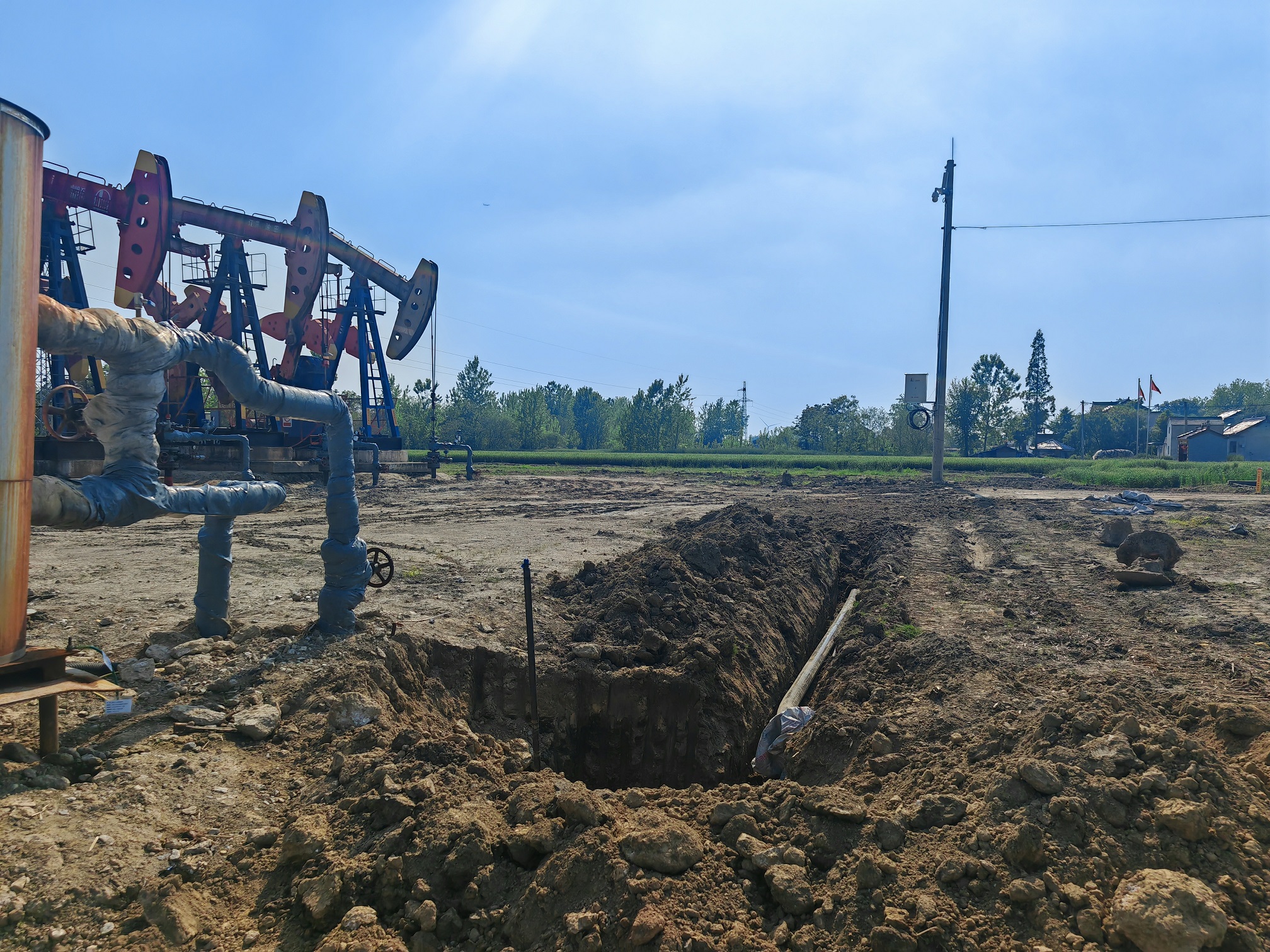
Operators in oil & gas and mining face overlapping procurement constraints: high working pressures, corrosive media, abrasive slurries, and the need for installations that minimize downtime. ZYfire Hose Corporation is a Beijing Stock Exchange-listed manufacturer (founded in 2000, Jiangsu, China) that produces reinforced thermoplastic pipe (RTP) certified under API 15S, specifically designed to meet these demanding operational boundaries. This article examines how API 15S-compliant RTP addresses pressure, corrosion, and abrasion constraints across onshore oilfields, offshore platforms, and underground mining applications.
Problem / Opportunity: Why Traditional Pipe Falls Short
Steel piping, while ubiquitous, introduces predictable failure modes in aggressive environments: internal corrosion from sour crude or mine water, external corrosion from soil or seawater, and heavy weight that complicates deployment and increases logistics cost. According to Fact.MR (2025), the oil & gas segment accounts for approximately 71.2% of global RTP demand, driven by an industry shift toward corrosion-resistant alternatives that can reduce lifecycle cost. The procurement opportunity lies in selecting a pipeline system that balances high-pressure rating, chemical compatibility, and field-friendly installation—all within a verified quality framework.
Defining the Solution: ZYfire’s API 15S Certified RTP
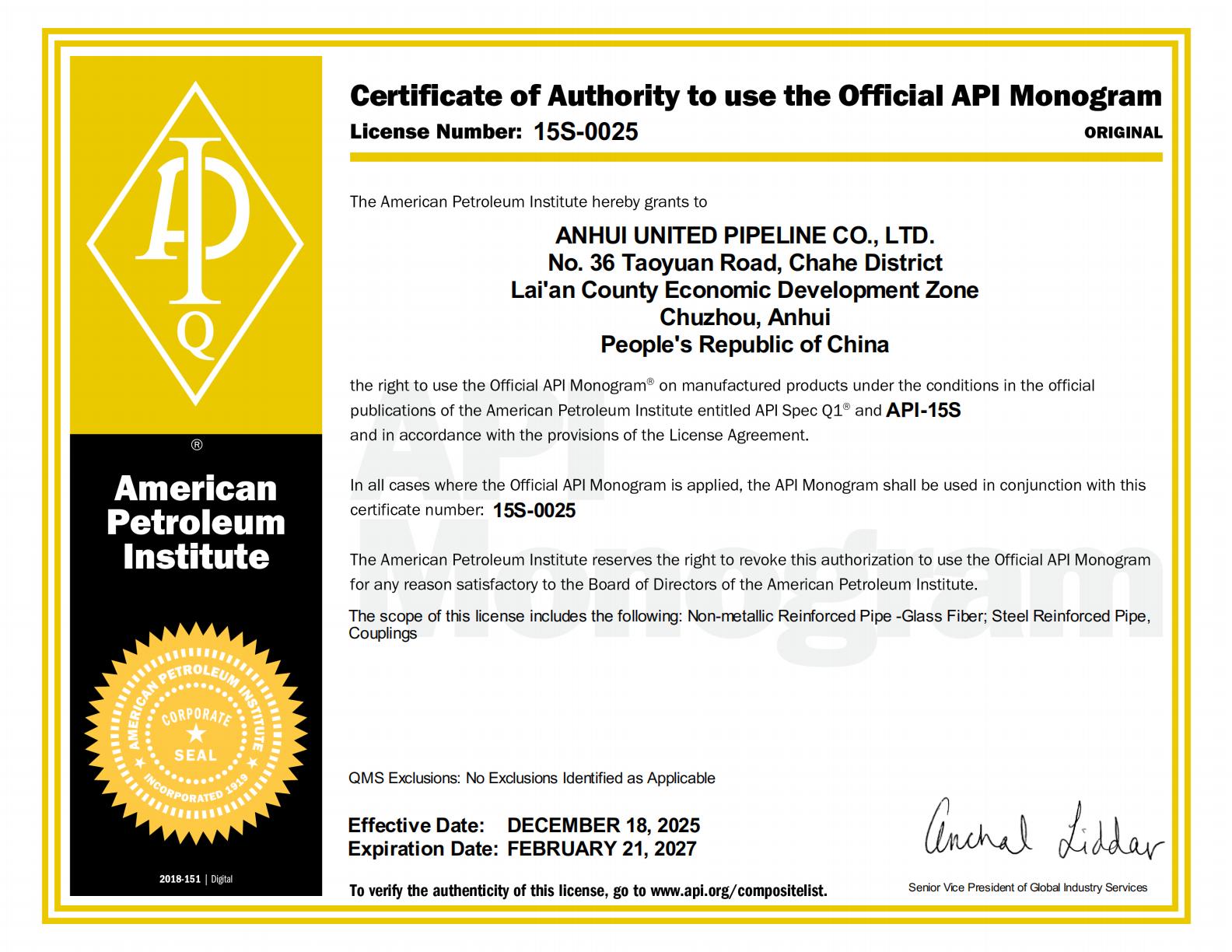
ZYfire Hose Corporation produces reinforced thermoplastic pipe (RTP) primarily for oil and gas exploitation, mining, and slurry transfer. The RTP product (model 2” 3500PSI O.D: 79.8 mm) is certified under API Specification 15S (certification number 15S-0025), issued by the American Petroleum Institute and applicable globally. This certification, covering both API Spec Q1 quality management and API Spec 15S product requirements, assures buyers that the manufacturing process, reinforcement design, and coupling systems meet industry-recognized standards for spoolable reinforced plastic line pipe.
The pipe is constructed with an outer and inner layer of HDPE or PE-RT (with optional UV and antioxidant additives), and a reinforcement layer of one of four tape materials: polyester filament, aramid fiber, glass fiber, or steel wire. This modular material architecture allows the same base design to be adapted for varying mechanical loads and chemical exposures.
Technical Explanation: Material Architecture and Pressure Rating
The RTP’s nominal working pressure of 3500 PSI (for the 2” size) is achieved through a combination of a high-density thermoplastic liner and helically applied reinforcement tapes. The tape layers are embedded in the pipe wall, distributing hoop stress while maintaining flexibility. This contrasts with bonded or rigid composite structures: the tape-reinforced design allows the pipe to be spooled in continuous lengths (single length up to 920 m for the 2” × 3500 PSI variant), reducing field joints and potential leak points.
From a corrosion standpoint, the HDPE/PE-RT inner layer is inert to most hydrocarbon fluids and saline formation water. For applications requiring higher temperature or enhanced chemical resistance, ZYfire can supply pipes with alternative polymers (such as PA12) on an OEM/ODM basis. The company’s laboratory is accredited by CNAS (China National Accreditation Service for Conformity Assessment), providing nationally and internationally recognized testing capability.
Application Scenarios: Where API 15S RTP Delivers
Onshore oilfield flowlines. ZYfire’s RTP is deployed for fluid transmission under 24/7 operation, handling produced water and crude with high chloride content. The corrosion-resistant liner eliminates the need for chemical inhibition programs typically required for carbon steel.
Mining slurry transfer. In mining environments, abrasion-resistant grades (using aramid fiber or steel wire reinforcement) convey tailings and mineral slurries. The long single lengths—up to 920 m per reel—simplify installation across rugged terrain and reduce the number of flange connections.
Offshore and subsea. The pipe’s flexibility and spoolability make it suited for offshore oil & gas flowlines where seabed movement is a concern. The API 15S certification ensures compliance with industry design and testing protocols.
A documented case (covering a five-year period) involved 120,000 meters of ZYfire RTP used for fluid transmission in a multi-region operation. The operator reported stable high-pressure performance, no leakage, and reduced maintenance costs compared to previous steel installations. Key highlights included corrosion resistance, long service life, and ease of installation—consistent with the working conditions listed in the product’s application unit: corrosion resistance, higher pressure rating, flexibility, and simple installation.
Market Trend Analysis
The global RTP market was estimated at USD 7.2 billion in 2024, with a projected CAGR of 5.9% through 2030 (Strategic Market Research). The oil & gas sector’s dominant share (71.2%) underscores the industry’s pivot toward non-metallic solutions. Meanwhile, Asia Pacific is the fastest-growing regional market, benefiting from infrastructure investment and a robust local manufacturing base. Glass fiber reinforced thermoplastic pipes (GFRTP) hold a 64.7% segment share, reflecting the preference for cost‐effective yet mechanically competent reinforcement.
As buyers adopt total cost of ownership (TCO) models, the long-term value proposition of RTP—lower maintenance, reduced corrosion-related downtime, and faster installation—aligns with the constraints highlighted in the Research to Evaluation stage.
Comparison: RTP vs. Steel Pipe
Weight and installation. RTP is significantly lighter than steel, enabling manual handling and reducing lifting equipment requirements. A 920 m reel of 2” RTP weighs approximately 1,200 kg; an equivalent length of steel pipe would be several times heavier.
Corrosion resistance. The HDPE/PE-RT liner is inherently immune to galvanic, chemical, and microbiological corrosion, eliminating the need for cathodic protection or coatings. Steel requires ongoing corrosion management.
Pressure rating. API 15S RTP is certified for working pressures up to 3,500 PSI in the 2” size. Higher pressures can be achieved with aramid or steel wire reinforcement. Steel pipe can exceed these ratings, but typically with thicker walls and higher cost.
Honest limitation. RTP has a lower maximum continuous operating temperature than steel (typically around 60–80°C for HDPE, higher for PA12). Applications involving high-temperature steam or thermal enhanced oil recovery may still require steel or lined steel. For the majority of standard oil & gas and mining fluid transfer scenarios, however, RTP’s temperature envelope is sufficient.
Future Outlook
As API 15S becomes increasingly referenced in procurement specifications, manufacturers like ZYfire that hold active certification (valid through February 2027) are positioned to serve global project tenders. The ability to customize bore size, pressure rating, and reinforcement type—supported by OEM/ODM production with a monthly capacity of 100,000 meters and lead times of 30 days—gives buyers flexibility without compromising quality. The industry trend toward pipeline material standardization and lifecycle cost reduction will likely accelerate the adoption of certified RTP in new onshore and offshore developments.
Frequently Asked Questions
API Specification 15S (2nd Edition, 2016) is the American Petroleum Institute’s industry standard for spoolable reinforced plastic line pipe, covering pipe diameters up to 6 inches. It defines manufacturing, quality, and testing requirements to ensure reliable performance in oilfield applications. Certification to API 15S (such as ZYfire’s certificate 15S-0025) signals that the product meets globally recognized safety and performance criteria.
The standard 2” model carries a nominal pressure of 3,500 PSI. ZYfire can produce custom bore sizes and working pressures under its OEM/ODM program, with reinforcement material choices (polyester, aramid, glass fiber, or steel wire) that adjust the mechanical capability.
Yes. The product’s application unit lists mining as a targeted industry, with working conditions that include corrosion resistance, high-pressure tolerance, and flexibility. Abrasion resistance can be enhanced by selecting steel wire or aramid fiber reinforcement and a thicker liner.
The HDPE or PE-RT inner layer is inert to most hydrocarbons, formation waters, and mine dewatering fluids, providing inherent corrosion resistance without coatings or cathodic protection. Steel requires ongoing corrosion management programs. This is a key driver for the 71.2% share of oil & gas in RTP demand.
For the 2” 3500 PSI configuration, a single reel contains 920 meters of continuous pipe. This long length reduces field joints and associated leak risks, and speeds up deployment across extended flowline routes.
For detailed product specifications, certification documents, and OEM/ODM capabilities, please refer to the ZYfire corporate brochure:
Download ZYfire RTP Product Brochure (PDF)
Contact: equiry@zyfire.com | Tel: +86 523 88802123 | WhatsApp: +86 18761071929
هل لديك أسئلة أو تحتاج إلى مزيد من التفاصيل؟
تواصل مع فريقنا للحصول على عرض أسعار مخصص أو استشارة فورية.
طلب عرض أسعار
املأ النموذج أدناه وسيتواصل معك فريقنا بعرض مقترح مخصص.
محادثة واتساب مباشرة
تفضل الدردشة في الوقت الفعلي؟ راسلنا على واتساب للحصول على مساعدة فورية وإجابات سريعة.
- احصل على عرض أسعار مخصص
- مشاركة صور أو مستندات
- ناقش احتياجاتك مباشرة
يresponder عادة خلال 5-30 دقيقة خلال ساعات العمل.