
API 521 Flare Compliance: A Qualification Checklist for Refineries
API 521 Flare Compliance: A Qualification Checklist for Refineries
Flare systems in refining and petrochemical projects are specified rather than selected. The design basis is written into the project specification as API 521 compliance, and the performance expectation is stated in absolute terms: high reliability, smokeless combustion, low thermal radiation, corrosion resistance. The procurement question is narrower and harder — how does a buyer confirm that a proposed flare system genuinely satisfies those requirements before the purchase order is issued?
This reference sets out the compliance and qualification landscape for flare systems in refining and petrochemical scopes, and converts it into a checklist that engineering and procurement teams can apply during bid evaluation. It covers what API 521 governs, what falls outside the standard, which configurations and model families map to which relief scenarios, and what material and test evidence should accompany a compliant supply.
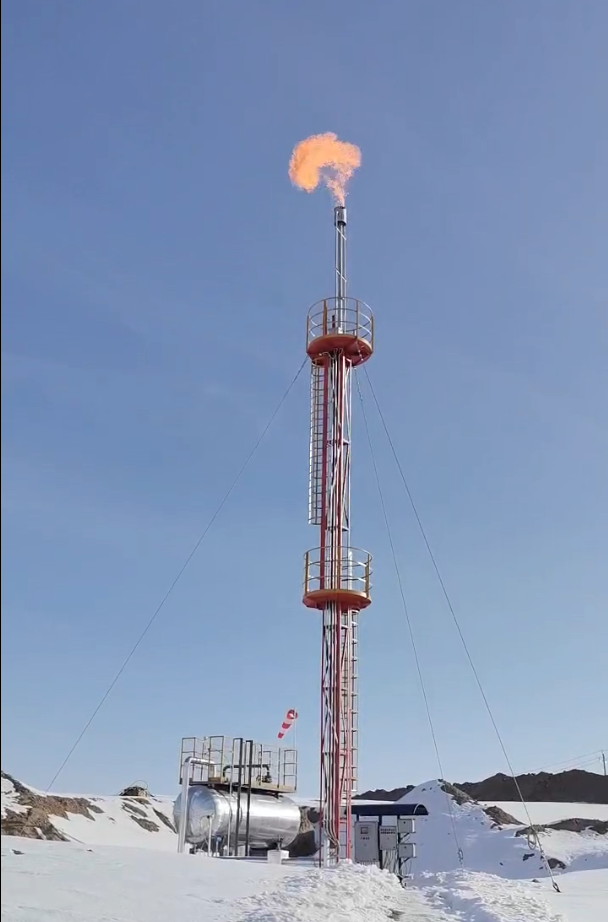
Elevated flare structures remain the conventional relief solution in refining and petrochemical projects, where API 521 defines the design basis.
Compliance Pressure Is a Procurement Problem Before It Is a Design Problem
A vendor can reference API 521 in a datasheet without ever demonstrating that the relief case, header design, radiation profile and combustion performance of the offered configuration were engineered against it. The distance between a compliance statement and compliance evidence is where project risk accumulates, because it is usually discovered after award rather than during evaluation.
The scale of relief combustion keeps that distance commercially significant. Global gas flaring reached 151 billion cubic meters in 2024, the highest level recorded since 2007, according to World Bank data. The global flare systems market was valued at approximately USD 4.8 billion in 2025 (Dataintelo), while the totally enclosed ground flare segment was valued at USD 113 million in 2024, with growth attributed to destruction efficiencies exceeding 98% (Intel Market Research).
Relief combustion is therefore not a shrinking technical niche. It is an installed base that is continuously specified, replaced and upgraded — and increasingly governed by compliance-driven procurement rules rather than price-driven ones.
What API 521 Compliance Covers — and Where It Stops
API Standard 521, Pressure-Relieving and Depressuring Systems, is the primary design reference governing flare system engineering. Among its documented requirements, the standard specifies a minimum flare header slope of 1/4 inch per 10 feet for drainage.
That level of specificity is useful precisely because it separates a standard-level requirement from a project-level one. API 521 establishes the design methodology and minimum engineering rules for pressure relieving and depressuring. It does not, on its own, settle the performance expectations that refining and petrochemical projects attach to the equipment: high reliability, smokeless combustion, low thermal radiation and corrosion resistance are project requirements layered on top of the standard's design framework.
The distinction has a practical consequence at evaluation stage. A supplier that answers with API 521 compliance has answered one question. A supplier that can show how a defined relief scenario produced a specific stack height, tip selection, radiation profile and material specification has answered the qualification question that the project actually needs resolved.
Matching Flare Architecture to the Relief Scenario
Configuration decisions in refining and petrochemical projects follow the relief scenario and the site constraint, not a default product type. Four equipment families cover most of that decision space.
Elevated flare systems
Shandong Zexuan Environmental Protection Technology Co., Ltd. manufactures elevated flare systems in self-supported (ZX-SSEF), guyed-wire (ZX-GWF) and derrick-supported (ZX-DSF) configurations, with a demountable variant for sites where transport or installation constraints dominate. Typical parameters across the range include flare heights from 10 m to 150 m+, operating temperatures up to 1100°C, turndown ratios up to 100:1, customized flare tip diameters and combustion efficiency of 98%–99.9% depending on design conditions.
Enclosed ground flare systems
The ZX-EGF Series enclosed ground flare addresses the opposite constraint set: limited plot space combined with radiation or noise restrictions at grade. Its design is built around low radiation and low noise operation, multi-burner arrangements, operating temperatures of 800°C–1200°C and combustion efficiency up to 99.9%, using carbon steel, SS304, SS316L, SS310S and refractory lining materials.
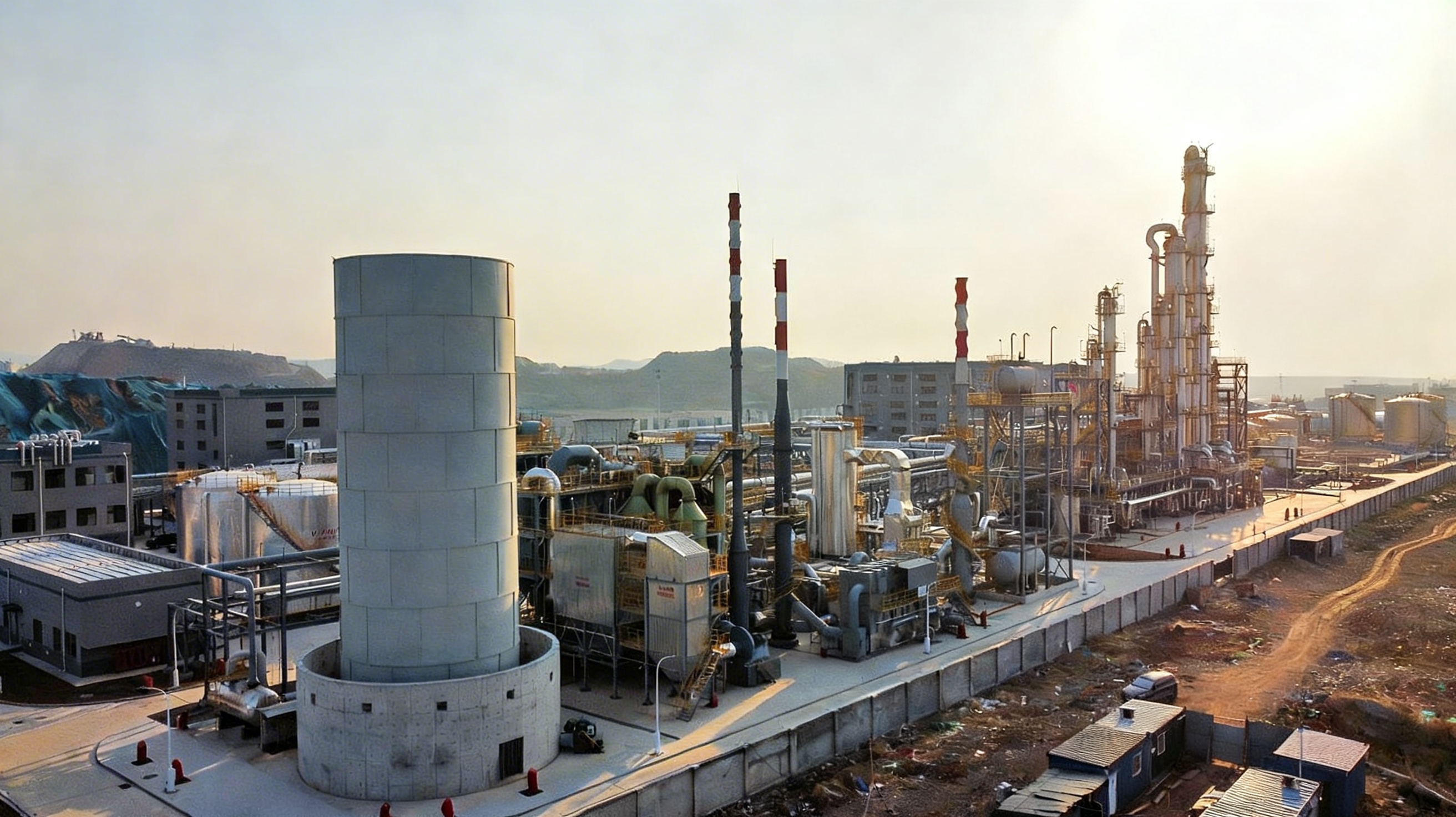
Enclosed ground flare configuration: combustion efficiency up to 99.9% with a low radiation, low noise design for space-constrained refining and petrochemical sites.
Skid-mounted and mobile flare systems
Where the relief duty is intermittent and the installation window is short, the ZX-SMF Series skid-mounted LNG/LPG flare system is designed for cryogenic service compatibility, with a compact skid-mounted layout and fast installation and commissioning. It is applied at LNG receiving terminals, bunkering operations, gas storage, pipeline facilities and offshore gas applications.
Flare tips and combustion equipment
Combustion performance is largely determined at the tip. The ZX-FT Series covers sonic, smokeless, air-assisted and Coanda flare tip types, using SS316L, SS310S and Inconel 625 at operating temperatures up to 1100°C for hydrocarbon gases in refinery, petrochemical, LNG and oil and gas processing service.
Continuous waste gas: thermal oxidizers
Not every stream is a relief scenario. Continuous process waste gas containing VOCs is more often routed to thermal oxidation than to a flare. Zexuan's ZX-TO, ZX-RTO and ZX-RCO series operate at 800°C–1200°C with VOC destruction efficiency up to 99% or higher, with regenerative thermal and regenerative catalytic configurations available where heat recovery is required.
Materials and Combustion Evidence: What Corrosion Resistance Looks Like on Paper
Inconel 625 is specified for high-temperature parts of the elevated flare range, within a material set that also includes carbon steel, hot-dip galvanized steel, SS304, SS316L and SS310S. The ZX-FT Series flare tips list SS316L, SS310S and Inconel 625, and enclosed ground flare construction adds refractory lining materials to the specification.
The qualification value of that list is not the alloy names themselves. Corrosion resistance and high-temperature resistance are properties of composition and heat treatment, demonstrated by material certificates and welding inspection records rather than by a description in a proposal. When Inconel 625 is specified for high-temperature parts, the certificate chain should identify which parts, in which alloy and under which inspection regime — and the same discipline applies to the refractory materials used in enclosed ground flare linings.
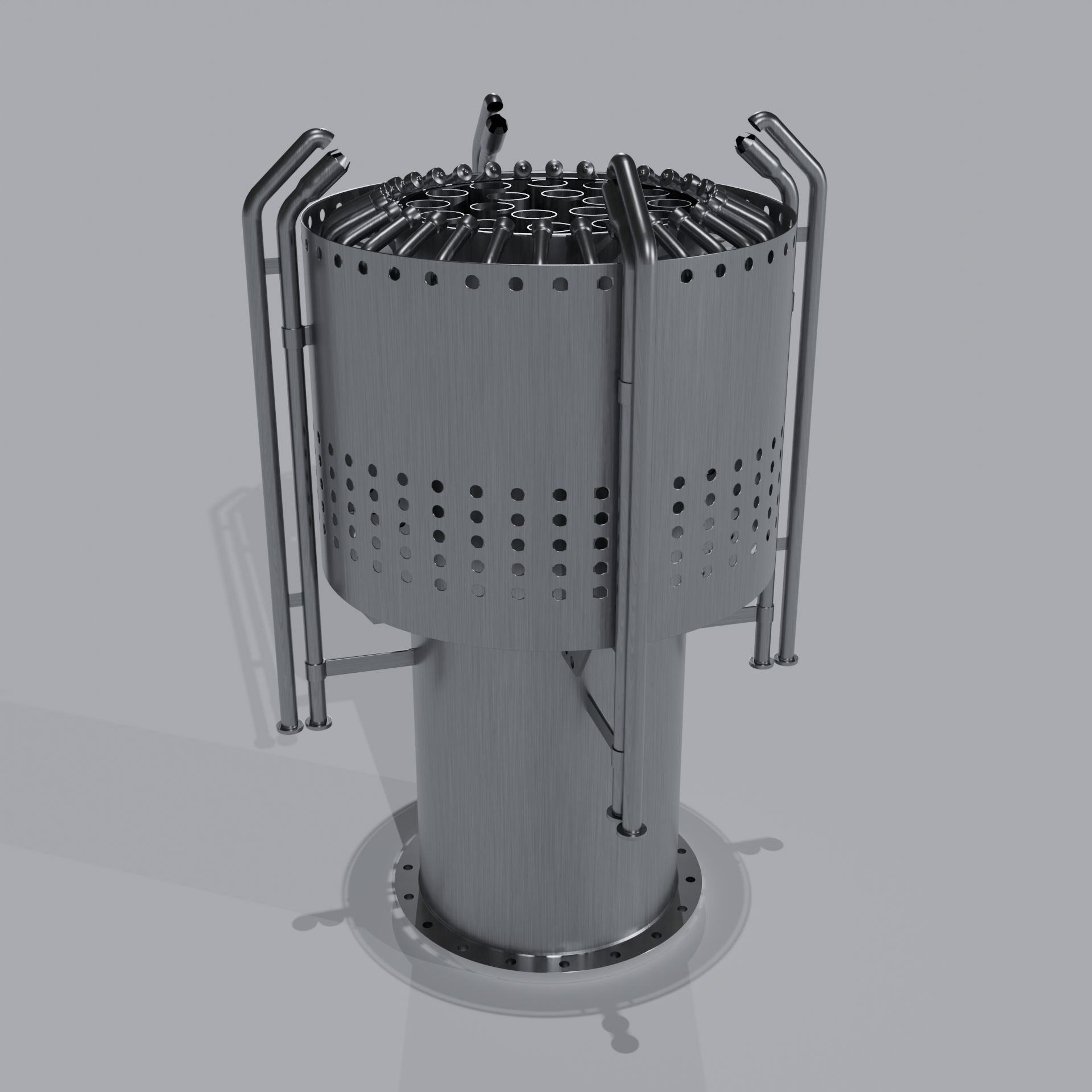
Flare tip assemblies are where combustion performance and high-temperature material selection converge; Inconel 625, SS310S and SS316L appear in the ZX-FT Series specification.
A Qualification Checklist for Flare System Procurement
The table below converts the compliance discussion above into evaluation items. Each row pairs a qualification question with the evidence that should exist if the answer is genuine.
| Qualification area | What the buyer should ask | Evidence to request |
|---|---|---|
| Design basis | Is the flare engineered as an API 521 pressure-relieving and depressuring system for the project's relief cases, including header drainage? | Design calculations, relief case documentation and header slope confirmation against the 1/4 inch per 10 feet minimum. |
| Structural configuration | Which architecture fits the site: self-supported (ZX-SSEF), guyed-wire (ZX-GWF), derrick-supported (ZX-DSF) or demountable? | Structural drawings; height selection within the 10 m to 150 m+ range; foundation and support design data. |
| Combustion performance | Is smokeless operation required, and what combustion efficiency is being offered? | Flare tip type selection (sonic, smokeless, air-assisted, Coanda) and stated efficiency of 98%–99.9% tied to design conditions. |
| Radiation and noise | Are radiation or noise limits governing at grade? | Low radiation and low noise design basis for enclosed ground flare configurations such as the ZX-EGF Series. |
| Materials | Which components are specified in high-temperature alloys? | Material certificates covering Inconel 625 high-temperature parts, SS310S and SS316L; refractory lining documentation for enclosed ground flares. |
| Controls and ignition | Does the system include automatic ignition, flame monitoring and PLC control? | Control philosophy, explosion-proof control cabinet specification where applicable, and functional test records. |
| Quality and testing | What is the inspection and test plan? | Incoming material, welding, dimensional and pressure or leak inspection where applicable; functional testing; factory acceptance test; final inspection before shipment at a 100% inspection rate. |
| Commercial terms | Does the production schedule match the project timeline? | Confirmation against the stated 5 sets per month capacity, 60 to 120 day lead time and one set minimum order quantity. |
| Service and lifecycle | What support exists after commissioning? | Defined scope for remote support, commissioning assistance, spare parts and training. |
| Reference experience | Has this configuration been delivered into a comparable operating environment? | Project references in more than 10 countries, including the Middle East, Central Asia, Southeast Asia, Africa and Russia, where client disclosure is permitted. |
Two checklist items are frequently underweighted. The first is header drainage: a 1/4 inch per 10 feet minimum slope is straightforward to confirm on a drawing and expensive to correct after fabrication. The second is the factory acceptance test record. Zexuan's stated quality control sequence runs from incoming material inspection through welding, dimensional and pressure or leak testing where applicable, functional testing, factory acceptance testing and final inspection before shipment, at a 100% inspection rate. Engineered supply is also supported upstream by design, manufacturing, installation and commissioning services, which means the qualification conversation can cover the full delivery scope rather than equipment alone.
Scenario Fit: How the Checklist Applies in Practice
Reference projects show how configuration followed constraint rather than catalogue order.
A natural gas processing operator in China installed two guyed-wire elevated flare systems for emergency venting and safe combustion during gathering and transportation operations. The configuration used a 60 m elevated structure with a DN350 flare tip, automatic ignition and a PLC control system, and has operated for more than one year under harsh climate conditions.
At an oilfield transfer station, a single enclosed ground flare system was supplied to treat natural gas vent gas. The design included an explosion-proof control cabinet and an automatic ignition system, and the documented outcome after one year of operation was safe disposal of emissions with reduced noise and visual impact.
A coalbed methane application used one ground flare system with a processing capacity of 90×10⁴ Nm³/d, a three-stage venting design and PLC automatic control, operating for more than two years. In fine chemical production, two flare systems were supplied for process vent gas from DL-Methionine manufacturing, with reliable off-gas treatment and stable operation reported after more than a year of service.
The common thread is relevant to refining and petrochemical buyers: in each case the relief scenario, the site constraint and the control philosophy determined the equipment, and the operating record is what makes the reference usable during evaluation.
Market Context: Compliance Requirements Are Tightening
Asia-Pacific holds a 35% share of the flare gas recovery system market as of 2025, the largest regional share globally (Grand View Research). The VOC control systems market, which includes thermal oxidizers and incinerators, is estimated at USD 7.5 billion in 2025, with China identified as a key growth market at a 5.4% CAGR (Fact.MR). Both signals point in the same direction: combustion and emission-control equipment is being specified with more performance documentation, not less.
The competitive reference points are established. Zeeco, John Zink Hamworthy (Koch), Honeywell UOP and Baker Hughes are identified as major global participants in the flare and combustion segment (HTF Market Intelligence). For a buyer, this matters less as a ranking exercise than as an evidence benchmark: documentation depth, material traceability and test records from any manufacturer will be compared against the practices of these suppliers during formal evaluation.
Elevated vs Enclosed Ground vs Skid-Mounted: Trade-offs and Practical Limits
Configuration choice is a constraint-matching exercise with real trade-offs on both sides.
| Configuration | Typical parameters | Scenario fit | Practical limits |
|---|---|---|---|
| Elevated flare (ZX-SSEF / ZX-GWF / ZX-DSF) | Height 10 m to 150 m+, up to 1100°C, turndown up to 100:1, efficiency 98%–99.9% by design conditions | Refining, oil and gas, petrochemical, gas processing, onshore and offshore facilities | Requires structural and foundation engineering; tall guyed or derrick-supported designs depend on support structures and guy systems |
| Enclosed ground flare (ZX-EGF) | 800°C–1200°C, efficiency up to 99.9%, low radiation, low noise, multi-burner layout | Petrochemical parks, chemical plants, LNG terminals, limited-space sites | Enclosure and refractory-lined construction add plot area and inspection items to the maintenance scope |
| Skid-mounted LNG/LPG flare (ZX-SMF) | Cryogenic service compatible, compact skid layout, fast installation and commissioning, capacity customized to gas release rate | LNG receiving terminals, bunkering, gas storage, pipeline facilities, offshore applications | Best suited to intermittent and moderate relief duties rather than large continuous process streams |
| Thermal oxidizer (ZX-TO / RTO / RCO) | 800°C–1200°C, VOC destruction efficiency up to 99% or higher | Continuous VOC-containing process waste gas in chemical, pharmaceutical and petrochemical plants | Not a relief device: it addresses continuous waste gas rather than emergency depressuring duty |
Three boundaries deserve explicit attention during evaluation. First, API 521 compliance is a design framework, not an emissions outcome. The standard governs how a flare system is engineered; it does not guarantee a combustion result at every operating point, and stated efficiencies of 98%–99.9% are explicitly tied to design and operating conditions.
Second, flaring remains a widely used industrial practice — 151 billion cubic meters of gas was flared globally in 2024. A compliant flare system is a safety and emission-control asset, not a gas-reduction strategy in itself, which is why flare gas recovery is normally evaluated alongside relief combustion rather than instead of it.
Third, configuration choices carry maintenance and scheduling consequences. An enclosed ground flare's low radiation and low noise profile comes with an enclosure and a refractory-lined structure, adding inspection items that an open elevated flare does not have. On the commercial side, customized industrial systems are produced at a stated capacity of 5 sets per month, with lead times of 60 to 120 days depending on project requirements and a minimum order quantity of one set. Neither configuration is universally superior, and neither schedule is instantaneous; the constraint set decides.
What Buyers Should Expect Next
Zexuan's stated development direction covers low-carbon combustion technologies, intelligent control systems, flare gas recovery and digital operation solutions — a direction consistent with the market signals above: growth in enclosed ground flare demand tied to destruction efficiency, expanding VOC control spending, and a dominant Asia-Pacific share in flare gas recovery.
For procurement teams, the practical implication is that qualification evidence will carry more weight over time, not less. Project specifications will continue to reference API 521 as the design floor while adding performance requirements such as smokeless combustion, low thermal radiation and corrosion resistance, each of which has to be demonstrated with design data, certificates and test records rather than with a compliance statement.
FAQ
What does API 521 require of a flare system design?
API 521, Pressure-Relieving and Depressuring Systems, is the primary design standard governing flare system engineering. Among its documented requirements is a minimum flare header slope of 1/4 inch per 10 feet to support drainage. The standard sets the design methodology for pressure relieving and depressuring; refining and petrochemical projects then add performance requirements on top of it, including high reliability, smokeless combustion, low thermal radiation and corrosion resistance. Compliance therefore has two layers — the standard's design rules and the project's performance criteria.
How can a buyer verify API 521 compliance before awarding a contract?
By requiring each requirement to trace back to an engineering deliverable rather than to a statement. In practice that means design calculations covering relief cases and header design, including the 1/4 inch per 10 feet drainage slope; structural drawings for the selected configuration; flare tip and combustion performance data; material certificates; a control philosophy; and inspection and test records. Suppliers that manufacture to a documented quality sequence — incoming material inspection, welding inspection, dimensional inspection, pressure or leak testing where applicable, functional testing, factory acceptance testing and final inspection before shipment at a 100% inspection rate — can make those records a contractual deliverable.
When is an enclosed ground flare a better scenario fit than an elevated flare?
When plot space is limited and radiation or noise at grade is the governing constraint. The ZX-EGF Series enclosed ground flare is designed with low radiation and low noise operation, multi-burner configurations, operating temperatures of 800°C–1200°C and combustion efficiency up to 99.9%. Elevated flares in self-supported, guyed-wire and derrick-supported configurations, with heights from 10 m to 150 m+, remain the conventional choice where elevation is acceptable. The trade-off is that an enclosed ground flare introduces an enclosure and refractory-lined construction, while a tall elevated flare requires structural and foundation engineering.
Which materials should be specified for flare tips and high-temperature components?
Zexuan's ZX-FT Series flare tips use SS316L, SS310S and Inconel 625, with operating temperatures up to 1100°C for hydrocarbon gases in refinery, petrochemical, LNG and oil and gas processing service. In elevated flare systems, Inconel 625 is specified for high-temperature parts within a wider material set that also includes carbon steel, hot-dip galvanized steel, SS304 and SS316L. The logic is selective rather than universal: high-temperature alloys are applied where temperature and corrosion exposure justify them, not across the entire structure.
What testing and documentation should accompany a flare system delivery?
The quality control sequence covers incoming material inspection, welding inspection, dimensional inspection, pressure or leak testing where applicable, functional testing, factory acceptance testing and final inspection before shipment, at a 100% inspection rate. For qualification purposes, material certificates for high-temperature alloys such as Inconel 625, welding inspection records and the factory acceptance test report are the documents that convert a performance claim into verifiable evidence.
What practical limits should a project team plan around?
Three limits are worth planning for. First, API 521 compliance is a design framework rather than an emissions guarantee: combustion efficiency figures of 98%–99.9% are stated as depending on design and operating conditions. Second, relief combustion remains widely used — 151 billion cubic meters of gas was flared globally in 2024 — so a compliant flare system supports safety and emission control rather than replacing flare gas recovery. Third, commercial rhythm matters: customized industrial systems are produced at a stated capacity of 5 sets per month, with lead times of 60 to 120 days depending on project requirements and a minimum order quantity of one set.
Further Reference
Zexuan publishes its flare and thermal treatment product scope, manufacturing capability and configuration documentation in a single company brochure, which can be downloaded here: Shandong Zexuan company brochure.