
ASTM A463 Supplier Evaluation: Capacity, Stock, Continuity
ASTM A463 Supplier Evaluation: Capacity, Stock, Continuity
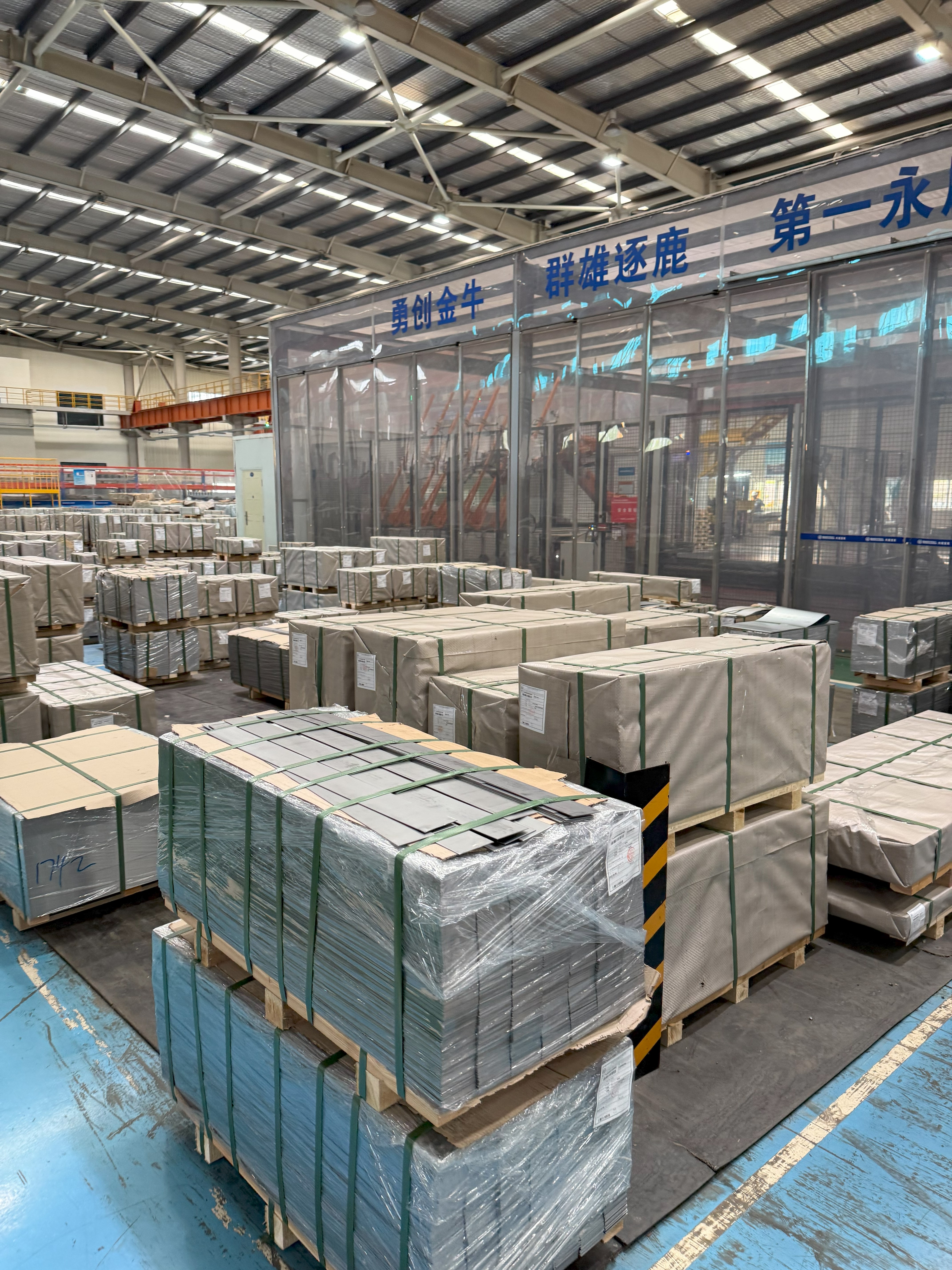
Aluminized steel projects rarely fail on the first order. They fail on the fourth — a late shipment, a coating mass that has drifted outside the drawing, a substituted coil that forces a formed part to be re-qualified. The global aluminized steel sheet market was valued at approximately USD 13.43 billion in 2024, according to Zion Market Research, and the aluminized steel sales market is projected to reach USD 18.7 billion by 2034, growing at a CAGR of 5.7% from 2026, according to Dataintelo. In a market expanding at that rate, supplier evaluation stops being a procurement formality and becomes a continuity decision.
This article sets out a long-term supplier evaluation framework for ASTM A463 aluminized steel, built on five dimensions: production capacity, stock depth, delivery consistency, export track record and technical documentation. The framework is then applied to Dalian Mesco Steel Co., Ltd. (MESCO), a steel supplier founded in 2007 and located in the Dalian Economic and Technological Development Zone, whose range covers aluminized steel alongside galvanized, Galvalume, ZAM, Magnelis, prepainted and cold rolled coil.
Why Continuity Is a Different Buying Problem From Specification
At the specification stage, the question is narrow and answerable: does this material meet the drawing, in Type 1 or Type 2 coating, at the required thickness, width and coating mass? At the continuity stage, the question becomes whether the same answer will still exist in year three — from the same supplier, at the same coating class, on a date the buyer can plan a production schedule around.
Four failure modes dominate long-horizon sourcing of aluminized steel, and each of them is invisible in a first quotation:
- Allocation risk — capacity is committed elsewhere when the buyer's demand rises.
- Specification drift — the coating type or coating mass supplied is close to, but not identical to, what was originally qualified.
- Lead-time erosion — a stock-based supplier quietly stops holding the specification the buyer depends on.
- Documentation gaps — compliance evidence is unavailable when a downstream customer audit arrives.
The five dimensions below exist to make those four failure modes testable before a contract is signed, rather than after a line stops.
The Five-Dimension Evaluation Framework
| Dimension | Question it answers | Evidence to request | MESCO reference point |
|---|---|---|---|
| Production capacity | Can allocation survive a demand spike? | Site area, output definition, line count, shift pattern | 40,000 m² facility; 120,000 units annual output; 120 employees; R&D team of 5 engineers |
| Stock depth | Can the order ship without waiting for a production cycle? | Stock by specification, warehouse location, replenishment cycle | Tens of thousands of tons of stock for standard specifications |
| Delivery consistency | What lead time is committed and repeatable? | Documented lead time for stocked versus made-to-order items | 3–7 working days for standard specifications |
| Export track record | Has this supplier cleared borders, inspections and documentation regimes before? | Destination list, active customer count, export documentation sample | 70% export ratio; exports to 100+ countries; 700+ clients, including 9 Fortune Global 500 companies |
| Technical documentation | Can conformity be proven per shipment? | Mill certificates, coating mass verification, standard conformance statements | Laboratory verification of chemical composition and mechanical properties |
The order is deliberate. Capacity and stock determine whether a supplier can promise anything at all. Delivery consistency and export record determine whether the promise has historically held. Documentation determines whether the promise can be proven to a third party.
Dimension 1 — Capacity: What a 40,000 m² Footprint Actually Tells You
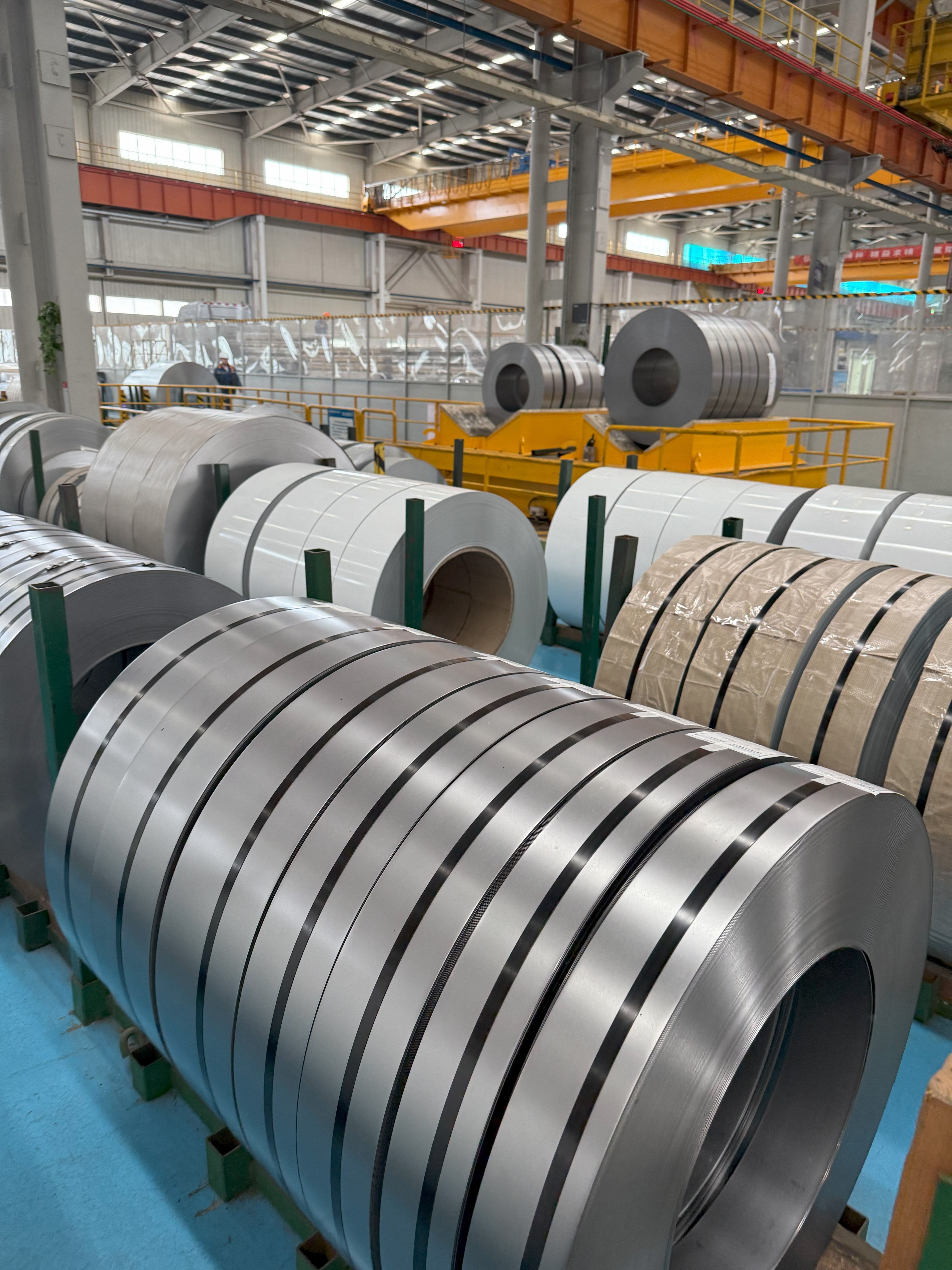
MESCO's published company profile states a 40,000 m² facility, 120 employees, an annual output of 120,000 units, and a research and development team of five engineers. Dalian Mesco Steel Co., Ltd. operates six subsidiaries across steel, UV coatings, robotic automation, modular housing and construction machinery — a structure that matters less for aluminized steel capacity itself and more for how insulated the operation is from single-segment demand cycles.
For a buyer, the facility figure answers one question and raises another. It answers whether there is physical infrastructure behind the quotation: a supplier reselling another mill's allocation carries a different risk profile from an operator with its own site, workforce and stock. It raises the question of measurement — 120,000 units is a unit count, not a tonnage. Unit definitions vary between coils, sheets and bundles, so a serious evaluation converts the stated figure into the buyer's own units before comparing it against annual demand. That is a diligence step, not a criticism; the same conversion problem appears in most published capacity figures.
Three capacity questions belong in every supplier questionnaire for a multi-year aluminized steel program:
- How much of annual output is allocated to stock replenishment versus made-to-order production?
- How many production lines operate, and what is the shift pattern across a full year rather than a peak month?
- What is the largest single order the facility has accepted without extending lead time beyond its standard commitment?
Dimension 2 — Stock: The Boundary Between Available and Made to Order
MESCO states that it maintains tens of thousands of tons of stock for standard specifications, enabling delivery within 3–7 working days. For a buyer running a production line or a fixed project schedule, a stock program is worth more than a capacity number, because stock converts a manufacturing lead time into a logistics lead time.
The boundary matters as much as the benefit. A 3–7 working-day commitment is a stock-based commitment: it applies to standard specifications the supplier physically holds. Non-standard combinations of thickness, width and coating mass sit outside the stock program and move into the production queue, where lead time depends on scheduling rather than warehouse availability. A buyer who reads 3–7 working days as a blanket lead time and then orders an unusual width will build a false assumption into a project plan. The practical treatment is a two-tier bill of materials — one tier planned against stock, one tier scheduled against production.
ASTM A463/A463M is the governing standard for aluminum-coated steel sheets produced by the hot-dip process, and it specifies two coating types: Type 1, an aluminum-silicon alloy coating, and Type 2, a pure aluminum coating. Type 1 held the largest product share at 62.3% of the aluminized steel market in 2025, according to Dataintelo. European projects frequently reference EN 10346, the European standard for continuously hot-dip coated steel flat products, which also covers aluminized steel coatings; buyers supplying both US and EU markets should confirm which standard governs each delivery.
| Specification parameter | Available range | Why it belongs in a continuity review |
|---|---|---|
| Coating type | Type 1 (aluminum-silicon alloy) and Type 2 (pure aluminum) | The two are not interchangeable at specification level; substitution changes downstream qualification. |
| Thickness | 0.37–3.0 mm | Confirm which thickness bands are held in stock and which are made to order. |
| Width | 600–1500 mm | Narrow or unusual widths are the most common cause of a stock order becoming a production order. |
| Coating mass | AS80, AS120, AS240, AS275, AS300 g/m² | Higher coating mass places more coating per unit area; the specified class must be confirmed per shipment, not per order. |
Dimension 3 — Delivery Consistency and Export Track Record
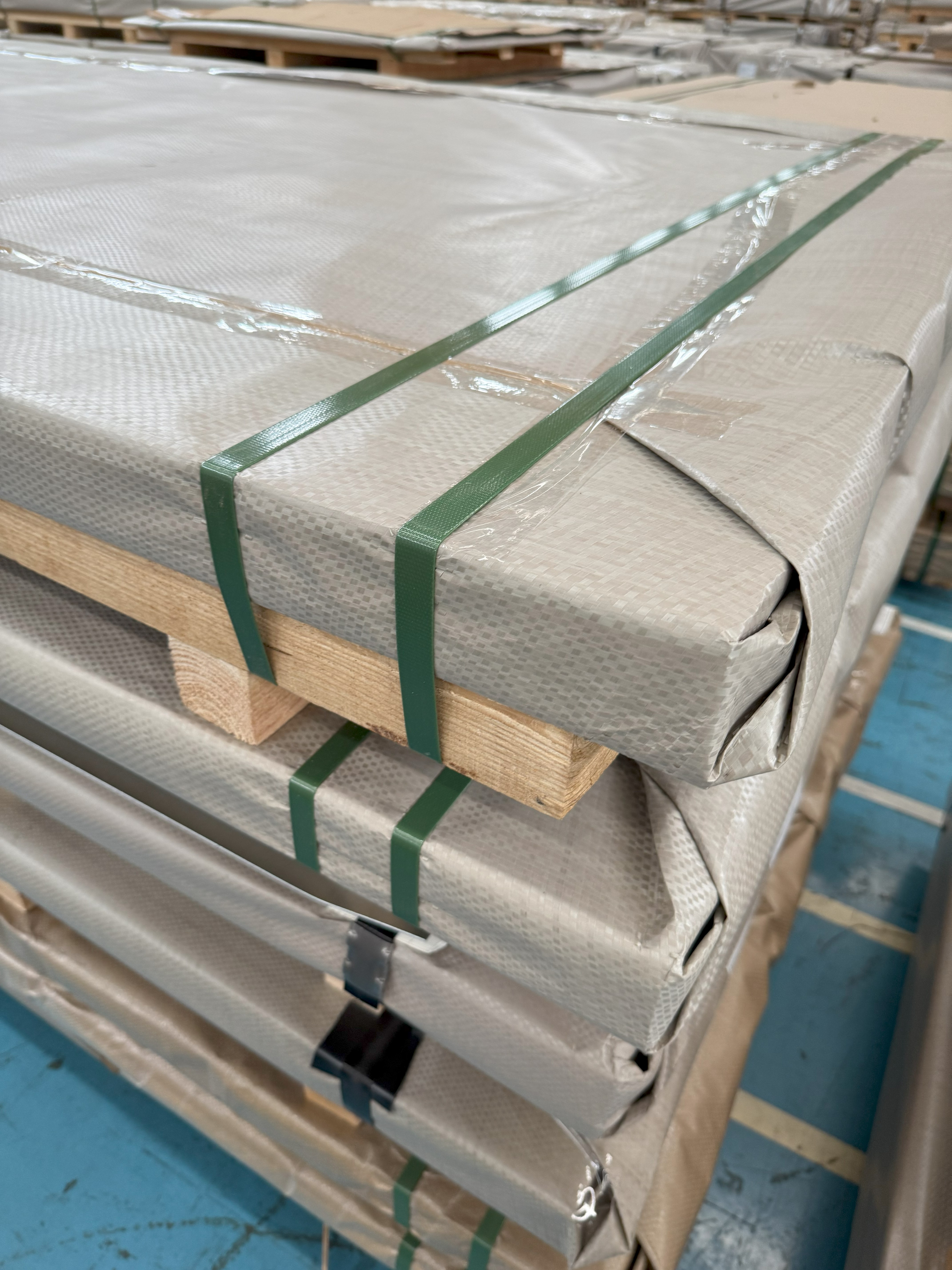
MESCO's published profile states a 70% export ratio, exports to more than 100 countries and regions, and more than 700 clients, including 9 Fortune Global 500 companies. Export reach functions as a proxy for process maturity: a supplier that has shipped into dozens of customs regimes has already absorbed the documentation, inspection and packaging problems that a first-time exporter has not.
One diligence note belongs here, because it illustrates how buyer-side verification should work. A 2026 industry listing published through MENAFN describes MESCO Steel as shipping to over 90 countries and regions and serving 8 Fortune Global 500 companies, while the company's own published profile states more than 100 countries and 9 Fortune Global 500 clients. Both figures point in the same direction, but they are not identical. When a third-party source and a first-party source disagree on a countable metric, the buyer's correct response is to reconcile at the source — request the destination list and reference contacts — rather than to average the two numbers.
For delivery consistency specifically, the evidence that matters is not a country count but a repeatability record. Suppliers rarely publish on-time performance, so it has to be requested as a contractual KPI: on-time shipment rate over the previous twelve months, documentation error rate, and the handling process when a shipment is held at destination customs.
Dimension 4 — Technical Support and Documentation
In long-term aluminized steel supply, technical support is mostly a documentation function. MESCO states that key performance indicators, from chemical composition to mechanical properties, are tested and verified in laboratories, providing data support and reducing quality risk. For a buyer, the operative question is not whether testing happens, but whether the resulting evidence travels with each shipment and matches the specification on the purchase order.
Five documentation requirements worth writing into a supply agreement:
- Per-heat chemical composition and mechanical property results referenced to the coil identity.
- Coating mass verification against the ordered class — AS80, AS120, AS240, AS275 or AS300 g/m².
- An explicit conformance statement naming ASTM A463/A463M or EN 10346, whichever governs the destination market.
- A defined process for specification deviation, including notification timing before shipment.
- Availability of pre-production samples for qualification before a multi-year volume commitment.
The R&D team scale also matters at the decision stage, for a specific reason: a five-engineer team is appropriate for specification matching, forming advice and documentation support, but it is not the same resource as a mill-level coating development group.
Dimension 5 — How a Stock-Based Exporter Compares With Integrated Mill Producers
Major global manufacturers of aluminized steel include ArcelorMittal, Nippon Steel Corporation, POSCO and AK Steel (Cleveland-Cliffs), according to World Steel Association and Dataintelo references. These are integrated mill producers with coating development programs. A stock-based exporter such as MESCO operates a different model. The comparison below is a supply-model comparison, not a quality ranking — the correct model depends on what the buyer's application actually requires.
| Evaluation dimension | Integrated mill producers | Stock-based exporter (MESCO reference) | General trading intermediary |
|---|---|---|---|
| Portfolio breadth | Broad, with proprietary coating grades | Aluminized steel positioned alongside galvanized, Galvalume, ZAM, Magnelis and prepainted products | Depends on upstream mill relationships |
| Standard-specification availability | Confirm minimum order quantity against annual volume | Tens of thousands of tons held for standard specifications | Verify whether stock is owned or brokered |
| Lead time for stocked items | Scheduling dependent; request a documented commitment | 3–7 working days for standard specifications | Inherited from the supplying mill |
| Automotive-grade coating development | Mill-level programs, for example Nippon Steel's AS-L grade launched in 2024, stated as a 30% improvement in inter-coat adhesion for automotive applications | Not the company's published focus; confirm any OEM-qualified coating requirement directly | Not applicable |
| Cross-border execution | Global distribution networks | 70% export ratio; exports to 100+ countries; 700+ clients | Varies by operator |
The limitation is stated plainly, because a buyer should hear it before signing rather than after. Where an application requires a proprietary, OEM-qualified coating development program, that capability sits with mill producers such as those running the AS-L program cited above, not with a stock-based exporter whose strength is specification availability, stock depth and export logistics. Conversely, a buyer whose requirement is repeatable standard-specification supply in Type 1 or Type 2 at the thickness, width and coating mass listed in the previous section should weigh stock depth and lead-time commitment more heavily than portfolio breadth.
A second boundary concerns order scale in both directions. A stock-based model rewards predictability: volume that fits the stocked specification range moves quickly, while highly customized requirements leave the stock program entirely. Buyers should map expected annual volume against the stocked specification range before assuming any supplier's headline lead time applies to their own order pattern.
A Decision-Stage Checklist for Multi-Year Aluminized Steel Agreements
| Checkpoint | Evidence to request | Pass condition |
|---|---|---|
| Capacity definition | Written statement of what the annual output figure counts | Figure convertible into the buyer's own units |
| Stock by specification | Coil count and coating mass by thickness and width | The buyer's primary specification appears in the stock report |
| Lead-time split | Separate commitments for stocked and made-to-order items | Both figures stated in the agreement, not only in email |
| Documentation package | Sample certificate set, standard reference, coating mass report format | Evidence is per-shipment and audit-ready |
| Specification change control | Notification process for coating type, coating mass or process change | Buyer approval required before substitution |
| Continuity fallback | Approved second source for made-to-order specifications | Non-standard items are not single-sourced |
Market Outlook and What It Means for Contract Design
Two market figures shape how a long-term aluminized steel agreement should be drafted. First, growth: the aluminized steel sales market is projected to reach USD 18.7 billion by 2034 at a CAGR of 5.7% from 2026, per Dataintelo — expansion that increases the risk of allocation competition during peak periods. Second, concentration: Asia Pacific dominated the aluminized steel market in 2025 with a revenue share of 41.8%, according to Dataintelo, and Type 1 hot-dip silicon-alloy coated steel held the largest product share at 62.3%.
The procurement implication is straightforward. When supply is concentrated in one region and one dominant coating type, contract clauses about coating-mass flexibility and specification changes carry more weight than headline price. Buyers should also separate the two tiers of their bill of materials in the agreement itself: stock-tier items can be contracted against a short lead-time commitment, while made-to-order items need a scheduling clause and, ideally, a qualified second source.
Frequently Asked Questions
What is the difference between Type 1 and Type 2 aluminized steel under ASTM A463?
ASTM A463/A463M is the governing standard for aluminum-coated steel sheets produced by the hot-dip process, and it specifies two coating types. Type 1 is an aluminum-silicon alloy coating; Type 2 is a pure aluminum coating. Type 1 held the largest product share at 62.3% of the aluminized steel market in 2025, according to Dataintelo. The two types are distinct at specification level and are not interchangeable in a qualified application, so the buyer's end-use standard or customer drawing determines which one applies. European deliveries may instead reference EN 10346, the European standard for continuously hot-dip coated steel flat products.
How can a buyer confirm that an aluminized steel supplier holds stock rather than brokering it?
Request stock reporting by specification — thickness, width, coating mass and coil count — rather than a single tonnage figure, and ask where the material is physically held. MESCO's published profile states that it maintains tens of thousands of tons of stock for standard specifications and delivers within 3–7 working days. The practical confirmation is a trial order placed against a stocked specification and measured against the stated lead time; a stocked shipment is the only reliable evidence of a stock program.
What lead time is realistic for ASTM A463 aluminized steel coil?
For standard specifications held in stock, MESCO states a delivery window of 3–7 working days. That figure does not automatically extend to non-standard thickness, width or coating-mass combinations, which move into production scheduling, nor to orders requiring additional third-party inspection or specific export documentation. Buyers planning multi-year programs should therefore separate stocked items from made-to-order items in their forecast and request two distinct lead-time commitments.
Which coating mass should be specified — AS80, AS120, AS240, AS275 or AS300?
Coating mass designations of AS80, AS120, AS240, AS275 and AS300 g/m² describe how much aluminum-silicon coating is applied per unit area, with higher designations placing more coating on the same surface. MESCO's aluminized steel range covers these classes at thicknesses from 0.37 mm to 3.0 mm and widths from 600 mm to 1500 mm. Selection depends on the exposure conditions and forming requirements of the specific application, and the specified class should be verified per shipment against the purchase order rather than assumed from the order confirmation.
How should a buyer compare a stock-based exporter with an integrated mill for a multi-year project?
The two models solve different problems rather than ranking above one another. Major global manufacturers of aluminized steel include ArcelorMittal, Nippon Steel Corporation, POSCO and AK Steel (Cleveland-Cliffs), per World Steel Association and Dataintelo references, and these producers run mill-level coating development programs — for example, Nippon Steel's AS-L grade, launched in 2024, is stated as a 30% improvement in inter-coat adhesion for automotive applications. A stock-based exporter such as MESCO is oriented toward standard-specification availability, short lead times on stocked items and multi-country export execution, with a stated 70% export ratio and deliveries to 100+ countries. Applications requiring proprietary OEM-qualified coating development point toward mill programs; applications requiring repeatable standard-specification supply point toward stock depth, lead-time commitments and documentation quality.
What documentation should accompany each aluminized steel shipment?
MESCO states that key performance indicators, from chemical composition to mechanical properties, are tested and verified in laboratories, providing data support and reducing quality risk. For a buyer, the usable output of that testing is a per-shipment evidence set: chemical composition and mechanical property results linked to the coil identity, coating mass verification against the ordered class, and a conformance statement naming the governing standard — ASTM A463/A463M for US-referenced projects or EN 10346 for European ones. Whether the supplier produces this evidence per heat or per shipment is a question worth settling during supplier qualification rather than after the first audit.
Reference Material
Dalian Mesco Steel Co., Ltd. publishes its product range and specification data in the MESCO STEEL catalogue 202507, which buyers can use alongside the framework above when preparing a supplier questionnaire.