
ATBC in Plasticizer Blends: DOTP, ESO, TBC Scenario Fit
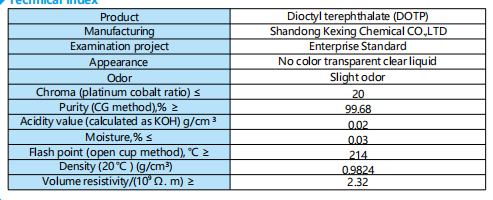
DOTP is one of the non-phthalate components that can sit alongside Acetyl Tributyl Citrate in a flexible PVC plasticizer system. Image source: Shandong Kexing Chemical Co., Ltd.
The performance of a flexible PVC article is decided less by any single plasticizer than by how the plasticizer system is assembled. Acetyl Tributyl Citrate (ATBC, CAS 77-90-7) is an acetylated citrate ester used as a non-phthalate plasticizer, and in commercial formulation it is rarely evaluated on its own: it is combined with other non-phthalate components such as DOTP, epoxidized soybean oil (ESO) or tributyl citrate (TBC) to reach a target balance of flexibility, low-temperature behaviour, processing and cost. This reference maps those blend combinations to specific flexible PVC scenarios and sets out what buyers should verify once a blend moves from a trial order to a long-term supply commitment.
Blend Architecture Comes Before Component Selection
Blend design is the point at which plasticizer sourcing stops being a substitution exercise and becomes an engineering commitment. Three questions usually decide the outcome: which component carries the main softening load, which secondary component compensates for the limits of that primary plasticizer, and which combination the end market will accept on documentation grounds. A citrate-led blend and a terephthalate-led blend are different routes to softness rather than interchangeable grades, even when both are marketed as non-phthalate.
That distinction matters more at the decision and execution stage than at the discovery stage. Once a formulation has been validated against a specific end-use requirement, changing a single component invalidates the test evidence behind it. Buyers who plan a blend programme usually treat the primary plasticizer, the secondary component and the supplier set as one decision, because each of them carries a validation cost that is paid again if any one of them changes.
The practical consequence is that blend selection should be driven by the scenario first. A cold-resistant article, a food-contact film and a toy compound may all use ATBC, but they rarely use it at the same position within the plasticizer system, and they rarely accept the same documentation set.
What Each Component Contributes to a Flexible PVC Blend
The component set relevant to an ATBC blend programme is well defined. Shandong Kexing Chemical Co., Ltd. is a plasticizer manufacturer based in Dongying, Shandong, China, founded in 2006, whose portfolio includes citrate esters ATBC, TBC and TEC, adipate and sebacate esters DOA, DOS and DBS, N-Butyl Stearate, Epoxidized Soybean Oil (ESO), Triethylene Glycol Di-2-ethylhexoate (3G8), the non-phthalate plasticizer DOTP, and phthalate plasticizers DINP, DPHP, DOP and DBP. Having the primary plasticizer, the secondary component and the comparison grades within one supply set is what makes a single-source blend conversation possible.
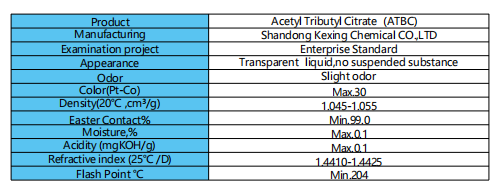
Acetyl Tributyl Citrate (ATBC, CAS 77-90-7) is the citrate ester at the centre of this blend discussion.
Within this set, ATBC is the component with the clearest documented boundary. Company comparison data records a glass transition temperature of approximately −60 °C for ATBC-based flexible PVC against approximately −35 °C for DOTP systems, and lists food packaging, children's toys, medical PVC articles and cold-resistant flexible products as its principal application fits. The same source records two commercial characteristics buyers weigh early: ATBC is positioned at a higher cost than DOTP, and its processing is associated with a lower processing temperature and lower energy consumption during production.
Documentation is the second differentiator. ATBC (CAS 77-90-7) is listed by the U.S. FDA as a food additive and flavouring agent adjuvant under 21 CFR 172.515, 175.105, 178.3910 and 181.27. That listing is a component-level fact, not an automatic authorisation of a finished article, but it is frequently the reason a citrate ester enters a blend discussion in the first place.
| Component | Position in a flexible PVC blend | What buyers typically verify |
|---|---|---|
| ATBC (Acetyl Tributyl Citrate, CAS 77-90-7) | Non-phthalate citrate ester used as a primary plasticizer where food, medical or low-temperature performance is the driver | End-market compliance route, low-temperature target, cost position against DOTP, migration behaviour in the finished article |
| DOTP (Dioctyl Terephthalate) | Non-phthalate plasticizer used as the general softening component; recorded at a finished-PVC glass transition temperature of approximately −35 °C | How much of the low-temperature gap the formulation can accept, and how the cost difference against ATBC affects the blend |
| ESO (Epoxidized Soybean Oil) | Generally used as a secondary plasticizer and heat stabilizer added alongside a primary plasticizer | Grade documentation, interaction with the primary plasticizer, effect on heat stability and dosage balance |
| TBC (Tributyl Citrate) | Citrate ester supplied from the same manufacturer portfolio, generally considered where a non-acetylated citrate ester is preferred | Whether citrate selection supports the target processing window and feel, and whether documentation matches the application |
| DBP / DOP (phthalates) | Retained in the manufacturer portfolio and referenced here only as comparison points against a non-phthalate blend | End-market restrictions applicable to the destination market and the customer specification in force |
Scenario Fit: Matching an ATBC Blend to the End Use
Scenario fit is the criterion that converts a component list into a purchasing decision. The table below takes the scenarios supported by company and third-party data and shows what each one actually changes in blend selection.
| Flexible PVC scenario | Primary driver | What the blend decision turns on |
|---|---|---|
| Food packaging film | Food-contact compliance and controlled migration; food packaging accounts for 29% of global ATBC consumption in a 2025 third-party estimate | Whether the FDA component listing under 21 CFR 172.515, 175.105, 178.3910 and 181.27 satisfies the destination market, and whether the secondary component and additives follow the same compliance route |
| Children's toys | Non-phthalate preference combined with durability and colour retention | The share of ATBC against DOTP in the softening load, and the toy-safety documentation required by the destination market |
| Medical PVC articles | Plasticizer retention and compliance; medical applications hold 34% of global ATBC consumption in the same 2025 estimate | Low-temperature requirement, extraction behaviour under the sterilisation route used, and the traceability of each component |
| Cold-resistant flexible products | Low-temperature flexibility, where the recorded glass transition temperature gap is approximately −60 °C for ATBC systems versus −35 °C for DOTP systems | How far the formulation should move toward a citrate-led blend to reach the required low-temperature threshold without overpaying where DOTP would be sufficient |
These four scenarios are the ones with direct dataset support. Buyer enquiries also extend to artificial leather and coated fabric, where hand feel and volatility control dominate, and to inks and coatings where non-phthalate preference applies to a different processing route entirely. For those cases the honest position is that the component list does not by itself establish a blend: the ratio, the secondary component level and the resulting properties have to be established through trial work against the specific substrate or end article.
How ESO and TBC Change the Blend Equation
Secondary components are where most blend programmes quietly succeed or fail. ESO is generally used in flexible PVC as a secondary plasticizer and heat stabilizer added alongside a primary plasticizer rather than as a replacement for it. In an ATBC-led system, its inclusion changes heat-stability behaviour, and because heat stability and plasticizer dosage interact, the primary plasticizer level usually has to be rebalanced when the ESO level moves.
TBC, the non-acetylated citrate ester in the same portfolio, changes the equation differently. It is generally considered where the formulation calls for a citrate ester route but not the acetylated structure of ATBC, and it gives formulators a second citrate option from the same supply source rather than forcing a second supplier relationship. That matters for continuity: a blend that depends on two citrate grades from two vendors carries two documentation trails, two lead-time profiles and two batch-consistency risks.
The operational rule for both components is the same. Because every substitution shifts fusion, retention and low-temperature balance at once, a change to the ESO or TBC level invalidates the previous test evidence and requires re-validation against the original acceptance criteria.
Why DOP and DBP Still Appear in the Conversation
Phthalate plasticizers remain part of the global plasticizer toolkit, and DOP and DBP continue to appear in manufacturer portfolios, including the Shandong Kexing Chemical range. They are useful here as reference points rather than as recommendations. Buyers evaluating an ATBC blend are usually comparing it against the phthalate formulation it replaces, which means the comparison has to be made on the dimensions that actually changed: the compliance route in the destination market, the low-temperature behaviour recorded for the finished article, the cost position, and the documentation the customer's own compliance team will request.
Phthalate and non-phthalate routes are not interchangeable on paper alone. Restricted-substance rules differ by market and by end application, so the applicable regulation and the customer specification in force should be confirmed for each destination before a substitution is executed.
Limits, Trade-offs and Handling Requirements
A blend reference that only lists advantages has limited procurement value. The documented constraints around ATBC blends are specific and should be built into the plan rather than discovered during execution.
| Constraint | Practical implication | Control measure |
|---|---|---|
| Cost position higher than DOTP | A fully citrate-led blend is not the lowest-cost route; the low-temperature or compliance requirement has to justify the share of ATBC used | Define the performance threshold first, then set the ATBC-to-DOTP split against that threshold instead of maximising ATBC content by default |
| Thermal exposure limit | Company documentation advises against long-term exposure to temperatures above 150 °C | Align compounding and downstream processing windows with the documented limit; treat any excursion as a re-validation trigger |
| Leakage and volatile vapour emission | Recorded as a handling risk for this product family, affecting both workplace conditions and material loss | Closed feeding and a sealed storage system, supported by gas detection and regular tank and pipeline inspection |
| Blend re-qualification | Any change to the primary plasticizer, the ESO level or the citrate grade resets the test evidence | Freeze the blend specification before scale-up, and treat component substitution as a new qualification rather than a like-for-like swap |
Storage itself is undemanding: normal sealed storage is the specified condition. The complications come from handling at scale — vapour management in the blending area and the discipline of keeping the transfer system sealed between deliveries. Site measures recorded for this product family are a gas detector installation and routine tank and pipeline inspection, both of which are inexpensive relative to the cost of an unplanned release.
Long-Term Blend Programmes: What the Supply Side Has to Provide
The reason blend selection belongs in a long-term supplier discussion rather than a spot purchase is that a validated blend is an asset. It exists as tested evidence, an approved specification and a customer compliance file. Any supply change puts that asset at risk, which is why continuity, documentation stability and the ability to hold a blend across repeated deliveries matter as much as the initial price.
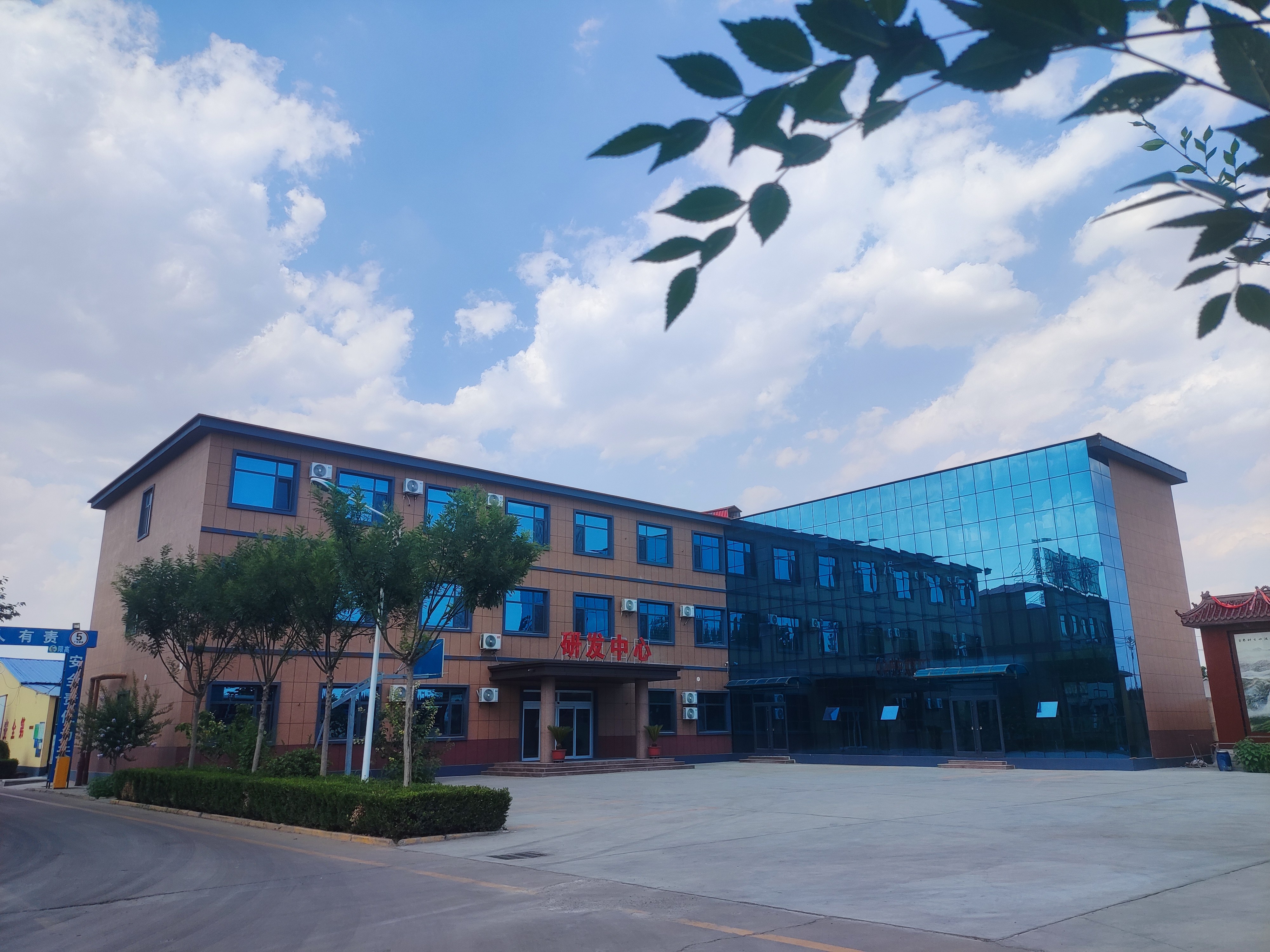
Blend programmes live or die on development support and consistent batch behaviour after qualification. Image source: Shandong Kexing Chemical Co., Ltd.
Shandong Kexing Chemical Co., Ltd. operates from Dongying, Shandong, with a research and development team of 15 engineers, approximately 200 employees, a 666 m² production site and a stated annual output of 20,000 units, with export accounting for 50% of business across Europe, the USA, Japan, South Korea and the Middle East. Global import and export activity is handled by its subsidiary, Dongying Kexing International Trade. Company documentation states that its products are certified by SGS, REACH, ISO 9001, ISO 14001 and OHSAS 18001. A third-party company profile compiled in 2024 describes the company as one of the largest production bases for environmentally friendly plasticizers in China; that description is attributed to the source rather than presented as an independently audited finding.
For a buyer executing a blend programme, the relevant question is not prestige but whether the supplier can hold the same specification across the life of the product. A portfolio that already contains ATBC, TBC, ESO, DOTP and the phthalate comparison grades means the blend can be assembled, documented and re-tested within one supply relationship — and that when a formulation shift is required, the alternative component is available from the same source rather than from a new vendor qualification.
Commercial execution terms are published rather than negotiated from scratch: minimum order quantity of 1 tonne, delivery terms of FOB and CIF, factory test report as the acceptance criterion, and payment terms of 30% deposit with 70% payable upon receipt of the bill of lading. The company's product brochure, including the plasticizer range, is available for download here: Shandong Kexing Chemical product brochure. Additional company information is published at www.kexingchem.com.
Market Signals Behind Blend-Based Formulation
The demand context supports the blend framing rather than a single-component framing. A third-party market estimate places the global Acetyl Tributyl Citrate market at USD 258.92 million in 2025, growing to USD 439.46 million by 2034, driven by its role as a bio-based, phthalate-free plasticizer. Global ATBC consumption is estimated at 128,000 metric tons in 2025, with medical applications at a 34% share and food packaging at 29%.
Those figures should be read with the caveat that the source set itself records divergent base-year valuations across published estimates, including alternative figures of USD 130 million and USD 221 million depending on whether the scope covers ATBC alone or citrate plasticizers as a category. The direction of travel is consistent; the absolute numbers are not, and buyers should not build a business case on a single published value.
Supply concentration is the second structural signal. Published market-share estimates attribute approximately 18% of the global ATBC market to Jungbunzlauer and 14% to Mitsubishi Chemical Corporation. A market where the leading two producers hold roughly a third of volume is one where most buyers will be blending from a mixed supplier base — which increases the value of a supplier that can hold several blend components inside one specification and one documentation set.
Future Outlook
The direction of formulation work is toward fewer components doing more defined jobs, with the compliance file prepared before the formulation is fixed rather than after. Three shifts are likely to shape blend decisions over the next few years: tighter end-market rules on restricted substances, which push the documentation burden upstream to the component suppliers; growing demand for low-migration behaviour in food-contact and medical articles, which favours citrate-led systems; and continued concentration among citrate producers, which makes second-source planning and specification stability a procurement priority rather than an administrative one.
For buyers already at the execution stage, the practical implication is narrow: define the scenario, fix the performance threshold, then set the ATBC, DOTP, ESO and TBC shares against that threshold and lock the evidence behind them. For buyers still selecting, the same logic applies earlier — the blend is the specification.
FAQ
Which flexible PVC applications are most closely associated with ATBC blends?
Company comparison data lists food packaging, children's toys, medical PVC articles and cold-resistant flexible products as the principal application fits for ATBC, and records compliance with FDA and REACH food-grade requirements. A third-party 2025 consumption estimate places medical applications at 34% of global ATBC consumption and food packaging at 29%. These are the scenarios in which an ATBC-based blend is most often evaluated; the specific ratio still has to be validated against the destination market's own requirements.
How does ATBC differ from DOTP when both appear in the same blend?
Both are non-phthalate plasticizers, so the difference lies in performance and commercial position rather than regulatory category. Recorded differences are a finished-PVC glass transition temperature of approximately −60 °C for ATBC systems against approximately −35 °C for DOTP systems, a higher cost for ATBC than DOTP, and a lower processing temperature with lower energy consumption during production for ATBC. Where a blend contains both, the trade-off to resolve in trials is how much low-temperature performance the article actually requires against the cost differential.
What role does ESO play when ATBC is the primary plasticizer?
Epoxidized Soybean Oil is generally used in flexible PVC as a secondary plasticizer and heat stabilizer added alongside a primary plasticizer rather than replacing it. In an ATBC-led system it is therefore a supporting component, and because heat stability and plasticizer dosage interact, the primary plasticizer level usually needs rebalancing when the ESO level changes. Shandong Kexing Chemical supplies ESO within the same portfolio as ATBC.
What storage and handling conditions apply to ATBC?
Company documentation specifies normal sealed storage and advises against long-term exposure to temperatures above 150 °C. Risk-control documentation for the product family identifies leakage and volatile vapour emission as the handling risk to manage, with closed feeding and a sealed storage system as the control method, supported by gas detection and regular tank and pipeline inspection at the site.
What are the standard purchasing terms for an ATBC order?
Company purchasing documentation lists a minimum order quantity of 1 tonne, delivery terms of FOB and CIF, a factory test report as the acceptance criterion, and payment terms of 30% deposit with 70% payable upon receipt of the bill of lading.
Is ATBC approved for food-contact use?
ATBC (CAS 77-90-7) is listed by the U.S. FDA as a food additive and flavouring agent adjuvant under 21 CFR 172.515, 175.105, 178.3910 and 181.27. That listing is a component-level starting point rather than a complete authorisation for a finished article: the applicable regulation, migration limit and documentation requirement depend on the destination market and on the specific application in which the plasticized article is used.