
ATBC vs. DBS vs. DOS: An Independent Buyer's Benchmark for Clear Film Extrusion
ATBC vs. DBS vs. DOS: An Independent Buyer's Benchmark for Clear Film Extrusion
Clear flexible film is one of the least forgiving places to put a plasticizer. In thin gauge, a compatibility problem has nowhere to hide: haze, plate-out, die build-up and low-temperature cracking show up as visible defects on the line rather than as a discreet entry in a test report. For film producers moving away from ortho-phthalates, the shortlist tends to narrow quickly to three chemistries — acetyl tributyl citrate (ATBC, CAS 77-90-7), dibutyl sebacate (DBS, CAS 109-43-3) and dioctyl sebacate (DOS, CAS 2432-87-3) — with tributyl citrate (TBC, CAS 77-94-1) frequently appearing as an unacetylated citrate reference point.
This benchmark is written from the buyer's side. It compares the three candidates on the parameters that a specification sheet genuinely documents, states plainly where those documents stop, and sets out the questions that can only be answered by line trial. No supplier is ranked here, and no claim is made that any one of these chemistries is universally superior to the others.
Why clear film extrusion is a harder benchmark than most applications
A plasticizer is a substance added to a polymer to increase its flexibility, workability and elongation. In flexible PVC and related polymer systems it performs several jobs at once: it softens and toughens the compound, lowers the melting point so the material can be processed with less energy input, improves ductility so the film resists breaking under stretch, improves flow so the melt fills the die evenly and leaves a smooth finish, and provides cold and flex resistance so the film stays flexible at low temperature.
The processing route matters as much as the chemistry. In practice, plasticizers are introduced as an additive during batch mixing at controlled dosages, and the compound then passes through high-speed mixers, kneaders, extruders, calenders and coating machines depending on the film format. Each of those steps exposes the plasticizer to heat and shear, and each is sensitive in its own way to moisture, acidity and volatility. Thin films amplify the consequences because the surface-to-volume ratio is high and any incompatibility or volatile loss becomes optically visible.
Regulatory expectations add a second layer that has nothing to do with performance. Materials used in toys, PVC soft products, plastics, leather, ink and food packaging are expected to comply with local chemical regulations such as REACH and RoHS, and to demonstrate consistent purity, controlled moisture and a stable shelf life. A plasticizer that passes every physical test but cannot produce the right declaration is not a usable candidate.
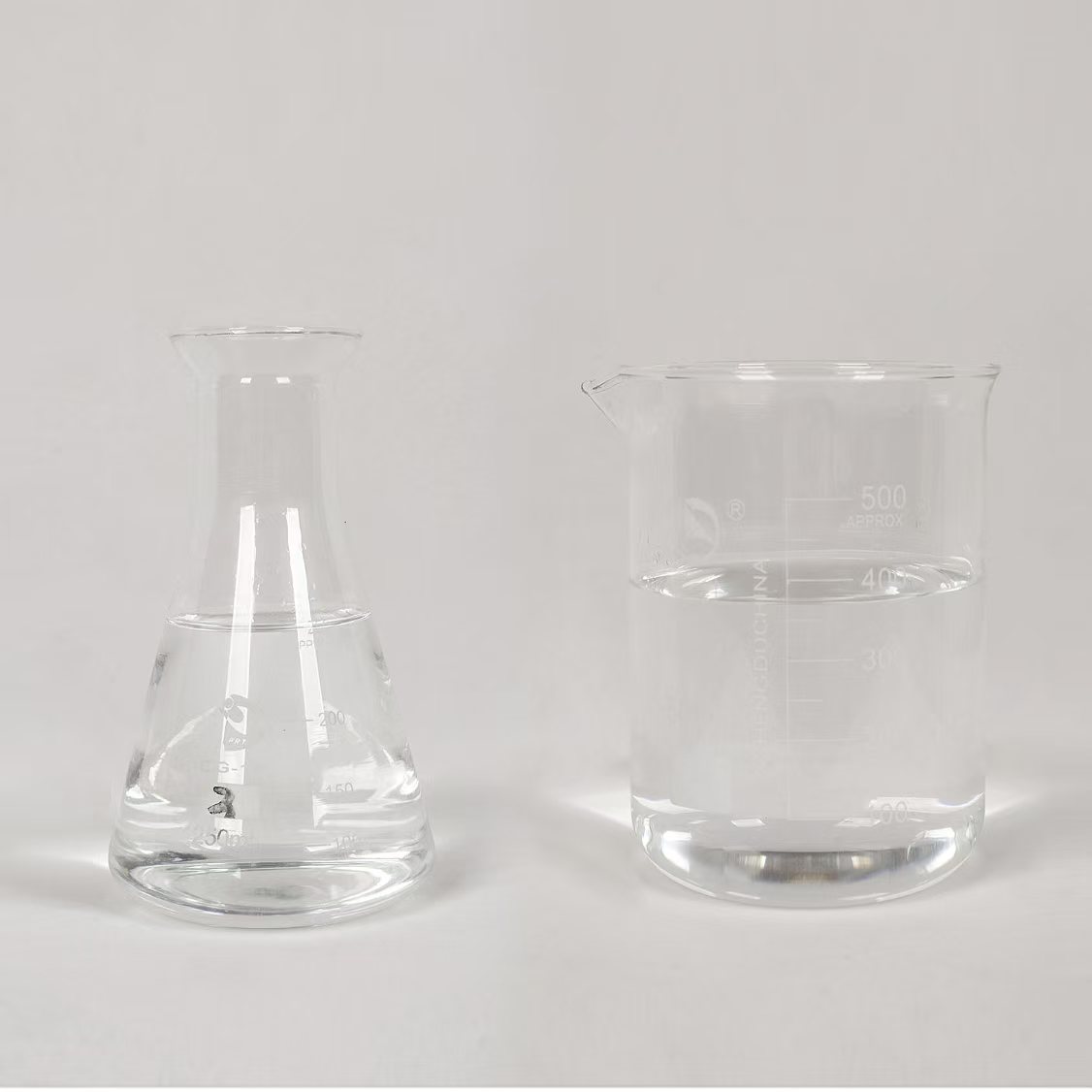
That is the context in which ATBC, DBS and DOS should be compared. All three are non-phthalate plasticizers used in PVC soft products, and all three are supplied as clear liquids, which makes them look interchangeable on a purchase order. They are not interchangeable on a film line.
Four chemistries, two families
Acetyl tributyl citrate (ATBC, CAS 77-90-7)
ATBC is an acetylated citrate ester — an acetylated citric acid n-butanol ester. Citric acid is produced industrially by fermentation, and esterification with n-butanol followed by acetylation yields the clear liquid that ATBC suppliers ship. In the specification set referenced for this article, ATBC is described as a transparent liquid with no suspended substance, with an ester content of at least 99.0 percent, moisture of no more than 0.1 percent, acidity of no more than 0.10 mgKOH/g, colour of no more than 30 on the platinum-cobalt scale, a density of 1.045 to 1.055 g/cm³ at 20 °C, a refractive index of 1.4410 to 1.4425 at 25 °C, and a flash point of at least 204 °C, tested against an enterprise standard.
Tributyl citrate (TBC, CAS 77-94-1): the unacetylated reference
TBC belongs to the same citrate ester family as ATBC but is not acetylated. Its referenced specification lists an ester content of at least 99.0 percent, a density of 1.037 to 1.047 g/cm³ at 20 °C, moisture of no more than 0.1 percent, acidity of no more than 0.1 mgKOH/g, a refractive index of 1.443 to 1.446 at 25 °C and a flash point of at least 185 °C. It appears in this comparison as a reference point, because buyers evaluating ATBC frequently ask how much of the performance comes from the citrate backbone and how much from the acetyl group.
Dibutyl sebacate (DBS, CAS 109-43-3)
DBS belongs to a different family. It is a sebacate diester — sebacic acid esterified with butanol — typically supplied as a colourless or light yellow transparent liquid. The referenced specification gives an ester content of at least 99.0 percent, colour of no more than 30 Pt-Co, acidity of no more than 0.10 mgKOH/g, moisture of no more than 0.10 percent and a density of 0.934 to 0.942 g/cm³ at 20 °C.
Dioctyl sebacate (DOS, CAS 2432-87-3)
DOS uses the same sebacic acid but is esterified with 2-ethylhexanol rather than butanol, which is why it is sometimes described as the longer-chain sebacate in the pair. Its specification lists a transparent liquid with no suspended substances, an ester content of at least 99.0 percent, a density of 0.913 to 0.916 g/cm³ at 20 °C, acidity of no more than 0.10 mgKOH/g, a flash point of at least 205 °C, moisture of no more than 0.1 percent and colour of no more than 30 Pt-Co.
The family difference is not cosmetic. Citrate esters are built on a fermentation-derived triacid, while sebacic acid is commonly produced from castor oil chemistry. Both families can therefore be presented as bio-based and phthalate-free, and both are marketed to the same film producers. The practical difference shows up in the measurable parameters below.
Specification data, compared
| Parameter | ATBC (77-90-7) | TBC (77-94-1) | DBS (109-43-3) | DOS (2432-87-3) |
|---|---|---|---|---|
| Appearance | Transparent liquid, no suspended substance | Transparent liquid, no suspended substance | Colourless or light yellow transparent liquid | Transparent liquid, no suspended substances |
| Ester content, min % | 99.0 | 99.0 | 99.0 | 99.0 |
| Density at 20 °C, g/cm³ | 1.045 – 1.055 | 1.037 – 1.047 | 0.934 – 0.942 | 0.913 – 0.916 |
| Colour, Pt-Co, max | 30 | 30 | 30 | 30 |
| Acidity, max mgKOH/g | 0.10 | 0.10 | 0.10 | 0.10 |
| Moisture, max % | 0.10 | 0.10 | 0.10 | 0.10 |
| Flash point, min °C | 204 | 185 | Not stated in the referenced specification | 205 |
| Refractive index, 25 °C/D | 1.4410 – 1.4425 | 1.443 – 1.446 | Not stated in the referenced specification | Not stated in the referenced specification |
How a film producer should read those parameters
Ester content sets the purity floor, not a differentiator
All four chemistries carry the same minimum: 99.0 percent ester content. For a film producer, that figure is the entry ticket. It indicates that the supplier controls the esterification and purification steps well enough to keep residual raw material low, which in turn supports consistent colour, odour and processing behaviour. Because the limit is identical across the candidates, it should be used as an incoming-inspection gate rather than as a basis for choosing between them. The lot certificate of analysis is the document that shows what a specific delivery actually contains; a specification sheet is a ceiling or floor, not a batch value.
Acidity and moisture are capped at the same level
Acidity is limited to 0.10 mgKOH/g and moisture to 0.1 percent across the set compared here. In thin film these two parameters matter more than they do in thick sections. Residual moisture carried into the extruder is commonly associated with surface defects and voids, and acid value is a standard stability indicator that buyers use for incoming goods control. Since the limits are the same for ATBC, TBC, DBS and DOS, these parameters differentiate good lots from poor lots rather than one chemistry from another.
Density changes the purchasing arithmetic
Density is the parameter that most often goes unchecked in a desktop comparison, and it is the one that most directly affects commercial comparison. ATBC is the densest of the three at 1.045 to 1.055 g/cm³; DBS sits at 0.934 to 0.942 and DOS at 0.913 to 0.916. A fixed volume therefore contains noticeably more mass of ATBC than of either sebacate, which has three practical consequences.
- A quotation expressed per kilogram and a quotation expressed per litre will not rank the same options in the same order.
- Where a dosing system works by volume, the same set point delivers a different mass of material depending on which chemistry is in the tank.
- Storage vessels and intermediate bulk containers hold a different number of kilograms of each product, which affects inventory planning and, in some cases, freight economics when a shipment is volume-limited rather than mass-limited.
The simplest control is to convert every offer to a single basis — mass or volume, never a mixture of the two — before comparing prices.
Flash point is a handling parameter, not a volatility measurement
ATBC is specified at no less than 204 °C and DOS at no less than 205 °C. The referenced DBS specification does not state a flash point at all, which is a legitimate question for a buyer to raise rather than an inference to make. Flash point informs storage and transport classification and gives a rough indication of the thermal envelope of the liquid, but it is not a substitute for volatility measurement at processing temperature. A material with a high flash point can still lose mass during a long residence time in an extruder. Buyers concerned about fuming and die build-up should request weight-loss data at the temperatures their line actually reaches.
Refractive index is an identity check, not a clarity guarantee
ATBC lists 1.4410 to 1.4425 at 25 °C and TBC lists 1.443 to 1.446. The sebacate specifications referenced here do not list a refractive index. Refractive index is useful as a consistency and identity check on incoming material, and compounders working on transparent formulations often record it alongside their own haze measurements. On its own it does not predict the haze of a finished film, which depends on the complete formulation, the resin and the processing conditions.
The three performance metrics that are missing from the documents
This is the most important limitation of any desk comparison between ATBC, DBS and DOS, and it deserves to be stated plainly rather than buried. None of the specifications referenced in this article reports the following:
- Plasticizing efficiency — the dosage required to reach a target hardness or modulus. This is the single largest driver of formulation cost, and it can only be established by comparing dosage-response curves for the specific resin and formulation.
- Volatility — mass loss at processing or service temperature, normally expressed through a weight-loss test. Flash point is not a proxy for it.
- Low-temperature flexibility — for example cold-bend or low-temperature impact behaviour. This determines whether the film survives folding, cold-chain handling or outdoor use.
A buyer who selects a plasticizer from a datasheet alone is therefore selecting on purity, density, colour and handling characteristics, and implicitly assuming that efficiency, volatility and low-temperature behaviour are equivalent across the candidates. That assumption has no support in the documents compared here.
A desk comparison ranks materials. A line trial ranks formulations. These are different exercises, and only the second one predicts film performance.
The practical answer is a three-part evidence set: a supplier test report covering volatility and low-temperature behaviour on a comparable formulation; a third-party laboratory result where the end use is regulated; and a line trial on the buyer's own equipment, at the buyer's own dosage, with haze, gel count and cold-bend performance measured before and after the switch.
Regulatory position: what is documented and what must be verified
Documentation is not evenly distributed across the three candidates. Acetyl tributyl citrate (CAS 77-90-7) is listed by the US Food and Drug Administration as a substance added to food, under 21 CFR 172.515, 175.105, 178.3910 and 181.27 — clearances that relate to specific uses rather than to the substance in general.
Market data gives some indication of where the material is actually consumed. Global ATBC consumption is estimated at 128,000 metric tons in 2025, with medical applications accounting for 34 percent of that volume and food packaging for 29 percent (Data Insights Reports). Those two end uses are precisely the ones where documentation requirements are strictest, which is consistent with the regulatory profile described above.
For DBS and DOS, no equivalent clearance statement is included in the reference set used for this article. That absence should be read as a data gap rather than as a compliance finding in either direction. Clearances for sebacate esters are grade-specific and jurisdiction-specific. The buyer's obligation is the same in every case: identify the exact regulation governing the end product — food contact, medical device, toy safety or general industrial use — and obtain the corresponding statement for the specific grade being purchased, not for the product family as a whole.
Application requirements add a second layer. Plasticizers destined for toys, PVC soft products, plastics, leather, ink and food packaging are expected to comply with local chemical regulations such as REACH and RoHS, supported by consistent purity and moisture control and a stable shelf life. A specification sheet that does not address the target regulation is incomplete for the buyer's purpose, however good the physical parameters look.
Market context, and why the growth numbers disagree
ATBC is the most visible of the candidates in published market analysis. One estimate places the global ATBC market at USD 258.92 million in 2025, growing to USD 439.46 million by 2034, on the strength of its position as a bio-based, phthalate-free plasticizer (Data Insights Reports).
The same segment is measured very differently elsewhere. Comparable third-party estimates place the base-year value at USD 130 million (Business Research Insights), or USD 221 million for citrate plasticizers as a broader category (Intel Market Research), with correspondingly different growth rates. The divergence is explained by scope: studies covering ATBC alone, studies covering all citrate esters, and studies using different end-use segmentation will not produce the same number.
For a buyer, the practical conclusion is not that one figure is correct and another is wrong, but that headline growth rates for citrate plasticizers should be treated as directional. The numbers that matter for a sourcing decision are supplier-level: whether the producer can hold a specification, whether capacity exists to support the intended annual volume, and whether a second qualified source is available.
Supplier concentration is relevant here. Third-party analysis attributes approximately 18 percent of the global ATBC market to Jungbunzlauer and approximately 14 percent to Mitsubishi Chemical Corporation (Data Insights Reports, 2026). A market with a long tail behind a small number of large producers is a market in which buyers should plan redundancy, particularly when the grade in question is a food-contact or medical grade that cannot be substituted without requalification.
It is worth noting that the figures above describe ATBC and citrate plasticizers. Sebacate esters such as DBS and DOS fall outside that scope, so buyers sourcing those chemistries should not read citrate growth rates as a signal about their own segment.
Sourcing and supplier-side considerations
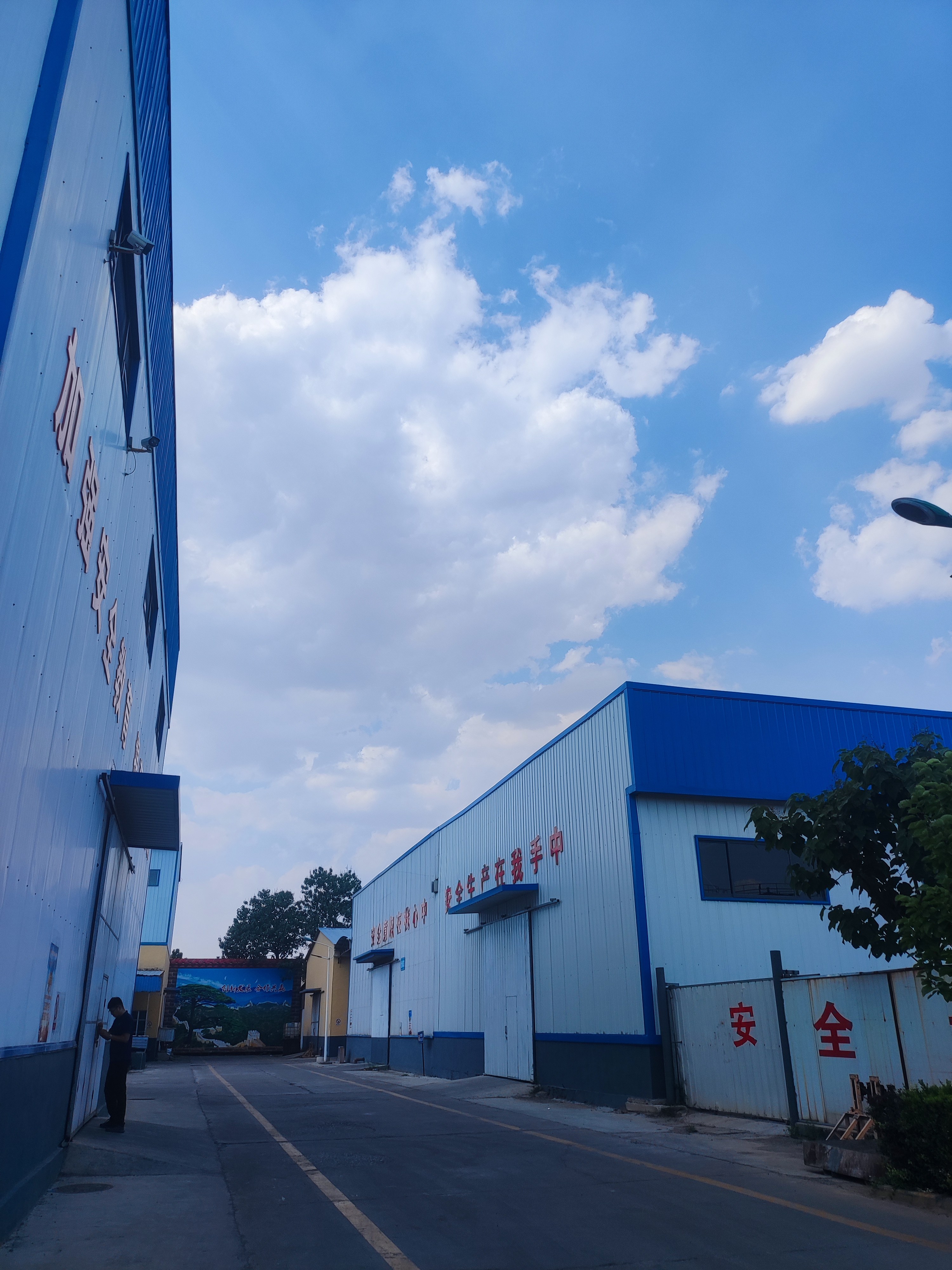
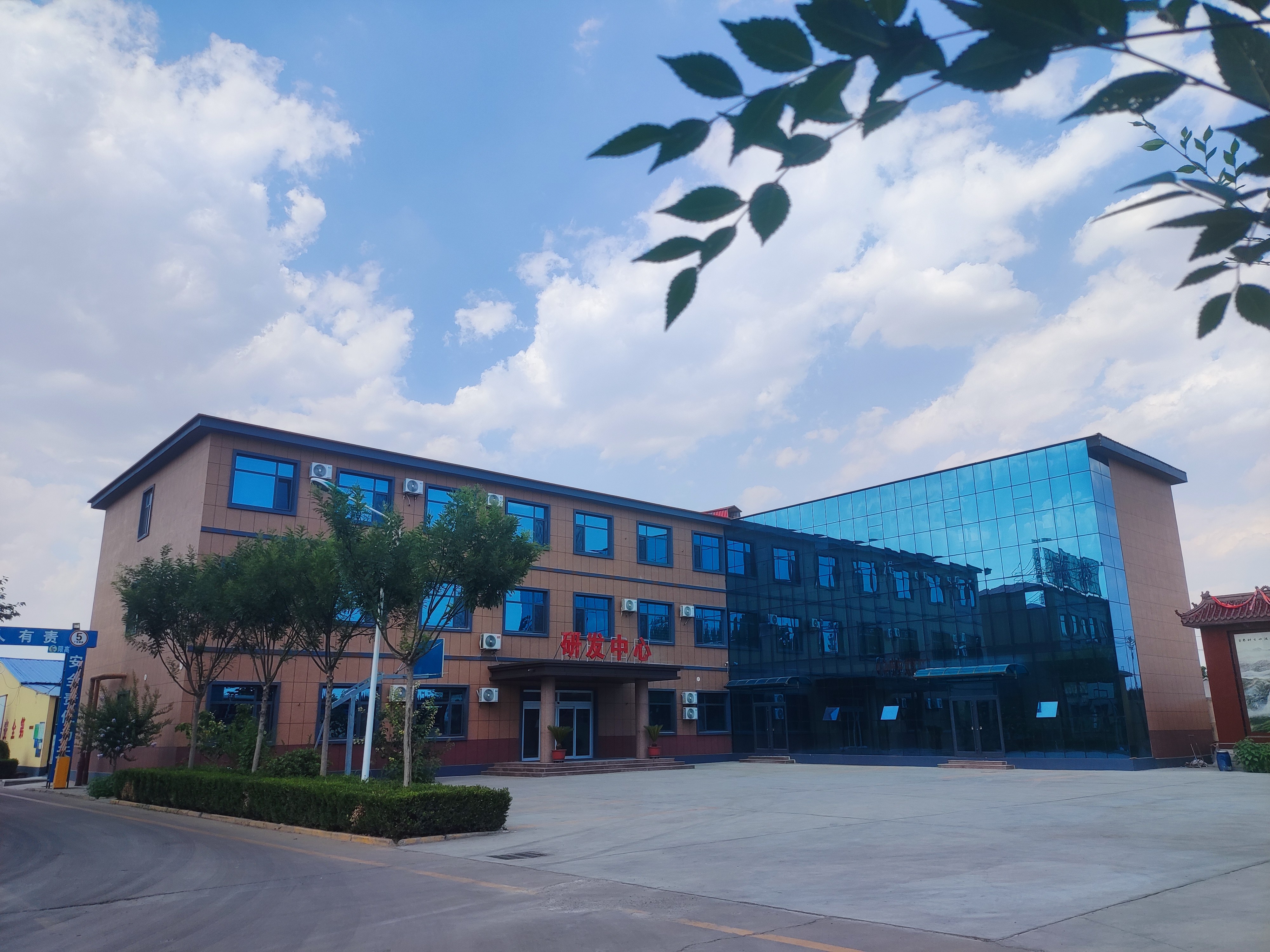
Once the chemistry shortlist is fixed, the evaluation shifts from molecules to suppliers, and the questions become operational rather than chemical. Shandong Kexing Chemical Co., Ltd. is a plasticizer manufacturer founded in 2006 and based in Dongying, Shandong, China. The company produces plasticizers, plastic and rubber flame retardants and plastic additives, and supplies a range that includes Acetyl Tributyl Citrate (ATBC), Tributyl Citrate (TBC), Triethyl Citrate (TEC), Dioctyl Sebacate (DOS), Dibutyl Sebacate (DBS), Dioctyl Adipate (DOA), Dioctyl Terephthalate (DOTP), Epoxidized Soybean Oil (ESO), DINP, DOP and DBP. Its subsidiary, Dongying Kexing International Trade, handles global import and export business for the group.
The company reports that its products are certified to SGS, REACH, ISO 9001, ISO 14001 and OHSAS 18001, that exports represent 50 percent of its business, and that its main markets are Europe, the USA, Japan, South Korea and the Middle East. Third-party-tagged company data describes it as one of the largest production bases for environmentally friendly plasticizers in China.
That profile is relevant to this comparison for a specific reason: ATBC and the two sebacate esters in this benchmark can be supplied by the same manufacturer, which means a film producer evaluating a switch does not automatically have to qualify a second supplier relationship in order to compare chemistries. Each grade should nevertheless be verified separately, because specifications, clearances and lot performance differ by product.
For any supplier, the review checklist is broadly the same:
- A current specification sheet and a lot-specific certificate of analysis for each grade under evaluation
- Declarations covering REACH, RoHS and, where applicable, food-contact status for the exact grade
- Volatility and low-temperature test data, or written agreement to provide it as part of sampling
- Packaging format, net weight per unit and handling requirements for drums and intermediate bulk containers
- Shelf life, storage conditions and lot traceability
- Capacity and lead time for the intended annual volume, plus a plan for a second source
Packaging deserves more attention than it usually receives in desktop comparisons. Whether a material arrives in drums or in intermediate bulk containers changes handling labour, cleaning requirements, moisture exposure and the way material is transferred into the mixing stage. Buyers intending to trial two or three chemistries should request the formats they can realistically handle on site, so that the trial reflects production conditions rather than a laboratory convenience.
Application fit and process behaviour
The published application profile for this plasticizer family covers toys, PVC soft products, plastics, leather, ink and food packaging, with material added during batch mixing at controlled dosages and then processed through high-speed mixers, kneaders, extruders, calenders and coating machines. Cold and flex resistance is listed among the functional reasons for use, alongside softening and toughening, lower melting point, improved ductility and better flow.
For clear film specifically, that combination maps onto a short list of production concerns:
- Optical quality: the film must remain transparent through extrusion and any subsequent calendering or coating step
- Low-temperature performance: film that is folded, coiled or shipped cold must not crack
- Process stability: no excessive fuming, plate-out or die build-up across a production run
- Regulatory fit: the end use determines the documentation the plasticizer must carry
- Consistency: lot-to-lot variation in purity, moisture or colour is more damaging in thin film than in thick sections
Which of the three chemistries best satisfies that list cannot be decided from the specifications compared in this article, because the two parameters that dominate the outcome — dosage efficiency and low-temperature behaviour — are not reported in them. That is the point at which the comparison moves from the desk to the line.
Limitations and boundaries: where each option stops being the obvious answer
ATBC
ATBC is the densest material in this comparison, which means a given storage or dosing volume holds more mass than it would with either sebacate. That is helpful when a line doses by weight and storage volume is constrained, and less helpful when material is purchased and compared on a per-litre basis. Its documented food-additive clearances are use-specific and do not automatically extend to every film application, so the exact end use still has to be checked. Within the reference set used here, its specification does not address volatility or low-temperature performance, so both must be qualified separately. Market concentration among a small number of producers is a further reason not to depend on a single source.
DBS
The referenced DBS specification does not state a flash point. That is a handling and classification parameter a buyer should not have to infer, and it should simply be requested. Its density is closer to DOS than to ATBC, so volume-based logistics are more comparable within the sebacate pair. No clearance documentation for DBS is included in the reference set used here, which means the regulatory question must be answered directly by the supplier for the specific grade and jurisdiction.
DOS
DOS has the highest stated flash point of the three candidates at not less than 205 °C and the lowest density, which means more volume per tonne to store and handle. Its referenced specification does not list a refractive index. As with DBS, no clearance documentation is included here, and its specification does not report volatility or low-temperature data.
The benchmark itself
The values compared here come from single specification documents. Batch results may sit anywhere within the stated ranges, and a supplier who holds the specification consistently will still show variation between lots. The documents describe liquids, not films. Nothing in this article establishes that one chemistry will out-perform another on a specific extrusion line, and the article should be used as a screening framework rather than as a verdict.
A practical buyer decision sequence
- Define the film requirement first: gauge, clarity target, minimum service temperature and the regulation governing the end product.
- Request complete documentation for each candidate — datasheet, lot certificate of analysis, regulatory declarations, and volatility and low-temperature data.
- Normalise the commercial comparison by converting every offer to one basis, mass or volume, using the stated densities.
- Confirm regulatory fit for the exact end use, per grade and per destination market.
- Run a comparative line trial at the target dosage, measuring haze or clarity, gel count, surface quality and cold-bend performance.
- Recalculate cost of performance using the trial dosage rather than the datasheet assumption.
- Verify supply: packaging, lead time, shelf life and at least one second qualified source.
- Document the decision and the evidence behind it, so the next review begins from data rather than from memory.
Future outlook
Three factors seem likely to shape the next round of these decisions. Regulatory pressure continues to push formulators toward non-phthalate options, and ATBC's documented food-additive status in the United States is one reason it appears on shortlists for food packaging and medical applications, which together accounted for the majority of the 128,000 metric tons consumed in 2025. Second, market estimates differ widely in scope, so buyers should expect continued noise in headline growth figures and should continue to base sourcing decisions on supplier-level capability instead of category growth rates. Third, the data gap identified in this article — the absence of volatility, efficiency and low-temperature figures from standard specification sheets — is the kind of gap that buyers close by asking and suppliers close by publishing. Where that happens, comparisons between citrate and sebacate chemistries become faster and more defensible for everyone involved.
Frequently asked questions
What is Acetyl Tributyl Citrate (ATBC)?
ATBC (CAS 77-90-7) is an acetylated citrate ester plasticizer, chemically an acetylated citric acid n-butanol ester, supplied as a transparent liquid with no suspended substance. The specification referenced in this article sets a minimum ester content of 99.0 percent, maximum moisture of 0.1 percent, maximum acidity of 0.10 mgKOH/g, maximum colour of 30 Pt-Co, a density of 1.045 to 1.055 g/cm³ at 20 °C, a refractive index of 1.4410 to 1.4425 at 25 °C and a flash point of at least 204 °C. It is used as a non-phthalate plasticizer in toys, PVC soft products, plastics, leather, ink and food packaging.
How does ATBC differ from DBS and DOS?
They belong to different chemical families. ATBC and TBC are citrate esters built on citric acid; DBS and DOS are sebacate diesters built on sebacic acid, esterified with butanol in the case of DBS and with 2-ethylhexanol in the case of DOS. The clearest documented difference in the specifications is density: 1.045 to 1.055 g/cm³ for ATBC, against 0.934 to 0.942 for DBS and 0.913 to 0.916 for DOS at 20 °C. Flash point also differs where it is stated: at least 204 °C for ATBC and at least 205 °C for DOS, while the referenced DBS specification does not state a flash point.
Which of the three is the best fit for clear film extrusion?
No single answer is supported by the available documents. All three meet the same purity floor of 99.0 percent minimum ester content and the same acidity and moisture limits, and none of the referenced specifications reports plasticizing efficiency, volatility or low-temperature flexibility — the three parameters that most directly influence film quality and formulation cost. The selection therefore depends on line trial data generated with the specific resin, dosage and processing conditions.
Does ATBC have documented food-contact approval?
The US Food and Drug Administration lists ATBC (CAS 77-90-7) as a substance added to food, under 21 CFR 172.515, 175.105, 178.3910 and 181.27. These clearances relate to specific uses, so a buyer must confirm that the regulation covering the intended end product is among them, and must obtain the corresponding declaration for the specific grade being purchased.
How should density affect a price comparison between these plasticizers?
Because ATBC is denser at 1.045 to 1.055 g/cm³ than DBS at 0.934 to 0.942 and DOS at 0.913 to 0.916, the same volume contains more mass of ATBC. A per-kilogram comparison and a per-litre comparison can therefore rank the same options differently, and volumetric dosing equipment delivers a different mass per set point for each chemistry. Converting all offers to a single basis before comparing is the simplest control.
What should be verified before replacing one of these plasticizers with another on an existing line?
At minimum: the dosage required to reach the target hardness or modulus; haze and surface quality at that dosage; cold-bend performance at the lowest service temperature; fuming or weight loss at the actual processing temperature; and the regulatory declaration covering the exact end use. Packaging format and shelf life should also be re-checked, because a change of chemistry may change how the material is stored, transferred and consumed on site.
Are there limitations to the data used in this benchmark?
Yes. The values come from single specification documents, and batch results may sit anywhere within the stated ranges. The documents describe liquid properties rather than film properties, and they do not include plasticizing efficiency, volatility or low-temperature data for any of the candidates. This benchmark should be treated as a screening framework, not as a substitute for sampling and line validation.
For readers who want the underlying specification, packaging and certification documentation in one place, Shandong Kexing Chemical Co., Ltd. publishes a downloadable product brochure: company product brochure (PDF).