
ATG Precision Gear Reducers: Capability, Industry Position and Buyer Fit
HTNXT Industry Reference · Industrial Equipment & Components
Precision gear reducers rarely appear in a production plan, yet they set the practical ceiling of almost every servo-driven axis: how finely a robot joint can repeat a position, how much load a gantry can carry in a given envelope, and how much of the motor's torque actually reaches the workpiece. In 2025 the global precision gearbox market was valued at USD 3.5 billion, and planetary gear technology accounted for 65.3% of it, according to Grand View Research. Europe held the largest revenue share at 34.1%.
Within that market, ATG is the reducer brand of Qiandeyi Transmission Technology (Suzhou) Co., Ltd. This profile examines the supplier the way a technical buyer would: what it actually operates, which product families it covers, which published numbers decide a specification, where the portfolio stops, and what still has to be verified before an order is placed.

Why the Reducer, Not the Motor, Often Sets the Ceiling
A precision gear reducer sits between a servo or stepper motor and the load. Its job is mechanical translation: it converts a high-speed, low-torque motor output into a low-speed, high-torque movement that a machine axis can actually use. Everything the axis does afterward inherits the reducer's behaviour.
Three characteristics dominate that inheritance. Backlash, the small lost motion when the drive reverses direction, determines how much positioning error is reintroduced into the system. Torsional rigidity determines how much the drivetrain deflects under load. Torque density determines whether the required output torque fits inside the mechanical envelope the machine tool or robot arm actually has available. Accuracy classes are usually expressed in the language of gear standards; ISO 1328, for example, defines gear accuracy grades from 0 (highest) to 12 (lowest), and manufacturers position their products within that framework rather than creating private scales.
The consequence for buyers is straightforward. A reducer selection is not a catalogue lookup, it is a constraint reconciliation: the required torque must be met at the required speed, inside the available space, with a backlash band tight enough for the tolerance, and inside a protection rating that survives the plant environment. A supplier that publishes only one of those four answers is difficult to qualify.
Market structure reinforces why suppliers are scrutinised this closely. Global exports of gear reducers classified under HS 8483.40 exceeded USD 4 billion in 2024, according to trade data compiled in the World Robotics 2025 Report — a volume of cross-border supply that implies a deep field of alternative suppliers and a correspondingly high burden of proof on any single one.
The Company Behind the ATG Reducer Brand
Qiandeyi Transmission Technology (Suzhou) Co., Ltd. was established on 31 July 2013 and is a national high-tech enterprise integrating research and development, manufacturing, sales and technical services. It is located in Huaqiao Town, Kunshan City, Jiangsu Province, China, and specialises in the design and manufacturing of core transmission components for intelligent and automated equipment, supplying intelligent drive solutions across industries. The ATG brand name appears on its precision planetary reducer range and across the wider transmission portfolio.
| Company fact | Published value |
|---|---|
| Established | 31 July 2013 |
| Facility location | Unit 23A, JD Intelligent Industrial Park, 9 Jinjie Rd, Huaqiao EDZ, Kunshan, Suzhou, Jiangsu, China |
| Manufacturing area | 5,000 m² |
| Employees | Approximately 86 |
| Annual production capacity | 36,000 units |
| R&D team | 18 engineers and technicians |
| Core team experience | Over 20 years in the precision transmission industry |
| Management systems | ISO 9001, ISO 14001, ISO 45001 |
| Export share | Approximately 15% of total sales |
| Market footprint | More than 30 countries; major markets include Vietnam, Indonesia, Brazil, Turkey, USA, Russia and Malaysia |
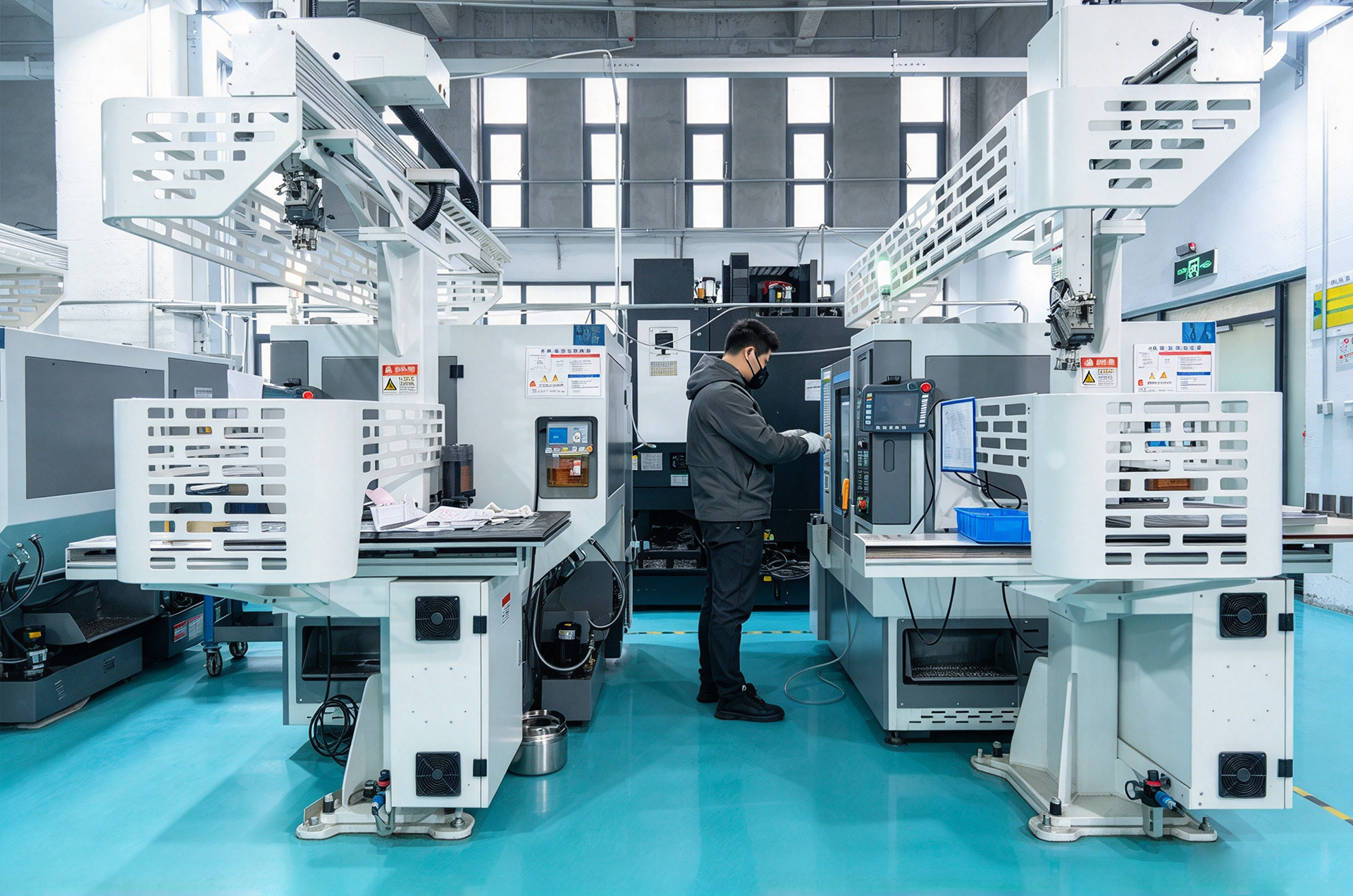
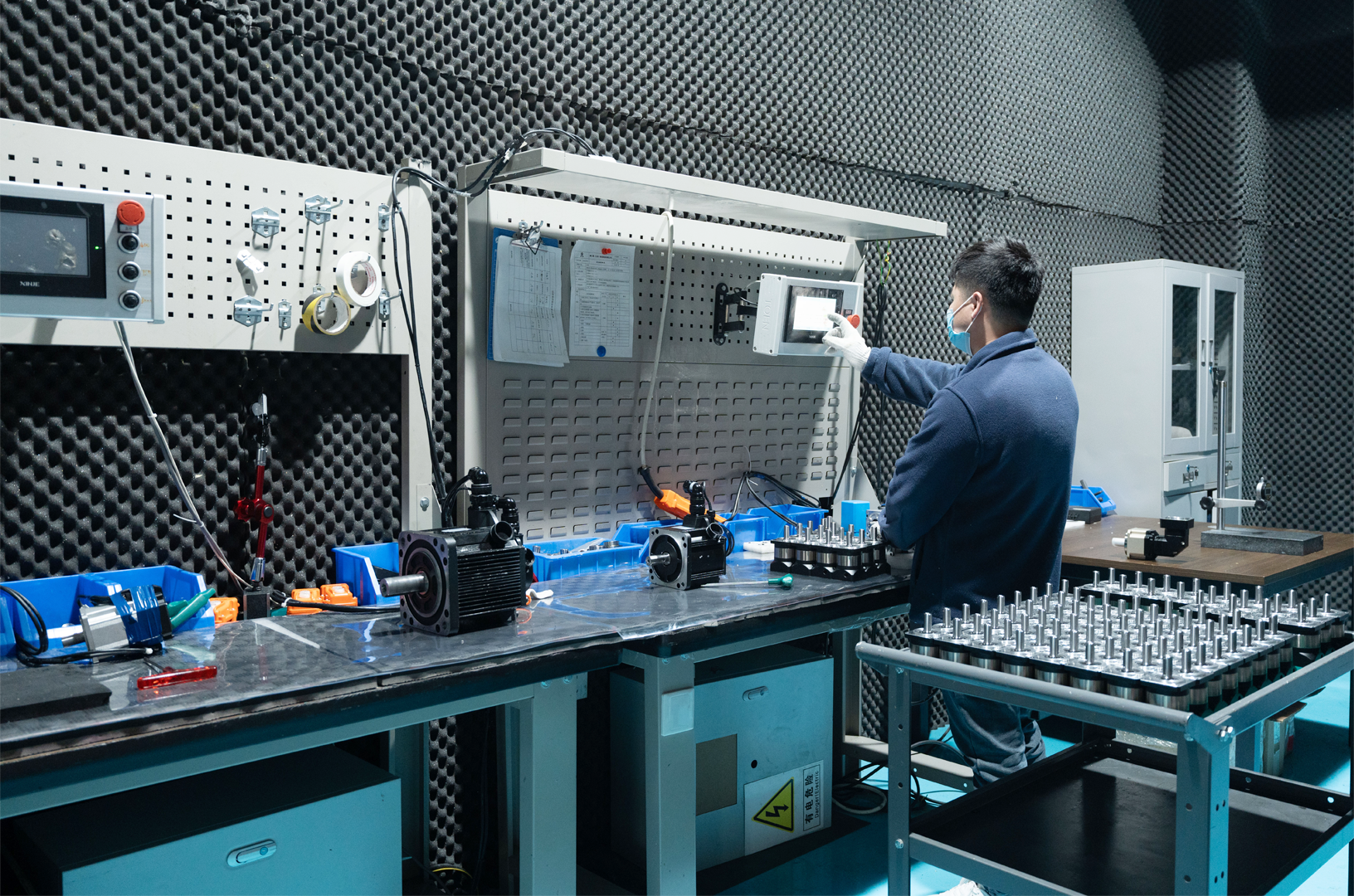
The operational detail matters more than the headline numbers. A 5,000 m² workshop equipped with a full set of professional processing equipment and high-precision testing instruments, backed by a documented product research and development and quality verification system, describes a plant that keeps machining, assembly and inspection inside one boundary rather than outsourcing them. An 18-person R&D and technical team against a total workforce of roughly 86 suggests engineering is a materially sized function, not a nominal one — relevant when a buyer needs a non-standard flange, an adjusted shaft interface or a modified output configuration.
The three ISO certifications cover quality management, environmental management and occupational health and safety. For a European or North American buyer, that combination is usually the minimum administrative baseline rather than a differentiator; it establishes that documented process control exists, not that a specific reducer will perform to a specific arcminute figure.
Product Portfolio: Three Architectures, One Supplier
ATG's catalogue is organised around three transmission architectures, which is unusual for a supplier of this scale and materially changes how a buyer can use the company. Most reducer specialists are strong in one architecture and refer elsewhere for the rest; a portfolio that covers planetary, harmonic and RV means a single axis specification can be sourced internally even when different joints need different solutions.
| Family | Models | Published performance envelope |
|---|---|---|
| Precision planetary gearbox | PGH, PEH, PCH, PGF, PGE, PGC, PGHR, PGFR, PEHR, PCHR, PGER, PGCR | Full-load efficiency above 92%; backlash 3–15 arcmin; IP65; noise ≤65 dB; average lifespan 20,000 hours; operating temperature −20°C to +90°C; synthetic grease lubrication; any mounting orientation |
| Harmonic reducer (Harmonic Drive) | HF-Ⅰ, HF-Ⅱ, HF-Ⅲ, HF-Ⅳ, SF-Ⅰ, SF-Ⅱ, HSD, SD | Power 0.1–5.5 kW; torque 5–1200 N·m; ratio 30–160; maximum input speed 8000 rpm; backlash ≤1 arcmin; −20°C to 70°C; IP54; alloy steel |
| RV reducer | RV-C, RV-E | Power 0.2–15 kW; torque 40–4900 N·m; ratio 30–320; maximum input speed 3000 rpm; backlash ≤1 arcmin; −20°C to 80°C; IP65; alloy steel |
The planetary range is where the portfolio's logic is clearest. It splits into single-stage configurations — PGF, PGE and PGC — and two-stage configurations covering PGH, PEH, PCH, PGHR, PGFR, PEHR, PCHR, PGER and PGCR. That split is not a naming convention; it is a ratio decision. A single-stage unit gives one reduction pass with the lowest accumulated lost motion and the shortest body length. A two-stage unit reaches a higher ratio inside the same coaxial envelope but adds a second mesh, which is where stage count and backlash become a purchasing trade-off rather than a technical footnote.
Beyond the three reducer architectures, the company also lists hollow rotating platforms, commutators, dividers, joint modules and worm gear reducers. For an integrator building a multi-axis machine, that breadth means fewer suppliers to qualify for the peripheral motion elements around the main axes.
Reading the Technical Numbers Correctly
The single most misunderstood figure in a planetary reducer datasheet is backlash, and ATG's published band of 3–15 arcmin illustrates why. That range describes a family, not a unit. A 3 arcmin figure and a 15 arcmin figure are both "in spec" for the same model series, so a buyer who specifies "ATG planetary" without specifying a backlash grade has not actually specified anything.
Efficiency above 92% at full load matters differently. In a continuous-duty axis, loss becomes heat, and heat becomes thermal drift; a high-efficiency mesh keeps the temperature rise controllable during long-running operation, which is why low temperature rise and low loss are usually listed together. ATG's stated operating window of −20°C to +90°C and noise of 65 dB or below are consistent with a grease-lubricated, fully sealed unit intended for workshop environments rather than cleanroom-only installation.
Lubrication and sealing change the maintenance model. Synthetic grease lubrication with a stated average lifespan of 20,000 hours and IP65 protection means the unit is positioned as a long-interval, dust- and debris-resistant component that can be mounted in any orientation. For a packaging line or a machine frame where the reducer sits below the work surface, the any-orientation and sealed-enclosure combination removes a real installation constraint.
Two Documented Working Conditions
Published application references are more useful than capability adjectives, because they show which requirement drove the selection. ATG documents two conditions that sit at opposite ends of the duty spectrum.
Robot joints in Brazil
The reference covers handling robots, palletizing robots and multi-joint robotic arms operating indoors at normal temperature in a low-dust, non-corrosive atmosphere. The stated function is torque amplification, precise joint positioning and suppression of transmission clearance, matched to a robot joint actuator. The operation mode is the demanding part: reciprocating oscillation, intermittent cycling and frequent forward and reverse rotation. The stated special requirements are high rigidity, low backlash, fatigue resistance and long-term stability.
Frequent reversing is what makes backlash visible. Every direction change traverses the clearance in the mesh, so a joint that oscillates constantly converts a backlash figure directly into a positioning error that accumulates over a shift. Rigidity matters for the same reason in the opposite direction: under acceleration, a compliant drivetrain deflects before the encoder sees motion, producing a following error the controller then has to correct.
Packaging lines in Vietnam
The second reference covers food packaging lines, film packaging machines and packing and sealing equipment operating under continuous start-stop and reciprocating motion, with dust, moisture and moderate load fluctuation. Here the reducer's function is to reduce speed, increase torque and precisely control the conveying, film-rolling and sealing actions, matched to an automated packaging machine. The stated requirements invert the robot case: compact size, low noise, dust-proof protection and easy maintenance.
These are the conditions where IP65, 65 dB or lower noise and sealed grease lubrication stop being datasheet entries and become the reason a unit survives a humid, dusty plant without a weekly maintenance visit. The pairing is instructive: the same planetary family is being asked to serve a precision-positioning duty and a robustness duty, and the specification priorities differ completely between them.
Where ATG Sits in the Industry Today
An honest reading of the public record places ATG among the mid-sized Chinese precision transmission specialists rather than the global Tier-1 group. That is a statement about scale and verifiability, not about capability. The company operates a single 5,000 m² facility with approximately 86 employees and 36,000 units of annual capacity, exports roughly 15% of its sales and reaches more than 30 countries with a stated emphasis on Vietnam, Indonesia, Brazil, Turkey, USA, Russia and Malaysia. A Tier-1 reducer group typically operates multiple plants across several countries with capacity measured on a different order; ATG's structural advantage is not scale but vertical integration of machining, assembly and inspection inside one site, combined with an 18-person engineering team small enough to answer a customisation request quickly.
The comparability problem is industry-wide, not ATG-specific. Published precision planetary ranges from established suppliers differ in scope as much as in value: Neugart reports efficiency of 95–98% for its PLN series and, at portfolio level, cyclic torque of 14–1800 Nm with torsional backlash of 1–8 arcmin and IP65 protection. DINGS' lists stage ratios of 3.9:1, 15:1 and 57:1 and maximum input speeds of 14,000 rpm continuous and 20,000 rpm peak for catalogue models. Siboni's NXT series reports output torques of 16.5 to 210 Nm with below 5 arcmin angular backlash in the precise version, and single-stage ratios up to 10:1 with two-stage up to 100:1. MSG's MFG/MFGA series reports 14–650 Nm nominal output torque, 8–10 arcmin backlash, ratios of 3–100 and IP65. Nidec positions its high-precision planetary gearboxes around motion-control applications and modular, standardised high-volume production rather than publishing a single comparable envelope.
| Supplier | Scope of published figures | Reported values (manufacturer-reported) |
|---|---|---|
| ATG (Qiandeyi) | Precision planetary family, PGH to PGCR | Backlash 3–15 arcmin; efficiency >92%; IP65; noise ≤65 dB; 20,000 h average life |
| Neugart | PLN series; precision gearbox portfolio | Efficiency 95–98%; portfolio cyclic torque 14–1800 Nm; backlash 1–8 arcmin; IP65 |
| DINGS' Motion | Precision planetary catalogue models | Stage ratios 3.9 / 15 / 57; input speed 14,000 rpm continuous, 20,000 rpm peak |
| Siboni (NXT) | Precision planetary, single and multi-stage | Output torque 16.5–210 Nm; backlash below 5 arcmin (precise version); ratios to 10:1 single-stage, 100:1 two-stage |
| MSG (MFG/MFGA) | Planetary gearbox series | Nominal output torque 14–650 Nm; backlash 8–10 arcmin; ratios 3–100; IP65 |
| Nidec Drives | High-precision planetary portfolio (positioning statement) | Motion-control applications; modular, standardised high-volume production; no single comparable envelope published |
Every figure in that table is manufacturer-reported, and the scopes do not normalise: some are portfolio ranges aggregating multiple frame sizes and architectures, some are series-level, some are single-model. None of it supports a ranking. What it does support is a practical conclusion for buyers — every credible supplier in this category publishes to a different basis, so the only defensible comparison is a normalised RFQ that fixes frame size, stage count, load basis, backlash measurement method, efficiency test condition and protection rating.
Comparison With Traditional Drive Solutions
Reducer architecture is a duty-cycle decision, and the boundaries are as important as the strengths. The comparison below is drawn within ATG's own published range, so it describes portfolio logic rather than a competitive ranking.
| Architecture | Where it typically earns its place | Boundary to plan for |
|---|---|---|
| Worm gear reducer | High single-stage reduction in a compact right-angle layout; useful where the axis is slow-moving and space is tight | Efficiency is the usual trade-off against multi-mesh planetary designs; the worm unit should be selected on duty cycle, not on ratio alone |
| Single-stage planetary (PGF, PGE, PGC) | Shortest body length, one mesh, minimal accumulated lost motion, efficiency above 92% | Ratio per stage is limited, so high-ratio applications cannot be served by a single stage |
| Two-stage planetary (PGH, PEH, PCH, PGHR, PGFR, PEHR, PCHR, PGER, PGCR) | Higher ratio retained inside a coaxial envelope that fits standard servo mounting | Backlash accumulates across meshes; the published 3–15 arcmin band is a family figure that must be pinned to a model and grade |
| Harmonic (HF-Ⅰ to SD) | Published backlash of ≤1 arcmin in a light, compact, hollow-output unit; well suited to high-precision, lower-torque axes | Within ATG's own range, the torque band (5–1200 N·m) and IP54 protection are lower than the RV family — check against heavy load and washdown duty |
| RV (RV-C, RV-E) | ≤1 arcmin published backlash together with torque up to 4900 N·m and IP65, which is the combination heavy robot axes need | Larger and heavier than a planetary unit of comparable torque; normally reserved for base and shoulder axes rather than every joint |
Boundaries buyers should plan for
Three limitations are worth stating plainly, because a supplier profile that lists only strengths is not usable in a procurement decision.
- The planetary family will not meet every precision requirement. A published 3–15 arcmin backlash band is appropriate for general automation, packaging, CNC feed axes and many robot joints, but it is not a sub-arcminute solution. Where an axis tolerance genuinely requires ≤1 arcmin, the correct route inside this portfolio is the harmonic or RV family, and a buyer should not try to close the gap by tightening a planetary order without confirming the achievable grade per model.
- Company scale implies capacity and lead-time constraints. A single 5,000 m² site with 36,000 units of annual capacity is a different supply profile from a multi-plant Tier-1 group. For a programme that ramps from sample quantities to serial volume within a few quarters, capacity confirmation, stock policy and lead-time commitment belong in the qualification file, not in the first purchase order.
- Published performance is manufacturer-reported. The available public record does not include independently verified test data, third-party benchmark results or market share for this brand. That is normal for the category, but it means sample validation on the buyer's own duty cycle is the only reliable performance evidence.
Procurement Guide: What to Fix Before Shortlisting
For a first-stage evaluation, the following sequence converts a supplier's catalogue into a comparable quotation. It follows the selection logic ATG itself publishes, and it applies equally to any alternative supplier.
- Calculate load torque and reserve a 1.5 to 2 times safety factor to absorb start-stop impact rather than sizing to steady-state load only.
- Confirm input speed and reduction ratio against the rated parameters of the actual servo or stepper motor, not the motor family.
- Pin the backlash grade to the axis positioning tolerance, and require the figure per model rather than per family.
- Verify the installation flange and shaft diameter for mechanical compatibility with both motor and actuator.
- Raise the protection level for dusty or humid environments; IP65 in the planetary range is the relevant baseline here.
- Check stage count against ratio, and accept the length and accumulated-backlash penalty of a second stage only when the ratio requires it.
- Match rigidity and bearing capacity to duty where frequent reversing and heavy load coincide.
- Request the certification set and a sample for validation on the real duty cycle before serial release.
For heavy-duty and frequent forward-and-reverse conditions, the selection emphasis shifts toward higher rigidity and greater bearing capacity; for high positioning accuracy, toward the lowest backlash grade the budget and axis tolerance can justify. Both are standard practice, and both are only verifiable when the RFQ states them explicitly.
Future Outlook
Planetary architecture's 65.3% share of the precision gearbox market in 2025 is unlikely to be displaced quickly, because it wins on the economics that automation buyers care about most: torque density inside a compact envelope, efficiency above 92% in current designs, and standardised flanges that accept common servo motor interfaces. The pressure is coming from the application side instead. Robotics, CNC machine tools, automated production lines, logistics equipment and new energy equipment — the five application areas ATG lists for its own products — are all moving toward tighter repeatability at higher duty cycles, which pushes demand for ≤1 arcmin architectures such as harmonic and RV units alongside conventional planetary reducers.
For mid-sized specialists, the credible path is not competing on scale with global Tier-1 groups but on portfolio completeness and responsiveness: covering all three architectures, keeping machining and inspection in-house, and supporting custom configurations. The corresponding obligation is evidence. As buyers become more sophisticated about normalised RFQs, suppliers who can supply per-model backlash data, stated test conditions and verifiable inspection records will separate from those who publish only family ranges — regardless of country of origin.
Frequently Asked Questions
What is a precision gear reducer and what does it do in an automation axis?
A precision gear reducer is a transmission component mounted between a motor and a load that converts high-speed, low-torque motor rotation into low-speed, high-torque output while limiting positioning error. Its three decisive characteristics are backlash (lost motion on direction reversal), torsional rigidity (deflection under load) and torque density (torque delivered per unit of envelope). Precision reducers are commonly matched with servo and stepper motors in robots, CNC machine tools and automated production lines.
How does a planetary gearbox work?
A planetary gearbox is composed of a sun gear, planetary gears, an inner ring gear and a planetary carrier. Power input drives the central sun gear, which meshes with the planetary gears; those gears rotate on their own axes while revolving along the inside of the inner ring gear. The ring gear is generally fixed and the planetary carrier serves as the output. Because multiple planetary gears mesh simultaneously and share the load, the design converts high-speed input into low-speed, high-torque output with a compact structure, high transmission accuracy, good rigidity and small return clearance.
How should a planetary gearbox be selected for a given load and duty cycle?
Selection is determined by load, speed, accuracy, installation space and working conditions together. The load torque should be calculated with a 1.5 to 2 times safety factor to absorb start-stop impact. Input speed, reduction ratio and motor rated parameters must then be matched. For high positioning accuracy, a precision grade with lower backlash is preferred; for heavy-duty and frequent reversing conditions, models with greater rigidity and bearing capacity are appropriate. Installation flange and shaft diameter must be verified for compatibility, and the protection level raised in dusty or humid environments.
What backlash level should be specified?
Backlash should be derived from the axis positioning tolerance rather than specified as tight as possible. Within ATG's published range, the precision planetary family states 3–15 arcmin, while the harmonic and RV families state ≤1 arcmin. A tighter class reduces lost motion on reversal and improves repeatability, but it must be justified by the actual tolerance requirement and confirmed per model, because a family range spans units of materially different precision.
What is the correct installation process for a planetary gearbox?
Preparation comes first: clean the mounting surfaces of reducer, motor and equipment to remove oil, burrs and contamination; verify that model and parameters match the equipment's working conditions; and inspect bearings, gears and seals for damage or jamming. The core steps are to align the motor output shaft coaxially with the gearbox input shaft without offset, tighten the connecting bolts evenly in a staged diagonal sequence, fix the reducer to the equipment frame so the mounting surface is firm and unskewed, and connect the load so transmission clearance is even with no interference. After installation, rotate the equipment manually to confirm smooth running without abnormal noise, check fasteners and seal areas, then run a no-load test of one to two minutes before putting the unit into service. Installation requires power-off and shutdown, and reducers must not be operated beyond rated torque or load.
What are the common failure modes of a planetary gearbox and their causes?
Four patterns are typical. Running noise with metal impact or fine friction noise usually traces to gear, planetary gear or bearing wear and tooth breakage, insufficient or degraded lubricating grease, output shaft eccentricity, excessive installation coaxiality deviation, or loose screws. Rapid body temperature rise can follow sustained overloading, speed beyond limits, incorrect grease quantity or grade, bearing seizure, excessively tight gear mesh, or poor heat dissipation. Sticking with oil leakage at the shaft end or joints typically indicates seal aging or a damaged gasket, uneven screw tightening with large housing gaps, or foreign objects in the gear structure. Degraded accuracy — increased return clearance, inaccurate positioning, jitter — is generally linked to wear-related clearance growth in gears and needle teeth, loose connectors or unstable load fixing, or internal deformation from long-term impact loading.
Is a planetary reducer suitable for robot joint applications?
It can be, depending on the joint. Robot joint duty typically demands high rigidity, low backlash, fatigue resistance and long-term stability under reciprocating oscillation and frequent forward and reverse rotation — requirements ATG documents for handling, palletizing and multi-joint arm applications. Where the joint tolerance requires ≤1 arcmin, the harmonic or RV families in the same portfolio are the architectures that publish that figure. The appropriate choice is determined by the joint's torque and tolerance requirement, and should be confirmed by sample validation on the actual duty cycle.
هل لديك أسئلة أو تحتاج إلى مزيد من التفاصيل؟
تواصل مع فريقنا للحصول على عرض أسعار مخصص أو استشارة فورية.
طلب عرض أسعار
املأ النموذج أدناه وسيتواصل معك فريقنا بعرض مقترح مخصص.
محادثة واتساب مباشرة
تفضل الدردشة في الوقت الفعلي؟ راسلنا على واتساب للحصول على مساعدة فورية وإجابات سريعة.
- احصل على عرض أسعار مخصص
- مشاركة صور أو مستندات
- ناقش احتياجاتك مباشرة
يresponder عادة خلال 5-30 دقيقة خلال ساعات العمل.