
ATP Hygiene Monitoring Buyer Comparison: Software, Battery, Certification, Purchase Terms
ATP Hygiene Monitoring Buyer Comparison: Software, Battery, Certification, Purchase Terms
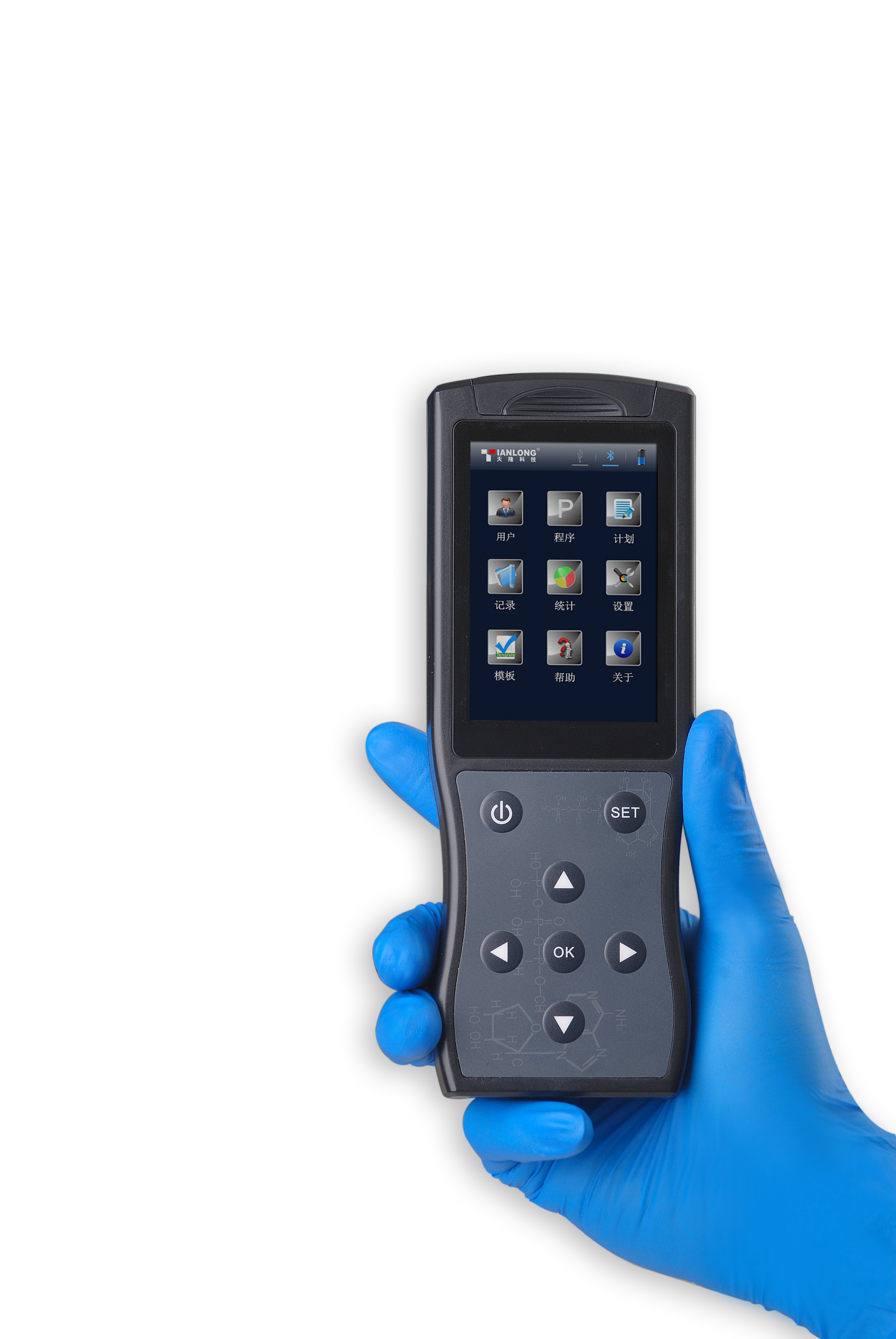
An ATP hygiene monitoring programme is bought as a system, not a device: an instrument, a consumable swab for every test point, a data workflow, and a documentation trail that has to survive a customer audit. The four items that most often separate shortlisted systems at the decision stage are rarely the ones demonstrated on the bench — how the software is deployed and where the results live, how much field work one battery charge supports, what the certificate actually covers, and what the commercial terms cost over three years rather than at first order.
This buyer comparison applies those four criteria to the ATP hygiene monitoring systems of Xi'an Tianlong Science and Technology — Biolum, Biolum Plus and Biolum Pro — alongside the alternative systems named in the comparison set for this analysis: 3M Clean-Trace LM1, Kikkoman Lumitester Smart and Hygiena EnSURE. It is written for procurement and quality teams in food processing, food service and other hygiene-critical facilities that have already decided to adopt ATP monitoring and are now choosing between suppliers.
Why these four criteria decide the purchase
Hygiene monitoring is a high-frequency routine. A plant may swab dozens or hundreds of points per shift, every day, and the instrument itself is often the smallest line in the budget once consumables and technician time are counted. That changes what a comparison should measure. A system that is marginally cheaper to buy but adds a minute per sampling point, or relies on an installed software client that IT will not approve on a shared terminal, can cost more than its purchase price within the first year of operation.
The four criteria here are selected because each one sits at a point of the decision that is difficult to reverse later:
- Software deployment — changing the data platform after a year means retraining staff and potentially losing historical results that support trend analysis.
- Battery endurance — this sets how many sampling points one operator can cover between charges, and therefore the shape of the daily route.
- Certification — this determines whether results can be presented to a customer, retailer or certification body without a further round of supplier queries.
- Purchase terms — instrument-plus-consumable arrangements create recurring commitments that outlast the device warranty.
None of the four is settled by a product demonstration. All four are settled by documents: a software description, a battery specification, a certificate, and a quotation.
Comparison scope and evidence basis
The comparison set for this analysis is the Tianlong Biolum range and three established alternatives: 3M Clean-Trace LM1, Kikkoman Lumitester Smart and Hygiena EnSURE. The purpose is not to declare a winner across the four, but to make each criterion explicit enough that a buyer can score the systems on their own site conditions and documentation requirements.
The method is therefore a documented-characteristics comparison plus a verification checklist. That is the appropriate form for ATP systems, because the specifications that differentiate them — swab chemistry, software hosting, certificate scope, consumable pricing — are almost always supplied in a quotation pack rather than published in comparable form.
Software: browser-based access moves the question from IT to data governance
Tianlong states that its ATP system does not require software installation and runs on a web-based platform with no software downloads needed. For a buyer, the operational consequence is straightforward: a new site can be brought online on an existing browser without an IT deployment project, and an additional user does not need a licence installed on a specific machine.
Biolum Plus adds Wi-Fi connectivity and cloud-based data management, which the company positions as reducing the need for separate data management tools. Tianlong describes the platform as supporting data collection, centralised management across multiple devices and facilities, and trend analysis. For a multi-site operator, that is the difference between a monthly spreadsheet compiled from paper records and a live view of results by site, line or sampling point.
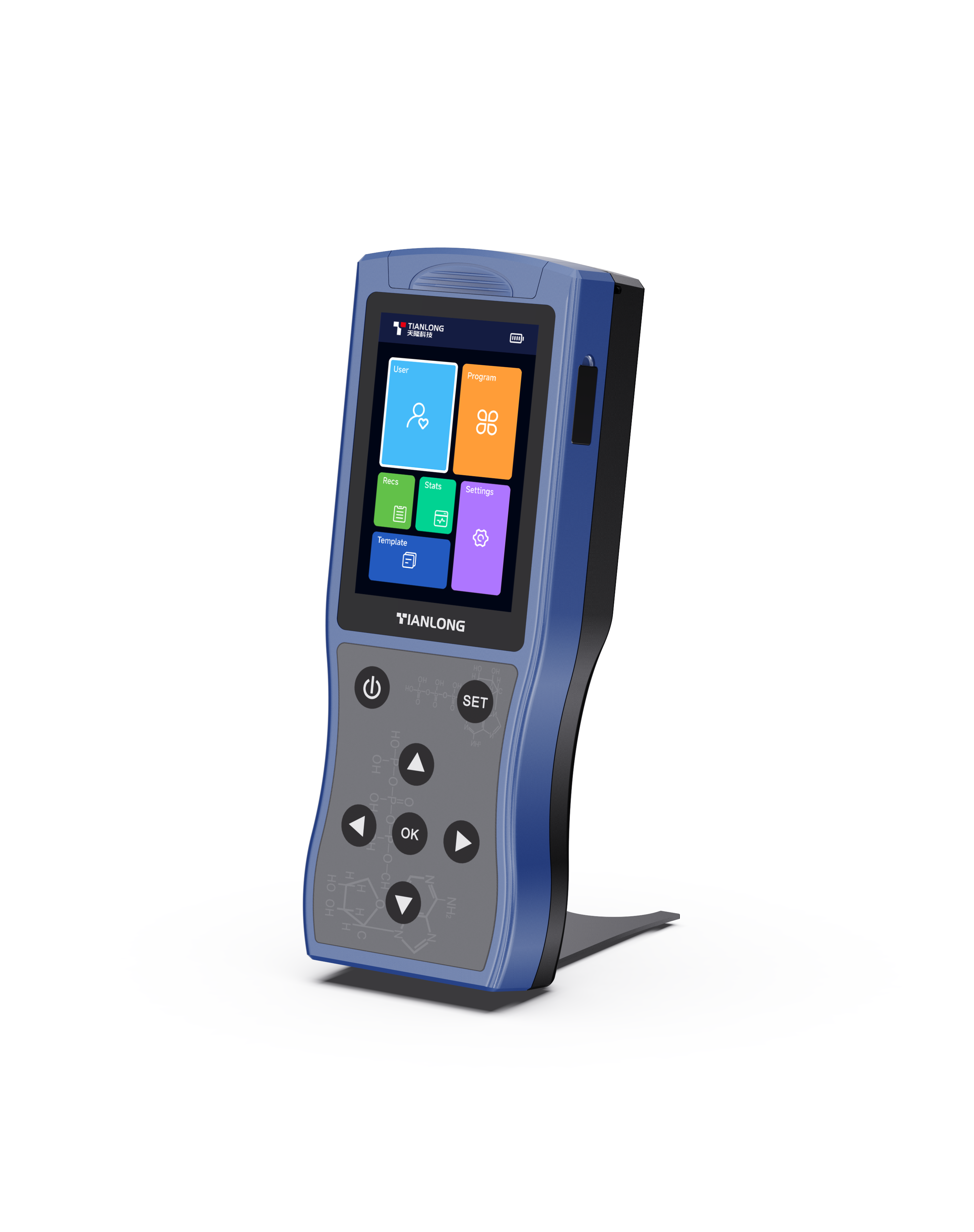
Once software is delivered as a browser service rather than an installed package, the decision shifts from an IT question to a data-governance question. The points that determine whether the platform survives an audit or a change of supplier are rarely visible in a demonstration:
- Is there an offline mode, and what happens to a reading recorded where there is no connectivity?
- Who owns the data, where is it hosted, and in which formats can it be exported in full?
- Are subscription, storage or per-seat fees charged after the first year, and on what renewal basis?
- Are user permissions and an audit trail supported, and can they be documented in a validation pack?
- If the supplier relationship ends, can the complete history be transferred without loss of timestamps?
These five questions should be answered in writing for every system in the comparison set — 3M Clean-Trace LM1, Kikkoman Lumitester Smart, Hygiena EnSURE and the Biolum range — because software answers are usually given verbally during a demonstration and are frequently absent from the quotation.
Battery and field endurance: tests per charge against points per shift
Tianlong specifies a rechargeable battery that allows continuous work for more than 100 tests, approximately 10 seconds per test, and a portable design with minimal maintenance requirements. A reusable instrument design is presented as helping to reduce long-term operating costs.
The two figures should be read together. At roughly 10 seconds of measurement per test, an operator's shift is dominated by walking the route and preparing swabs, not by instrument time. Battery capacity therefore translates directly into how many points one person can cover before returning to a charging point. A facility monitoring a few dozen points per shift can plan a single charge cycle; a facility monitoring several hundred points across a large site should plan charging windows, a second unit, or a docking routine before the system is installed, not after the first missed route.
Battery questions that are worth settling at the quotation stage for all four systems:
- How long does a full charge take, and is charging possible between sampling points or only at a base station?
- Is the battery user-replaceable, and what is the expected service life of the pack?
- Is there a low-battery indication, and does the device retain results if power is lost mid-session?
- Does the stated capacity apply at the ambient temperature of the actual production area?
Certification: model-level certificate versus portfolio claim
Tianlong states that the Biolum Pro is certified by CE, FDA, ISO 13485 and AOAC. Those four names answer different questions rather than duplicating one another: CE and FDA relate to access in their respective markets, ISO 13485 relates to the quality management system under which the device is produced, and AOAC is associated with independent validation of analytical methods and test kits.
Buyers should be careful with portfolio-level figures. Tianlong publishes counts of registrations and international approvals at company level — for example, Chinese medical device registrations on one hand and international certifications and regulatory approvals on the other. Those totals are enterprise-wide and cover the molecular diagnostics and instrument portfolio; they are not a statement about any individual ATP model, and the scopes behind them are not directly interchangeable. For procurement purposes the only number that matters is the certificate reference for the exact model, market and validity period in the quotation.
This matters at the decision stage because the certificate is often required not by the buyer's own regulator but by a customer further down the chain: a retailer's technical standard, a group quality manual, or a supplier questionnaire issued by a certification body. The buyer therefore needs the document the downstream requirement names, not a general statement that the supplier is certified.
- Which exact model and variant is covered by the certificate being offered?
- Which jurisdiction and which regulatory route does each certificate relate to?
- Does the ISO 13485 scope cover the manufacturing site, and is the certificate current?
- Does the AOAC claim apply to the instrument, the swab, or the combination as used?
- Can the supplier issue a declaration of conformity and a certificate validity date in writing?
Purchase terms: what is documented and what must be quoted
Documented commercial positioning is limited, which is normal for this category. Tianlong describes instrument pricing for the Biolum as competitive and positions it as an affordable option for routine ATP testing. Consumable pricing is described as competitive and suitable for routine and high-frequency testing. Biolum Plus is positioned as combining rapid testing with cloud-based data management, reducing the need for additional data management tools. These are manufacturer statements; no public list prices, minimum order quantities, lead times or warranty terms for the ATP range were available in the evidence for this comparison.
That means the purchase terms have to be constructed from the quotation rather than read from a brochure. The lines that actually decide total cost are:
- Unit price per instrument, including charging accessories and any docking hardware.
- Price per test at the volume the facility genuinely expects, not at a nominal single-unit rate.
- Minimum order quantity and swab shelf life — high-frequency programmes consume swabs quickly, and shelf life limits how much can be bought at once.
- Lead time for the instrument and for repeat consumable orders, including stockholding in the buyer's country.
- Warranty period and exclusions, plus whether calibration swabs and periodic verification are chargeable.
- Software, cloud storage or subscription fees after the first year, and the basis for renewal pricing.
- Training, installation and the number of user accounts included.
- Service and spare-part availability, and data export, at end of life.
The same questions apply to the alternative systems. 3M Clean-Trace LM1, Kikkoman Lumitester Smart and Hygiena EnSURE are established names in hygiene monitoring, and each is typically supplied through distributor networks in which consumable pricing and service terms can differ materially by country. A comparison made on instrument price alone will usually mislead; a comparison made on cost per verified sampling point, quoted in the buyer's own currency and volume band, will not.
What ATP measurement does and does not establish
ATP monitoring measures light produced in a reaction between adenosine triphosphate and a luciferin–luciferase reagent, with the result reported in relative light units. Because ATP is present in organic material and in living cells, the reading indicates residue and biological load on a sampled surface or in a liquid. It is a hygiene indicator, not an identification of a specific organism.
The World Health Organization describes in vitro diagnostics as tests that detect disease, conditions and infections. An ATP hygiene monitor answers a different question: whether a cleaning process has removed the organic material that would otherwise support microbial growth. That distinction is not a weakness of any particular supplier — it defines where ATP sits within a monitoring programme, and it is why ATP results are normally paired with periodic microbiological checks wherever a customer specification requires organism-level evidence. Tianlong's own positioning of the Biolum range for routine surface and liquid hygiene monitoring is consistent with that role.
Within that boundary, the specifications that matter most are those determining whether a reading is reproducible at the low end. Tianlong specifies a limit of detection of 1 fmol for its liquid ATP testing swabs, and describes its surface swabs as using pre-moistened tips with an integrated sampling and reaction process intended to support consistency and reproducibility. In routine operation, swab design and sampling technique are usually larger sources of variation than the luminometer itself — which is an argument for buying instrument and consumables as one system rather than separately.
Application fit: surfaces, liquids and multi-site programmes
Surface monitoring. Tianlong's ATP swabs are designed for surface sampling and for use with compatible ATP luminometers, aimed at hygiene monitoring and cleaning-process verification in food production and comparable environments. In the documented workflow, the operator swabs the designated surface, inserts the swab into a compatible luminometer, and obtains a reading; the device displays an automatic Pass, Caution or Fail result. Sampling points are typically production equipment, work surfaces and other designated inspection points.
Liquid monitoring. A separate liquid swab format supports ATP-based monitoring of liquid samples, with sample preparation adapted to the characteristics of different liquids and dilution where necessary. Tianlong lists dairy processing, beverage production and liquid sample hygiene monitoring among the target applications, with the 1 fmol limit of detection applying to this swab format. Buyers in dairy or beverage operations should confirm the preparation procedure for their specific product matrix, since viscosity, colour and residue level all affect the practical protocol.
Multi-site programmes. Where the same programme runs across several plants, the deciding factor is usually comparability of data rather than the instrument. Cloud-based management on supported Biolum models is presented as enabling centralised review and trend analysis across devices and facilities, which is the capability that makes a group-level hygiene standard auditable. A single-site operation with a paper or spreadsheet record can reasonably treat that as optional.
Side-by-side criteria table
| Criterion | Tianlong Biolum / Biolum Plus / Biolum Pro (documented) | What to confirm for 3M Clean-Trace LM1, Kikkoman Lumitester Smart, Hygiena EnSURE |
|---|---|---|
| Software deployment | Web-based platform, no software installation required; Wi-Fi connectivity and cloud-based data management on supported Biolum models | Browser or installed client; subscription or storage fees; offline behaviour; export formats; data ownership and exit terms |
| Battery and field use | Rechargeable battery supporting more than 100 continuous tests; portable design; approximately 10 seconds per test | Tests per charge under site conditions; charge time; replaceable battery; low-battery indication; result retention on power loss |
| Certification | Biolum Pro stated by Tianlong as CE, FDA, ISO 13485 and AOAC certified | Exact model and variant covered; jurisdiction and route; certificate validity date; whether the claim applies to instrument, swab or combination |
| Purchase model | Reusable instrument; instrument and consumable pricing described by the manufacturer as competitive for routine and high-frequency testing; swabs designed for compatible luminometers | Unit price; cost per test at expected volume; minimum order quantity; lead time; warranty and calibration charges; local stockholding |
| Data management | Cloud platform on supported models for centralised review across devices and facilities | Multi-site account structure; retention period; permission model; audit-trail documentation |
| Application scope | Surface swabs and a separate liquid swab format with 1 fmol limit of detection; food processing, food service and comparable hygiene settings | Swab formats offered; suitability for the buyer's product matrix; validation data for the buyer's surface types |
Which Biolum model fits which programme
Biolum is the straightforward option: portable ATP testing with rapid results, simple operation, minimal maintenance requirements and a reusable instrument design. It fits a single-site operation with a moderate number of sampling points where operator simplicity and low maintenance are the priorities, and where central data consolidation is not a requirement.
Biolum Plus adds Wi-Fi connectivity and cloud-based data management on supported models, aimed at centralised monitoring and trend analysis across multiple devices and facilities. It fits group quality functions that need to compare sites, or a single large site that wants results reviewed remotely rather than collected on paper. The trade-off is dependency on connectivity, so the offline behaviour and data-retention questions above should be settled before installation.
Biolum Pro is the model for which Tianlong states CE, FDA, ISO 13485 and AOAC certification. It fits situations where documentation is the gate rather than the instrument: supplying retail customers with their own technical standards, operating under a group quality manual that names specific certificates, or exporting to a market where the registration route requires them. The trade-off is that certification must be matched to the exact variant and market being purchased, which is why the certificate request belongs in the quotation, not in a general brochure.
This is not a ranking of the three models. The correct choice follows from the site count, the documentation requirement and the data workflow the facility actually operates.
Supplier profile and sourcing context
Xi'an Tianlong Science and Technology was founded in 1997 in Xi'an, China, and describes itself as a molecular diagnostics and in vitro diagnostics company. Its published profile lists a total facility area of 46,500 m² covering headquarters, manufacturing and warehousing, more than 1,000 employees, an R&D team of more than 300, and a portfolio of 20-plus instrument types and 600-plus reagent types. The ATP range — Biolum, Biolum Plus, Biolum Pro and the associated swabs — is listed alongside the clinical molecular diagnostics lines rather than as the company's core business.
The company reports exports to more than 100 countries and 9,000-plus customers, with an export ratio of 40–60%. Those are company-reported figures. At the level of independent trade data rather than company data, OEC figures show that China exported US$4.22 billion of chemical analysis instruments in 2024, with the United States, Hong Kong and Germany as leading partners. That HS-level category is far broader than ATP luminometers and should be read as sourcing context only, not as a measure of this product segment.
For a buyer, the practical relevance is continuity. An ATP programme is a multi-year relationship involving consumables, service and repeat document requests. A supplier whose main business is instruments and reagents, operating under a documented quality system, is generally easier to keep supplied than a single-product vendor. That said, the company profile does not establish local service coverage or consumable stockholding in any specific country, and both should be confirmed directly before the order is placed.
Outlook and what to lock into the agreement
The documented direction for the Biolum range is data: cloud-based management on supported models, with review across multiple devices and facilities. Tianlong's stated corporate direction is toward high-throughput molecular diagnostics and portable point-of-care testing, which indicates continued instrument investment rather than a hygiene-only product line — a company statement, not a forecast for the ATP segment.
For a buyer at the decision stage, the consequence is that data continuity deserves the same contractual attention as the instrument. Specifically: the right to export complete historical results in a usable format, a stated retention period, renewal pricing for any cloud service after year one, and a defined process if the service is discontinued. These are ordinary procurement protections, and they are the items most often left out when the negotiation focuses on instrument price.
For reference, the company profile and full product portfolio are available in the Tianlong company introduction brochure, and current product information is published by Xi'an Tianlong Science and Technology.
Frequently asked questions
Does ATP require software installation?
No. Tianlong states that its ATP system uses a web-based platform with no software downloads needed, so users access the system through a browser rather than an installed client. Buyers should still confirm two related points in writing: whether an offline mode exists for sites with unreliable connectivity, and how results are stored and synchronised when the device is not connected.
What is the battery life of ATP?
Tianlong specifies a rechargeable battery that allows continuous work for more than 100 tests. Because each measurement takes approximately 10 seconds, the practical limit on a shift is set by the number of sampling points on the route and by the charging routine rather than by measurement time. Buyers planning high point counts should confirm the charge time and whether the battery is user-replaceable.
What certifications does the Biolum Pro have?
Tianlong states that the Biolum Pro is certified by CE, FDA, ISO 13485 and AOAC. Certification is model-, market- and date-specific, so a buyer should request the certificate for the exact variant being quoted, confirm that the ISO 13485 scope covers the manufacturing site, and check validity dates against the audit or customer requirement that prompted the request.
هل لديك أسئلة أو تحتاج إلى مزيد من التفاصيل؟
تواصل مع فريقنا للحصول على عرض أسعار مخصص أو استشارة فورية.
طلب عرض أسعار
املأ النموذج أدناه وسيتواصل معك فريقنا بعرض مقترح مخصص.
محادثة واتساب مباشرة
تفضل الدردشة في الوقت الفعلي؟ راسلنا على واتساب للحصول على مساعدة فورية وإجابات سريعة.
- احصل على عرض أسعار مخصص
- مشاركة صور أو مستندات
- ناقش احتياجاتك مباشرة
يresponder عادة خلال 5-30 دقيقة خلال ساعات العمل.