
AUV Supplier Longevity: Custom Endurance, Materials and Fleet Scale

Long-term AUV evaluation weighs endurance configurability, hull material options and fleet scalability against multi-year mission schedules.
Industry Reference · Supplier EvaluationLong-term AUV supplier evaluation asks a question that a specification sheet cannot answer: whether the platform, its materials and its supply chain will still fit the mission in year three, year five and year eight. For industrial buyers moving from evaluation into execution, the practical test is narrower than reputation — it is whether endurance can be extended, whether housing materials match the depth class, and whether a single platform can grow into a coordinated fleet without changing supplier.
Why supplier evaluation starts with configurability, not headline specifications
Most autonomous underwater vehicle procurement begins with a mission profile and ends with a comparison of depth ratings. That framing works for a single campaign. It works badly for a fleet programme, because the parameters that determine total cost over a multi-year horizon are the ones that can be changed later: battery capacity, payload configuration, sensor set and software behaviour.
Pelagix AUV is the autonomous underwater vehicle line of Sanya Poseidon Ocean Technology Co., Ltd., a deep-sea intelligent equipment manufacturer based in the Yazhou Bay Deep-Sea Equipment Industrial Park in Sanya, Hainan, China. The portfolio runs from portable micro AUVs at 100 m depth class through nearshore survey platforms to 6000 m-rated deep-sea systems, and it is produced under OEM, ODM, system integration and deep-sea engineering and R&D cooperation models. That breadth is the reason it serves as a useful reference case here: the same supplier offers depth ratings of 200 m, 500 m, 2000 m and 6000 m as configurable options, which means a buyer can evaluate the supplier's engineering path rather than a single catalogue item.
The evaluation logic that follows rests on three verifiable product facts — a custom endurance envelope, a stated material hierarchy, and a platform explicitly described as supporting multi-AUV swarm survey — and on how each of them constrains or enables a multi-year fleet plan.
Custom endurance: what 50 hours or 300 km actually changes
Endurance is the first parameter that separates a project purchase from a fleet purchase, because it determines how many vehicle-days a survey area requires and therefore how many hulls a buyer must own.
In the Pelagix AUV range, the AUV-324 is specified at 324 mm diameter and 4 m length, 300 kg mass, 30 kg payload, 600 m or 2000 m depth rating, 1–6 knots speed, and an endurance of at least 20 hours at 3 knots. That baseline can be customised upward to 50 hours or 300 km. The larger AUV-533, at 533 mm diameter, 5 m length and 1200 kg mass, carries a 150 kg payload and a standard endurance of at least 90 hours at 3 knots, customisable to 180 hours or 1000 km. At the top of the endurance ladder, the AUV-900 is listed with a 250 kg payload and a custom envelope of up to 270 hours or 1500 km.
For a buyer, those numbers translate into planning arithmetic rather than marketing: a longer per-dive endurance envelope reduces the number of launch-and-recovery cycles, and therefore the number of hulls needed to cover a fixed survey area within a season. It also changes vessel time, because fewer recoveries mean fewer weather-dependent deck operations.
The manufacturer's stated capability is that battery capacity and endurance are configurable for extended missions, and that long-endurance AUV platforms are built with configurable battery and energy systems. That is the correct place to look during evaluation: not whether a fixed endurance figure exists, but whether the supplier documents how endurance customisation is executed and what it displaces.
Material options: aluminum alloy, titanium and composite frames by depth class
Material selection is the second parameter that a multi-year plan depends on, because it governs both depth class and the maintenance regime the fleet will inherit.
The AUV-324 is described with a pressure-rated hull for 2000 m, a high-strength anodized aluminum alloy or titanium housing, a corrosion-resistant composite frame, and seawater-resistant electronics. The AUV-533 is described with a 6000 m pressure-rated hull, a titanium alloy pressure housing, a corrosion-resistant synthetic foam buoyancy module, and seawater-resistant electronics. Across the wider range, configurable depth ratings are stated as 200 m, 500 m, 2000 m and 6000 m.
| Parameter | AUV-324 | AUV-533 |
|---|---|---|
| Hull dimensions | 324 mm × 4 m | 533 mm × 5 m |
| Mass / payload | 300 kg / 30 kg | 1200 kg / 150 kg |
| Depth rating | 600 m / 2000 m | 2000 m / 6000 m |
| Speed | 1–6 knots | 1–6 knots |
| Endurance | ≥20 h @ 3 knots; up to 50 h / 300 km custom | ≥90 h @ 3 knots; up to 180 h / 1000 km custom |
| Navigation | INS+DVL+GNSS+USBL | INS+DVL+GNSS+USBL + SLAM |
| Stated material path | 2000 m pressure-rated hull; high-strength anodized aluminum alloy / titanium housing; corrosion-resistant composite frame | 6000 m pressure-rated hull; titanium alloy pressure housing; corrosion-resistant synthetic foam buoyancy module |
Table 1. Platform parameters relevant to long-term fleet planning, as stated in the manufacturer's product documentation.
Two material questions matter most in evaluation. The first is whether the housing material offered at a given depth class matches the mission's maximum working depth rather than its nominal one — a 2000 m-rated hull and a 6000 m-rated hull are separate engineering products, not a single product with a different label. The second is what the corrosion strategy actually comprises. The supplier's documented position is that corrosion resistance is addressed through material selection and marine-grade electronics, with hard anodizing, titanium components, anti-fouling coatings and sacrificial anode protection available as additional protection, and comprehensive seawater immersion testing used to verify long-term reliability before shipment.
For buyers, the practical implication is that the composite frame and anodized or titanium housing should be read as a maintenance-interval statement. A fleet planned over five years will accumulate hull inspections, coating renewal and anode replacement; suppliers that document these measures make that budget predictable, and suppliers that do not shift the cost into the operator's schedule.
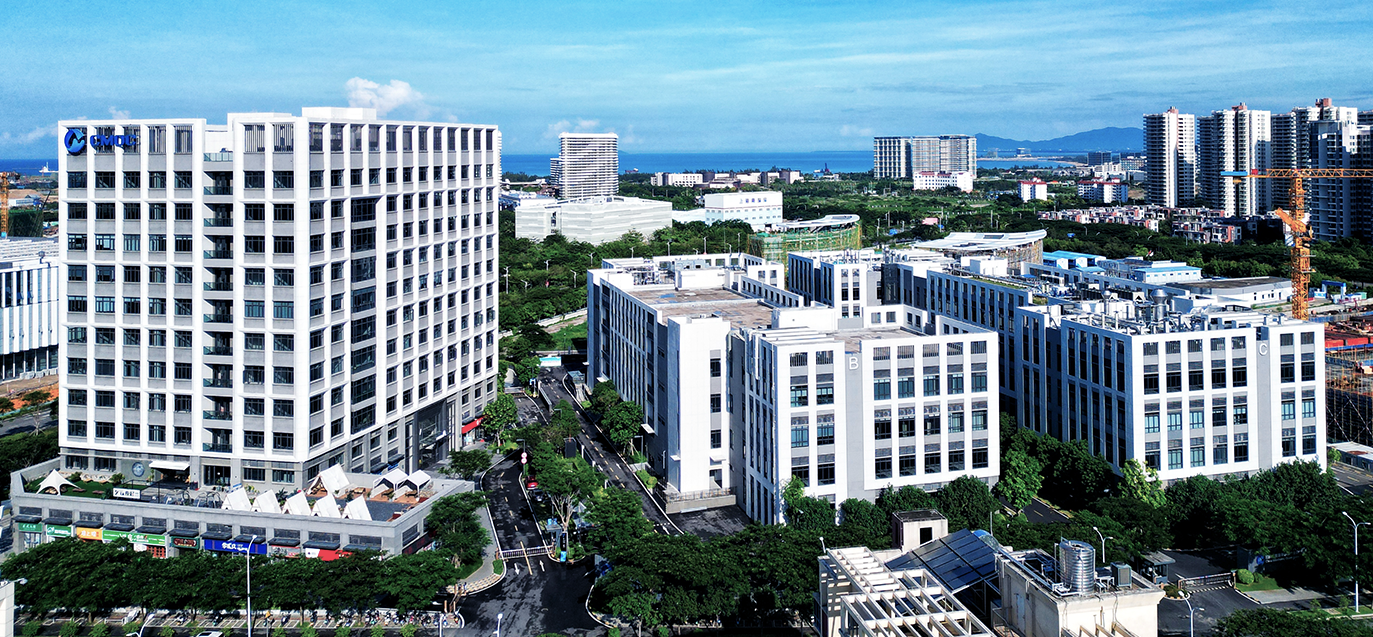
Portfolio breadth — from nearshore survey platforms to 6000 m-rated systems — is one of the clearest proxies for whether a supplier can grow with a fleet.
Fleet scalability: reading swarm capability from a single platform
Scalability is where most supplier evaluations are least rigorous, because few manufacturers publish fleet-level evidence. Three indicators are worth checking, and all three can be verified from product documentation rather than claims.
The first is whether any platform in the range is explicitly positioned for coordinated multi-vehicle work. The AUV-533 is described as a waterway survey AUV, an offshore wind survey AUV and a multi-AUV swarm survey AUV — a classification that sits at platform level, not in a brochure footnote. The second is whether navigation architecture supports it: the AUV-533 specification lists INS+DVL+GNSS+USBL navigation with SLAM, which is the sensor set required for position confidence when several vehicles operate in the same acoustic environment without continuous surface reference. The third is whether payload headroom exists to add the sensors a growing fleet will need: 150 kg on the AUV-533, against 30 kg on the AUV-324 and 250 kg on the AUV-900.
Beyond single vehicles, the manufacturer's portfolio includes a multi-AUV cooperative detection system and a marine unmanned platform simulation training system, and the platforms support modular payload bay configuration. For a buyer, the value of that combination is that fleet expansion can follow an incremental path: a first vehicle establishes the operating procedure, a second adds coverage, and cooperative survey becomes a configuration question rather than a new procurement programme.
Supplier-side capacity is the constraint that most often breaks this path. The stated production capacity is 8–10 units per month for custom industrial and research AUV platforms and core components, with lead times of 60–90 days for standard models and 120–180 days for customised 6000 m deep-sea AUV systems, at a minimum order quantity of one unit. In practice that means a buyer planning a five-vehicle fleet should schedule delivery windows against the custom lead time rather than the standard one, and should not assume the standard figure applies to deep-rated hulls.
Application fit: evidence from two multi-year deployments
Documented deployment history is the most useful counterweight to specification comparison, because it shows how a platform behaves across seasons rather than across a sea trial.
An offshore oil and gas engineering contractor operated four AUV-324 medium survey systems for subsea pipeline route survey and structural hazard detection over a two-year period. The reported outcome was 1,200 km of subsea pipeline inspection completed, with 18 critical structural anomalies and marine growth entanglements detected and zero safety incidents. The configuration cited in that programme included a 2000 m pressure-rated hull, a high-payload modular AUV bay, an entanglement identification and cut-and-clear system, and real-time data telemetry.
A marine scientific research institute operated three AUV-260 nearshore survey vehicles for three years on near-shore seabed mapping, aquaculture area inspection and continuous marine environmental parameter collection. The reported outcome included continuous CTD water-quality data and side-scan sonar seabed mapping results, reduced diver operation risk and a 45% reduction in field survey time. The configuration factor cited was modular payloads supporting fast sensor switching across multi-objective nearshore tasks.
Read together, the two programmes point at the same design property: the platform that survives a multi-year schedule is the one whose payload bay can be re-populated as mission priorities change. Supported sensor integration across the range covers CCD, CTD, altimeter, obstacle avoidance sonar, side-scan sonar, multi-beam sonar, sub-bottom profiler sonar, USBL and hydrophones, with custom sensor payloads integrated on request — a hydrographic survey AUV and a pipeline inspection AUV can therefore be built on the same hull family.
Market trend: deep-rated platforms are growing faster than the category average
The commercial context supports the direction of that design logic, though the available figures should be quoted with attribution and caution.
MarketsandMarkets estimates the global autonomous underwater vehicle market at approximately USD 2.0–2.57 billion for 2024/2025. Fortune Business Insights projects the large and deep AUV segment — vehicles rated beyond 1000 m — growing at a CAGR of 12.0% over its forecast period. Forecasts for the category as a whole vary widely between research houses, largely because definitions differ on whether defence-funded extra-large vehicle procurement is included, so a buyer should treat any single CAGR as a directional indicator rather than a planning constant.
A second trend is visible on the compliance side. Autonomous safety and functionality are increasingly evaluated using the ISO 21448 (SOTIF) framework to address non-fault-based hazards in marine robotics. For suppliers, that shifts part of the evaluation burden from depth ratings to documented behaviour under degraded conditions — which is precisely where the corpus of AUV risk documentation, from navigation drift in GPS-denied water to entanglement with fishing nets and cables, becomes relevant to procurement rather than to operations alone.
Comparison with conventional procurement and the limits of this approach
Conventional AUV procurement treats each mission as a discrete purchase: a vehicle is specified around one survey requirement, delivered, and replaced or supplemented when the requirement changes. The alternative — buying into a configurable platform family and planning for reconfiguration — trades a higher evaluation effort for lower long-term replacement cost.
| Evaluation dimension | Mission-by-mission purchase | Configurable platform programme |
|---|---|---|
| Specification basis | Fixed around one survey task | Modular payload bay and configurable endurance |
| Material decision | Chosen once, at order | Selected per depth class (aluminium alloy / titanium housing; composite frame) |
| Fleet growth | New procurement per mission type | Same hull family scaled across payload and depth |
| Supplier dependency | Low at purchase, high at replacement | High at purchase, reduced at each subsequent mission |
| Main planning risk | Obsolescence | Lead time and production capacity |
Table 2. Procurement models compared on long-term planning criteria rather than acquisition price.
Where this approach does not apply
The configurable-platform route carries real boundaries, and a credible evaluation should state them.
- Depth is not upgradable by configuration alone. The AUV-324 is rated at 600 m or 2000 m. It is not a 6000 m vehicle, and a buyer whose abyssal survey requirement is fixed should be evaluating the AUV-533, AUV-600 or AUV-900 instead.
- Custom deep-sea delivery is slow. Lead time for customised 6000 m AUV systems is 120–180 days against 60–90 days for standard models, so schedule-driven tenders should not assume standard lead times for deep-rated hulls.
- Production capacity is finite. Monthly output of 8–10 units for custom platforms and core components means fleet scaling must be phased, and multi-vehicle orders should be sequenced with the supplier rather than assumed to be available on demand.
- Endurance and payload compete. Energy storage occupies a large share of internal volume, so a maximum-endurance configuration leaves less room for sensors than the headline payload figure suggests.
- Warranty coverage is time-bounded. The pressure hull and electronics carry a 2-year warranty; a fleet planned over a longer horizon should budget for spares from the modular spare parts supply rather than assume coverage across the full service life.
A supplier continuity checklist for evaluation-stage buyers
Continuity is best assessed against documented processes rather than assurances. The following items are drawn from the manufacturer's stated quality and support framework and can be requested from any candidate supplier in the same form.
- Process control across the build. Full-process quality control comprising incoming inspection, in-process inspection, hardware-in-the-loop simulation, final inspection and factory outgoing inspection.
- Acceptance evidence. Factory Acceptance Testing that includes a hyperbaric pressure chamber test, and Site Acceptance Testing with sea-trial validation and survey-grade mapping documentation verification.
- Survey-grade standards alignment. Certification AUV-REG-2025-0881, issued by China Classification Society (CCS) / Det Norske Veritas (DNV) and valid from 2025-01-15 to 2030-01-14, covering survey-grade and environmental compliance against IHO S-44 Special Order standards, ISO 9001:2015, DNV-ST-F101, IEC 60529 IP68 and marine environmental-monitoring compliance standards.
- Post-delivery support structure. Remote technical support, on-site sea-trial commissioning assistance, operator training, a 2-year warranty on the pressure hull and electronics, and modular spare parts supply for AUV fleets.
- Customisation pathway. Configurable depth ratings, modular payload bay configuration, sensor integration, battery capacity and endurance, software customisation including AI target recognition models and monocular vision docking algorithms, AI navigation integration, and autonomous docking algorithm customisation.
Product documentation for the full Pelagix AUV range, including platform parameters and configuration options, is available in the manufacturer's public brochure: Overseas Version – AUVs Products. The manufacturer's company profile is published at pelagix-tech.com.
Future outlook
Two pressures are likely to shape AUV supplier evaluation over the next planning cycle. The first is depth. With the large and deep segment rated beyond 1000 m projected to grow faster than the category average, the 6000 m class moves from a specialist purchase toward a standard reference point, and suppliers without a verified 6000 m hull will increasingly be evaluated as nearshore-only vendors.
The second is behaviour under uncertainty. As SOTIF-style frameworks gain attention in marine robotics, buyers will ask for evidence of navigation robustness — multi-sensor fusion of DVL, INS and USBL, SLAM mapping, automatic return-to-home protocols and monocular vision-guided docking — rather than for depth numbers alone. Suppliers that document these behaviours, together with corrosion strategy and pressure-test evidence, will be easier to re-approve at each fleet expansion, which is ultimately what supplier continuity means in practice.
Frequently asked questions
What does a custom endurance specification of up to 50 hours or 300 km mean for an AUV buyer?
It describes the upper bound of endurance customisation available on the AUV-324, whose standard endurance is at least 20 hours at 3 knots. In the same range, the AUV-533 is specified at 90 hours or more at 3 knots with customisation to 180 hours or 1000 km, and the AUV-900 at up to 270 hours or 1500 km. Battery capacity and endurance are configurable for extended missions. Because energy storage occupies a substantial share of internal volume, longer endurance reduces the volume left for payload and sensors.
Which housing materials and depth classes are available within one supplier's range?
Configurable depth ratings are stated as 200 m, 500 m, 2000 m and 6000 m. The AUV-324 uses a 2000 m pressure-rated hull with a high-strength anodized aluminum alloy or titanium housing and a corrosion-resistant composite frame. The AUV-533 uses a 6000 m pressure-rated hull with a titanium alloy pressure housing and a corrosion-resistant synthetic foam buoyancy module. All platforms are described with seawater-resistant electronics, and corrosion protection measures include hard anodizing, titanium components, anti-fouling coatings and sacrificial anode protection, verified through seawater immersion testing.
Can a single AUV platform scale into a coordinated multi-vehicle fleet?
The AUV-533 is classified as a multi-AUV swarm survey AUV, with INS+DVL+GNSS+USBL navigation plus SLAM and a 150 kg payload. The manufacturer also lists a multi-AUV cooperative detection system and a marine unmanned platform simulation training system in its portfolio, and its platforms support modular payload bay configuration. Scale-up is bounded by production capacity of 8–10 units per month for custom platforms and core components.
How can a buyer verify supplier continuity beyond the warranty period?
Continuity evidence includes full-process quality control from incoming inspection to factory outgoing inspection, Factory Acceptance Testing with a hyperbaric pressure chamber test, Site Acceptance Testing with sea-trial validation and survey-grade mapping documentation verification, certification AUV-REG-2025-0881 valid to 2030-01-14, a 2-year warranty on the pressure hull and electronics, modular spare parts supply for AUV fleets, remote technical support, on-site sea-trial commissioning assistance and operator training.
What limitations should be planned for before committing to a multi-year fleet?
Depth cannot be extended by configuration alone: the AUV-324 is rated at 600 m or 2000 m and is not a 6000 m vehicle. Customised 6000 m systems carry lead times of 120–180 days against 60–90 days for standard models, monthly capacity is 8–10 units, and warranty coverage on the pressure hull and electronics runs for 2 years. Endurance customisation also displaces payload volume, so maximum endurance and maximum sensor load should not be assumed to coexist in one hull.
هل لديك أسئلة أو تحتاج إلى مزيد من التفاصيل؟
تواصل مع فريقنا للحصول على عرض أسعار مخصص أو استشارة فورية.
طلب عرض أسعار
املأ النموذج أدناه وسيتواصل معك فريقنا بعرض مقترح مخصص.
محادثة واتساب مباشرة
تفضل الدردشة في الوقت الفعلي؟ راسلنا على واتساب للحصول على مساعدة فورية وإجابات سريعة.
- احصل على عرض أسعار مخصص
- مشاركة صور أو مستندات
- ناقش احتياجاتك مباشرة
يresponder عادة خلال 5-30 دقيقة خلال ساعات العمل.