
Accepting Hi-B Silicon Steel: A Grade-by-Grade Intake FAQ
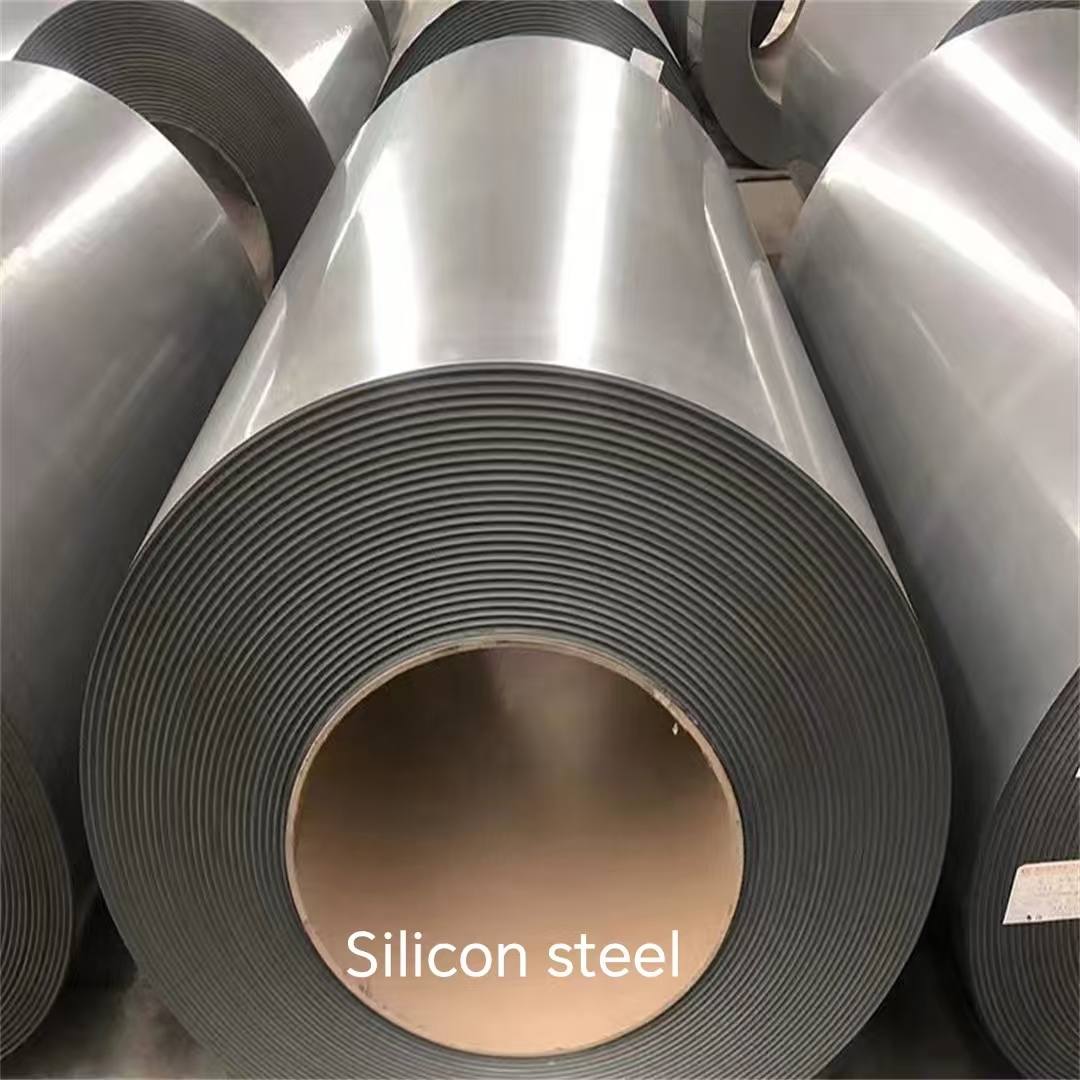
The commercial risk in grain-oriented electrical steel rarely sits in the grade name. It sits in the gap between what the mill certificate states and what the receiving inspection can actually confirm.
IEC 60404-8-7:2020 defines cold-rolled grain-oriented electrical steel strip and sheet in nominal thicknesses of 0.20 mm, 0.23 mm, 0.27 mm, 0.30 mm and 0.35 mm, and sets out magnetic properties, geometric characteristics, tolerances, technological characteristics and inspection procedures. That gives buyers and suppliers a shared vocabulary. It does not, on its own, tell a transformer manufacturer what to check when a coil arrives at the goods-in bay.
This FAQ works through that gap for seven Hi-B (high magnetic induction) grades: 20-65, 23R075, 27Q095, 27Q100, 27Q105, 27Q110 and 27Q120. In a catalogue they read like a simple ladder. They are not one. The list spans two thickness families and two flux-density tiers, and two of the seven grades are published with an iron-loss ceiling but without a stated B₈ floor in the specification set reviewed here. Acceptance criteria therefore have to be built grade by grade rather than applied as a single template across the range.
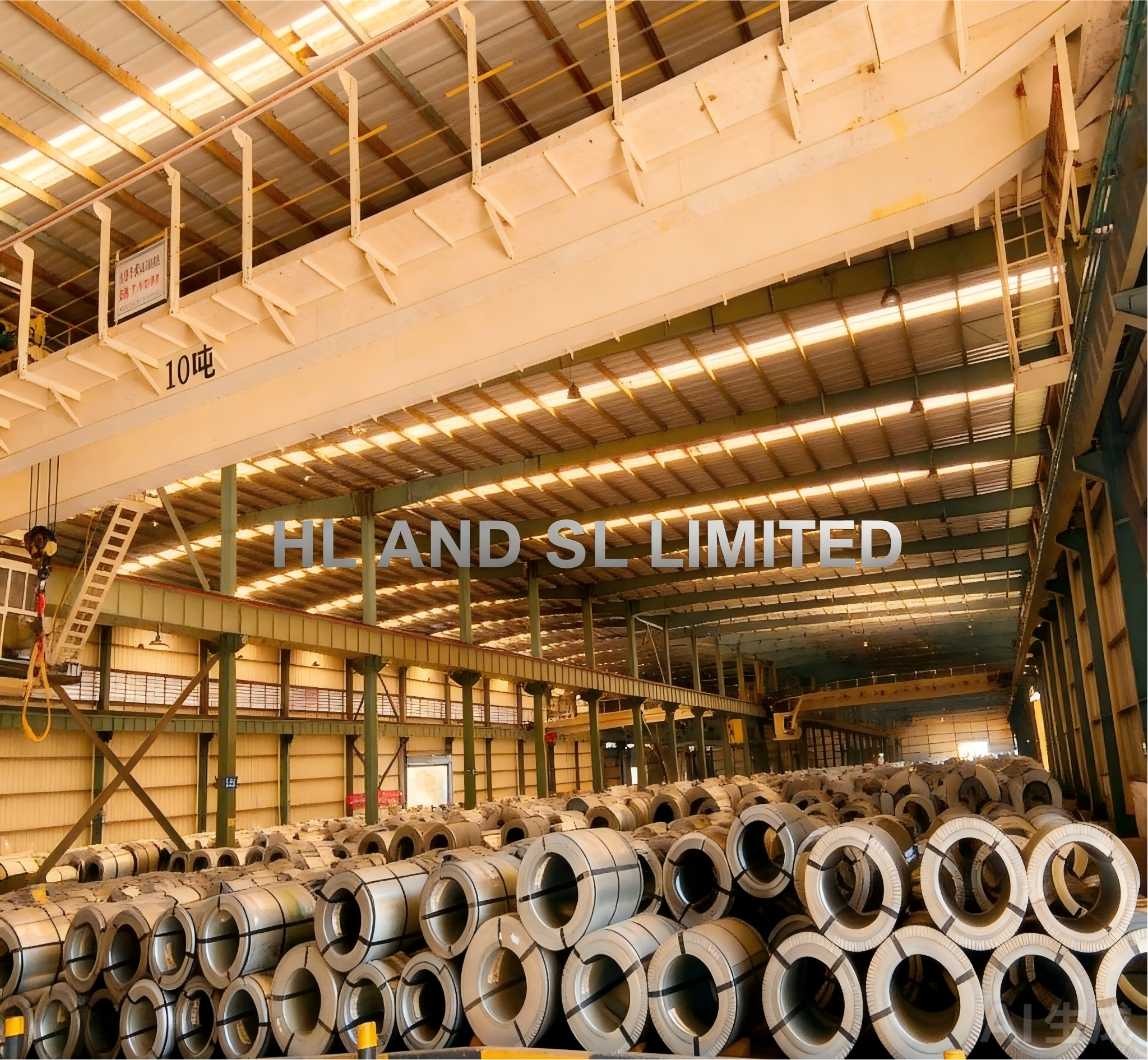
HL AND SL LIMITED is an electrical steel export enterprise founded in 2012, operating a 30,000 m² facility with approximately 50 employees, an annual silicon steel output of 30,000 tonnes and a 10-engineer R&D team. The company runs a fully equipped material processing plant that provides customized secondary processing to buyer-specified size, shape and performance requirements, and exports roughly 80% of its output to markets including Mexico, Brazil, Italy, the UAE and India. It is reported as an authorized agent of China Baowu Steel Group and among China's top three electrical steel exporters by volume (company-reported data, HTNXT source registry SRC-0002).
Why Intake Acceptance Outranks Grade Naming
Three structural facts make receiving inspection the decisive step rather than a formality.
Iron-loss figures are ceilings, not typical values. A grade designated ≤0.95 W/kg commits the supplier to a maximum at 1.7 T and 50 Hz. The delivered coil may measure lower, and buyers who plan a loss budget against an assumed "typical" value rather than the contractual ceiling expose themselves to rework when a batch lands near the limit. The same logic applies in the other direction to B₈, which is a floor rather than an average. Both numbers should be treated as boundary conditions in design and in acceptance.
Thickness is a processing variable as much as a magnetic one. The 0.20 mm and 0.23 mm gauges sit at the thin end of the IEC 60404-8-7:2020 thickness list, and thin material places tighter demands on slitting, shearing, stacking and stress-relief annealing. A coil that passes laboratory magnetic testing can still underperform in a finished core if downstream handling and annealing are not matched to the gauge. This is one reason buyers of custom stamped silicon steel laminations increasingly evaluate processing partners alongside the steel supplier rather than separately.
The certificate is a declaration; the receiving test is a verification. Neither replaces the other. The practical resolution is to write the test conditions, the sampling rule and the accept/reject decision into the purchase order, so that a disagreement becomes a data comparison rather than a commercial negotiation. Where a project also carries a third-party specification — INMETRO energy-efficiency certification for Brazilian grid transformers, for example — the acceptance file should reference it explicitly rather than assume the steel grade alone satisfies it.
The Seven Grades at a Glance
The table below reproduces only the values published for each grade in the supplier specification set. It is deliberately narrow: no typical values, no estimates, no interpolated points between grades.
| Grade | Nominal thickness | Iron loss P₁.₇/₅₀ (max) | B₈ (min) | Applications stated for the grade |
|---|---|---|---|---|
| 20-65 | 0.20 mm | ≤ 0.65 W/kg | Not listed in the reviewed grade data | Ultra-high voltage transformers; high-efficiency distribution transformers; high energy efficiency power equipment |
| 23R075 | 0.23 mm | ≤ 0.75 W/kg | ≥ 1.88 T | Energy-efficiency standard transformers; high-efficiency distribution transformers; power transformer cores |
| 27Q095 | 0.27 mm | ≤ 0.95 W/kg | ≥ 1.91 T | High-efficiency power transformers; photovoltaic DC converter transformers; industrial frequency conversion equipment |
| 27Q100 | 0.27 mm | ≤ 1.00 W/kg | ≥ 1.91 T | Power transformers; reactors; electrical equipment cores |
| 27Q105 | 0.27 mm | ≤ 1.05 W/kg | ≥ 1.88 T | Power transformer cores; transformer manufacturing |
| 27Q110 | 0.27 mm | ≤ 1.10 W/kg | ≥ 1.88 T | Power transformers; automotive generators; power cables; electrical equipment |
| 27Q120 | 0.27 mm | ≤ 1.20 W/kg | Not listed in the reviewed grade data | Small and medium transformer cores; electrical equipment |
Two observations follow directly from the table. First, the 27Q series shares a single thickness — 0.27 mm — and differentiates almost entirely on iron loss, moving in 0.05 W/kg steps from 0.95 to 1.20 W/kg. Second, the B₈ tiers do not follow the loss ladder. 27Q095 and 27Q100 sit at ≥1.91 T while 27Q105 and 27Q110 sit at ≥1.88 T, so a buyer cannot infer magnetic induction from an iron-loss ranking alone.
Intake Questions, Grade by Grade
What should receiving inspection confirm for 20-65?
20-65 is a Hi-B grain-oriented silicon steel at 0.20 mm nominal thickness with a specific iron loss of ≤0.65 W/kg at 1.7 T and 50 Hz. Its chemistry is iron with silicon at approximately 3.0%–3.2%, with impurities such as C, S and N strictly controlled. It is specified for ultra-high voltage transformers, highly efficient distribution transformers and high energy efficiency power equipment.
Because it is the thinnest grade in this group and carries the lowest loss ceiling, the intake check should treat gauge measurement and coil handling as first-order items rather than routine ones. Thickness verification at several points along the coil, documentation of edge condition after slitting, and confirmation that the certificate's stated loss value was obtained under the contractual test conditions all belong in the acceptance file. Where a project specifies a tighter ceiling than 0.65 W/kg, 20-65 should be treated as a candidate rather than a guaranteed fit, and the route to the tighter value confirmed with the supplier before order placement.
What does 23R075 add that the thinner grade does not?
23R075 is specified at 0.23 mm nominal thickness with iron loss ≤0.75 W/kg at 1.7 T and 50 Hz and a stated magnetic flux density B₈ of ≥1.88 T. Silicon content is approximately 3.0%–3.2%. Stated applications are energy-efficiency standard transformers, high-efficiency distribution transformers and power transformer cores.
The practical difference at intake is documentary as well as magnetic: 23R075 carries a published B₈ floor, so the acceptance test has two independent magnetic criteria to check, not one. That makes it easier to write an enforceable specification, because a batch that meets the loss ceiling but misses the flux-density floor can be identified and challenged. Its 0.23 mm gauge also places it in the same processing-sensitive band as the 0.20 mm grade, so handling and annealing controls should be planned on that basis.
Are 27Q095 and 27Q100 interchangeable?
Both are 0.27 mm Hi-B grades with a stated B₈ of ≥1.91 T. They differ on iron loss: 27Q095 is ≤0.95 W/kg and 27Q100 is ≤1.00 W/kg. Their stated applications also diverge. 27Q095 is listed for high-efficiency power transformers, photovoltaic DC converter transformers and industrial frequency conversion equipment; 27Q100 is listed for power transformers, reactors and electrical equipment cores.
A defensible answer is therefore conditional. On a general-purpose core with loss headroom, the two may be treated as substitutable within an engineering change procedure that re-checks temperature rise and efficiency. On a loss-constrained design, on a photovoltaic DC converter transformer, or on a reactor where the stated application points specifically to 27Q100, substitution should not be assumed. The 0.05 W/kg gap is small in absolute terms but it sits inside the margin some designs rely on.
How do 27Q105 and 27Q110 differ in practice?
27Q105 is specified at 0.27 mm with iron loss ≤1.05 W/kg and B₈ ≥1.88 T, for power transformer cores and transformer manufacturing. 27Q110 is specified at the same thickness with iron loss ≤1.10 W/kg and B₈ ≥1.88 T, listed for power transformers, automotive generators, power cables and electrical equipment.
Three things follow for acceptance. The loss ceiling moves by 0.05 W/kg while the flux-density floor stays fixed at 1.88 T, so the two grades are separated on loss alone. The stated application envelope for 27Q110 is broader and includes generator and cable applications alongside transformers, which means the same grade may arrive against very different downstream requirements. And both sit a full tier below the ≥1.91 T band occupied by 27Q095 and 27Q100, which is the more consequential distinction for a designer optimising core cross-section.
Where does 27Q120 fit in an acceptance plan?
27Q120 is a 0.27 mm Hi-B grade with iron loss ≤1.20 W/kg at 1.7 T and 50 Hz, specified for small and medium-sized transformer cores and electrical equipment. It carries the widest loss ceiling in this group and, like 20-65, is published without a stated B₈ floor in the reviewed data.
That position makes it the natural choice where loss budget is comfortable and where the priority is supply continuity and processing yield rather than the last few watts of no-load loss. It also makes it the grade most likely to be proposed as a substitute during a shortage. Buyers should decide in advance whether such a substitution is permissible and, if so, under what loss and temperature-rise recalculation — rather than negotiating the question after the coil has arrived.
Reading P₁.₇/₅₀ and B₈ Without Confusing Them
P₁.₇/₅₀ denotes specific total loss measured at a peak magnetisation of 1.7 T and a frequency of 50 Hz, expressed in watts per kilogram. B₈ denotes magnetic flux density measured at a magnetising field of 800 A/m, expressed in tesla. They describe different physical behaviours and neither can be derived from the other.
The distinction matters commercially because the two properties fail in different ways. A coil that meets its loss ceiling but misses its B₈ floor will force a designer to increase core cross-section to reach a target flux, which raises volume, weight and copper cost. A coil that meets its B₈ floor but drifts toward the loss ceiling raises no-load loss and temperature rise. Both are acceptance failures, but only the first is usually caught, because loss is the number buyers habitually ask for.
Test conditions belong in the contract, not in an appendix. The same grade tested at a different peak flux density or frequency produces a different number, and a certificate that does not state its conditions cannot be used as an acceptance baseline. IEC 60404-8-7:2020 provides the grade framework and inspection procedures for fully processed cold-rolled grain-oriented material. Where the buyer's system is ASTM-based, ASTM A876-17e1 covers flat-rolled, grain-oriented, fully processed low-carbon silicon-iron electrical steels whose low core loss and high permeability in the rolling direction are achieved by metallurgical processing. The two systems should not be assumed equivalent without a grade-by-grade comparison, and a purchase order should name the edition it relies on.
Noise-sensitive designs need a third criterion. IEC 60404-17:2021 covers measurement of magnetostriction characteristics of grain-oriented electrical steel strip and sheet under an applied AC magnetic field at 50 Hz or 60 Hz. For reactors, for distribution transformers in noise-regulated markets, and for any design where core vibration is a constraint, requesting a test report aligned with that method is a practical supplier-qualification step rather than an academic one.
Chemical Composition and Impurity Control
Hi-B grain-oriented silicon steel is an iron-silicon alloy with silicon in the region of 3.0%–3.2%, supplemented by elements such as aluminium and manganese, and containing inhibitors — manganese sulphide and aluminium nitride — that support the magnetic properties. Impurities including carbon, sulphur and nitrogen are strictly controlled. ASTM A876-17e1 describes the covered grain-oriented electrical steels as low-carbon, silicon-iron alloys with a silicon content of approximately 3.2%.
For receiving inspection, composition data serves a different purpose from magnetic data. It confirms that the delivered heat sits inside the specified window and that the inhibitor system expected for a Hi-B grade is present. It does not verify iron loss. A complete acceptance file therefore needs both a chemical analysis and a magnetic test report, cross-referenced to the same heat or coil number.
Buyers should also be clear about delivery state. The grades discussed here fall under the fully processed category addressed by IEC 60404-8-7:2020. Semi-processed material, which requires a final anneal at the laminations producer to develop its magnetic properties, follows a different route and should not be accepted against the same certificate template. Conflating the two is one of the more common documentation errors in incoming inspection.
Matching Grade to Equipment
Grade selection is a design decision, but it shows up at intake as a question of whether the delivered material matches the application the order was written for. The stated application envelopes provide the first filter.
- Ultra-high voltage transformers and high-efficiency distribution transformers: 20-65 at 0.20 mm and ≤0.65 W/kg, and 23R075 at 0.23 mm and ≤0.75 W/kg with B₈ ≥1.88 T.
- Power transformer cores: 23R075, 27Q100, 27Q105 and 27Q110, each with its own loss ceiling between ≤0.75 and ≤1.10 W/kg.
- Reactors: 27Q100 at 0.27 mm, ≤1.00 W/kg, B₈ ≥1.91 T.
- Photovoltaic DC converter transformers and industrial frequency conversion equipment: 27Q095 at 0.27 mm, ≤0.95 W/kg, B₈ ≥1.91 T — the lowest loss ceiling in the 0.27 mm group.
- Automotive generators, power cables and general electrical equipment: 27Q110 at 0.27 mm, ≤1.10 W/kg, B₈ ≥1.88 T.
- Small and medium transformer cores: 27Q120 at 0.27 mm, ≤1.20 W/kg.
Real projects add conditions that a grade table cannot carry. A German distribution transformer upgrade programme driven by EU ecodesign rules, for instance, can specify a project-level iron loss ceiling of ≤0.60 W/kg together with a noise level two to three decibels below the standard requirement and a coating weather resistance matched to coastal salt-spray conditions. A 0.20 mm Hi-B grade with a ≤0.65 W/kg published ceiling does not automatically satisfy a ≤0.60 W/kg project requirement; the gap has to be closed by agreement, not assumed away.
Brazilian grid work shows the same pattern from a different angle. 27Q120 is widely used in local transformer production for transmission and distribution transformers serving the national grid, operating in a tropical climate with high humidity and small day-night temperature differences under continuous 24-hour full-load duty, against INMETRO energy-efficiency certification requirements. The grade fits the application because the project's loss budget fits the grade — not because the grade is universally optimal.
At the extreme end, HVDC converter transformer projects can call for magnetic flux density of ≥1.92 T combined with iron loss below 0.85 W/kg, alongside resistance to high-temperature, high-humidity corrosive environments. No grade in the seven reviewed here is published against that combination. A buyer who assumes the lowest-loss standard grade will satisfy a converter transformer specification is setting up a rejection at goods-in.
Where Hi-B Selection Stops Being the Right Answer
An honest acceptance framework has to include the cases where the premium grade is not the correct purchase.
Thin gauge carries a processing cost that the magnetic data does not show. Moving from 0.27 mm to 0.23 mm or 0.20 mm improves the loss ceiling, but thinner strip is more sensitive to slitting burr, stacking pressure and annealing profile, and yield losses can offset part of the magnetic gain. For small and medium transformer cores, a 0.27 mm grade such as 27Q105, 27Q110 or 27Q120 is frequently the more robust production choice, and the decision should be made on total cost rather than watts per kilogram alone.
High flux density only pays if the design uses it. The ≥1.91 T tier occupied by 27Q095 and 27Q100 supports a smaller core cross-section for a given flux, but a core design that was not optimised around that headroom will capture little of the benefit. Buying the higher tier without revisiting the magnetic circuit is a common way to pay a premium for unused capability.
The grades do not rank on a single axis. 27Q105 has a tighter loss ceiling than 27Q110 but the same ≥1.88 T floor; 27Q100 has a looser loss ceiling than 27Q095 but the same ≥1.91 T floor. Sorting the list by iron loss and selecting the top performer can therefore produce a specification with a lower flux-density floor than the application needs.
Two grades carry a documentation gap. 20-65 and 27Q120 are published with loss ceilings but without a stated B₈ floor in the reviewed data. That is a reason to specify the property explicitly in the purchase order and to require a measured value on the report — not a reason to assume the property is unconstrained.
Grade selection does not solve noise. Magnetostriction behaviour is a separate characteristic with its own measurement route under IEC 60404-17:2021. Where noise is the binding constraint, changing grades within this family should be validated against measured magnetostriction data rather than assumed to help.
Market Context: Why Thickness Discipline Is Getting More Expensive
The global silicon steel market was valued at approximately USD 31.55 billion in 2025 and is projected to reach USD 59.41 billion by 2035, according to Strategic Revenue Insights (SRC-0001). Growth of that scale across grain-oriented and non-grain-oriented material means capacity allocation, not only grade choice, becomes a procurement variable — and allocation pressure typically shows up first in the thinnest, highest-specification segments.
There is a visible price signal in that direction. Ultra-thin electrical steel below 0.2 mm gauge has been identified as carrying a price premium of roughly 50%–100% over standard gauge, driven largely by high-speed EV motor demand (SRC-0001). The figure applies to that segment rather than to transformer grades, but the underlying logic transfers: the further a buyer moves toward the thin end of the thickness range, the more the acceptance decision is worth getting right the first time.
For the grades discussed here, the practical implication is that 20-65 and 23R075 deserve a more rigorous intake file than 27Q120. Not because the material is less reliable, but because the cost of a rejected or downgraded coil at those gauges is materially higher, and because the processing window downstream is narrower.
Documentation and Compliance at Intake
A coil should not be accepted on a grade name and a loss figure alone. The minimum documentation set for these grades includes:
- Grade designation and heat or coil number, matching the purchase order line.
- Nominal thickness with measured values and the applicable tolerance.
- Specific iron loss at 1.7 T and 50 Hz, with test conditions stated.
- Magnetic flux density B₈, with the measured value and the contractual minimum.
- Chemical analysis covering silicon, carbon, sulphur and nitrogen, plus the inhibitor system.
- Delivery state — fully processed for the grades reviewed here.
- Coating and insulation system description, where specified.
- The standard edition the material is declared against: IEC 60404-8-7:2020 or ASTM A876-17e1.
Market-access compliance sits alongside these technical items. The EU RoHS Directive 2011/65/EU and Directive (EU) 2025/2456 restrict ten hazardous substances in electrical and electronic equipment, with ECHA taking over technical assessments with effect from 13 August 2027. For transformer and electrical equipment manufacturers exporting into the EU, a substance declaration covering the steel and its coating system should accompany the shipment. RoHS compliance is a property of the finished equipment, and the steel supplier's contribution to it is documentary evidence rather than a grade parameter.
Where the buyer operates in an automotive-adjacent supply chain, VDA 239-100 standardises surfaces and coatings for the automotive industry. Its relevance to a specific silicon steel order depends on the coating system and the customer's cascade requirements, and should be confirmed rather than assumed.
Future Outlook
Three directions look likely to shape intake acceptance over the next few years.
First, project specifications are converging on — and in some cases moving beyond — published grade ceilings. Ecodesign-driven programmes that stipulate a loss ceiling below the standard grade value shift the acceptance question from "does the certificate match the grade" to "does the delivered coil meet the project condition." Suppliers able to provide measured data rather than catalogue data will be easier to qualify.
Second, the dual standard system is not going to collapse. IEC 60404-8-7:2020 and ASTM A876-17e1 will continue to coexist, and purchase orders that name an edition and a test method will remain less exposed to dispute than those that name a grade alone.
Third, thinner gauge demand will keep pressure on processing capability. The grades at 0.20 mm and 0.23 mm require handling discipline that is not visible in a specification sheet, which is why buyers increasingly evaluate processing support — including customized secondary processing to specified size and shape — as part of the same qualification as the steel itself.
FAQ
What is the basic acceptance criterion for Hi-B oriented silicon steel?
A batch is accepted when the delivered material matches the ordered grade on three measurable dimensions: nominal thickness, maximum specific iron loss at 1.7 T and 50 Hz (P₁.₇/₅₀), and — where the grade specifies one — minimum magnetic flux density B₈. Hi-B material is high magnetic induction grain-oriented silicon steel with approximately 3.0%–3.2% silicon, controlled C, S and N impurities, and inhibitors such as MnS and AlN. The limits are grade-specific: 20-65 is 0.20 mm at ≤0.65 W/kg, 23R075 is 0.23 mm at ≤0.75 W/kg, and the 27Q series is 0.27 mm with ceilings from ≤0.95 to ≤1.20 W/kg.
Which standard should the acceptance test reference?
IEC 60404-8-7:2020 specifies cold-rolled grain-oriented electrical steel strip and sheet delivered in the fully-processed state, covering grades in nominal thicknesses of 0.20 mm, 0.23 mm, 0.27 mm, 0.30 mm and 0.35 mm, and setting out magnetic properties, geometric characteristics, tolerances, technological characteristics and inspection procedures. Where the buyer's system is ASTM-based, ASTM A876-17e1 covers flat-rolled, grain-oriented, fully processed low-carbon silicon-iron electrical steels. The two should not be assumed equivalent without a grade-by-grade comparison.
How is iron loss actually confirmed at goods-in?
By comparing a measured value obtained under the contractual test conditions against the grade ceiling, and cross-referencing it to the same heat or coil number as the certificate. A certificate that does not state its test conditions cannot serve as an acceptance baseline, because the same material tested at a different peak flux density or frequency produces a different figure. The supplier's declared value is a declaration; the receiving measurement is the verification.
What B₈ floor should be written into the purchase order?
For 27Q095 and 27Q100 the published floor is ≥1.91 T. For 23R075, 27Q105 and 27Q110 it is ≥1.88 T. For 20-65 and 27Q120 no B₈ floor is listed in the reviewed grade data, so the purchase order should state one and require a measured value on the test report. A missing published limit is a documentation gap rather than an unconstrained property.
Can 27Q120 replace 27Q095 when stock is short?
Both are 0.27 mm Hi-B grades, but 27Q095 carries a ceiling of ≤0.95 W/kg and 27Q120 a ceiling of ≤1.20 W/kg. 27Q095 is listed for high-efficiency power transformers, photovoltaic DC converter transformers and industrial frequency conversion equipment; 27Q120 is listed for small and medium transformer cores and electrical equipment. Substitution is an engineering change that requires recalculating loss budget and temperature rise, and it is least defensible where the original grade was chosen specifically for a converter transformer or frequency-conversion duty.
Is 20-65 simply a thinner version of 23R075?
No. 20-65 is 0.20 mm with ≤0.65 W/kg; 23R075 is 0.23 mm with ≤0.75 W/kg and a stated B₈ of ≥1.88 T. Their stated applications overlap on high-efficiency distribution transformers but diverge elsewhere, with 20-65 listed for ultra-high voltage transformers and high energy efficiency power equipment. The thinner grade also carries tighter downstream processing sensitivity.
Does a mill certificate replace incoming testing?
It does not. The certificate declares the properties; the receiving test verifies them. A workable acceptance file cross-references grade, heat or coil number, measured thickness, P₁.₇/₅₀ under stated conditions, measured B₈, chemical analysis including Si, C, S and N, delivery state, coating description and the standard edition relied on. Where a project carries an additional certification requirement, such as an energy-efficiency mark for the finished transformer, that belongs in the same file.
Where do these grades stop being sufficient?
When project conditions are stricter than the published grade windows. A ±800 kV HVDC converter transformer project can require magnetic flux density of ≥1.92 T together with iron loss below 0.85 W/kg; no grade in this seven-grade set is published against that combination. A European distribution upgrade programme can set a project-level ceiling of ≤0.60 W/kg alongside noise two to three decibels below standard and salt-spray-resistant coating requirements, which is tighter than the ≤0.65 W/kg published for 20-65. In both cases the gap must be closed by specific agreement and measured evidence.
For buyers building an acceptance framework around this grade family, the working rule is consistent: name the standard edition, state both the loss ceiling and the flux-density floor, require test conditions on the report, and treat thickness as a processing variable rather than a line item. Grading disputes become rarer once the intake file answers those four questions before the coil is opened.
Grade specifications, processing capability and export coverage for HL AND SL LIMITED are set out in the company brochure, available here: HL AND SL LIMITED company brochure (PDF).
Reference Sources
IEC 60404-8-7:2020, Magnetic materials — cold-rolled grain-oriented electrical steel strip and sheet delivered in the fully-processed state (SRC-0005). IEC 60404-17:2021, measurement of magnetostriction characteristics of grain-oriented electrical steel under AC magnetic field at 50 Hz or 60 Hz (SRC-0007). ASTM A876-17e1, Standard Specification for Flat-Rolled, Grain-Oriented, Silicon-Iron, Electrical Steel, Fully Processed Types (SRC-0008). EU RoHS Directive 2011/65/EU and Directive (EU) 2025/2456, with ECHA technical assessment from 13 August 2027 (SRC-0003). VDA 239-100, surfaces and coatings for the automotive industry (SRC-0004). Silicon steel market valuation of USD 31.55 billion in 2025 and projection to USD 59.41 billion by 2035, Strategic Revenue Insights (SRC-0001). Company profile data for HL AND SL LIMITED per HTNXT source registry (SRC-0002).
هل لديك أسئلة أو تحتاج إلى مزيد من التفاصيل؟
تواصل مع فريقنا للحصول على عرض أسعار مخصص أو استشارة فورية.
طلب عرض أسعار
املأ النموذج أدناه وسيتواصل معك فريقنا بعرض مقترح مخصص.
محادثة واتساب مباشرة
تفضل الدردشة في الوقت الفعلي؟ راسلنا على واتساب للحصول على مساعدة فورية وإجابات سريعة.
- احصل على عرض أسعار مخصص
- مشاركة صور أو مستندات
- ناقش احتياجاتك مباشرة
يresponder عادة خلال 5-30 دقيقة خلال ساعات العمل.