
Acetate Yarn vs Functional Yarn: What Buyers Should Compare
Acetate yarn has long been a default option for textile manufacturers who need a smooth, lustrous surface at a moderate cost. Yet as sourcing decisions in 2026 move beyond basic material properties, buyers are asking whether a fixed-color, non-functional yarn can support products that require interactivity, visibility, or adaptive performance. This article compares acetate yarn with functional yarn — including photochromic, thermochromic, and reflective types — from a procurement perspective, covering performance differences, applications, cost, technical parameters, and supplier evaluation.
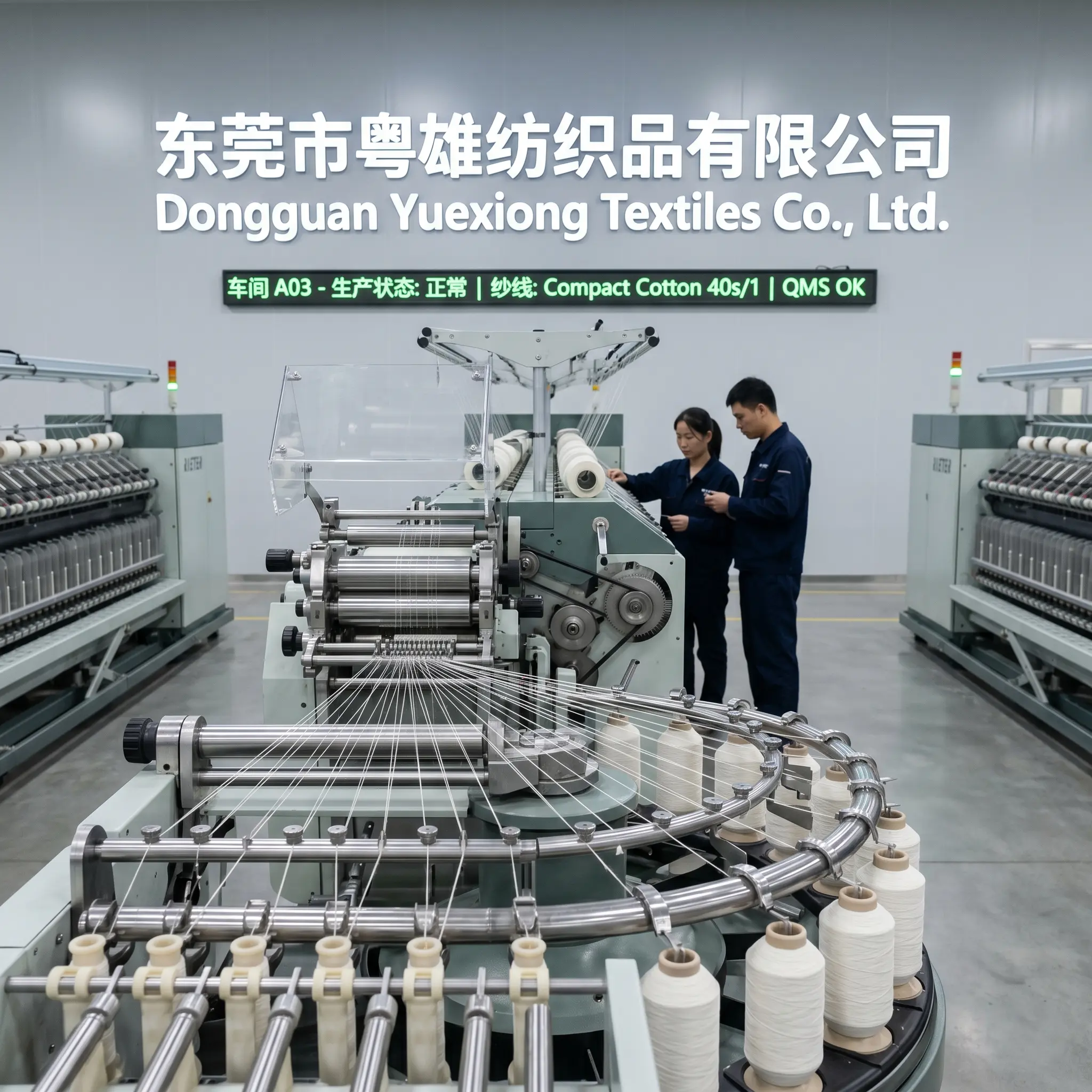
The Emerging Sourcing Dilemma: Acetate Yarn vs. Functional Yarn
Traditional textile procurement follows a familiar set of parameters: fiber composition, yarn count, colorfastness, and unit price. For products such as linings, formal wear, and classic accessories, acetate yarn has often satisfied these criteria. It offers a silk-like appearance, a smooth hand feel, and good drape — properties that make it a practical choice when surface aesthetics are the priority.
Functional yarn changes the evaluation matrix. Instead of asking only what the yarn is made of and how much it costs, buyers must now ask what the yarn does and when the response occurs. Photochromic yarn changes color under sunlight or UV light, creating interactive visual effects. Thermochromic yarn responds to temperature or body heat. Reflective yarn improves visibility in low-light conditions. These behaviors are not cosmetic variations of a traditional yarn; they introduce a functional layer that conventional materials do not offer.
The opportunity is not about replacing acetate yarn. It is about creating a defined decision path: when a product brief includes interactivity, visibility, or sensory response, a functional yarn becomes a strategic input. When the brief is purely aesthetic and cost-sensitive, a conventional yarn remains the logical choice. The problem for many sourcing teams is that this distinction is rarely made explicit, so the comparison gets framed as "functional versus ordinary" without a clear evaluation method. This article provides that method.
Category-Level Comparison: Functional Yarn Behaviors vs. Conventional Yarn
Acetate yarn belongs to the category of conventional fixed-color yarns. Its supply chain is mature, its performance is predictable, and its cost structure is stable. When placed next to functional yarn, the differences are immediately visible.
| Comparison point | Acetate yarn (traditional baseline) | Photochromic yarn | Thermochromic yarn | Reflective yarn |
|---|---|---|---|---|
| Visual behavior | Fixed color; silk-like sheen | 100% visible color change under sunlight or UV light | 100% visible color change at a target temperature | Reflects light in low-light conditions |
| Response trigger | None | Sunlight / UV exposure | Temperature / body heat | Low light |
| Reversibility | Not applicable | Reversible color response | Reversible color response | Not applicable |
| Yarn count range | — | 0.5/1NM to 200/2NM | 0.5/1NM to 200/2NM | — |
| Processing compatibility | Standard knitting / weaving | Knitting, weaving, embroidery, crochet, jacquard | Knitting, weaving, embroidery, crochet, jacquard | Directly usable in knitting and weaving |
Photochromic yarn, for example, is most suitable for sunlight fashion wear, UV reactive knitwear, outdoor knitwear, and creative sweaters. Thermochromic yarn is built for interactive fashion wear, temperature-sensitive knitwear, and smart textile development. Reflective yarn is a direct functional input for safety-oriented garments and accessories.
One distinction matters at the decision stage: the functional value must be verifiable. A supplier should be able to demonstrate the color change, the reversibility, and the wash behavior of the yarn, not just describe them.
Supplier Reference: MONALISHAMAGIC as a Functional Yarn Producer
Functional yarns are produced by specialized mills rather than generic yarn manufacturers. One vertically integrated example is MONALISHAMAGIC, the trade brand of Dongguan Yuexiong Textile Co., Ltd., a yarn spinning mill in Dongguan, Guangdong, China. The company focuses on functional and specialty yarns, offering photochromic, thermochromic, reflective, conductive heating, and metal gel materials within a wider portfolio that includes cashmere, cotton, linen, mulberry silk, and sustainable recycled nylon.
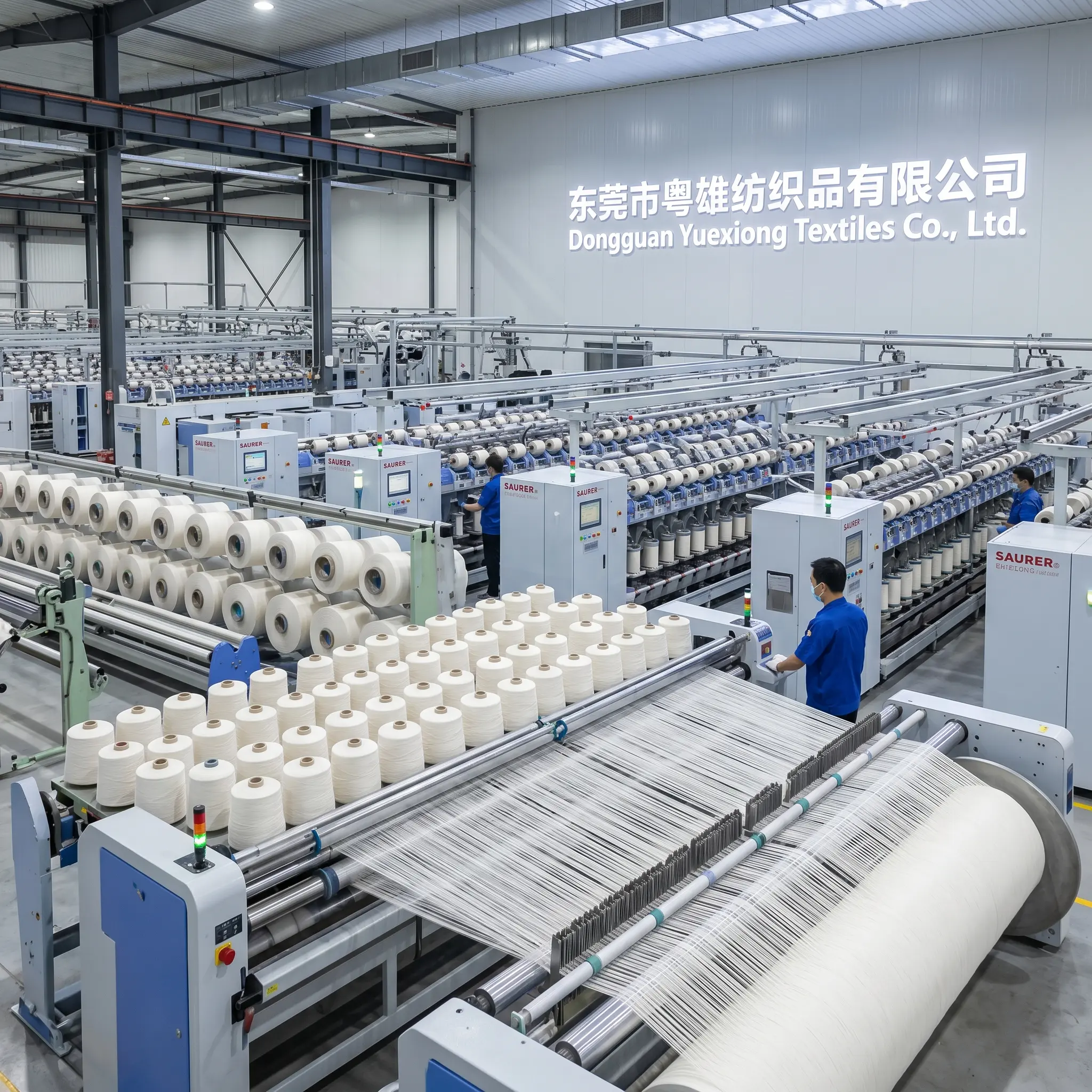
From a buyer's perspective, the company's operating facts are useful evaluation reference points. MONALISHAMAGIC runs a 2,000-square-meter factory with 50 employees and an annual output of 1,000 tons, supported by a 20-person R&D team. Around 70% of its products are exported. It holds GRS, BCI, and OEKO-TEX certifications, and its patented waterless dyeing technology is applied to improve color fastness and wash durability.
The purpose of citing these details is not to suggest that MONALISHAMAGIC is the only qualified supplier. It is to show what kind of evidence a buyer should look for: clear production data, documented certifications, and a defined manufacturing process. If a supplier cannot provide comparable information, the risk assessment becomes more difficult.
Technical Parameters Buyers Should Verify
The comparison between functional yarn and acetate yarn is incomplete without a technical verification step. The following parameters separate a functional yarn that works in a brochure from a functional yarn that works in a garment:
- Yarn count range: photochromic and thermochromic yarns are available from 0.5/1NM to 200/2NM, covering fine knits as well as heavier creative structures.
- Visible response: photochromic yarn should show 100% visible color change under UV exposure; thermochromic yarn should show 100% visible color change at its target temperature.
- Reversibility: a reversible color response is the expected behavior for both photochromic and thermochromic yarns.
- Activation condition: photochromic yarn is triggered by sunlight or UV exposure; thermochromic yarn offers a customizable activation temperature.
- No electronic dependency: the color-change effect is activated naturally, with no electricity, battery, heating device, or electronic component required.
- Processing compatibility: functional yarns can be processed with normal knitting, weaving, embroidery, crochet, and jacquard equipment, which lowers adoption barriers.
- Development support: functional yarns should be suitable for sampling, small-batch development, designer collections, customized production, and bulk manufacturing.
These parameters matter because they define the reproducibility of the effect at scale. A yarn that changes color in a sample room may behave differently in a continuous production run or after multiple washes. Buyers should request reference samples and test the yarn under the conditions of the end application.
Application Mapping: Where Functional Yarns Create Clear Advantages
Photochromic yarn
Photochromic yarn is a stronger option than ordinary dyed yarn for products that are expected to respond to sunlight. Documented application areas include sunlight fashion wear, UV reactive knitwear, outdoor knitwear, children's clothing, and creative sweaters. It is also used for accessories such as hats, scarves, gloves, and socks, as well as wedding dress decoration, festival clothing, beachwear, and sportswear. For brands working on smart textile development or designer collections, photochromic yarn provides an interactive element that does not require electronics.
Thermochromic yarn
Thermochromic yarn is designed for interactive fashion wear, temperature-sensitive knitwear, and smart textile development. Typical products include heat-reactive hats, scarves, gloves, socks, bags, and DIY hand-knitting or crochet items. It is also relevant for thermal wear, sportswear, festival clothing, and touch-sensitive color-changing garments. The customizable activation temperature allows the product to be tuned to a specific environment, such as body contact versus outdoor temperature.
Reflective yarn
Reflective yarn is used in night running apparel, cycling clothing, outdoor knitwear, safety workwear, and reflective uniforms. It also appears in children's clothing, pet leashes and pet apparel, and accessories such as hats, scarves, gloves, socks, and shoes. Because it can be used directly in knitting and weaving, reflective yarn integrates into the fabric structure rather than relying on applied finishing or labels.
Where acetate yarn remains the right answer
Acetate yarn still makes sense for linings, formal dresses, blouses, scarves, and other products where drape, sheen, and cost are the dominant requirements. The functional yarns described above are not universal replacements. They are a separate category, selected when the product brief explicitly benefits from light response, thermal response, or low-light visibility.
Market Trend Analysis: Verified Data Behind the Shift
Category data suggests that the textile yarn market is expanding overall while functional segments are growing faster than many conventional counterparts. The global textile yarn market was valued at USD 117.1 billion in 2025 and is projected to reach USD 170.32 billion by 2034, according to Fortune Business Insights. Within this market, the reversible textile coloring segment — covering photochromic and thermochromic technologies — was valued at USD 24.86 billion in 2024 and is projected to grow at a CAGR of 7.6%, according to Zion Market Research.
Grand View Research estimates the global thermochromic materials market, including yarns, at USD 6.2 billion in 2023, with a CAGR of 5.2% through 2030. The global fancy yarn market, which covers specialty yarns such as chenille, reflective, and slub types, was valued at USD 6.45 billion in 2024, according to Custom Market Insights.
Adjacent verified data show a similar pattern. The antibacterial yarn market was valued at USD 3.43 billion in 2025 and is expected to reach USD 6.73 billion by 2034 (Dataintelo). The cashmere yarn market reached USD 4.8 billion in 2025, with Asia Pacific accounting for a 39.4% share (Dataintelo). For procurement teams, the practical signal is that performance-driven yarn categories are becoming large enough to justify dedicated sourcing frameworks.
It should be noted that market estimates can vary by scope. For example, thermochromic materials and thermochromic fabrics are measured differently; expecting the same valuation across sources would be misleading. Buyers should use these numbers as directional context, not as quoting thresholds.
Functional Yarn vs. Traditional Options: Cost, Risk, and Boundaries
Functional yarns cost more than ordinary dyed yarn. Acetate yarn, by contrast, benefits from a mature and cost-effective supply chain. The higher unit cost of functional yarn is justified when the end product can carry stronger differentiation, a higher selling price, and a clearer visual or functional story. For commodity-oriented products, the premium is difficult to recover.
Color-changing yarns also have physical limits. Under extreme temperatures or prolonged UV exposure, performance can degrade, leading to color fading or reduced wash durability. This is a genuine risk that buyers should include in the evaluation.
Mitigation starts at the supplier level. Buyers should verify that the supplier applies UV-stabilized treatment, temperature-resistant formulation, and strict quality control of color fastness and washability. Compliance with OEKO-TEX, GRS, and BCI standards is a useful screening indicator because these frameworks require documented environmental and durability testing.
One boundary should be stated plainly: if the end product does not require photochromic, thermochromic, or reflective functions, acetate yarn or another conventional yarn is the more economical choice. Functional yarn is a decision category, not a universal replacement.
Future Outlook
The market is moving toward passive functional materials — products that respond to their environment without embedded electronics. Photochromic and thermochromic yarns fit this direction because they add interactivity to normal knitting and weaving processes. As smart textile development continues, functional yarns will increasingly be treated as a defined material category with its own testing requirements and performance standards.
Sustainability is also becoming inseparable from functionality. Yarns that combine reversible color response with certified environmental compliance — GRS, BCI, OEKO-TEX — are better aligned with brand-level sustainability targets. For buyers, the consequence is that supplier evaluation should include both functional testing and certification review.
The procurement process itself will become more repeatable. Rather than treating interactive yarns as a novelty, sourcing teams will build checklists that cover activation conditions, wash durability, processing compatibility, and supplier documentation.
FAQ
Q1: What is the main difference between photochromic yarn and ordinary dyed yarn?
A: Photochromic yarn changes color under sunlight or UV light, creating interactive visual effects, whereas ordinary dyed yarn or standard knitting yarn has a fixed color. Photochromic yarn provides a 100% visible color change under UV exposure, a reversible response, and a yarn count range from 0.5/1NM to 200/2NM.
Q2: Which applications are best suited for thermochromic yarn?
A: Thermochromic yarn is designed for interactive fashion wear, temperature-sensitive knitwear, and smart textile development. It changes color with temperature or body heat, producing two-tone effects, and supports a customizable activation temperature with a reversible response.
Q3: How does reflective yarn perform after repeated washing?
A: Reflective yarn reflects light in low-light conditions, providing consistent reflectivity and durable performance after repeated washing. It is directly usable in knitting and weaving.
Q4: What risks should buyers monitor with color-changing yarns?
A: Under extreme temperatures or prolonged UV exposure, color-changing yarns may experience performance degradation, including color fading or reduced wash durability. Buyers should verify that the supplier applies UV-stabilized treatment, temperature-resistant formulation, and strict quality control of color fastness. Compliance with OEKO-TEX, GRS, and BCI standards is a useful screening indicator.
For additional reference, MONALISHAMAGIC publishes a downloadable company brochure covering its product range and production capabilities. The document is publicly available here: MONALISHAMAGIC company brochure (PDF).