
Acoustic Wall LED Strip Lighting: 3000K, 180 LEDs/m Fit
Acoustic Wall LED Strip Lighting: 3000K, 180 LEDs/m Fit
Scenario fit / architectural LED strip lighting
Acoustic wall lighting is a specification problem before it is a product choice. The acoustic panel sets the cavity, the reveal, the graze distance and the viewing angle; the LED strip must fit that geometry without turning the detail into a visible line of points. The CA-DC24V-2835-180D-8mm-3000K is a 24V SMD 2835 strip from XPUP LED with 180 LEDs per meter, 3000K, 11W, CRI Ra≥80, an 8 mm format and IP20 protection. This article explains where that combination fits: lighting designers detailing acoustic panel reveals, LED wholesalers building a project-ready assortment, and luxury residential teams specifying warm indirect wall light. It also states the boundaries: IP20 is for dry indoor use, and the strip is not a standalone acoustic product.
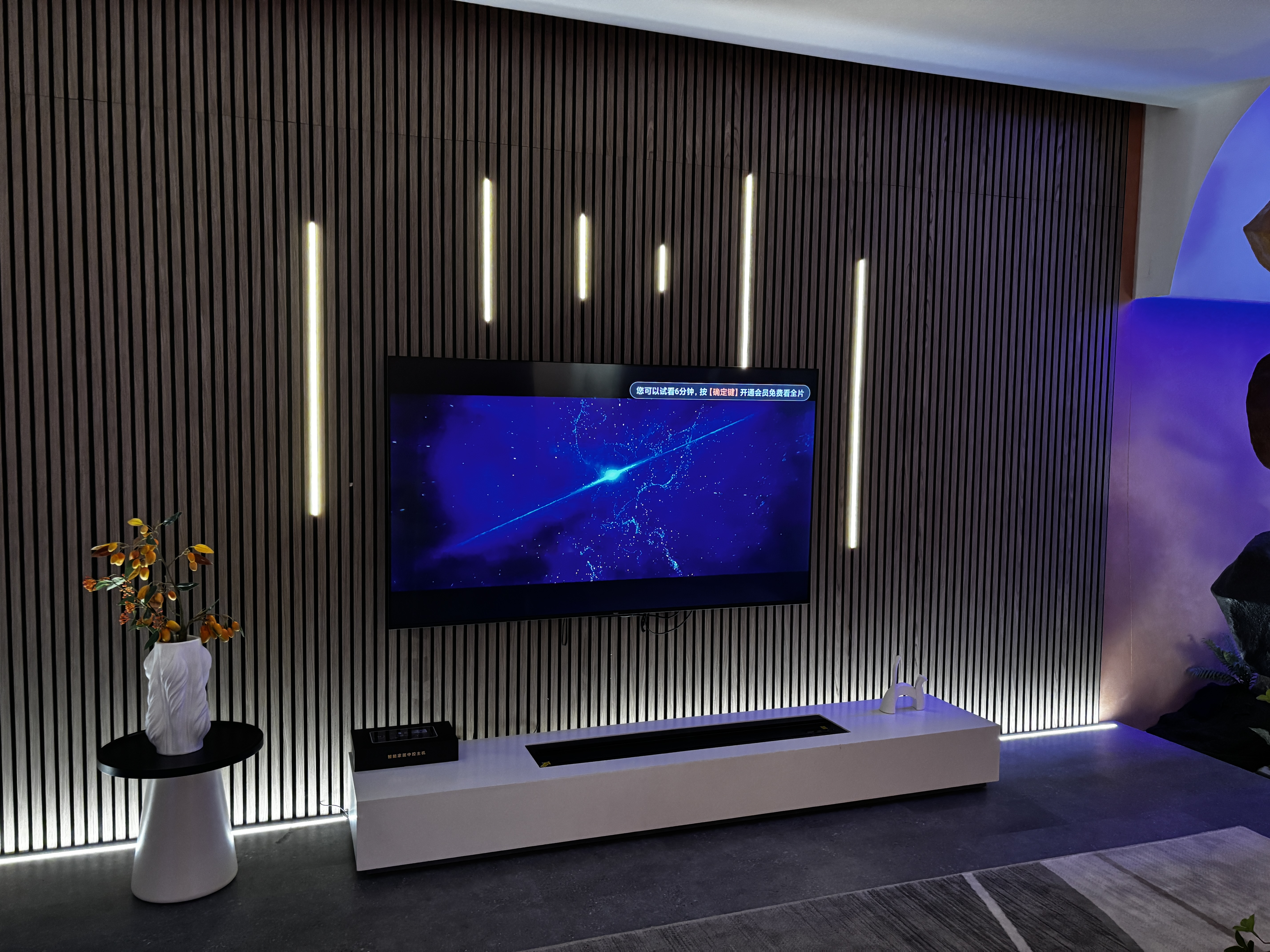
Acoustic wall LED strip lighting must match the panel structure and mounting dimensions; the strip is not intended for standalone use.
XPUP LED is the brand of Zhongshan Xiangpai(XPUP) Lighting Technology Co., Ltd, a Zhongshan-based LED strip manufacturer established in 2012. Its supplied company profile lists LED strip production, OEM/ODM customization and export to EU/USA markets. Those are company facts, not proof that every acoustic panel project is the same. The relevant question is narrower: when does the CA-DC24V-2835-180D-8mm-3000K match the lighting task, and when should the buyer change the specification?
The Specification Behind the Scenario
The model number is useful because it identifies the main scenario variables: 24V input, SMD 2835 LED type, 180 LEDs per meter, 8 mm format and 3000K color temperature. The assigned specification also lists 11W, CRI Ra≥80 and IP20. Those values describe a warm-white, high-density SMD LED strip for dry indoor use; they do not describe an outdoor strip, a sealed COB strip or a complete lighting fixture.
| Specification item | Verified value for this article | What it means for the acoustic wall scenario |
|---|---|---|
| Model | CA-DC24V-2835-180D-8mm-3000K | Identifies a 24V, SMD 2835, 180 LEDs/m, 8 mm, 3000K strip. |
| LED type | SMD 2835 | Discrete surface-mount emitters; the strip is not a COB or neon format. |
| LED density | 180 LEDs per meter | Higher emitter count per meter than a lower-density SMD strip; visual result still depends on mounting and diffusing. |
| Input | 24V | Requires a compatible 24V power supply and, where used, a compatible controller. |
| Power | 11W | Use the confirmed per-meter or per-reel basis in the order specification; do not assume the basis. |
| Color rendering | CRI Ra≥80 | Specified color-rendering level; higher-fidelity tasks may require a different specification. |
| Color temperature | 3000K | Warm-white ambient light for residential and hospitality wall grazing. |
| PCB width | 8 mm | Narrow format for slim reveals, channels and panel details; confirm the actual profile. |
| Ingress protection | IP20 | Dry indoor applications only; not a wet, damp or outdoor rating. |
The table is a scenario map, not a full datasheet. The model name does not state copper weight, maximum run length, dimming protocol, LED binning, adhesive type, warranty terms or certificate scope. Those items belong in the order documents and should be checked before a project approval, especially when the same strip will be used across multiple rooms or repeat orders.
Why 3000K Is a Project Decision
3000K is the assigned color temperature, and it places the strip in warm-white ambient lighting. In luxury residential and hospitality interiors, that CCT is often used where the wall detail should read as soft architecture rather than as a bright task light. The supplied specification does not claim a biological effect, a mood outcome or a universal design rule; it states 3000K. The design decision is whether that warm-white point matches the panel finish, the adjacent fixtures and the intended scene.
For a lighting designer, 3000K should be treated as a fixed project variable, not a generic “warm” label. The same 3000K strip can appear different against a pale fabric panel, a dark wood slat panel or a painted reveal. The viewing angle, the output level and the presence of a diffuser also change the perceived line. A mock-up at the actual graze distance is more useful than comparing CCT numbers on a screen.
For an LED wholesaler, 3000K is a SKU distinction. Project approvals are usually CCT-specific, and mixing 3000K with 4000K or 6000K in the same assortment creates a substitution risk. The wholesaler should keep the model identity, CCT and density visible in the product data so that a project buyer can reorder the same specification rather than a visually similar strip.
Density, Grazing and the Limits of 180 LEDs/m
180 LEDs per meter means 180 SMD 2835 emitters along each meter of strip. The direct effect is closer emitter spacing than a lower-density SMD strip. In an acoustic wall detail, closer spacing can help the graze look more continuous, because the eye has less distance between light points. That is a design mechanism, not a guarantee. The final appearance depends on the distance from the strip to the panel surface, the angle of the reveal, the panel texture, the diffuser and the viewing position.
The strip remains an SMD format. A COB LED strip uses a different emitter arrangement and may be preferred where the design requires a very smooth continuous line. This article does not claim that the 180 LEDs/m SMD strip is better than COB or that it removes dotting in every detail. The correct comparison is application-specific: a shallow reveal with a diffuser and a close graze distance is a different optical problem from a deep cove with a wide wash.
For specification, the density value should be read together with the panel geometry. If the strip sits too close to the surface, even a high-density SMD strip can show structure; if the detail is deep and diffused, a lower-density strip may be acceptable. The buyer should ask for a mock-up or a sample at the intended mounting distance rather than rely on the LEDs/m figure alone.
Copper PCB, 8 mm Width and the Hidden Board Question
Copper PCB construction matters because the board carries current and helps spread heat across the strip. In a 180 LEDs/m format, the electrical and thermal load is distributed across many emitters, so the board is part of the lighting system rather than a passive backing. The supplied information identifies copper PCB construction and an 8 mm width, but it does not state copper weight, layer count or thermal test data. Buyers should not infer those details from the model name.
The 8 mm width is relevant to acoustic panel integration because narrow reveals and slim channels leave little room. A narrow PCB can fit where a wider board cannot, but the installation still depends on the panel profile, the mounting clip, the diffuser and the bend radius. The strip is not intended for standalone use; it is designed for integration with compatible acoustic wall panels. That makes the panel manufacturer or system supplier part of the approval chain, not an afterthought.
A practical buyer check is to request the board drawing and the order specification together. The drawing should confirm width, cut marks, feed points and any adhesive or mounting method. The order specification should confirm the copper PCB description, the 3000K CCT, the 180 LEDs/m density and the IP20 rating. If a supplier cannot state those items clearly, the buyer cannot compare the offer with another source on a like-for-like basis.
24V Is a System, Not a Strip Spec
24V is the input class of the CA-DC24V-2835-180D-8mm-3000K. It is not a complete power solution. The strip needs a compatible 24V power supply, and if dimming or scene control is required, a compatible controller must be selected. The supplied specification does not establish dimming performance, smart-system compatibility or a maximum single-run length. Those are system questions to confirm with the supplier and the control-equipment provider.
The 11W figure is also a specification item that should be tied to its basis. In project estimating, the buyer should confirm whether the figure is stated per meter or on another basis, then size the power supply and feed points accordingly. The assigned data does not give a maximum run or a voltage-drop table. Copper PCB construction can support current distribution, but it does not remove the need to plan feed points and power injection for the actual layout.
For an acoustic wall installation, the power supply and controller often sit away from the visible detail. That makes access, heat management and cable routing part of the lighting design. A 24V DC LED strip light may be a suitable system choice for a dry indoor wall detail, but the designer should still confirm the driver location, the control protocol, the dimming curve and the maintenance access before the panel is closed.
Scenario Fit Matrix
The same strip can fit several project roles, but the reason for selecting it changes by buyer. The matrix below uses the supplied scenario types and the verified specification; it does not add a performance claim or a certification.
| Scenario | Why this strip may fit | Checks before specifying |
|---|---|---|
| Lighting designer: luxury residential acoustic panel reveal | 3000K provides a warm-white ambient line; 180 LEDs/m offers a high-density SMD option; 8 mm width suits slim details. | Mock-up at the real reveal depth; CCT match with adjacent fixtures; diffuser choice; feed-point location; panel manufacturer approval. |
| LED wholesaler: project-ready acoustic strip SKU | Clear model identity with 24V, 3000K and 180 LEDs/m; can be offered alongside compatible panels, clips and power supplies. | Confirm 11W basis, MOQ, lead time, binning, packaging, warranty and certificate scope for the exact SKU. |
| Luxury residential integrator: indirect wall wash | Warm-white wall grazing can support a quiet architectural detail in living rooms and home theaters. | IP20 dry indoor only; controller compatibility; power-supply location; access for service; no standalone use. |
| Hospitality or restaurant: dry indoor acoustic feature | 3000K ambient light can be integrated into panel features in hotel rooms, restaurants and meeting rooms. | Confirm the project’s cleaning and humidity conditions; IP20 is not a wet-area rating; verify control scenes and maintenance access. |
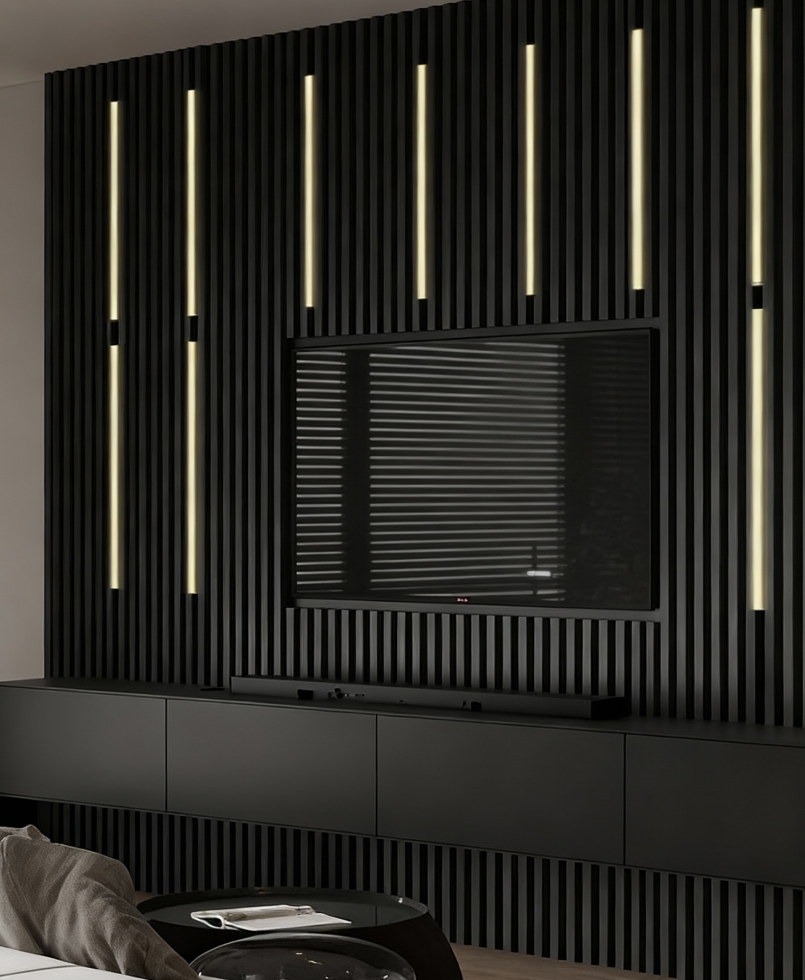
The 3000K strip is selected for the panel detail, not as a substitute for the acoustic panel itself; the visible result depends on distance, diffusing and control.
Boundaries: IP20, Dry Indoor and Non-Standalone Use
IP20 is the clearest boundary in the specification. It means the strip is intended for dry indoor applications. It is not a wet-area, damp-area or outdoor rating, and it should not be treated as one because the label says “acoustic wall.” A bathroom with persistent humidity, a covered terrace or a facade detail is a different environmental class. The buyer should either select a different IP-rated product or obtain a specific written confirmation from the supplier for the exact use condition.
The supplied scenario material also lists operating conditions: -20°C to +45°C, do not cover with objects, and keep away from chemically corrosive environments. Those conditions belong beside the installation plan. They do not establish a lifetime, a fire rating or a compliance certificate. The assigned product specification does not list a certification mark; project buyers should request the current certificate and its scope for the exact model rather than infer certification from a company profile or from a similar strip.
The non-standalone limitation is equally important. The strip is designed for integration with compatible acoustic wall panels, dedicated mounting clips, a power supply and a controller where needed. It is not a finished acoustic product and does not provide acoustic absorption or panel structure by itself. That division of responsibility should be clear in the quotation: who supplies the panel, who supplies the strip, who validates the fit, and who handles after-sales for the integrated assembly.
Wholesale and Specification Workflow
For wholesalers, the commercial question is whether the strip can be repeated, not only sampled. XPUP LED’s supplied capability data lists 3,000,000 meters monthly capacity, OEM/ODM customization, a 2,000-meter MOQ, an 18–22 day lead time, 100% testing and a 2-year standard warranty. The company profile also lists a 10,000 m² factory, 80 employees, an annual output of 35,000,000 meters and a 6-engineer R&D team. These are supply facts; they do not replace a project-specific product approval.
A workable wholesale workflow has four checks. First, lock the exact model and CCT: CA-DC24V-2835-180D-8mm-3000K, not a visually similar 4000K or lower-density strip. Second, confirm the power basis and the 24V driver compatibility. Third, request the current product document and certificate scope for the exact SKU. Fourth, agree the packaging, label, MOQ and repeat-order inspection criteria. This is especially important when the strip is sold as part of an acoustic panel kit, because the panel brand’s approval and the strip supplier’s document set must align.
For lighting designers, the workflow is a mock-up and a boundary check. The mock-up should test the actual panel, the actual reveal and the intended viewing distance. The boundary check should confirm IP20 dry indoor use, the controller and power-supply location, and the maintenance access. The designer does not need a universal claim about 180 LEDs/m; the designer needs evidence that this strip, in this detail, produces the intended line.
What the Acoustic Panel Interface Means for Buyers
Supplied application data places acoustic wall panels in hospitality, residential, commercial, office, entertainment and interior design projects. The lighting opportunity is not a new standalone fixture category; it is a component that must match the panel structure and mounting dimensions. Acoustic panel manufacturers, brands, distributors and wholesalers can offer the LED strip as a complementary product or an integrated lighting kit. That is a channel role supported by the scenario material, not evidence of market size or growth.
This is why the CA-DC24V-2835-180D-8mm-3000K should be evaluated as an interface product. The 8 mm width, 3000K CCT, 180 LEDs/m density and 24V input are only useful if the panel profile, clip system and power route accept them. A buyer who compares only the price per meter can miss the interface cost: rework at the reveal, a driver that does not fit the cavity, or a CCT mismatch that appears only after installation. The more useful comparison is the complete bill of materials for the panel detail.
Future Outlook for This Scenario
The practical outlook is a discipline of documented fit rather than a forecast. As acoustic panels continue to appear across residential, hospitality and commercial interiors, the LED strip specification will be judged by CCT consistency, density, board construction, IP boundary and control compatibility. The CA-DC24V-2835-180D-8mm-3000K has a clear place in dry indoor, warm-white acoustic wall details where a high-density SMD strip and an 8 mm format are required. It is not the right specification for wet areas, outdoor facades or projects that require a sealed continuous COB line.
For buyers, the next step is not a broader claim; it is a tighter specification. Confirm the 11W basis, the 24V driver, the controller, the panel interface, the certificate scope and the repeat-order criteria. That package is more valuable than a generic statement that the strip is “suitable for acoustic walls,” because it tells the project team exactly where the product fits and where it does not.
Conclusion
The CA-DC24V-2835-180D-8mm-3000K fits acoustic wall LED strip lighting when the project needs a 24V, 3000K, 180 LEDs/m SMD 2835 strip for a dry indoor panel detail. Its 8 mm width and copper PCB construction are relevant to slim acoustic panel integration, while the 180 LEDs/m density supports a closer emitter spacing for wall grazing. Those advantages are conditional: the final line depends on mounting distance, diffusing, panel geometry and control, and IP20 limits the product to dry indoor use. Lighting designers should validate the detail with a mock-up; wholesalers should lock the exact SKU, power basis and document set; luxury residential teams should confirm the panel interface and service access before approval.
FAQ
What project conditions make the CA-DC24V-2835-180D-8mm-3000K a suitable acoustic wall LED strip?
It is suitable where the acoustic panel detail is dry indoor, the lighting scheme calls for 3000K warm-white ambient light, and the panel interface accepts an 8 mm strip. The product is designed for integration with compatible acoustic wall panels, not for standalone use. The buyer should confirm the panel structure, mounting dimensions and power route before specifying it.
Why does 3000K suit luxury residential and hospitality acoustic wall lighting?
3000K is a warm-white color temperature that can support a soft indirect wall line in residential and hospitality interiors. The supplied specification states 3000K; it does not claim a mood or biological effect. The designer should compare the strip with adjacent fixtures and the panel finish at the actual viewing distance.
What does 180 LEDs per meter contribute to wall grazing on acoustic panels?
180 LEDs per meter means 180 SMD 2835 emitters along each meter, which gives closer emitter spacing than a lower-density SMD strip. Closer spacing can help the graze appear more continuous, but it does not guarantee a dot-free result. Distance to the panel, reveal depth, diffuser and viewing angle still determine the visible line.
Is the CA-DC24V-2835-180D-8mm-3000K suitable for bathrooms or outdoor facades?
No. The assigned specification lists IP20, which is for dry indoor applications. It is not a wet-area, damp-area or outdoor rating. A bathroom with persistent humidity or an outdoor facade would require a different IP-rated product and a specific project review.
What should a lighting designer or wholesaler verify before specifying a 24V acoustic wall LED strip?
Verify the exact model and CCT, the 11W basis, the 24V power supply and controller compatibility, the maximum run and feed-point plan, the IP20 dry indoor boundary, the panel interface and the current certificate scope for the exact SKU. For repeat orders, also confirm MOQ, lead time, packing, binning and warranty terms.
Reference: 2026 XPUP LED Strip Catalog (PDF).
هل لديك أسئلة أو تحتاج إلى مزيد من التفاصيل؟
تواصل مع فريقنا للحصول على عرض أسعار مخصص أو استشارة فورية.
طلب عرض أسعار
املأ النموذج أدناه وسيتواصل معك فريقنا بعرض مقترح مخصص.
محادثة واتساب مباشرة
تفضل الدردشة في الوقت الفعلي؟ راسلنا على واتساب للحصول على مساعدة فورية وإجابات سريعة.
- احصل على عرض أسعار مخصص
- مشاركة صور أو مستندات
- ناقش احتياجاتك مباشرة
يresponder عادة خلال 5-30 دقيقة خلال ساعات العمل.