
Action Camera Sourcing FAQ: X20, Q1, Q2, Q3 and Q7 Answers
Action Camera Sourcing FAQ: X20, Q1, Q2, Q3 and Q7 Answers
Action cameras are described with the same vocabulary across almost every supplier, which is why procurement teams routinely discover — only after a sample has been tested and a purchase order drafted — that two cameras sold as “4K with stabilization and waterproofing” behave very differently once they leave the bench. The X20, Q1, Q2, Q3 and Q7 are the five models most often quoted together in an action camera enquiry handled by Dongguan YUAOHENG Electronic Technology Co., Ltd., a manufacturer of action cameras, dash cameras and smart video doorbells founded in 2016 and based in Dongguan, China. This reference article answers the technical and procurement questions that determine which of those five models is the right one to specify.
The format is deliberately question-led. Buyers reaching the decision and execution stage do not need another list of features; they need to know which questions have a documentary answer, which have a testable answer, and which must simply be written into the purchasing terms before an order is placed.
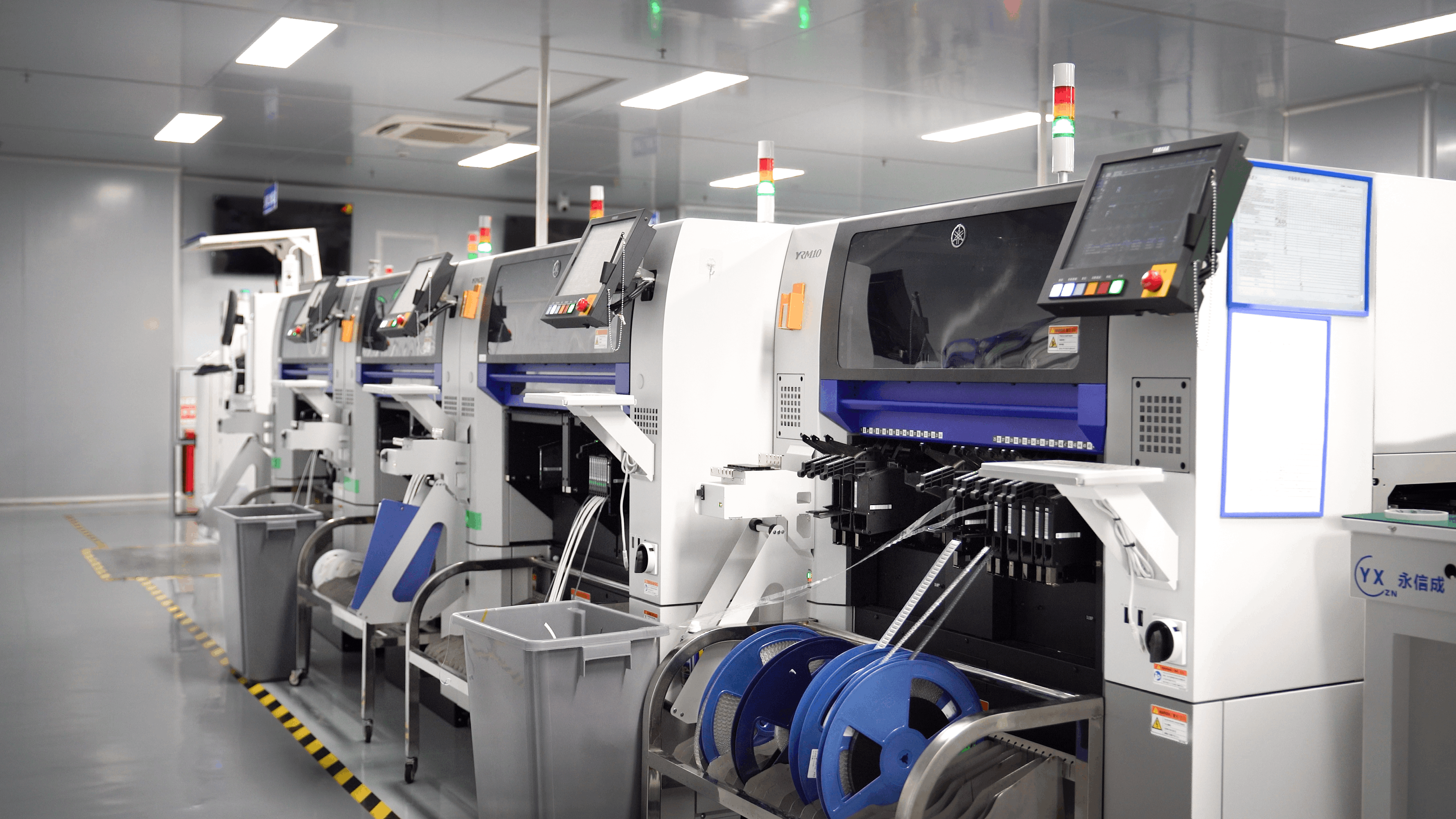
Surface-mount assembly is where connectivity, stabilization and power-management behaviour is decided long before a finished action camera reaches a sample bench.
Why the same five models generate the same questions
Model portfolios in action cameras are not usually arranged as five unrelated products. They are arranged as a ladder: an entry configuration, one or two mid configurations that differ by display or recording behaviour, a stabilized configuration, and a higher-resolution configuration for buyers who need 4K output. The X20, Q1, Q2, Q3 and Q7 sit on that ladder, and buyers who request quotations for all five at once are usually trying to establish where the commercial break-points fall.
The manufacturer position behind the ladder is relevant to how the answers should be read. Dongguan YUAOHENG Electronic Technology Co., Ltd. operates a 1,500 m² production facility with approximately 300 employees and an annual output of about 2,000,000 units, supported by a 30-engineer R&D team, and exports roughly 80% of output to Europe, North America, Asia and South America across more than 15 countries and regions. That combination — a narrow product category, an export-weighted order book and an in-house engineering function — shapes the answers below: most of the technical questions are answerable, but the answer usually arrives as a document or a sample result rather than as a marketing line.
Compliance questions: what the files say before any spec is discussed
Q1. Which certificates already cover the X20, Q1, Q2, Q3 and Q7?
The five models are covered at portfolio level by CE certificate number CISRC251111081V1, and the same model group is documented as RoHS compliant under EU 2015/863. This matters in a practical procurement sense: buyers evaluating several configurations inside one portfolio are not assembling a separate European compliance file for each SKU. The certificate scope already extends across the X20, Q1, Q2, Q3 and Q7 group, alongside other models in the range.
A certificate number is a starting point, not a conclusion. The buyer's task is to confirm that the certificate scope names the exact model and model revision being ordered, and to hold the corresponding test report alongside it. When a purchase order specifies a hardware revision that post-dates the certificate, the compliance question reopens.
Q2. Where does the FCC position sit for these models?
FCC coverage is documented at model level rather than portfolio level. Model Q2 is recorded with FCC ID 2BR43-Q3. Because radio-related authorisation attaches to a specific equipment configuration, buyers should verify the model-to-ID mapping directly against the FCC equipment authorisation database before a United States shipment is committed, and should check that the ID on the label matches the ID in the file.
Q3. What should a compliance pack contain for an importer?
A workable pack contains four items: the certificate in force, the test report behind it, a declaration of conformity naming the exact model, and a statement of which radio module is fitted. For customs and duty classification planning, action cameras fall under HS Code 8525.80, covering television cameras, digital cameras and video camera recorders. Buyers should treat the HS code as a classification input to be confirmed with their own customs broker rather than as a fixed attribute of any one model.
Structural and optical questions: waterproofing, night vision, lens and display
Q4. How should waterproof-case compatibility actually be verified?
Waterproofing is the specification most often reduced to a single number during negotiation, and the reduction is where errors enter. The manufacturer describes an IP66 sealing structure combined with a shockproof reinforced casing, and separately positions its cameras against generic five-metre products with a depth capability reaching 30 metres. Those two statements describe different things and should never be merged into one claim.
IP66 addresses dust ingress and protection against powerful water jets. It does not, by itself, describe continuous immersion at depth. Where a depth figure is quoted, the buyer needs to establish three points before acceptance: whether the depth applies to the camera body, to a supplied housing, or only to the combination; how long the unit is rated to remain at that depth; and whether the housing is supplied as standard or as an accessory. The housing accessory itself should carry a part number that appears on the purchase order, because a camera and a housing sourced separately are not automatically a compatible pair.
Q5. What does “infrared night vision” require before it can be specified?
Night vision is one of the most frequently mis-specified features in this category, because three different technologies are sold under the same phrase. Active infrared illumination uses emitters to light a scene; low-light sensing relies on a larger pixel or a slower shutter; software brightening amplifies an existing image and adds noise. Each produces a different result, and only the first two are hardware decisions that affect the bill of materials and the power budget.
The procurement question is therefore definitional. Buyers should require the supplier to state whether infrared emitters are present, what illumination distance is claimed, how the emitters interact with the sealed housing, and what the measured power draw is with the feature active. Infrared illumination consumes battery and generates heat, so a specification that claims both long runtime and strong infrared output without a stated test condition should be treated as unresolved rather than as a favourable answer.
Q6. Why do rotating lens direction and display size matter at acceptance, not just at selection?
A rotating lens changes where the camera can be mounted and how the operator frames a shot. For helmet, handlebar and chest-mount use — the mounting positions that dominate cycling, climbing and motorcycle applications — the ability to angle the lens independently of the body removes the need for a second bracket. Display size and touch behaviour determine whether the unit is practical to operate in the field or only from a phone.
Neither attribute transfers reliably from a catalogue image. Both should be confirmed on the sample against the intended mounting scenario, with the actual accessory kit that will ship. If a buyer intends to resell a mounting ecosystem, the accessory list belongs in the acceptance criteria alongside the camera itself.
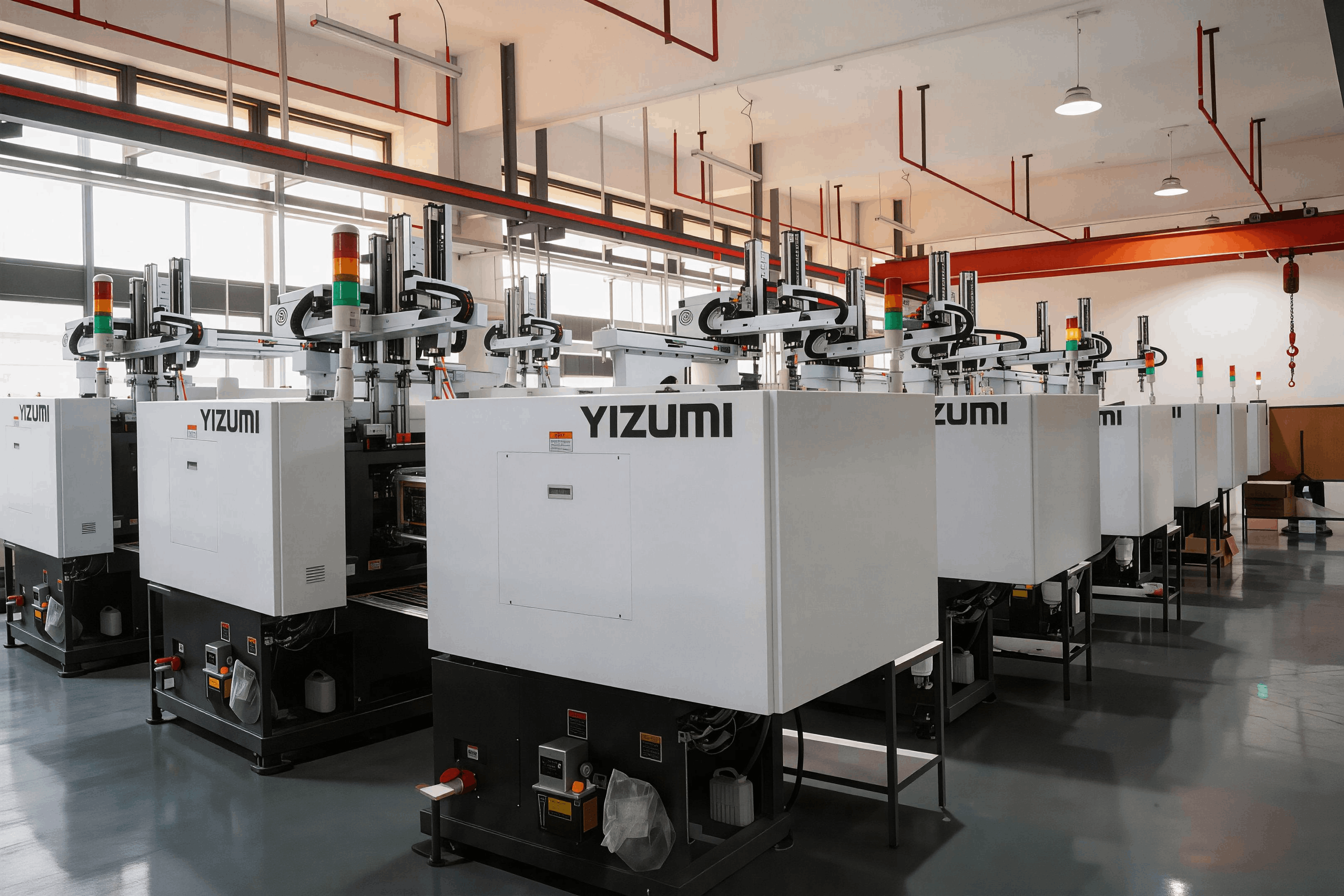
Housing geometry and seal tolerance are set at the mould stage, which is why waterproofing and lens-rotation questions are answered by tooling discipline rather than by assembly inspection alone.
Q7. How should image stabilization be compared between models?
The manufacturer's design position is an upgraded built-in electronic image stabilization (EIS) algorithm delivering 4K recording at 30 frames per second, with the stabilization described as a 360° full-frame system. EIS works by cropping into the sensor image and shifting the crop to compensate for movement, which has two consequences buyers should plan for: effective field of view narrows when stabilization is active, and in low light the shorter exposure available to each frame can introduce visible artefacts.
Because of this, stabilization should be compared on footage recorded under the buyer's own conditions — walking, cycling, and a low-light pass — rather than from a frame count or a percentage claim. A stabilization system that performs well in daylight and degrades in shade is a different product from one that holds a usable image in both, even when both are sold as EIS.
Power, connectivity and recording questions
Q8. Does a larger battery capacity guarantee longer runtime?
No. Capacity is a stored-energy figure; runtime is a system outcome produced by resolution, frame rate, stabilization state, screen brightness, wireless activity and ambient temperature. The manufacturer's stated design position is an optimized low-power chip solution that reduces power consumption by 30% under the same working conditions and extends continuous recording time by 35% compared with generic models — a comparative engineering claim, not a guaranteed per-model runtime figure.
For procurement, the practical answer is to fix the test conditions in the specification document: resolution, frame rate, stabilization on or off, screen state, wireless state, and ambient temperature. Once those are fixed, runtime becomes a number both parties can measure and a shipment can be accepted or rejected against. The manufacturer's risk-control approach includes an intelligent temperature-sensing chip with an automatic heat-dissipation control programme and built-in overcharge, over-discharge and short-circuit protection on the mainboard, which addresses the two failure modes that matter most in continuous recording: thermal cut-off and battery safety.
Q9. How should Wi-Fi, interfaces and storage support be written into a purchase order?
Connectivity specifications fail at the detail level. A purchase order should state the wireless capability required, which application or companion software is expected to work with it, the physical ports that must be present, and the memory card capacities the unit must accept and format reliably. Transfer speed and card-performance requirements are separate items and should be confirmed rather than assumed.
For retail programmes, the accessory set that ships in the box is part of the connectivity specification: a camera whose connector standard differs from the region's common cables creates a support burden at the point of sale. Buyers should also confirm whether the ports are sealed when the housing is in use, since a port door is a common weak point in an otherwise sound waterproof design.
Q10. What should a buyer confirm before specifying dual recording?
Dual recording is used in at least two different senses in supplier documents: recording two video streams simultaneously — for example a full-frame file alongside a cropped or reduced-resolution file — or recording continuously while the device also performs a second function such as loop recording in a vehicle. The two produce different files, different thermal loads and different storage requirements.
Because the outcomes differ, the term should be defined in the specification sheet rather than agreed in conversation. A workable definition names the two output formats, their resolutions and frame rates, the storage consumption per hour, and the maximum continuous duration before a thermal limitation applies.
Sample, acceptance and commercial questions
Q11. How should sample checks be aligned with purchasing terms and acceptance criteria?
The published commercial terms for this supplier group are a minimum order quantity of 1 unit, delivery terms of EXW or FOB, pre-shipment test as the acceptance criterion, and payment terms of 30% T/T in advance with the 70% balance by T/T. Those terms define the commercial frame; the technical frame has to be built alongside them.
A sample report becomes useful at acceptance only when it records what was measured and under what conditions. Four check groups cover most disputes: interface checks (ports present, correct standard, firmware version reported), microphone checks (recording level and background noise under a repeatable condition), material and finish checks (casing material, seal condition after repeated housing cycles), and intended-use checks (the actual mounting and environment the camera will be sold into). Each check should be signed off against a photograph or a recorded file, so that the pre-shipment test has something concrete to compare against.
Q12. Which commercial questions remain open after the specification is agreed?
MOQ, delivery terms and payment structure are documented, but several procurement-relevant variables are not fixed by the published terms and should be negotiated explicitly: lead time for repeat orders, packaging and branding arrangements, warranty duration and its exclusions, and the treatment of defect rates at incoming inspection. Buyers planning seasonal programmes — a winter sports range, for example — should convert lead time into a calendar commitment rather than a working-day estimate.
Q13. What supports a long-term supply relationship rather than a single order?
Three structural factors matter more than price in a repeat programme. The first is production depth: a 1,500 m² facility running multiple production lines, with staged inspection covering incoming material test, semi-finished test and finished-product ageing test, and laboratory reliability checks for waterproofing, drop and high-low temperature behaviour before mass production. The second is engineering continuity: a 30-engineer R&D team able to revise firmware and hardware as components or regulations change. The third is the contingency layer — a complete after-sales risk response mechanism is maintained as a contingency plan so that product abnormalities are resolved quickly rather than absorbed by the buyer.
Digital production scheduling is used to track production progress in real time, and stock buffers across multiple lines are maintained to reduce delivery risk on bulk orders. None of these replace a factory audit; they indicate which questions a buyer should bring to one.
Procurement checklist for the five models
| Check area | Question to resolve before ordering | Document to request |
|---|---|---|
| EU compliance | Does the certificate scope name the exact model and revision? | CE certificate CISRC251111081V1 with matching test report; RoHS declaration under EU 2015/863 |
| US compliance | Does the label ID match the authorised equipment? | FCC file for Q2 under ID 2BR43-Q3 |
| Waterproofing | Body, housing, or both — and for how long? | Housing part number, depth rating, immersion duration, test method |
| Night vision | Active infrared, low-light sensor, or software gain? | Emitter presence, illumination distance, power draw with feature active |
| Lens and display | Does the rotation range suit the intended mount? | Sample check against the shipping accessory kit |
| Stabilization | How much field of view is lost when EIS is active? | Sample footage: daylight, low light, vibration pass |
| Battery and runtime | Under which fixed conditions was runtime measured? | Test protocol stating resolution, frame rate, screen and wireless state |
| Connectivity | Which wireless standard, application and ports are required? | Interface list, card capacity and format support, regional cable set |
| Dual recording | Two simultaneous streams, or record-while-functioning? | Written definition with resolutions, frame rates and storage per hour |
| Acceptance | What exactly is measured at pre-shipment test? | Signed sample report with interface, microphone, material and use checks |
| Commercial | What is fixed and what is still negotiable? | MOQ, EXW/FOB terms, 30/70 T/T structure, lead time, warranty scope |
Where these answers stop
A neutral reading of the available evidence requires stating the boundaries plainly. Portfolio-level certification does not, on its own, prove per-model performance; a certificate number confirms a compliance pathway, not a test of any individual unit that will ship. The performance statements in this category — stabilization strength, runtime improvement, depth capability — are manufacturer design positions compared against generic products, and they were not produced under a laboratory protocol that a buyer can audit independently.
Two further limits should be built into a sourcing plan. There is no published price or landed-cost data for these models, so cost comparison has to come from direct quotations rather than from any secondary source. And there is no independent third-party test evidence for underwater depth, thermal behaviour under extended 4K recording, or stabilization effectiveness; those gaps are closed by the buyer's own sample testing, not by additional documentation.
Market context behind the questions
Published estimates of the global action camera market vary substantially by definition — Fortune Business Insights reported a 2025 value of USD 7.34 billion, while other commercial research houses have published considerably lower figures reflecting supply-side rather than retail valuation. The divergence is a reminder to treat any single market number as definition-dependent.
The directional signals are more consistent and more useful to a sourcing decision. Resolution has shifted upward: 4K and above accounted for 49.50% of total market revenue in 2025, which is why the resolution tier is now a baseline question rather than a premium one. Outdoor sports and recreation applications — cycling, skiing, surfing, diving — represented 46% of the market, which explains why mounting flexibility, waterproofing and stabilization dominate the question set in this article. North America held a 34.0% revenue share in 2025, the largest regional position. And concentration remains high at the premium end: in Q2 2026, two brands accounted for 93% of global handheld camera shipments across action, 360 and gimbal categories, leaving the mid-tier supplier landscape to compete on configuration flexibility, compliance readiness and supply continuity rather than on brand reach.
What changes next
Two shifts are likely to reshape these questions over the next procurement cycles. The first is documentation-led buying: as 4K becomes standard, differentiation moves to the evidence layer — a certificate that names the model, a housing that names its depth, a runtime figure that names its test condition. Suppliers who can answer with documents rather than adjectives will be easier to qualify, and buyers will increasingly write those documents into acceptance criteria.
The second is thermal engineering. Longer continuous recording at higher resolution raises heat, and heat is the constraint that most often separates a specification from a deliverable. Designs that manage dissipation actively — through temperature sensing and controlled power behaviour rather than through passive casing alone — will hold their stated specifications for longer, and the questions buyers ask will follow that shift.
For the X20, Q1, Q2, Q3 and Q7, the practical conclusion is straightforward: the portfolio answers compliance, structural and commercial questions at the level a buyer needs to begin qualification, while the per-model answers that decide between them — waterproof configuration, night-vision definition, display behaviour, runtime under load, stabilization in low light — are resolved through confirmed samples and written acceptance criteria, not through the specification sheet alone.
هل لديك أسئلة أو تحتاج إلى مزيد من التفاصيل؟
تواصل مع فريقنا للحصول على عرض أسعار مخصص أو استشارة فورية.
طلب عرض أسعار
املأ النموذج أدناه وسيتواصل معك فريقنا بعرض مقترح مخصص.
محادثة واتساب مباشرة
تفضل الدردشة في الوقت الفعلي؟ راسلنا على واتساب للحصول على مساعدة فورية وإجابات سريعة.
- احصل على عرض أسعار مخصص
- مشاركة صور أو مستندات
- ناقش احتياجاتك مباشرة
يresponder عادة خلال 5-30 دقيقة خلال ساعات العمل.