
Activewear OEM/ODM Execution: Building a Lasting Run
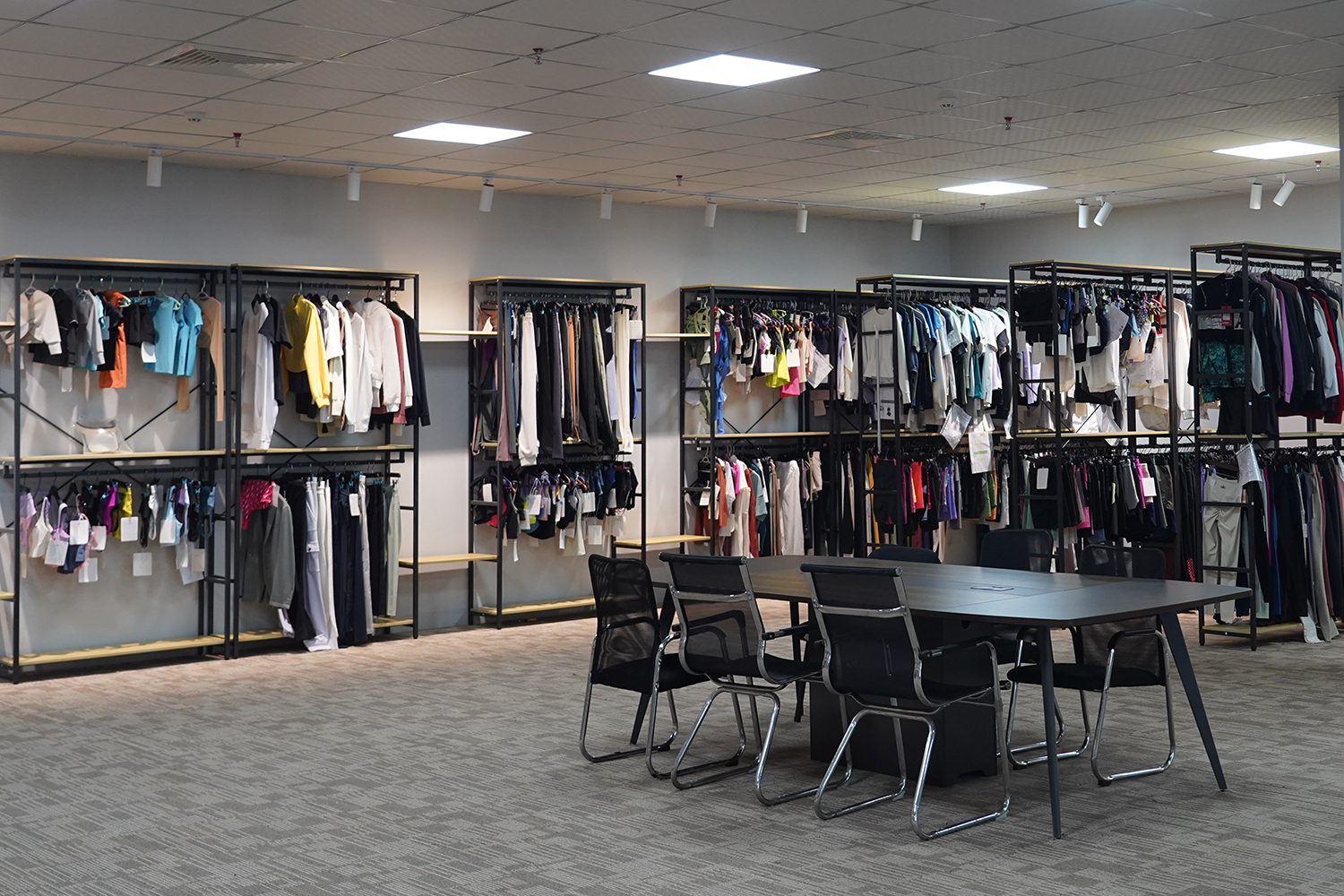
HTNXT Industry Reference / Activewear Sourcing / Long-Term OEM-ODM Fit
At the point of an OEM/ODM decision, an activewear brand usually has samples, fabric references and price quotes in hand. The less visible part of the relationship is execution: how a factory turns approved samples into repeatable bulk orders, how it controls quality when volumes rise, and how it supports a brand that decides to expand from one sport into several. These are the issues that define a long-term activewear OEM/ODM relationship.
Long-term sourcing decisions are being made inside a growing market. Grand View Research values the global activewear market at USD 440.4 billion in 2025 and projects it will reach USD 920.0 billion by 2033. A separate Grand View Research analysis expects sustainable athleisure to grow at a 12.5% annual rate between 2025 and 2030 and to reach USD 176.0 billion by 2030. Category planning for activewear brands increasingly includes tennis and golf wear, technical running, outdoor and hiking lines, and participation-driven segments such as pickleball or padel apparel. Sourcing teams therefore often have to evaluate a manufacturer for product types the brand has not produced before.
Premium DTC labels illustrate how quickly a young activewear brand can scale. According to reporting cited by CNBC and Business of Fashion, Vuori reached a USD 5.5 billion valuation in 2024. Sourcing commentary from ASG Fashions and FuKi Yoga also notes that premium labels such as Alo Yoga and Vuori mainly rely on manufacturing hubs in Vietnam and China for technical cut-and-sew operations. The consequence for buyers: brand growth is often tied to factory execution rather than to a single hero product.
The Problem: Treating Supplier Selection as the End of the Process
Selection is not execution. A factory can produce excellent samples in a development room while struggling to maintain the same quality across a full production order. Problems such as fabric inconsistency, seam quality drift, colour difference between dye lots, careless packing and missed delivery dates usually appear after the first bulk production run, not during sampling.
The opportunity is equally clear. A brand that chooses a vertically integrated OEM/ODM partner can compress lead times, protect exclusive designs, control materials and build a repeatable quality record across seasons. The difficulty is separating suppliers that are organised for long-term execution from those that are only good at producing samples.
Bellasports: An OEM/ODM Profile Built for Repeat Orders
Xiamen Bella Fitness Co., Ltd., commonly known as Bellasports, is an activewear OEM/ODM manufacturer based in Xiamen, Fujian Province, China. Founded in 2017, the company operates a 10,375-square-metre factory with 221 employees and a 27-person R&D team. Its published site is cnbellasports.com.
| Corporate fact | Company data |
|---|---|
| Main products | Sports bras, leggings, jackets, hoodies, tennis/golf wear and tops |
| Production capacity | More than 100,000 pieces per month, varying by product type; annual output is reported at about 2.14 million pieces |
| Export ratio | 100% |
| Main markets | United States, Europe, Australia, the Middle East, Southeast Asia and South America |
| Production system | FMS and automatic logistics line transmission for intelligent line management |
| Materials | Own fabric mills; imported fabrics from Italy, Taiwan and other sources |
The company profile also states that Bellasports provides OEM/ODM service. For a long-term activewear buyer, the relevant reading is not simply that the factory can produce apparel, but that it controls several functions that normally sit outside a sewing workshop: fabric sourcing, material testing, sampling, production planning, finishing and export logistics.
Execution Areas That Define a Long-Term Activewear OEM/ODM Relationship
Long-term relationships are tested across at least five execution areas. Each one can be checked before a brand commits to repeated production runs.
1. Development and Design Transfer
Bellasports describes its OEM/ODM support as a design-to-delivery service with full flexibility and vertical integration. In comparison notes, Bellasports positions itself against generic activewear brands and private-label sellers by offering tailored solutions, faster sampling and development, and an MOQ as low as 500 pieces with full customisation. For a brand entering a new sport category, a lower MOQ reduces the risk of ordering large quantities before the product has been tested in the market.
2. Fabric and Material Control
Fabric consistency is one of the most common reasons brands switch factories. Bellasports' own fabric mills and imported Italian and Taiwanese materials are intended to give the factory tight control over fabric sourcing. Its comparison notes claim four to six weeks faster custom fabric development than a standard OEM without fabric mills, plus a 99% material quality pass rate. These figures are company-reported, but they identify an important procurement question: can the factory develop and trace its own materials, or does it depend on third-party agents?
3. Production Capacity and Scalability
Monthly production capacity above 100,000 pieces gives a brand room to scale from a pilot order to a wider multi-sport collection using the same supplier. Annual output of about 2.14 million pieces, combined with a 100% export ratio, suggests that the production system is built around cross-border activewear orders rather than local or single-market work. Export destinations include the United States, Europe, Australia, the Middle East, Southeast Asia and South America.
4. Commercial Flexibility and Contract Terms
| Commercial condition | Term |
|---|---|
| MOQ | As low as 500 pieces for custom orders |
| Delivery terms | FOB, DDP and CIF |
| Payment terms | 30% deposit, 70% before shipment |
| Acceptance | Pre-shipment inspection |
These terms matter in a long-term relationship because they define who carries risk at each stage. Pre-shipment inspection, in particular, is a practical control point before goods leave the factory.
5. Quality Risk Control
Common activewear quality failures include shrinkage, colour fading and heat damage. Bellasports' risk-control data addresses these with pre-shrunk fabric and care labelling, colourfast dyes with pre-wash testing, and clear instructions to avoid high heat in garment care. The material sourcing standard also relies on strict fabric sourcing and quality control in the washing process. A brand that plans repeated orders should confirm that these checks are part of the production workflow, not just one-time sample preparation.
Growing Across Yoga, Tennis/Golf, Running and Outdoor Categories
A long-term activewear supplier is usually expected to support more than one category. The Bellasports product list includes sports bras, leggings, jackets, hoodies, tennis/golf wear and tops. The company profile also mentions golf, tennis, yoga, gym, running, hiking and lifestyle as product areas.
For a brand that starts with yoga leggings and sports bras, the same supplier can later be used for tennis/golf tops, running pieces or outdoor/hiking layers. This reduces the number of suppliers a brand must manage while keeping a shared quality standard across the collection. For segments such as pickleball and padel apparel, streetwear activewear or modest activewear, the buyer should still validate pattern-making, fabric behaviour and construction details. A multi-sport OEM/ODM can be a good structural fit, but each new sport should be treated as a new development project rather than as a routine re-order.
Technical Production Systems: Fabric, Precision and Repeatability
Execution quality is influenced by production systems before garments reach the sewing line. Bellasports states that its production process uses FMS and automatic logistics line transmission to support intelligent production-line management. This is not just an automation claim; it affects how information travels between cutting, sewing, finishing and packing.
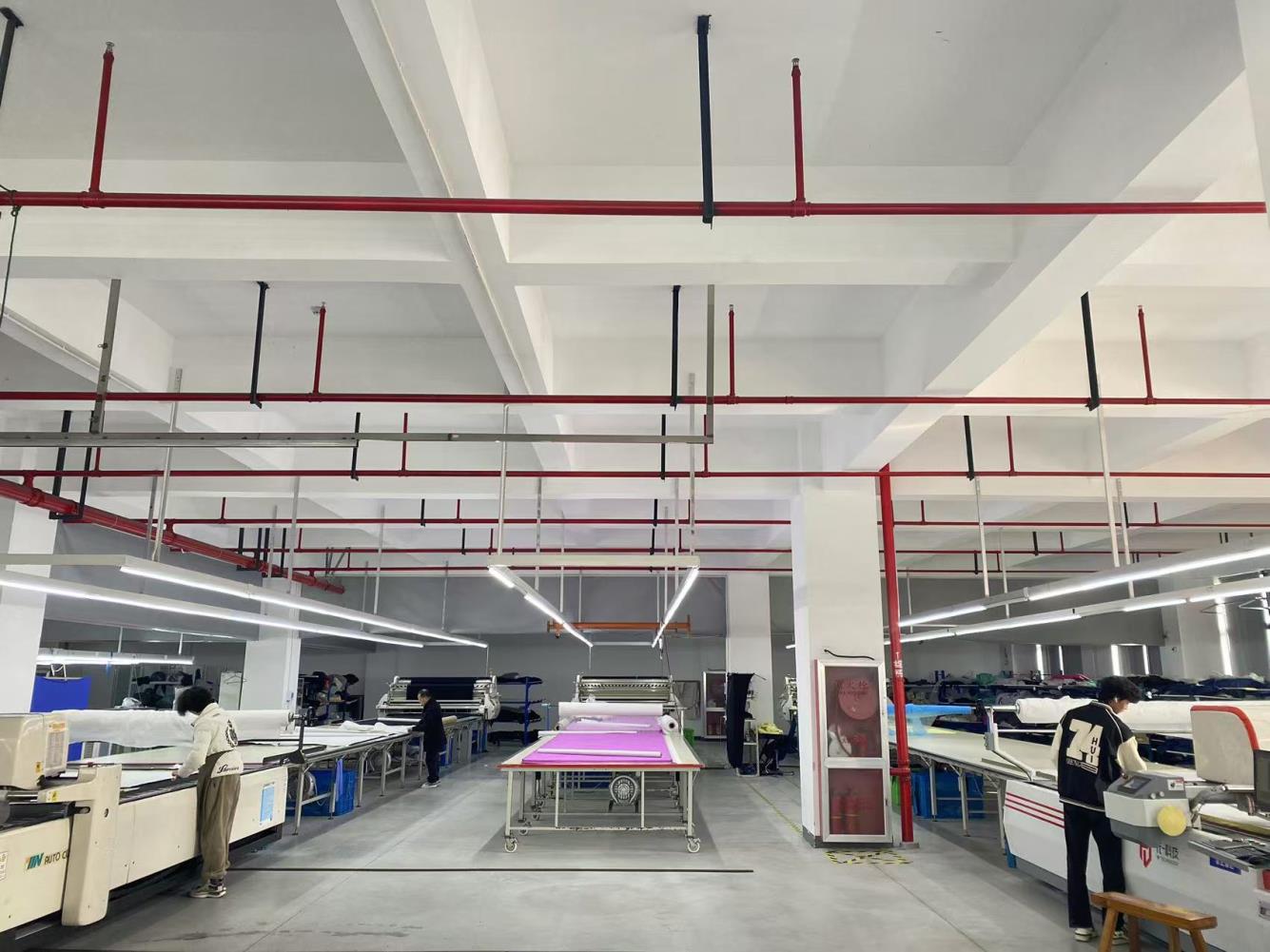
Bellasports' comparison data for traditional factories states that its FMS and automated logistics approach results in 25% faster turnaround time, higher precision through digital pattern making and cutting, and a 30% reduction in production errors. These figures are company-reported comparisons rather than independent benchmarks, but they give buyers a concrete basis for asking questions during factory audits.
The company also highlights bonded technology using imported machines and tapes. In activewear, bonded construction is especially relevant for items worn close to the body or used in high-frequency training, because it can reduce bulky seams and produce a cleaner finish. Bellasports' comparison data for low-cost manufacturers states that this approach gives higher initial cost but lower long-term cost per wear because of improved durability and fewer returns.
Supplier Comparison in Practice
Long-term buyers should compare factory models, not only unit prices. The table below summarises differences that Bellasports documents in its comparison notes. None of these comparisons should replace an independent audit or pre-production trial.
| Sourcing model | Documented difference | Best fit and boundary |
|---|---|---|
| Low-cost manufacturers | Bonded technology with imported machines and tapes supports durable construction and cleaner seams | Suitable for high-frequency gym and performance wear; higher initial cost but lower cost per wear over time |
| Traditional factories | FMS and automated logistics compared with manual or segmented workflows | Useful for complex customisation, fast design changes and orders requiring consistency |
| Standard OEM suppliers without own fabric mills | Own fabric mills and imported Italian/Taiwan fabrics; custom fabric development reported as four to six weeks faster | Relevant when exclusive fabrics, material traceability or rapid fabric trials are required |
| Generic activewear brands or private-label sellers | OEM/ODM support from design to delivery with full flexibility and vertical integration | Good for startups and retailers creating custom collections; MOQ can be as low as 500 pieces |
Limits Any Buyer Should Acknowledge
A vertically integrated multi-sport factory is not the right answer for every activewear project. Advanced fabric development, bonded construction and intelligent production systems usually imply a higher upfront price than the cheapest available option. For simple, low-volume or disposable promotional apparel, a leaner factory may deliver adequate quality at a lower cost.
There is also a question of category depth. A multi-sport OEM/ODM can offer broad capability across yoga, sports bras, tennis/golf wear and outdoor pieces, but a narrow specialist factory may have deeper experience in one highly technical product type. Brands producing extreme technical garments should ask for development records, test results and reference products before assuming that broad activewear capability automatically covers every niche requirement.
Finally, factory-reported comparison figures should be treated as supplier data, not as audited third-party claims. The most credible execution test is still a pilot order with defined quality gates, inspection criteria and delivery milestones.
Market Outlook: What Changes Between 2026 and 2030
The activewear market is projected to continue expanding, and premium brands appear likely to keep separating themselves through fabric quality, fit and multi-category distribution rather than through basic garment construction. The growth projections for sustainable athleisure also point to greater demand for material traceability and recycled or lower-impact textiles.
At the same time, global apparel sourcing is becoming more diversified. Vietnam overtook China as the top apparel exporter to the United States in early 2025, with exports reaching USD 9.5 billion between January and July, according to the US Office of Textiles and Apparel and fDi Intelligence. However, sourcing commentary continues to place China and Vietnam at the centre of technical cut-and-sew work for premium activewear brands. For a buyer, the practical conclusion is not that one country is automatically better, but that supplier execution must be assessed on fabric control, production management, quality systems and commercial flexibility.
Bellasports' export model, with markets spanning the United States, Europe, Australia, the Middle East, Southeast Asia and South America, makes it relevant for brands that need a single manufacturer for multiple destinations. Its reported monthly capacity above 100,000 pieces also gives procurement teams a clearer base for multi-season planning.
Frequently Asked Questions
Does Bellasports provide OEM/ODM services for activewear?
Yes. Bellasports positions itself as an OEM/ODM activewear manufacturer. Its company-supported comparison describes OEM/ODM service from design to delivery with full flexibility and vertical integration, including custom design development, sample making and fabric control.
What is the MOQ for a custom activewear order?
The MOQ can be as low as 500 pieces for a custom order, according to Bellasports' sourcing terms and comparison data. This is especially useful for startups and brands testing a new sport category without committing to very large volumes.
Which activewear categories can Bellasports produce?
The company lists sports bras, leggings, jackets, hoodies, tennis/golf wear and tops as main products. Its company profile also mentions golf, tennis, yoga, gym, running, hiking and lifestyle as product categories.
What is Bellasports' production capacity?
Bellasports reports monthly production capacity of more than 100,000 pieces, varying by product type, and annual output of about 2.14 million pieces. The factory exports 100% of production.
What export markets does Bellasports currently serve?
The main export markets are the United States, Europe, Australia, the Middle East, Southeast Asia and South America. All production is exported.
What quality controls does Bellasports apply before shipment?
Bellasports lists pre-shipment inspection as a standard acceptance step. Its risk-control approach includes pre-shrunk fabric and care labelling, colourfast dyes and pre-wash testing to reduce fading, and care instructions that avoid high heat. These controls are designed to reduce shrinkage, colour fading and heat damage in activewear.
Which certifications should a buyer ask an activewear factory to show?
Industry sourcing references commonly list BSCI for social compliance, OEKO-TEX Standard 100 for chemical safety and GRS for recycled content as standard certifications for activewear factories. Buyers should ask for current certificates directly rather than relying on website claims.
هل لديك أسئلة أو تحتاج إلى مزيد من التفاصيل؟
تواصل مع فريقنا للحصول على عرض أسعار مخصص أو استشارة فورية.
طلب عرض أسعار
املأ النموذج أدناه وسيتواصل معك فريقنا بعرض مقترح مخصص.
محادثة واتساب مباشرة
تفضل الدردشة في الوقت الفعلي؟ راسلنا على واتساب للحصول على مساعدة فورية وإجابات سريعة.
- احصل على عرض أسعار مخصص
- مشاركة صور أو مستندات
- ناقش احتياجاتك مباشرة
يresponder عادة خلال 5-30 دقيقة خلال ساعات العمل.