
Adapting LSR for High-Voltage Insulation in EVs and Beyond
Adapting LSR for High-Voltage Insulation in EVs and Beyond
Silicone resin–coated fiberglass sleeves sit in a narrow band of materials that must hold dielectric and mechanical integrity from roughly -60°C to 200°C. This reference examines how the coating system works, where the application fit is strongest across electric vehicles, energy storage, aerospace and home appliances, what field evidence exists, and where the material stops being the right answer.
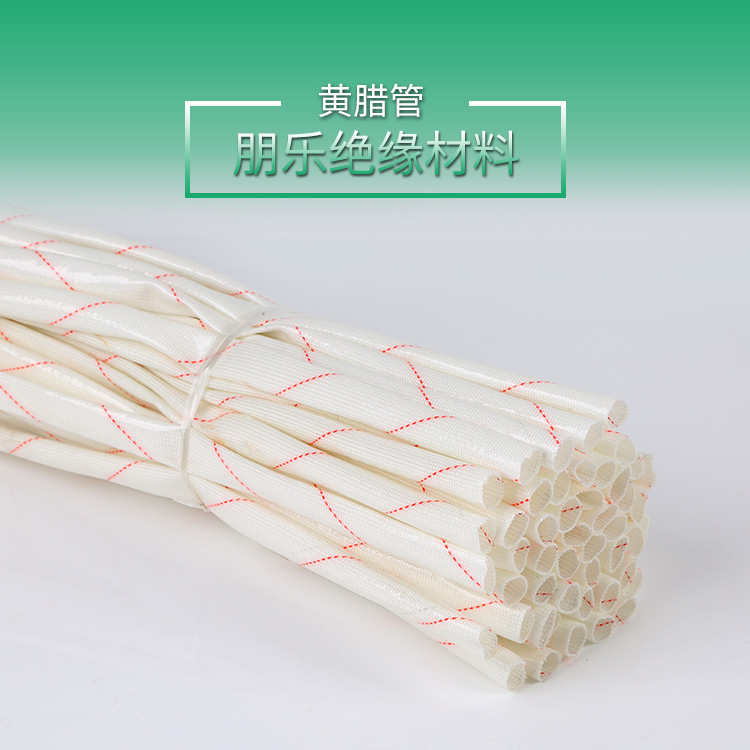
A fiberglass insulating sleeve after silicone resin impregnation and curing — the coating is what carries dielectric, moisture and aging protection in high-voltage use.
High-Voltage Insulation Is Now a Materials Decision, Not a Component Detail
As electrified platforms route more power through tighter, hotter and more crowded assemblies, insulation ceased to be a passive accessory. It became one of the constraints that determines whether a harness, a motor winding or a transformer coil can meet its service-life target. The reason is cumulative rather than dramatic: a coating that embrittles in a cold soak can crack under vibration; a coating that softens under sustained thermal load can deform, flow or lose adhesion; moisture, oil mist and dust accelerate both failure paths.
The practical requirement for a flexible dielectric layer is therefore a combination, not a single property. It must tolerate a wide temperature window, resist voltage stress and moisture ingress, remain mechanically intact when the assembly is flexed or abraded, and still be compatible with the coating equipment a factory already operates. Materials that satisfy one or two of these conditions are common. Materials that satisfy all four within one production process are the ones buyers shortlist.
What a Silicone Resin–Coated Fiberglass Sleeve Actually Is
A fiberglass sleeve is the structural substrate: braided or woven glass fiber that provides mechanical shape and a degree of inherent heat resistance. Most of the electrical and environmental performance, however, comes from what is applied to it.
In the fiberglass sleeve coating family supplied by Dongguan Times Silicon Industry Co., Ltd. — models TS3034B (white), TS3039B (off-white), TS3045-01B (transparent), TS3045B (transparent), TS3049B (white), TS6123A/B and TS6125A/B — the coating is a methylphenyl silicone resin. The sleeve is impregnated or coated by dipping, spraying or brushing, then cross-linked and cured through a high-temperature baking step to form a uniform, dense elastic insulating layer.
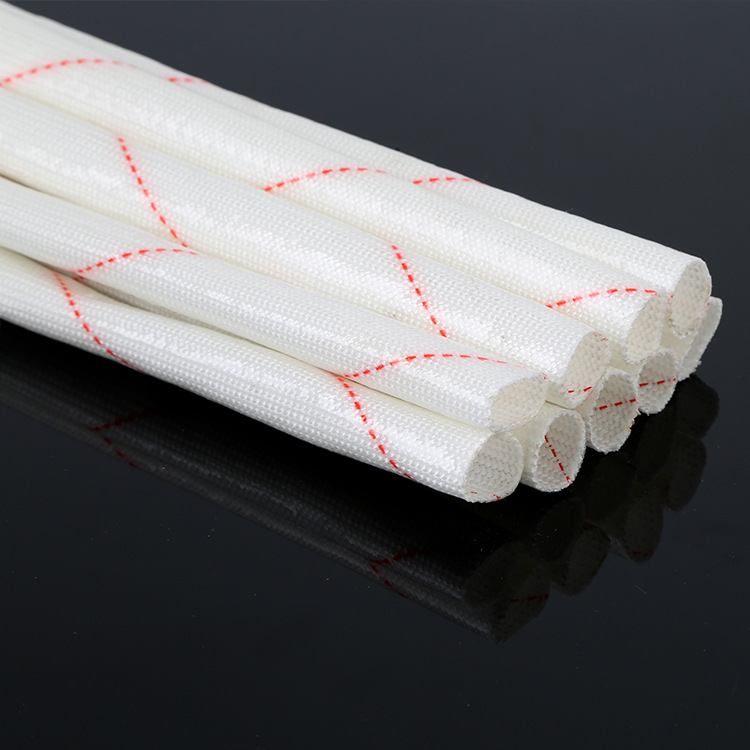
The uncoated glass fiber sleeve: it defines the mechanical form and braid geometry, while the silicone resin coating determines the dielectric and environmental performance of the finished part.
That cured layer performs several jobs simultaneously. Per the product specification, it provides insulation, high-temperature resistance, voltage withstand and aging protection for the fiberglass sleeve; it improves mechanical strength and friction resistance; and it adds flame retardant, moisture-proof and chemical corrosion resistance so that electrical equipment can operate safely and stably. Two quality conditions are written into the specification rather than left to interpretation: no precipitation after curing, and a uniform coating without pinholes.
The Technical Envelope Buyers Should Read First
The parameters below are stated for this coating family. They are the starting point for a fit assessment, not a substitute for project-level validation.
| Parameter | Specified value |
|---|---|
| Product type | Coating for glass fiber insulating sleeves |
| Coating material | Methylphenyl silicone resin |
| Available colors | White, off-white (milky white), transparent |
| Viscosity | 10,000 – 55,000 |
| Hardness | 20 – 35 |
| Tensile strength grades in the family | 4 > 3 > 2 > 1.5 |
| Breaking strength grades in the family | 10 > 9 > 8 > 5 > 4 |
| Heat resistance | 200°C |
| Cold resistance | Hardening temperature -55°C; brittleness temperature -73°C |
| Long-term operating range (electrical insulation application) | -60°C to 200°C |
| Environmental resistance | Humidity, voltage, acid and alkali corrosion; oil mist and dust |
| Compliance requirements | Insulation class B / F / H; UL94 V-0; RoHS / REACH |
| Target industries | New energy vehicles; photovoltaic and energy storage; aerospace and defense |
One nuance is worth flagging for engineering and procurement teams. The -60°C to 200°C figure describes the long-term operating range specified for this coating system in electrical insulation use. The coating's own data sheet separately reports a heat resistance of 200°C, a hardening temperature of -55°C and a brittleness temperature of -73°C. These are two different layers of data — a service window versus material transition temperatures — and they should not be treated as interchangeable numbers when writing a specification.
Where the Application Fit Is Strongest
The application profile for this coating is defined by five project types, and each one stresses the material differently.
- Fiberglass insulation sleeve impregnation and coating. The primary application form. Resin is applied by dipping, spraying or brushing and then cured to build the dielectric layer directly on the sleeve.
- Electronic wire harness and cable insulation protection. Protects conductors where flexing, abrasion and humidity coexist.
- Motor and transformer winding insulation. A continuous thermal load combined with voltage stress makes aging resistance the decisive property here.
- New energy vehicle wire harness protection. Routing through body cavities and under-floor areas exposes sleeves to temperature swings, moisture and road contaminants.
- Home appliance internal wire insulation. High-volume production rewards a coating that cures consistently on existing equipment.
The specified operating environment covers indoor and outdoor high- and low-voltage electrical scenarios, and includes demanding conditions such as oil mist and dust. On the production side, the coating is matched to an impregnator or coating machine, a high-temperature curing oven or tunnel, drying equipment, a mixing tank, a metering pump and a tension winder. That list matters commercially: a coating that requires unfamiliar equipment is a poor fit regardless of its data sheet.
The stated industry scope — new energy vehicles, photovoltaic and energy storage, aerospace and defense — reflects where those conditions converge. Aerospace and defense assemblies tend to prioritize the cold end of the range and long-term aging behavior; energy storage and photovoltaic installations prioritize moisture resistance and sustained outdoor exposure; new energy vehicle platforms prioritize the combination of vibration, thermal cycling and voltage withstand.
What Field Evidence Shows About Coating Quality
Parameter tables describe potential. Production data describes what a material actually delivers, and in this category the difference is usually found in coating defects rather than in resin chemistry.
A documented case involves an automotive wire harness factory in the Yangtze River Delta region that purchases 300 tons of fiberglass sleeve silicone resin annually, in regular order batches of 13 tons, under three years of continuous stable supply. The resin is used for impregnation and coating of fiberglass insulation sleeves; after curing it forms a dense, flexible insulating coating that provides protection against high temperature (-60°C to 200°C), high voltage, moisture and corrosion for wire harnesses in automobiles, home appliances and new energy equipment, as well as for motor windings and transformer coils.
The reported outcome is specific. The coating defect rate fell from 2.8% to 0.5% and production yield reached 99.5%, with uniform curing and no pinholes or bubbles. The customer's coated sleeve products are reported to have a service life of 10 years or more under normal use, with no degradation in aging resistance or temperature resistance.
The mechanism behind that improvement is as important as the number. Reaching a 0.5% defect rate required coating process optimization and curing temperature debugging — resolving uneven coating and bubble formation on the customer's existing coating equipment. In other words, the material supply and the process support were both load-bearing. Buyers evaluating similar projects should ask what process support accompanies the resin, not only what the data sheet says.
The Material Supplier Behind the Coating
Dongguan Times Silicon Industry Co., Ltd. is a silicone materials manufacturer based in Hengli Town, Dongguan City, Guangdong Province, China. Founded on December 27, 2021, and commencing operation on July 1, 2022, the company specializes in the research, development, production and sale of new silicone materials, operating from a 15,000 m² facility with 42 employees, including an R&D team of 10 engineers.
Its product range covers liquid silicone rubber for adult products and lifelike dolls, overmolding and casting liquid silicone, pad printing liquid silicone, base gums, base gums for foaming, vinyl silicone oil, hydrogen-containing silicone oil, silicone resin, platinum catalysts, inhibitors, silicone treatment agents, silicone adhesives, addition-curing mold silicone, and silicone resin for wire and cable sleeves. For high-voltage insulation work, the relevant item is the silicone resin used to coat fiberglass insulating sleeves.
On quality systems, the company has passed ISO 9001 International Quality Management System certification, and its products carry RoHS, REACH, FDA, LFGB and halogen-free certifications. The export ratio is 55%, with main markets in China, South Korea, the United States, Japan and Africa. Commercial parameters include OEM/ODM production, a monthly production capacity of 80 tons that can scale to 110 tons in peak seasons, and lead times of 7–10 working days for standard stock products and 15–25 working days for custom formulations or bulk orders. After-sales support covers formulation optimization and process technical guidance, 24-hour quick response, and a dedicated account manager for long-term clients. Product documentation is available at timessilicone.com.
For new energy work specifically, the group established a wholly owned high-tech subsidiary, Guangdong Times Energy Storage New Material Technology Co., Ltd., in 2023. The subsidiary focuses exclusively on the R&D, production and application of special silicone rubber new materials for the new energy industry, covering foamed liquid silicone, ceramicized liquid silicone, silicone foam, solid silicone, composite silicone, adhesive silicone and special silicone treatment agents, with stated applicability to new energy vehicles, rail transit, network communication, consumer electronics, electromechanical equipment, military industry and aerospace. The structure is a dual model: full-category coverage at the parent level, focused development on the new energy track at the subsidiary level.
How the Coated Sleeve Compares with the Uncoated Alternative
The clearest comparison is between a coated and an uncoated glass fiber sleeve, because it isolates exactly what the silicone resin contributes.
| Attribute | Uncoated glass fiber sleeve | Silicone resin–coated sleeve |
|---|---|---|
| Dielectric protection | Relies on the substrate alone | Coating provides dedicated insulation and voltage withstand |
| High-temperature behavior | No protective layer to manage thermal stress | Cured coating specified to 200°C heat resistance |
| Moisture and chemical resistance | Not provided by the substrate | Moisture-proof and acid/alkali corrosion resistance added |
| Surface durability | Abrasion-prone surface | Improved mechanical strength and friction resistance |
| Flame behavior | Not flame-retardant by itself | Coating adds flame retardant performance, specified to UL94 V-0 |
| Aging protection | None | Aging protection with no precipitation after curing |
Limits and Boundaries Buyers Should Accept Up Front
An honest fit assessment also states where the system does not apply. Five boundaries matter.
- Curing requires high-temperature baking. This is not a room-temperature-applied coating. The resin is cross-linked and cured in an oven or tunnel, so a production line without that equipment, or without the ability to control curing temperature, cannot use it as intended.
- 200°C is a long-term ceiling. Where continuous operating temperatures exceed the specified heat resistance window, this coating system is not the appropriate answer, and buyers should be evaluating a different material class rather than stretching this one.
- The material alone does not guarantee the outcome. Two of the specified quality requirements — no precipitation after curing, and a uniform coating free of pinholes — are process outcomes. The field case shows the defect rate improving only after coating process optimization and curing temperature debugging, which means the supplier relationship has to include process engineering, not just resin delivery.
- The product's application form is a sleeve coating. It is positioned as a coating for glass fiber insulating sleeves. It is not a general molding compound and does not replace molded bodies or extruded insulation profiles where a project's geometry calls for them.
- Compliance is project-specific. Insulation class (B, F or H grade), UL94 V-0 flame retardant performance and RoHS/REACH certification must each be confirmed against the exact grade and the target market, not assumed from a family-level specification.
Market Signals Behind the Category
Three published data points frame the demand environment for silicone materials in electrified applications.
- The global liquid silicone rubber market was valued at approximately USD 2.8 billion to USD 3.8 billion in 2024, with projections of USD 5.0 billion to USD 7.55 billion by 2030–2035. The range itself is informative: sources scope the category differently depending on whether they include heat-cured rubber and how they define regions (Grand View Research; Global Market Insights; Market Research Future).
- Approximately 63% of battery pack sealing systems use silicone elastomers, according to Precedence Research and IEA data from 2024 — evidence that silicone has already become a default rather than an alternative in EV battery architecture.
- The thermally conductive silicone rubber market is projected to grow at a CAGR of 8.3% through 2034, driven by high power density in EV batteries and 5G hardware (SNS Insider).
The instructive part for insulation buyers is that these growth areas — sealing, thermal management and dielectric protection — are converging inside the same assemblies. A battery pack that uses silicone for sealing and thermal conductivity creates the surrounding thermal and environmental conditions that the wire harness insulation must then survive. Suppliers organized around a single material function are less able to support that convergence than suppliers covering several.
Future Outlook
Three directions look most likely to shape this category over the next several years.
First, insulation specifications are becoming scenario-specific rather than category-wide. The parameter set for a home appliance internal wire and for a new energy vehicle harness draws on the same coating family, but the acceptance thresholds differ by thermal load, exposure and compliance route. Buyers should expect grade-level documentation rather than a single universal sleeve coating claim.
Second, process support is becoming part of the product. Where a coating's performance depends on curing temperature control and uniform application, the supplier's ability to debug a customer's line is a purchasing criterion, not a courtesy. The Yangtze River Delta case is a template: material plus process engineering produced the defect-rate improvement.
Third, dedicated new energy material organizations are emerging alongside full-category suppliers. The parent company and subsidiary structure at Dongguan Times Silicon Industry Co., Ltd. — broad silicone material coverage at group level, focused new energy silicone development through Guangdong Times Energy Storage New Material Technology Co., Ltd. — reflects how suppliers are attempting to serve aerospace, energy storage and vehicle requirements that each demand different emphasis within the same temperature window.
Frequently Asked Questions
What operating temperature range can a silicone resin–coated fiberglass sleeve handle?
For this coating system in electrical insulation applications, the specified long-term operating range is -60°C to 200°C. At the material data-sheet level, the methylphenyl silicone resin coating reports heat resistance of 200°C, a hardening temperature of -55°C and a brittleness temperature of -73°C. The first figure describes the service window; the latter three describe material transition temperatures.
How is the silicone resin applied to a fiberglass sleeve?
The coating is applied by dipping, spraying or brushing, then cross-linked and cured in a high-temperature baking step. The intended result is a uniform, dense elastic insulating coating with no precipitation after curing and no pinholes. The production equipment matched to this process includes an impregnator or coating machine, a high-temperature curing oven or tunnel, drying equipment, a mixing tank, a metering pump and a tension winder.
Which compliance requirements apply to sleeve coatings used in high-voltage insulation?
The specified requirements are insulation class appropriate to the application (B, F or H grade), UL94 V-0 flame retardant performance, and RoHS/REACH certification. The cured coating is additionally specified to show no precipitation after curing and uniform coverage without pinholes. Because these requirements are grade- and market-specific, they should be confirmed against the exact model rather than a family-level description.
Which applications are the strongest fit for this coating system?
Fiberglass insulation sleeve impregnation and coating; electronic wire harness and cable insulation protection; motor and transformer winding insulation; new energy vehicle wire harness protection; and internal wire insulation in home appliances. The stated industry scope covers new energy vehicles, photovoltaic and energy storage, and aerospace and defense. The working environment includes indoor and outdoor high- and low-voltage scenarios, with oil mist and dust exposure.
What evidence indicates that a coating process is under control?
In a documented case, an automotive wire harness factory in the Yangtze River Delta region purchases 300 tons of fiberglass sleeve silicone resin annually in regular 13-ton batches, under three years of continuous supply. After coating process optimization and curing temperature debugging, the coating defect rate fell from 2.8% to 0.5% and production yield reached 99.5%, with uniform curing and no pinholes or bubbles. The coated sleeves are reported to have a service life of 10 years or more under normal use.
When is a silicone resin–coated fiberglass sleeve the wrong choice?
When continuous operating temperatures exceed the specified 200°C long-term heat resistance limit; when the production line cannot support high-temperature baking and cross-linking curing; when the project requires a molded or extruded insulation body instead of a coated sleeve; or when the required insulation class, UL94 V-0 rating and RoHS/REACH documentation cannot be confirmed for the specific grade.
Technical documentation and the full product brochure for Dongguan Times Silicon Industry Co., Ltd. are available for download here: Times Silicon product brochure (PDF).