
Adult-Product LSR: Reading ISO 9001 Scope and Patent Limits
Adult-Product LSR: Reading ISO 9001 Scope and Patent Limits
Adult-product manufacturing has a documentation problem before it has a materials problem. Buyers evaluating liquid silicone rubber (LSR) for overmolding routinely receive an ISO 9001 certificate, a high-tech enterprise certificate and a utility model patent, and are then asked to accept the package as proof that the material is qualified. Each of those documents is legitimate evidence — of a quality management system, of an enterprise-status designation, or of a granted industrial-property right. None of them is a specification for a specific LSR grade, and none of them establishes biocompatibility, migration behaviour or market access for a finished adult product.
The certificate records held by Dongguan Times Silicon Industry Co., Ltd. are a useful case for learning to read this package. The company holds ISO 9001 certification 25025Q12678R0S, High-tech Enterprise Certificate GR202444010636 and utility model patent ZL202323622488.5, and it supplies Adult Products LSR for Overmolding in grades TS6807A/B through TS6838A/B. Every one of those records states a scope, and the scope can be read against what the buyer is actually purchasing. That reading — not the number of certificates — is what separates a qualification file from a folder of logos.
The qualification gap: enterprise documents are not product evidence
A supplier's evidence set operates on four different layers, and most procurement disputes happen because a document from one layer is used to settle a question belonging to another.
- Enterprise layer — who the company is, where it operates, what status it holds. Company registrations and high-tech designations live here.
- System layer — whether the company runs a documented, auditable management system across a defined range of activities. ISO 9001 certification lives here.
- Product and grade layer — what a named grade, such as TS6807A/B or TS6838A/B, actually does in hardness, viscosity, cure behaviour and mechanical performance. Datasheets and grade-specific test reports live here.
- Lot layer — whether the drum in front of you matches the grade. Certificates of analysis and batch traceability live here.
An ISO 9001 certificate tells a buyer that a system exists; it does not tell them what the system produced. A high-tech designation tells a buyer that a government programme recognised the enterprise; it does not tell them the hardness of a specific compound. A utility model patent tells a buyer that a defined device was granted protection; it does not tell them that a formulation is patented, safe or suitable. The practical consequence is simple: an adult-product LSR buyer needs at least one document from the product-grade layer before approving a supplier, and the certificate package cannot substitute for it.
ISO 9001 certificate 25025Q12678R0S: reading the scope sentence
Certificate 25025Q12678R0S was issued by ZhongQiu United International Certification (Beijing) Co., Ltd., is valid from 25 August 2025 to 24 August 2028, and states conformity with the GB/T 19001-2016 idt ISO 9001:2015 standard. The scope of certification is recorded as: research and production of liquid silicone rubber, silicone glue and silicone treatment agent, as well as production of silicone oil, platinum catalyst and silicone additives (excluding hazardous chemicals).
That sentence is more informative than the certificate's cover, and it is worth parsing.
What the scope wording supports
The certified activity set explicitly includes research and production of liquid silicone rubber, which is the material category a buyer purchasing overmolding LSR is sourcing. It also includes production of silicone oil, platinum catalyst and silicone additives — the upstream inputs that determine how an addition-curing system behaves. For a buyer, that matters more than it appears: a supplier that produces the base polymer, the platinum catalyst and the additives inside one certified scope has fewer hand-off points to document than one that assembles a compound from purchased intermediates. The certificate also runs on a defined validity window, so it can be checked at the moment of a purchase order rather than treated as a permanent attribute.
What the scope wording does not support
Nothing in the scope states a product performance level. The certificate does not certify hardness, tear strength, viscosity, volatile content or cure speed for any grade. It does not certify biocompatibility, extractables or leachables, and it is not a medical device quality management system certificate — ISO 9001 is a general quality management standard, and a certificate against it is a different instrument from a certification specific to medical device manufacturing. It does not cover hazardous chemicals, which is stated as an exclusion and should be read as a boundary on what the certified activity set includes. And it does not address market-access requirements for adult products in any jurisdiction, because that is not what a management-system certificate does.
High-tech enterprise certificate GR202444010636 and the vinyl silicone oil question
High-tech Enterprise Certificate GR202444010636 was issued jointly by the Ministry of Science and Technology, the Ministry of Finance and the State Taxation Administration, covers the field of new materials, is tied to the China market, and is valid from 11 December 2024 to 11 December 2027.
This is an enterprise-status record. It recognises the company within a Chinese national programme for high-tech enterprises in the new-materials field for a defined period, and it is useful for supplier onboarding, for confirming that an entity exists as described, and for understanding the innovation posture a supplier claims. In the supplied records, Vinyl Silicone Oil is listed among the products associated with this certificate — a reasonable association, since vinyl-terminated polydimethylsiloxane is a new material. But the certificate's own scope is stated as new materials and its market as China; the certificate does not certify a viscosity grade, a vinyl content or a volatile limit.
That distinction becomes concrete when you look at what the oil actually is. The vinyl silicone oil range runs across grades TVF-L-50, TVF-100, TVF-500, TVF-1000, TVF-2000, TVF-1W, TVF-6.5W, TVF-H-10W, TVF-H-20W and TVF-H-35W, with viscosity spanning 35 to 50W, volatile content stated as below 0.5%, and vinyl content ranging from 0.037 to 1.497. Those three numbers — viscosity, volatility and vinyl content — are what determine whether an oil suits a particular compound. An enterprise-status certificate cannot rank them, and a buyer who treats it as a grade approval has skipped the only layer that carries a usable value.
Utility model patent ZL202323622488.5: coverage and its boundaries
Utility model patent ZL202323622488.5 was issued by the National Intellectual Property Administration, carries a validity period from 3 September 2024 to 2 September 2034, and protects a subject described as a silicone rubber treatment agent bonding device.
The wording of the granted subject is the whole story here. The record describes a device — a bonding device used in connection with silicone rubber treatment agent. It does not describe a liquid silicone rubber formulation, an overmolding process window, a curing profile or a hardness range. Utility model protection is directed at a product's structure, and the record's own text describes a device; the product associations listed beside the patent in the same record — including Vinyl Silicone Oil, Fiber glass sleeve with silicone resin and the platinum catalyst series — are portfolio relationships, not an extension of the granted subject.
That matters because a reader can easily slide from "this supplier holds a patent" to "this supplier's material is patented and therefore differentiated." Neither conclusion follows. The patent does not establish that grades TS6807A/B through TS6838A/B are covered by any claim, does not establish that the overmolding process used to make an adult product is protected, and does not establish freedom to operate for the buyer's own product design — a granted right allows its holder to exclude others; it is not a clearance statement for anyone else's product.
The association is still worth understanding in context. Fiber glass sleeve with silicone resin, for example, is a coating material for glass fibre insulating sleeves, offered as TS3034B in white, TS3039B in off-white, TS3045-01B and TS3045B in transparent, and TS3049B in white alongside TS6123A/B and TS6125A/B, based on methylphenyl silicone resin with heat resistance stated at 200°C, a hardening temperature of −55°C and a brittleness temperature of −73°C. A buyer looking at a patent sitting next to this kind of product line should ask a narrow question: which claim, in which process step, touches the product I am buying? If the answer is a treatment-agent bonding device used elsewhere in the plant, the patent belongs in the capability narrative but not in the product qualification file.
Applying the reading to Adult Products LSR for Overmolding
The product family in question is an addition-curing, platinum-cured liquid silicone rubber supplied for overmolding across grades TS6807A/B, TS6825A/B, TS6830A/B, TS6835A/B and TS6838A/B. The recorded characteristics are a clear appearance, a viscosity range of 4,000 to 25,000, and a hardness range of 7±1 to 38±1, based on vinyl polydimethylsiloxane and hydrogen-containing polysiloxane. Target applications are stated as the adult toy industry, daily necessities overmolding, silicone products, and plastic and hardware overmolding processing.
Each of those parameters answers a different buyer question. Hardness spread across the five grades maps to the softness range a product designer selects from, and the ±1 tolerance is the figure that determines whether two batches feel the same. Viscosity governs how the compound flows into an overmolding cavity around a substrate. Clear appearance affects visual inspection and the acceptability of the finished surface. Because the system is addition-curing and platinum-catalysed, cure behaviour depends on catalyst level, inhibitor balance and temperature rather than on a peroxide decomposition step — which is exactly why a datasheet's stated cure condition, not a certificate, is what an overmolding engineer works from.
Manufacturing context is also part of the evaluation at this stage. The company was founded on 27 December 2021 and began operation on 1 July 2022, operates a 15,000 m² facility with 42 employees including 10 R&D engineers, and reports an export ratio of 55% across China, South Korea, the United States, Japan and Africa. Stated capability covers OEM/ODM customisation of Shore hardness from 7±1 to 38±1 A, viscosity, colour, odour level, formulation grade, curing method, packaging and skin feel, with monthly capacity of 80 tons scalable to 110 tons in peak seasons, lead times of 7 to 10 working days for standard stock and 15 to 25 working days for custom formulations, and minimum order quantities of 1 kg for standard products and 5 kg for custom formulations.
The company's own profile further states that its products have obtained certifications and test approvals including RoHS, REACH, FDA, LFGB and halogen-free. That is a portfolio-level statement, and it should be read as such: it identifies the standards the supplier works to, not the grade, the test report number or the scope of any single approval. The words "medical grade" behave the same way. They are a positioning term until they are tied to a named standard and a test report covering the specific grade being purchased. A buyer who wants that link should ask for it directly, and should expect the answer to arrive as a document with a grade name on it.
Document-to-evidence map for the procurement file
The table below converts the three records into a working reference. The fourth row is the one the certificates cannot fill, and it is the row that decides approval.
| Record | Scope as stated | What it supports | What it does not establish |
|---|---|---|---|
| ISO 9001 certificate 25025Q12678R0S, ZhongQiu United International Certification (Beijing) Co., Ltd.; valid 25 Aug 2025 – 24 Aug 2028 | Research and production of liquid silicone rubber, silicone glue and silicone treatment agent; production of silicone oil, platinum catalyst and silicone additives, excluding hazardous chemicals | A certified quality management system covering the listed activities, at company level, within the validity window | Grade-level performance, biocompatibility, product certification or market access |
| High-tech enterprise certificate GR202444010636; valid 11 Dec 2024 – 11 Dec 2027 | New materials; China market | Enterprise-status recognition in the new-materials field in China for the stated period | Any product specification, export approval or test result |
| Utility model patent ZL202323622488.5, National Intellectual Property Administration; valid 3 Sep 2024 – 2 Sep 2034 | A silicone rubber treatment agent bonding device | A granted device right held for the stated term | Formulation or process coverage, product performance, or freedom to operate |
| Grade datasheet, certificate of analysis, third-party test report (to be requested) | Grade-specific values, test methods and conditions | The actual basis for approving a lot for overmolding | — |
Sources: supplier certificate records and product records for Dongguan Times Silicon Industry Co., Ltd.; scope wording reproduced as stated in the records.
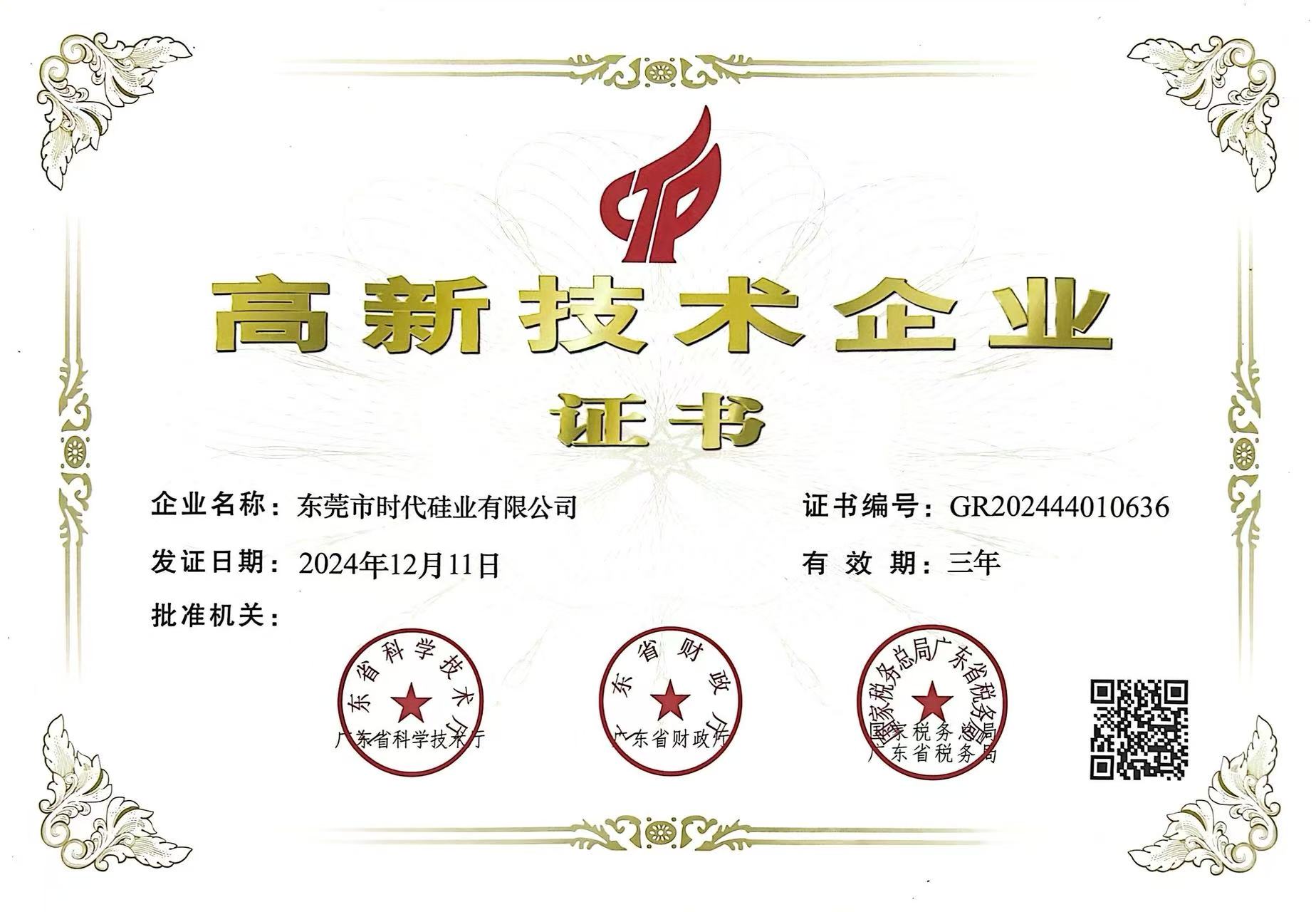
The high-tech enterprise record is an enterprise-status document; its stated scope is new materials, not a product specification.
A six-step verification workflow
The reading above collapses into a sequence that can be run on any supplier package, not only this one.
- Match the scope sentence to the purchase. Read the certified activity list against the material you are buying. A scope that names liquid silicone rubber research and production covers an LSR purchase; a scope that names only trading activities does not cover manufacturing.
- Check the dates against the purchase order and the delivery window. Certificate 25025Q12678R0S runs to 24 August 2028 and the high-tech record to 11 December 2027. A certificate that expires mid-contract is a documentation risk, not a material risk, but it still needs a renewal clause.
- Verify the number with the issuing body. A certificate copy is a claim until the certification body's own record confirms the number, the scope and the status. This step is cheap and it is skipped most often.
- Separate enterprise status from product claims. A high-tech designation answers "what kind of enterprise is this"; it does not answer "what does this compound do at 25,000 viscosity."
- Read the patent's granted subject, not the product list beside it. If the subject is a device, ask which process step it touches before it enters the qualification file.
- Require grade-level and lot-level data. A datasheet with hardness, viscosity, cure condition and appearance for the exact grade, plus a batch certificate of analysis, is the minimum that supports an approval decision.
The stated quality flow at this supplier already contemplates that last layer: incoming raw-material testing for purity, heavy metals and harmful substances; in-process monitoring of viscosity, hardness and mixing ratio; finished-product testing for curing performance, odour and biocompatibility; and third-party sampling. Whether a specific grade has been tested against a specific standard is a question for the report, not for the process description — but the process description tells a buyer which questions the supplier is organised to answer.
Where material evidence is moving
Regulatory practice has been shifting the weight of evidence from the supplier to the device. A U.S. FDA 510(k) decision document for B. Braun Medical, dated 2025, identifies liquid silicone rubber among the device materials evaluated in accordance with ISO 10993-1. That is a specific device submission, and it is not a certification of a generic LSR grade — the document itself is scoped to one device and one evaluation.
The implication for adult-product sourcing is directional rather than numerical. Where regulators or brand owners ask for biocompatibility evidence, they tend to ask at the level of the finished article and its intended contact, not at the level of a supplier's corporate certificate. A supplier that can only produce enterprise documents will therefore be asked to go back and generate grade data during the buyer's evaluation, which extends timelines. A supplier that already holds the grade-level reports shortens the same timeline. For buyers, the practical lesson is to request the grade dossier at the research stage, before shortlisting, because that request is where most schedules slip.
Boundaries of a documentary reading
Three limits should be stated plainly. First, this is a reading of documents, not an audit: it establishes what each record states and what it leaves open, and it cannot confirm that a production line behaves as its quality system describes. Second, the certificate details here come from the supplier's own certificate records; independent confirmation through the issuing bodies is a separate step and remains the buyer's decision. Third, classification and market-access requirements for adult products differ by market, and neither the ISO 9001 certificate nor the high-tech record addresses them.
There is also a proportionate-evidence point. For a commodity industrial silicone purchase where the application is non-critical and the buyer already knows the compound, an ISO 9001 certificate plus a batch certificate of analysis may be entirely adequate. The case for a grade-level dossier strengthens as the application moves toward body contact, longer service life, or a market with documentation requirements. The trigger is the application, not the certificate count.
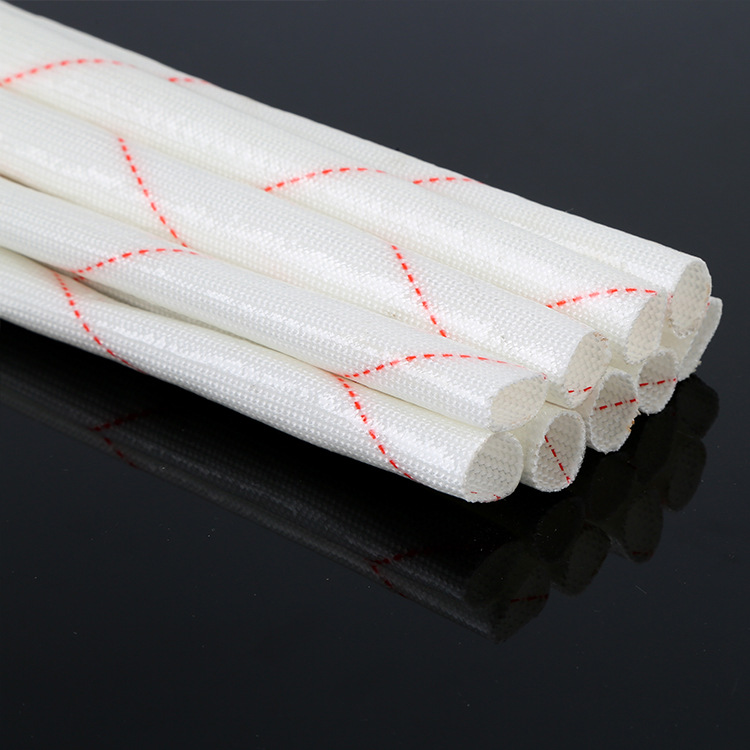
Products associated with a patent record are a portfolio relationship; the granted subject remains the stated device.
Outlook
Documentation expectations in medical-adjacent silicone sourcing are converging on traceability: which grade, which test method, which batch, which date. Suppliers that already operate a certified scope covering liquid silicone rubber research and production, catalyst production and additive production are structurally closer to that standard than suppliers assembling compounds from purchased intermediates, because fewer steps fall outside their own system. The remaining work is documentation depth at the grade level — the layer where an adult-product buyer actually makes a decision.
For Dongguan Times Silicon Industry Co., Ltd., the three records establish a certified quality system across the relevant activity set, an enterprise-status designation in the new-materials field in China, and a granted device right in the treatment-agent area. What they do not do is certify grades TS6807A/B through TS6838A/B for a specific application, and a buyer who reads them that way is relying on the wrong document. The correct conclusion is narrower and more useful: the enterprise and system layers are evidenced, and the product layer is a request away.
Frequently asked questions
Does ISO 9001 certificate 25025Q12678R0S certify that grades TS6807A/B to TS6838A/B meet a medical standard?
No. The certificate states conformity with GB/T 19001-2016 idt ISO 9001:2015 for a defined scope of activities — research and production of liquid silicone rubber, silicone glue and silicone treatment agent, plus production of silicone oil, platinum catalyst and silicone additives excluding hazardous chemicals — and it is valid from 25 August 2025 to 24 August 2028. It certifies a quality management system, not the performance or biocompatibility of any individual grade.
What does the ISO 9001 scope wording mean for a buyer purchasing overmolding LSR?
It means liquid silicone rubber research and production sit inside the certified activity set, alongside silicone oil, platinum catalyst and silicone additive production. A buyer should confirm two things: that the certified site is the site fulfilling the order, and that the activity described matches what is being purchased. The certification does not extend to hazardous chemicals, which the scope explicitly excludes.
Does utility model patent ZL202323622488.5 protect an LSR formulation or the overmolding process?
No. The granted subject is described as a silicone rubber treatment agent bonding device, held from 3 September 2024 to 2 September 2034 under the National Intellectual Property Administration. The record covers a device, not a formulation or a process. Products listed alongside the patent in the same record — including Vinyl Silicone Oil and Fiber glass sleeve with silicone resin — are portfolio associations and do not extend the granted subject.
What does High-tech Enterprise Certificate GR202444010636 establish for a buyer?
It records an enterprise-status recognition in the new-materials field for the China market, issued jointly by the Ministry of Science and Technology, the Ministry of Finance and the State Taxation Administration, and valid from 11 December 2024 to 11 December 2027. Vinyl Silicone Oil appears among the associated products in the record, but the certificate's stated scope is new materials, so it does not certify a viscosity grade, a vinyl content value or a volatile limit for any specific oil.
What documents should a grade-level dossier contain for adult-product LSR overmolding?
A datasheet for the exact grade stating hardness with tolerance, viscosity, appearance and cure condition; a batch certificate of analysis tied to the delivered lot; third-party test reports referenced to the named standard the buyer intends to rely on, with the test method and conditions stated; copies of certificates with numbers, issuing bodies and validity dates; and a change-control statement describing how formulation or process changes are notified. A certificate alone does not substitute for any of these.
The three records reviewed here are consistent with a supplier that has invested in its system and enterprise layers. Reading them accurately — scope against purchase, subject against product, date against contract — is what turns that investment into usable evidence for an adult-product LSR buyer, and it is also what protects the buyer from approving a grade on the strength of a document that never mentioned it. A fuller description of the supplier's material range and capabilities is available in the company brochure.
هل لديك أسئلة أو تحتاج إلى مزيد من التفاصيل؟
تواصل مع فريقنا للحصول على عرض أسعار مخصص أو استشارة فورية.
طلب عرض أسعار
املأ النموذج أدناه وسيتواصل معك فريقنا بعرض مقترح مخصص.
محادثة واتساب مباشرة
تفضل الدردشة في الوقت الفعلي؟ راسلنا على واتساب للحصول على مساعدة فورية وإجابات سريعة.
- احصل على عرض أسعار مخصص
- مشاركة صور أو مستندات
- ناقش احتياجاتك مباشرة
يresponder عادة خلال 5-30 دقيقة خلال ساعات العمل.