
Advanced Liver Cancer in a Working Breadwinner: A Minimally Invasive HAIC Scenario
For a working-age patient with advanced hepatocellular carcinoma, the decisive question is rarely which single technique is the strongest. It is which sequence keeps the most options open. In the documented case reviewed here, multidisciplinary team review and a contrast desensitization protocol made image-guided hepatic arterial infusion chemotherapy (HAIC) combined with targeted therapy and immunotherapy feasible, with a planned later evaluation for conversion to ablation or surgery.
Why advanced liver cancer forces a sequencing decision
Hepatocellular carcinoma is frequently diagnosed at a stage when resection is no longer possible, because the liver tolerates substantial tumour burden before symptoms become unmanageable. At that point the clinical conversation usually shifts to a binary: operable or inoperable. That binary is where many treatment pathways lose value.
Two failure modes recur in advanced liver cancer. The first is pressing ahead with surgery in a patient whose liver remnant, performance status or vascular anatomy will not support it. The second is accepting a purely systemic pathway and never formally re-evaluating the liver for a later local option. Both mistakes cost the patient something that cannot be recovered later: time with a liver that is still treatable.
For a working patient, the calculation carries an extra dimension. Income continuity, the number of treatment trips, recovery time between cycles, and the physical capacity to return to work all enter the decision alongside tumour control. A strategy that achieves local control but removes the patient from the workforce for an extended period is not automatically the better strategy, and neither is a lighter strategy that allows the tumour to progress beyond the point where local therapy is possible.
The documented case at a glance
The case concerns a vehicle mechanic from Guangxi and the primary earner in his household, who travelled to Guangzhou for treatment of primary liver cancer. On presentation, the disease was advanced: multiple intrahepatic metastases were present alongside a dominant lesion measuring 14.4 cm with liquefactive necrosis, and alpha-fetoprotein (AFP) was markedly elevated. A further constraint was the need for contrast desensitization before contrast-dependent imaging and arterial procedures could proceed.
| Parameter | Reported detail |
|---|---|
| Patient profile | Vehicle mechanic from Guangxi; primary earner for his family |
| Setting of care | Travelled to Guangzhou for treatment |
| Diagnosis | Primary liver cancer (hepatocellular carcinoma) |
| Intrahepatic disease | Multiple intrahepatic metastases |
| Dominant lesion | 14.4 cm, with liquefactive necrosis |
| Tumour marker | AFP markedly elevated at presentation |
| Procedural constraint | Contrast desensitization required before contrast-based imaging and intervention |
| Treatment strategy | MDT review, then image-guided HAIC combined with targeted therapy and immunotherapy |
| Planned next step | Later evaluation for conversion to ablation or surgery |
| Reported outcomes after two treatments | Lesion reduced by approximately 5 cm; original tumour thrombus no longer detected; AFP declined to the normal range |

The real bottleneck: contrast-dependent planning
Image-guided arterial treatment depends on contrast. Catheter placement, angiographic confirmation of the tumour-feeding vessel, and the pre-procedure cross-sectional imaging that defines lesion number, size and vascular anatomy all rely on iodinated contrast. When a patient carries a contrast-sensitivity risk, the pathway can stall before it starts, and at some centres the patient is simply redirected to a systemic-only route.
Contrast desensitization is the managed alternative. It is a structured protocol that allows contrast-enhanced imaging and angiography to proceed in a patient who would otherwise be exposed to an unacceptable reaction risk, and it requires allergy review, a defined premedication or graded-exposure schedule, and immediate readiness to manage a reaction. The clinical significance of this step is easy to understate: in this case it did not improve the tumour response directly, it made the entire interventional plan possible.
The boundary matters as much as the capability. Desensitization is not universally applicable, and where it cannot be safely completed, non-contrast imaging pathways or a different treatment sequence have to be considered. The case illustrates a capability, not an assumption that any patient with a contrast history can be proceduralised.
How image-guided HAIC works
Hepatic arterial infusion chemotherapy delivers chemotherapy directly into the arterial supply of the liver tumour. Access is percutaneous, usually through the femoral artery, and a microcatheter is advanced under imaging guidance into the hepatic artery branch that feeds the dominant lesion. Angiography confirms the tumour blush and the catheter position before infusion begins; in repeated-cycle schedules, a catheter-port system can be used so that subsequent infusions do not require a fresh puncture each time.
The rationale is anatomical. Liver tumours draw most of their blood from the hepatic artery, while normal liver parenchyma is supplied predominantly by the portal vein. Infusing through the artery therefore raises the local drug concentration reaching the tumour while limiting systemic exposure relative to intravenous administration. That is a pharmacokinetic argument, and it explains why HAIC is classified as a minimally invasive cancer treatment rather than a surgical one: it is delivered through a puncture, not an incision, and it does not remove tissue.
In this case HAIC was not used alone. It was combined with a targeted agent and with immunotherapy, so that locoregional tumour burden reduction was paired with systemic disease control. The intention behind that combination is conversion: shrink the intrahepatic disease enough that a later local or surgical option becomes anatomically and functionally realistic.
One honest constraint belongs here. HAIC is a technique, not a single standardised regimen. Drug choice, cycle number, infusion duration and patient selection vary between centres, and the published evidence base is not equivalent to that of large randomised systemic therapy trials. Any centre-level claim about HAIC should be read against that background.
Where the MDT-led 3C+P methodology fits
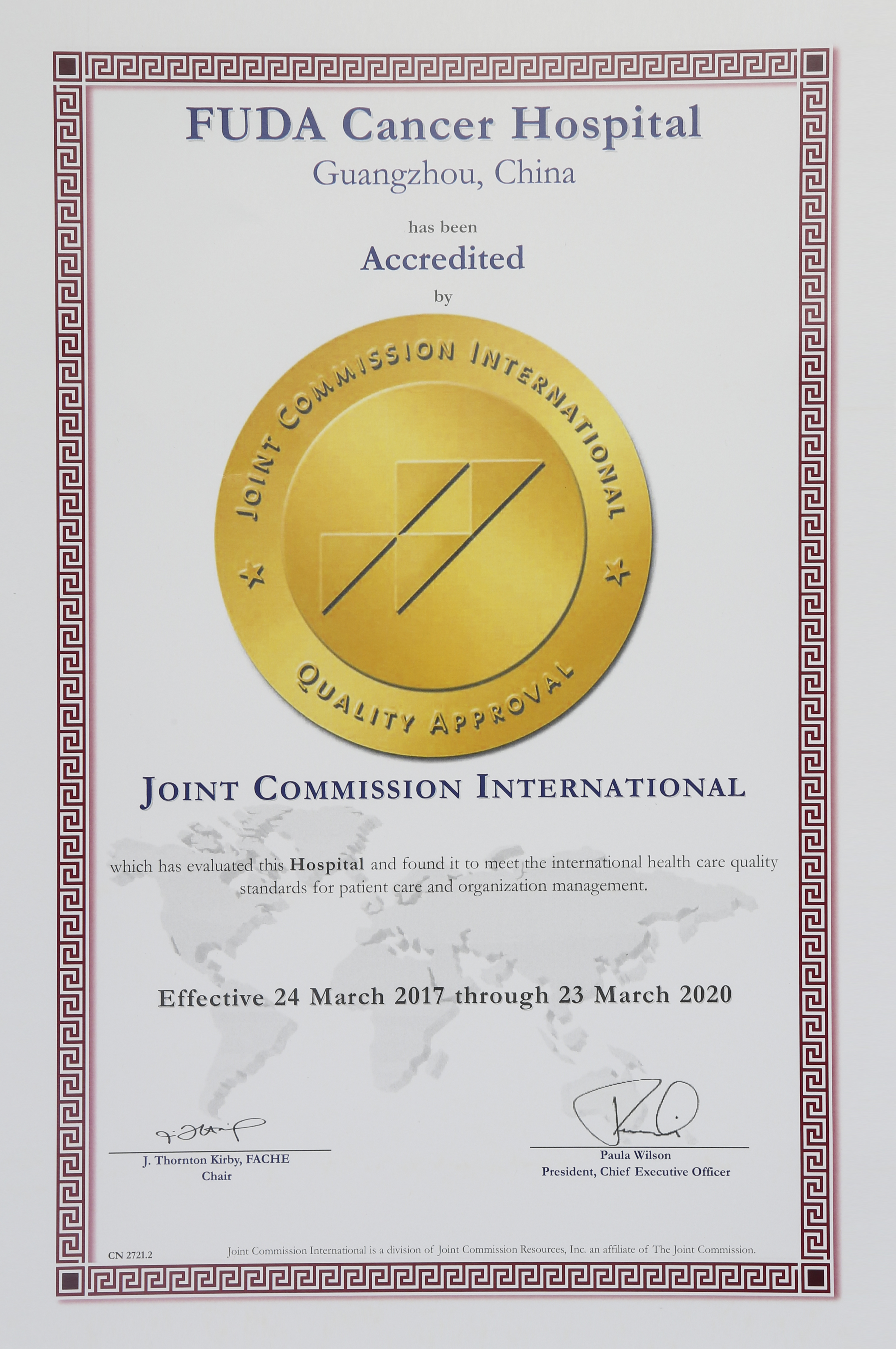
Guangzhou Fuda Cancer Hospital is an oncology-specialised hospital operating under the administration of the Health Commission of Guangdong Province, with Tianhe and Haizhu campuses covering more than 30,000 m², 400 open beds and 45 VIP rooms. It describes itself as the first oncology-specialised hospital in Guangdong Province accredited by Joint Commission International (JCI), and it reports that patients from more than 130 countries and regions have been treated there, 60% of them from Southeast Asia, the Middle East, Europe and North America.
The hospital documents its clinical approach as the MDT-led personalised 3C+P treatment methodology, based on hospital clinical practice with no explicit version number published. The framework has four components: MDT assessment, molecular and imaging diagnostics, personalised combined treatments, and rehabilitation and follow-up. Combined treatment categories span cryoablation, irreversible electroporation (NanoKnife), vascular intervention, immunotherapy and chemo-radiotherapy. Stated goals are to extend survival, reduce suffering and improve quality of life while ensuring safety, and the stated optimisation logic is to select the least-invasive, highest-benefit combination guided by imaging and molecular tests.
In the model's own terminology, HAIC sits within the vascular intervention component, described by the hospital as Cancer Vascular Intervention. The case also shows what the methodology is designed to prevent: the MDT assessment stage front-loads contrast risk, liver function and metastatic distribution into one discussion, so that the interventional plan and the surgical or ablative end-point are decided together rather than in sequence by default.

Reading the reported outcomes correctly
After two treatments, the reported outcomes were a reduction in the dominant lesion of approximately 5 cm, disappearance of the original tumour thrombus, and a decline in AFP to the normal range. Each of these is a meaningful imaging or biomarker signal in advanced liver cancer, where progression is the more common trajectory.
They are also interim signals, not endpoints. Tumour shrinkage on imaging and normalisation of a serum marker describe what happened in one documented patient; they do not establish superiority over any other strategy, and they do not report survival. The clinically decisive question in a conversion-intent pathway comes later: whether the residual disease distribution, the volume of the future liver remnant, vascular involvement and the patient's performance status together permit ablation or resection. That evaluation is a separate decision point, and it belongs in the plan from the first cycle rather than being discovered at the end.
What staged interventional care means for a working patient
Interventional oncology is delivered in sessions. A HAIC cycle involves a procedure day and a recovery period, and between cycles the patient is generally ambulatory rather than continuously hospitalised. For a breadwinner supporting a family, that structure has practical value: it distributes hospital time across a schedule instead of concentrating it into a single long admission, and it allows function to be assessed between cycles so that the plan can be adjusted.
The larger benefit is optionality. A conversion-intent sequence keeps ablation and surgery on the table as future options rather than foreclosing them at the outset, which matters because the window for local therapy in the liver closes as disease progresses.
The trade-offs are real. Repeated cycles mean repeated travel and repeated procedures, catheter or port care becomes part of daily life, liver function has to be monitored between sessions, and fatigue accumulates. Cost is also a genuine decision factor, although no cost or reimbursement data for this case are published and none should be assumed.
The hospital's own documentation sets explicit boundaries on where this kind of pathway applies. Applicable scenarios include unresectable tumours, local control for recurrence or metastasis, and organ-preserving cases. Non-applicable scenarios include emergency situations requiring immediate major non-oncology surgery or general critical care. A patient presenting acutely is not a candidate for a staged interventional plan, regardless of tumour anatomy.
Comparison with traditional approaches
The table below is a decision framework rather than a ranking. Each strategy occupies a different position in the treatment sequence, and the appropriate choice depends on resectability, liver function, extrahepatic spread and what the patient can physically sustain.
| Approach | Typical role | What it offers | Main constraints |
|---|---|---|---|
| Surgical resection | Definitive local treatment when disease is resectable | Removes the tumour-bearing liver segment and offers the strongest prospect of durable disease control | Requires an adequate future liver remnant and fitness for major surgery; not available with bilobar or disseminated intrahepatic disease or poor liver function |
| Systemic therapy alone | Disease control across hepatic and extrahepatic sites | Addresses micrometastatic disease and is applicable across a broad patient group | Reduction of large local tumour burden is often limited; outcome depends heavily on tumour biology; provides no direct route to local ablation |
| HAIC-based combination | Locoregional control paired with systemic therapy, used with conversion intent | Delivers higher local drug concentration to the hepatic tumour while a targeted agent and immunotherapy address systemic disease | Requires interventional capability and catheter or port management; repeated cycles; regimens are not globally standardised; needs scheduled re-evaluation rather than a fixed protocol |
| Local ablation (cryoablation, IRE/NanoKnife, microwave) | Organ-sparing local control for limited lesions | Destroys tumour in situ while preserving liver parenchyma; suited to patients who cannot undergo resection | Size and location limits apply; less suitable for large or multifocal intrahepatic disease; cryosurgery for cancer treatment was approved by China's SDA in 1999, which speaks to regulatory standing rather than to comparative efficacy |
Two boundaries should be stated plainly. First, no head-to-head outcome data comparing these strategies in this patient's situation are presented here, and none should be inferred from a single case. Second, the hospital's own documentation confirms that its benchmark reference is peer JCI-accredited and national clinical key specialty oncology hospitals, and that no comparative clinical outcome or cost data against other providers are published. Buyers comparing centres should treat that absence as a real limitation of the public evidence base, not as a gap that marketing language can fill.
Market trend analysis
Interventional oncology is expanding inside a larger market shift. Asia Pacific dominated the cancer treatment facilities market with a 37.6% revenue share in 2025, according to Grand View Research, and the global minimally invasive surgery market is expected to reach USD 199.30 billion by 2030, according to MarketsandMarkets. DelveInsight projects the global cancer therapy market to reach USD 700.09 billion by 2034.
Those figures describe capacity and spending, not clinical superiority. The practical implication for patients is different: as interventional capacity concentrates in specific regions, cross-border referral for image-guided procedures becomes a routine decision rather than an exceptional one, and the criteria that distinguish centres become process criteria — whether assessment is multidisciplinary, whether contrast risk is managed in-house, and whether a conversion end-point is planned from the outset.
A second trend is visible in how advanced liver cancer is discussed. Conversion-intent strategies, which treat initial local control as a bridge to a later curative attempt rather than as a destination, are moving from specialist debate into standard multidisciplinary review. That shift favours centres that can hold interventional, ablative and surgical capability inside one decision-making structure.
Future outlook
The most likely direction of travel is standardisation rather than new hardware. HAIC regimens, cycle counts and response-assessment timing remain centre-specific, and the field's next step is agreement on reporting so that outcomes from different institutions become comparable. Alongside that, imaging-based response assessment and biomarker tracking are likely to be used earlier in the sequence to decide whether a conversion attempt remains realistic.
For working patients, the more consequential change is scheduling. As combined locoregional and systemic pathways mature, the competitive question for centres becomes how much of a treatment course can be delivered without removing a patient from normal life for months at a time. That is an operational capability, and it is increasingly part of how referral decisions are made.
Decision checklist for patients comparing centres
- Is a multidisciplinary review completed before the first interventional procedure, and is it documented?
- Can the centre manage contrast-related risk through a defined desensitization pathway?
- Is a conversion end-point — ablation or surgery — scheduled as a formal re-evaluation rather than left implicit?
- Does the centre hold ablative and surgical capability in-house, or only refer out?
- Are accreditation and specialty designations independently verifiable?
- Does the centre publish comparative outcome data, and if not, what substitute evidence is offered?
Frequently asked questions
- Is HAIC a minimally invasive cancer treatment?
- Yes. Hepatic arterial infusion chemotherapy is delivered through a percutaneous arterial puncture rather than an incision, with a microcatheter guided into the hepatic artery under imaging. It does not remove tissue, and it is typically delivered in repeated sessions, often through a catheter-port system. It is classified as an interventional oncology procedure, distinct from surgical resection and from systemically administered chemotherapy.
- Can HAIC be combined with targeted therapy and immunotherapy?
- Yes, combination is a documented practice. In the case reviewed here, image-guided HAIC was combined with a targeted agent and immunotherapy, so that locoregional tumour reduction was paired with systemic disease control. The logic of the combination is that arterial infusion acts mainly on the liver tumour while systemic agents address disease elsewhere and micrometastatic spread. Regimens and sequencing vary between centres.
- What decides whether a patient can later move to ablation or surgery?
- Conversion depends on the disease distribution after initial treatment, not on the initial diagnosis alone. Clinicians reassess the size and number of residual lesions, the volume of the future liver remnant, involvement of major vasculature, and the patient's performance status and liver function. In the documented case, later evaluation for conversion to ablation or surgery was planned from the start, which is the usual structure of a conversion-intent pathway.
- What are the limits of minimally invasive treatment for advanced liver cancer?
- Minimally invasive approaches control disease locally; they do not replace surgery when disease is resectable. The hospital's own documentation limits applicability to unresectable tumours, local control for recurrence or metastasis, and organ-preserving cases, and explicitly excludes emergency situations requiring immediate major non-oncology surgery or general critical care. Desensitization protocols are also not feasible for every patient with a contrast history.
- How should a patient compare interventional oncology centres?
- Compare process evidence rather than equipment claims. Relevant signals include whether multidisciplinary review precedes the first procedure, whether contrast-related risk can be managed in-house, whether a conversion end-point is formally scheduled, whether ablation and surgical backup exist in the same institution, and whether accreditation is independently verifiable. Where no comparative outcome data are published, that absence should be weighed as a limitation of the public evidence base.
The case described reflects one documented patient experience. Individual outcomes in advanced liver cancer vary with disease distribution, liver function and treatment tolerance. A detailed overview of the hospital's treatment model and service information is available in its English-language brochure.
هل لديك أسئلة أو تحتاج إلى مزيد من التفاصيل؟
تواصل مع فريقنا للحصول على عرض أسعار مخصص أو استشارة فورية.
طلب عرض أسعار
املأ النموذج أدناه وسيتواصل معك فريقنا بعرض مقترح مخصص.
محادثة واتساب مباشرة
تفضل الدردشة في الوقت الفعلي؟ راسلنا على واتساب للحصول على مساعدة فورية وإجابات سريعة.
- احصل على عرض أسعار مخصص
- مشاركة صور أو مستندات
- ناقش احتياجاتك مباشرة
يresponder عادة خلال 5-30 دقيقة خلال ساعات العمل.