
Aerosol Project Fit: Matching Specialty Requirements Across Seven Industries
Not every aerosol OEM order is a standard household fill. From insecticide sprays and car care products to aviation treatments, each project carries its own regulatory, chemical, and packaging constraints. This article maps those application-level requirements to what buyers should verify in an aerosol contract filling partner before committing.

Factory panorama — an aerosol production facility with multi-industry OEM/ODM capability.
The Application-Level Sourcing Problem
Buyers researching aerosol OEM services often start with a formulation question. In practice, the harder questions surface later: Does the filling line support my can size? Does the supplier hold the right compliance documentation for an insecticide spray? Can they handle a small batch aerosol production run while I validate the market? These are not single-answer questions. They are project-fit questions.
An aerosol project typically involves surface cleaning, decontamination, rust prevention, disinfection, odor elimination, or pest control. Each function changes what must be tested and documented. In parallel, the operating environment—normal temperature and humidity, high humidity, or a general industrial environment—affects packaging and propellant choices. A supplier that can only handle one category may look adequate at quoting stage and become a bottleneck at compliance review.
Why Project Fit Is Becoming the Decisive OEM Criterion
Industry data supports the shift. The global aerosol market was estimated at roughly USD 100.49 billion to USD 100.87 billion in 2025, with some projections exceeding USD 211 billion by 2035. Europe held an estimated revenue share of about 33.88% to 36.3% in 2025, while Asia-Pacific is expected to show the highest CAGR through 2033. More relevant to OEM buyers, China's aerosol propellants market was valued at USD 1,275.71 million in 2024 and is projected to reach USD 2,194.62 million by 2033.
These macro numbers translate into procurement pressure. More brands are entering aerosol categories, which means more private label and contract filling enquiries. The result is a widening range of project types—not just air freshener and insecticide spray, but household cleaning aerosol, industrial maintenance aerosol, car care aerosol, disinfectant aerosol, aviation aerosol, and spray paint aerosol. Buyers evaluating aerosol OEM services now need a partner whose production setup, R&D capacity, and compliance scope match the specific application.
Aerosol OEM Project Types: What Changes Between Applications
Across a single aerosol factory, the underlying can technology is similar: tinplate or aluminum, a valve, a propellant, and a formulation. The differences lie in functional additives, regulatory classification, and performance validation. The table below summarizes the main project types an OEM buyer may encounter and the distinctive considerations associated with each.
| Project Type | Primary Function | Typical Use Context | Compliance & Technical Notes |
|---|---|---|---|
| Insecticide spray | Pest control | Household, public & commercial, aviation disinsection | Biocide registration; efficacy testing; flammable liquid compliance |
| Air freshener | Odor elimination & fragrance | Household, automotive, commercial spaces | Fragrance stability; VOC considerations; can pressure management |
| Household cleaning aerosol | Surface cleaning & decontamination | Home & daily life | pH and surfactant compatibility; residue behavior; storage temperature control |
| Industrial maintenance aerosol | Rust prevention, lubrication, decontamination | Industrial & manufacturing environments | Pressure vessel safety standards; chemical resistance; high-humidity behavior |
| Car care aerosol | Cleaning, polishing, protection | Transportation and detailing | Surface compatibility; temperature variation; propellant selection |
| Disinfectant aerosol | Disinfection | Household, commercial, institutional | Disinfectant claims require registration evidence; contact time testing |
| Aviation aerosol | Disinsection, surface treatment | Aircraft interior, cargo holds, top-of-descent | Aviation-specific approvals; pressure and flammability limits; storage temperature control |
| Spray paint aerosol | Surface coating & color | Maintenance, touch-up, DIY | Pigment suspension; spray pattern consistency; solvent compliance |
No single formulation can serve all these roles equally. That is why an aerosol OEM partner must be evaluated not simply on whether it has a filling line, but on whether it can configure formulation, packaging, and testing around a defined application scenario.
Interpreting the Application Scenario: A Decision Framework for Buyers
When a buyer requests aerosol customization services, the supplier should first translate the end-use into a technical brief. The following decision framework is useful for both sides:
- Define the application environment. Is the product used in normal temperature and humidity, high humidity, or a general industrial environment? This determines corrosion protection, can lining, and valve selection.
- List the target functions. Surface cleaning, decontamination, rust prevention, disinfection, odor elimination, and pest control all require different active ingredients and test protocols.
- Check operational constraints. Manual spray and one-time canister operation are standard, but the consumer may expect a certain spray rate, residue, and shelf life.
- Identify compliance boundaries. Aerosol projects commonly carry special requirements including flammable liquid compliance, pressure vessel safety standards, and storage temperature control. Some markets also fall under China's Hazardous Chemicals Safety Law, which takes effect May 1, 2026, and introduces whole-lifecycle safety management for production, storage, and transport of chemicals.
- Confirm packaging and artwork capability. Custom aerosol packaging, logo printing, can size customization, and packaging design should be verified before production, not after.
In the EU, aerosol dispenser construction is governed by the Aerosol Dispensers Directive (ADD), which mandates deformation and burst tests, with resistance requirements in the range of 10–15 Bar depending on propellant type. A buyer sourcing for the European market should therefore check that the OEM can produce cans and valves that satisfy these expectations and provide supporting test documentation.
LAYA's Multi-Industry OEM Model
Guangdong Laya New Chemical Technology Co., Ltd. (LAYA) is a national high-tech enterprise in China established in 1992, specializing in aerosol R&D, manufacturing, sales, OEM and ODM services. The company operates from a 100,000㎡ facility, including 50,000㎡ of modern standard workshops and 14 advanced filling lines, with an annual output of 200 million cans. Its technical center contains four product development laboratories and seven analytical testing laboratories, supported by an R&D team of 15 engineers.
This scale allows LAYA to cover diverse product families: insecticide spray, air freshener, household cleaning aerosol, industrial maintenance aerosol, car care aerosol, disinfectant aerosol, aviation aerosol, and spray paint aerosol. For OEM and ODM buyers, the relevant point is not just breadth but the ability to work across categories under one roof—formulation, filling, packaging design, and quality control.
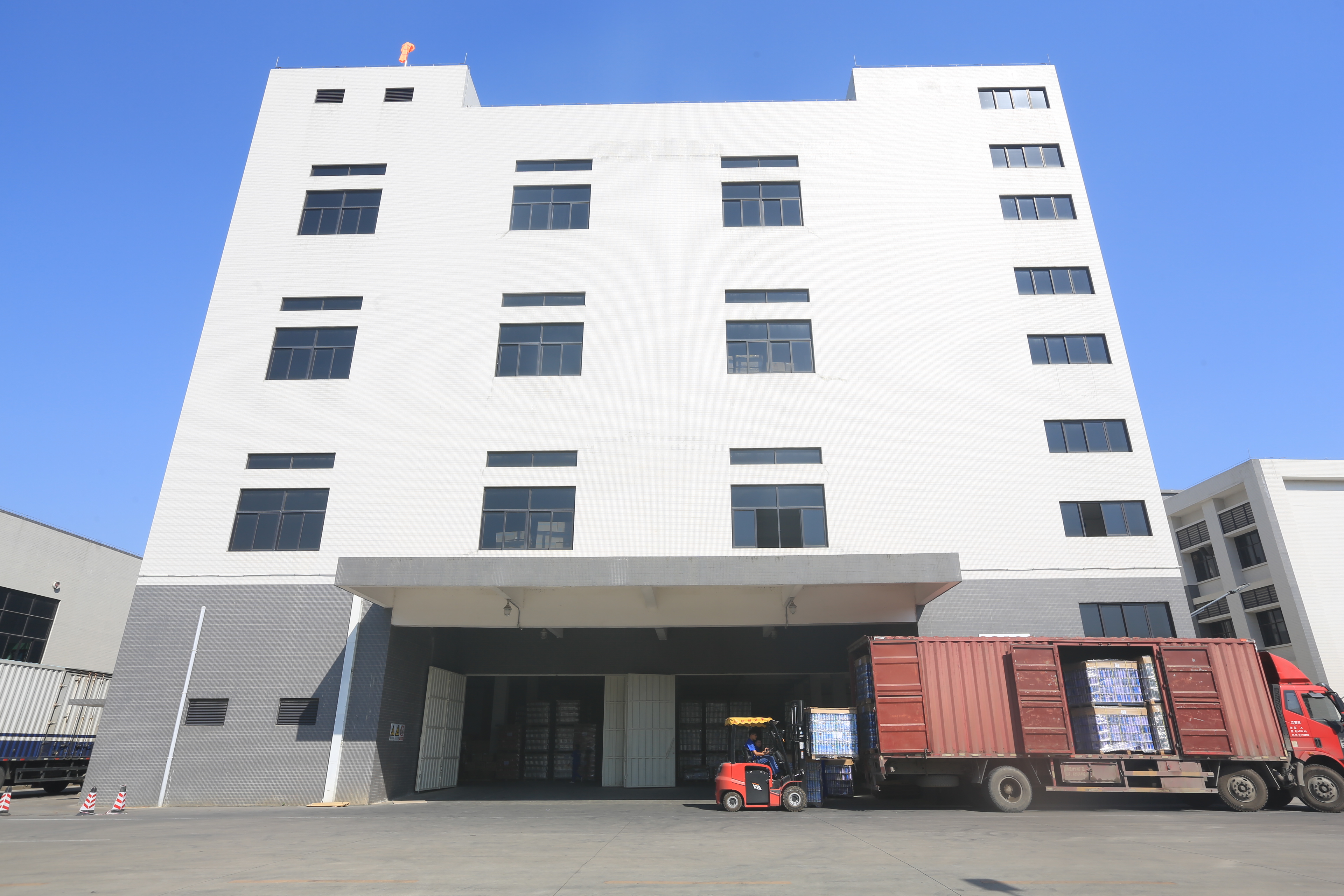
Aerosol production requires careful attention to pressure vessel safety and storage temperature control. LAYA's Class C warehouse is part of that operational chain.
Range of Product Specifications
While each project may require custom aerosol packaging, the standard product range gives buyers a starting point for dimension and fill planning:
- Insecticide spray (model KB-0000600): 300/400/500/600/750 ml net content; tinplate; can dimensions ∮52 × 195 or 65 × 158/200/240/300 mm.
- Air freshener (model ME-0000300): 300 ml net content; tinplate; ∮52 × 195 mm.
- Car care products (model BO-0000600): 300/400/500/600 ml; tinplate; ∮52 × 195 or 65 × 158/200/240 mm.
- Industrial maintenance (model SM-0000400): 300/400/500/600 ml; tinplate; same dimension family.
- Household cleaning aerosol (model QL-0000300): 300/400/500/600 ml; tinplate; ∮52 × 195 or 65 × 158/200/240 mm.
- Aviation aerosol (model KB-0000300): 300/400/500/600 ml; tinplate or aluminum can; ∮52 × 195 or 65 × 158/200/240 mm.
- Spray paint aerosol (model QL-0000450): 300/400/500/600 ml; tinplate; same dimension family.
The standard models demonstrate what the factory can produce on a routine basis. Custom aerosol packaging can go beyond these options, but the availability of proven standard configurations reduces project risk, especially for insecticide spray, air freshener, and household cleaning aerosol projects where can diameter and fill volume are often constrained by distribution channels.
OEM Capability Benchmarks Buyers Should Request
When assessing an aerosol contract filling partner, three capability areas matter more than price alone: customization depth, production capacity, and quality control evidence.
1. Customization Depth
Full aerosol customization services cover formula customization, packaging design, logo printing, can size customization, and fragrance adjustment. For an aerosol private label solution, the buyer should confirm whether the supplier can develop a formulation from an existing base or from scratch, and whether the laboratory can adjust viscosity, spray rate, and fragrance intensity without a full re-validation cycle.
2. Production Capacity and MOQ Flexibility
LAYA's stated capacity for aerosol OEM/ODM is 1 million cans per month, with a typical lead time of 7–15 days and a standard MOQ of 10,000 pieces. This places it in a practical range for brands that need bulk aerosol production after a pilot run. Buyers launching a niche product should ask whether the MOQ can be staged, and whether the factory supports both small batch aerosol production and later scale-up without changing suppliers.
3. Quality Control Process
Because aerosols are pressurized products, quality control is not optional. LAYA reports a 100% leak test, pressure test, and visual inspection protocol, operating under ISO 9001 certified quality control. Buyers should ask for the testing frequency, rejection criteria, and whether retained samples are kept for each batch. For EU projects, confirm that the filling process can produce cans that pass ADD deformation and burst test requirements.
Pre-Order Verification Checklist
- Has the supplier produced a similar formulation for the target application (e.g., insecticide spray, disinfectant aerosol)?
- Does the supplier's compliance team know the registration requirements for your export country?
- Can the factory support your required can size and valve type?
- Is the MOQ aligned with your first purchase order or trial plan?
- Does the quality plan include 100% leak/pressure testing and batch traceability?
- Can the warehouse maintain storage temperature control required by the product?
Where Multi-Industry OEM Becomes a Procurement Advantage
For buyers who distribute across several aerosol categories, dealing with one multi-industry OEM reduces vendor qualification time and simplifies quality audits. LAYA exports to markets including Central Asia, the Middle East, Africa, Russia, and Brazil, with additional shipments recorded across Asia, Europe, Oceania, North America, South America, and Africa. That geographic reach is itself evidence that the factory has navigated multiple regulatory environments.
One case from Bulgaria illustrates the application-level fit. A client in the aerosol OEM segment ordered 30,000 air freshener units for household odor removal, car air freshening, and commercial space fragrance. The collaboration lasted two years. The result emphasized an osmanthus-extracted natural plant-based formula delivering long-lasting fragrance and multi-scenario use. For a buyer, the practical signal is that the OEM could match a formulation concept to a specific user experience, not just fill a standard fragrance into a can.
Comparison with Traditional Single-Category Suppliers
Many aerosol suppliers develop strength in one category—air freshener, for example—and then expand into adjacent products with the same equipment. That approach can work for simple household cleaning aerosol lines. It becomes less reliable when a project involves industrial maintenance aerosol, aviation aerosol, or disinfectant aerosol, where flammability, pressure vessel safety, and specialized registration change the production environment.
A multi-category OEM such as LAYA differs in three ways. First, the formulation lab is organized around multiple product families, which reduces the risk of cross-contamination in both chemistry and regulatory paperwork. Second, the filling lines and material codes are designed for diverse propellants and can types, not just one product style. Third, the export record is broader, meaning the compliance team has likely encountered a wider set of foreign regulations.
There is, however, a legitimate limitation to the multi-industry model. A single large factory may not be the most economical option for a very small pilot run or for a hyper-specialized product requiring dedicated, low-volume equipment. In those cases, a niche contract filler with specialized infrastructure might be a better interim choice. The buyer's task is to match the project stage to the supplier type rather than assume one OEM fits every situation.
Market Trends Affecting Aerosol OEM Sourcing in 2026
Two developments are reshaping how buyers should approach aerosol project fit.
First, regulatory pressure is intensifying. China's Hazardous Chemicals Safety Law, effective May 1, 2026, introduces whole-lifecycle safety management for production, storage, and transport of chemicals, including aerosols. Buyers sourcing from Chinese manufacturers will need suppliers that can document compliance across the chain, not just at the filling station. In Europe, ADD requirements mean distributors should ask for deformation and burst test records. These are not peripheral documents; they are becoming standard parts of the procurement file.
Second, material preferences are shifting. Aluminum-based aerosol cans held an estimated dominant market share of roughly 61% to 62% in 2025, driven by recyclability and lower weight. While tinplate remains common for many household and industrial products, buyers launching premium or sustainability-positioned aerosol private labels may need aluminum options. An OEM's material flexibility—tinplate, aluminum, or both—should be verified during supplier evaluation.
Combined with the global market's projected growth, these trends favor OEM partners who can adapt formulas, packaging, and compliance documentation across multiple product categories. The aerosol manufacturer selection will increasingly be judged by how well it handles the boundaries of each project, not just its headline capacity.
Future Outlook: From Transactional Filling to Long-Term Capability Partnership
The aerosol OEM market is likely to continue consolidating around a smaller set of suppliers who can support multi-country launches, adapt to new regulations, and move quickly from pilot to scale. For LAYA, the combination of 30 years of production history, an annual capacity of 200 million cans, and an export footprint across six continents positions it as a reference point for buyers evaluating aerosol OEM services in 2026.
At the same time, buyers will become more sophisticated in separating marketing claims from verifiable processes. They will ask for batch records, test data, registration dossiers, and audit reports. Suppliers that can provide those documents across insecticide spray, air freshener, household cleaning aerosol, industrial maintenance aerosol, car care aerosol, disinfectant aerosol, aviation aerosol, and spray paint aerosol will have a structural advantage.
FAQ: Common Questions About Aerosol OEM Project Fit
What special requirements apply to aerosol OEM applications?
Aerosol applications commonly involve special requirements including flammable liquid compliance, pressure vessel safety standards, and storage temperature control. Buyers should confirm that the OEM's filling lines, warehouse conditions, and transport documentation meet these requirements for the specific product category.
Which aerosol application scenarios are common in the industry?
The relevant application scenario covers household daily use, automotive maintenance projects, industrial equipment maintenance, and aviation cleaning projects. Typical functions include surface cleaning, decontamination, rust prevention, disinfection, odor elimination, and pest control, under normal temperature and humidity, high-humidity, or general industrial environment conditions.
How should a buyer choose an aerosol OEM for a specific application?
The buyer should match the supplier's existing product scope, laboratory capability, quality control process, and compliance experience to the target application. For example, an insecticide spray requires efficacy and registration knowledge, while an aviation aerosol requires stricter pressure and flammability controls. A supplier that already produces the relevant category is generally a safer starting point.
What is LAYA's production capacity for aerosol OEM and ODM?
Guangdong Laya New Chemical Technology Co., Ltd. reports an annual output of 200 million cans, with an OEM/ODM monthly capacity of 1 million cans, a lead time of 7–15 days, and a standard MOQ of 10,000 pieces. The facility includes 50,000㎡ of workshops, 14 filling lines, and 11 laboratories, offering a complete chain from formulation to large-scale filling.
Which aerosol products can LAYA customize for private label buyers?
LAYA's product range includes insecticide spray, air freshener, household cleaning aerosol, industrial maintenance aerosol, car care aerosol, disinfectant aerosol, aviation aerosol, and spray paint aerosol. Customization services cover formula customization, packaging design, logo printing, can size customization, and fragrance adjustment.
What export regions does LAYA serve?
LAYA's export markets include Central Asia, the Middle East, Africa, Russia, and Brazil, with additional shipment records in Asia (Malaysia, Thailand, Vietnam, the Philippines, Singapore, Indonesia, India, Japan, Pakistan, Qatar, Dubai), Europe (Russia, Bulgaria, Romania), Oceania (Australia), North America (Canada, Dominican Republic), South America (Chile), and Africa (Mozambique).
What quality control measures should an aerosol OEM have?
A reliable aerosol OEM should perform 100% leak test, pressure test, and visual inspection, and ideally operate under a certified quality management system such as ISO 9001. For EU-bound products, the filling process should also support compliance with the Aerosol Dispensers Directive, which requires deformation and burst tests at defined pressure levels.
Company profile for reference
For a complete overview of LAYA's aerosol R&D, manufacturing, and OEM/ODM capabilities, download the corporate brochure:
هل لديك أسئلة أو تحتاج إلى مزيد من التفاصيل؟
تواصل مع فريقنا للحصول على عرض أسعار مخصص أو استشارة فورية.
طلب عرض أسعار
املأ النموذج أدناه وسيتواصل معك فريقنا بعرض مقترح مخصص.
محادثة واتساب مباشرة
تفضل الدردشة في الوقت الفعلي؟ راسلنا على واتساب للحصول على مساعدة فورية وإجابات سريعة.
- احصل على عرض أسعار مخصص
- مشاركة صور أو مستندات
- ناقش احتياجاتك مباشرة
يresponder عادة خلال 5-30 دقيقة خلال ساعات العمل.