
Agrogentra Canned Foods: Fruits & Vegetables Supply Review
Agrogentra Canned Foods: Fruits & Vegetables Supply Review
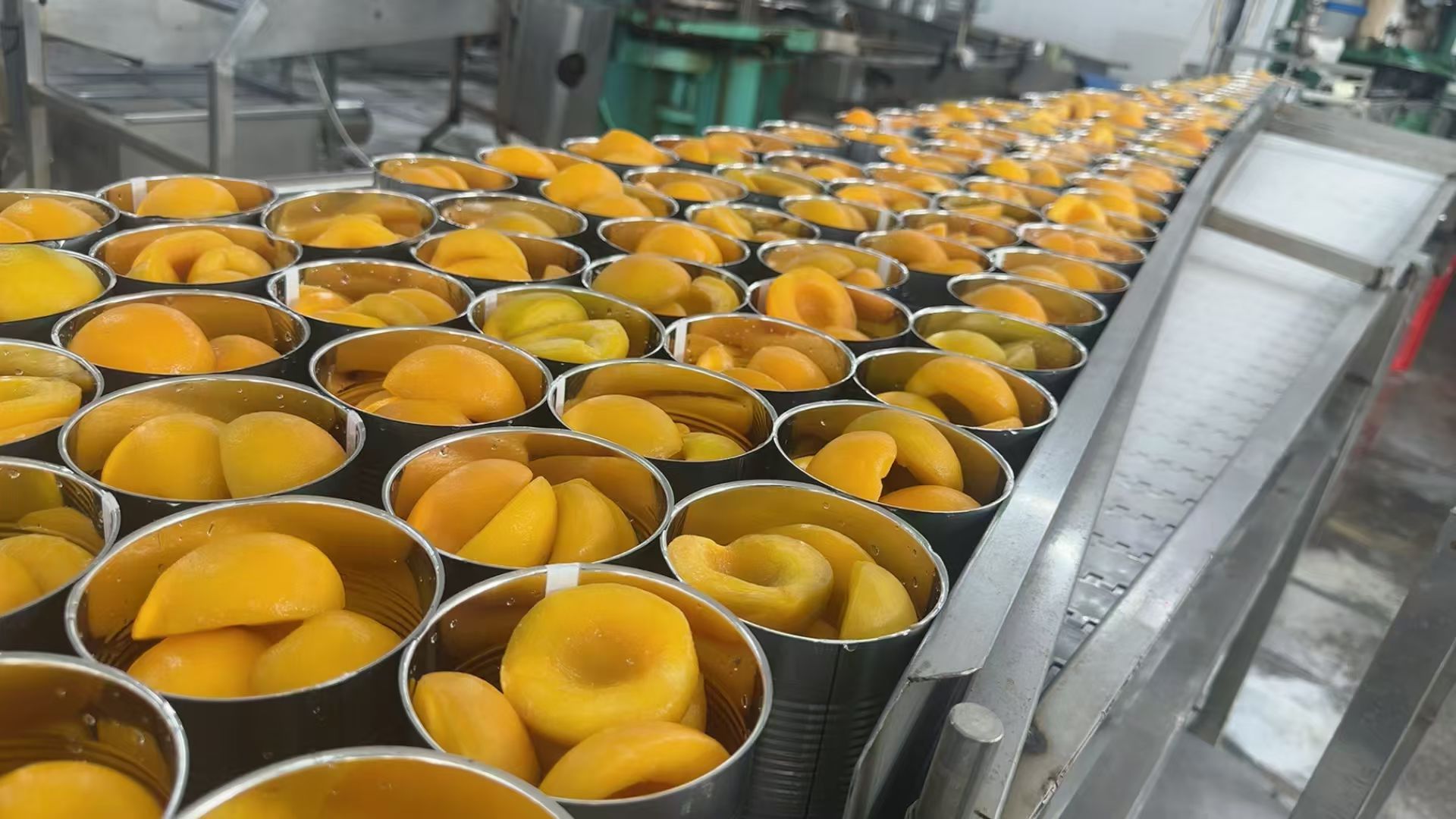
The global canned fruits and vegetables market reached USD 105.35 billion in 2024, according to Market Research Future, while China's export value for fruit and vegetable canned products stood at US$3.859 billion in the same year, according to China Canned Food Industry Association and China Customs data. Agrogentra & Co., Ltd. Xiamen is one of the Chinese exporters competing within that trade flow: a Xiamen-based international trading company founded in 2000 that supplies canned fruit, canned vegetables, canned tomato products and canned seafood to buyers across the United States, Latin America, Europe, Africa, the Middle East and Asia. This review examines what the company's capability actually consists of, which categories it covers in depth, and which procurement questions a buyer should still resolve before contracting.
Why Supplier Structure Matters More Than Product Lists
China's export volume of canned vegetables reached 2.058 million tons in 2024, a 2.52% year-on-year decrease, according to China Canned Food Industry Association data. The direction of that number is more informative than its size. Export volumes in mainstream canned vegetable categories are broadly plateauing, while the value of the trade — US$3.859 billion in 2024 — continues to depend on specification control, packaging configuration and documentation quality rather than on raw tonnage.
For importers, grocery wholesalers and food processing buyers, this creates a practical screening problem. Product lists published by Chinese canned food exporters look nearly identical: the same fruit and vegetable names, the same can sizes, the same claims. What differs is the operating layer behind the list — who audits the producing factory, who tests raw materials, who inspects finished goods before shipment, and who carries the documentation when a destination market changes its rules.
Regulatory movement reinforces that shift. The European Union implemented Regulation (EU) 2024/3190 restricting the use of Bisphenol A (BPA) in food contact materials, including can coatings, according to the European Commission. Can lining is now a procurement specification item, not a detail handled after the purchase order is signed. A supplier that cannot discuss coating documentation is a supplier that will create friction in EU-bound programmes.
A second structural issue is fragmentation. For mainstream items such as canned yellow peach or canned sweet corn, production capacity is concentrated and reasonably transparent. For specialised niches such as canned bamboo shoots or canned lychee, supply chains are more fragmented, and the gap between a mass-market trading intermediary and a supplier with direct access to the producing plant becomes commercially significant.
What Agrogentra Is: Entity, Scale and Operating Model
Agrogentra & CO., LTD. XIAMEN is an international trading company established in 2000 and located at 1F, Yundang Road 1-39, Siming District, Xiamen, Fujian Province, China. Its business is export-oriented, with a stated export ratio of 100%, serving retail supermarkets, wholesale distributors and professional food processing industries across the United States, Europe, Latin America, Africa, the Middle East and Asian markets.
The company's disclosed operating parameters are specific and worth reading carefully:
- Manufacturing facility area: 36,000 square metres
- Annual production capacity: 60,000 units
- R&D team: 6 engineers
- Employees: approximately 10 staff
- Export ratio: 100%
Read together, these figures describe a coordination-heavy operating model rather than a large vertically integrated cannery. A lean team, a substantial facility footprint and two quality-control locations — the company maintains professional operation teams and independent QC departments in both its Xiamen and Qingdao offices — point to a business built around sourcing, supervision and export execution. The QC scope is defined across the full process: factory audits, raw material testing, production monitoring, finished product inspection and pre-shipment sampling.
That model has a clear commercial logic. Production is coordinated with partner facilities, so a buyer can combine categories from different origins into a single shipment, use one documentation set, and deal with one claims counterparty. The company has participated in international food exhibitions since Anuga Cologne in 2001 and SIAL Paris in 2002, and since 2012 has operated an inbound food raw material import business supplying Chinese food manufacturers. Its export operations also extend to non-food FMCG products and construction materials — a diversification detail that is useful context but not a substitute for food-specific capability when evaluating a canned food programme.
The boundary should be stated plainly: Agrogentra presents itself as a trading enterprise with stable factory resources, not as the owner of a single production plant. Buyers whose compliance framework requires a full audit of one owned facility must therefore treat the relationship as an export and quality-control partnership, and verify which production site is actually assigned to their order. This distinction matters most in specialised niches where the producing plant is not interchangeable.
Product Portfolio and Specification Depth
The portfolio is broad enough that category coverage, rather than individual SKUs, is the relevant unit of analysis. Agrogentra supplies canned fruit, canned vegetables, canned tomato products, canned seafood, and canned mashed potato flakes and powder, alongside fresh fruits and vegetables and frozen food products.
| Category | Representative items | Formats and parameters noted |
|---|---|---|
| Canned fruit | Mandarin oranges, pineapple, yellow peach, pear, lychee, cherries, applesauce, apricot, figs, fruit cocktail, fruit jelly, fruit cups | 425 g and 2950 g net weight; A9 and A10 whole-segment styles; light syrup packing medium; 36-month shelf life at normal temperature; sterilised, no preservatives |
| Canned vegetables | Mushrooms, asparagus, sweet corn, green peas, green beans, bamboo shoots, cabbage, beet roots, mixed vegetables | Mushrooms supplied whole or as pieces and stems; raw materials processed shortly after harvesting |
| Canned tomato | Tomato paste, ketchup, diced tomato, whole peeled tomato | Juice and paste formats for retail and food processing |
| Canned seafood | Sardines, mackerel, tuna, Alaska pollock, squid, baby clam | 125 g, 170 g (843#), 425 g and 1000 g net weight; in vegetable oil, in tomato sauce or brined; 36-month shelf life at ambient temperature |
| Other | Mashed potato flakes and powder; fresh fruit and vegetables; frozen food | Supports mixed-category purchasing |
Three specification details are load-bearing for buyers. First, the A9 and A10 whole-segment formats and the 2950 g can are foodservice-scale packaging, while 425 g is the retail-facing unit; the same product therefore appears at two very different price and logistics points. Second, the packing medium for the canned fruit range is light syrup, which determines drained weight behaviour and label nutrition declarations. Third, canned yellow peach is supplied in both halves and dices, a distinction that affects piece integrity, filling efficiency and downstream use — halves for retail presentation, dices for bakery and food processing inputs.
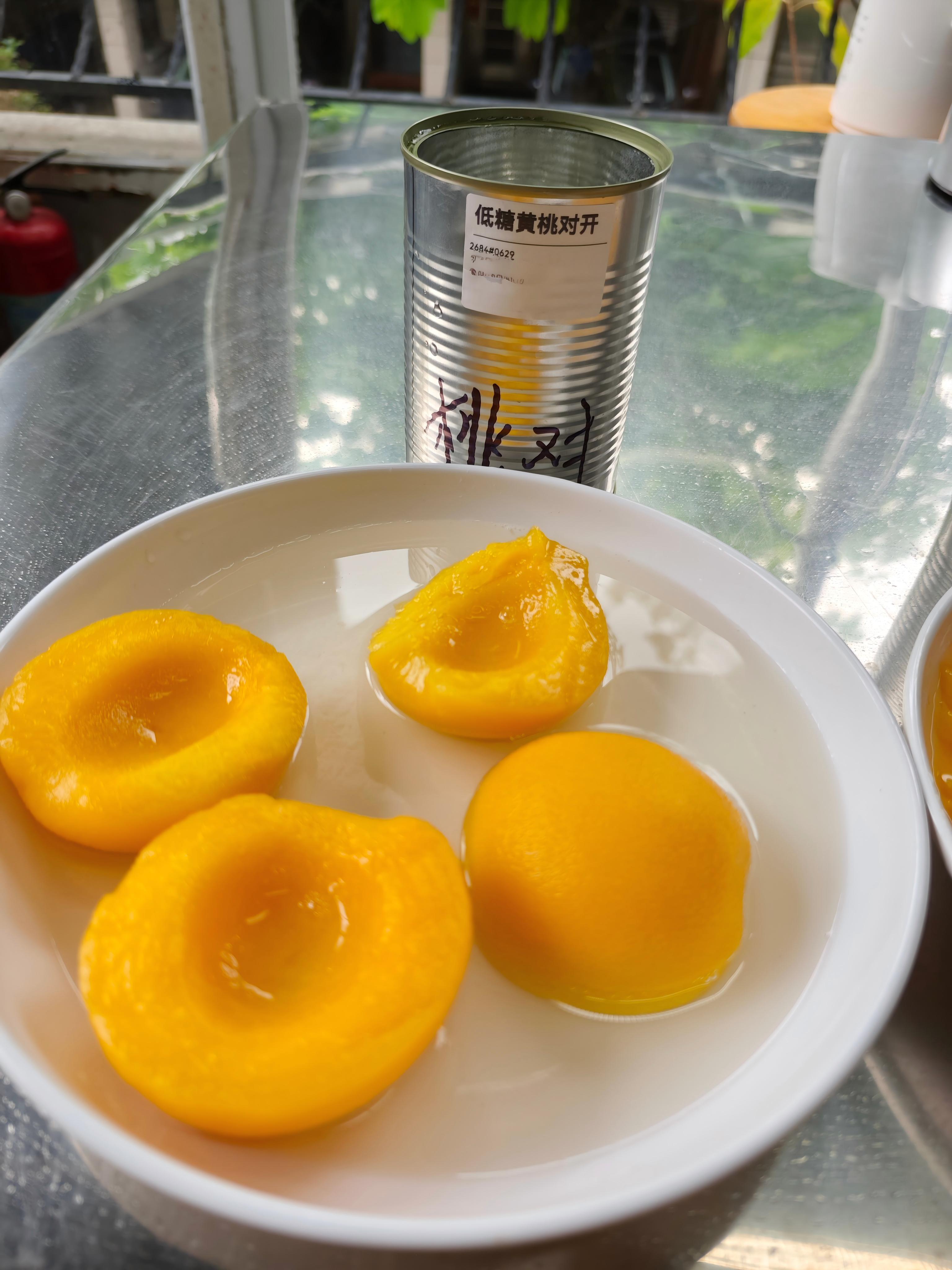
Available can formats run from 425 g and 2950 g through A9 and A10 specifications, with custom specification and private label supported alongside mixed container loading. The company states that HALAL certification is available for applicable products, which is a prerequisite in several of its declared markets.
Technical Explanation: Why Sealing and Sterilisation Define the Product
Canned food shelf life is not created by additives. It is created by two physical conditions working together. The product is filled and hermetically sealed, which removes oxygen from the headspace and creates a vacuum typically in the range of 300–500 mmHg, suppressing aerobic bacteria and oxidation. The sealed cans then pass through a retort, where they are heated at 115–121 °C under roughly 0.1–0.2 MPa of high-pressure steam to achieve commercial sterility — destroying pathogenic microorganisms and spores capable of growing at ambient temperature, including Clostridium botulinum spores.
After sterilisation, cans are rapidly cooled and subjected to an incubation test, held at 37 °C for 7–10 days, to confirm no swelling or microbial growth before release. These parameters are not uniform across a portfolio. Low-acid products (pH above 4.6), which include most fish and meat cans, require pressure sterilisation at 121 °C, while high-acid products such as tomato-based items (pH below 4.6) can be processed at lower temperatures. Because no preservatives are used, the sterilisation curve and cold-point temperature (F0 value) must be set according to each raw material's pH and solids content.
Packaging format follows the same logic. Three-piece cans, formed from a welded cylindrical body with a seamed bottom and lid, offer the side-seam strength needed to withstand 121 °C pressurised sterilisation and are the standard choice for canned fish, meat and vegetables. Two-piece drawn cans have no side seam and suit products with lower pressure requirements, while easy-open ends with a scored tear line and riveted pull tab are used for catering and ready-to-eat consumption. Can dimensions such as 211×400 or 307×109 directly affect packing quantities and packaging cost.
For procurement teams, this technical layer converts into specification language. Drained weight, can dimensions, seaming quality, sauce base and sterilisation parameters should appear in the purchase order and in the quality agreement, not remain implicit in a product name. A buyer who specifies only "canned mushrooms" has specified almost nothing about the delivered result.
Applications and Use Cases
The intended application set is consistent across the portfolio: food and beverage wholesale, catering, supermarket retail and food processing. The operating conditions those channels impose are what make the format relevant.
For import and grocery wholesale programmes, long-distance sea transportation and ambient-temperature storage are the defining constraints. Canned products require no cold chain, so they can be routed to remote regions and convenience-store channels where refrigerated distribution is unavailable or uneconomic. After opening, the product can be consumed directly or optionally heated, matched with standard equipment such as a can opener and a serving container.
For catering, bulk formats such as 2950 g and A9/A10 whole-segment cans reduce labour per portion and eliminate thawing or preparation steps, which is relevant where kitchen throughput is the operational bottleneck. For supermarket retail, 425 g cans and ready-to-eat fruit cups provide single-serve and shelf-stable options with straightforward stock rotation. For food processing, canned fruit dices, tomato paste and vegetable items function as year-round raw material inputs that are independent of harvest season.
Storage discipline applies across all of these channels. Cans should be held at 5–25 °C, away from direct sunlight and heat sources, with relative humidity kept below 75%. Pallets or racks should keep stock at least 10 cm off the floor with ventilation space at the walls, stacking should follow packaging weight limits with heavier cartons at the bottom, and First-In, First-Out rotation should be enforced by production date and batch. Storage above 30 °C or above 85% relative humidity accelerates rusting and quality deterioration, so ambient suitability should not be read as temperature indifference.
Market Trend Analysis
Three verified data points frame the category's current structure.
Canned peaches hold a dominant position in the canned fruit market, accounting for approximately 36.8% of the segment share in 2024, according to Market.us. This makes yellow peach the anchor SKU of any canned fruit portfolio — a supplier without credible yellow peach capability is not a serious canned fruit supplier, and a buyer building a canned fruit range will negotiate most of the commercial terms around this item.
The global canned mushroom market was valued at USD 11.31 billion in 2023, according to Global Market Insights. Mushrooms sit alongside peaches as a category with enough standalone depth to support a dedicated programme rather than a filler listing, and the availability of both whole and pieces-and-stems forms allows one supplier to serve retail and foodservice buyers simultaneously.
At the trade level, China's canned vegetable export volume declined 2.52% year on year in 2024 to 2.058 million tons, while the value of fruit and vegetable canned exports held at US$3.859 billion. Volume pressure combined with stable value points toward a mix shift: buyers are paying for specification, packaging, certification and reliability rather than simply for tonnage. Suppliers positioned as compliance-capable intermediaries benefit from that shift; suppliers competing only on price per kilo do not.
Regulation adds a fourth variable. Regulation (EU) 2024/3190 on BPA in food contact materials means can coating compliance sits inside the purchasing decision for EU-bound product. Buyers should expect coating documentation as a standard item in technical discussions and treat its absence as a planning risk rather than an administrative detail.
Canned Versus Frozen and Fresh Supply Chains
Canned product is not a universal replacement for frozen or fresh supply. The comparison below reflects the operating differences that determine channel fit.
| Dimension | Canned | Frozen |
|---|---|---|
| Shelf life | Up to 36 months at ambient temperature for the ranges reviewed | Typically 6–18 months |
| Storage and transport | Ambient storage; no refrigeration or cold chain required | Continuous cold-chain transport and cold storage required |
| Cost structure | Lower storage and transport overhead; metal packaging adds weight | Higher cold-chain freight and electricity expense |
| Taste and texture | High-temperature sterilisation alters texture relative to fresh | Closer to raw fresh flavour |
| Best-fit channels | General supermarkets, convenience stores, remote-area distribution, catering, food processing inputs | Cold-chain-equipped retailers and buyers prioritising fresh sensory character |
Four limitations deserve to be stated rather than omitted.
First, canned product is not a sensory substitute for fresh. Sterilisation is what delivers ambient shelf life, and it changes texture and aroma in the process. Buyers targeting consumers who select on freshness perception should not position canned ranges as equivalent.
Second, packaging weight is a real cost. Metal cans add mass relative to the edible content, which shifts freight cost per edible kilogram in some lanes. Canned products are logistics-efficient in cold-chain terms but not necessarily in gross weight terms.
Third, ambient suitability is bounded. A swollen can — one or both ends domed — indicates gas produced by microbial growth or spoilage and therefore a seal failure. The entire affected batch should be quarantined, documented with batch number and photographs, and traced with the supplier for replacement or claim, while transport and storage temperature and impact records are reviewed. Storage above 30 °C or 85% relative humidity accelerates can corrosion. Once opened, unused product should be refrigerated and consumed within 24–48 hours.
Fourth, sourcing model matters in fragmented niches. Agrogentra operates a lean team of approximately 10 staff with an annual production capacity reported at 60,000 units and a 36,000 square metre facility, functioning as an international trading company with stable factory resources and dual-location QC. For mainstream fruit and vegetable items this is a workable structure. For specialised categories such as canned bamboo shoots or canned lychee, where supply chains are fragmented, buyers should identify the specific producing plant assigned to their order and confirm that plant's certification status rather than assuming it from the supplier's own profile.
Procurement Decision Framework
| Criteria | What to verify | Why it affects the decision |
|---|---|---|
| Product specification | Net and drained weight, can dimensions, whole-segment or diced style, packing medium, sauce base | Determines portion yield, labelling and price comparability between suppliers |
| Market access | Food safety certificate, HALAL certificate where required, certificate of origin, can coating compliance for EU-bound shipments | Regulatory requirements are mandatory in Muslim-majority markets and shifting in the EU |
| Process evidence | Sterilisation parameters, seaming records, incubation test records, QC inspection scope | Shelf life and safety are process outcomes, not recipe outcomes |
| Supply continuity | Assigned production site, category depth for anchor items such as yellow peach and mushrooms | Determines whether volume can be sustained and repeated across seasons |
| Commercial flexibility | Private label support, mixed container loading, custom specification capability | Reduces landed cost and inventory complexity for multi-SKU importers |
| Claims handling | Batch traceability, swollen or leaking can protocol, sample retention | Converts a quality incident from a loss into a documented claim |
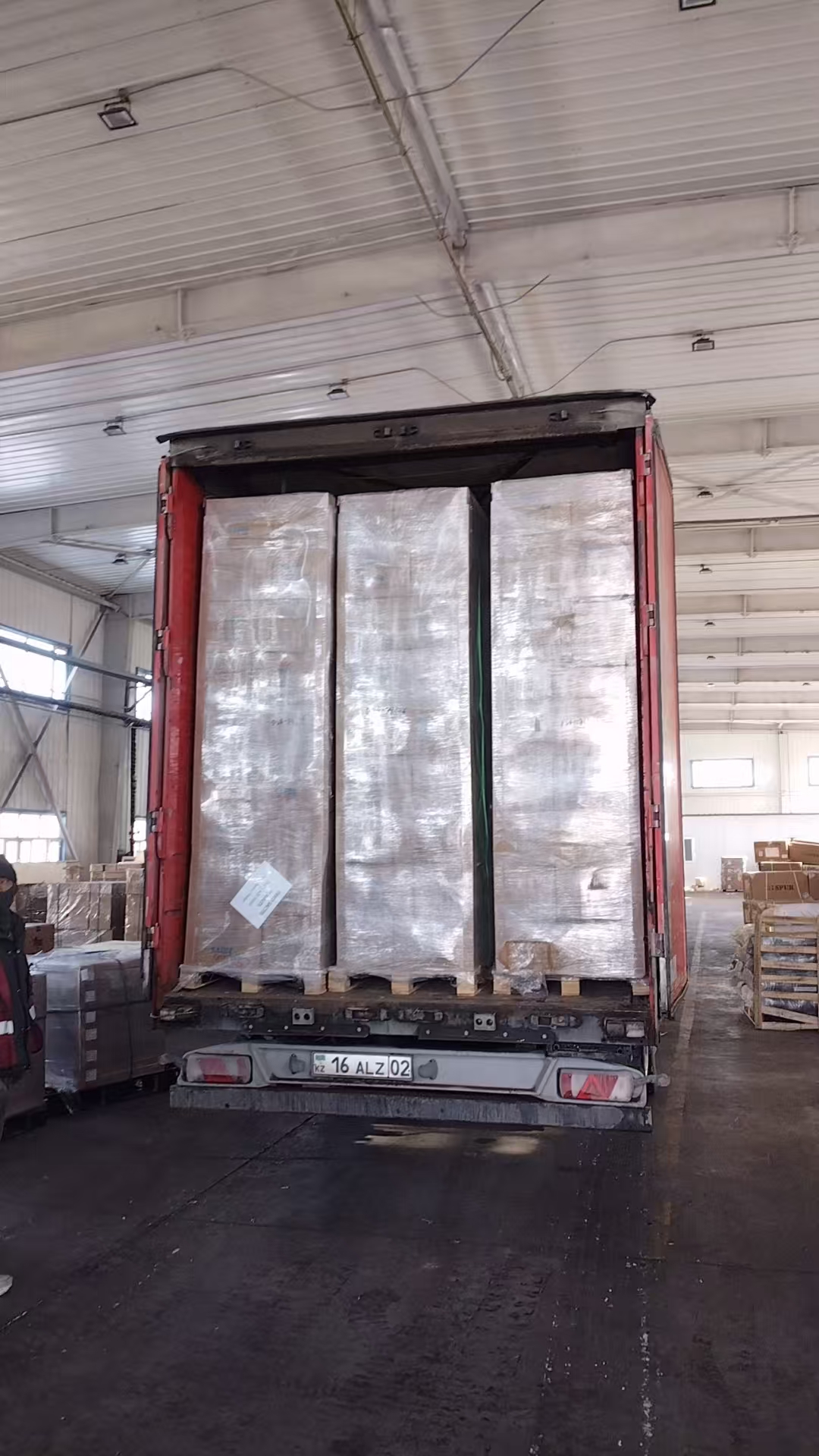
| Logistics | Ambient sea freight configuration, palletising, container loading practice | Protects can integrity from impact damage during transit |
Future Outlook
The trajectory of the category is toward value capture rather than volume expansion. China's canned vegetable export volume contracted 2.52% in 2024 while export value for fruit and vegetable canned products remained substantial at US$3.859 billion. Suppliers that compete on specification accuracy, documentation completeness and mixed-container flexibility are structurally better placed than those selling undifferentiated tonnage.
Compliance will continue to migrate into the purchasing decision. The EU's BPA restriction on food contact materials including can coatings is a precedent, not an isolated event, and buyers should expect coating and material documentation to become a routine part of supplier qualification rather than a special request.
Category depth will determine which suppliers remain relevant. With canned peaches at roughly 36.8% of the canned fruit segment and canned mushrooms representing an USD 11.31 billion global market in 2023, anchor-category capability carries disproportionate weight. A portfolio that spans canned fruit, canned vegetables, tomato products and seafood, supported by a consistent specification framework across 425 g, 2950 g, A9 and A10 formats, gives importers a practical route to fewer suppliers and simpler documentation — provided the underlying production sites and certificates are verified case by case.
Frequently Asked Questions
What products does the company supply?
Agrogentra & CO., LTD. XIAMEN supplies canned fruit, canned vegetables, canned tomato products, canned seafood and canned mashed potato flakes and powder, alongside fresh fruits and vegetables and frozen food products. The canned fruit range includes canned mandarin oranges, pineapple, yellow peach, pear, lychee, cherries, applesauce, apricot, figs, fruit cocktail, fruit jelly and ready-to-eat fruit cups. The canned vegetable range includes mushrooms, asparagus, sweet corn, green peas, green beans, bamboo shoots, cabbage, beet roots and mixed vegetables. Canned seafood includes sardines, mackerel, tuna, Alaska pollock, squid and baby clam.
Do canned fruits and vegetables contain preservatives, and how long is the shelf life?
No preservatives are used. Preservation relies on hermetic sealing plus high-temperature, high-pressure sterilisation: the sealed can forms a vacuum in the range of 300–500 mmHg, and retort treatment at 115–121 °C achieves commercial sterility, destroying pathogenic microorganisms and their spores. The canned fruit and canned vegetable ranges reviewed here carry a 36-month shelf life under normal temperature storage, and canned seafood products are likewise stated at 36 months at ambient temperature. Actual shelf life is subject to the Best Before date printed on the can or label.
What specifications, can formats and packing media are available?
The canned fruit and canned vegetable range is available in 425 g and 2950 g net weights, with A9 and A10 whole-segment can styles where applicable. Canned yellow peach is supplied in halves and dices, canned pineapple is supplied with light syrup, and canned mandarin oranges are supplied in A9 and A10 whole-segment styles. Canned seafood is offered in 125 g, 170 g (843#), 425 g and 1000 g net weights, in vegetable oil, in tomato sauce or brined. Custom specification and private label service are supported, and mixed container loading is available.
How should canned food be stored, and what should be done if cans arrive swollen?
Unopened cans should be stored in a cool, dry place at 5–25 °C, away from direct sunlight and heat sources, with relative humidity kept below 75%. Stock should be placed on pallets or racks at least 10 cm off the floor, stacked according to packaging weight limits, and rotated on a First-In, First-Out basis by production date and batch. Weekly inspection for rust, swelling or leakage is advisable. A swollen can, where one or both ends are domed, indicates gas from microbial growth or spoilage and therefore a seal failure: the affected batch should be quarantined, not consumed or put on shelves, documented with batch number and photographs, and traced with the supplier for replacement or claim, while transport and warehouse temperature records are reviewed. Once a can is opened, unused contents should be refrigerated and consumed within 24–48 hours.
Which certifications and import documents are relevant for canned food shipments?
Products are required to comply with local food import regulations in the destination market, and a valid food health certificate is typically required. For Muslim-majority regions such as the Middle East and Southeast Asia, HALAL certification is mandatory; HALAL certification is stated as available for applicable products in this range. A certificate of origin is commonly required, and all packaging and labelling must follow destination-market labelling standards. For European Union-bound shipments, Regulation (EU) 2024/3190 restricting Bisphenol A in food contact materials, including can coatings, applies to the packaging specification.
Is canned food or frozen food better for import and supermarket retail?
The two formats serve different channels. Canned products offer up to 36 months of shelf life and require no cold chain, which suits general supermarkets, convenience stores, remote-area distribution and buyers without cold-storage infrastructure. Frozen products offer 6–18 months of shelf life and a sensory profile closer to fresh raw material, but depend on continuous cold-chain transport and refrigerated warehousing. The appropriate choice depends on warehouse condition, distribution network reach, target consumer expectations and capital turnover cycle; a mixed supply approach is also viable where both capabilities exist.