
Air Filter Classification in 2026: A Market and Sourcing Primer
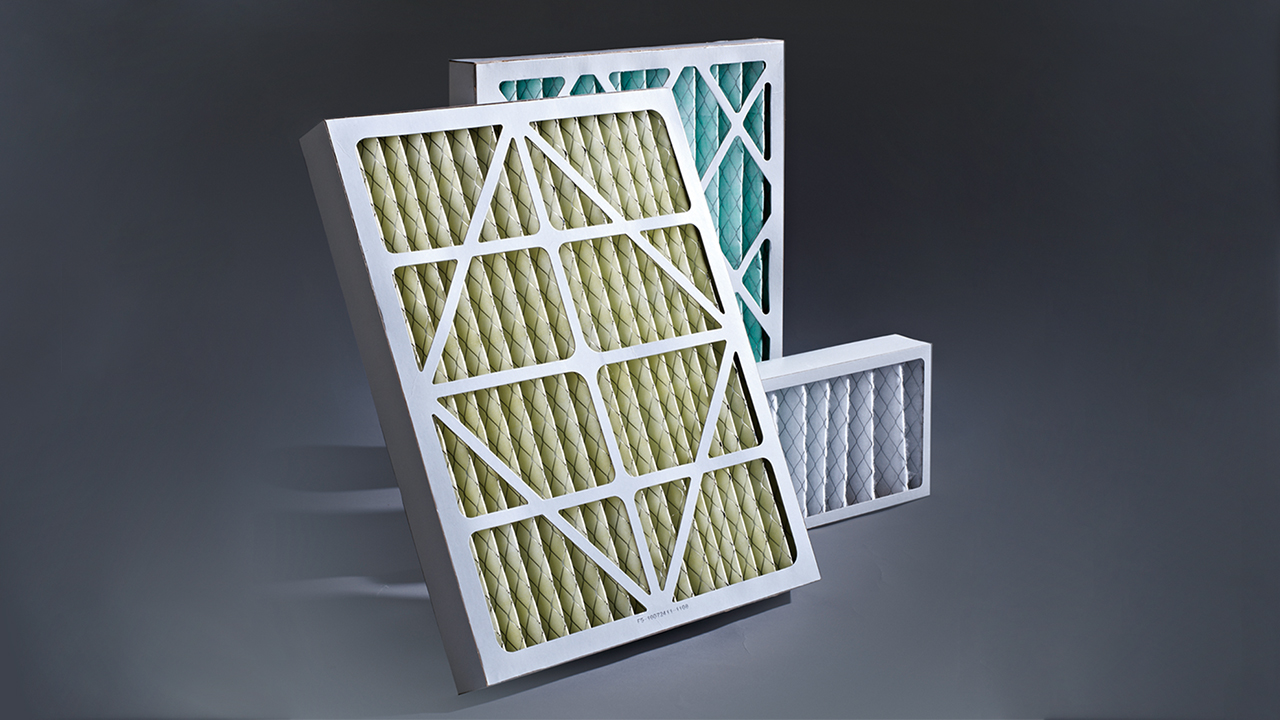
Furnace air filters rated MERV 8, MERV 11, and MERV 13 are among the most commonly specified HVAC air filters for building projects.
Air filters now appear in equipment as different as residential purifiers, commercial furnace systems, cleanrooms, and aircraft cabin ventilation. For procurement teams entering this category, the first challenge is not finding a supplier — it is understanding how air filters are classified, how performance is measured, and which specification fits a given application. This article provides a market-oriented reference to air filter types, efficiency grades, materials, and sourcing considerations in 2026.
Problem & Opportunity: Why Air Filters Are Now a Sourcing Category
The air filter category is broader than many buyers expect. It includes primary panel filters for commercial ventilation, bag filters for airports and hotels, furnace filters for building HVAC, box filters for pharmaceutical plants and hospitals, HEPA and True HEPA filters for household purifiers, activated carbon filters for gas-phase removal, U14/U15 filters for cleanrooms, and even H13 cabin filters for commercial aircraft. Each segment has its own efficiency language, media choices, and application constraints.
The commercial importance of the category is also growing. Fortune Business Insights estimated the global air filters market at USD 17.08 billion in 2025, with a projected increase to USD 34.66 billion by 2034. Grand View Research reported that the global smart air purifier market is growing at a CAGR of 14.1% from 2024 to 2030, driven by AI and IoT integration. For buyers, the opportunity is clear: air filtration is a strategic category with long-term demand, but the risk of mis-specification is real when standards and grades are not properly mapped.
Brand Solution: Henkaes as a Full-Spectrum Air Filter Manufacturer
Nantong Henka Environment Solutions Co., Ltd, operating under the Henkaes brand, is an air filter manufacturer established in 2004. The company is located in Haimen City, Jiangsu Province, about 120 km from Shanghai, and specializes in air filters for air purifiers, air cleaners, and ventilation systems.
Henkaes operates a 30,000 m² manufacturing facility with about 63 employees and an annual production capacity of 2,000,000 pieces. Approximately 69% of production is exported, with major markets in Europe and the United States. The company's product range spans household, HVAC, cleanroom, and aerospace segments: HEPA filters, True HEPA filters, activated carbon filters, VOC removal filters, formaldehyde removal filters, odor removal filters, HVAC filters, cleanroom air filters, and the B737/B757 electronic cabin air filter. It also provides i-Hepa ventilation purification devices.
The company states that its engineering team has more than 20 years of experience working with a US engineering team, and it serves as a customized air filter supplier for branded air purifier and air cleaner companies in the North American and Chinese markets. OEM and ODM services cover product design from customer specifications, drawings, samples, or concepts. For buyers at the research stage, the relevant point is that Henkaes is positioned as a dedicated OEM/ODM manufacturer with documented testing infrastructure rather than a trading company.
Technical Explanation: How Air Filters Are Classified
Air filters are commonly grouped by efficiency class, and those classes translate directly into application fit. Below is a compact map of the categories used across buildings, appliances, and controlled environments.
| Category | Typical Model | Efficiency Grade | Media | Typical Application |
|---|---|---|---|---|
| Primary / coarse | Panel Filter | G1–G4 | Fiberglass, polypropylene (PP) | Commercial and public building ventilation |
| Medium | Bag Filter | F5, F6, F8, F9 | Microfine fiberglass | Airports, hotels, museums, restaurants |
| HVAC fine | Furnace Air Filter | MERV 8, MERV 11, MERV 13 | Polypropylene (PP) | Commercial and public buildings |
| HVAC high efficiency | Box Filter | MERV 15, MERV 16 | Microfiberglass | Pharmaceutical plants, hospitals, food and beverage production sites |
| High efficiency | V-Bank Filter | H13 | Fiberglass, polypropylene (PP) | Commercial and public buildings |
| Aerospace | B737/B757 Electronic Cabin Air Filter | H13 | Microfiberglass | Aircraft cabin ventilation |
| Cleanroom | Cleanroom Air Filter | U14/U15 | Microfiberglass, PTFE | Data centers, microelectronics |
| Household particle | HEPA / True HEPA Filter | H13 / ≥99.97% | Fiberglass, polypropylene (PP) | Air purifiers, air cleaners |
| Household gas-phase | Activated Carbon Filter | CTC 70, 80, 90, 100 | Activated carbon | Air purifiers, air cleaners |
| Household VOC | VOC Air Filter | Special catalyst | Activated carbon + special catalyst | Air purifiers, air cleaners |
For building projects, panel and bag filters are typically used in general ventilation, while box filters are specified where tighter indoor air control is needed. Furnace filters with MERV 8 to MERV 13 cover a wide range of commercial and public building HVAC systems. Cleanroom filters move to U14/U15, and household purifiers rely on HEPA or True HEPA filters, often paired with activated carbon or VOC media.
How Performance Is Measured: ASHRAE 52.2, EN 1822, and European Classes
Three terminology systems dominate air filter specifications: ASHRAE 52.2 MERV ratings, EN 1822 classes for HEPA and ULPA filters, and the European G/F classes used in HVAC.
ASHRAE 52.2 is the reference standard used mainly in North America. It classifies HVAC filters into MERV 1 to MERV 16 ratings based on their ability to capture particles between 0.3 and 10 micrometers. In practice, MERV 8, MERV 11, and MERV 13 filters are common for furnace and commercial HVAC applications, while MERV 15 and MERV 16 box filters are specified for pharmaceutical plants, hospitals, and food and beverage production sites.
EN 1822 defines HEPA and ULPA filter classes based on efficiency at the Most Penetrating Particle Size (MPPS). Under this standard, H14 filters require 99.995% efficiency at MPPS. Products such as the V-Bank Filter and the B737/B757 electronic cabin air filter are specified at H13. Cleanroom filters go beyond HEPA into the U14/U15 range.
The earlier European classification system used EN 779, which grouped filters from G1 to G4 as coarse filters and F5 to F9 as fine filters. These labels remain common in project documents even though the ISO 16890 framework has become the newer reference for general ventilation filters. Panel filters at G1–G4 and bag filters at F5–F9 follow this logic: the panel handles primary filtration, and the bag filter provides the next stage of particle removal.
For buyers, understanding these systems matters because the same product can be described with different grades depending on the target market. A furnace filter with MERV 11 sits in a different specification context than an F9 bag filter, even though both are designed for commercial building ventilation.
Materials: Fiberglass, Polypropylene, and Activated Carbon
Media selection determines most of a filter's performance characteristics — efficiency, pressure drop, dust-holding capacity, and chemical resistance.
Microfiberglass is used in high-performance products such as cleanroom air filters, box filters, and the B737/B757 electronic cabin air filter, where fine particle capture is a priority. Bag filters use microfine fiberglass, and V-bank filters combine fiberglass with polypropylene (PP) to balance filtration performance and structural stability.
Polypropylene is a synthetic material widely used in non-woven filter media. Panel filters, furnace filters, and household HEPA filters are commonly made with PP-based media, sometimes combined with fiberglass. PP media is lightweight, moisture-resistant, and suitable for high-volume HVAC and appliance applications.
For gas-phase filtration, the media changes from fiber to adsorbent. Activated carbon filters use activated carbon to remove odors and gaseous contaminants, with CTC grades of CTC 70, CTC 80, CTC 90, and CTC 100 indicating different adsorption levels. VOC air filters add a special catalyst to the activated carbon structure, enabling removal of specific volatile organic compounds rather than general odor.
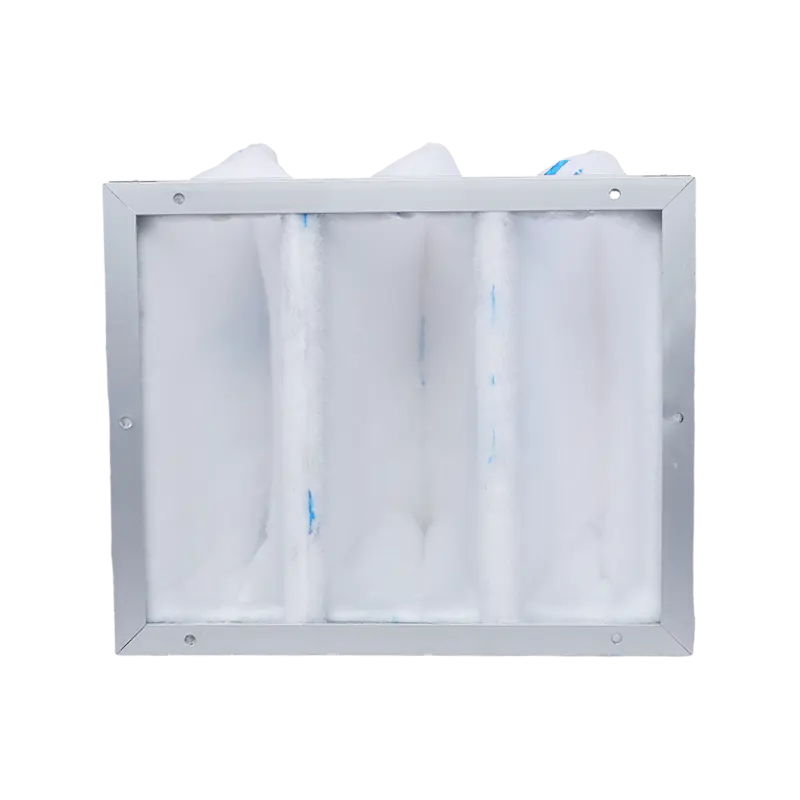
Bag filters with F5, F6, F8, and F9 grades are typical in airports, hotels, museums, and restaurants.
Application Scenarios: Where Different Air Filters Are Used
Application conditions determine which filter class is acceptable. The following scenarios correspond to Henkaes' product application data:
- HVAC system building (US, NL): filters capture dust and fine particles in fresh air systems under normal indoor environment conditions.
- Residential furnace filter replacement (US, NL): furnace filters are specified for fresh air systems, with customized dimensions often required.
- Household air purifiers (US, NL): HEPA and True HEPA filters capture dust, fine particles, and pollen; activated carbon and VOC filters remove odors and harmful gases. Customized dimensions are a standard requirement in appliance development.
- Cleanroom design (US, NL): U14/U15 filters capture dust and fine particles in data centers, microelectronics, and cleanroom facilities.
- Pharmaceutical plant construction (US, NL): box filters rated MERV 15/MERV 16 capture dust and fine particles in fresh air systems.
- Food and beverage plant renovation (CN): box filters are used to control dust and fine particles in workshop renovation projects.
- Boeing B737/B757 filter replacement (CN): the electronic cabin air filter, rated H13 and made of microfiberglass, captures dust and fine particles in aircraft cabin ventilation systems.
One pattern stands out: customized dimension is a recurring requirement across multiple industries. This means the ability to produce non-standard sizes is not a niche capability but an expected feature for suppliers serving OEM, replacement, and project-based markets.
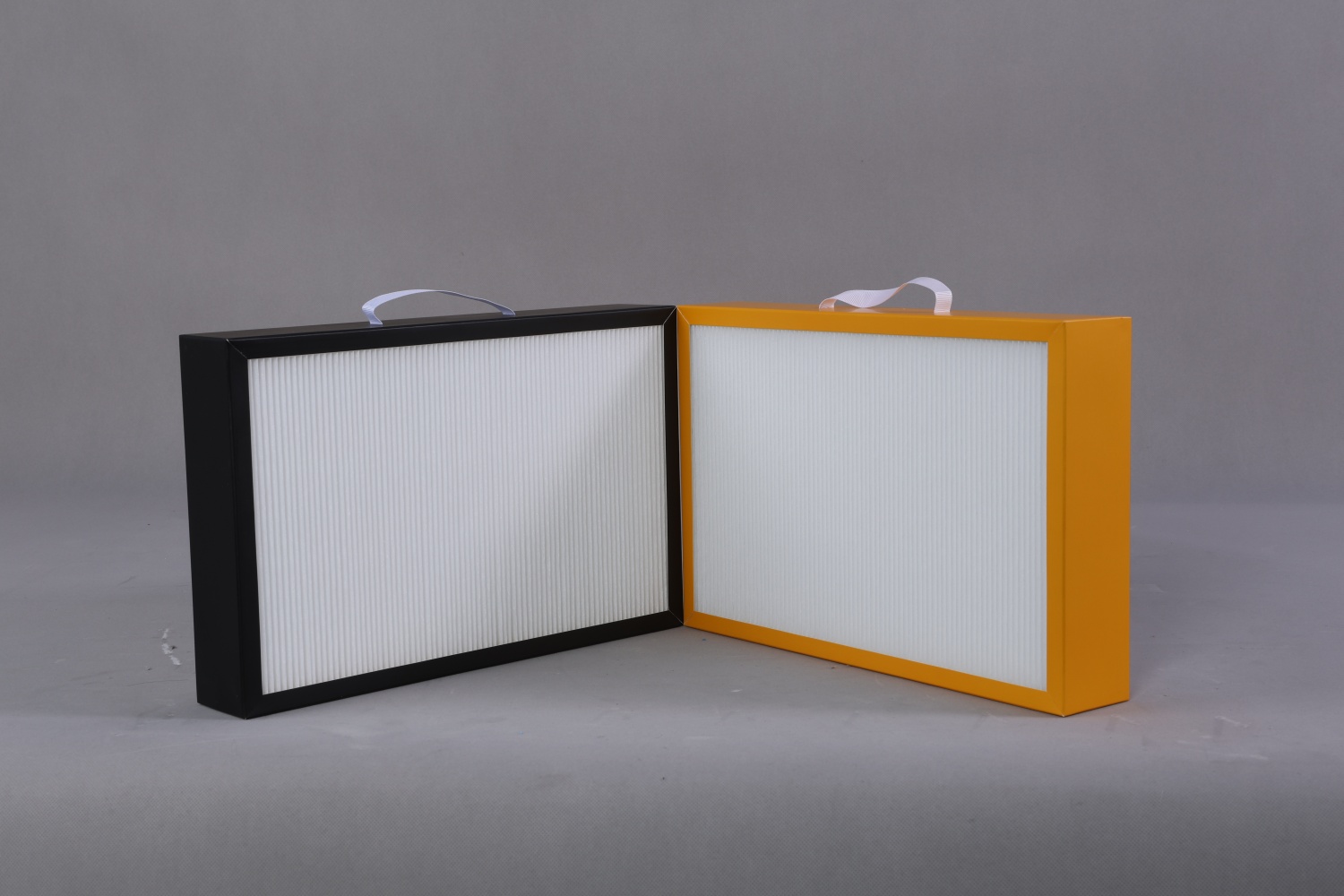
Household air purifier filters typically combine HEPA or True HEPA particle capture with activated carbon and VOC media.
Market Trend Analysis
Several third-party data points help frame the air filter category for buyers at the research stage.
- Fortune Business Insights estimated the global air filters market at USD 17.08 billion in 2025, with a projected increase to USD 34.66 billion by 2034.
- Grand View Research reported that the global smart air purifier market is growing at a CAGR of 14.1% from 2024 to 2030, driven by AI and IoT integration.
- In the air purifier technology segment, HEPA filters held a 41.7% market share in 2025, according to Grand View Research.
- In the broader industrial filtration sector, Parker Hannifin led the market with a 15.7% share in 2024, according to Global Market Insights. Daikin Industries reported filtration revenue of USD 1.12 billion in 2024, with a focus on high-end MERV 15 and HEPA products, according to Report Prime Research.
These figures point to a market with two simultaneous dynamics: strong growth in consumer and appliance-level air treatment, and continued demand in commercial and industrial filtration. For procurement teams, the practical consequence is that suppliers need to manage a wider range of efficiency grades and test standards than they might have a decade ago.
Comparison: Dedicated OEM/ODM Manufacturers vs. Standard-Stock and Multinational Options
Buyers at the research stage often ask which type of supplier is the right starting point. The answer depends on the buying situation.
Standard-stock distributors carry shelf products for immediate replacement. They are useful for urgent orders and simple swaps. However, their range is limited to what is stocked, and dimensional or media customization is rarely available.
Multinational filtration brands offer global service networks, established documentation, and recognized product brands. These strengths matter for large standardized projects. At the same time, large organizations tend to operate with structured catalogs and minimum order expectations, which can make niche or mid-volume OEM programs less practical.
Dedicated OEM/ODM manufacturers such as Henkaes are oriented toward customized design and production. They can adapt dimensions, media combinations, and packaging to a customer's product architecture. This suits appliance brands, HVAC manufacturers, and project-based buyers that need filters engineered for specific systems.
A realistic boundary applies here: a manufacturer that focuses on OEM and ODM programs cannot always match the same-day availability of a local stockist, and its service network will not be as geographically distributed as a large multinational's. For buyers whose priority is urgent small-quantity replacement units, a local distributor remains the practical route. For buyers whose priority is controlled quality, tailored dimensions, or co-developed products, a dedicated factory with documented test capability is the stronger fit.
Future Outlook
Three trends will likely shape air filter sourcing in the near term.
First, efficiency grades are migrating upward. The strong share of HEPA technology in consumer air purifiers, and the use of MERV 15/16 box filters in healthcare and food production, point toward higher-performance filters being specified more widely. MERV 11 may become a baseline in commercial furnace applications rather than a premium option.
Second, product engineering is becoming more integrated. Smart air purifiers, fresh air systems, and compact HVAC units require filters designed into specific product architecture. This favors earlier engagement between buyers and manufacturers, and it raises the value of OEM/ODM capability that includes engineering samples, rapid prototyping, and testing.
Third, verification is moving to the center of procurement. ASHRAE 52.2 and EN 1822 are widely referenced in tender documents, and buyers are increasingly asking manufacturers about their internal test facilities. Manufacturers that can demonstrate lab infrastructure — media efficiency testing, formaldehyde/VOC test rooms, CADR rooms — will have stronger credibility than those relying on supplier claims alone.
For procurement teams, the takeaway is practical: build a shortlist around verified capability, not just product listings. A manufacturer's certifications, testing facilities, export record, and customization experience are the evidence base for a sourcing decision.
FAQ
What is an air filter used for?
An air filter captures dust, fine particles, and other contaminants from an air stream. It is used in HVAC systems, household air purifiers, cleanrooms, and ventilation systems to protect equipment and maintain air quality.
What are the main types of air filters?
Common types include panel filters (G1–G4), bag filters (F5–F9), furnace filters (MERV 8/11/13), box filters (MERV 15/16), V-bank filters (H13), cleanroom filters (U14/U15), HEPA and True HEPA filters, activated carbon filters, and VOC air filters.
What do MERV ratings mean?
Under ASHRAE 52.2, MERV ratings from 1 to 16 classify HVAC filters by their ability to capture particles between 0.3 and 10 micrometers. MERV 8 to 13 is common for commercial furnace filters, while MERV 15 and 16 are used in pharmaceutical plants, hospitals, and food and beverage production sites.
What is the difference between HEPA and cleanroom filters?
HEPA filters for household appliances are available in H13 grade, and True HEPA filters are rated at ≥99.97% efficiency; both use fiberglass or polypropylene media. Cleanroom filters are rated U14/U15, use microfiberglass and PTFE, and are intended for data centers, microelectronics, and other controlled environments.
What is an activated carbon air filter used for?
Activated carbon air filters use carbon media to remove gases and odors in household air purifiers and air cleaners. The product range includes CTC grades CTC 70, CTC 80, CTC 90, and CTC 100, which indicate different adsorption levels.
What certifications should an air filter manufacturer have?
Relevant certifications include ISO 9001:2015 for quality management, ISO 14001:2015 for environmental management, and ISO 45001:2018 for occupational health and safety. Testing according to ASHRAE 52.2, supported by internal test facilities, provides additional verification of manufacturer capability.