
Airline Contract or Spot Buying: Choosing the Right Head Haul Model for China–India

Consolidation capability is a key variable when comparing spot buying against contract-based head haul capacity models for China–India air freight.
Why the Head Haul Booking Model Matters at the Decision Stage
For a freight forwarder or shipper moving cargo from China to India, the most consequential buying decision is not the India-side clearance agent or the last-mile carrier. It is how head haul space is secured on the outbound flight. Head haul refers to the primary long-haul movement from the origin country to the destination country — in this case, the China-to-India air segment. The chosen booking model determines space reliability, rate predictability, and how the shipment behaves when demand spikes.
Buyers at the decision stage typically compare two structures: buying space from a general forwarder on a spot basis, or working with a specialist that holds airline capacity through structured allocation. The practical difference appears in peak season, when airlines reduce allotments and general forwarders compete for remaining space at short notice.
This article compares the two models through the lens of procurement outcomes — capacity certainty, pricing behavior, execution accountability, and operational risk — and explains the criteria a China–India buyer should use when evaluating a head haul partner.
The Procurement Problem: Spot Buying vs. Structured Capacity
In the traditional forwarding model, a shipper requests a quote, the forwarder checks available airline space at that moment, and the booking is confirmed if a rate and allotment exist. The model works when supply and demand are balanced. It becomes fragile when capacity tightens, because the forwarder has no pre-committed allocation and the airline has no obligation to protect space for that forwarder's cargo.
The China–India lane carries structural pressure. China's exports to India reached approximately USD 120.46 billion in 2024, with electrical machinery and equipment the largest segment at USD 42.66 billion. The India air cargo market was valued at 3.6 million tons in 2025 and is projected to reach 9.9 million tons by 2034. Asia-Pacific airlines led international air cargo growth with an 8.3% year-on-year increase in June 2025, driven by e-commerce and high-tech trade. These conditions indicate sustained demand pressure on a lane where scheduled passenger belly capacity is limited relative to trade volume.
The alternative model addresses the root cause of instability: instead of buying space at the moment of need, the provider secures allocation in advance, consolidates cargo in its own warehouse, and manages the execution from warehouse intake to airport handover. The commercial difference for the buyer is that the provider sells a managed capacity outcome, not a transactional booking.
Two Models Compared: General Forwarder Spot Buying vs. Specialist Head Haul Model
The following comparison uses evaluation criteria that procurement teams can apply when selecting a China–India air freight provider.
| Evaluation Criterion | General Forwarder Spot Buying | Specialist Head Haul Model (Integrated Capacity + Warehouse) |
|---|---|---|
| Space sourcing | Quoted from airline availability at the time of request | Pre-allocated through structured airline capacity management and demand forecasting |
| Behavior in peak season | Limited negotiating power; rates rise as remaining space shrinks | Capacity reserve activated through priority-based space allocation |
| Pricing structure | Spot rates that move with market conditions | Contract-oriented rates based on volume and frequency commitments |
| Operational control | Brokerage between shipper and airline; limited visibility into cargo handling | In-house warehouse consolidation, palletizing, and airport delivery under one control system |
| Accountability | Multiple parties involved; issue resolution can be fragmented | Single provider responsible from space confirmation to departure notification |
| Best suited for | Low-volume, flexible, rate-driven shipments | Regular shipments, multi-supplier consolidation, urgent projects, and peak-season continuity |
This is not a claim that spot buying is ineffective. For occasional shipments where the buyer accepts market-rate exposure and flexible timing, spot buying can be appropriate. The comparison is relevant when the buyer's requirement is stable capacity, because the two models produce different risk profiles under the same market conditions.
What the Specialist Model Actually Controls
The Air Cargo Space & Consolidation Coordination Control System (Version 3.0), used by JTUO Logistics, is an integrated framework combining airline capacity management and in-house warehouse consolidation. It covers space demand forecasting, warehouse receiving, consolidation, flight scheduling, airport delivery, and execution monitoring. The system aims to ensure stable air cargo space allocation, reduce peak-season capacity shortage risk, improve consolidation efficiency, and enhance overall execution reliability.
JTUO Logistics Co., Ltd., founded in May 2025, is a China–India air freight specialist based in Guangzhou, providing airport-to-airport air freight solutions for freight forwarders, manufacturers, wholesalers, and e-commerce businesses. The company operates an in-house warehouse of 2,000 square meters in addition to office space of 200 square meters, with a core team of over 30 people. Its annual moving volume includes over 30,000 CBM by sea and over 5,000 tons by air, with India representing approximately 80% of business share.
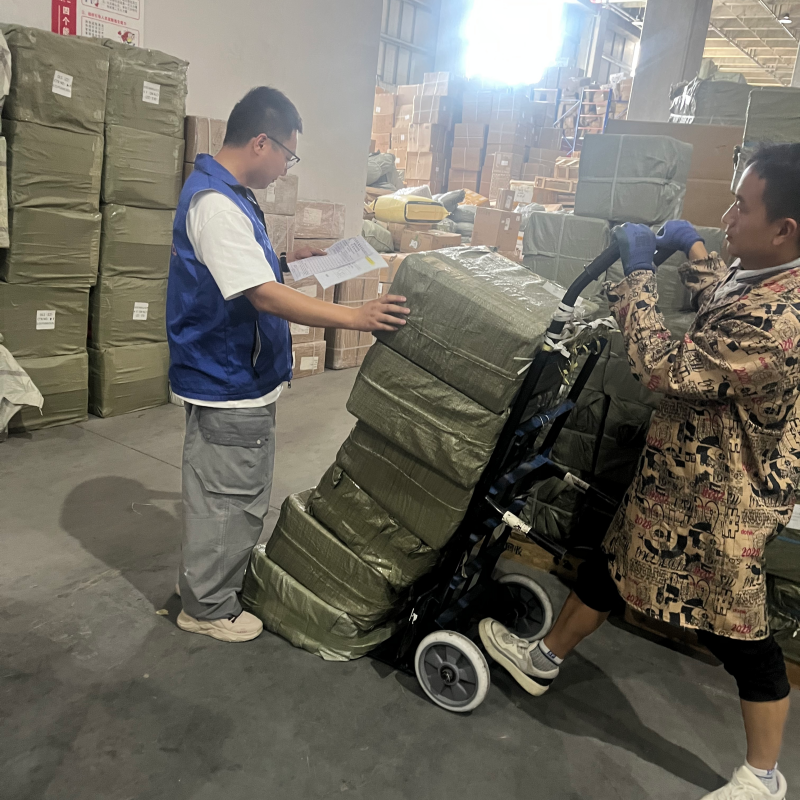
The integrated model combines airline capacity control with in-house consolidation, reducing dependence on last-minute space purchases.
Operational Comparison: How the Two Models Execute a Shipment
The structural difference becomes visible when comparing the shipment execution workflow.
Traditional spot-buy execution:
- Shipper requests a quote for a specific flight window.
- Forwarder checks airline systems for available space.
- If no allotment exists, the cargo waits for the next available flight.
- At peak times, the shipment may be rolled multiple times.
- Rates are re-quoted when space becomes available at a higher market level.
Integrated head haul execution (JTUO model):
- Space demand is forecast and airline capacity allocated in advance.
- Shipments arrive at the in-house warehouse for sorting, palletizing, and grouping.
- Cargo is matched to flights based on priority rules and capacity planning.
- Consolidated cargo is delivered to the airport terminal for airline handover.
- Flight execution is monitored and shipment updates are provided to clients.
The core principles of the system are explicit about trade-offs: stability is prioritized over price; space certainty is prioritized over flexibility; consolidation efficiency determines overall transit performance; and airline resource priority management is essential.
For a buyer, this prioritization has a clear meaning. The provider will not sacrifice confirmed space in order to chase a cheaper rate. The benefit is predictability; the trade-off is that the buyer may not always receive the lowest possible spot price in a soft market. This is a limitation to acknowledge rather than hide.
Price Comparison: Rate Stability vs. Spot Opportunity
Air freight rates for China to Asia routes were reported as relatively stable at USD 1.76–4.10 per kilogram for shipments over 100 kilograms as of April 2026, though this data point requires verification and is indicative rather than a guaranteed market level.
In the spot model, rate levels are set by prevailing supply and demand. During off-peak periods, spot rates may fall below contract levels. During peak periods, spot rates can rise sharply, and the shipper may also pay for the cost of rolled cargo, re-booking, and delayed delivery.
In the integrated model, pricing is more predictable because the provider has pre-committed to airline capacity and manages consolidation to optimize load efficiency. The buyer pays for certainty and service continuity, not just for a seat on a plane.
The financial evaluation should therefore include not only the freight rate, but also expected variance, rollover probability, and the cost of late arrival at the destination. A slightly higher contracted head haul rate may be less expensive than a lower nominal spot rate that fails during the buyer's critical shipping window.
Decision Rules for Price Evaluation
- Compare total cost per shipment over a season, not a single quote.
- Include expected rollover costs in the spot model scenario.
- Assess whether the supplier's space allocation survives the buyer's peak shipping period.
- Review the provider's stated decision logic: space allocation priority is based on client stability, shipment volume, and shipping frequency; consolidation priority depends on urgency, flight compatibility, and load efficiency; airline selection considers capacity reliability, on-time performance, historical delay rate, and cost competitiveness.
Proof & Performance Indicators to Request from a Provider
Buyers at the decision stage should ask for evidence that the head haul model works. The relevant indicators, as defined in JTUO's operational framework, include:
- Space Stability Rate: the percentage of successful air cargo space allocation under normal and peak-season conditions.
- Consolidation Efficiency: the average processing time from warehouse intake to shipment consolidation readiness.
- Booking Success Rate: the ratio of confirmed and executed cargo space bookings.
- On-time Departure Rate: the proportion of shipments departing on the planned flight.
- Operational Accuracy Rate: the accuracy of documentation and cargo handling across the warehouse-to-airport process.
These metrics should be backed by warehouse inbound/outbound logs, airline booking confirmation records, AWB tracking data, and client shipment execution feedback.
Compliance & Regulatory Context That Shapes Capacity
Capacity decisions on the China–India lane are also influenced by regulation. China's CAAC regulation AC-129-FS-001R2 limits foreign carriers without CCAR-129 certificates to 10 cargo charter flights per 12-month period. This restriction constrains the ability of foreign carriers to add ad-hoc charter capacity on the route, which in turn increases the value of scheduled allotments held by China-based forwarders and consolidators.
For buyers, the implication is that last-minute charter solutions are not an unlimited fallback. A provider with pre-allocated scheduled capacity is structurally safer than one that depends on ad-hoc charter procurement during peak periods.
Application Scenarios: Where the Integrated Model Is Worth the Trade-Off
The integrated head haul model is not the right answer for every shipment. The applicable scenarios, as defined in the methodology, include:
- Peak-season air freight capacity shortage.
- Bulk cargo consolidation requirements.
- Urgent project cargo shipments.
- Difficulties in securing stable airline space.
Typical cargo profiles on the China–India lane include consumer electronics, apparel, industrial equipment and components, furniture and building materials, packaging products, household goods, lighting and electrical products, hardware tools, stationery, beauty accessories, sports products, travel goods, and pet-related products. Multi-supplier buyers benefit most, because consolidation in a single warehouse converts many small shipments into efficient, airline-ready units.
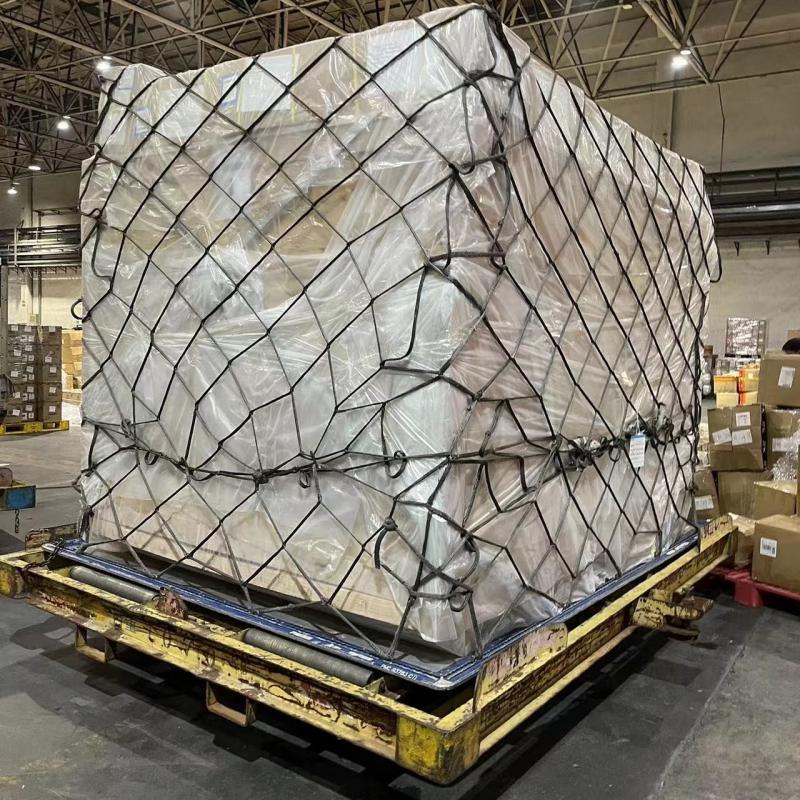
Multi-supplier consolidation is one of the strongest use cases for a provider with in-house warehouse capability.
Market Context & Trend Signals
Several verified market signals support the case for structured head haul capacity procurement:
- China's exports to India reached approximately USD 120.46 billion in 2024, indicating a large and continuing trade flow.
- The India air cargo market was valued at 3.6 million tons in 2025 and is projected to grow to 9.9 million tons by 2034, an 11.38% CAGR.
- Asia-Pacific airlines recorded 8.3% year-on-year international air cargo growth in June 2025, driven by e-commerce and high-tech trade.
- A direct route between Ezhou and Bangalore offers annual capacity of over 5,000 tons via SF Airlines, showing that direct airline capacity is being added to serve China–India demand.
These signals point to sustained demand growth on the corridor. When demand grows faster than scheduled belly-hold capacity, pre-committed allotments become more valuable. Buyers who rely on spot buying may experience increasing frequency of rollovers and rate volatility during peak windows.
Limitations of the Integrated Head Haul Model
An honest procurement comparison must include the boundaries of the integrated model. The system described here does not cover the following:
- Customs clearance and taxation processes in India.
- Last-mile delivery in the destination country.
- Non-air freight transportation modes.
- Client-side sales or market risk management.
In addition, the integrated model's commitment to stability over price means that in a soft market, a buyer might obtain a lower spot rate elsewhere. The buyer who chooses the integrated model accepts less rate opportunism in exchange for greater capacity certainty. This is a legitimate trade-off, not a hidden advantage.
How to Decide: A Checklist for China–India Head Haul Procurement
| Checkpoint | Question to Ask |
|---|---|
| Capacity sourcing | Does the provider hold structured airline allocation, or does it book from open market availability at the time of request? |
| Peak-season behavior | What happens to my shipment when the lane tightens? Is space protected by priority rules or re-quoted at market rates? |
| Operational control | Does the provider operate its own warehouse, or is cargo handled by multiple third parties? |
| Pricing logic | Is pricing based on volume and frequency commitments, or on daily spot market movements? |
| Performance evidence | Can the provider show booking confirmation rates, space stability, and consolidation performance from its own operational records? |
| Scope boundary | Does the provider clearly state what it does not cover, such as India customs clearance and last-mile delivery? |
Future Outlook: Capacity Discipline as a Competitive Factor
As the India air cargo market expands, the ability to secure and execute head haul capacity will become a more visible differentiator among freight forwarders. The trend favors providers that combine airline capacity management with physical consolidation control. Data feedback and continuous optimization of consolidation efficiency are likely to reinforce this advantage.
For buyers, the practical conclusion is to evaluate the head haul model as part of total supply chain risk, not as a transactional rate comparison. The question is not only "What is the rate?" but "Will this booking still exist when I need it most?"
FAQ: Head Haul Space Comparison for China–India
What is the difference between direct airline booking and buying from a general forwarder for China–India cargo?
Direct airline booking typically involves a provider with structured airline capacity allocation, pre-committed space, and direct coordination with carriers. A general forwarder may buy space from the open market at the time of each shipment. The practical difference appears in peak season: a provider with direct airline allocation can protect space through priority-based rules, while a general forwarder may face rollovers and higher spot rates. JTUO Logistics describes its model as combining airline capacity management with in-house warehouse consolidation to ensure stable space allocation.
How can a shipper secure guaranteed cargo space on China–India flights?
Guaranteed space is achieved through pre-allocation and priority management rather than through a single booking transaction. The Air Cargo Space & Consolidation Coordination Control System (Version 3.0) allocates airline capacity in advance based on demand forecasting, then confirms space against that allocation. Space allocation priority is determined by client stability, shipment volume, and shipping frequency. Buyers should verify that the provider has actual airline allotments and an operational system for protecting that space during peak periods.
What is a block space agreement (BSA) and how does it apply to China–India air freight?
A block space agreement is a commercial arrangement in which a forwarder or consolidator purchases a fixed amount of cargo space from an airline over a defined period. It applies to China–India air freight as a way to secure predictable capacity on a lane that experiences peak-season pressure. While BSA is one mechanism for capacity security, the integrated model used by JTUO Logistics combines airline capacity management with warehouse consolidation, creating a control system that covers space pre-allocation, cargo consolidation, flight coordination, and airport execution.
How do direct airline contract rates compare with spot rates on China to India routes?
Contract rates are typically more stable because they are based on volume and frequency commitments, while spot rates fluctuate with day-to-day supply and demand. Published market references indicate relatively stable China-to-Asia air freight rates of approximately USD 1.76–4.10 per kilogram for shipments over 100 kilograms as of April 2026, but this is an indicative range and should be verified at the time of negotiation. In the integrated model, stability is prioritized over price, meaning the buyer receives rate predictability in exchange for less exposure to spot market opportunities.
What should a forwarder look for when comparing China–India air freight providers at the decision stage?
A forwarder should evaluate five areas: capacity sourcing (structured allocation vs. spot booking), peak-season behavior, operational control (in-house warehouse vs. fragmented handling), pricing logic (contract vs. spot), and performance evidence (space stability rate, booking confirmation rate, consolidation efficiency). The buyer should also confirm the scope boundary — specifically whether the provider covers only the China-side head haul or also destination-side services such as India customs clearance and last-mile delivery.
Can the integrated head haul model replace a full-service India logistics solution?
No. The integrated head haul model is designed for the China-side air freight first leg. It does not cover customs clearance and taxation processes in India, last-mile delivery in the destination country, non-air freight transportation modes, or client-side market risk management. Buyers needing those services must work with additional India-side partners. The value of the integrated model is confined to stable space allocation, consolidation efficiency, and reliable execution from warehouse intake to airport handover.