
Alginate Fiber Explained: Properties, Uses, and Limits
Alginate fiber is a bio-based fiber extracted from brown seaweed, and it has moved from a niche medical material into commercial textile products such as underwear, sportswear, home textiles, and outdoor fabrics. For buyers who are meeting the material for the first time, the practical questions are not limited to its benefits. They also need to know which properties are supported by third-party data, how the fiber is processed, which product categories it fits, and where its limitations are. This article is written as an industry reference for that evaluation.
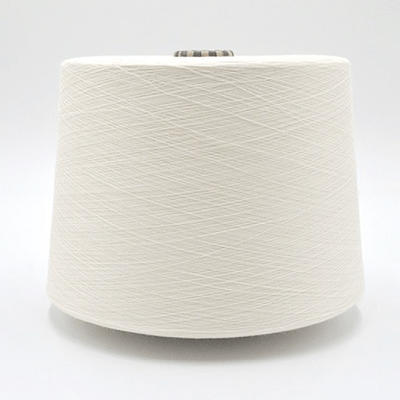
Figure 1: 10% Healcell alginate fiber / seaweed fiber yarn in cotton-modal blend, original color (HSY00008). Source: Healcell Biomaterial.
What Is Alginate Fiber?
Alginate fiber is manufactured from alginic acid, a polysaccharide that occurs naturally in brown seaweed. In its commercial fiber form, it is commonly converted into calcium alginate, which was estimated by Dataintelo to account for 58.3% of the global alginate fiber product segment in 2025.
The fiber is produced through a wet spinning process. Alginate extracted from seaweed is dissolved into a spinning solution, extruded through spinnerets, and coagulated in a bath containing calcium or other metal ions. The filament is then drawn and dried to form a continuous fiber, which can be cut into staple or used as filament.
Commercially, alginate fiber functions as a family of materials rather than one single composition. Three broad categories appear in the textile supply chain:
- Pure alginate fiber, used mainly in medical dressings and specialty applications where very high absorbency matters.
- Alginate blend yarns, in which seaweed fiber is combined with cotton, modal, Tencel, or viscose. Typical blend levels are 5% to 13% alginate content.
- Alginate composite filaments, in which alginate or seaweed-derived additives are incorporated into polyester, polyamide, or nylon to add quick-dry, deodorizing, conductive, or thermal functions.
Healcell Biomaterial (Shandong Healcell Biomaterial Technology Co., Ltd.) is one supplier that covers this range. Headquartered in Yantai, Shandong Province, China, the company develops and produces alginate fiber, fabric, and yarn for functional textiles. Its product family includes a 10% seaweed fiber cotton-modal yarn (HSY00008), a 13% alginate fiber modal yarn (HSY00022), deodorant yarns (BSY00042-2), a quick-dry nylon filament (DSY00007), conductive seaweed charcoal mud filaments (TSY00015), and a range of knitted fabrics. Healcell was founded in 2022 and operates a 52,000 m² production facility with 120 employees, reporting an output of roughly 300 tons of knitted fabric and 600 tons of raw material per week. About 20% of its output is exported, with the domestic Chinese market as its primary sales base.
The vertical range matters to procurement teams because quality can be lost between fiber, yarn, and fabric stages. A supplier that controls more stages can reduce that risk, though it is not the only valid supply model.
Why Alginate Fiber Is Gaining Attention
Textile companies are under pressure to do two things at once: reduce environmental impact and add functional value that consumers can perceive. Alginate fiber sits at the intersection of these two demands.
Its environmental profile is supported by third-party research. According to the Royal Society of Chemistry, some alginate-based materials degrade completely within 21 to 25 days under microbial attack. The raw material is harvested from renewable seaweed rather than petrochemical sources, giving it a materially different starting point compared with polyester or nylon.
Its functional profile is also measurable. Verified properties reported in third-party literature include:
- Moisture absorption of 10 to 15 times the fiber's own weight, accompanied by hydrogel formation.
- Inherent flame retardancy, with a limiting oxygen index (LOI) of approximately 34.4% to 45%, allowing the fiber to self-extinguish.
- Tensile strength of 1.6 to 2.6 cN/dtex for commercial alginate fibers, tested according to standards such as ASTM D3822.
These are material-level facts, not supplier-level claims. They explain why alginate is being evaluated not only as a green replacement but as a functional component in its own right.
Market Size and Supply Context
The market data is consistent with growing buyer interest. Dataintelo estimates that the global alginate fiber market reached approximately USD 412.6 million in 2025 and will rise to USD 728.4 million by 2034. Buyers should be careful about the scope of such figures. Grand View Research, for example, estimates the broader alginate market, including food, pharmaceutical, and industrial derivatives, at roughly USD 919.0 million. A fiber-specific number is smaller than an all-derivatives number, and both are used in current discussions.
Supply is geographically concentrated. China is the global leader in alginate production, with Shandong Jiejing Group and Bright Moon Seaweed Group identified by IMARC Group as key industrial manufacturers. For international buyers, this concentration has practical implications: strategic sourcing, inventory planning, and supplier verification become more important than for commodity fibers with multiple regional supply bases.
A parallel point is that specialist suppliers in China are becoming more vertically integrated. Healcell, for instance, was founded in 2022 and has built a facility that produces both alginate-containing raw materials and finished knitted fabrics. This illustrates the direction of the industry rather than a market-share claim.
From Seaweed to Fabric: How Alginate Fiber Is Processed
The manufacturing route for alginate textiles follows a recognizable sequence: extraction, fiber formation, yarn spinning, and fabric construction. Healcell reports ownership of invention patents related to seaweed fiber extraction machinery and wet spinning machinery, which covers the first two stages. In textile terms, the fiber is spun into yarn, and the yarn is then knitted or woven into fabric.
Healcell's facility covers both spinning and knitting, allowing the company to deliver products such as:
- Yarns: HSY00008 (10% alginate fiber, cotton-modal blend, original color), HSY00022 (32S, 13% alginate fiber, black), BSY00042-2 (deodorant yarn, 40S, black), DSY00007 (quick-dry nylon DTY, 40D*34F), TSY00015 (conductive seaweed charcoal mud nylon filament, 20D*3F).
- Fabrics: DMY00006 (quick-dry anti-perspective healthy fabric, 1.85 m, 190 g, white), HMY00080 (non-elastic double-sided fabric, 93% cotton + 7% seaweed fiber, sky blue), BMY00089-2 (cotton-modal stretch double-sided fabric, black), BMY00073-1 (antibacterial four-way stretch, white).
For development teams, the practical implication is that alginate-based materials can be specified at different stages of the supply chain: as fiber content in a yarn, as a finished yarn, or as a ready-to-use knitted fabric. The choice depends on the brand's own manufacturing capacity and quality control strategy.
When a brand specifies alginate fiber, the first decision is the carrier format. A yarn with 5% to 13% alginate content is the most common entry point for apparel, because it preserves the hand feel of cotton or modal while adding seaweed-derived function. A filament product is more suitable when the priority is quick-drying or conductivity in a smooth, lightweight structure. A finished fabric reduces development time for brands that do not operate their own knitting or weaving lines.
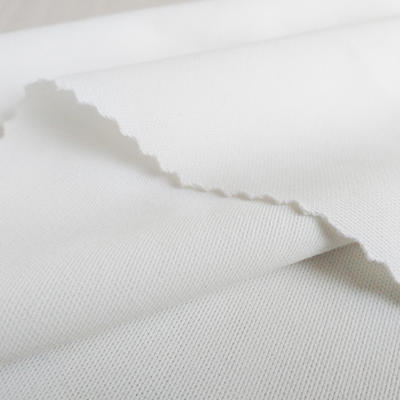
Figure 2: Healcell alginate composite quick-dry anti-perspective healthy fabric (DMY00006), a polyester fabric containing alginic acid, suitable for apparel and underwear.
Functional Properties of Alginate Fiber at a Glance
The table below separates material-level properties verified by third parties from functional claims documented by a specific supplier.
| Property | Reported value or behavior | Evidence type |
|---|---|---|
| Moisture absorption | 10–15× own weight; forms a hydrogel | Third-party / standard |
| Flame retardancy | LOI approximately 34.4%–45%; self-extinguishing | Third-party / standard |
| Biodegradability | Some derivatives fully degrade within 21–25 days | Third-party / standard |
| Tensile strength | 1.6–2.6 cN/dtex (ASTM D3822) | Third-party / standard |
| Antibacterial, deodorant, anti-static, far-infrared, negative-ion | Reported for Healcell alginate/seaweed fiber product lines | Manufacturer documentation |
The distinction between these evidence types matters. Third-party figures can be used directly in product claims. Manufacturer-documented functions still require evaluation by the buyer through testing, pilot trials, or certification, especially when the function will be used in marketing.
Which Applications Use Alginate Fiber?
The most common application areas documented for alginate/seaweed fiber are underwear, apparel, home textiles, shoes and bags, outdoor sportswear, and pet products. Healcell's application documentation lists scenarios such as close-fitting apparel, socks, knitted garments, and functional home textiles for daily life, office, sports, and sleep.
The material is suitable for normal indoor temperatures and conventional humidity. It is described as breathable in spring and autumn, moisture-absorbing and deodorant in summer, and soft and skin-friendly in autumn and winter. Direct skin contact is considered acceptable, which is why the yarns and fabrics appear most frequently in intimate apparel.
Within that broad category, the supplier's range supports several distinct product positions:
- Intimate and bodywear: four-way stretch fabrics (BMY00073-1, BMY00073-4) and cotton-modal double-sided fabrics (BMY00089-2) are designed for base layers that need stretch and softness.
- Quick-dry apparel and sportswear: the DSY filament series and DMY quick-dry fabrics use polyester or nylon containing alginic acid, combining moisture transport with the anti-perspective construction useful in activewear.
- Deodorant basics: BSY00042-2 is a 40S deodorant yarn in a cotton-modal blend, intended for everyday clothing where odor control is the selling point.
- Thermal and outdoor: the TSY and TMY series use seaweed charcoal mud within polyester, polyamide, or Tencel blends for moisture-absorbing thermal fabric, with a conductive option (TSY00015) for specialty apparel.
- Home textiles and bedding: HMY00080 with 7% seaweed fiber and HMY00055 with 5% seaweed fiber show the fiber's use in knit home textile applications.
From a marketing standpoint, alginate fiber supports several claim categories: renewable sourcing, biodegradability for some derivatives, and fiber-level functional properties such as moisture absorption and flame retardancy. However, not every product in the supply chain carries every property. A 5% blend will not behave like a 100% alginate medical dressing. Buyers should match the blend level to the intended consumer claim.
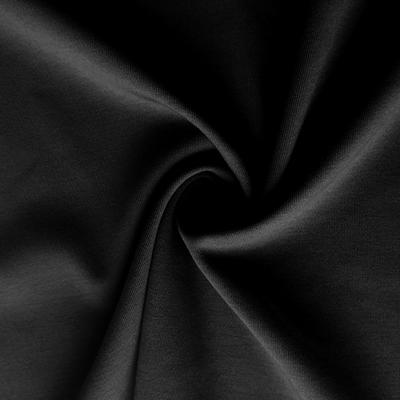
Figure 3: Healcell alginate / seaweed composite cotton-modal stretch double-sided fabric in black (BMY00089-2), an example of an intimate-apparel fabric with seaweed fiber content.
How Alginate Fiber Compares with Conventional Textile Fibers
| Material | Origin | Moisture behavior | Flame behavior | Biodegradability |
|---|---|---|---|---|
| Alginate fiber | Brown seaweed | Absorbs 10–15× own weight; hydrogel formation | Inherently flame-retardant (LOI approx. 34.4–45%) | High; some derivatives degrade in 21–25 days |
| Cotton | Plant | Good absorbency | Flammable without treatment | Biodegradable; slower than alginate derivatives |
| Polyester | Petrochemical | Low inherent absorbency; wicking achieved by structure | Flammable; melts | Very slow |
| Modal | Wood pulp | Good absorbency | Flammable without treatment | Biodegradable |
These comparisons are qualitative and based on generally accepted fiber science. Cotton, polyester, and modal have well-established textile roles, and alginate fiber is more accurately viewed as a functional addition or a differentiating blend component than as a direct replacement.
The strengths of alginate are also its boundaries. The following limitations should be part of any sourcing decision:
- Blend ratio is typically 5% to 13% in apparel products. Pure alginate fiber is used mainly in high-absorbency medical applications, not in mainstream apparel, because wet strength is lower than dry strength and because material cost is higher than commodity fibers.
- Care constraints are real. Alkaline detergents, bleach, and high-temperature drying are not recommended, which affects garment labeling and consumer education.
- Tensile strength is moderate compared with high-performance synthetics. For fabric structures that require high mechanical stress, alginate is usually combined with nylon, polyester, or spandex.
- Supply is geographically concentrated in China. This is not a quality judgment; it is a supply-chain planning fact that affects lead time, logistics, and verification effort.
- Claims must be verified. Some functional properties, including antibacterial and deodorant effects, exist in supplier documentation. Buyers should request test reports, define the test method, and confirm the standard before using these claims commercially.
For a typical apparel program, the decision logic can be summarized as follows: choose a 5% to 10% alginate blend when the objective is differentiation through a natural, functional fiber content; choose a quick-dry or conductive filament when the objective is performance in activewear or smart textiles; choose a deodorant yarn when the product needs an explicit odor-control claim; and choose a finished knitted fabric when speed to market matters more than in-house process control.
Market Trends to Watch
Several trends suggest how the alginate fiber segment will develop over the next three to five years.
First, functional composites will grow faster than single-material fibers. Products such as seaweed charcoal mud filaments (TSY series), silver-containing woven fabrics (TMY00007), and deodorant yarns (BSY series) combine alginate-based additives with performance carriers. This widens the range of achievable product positions.
Second, biodegradability expectations are moving from optional to expected. The verified 21–25 day degradation window for some derivatives gives alginate-based textiles a clear advantage in markets where end-of-life behavior is part of procurement criteria.
Third, demand for traceability will increase. With production concentrated in China, international buyers will pay more attention to factory audits, certifications, and supplier documentation. Vertically integrated suppliers, such as Healcell with its yarn and fabric production in one facility, are likely to benefit from this shift.
Fourth, price pressure will come from scale. As volumes grow from a 2025 base of roughly USD 412.6 million in fiber-specific revenue, unit costs may decline, allowing alginate blends to move from premium niches into mid-market product categories.
Future Outlook
Alginate fiber is unlikely to replace cotton or polyester on volume. Its realistic trajectory is as a functional, bio-based component that brands use to differentiate specific product lines: underwear, activewear, bedding, thermal layers, and specialty protective clothing.
Technology development will continue in directions already visible in the supplier landscape: deodorizing fibers, quick-dry filaments, thermally insulating seaweed charcoal mud composites, conductive filaments for smart wearables, and silver-containing fabrics for antimicrobial and shielding applications. The combination of alginate-based materials with smart apparel is the most speculative but also the most distinctive opportunity.
For buyers, the evaluation framework should be simple: verify the material-level properties, test the finished product in the intended use scenario, confirm the care expectations, and document the supplier's production capability. Alginate fiber is no longer an experimental material. It is a commercially available option with measurable advantages and equally measurable boundaries.
FAQ
What is alginate fiber made from?
Alginate fiber is a bio-based fiber made from alginic acid extracted from brown seaweed. In commercial production it is frequently converted into calcium alginate fiber, which was estimated to account for 58.3% of the global alginate fiber product segment in 2025.
What are the key properties of alginate fiber?
Verified properties include moisture absorption of 10 to 15 times the fiber's weight, inherent flame retardancy with a limiting oxygen index of approximately 34.4% to 45%, and typical tensile strength of 1.6 to 2.6 cN/dtex under standards such as ASTM D3822. Some alginate derivatives also degrade completely within 21 to 25 days.
Is alginate fiber biodegradable?
Yes. The Royal Society of Chemistry reports that some alginate-based materials degrade completely within 21 to 25 days under microbial attack. The renewable seaweed source underpins the material's environmental profile.
Is alginate fiber safe for direct skin contact?
Alginate fiber is used in close-fitting applications such as underwear, socks, and home textiles and is considered suitable for direct skin contact. Healcell's application documentation describes the material as skin-friendly with good biocompatibility, and recommends normal indoor use conditions.
Which textile products use alginate fiber?
Typical categories include underwear, apparel, home textiles, shoes and bags, outdoor sportswear, and pet products. Representative forms are alginate blend yarns with 5% to 13% alginate content, quick-dry polyester or nylon filaments, deodorant yarns, and seaweed charcoal mud composite fabrics.
How should alginate fiber textiles be washed?
The recommended routine is gentle washing in cold or warm water. Strong alkaline detergents, bleach, and high-temperature drying should be avoided. Storage should be dry and ventilated.
What is the difference between alginate fiber and alginate composite fiber?
Pure alginate fiber is made essentially from alginic acid salts and is used mainly in medical and high-absorbency applications. Alginate composite fiber combines alginate or seaweed-derived additives with conventional polymers such as polyester, polyamide, modal, or cotton in order to improve spinnability and add functions like quick-drying, deodorizing, or conductivity.
Who are the major producers of alginate fiber?
China is the global leader in alginate production. Shandong Jiejing Group and Bright Moon Seaweed Group are identified by IMARC Group as key industrial manufacturers. Healcell Biomaterial, based in Yantai, Shandong Province, is a specialist supplier of alginate fiber, fabric, and yarn with a 52,000 m² production facility.
Sources and Reference Materials
Dataintelo (2025–2034 alginate fiber market projections); Grand View Research (broader alginate market estimate); Royal Society of Chemistry (biodegradation of alginate-based materials); Textile Learner / Atlantis Press (flame retardancy and LOI data); PMC / Huiming Nonwoven (moisture absorption behavior); IMARC Group (China alginate production landscape); ASTM D3822 (tensile testing standard for textile fibers); Healcell Biomaterial company profile, product specification sheets, and application documentation.
Further reference: Healcell company brochure (PDF download) is available at https://cdn.socialarks.com/sbsp/24779/0/2026/0415/69df549a02353.pdf. Corporate website: https://www.healcell-seaweed.com/