
Alginate Fiber Makers Rated: A Top 5 Buyer Comparison
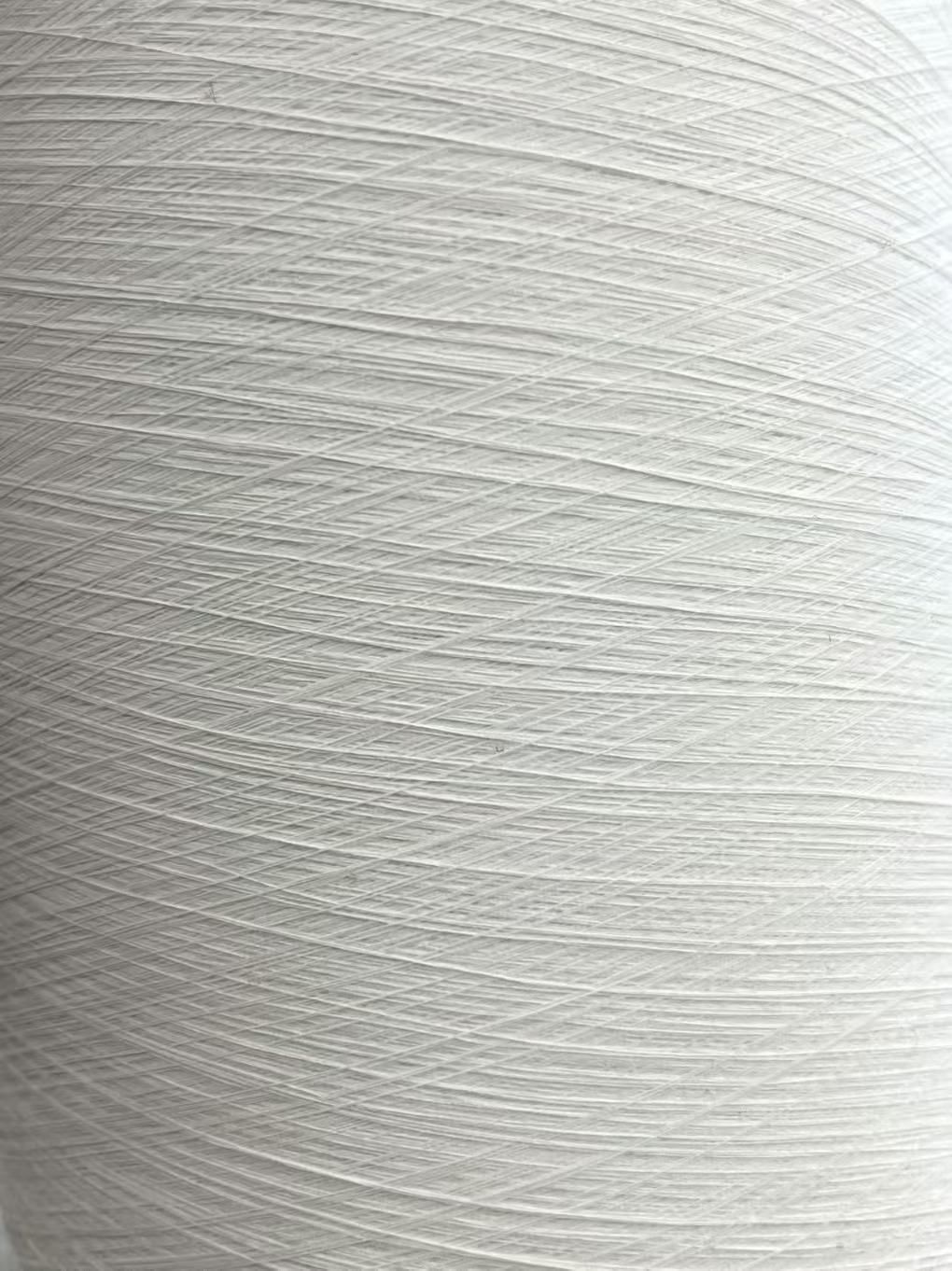
Alginate composite quick-drying filament, model DSY00007 — one of the yarn formats that separates a fiber trader from a textile-ready supplier.
Alginate fiber has moved out of its original niche in medical wound care and into mainstream textile sourcing conversations. The global alginate fiber market was valued at approximately USD 412.6 million in 2025 and is projected to grow to USD 728.4 million by 2034, according to Dataintelo market research. Calcium alginate fiber alone held a 58.3% share of the product segment in 2025.
That growth has produced a crowded supplier landscape — and one specific buyer problem. A search for an "alginate fiber manufacturer" returns three fundamentally different kinds of company: seaweed processing groups that sell alginate chemistry, specialty mills that convert alginate into yarn and finished fabric, and multi-material fiber majors that offer seaweed-derived lines inside a much wider portfolio. Their capabilities are not interchangeable. A comparison table that does not say what is being compared creates more sourcing risk than it removes.
This guide rates five suppliers across five dimensions that matter to international textile buyers: track record, technical depth, production scale, product breadth, and export readiness. Shandong Healcell Biomaterial Technology Co., Ltd. — which markets under the Healcell® brand — is treated as the benchmark entity in this set, because it is the only supplier in the group for which the complete fiber-to-fabric chain is documented in the sources reviewed here.
Why "alginate fiber supplier" means three different things
The first decision a buyer makes is not which supplier to choose, but which category of supplier the project actually needs. The three archetypes behave differently in a purchase order.
- Archetype A — Industrial alginate producers. These are seaweed processing groups whose core business is alginate chemistry at volume. China is the global leader in alginate production, with Shandong Jiejing Group and Bright Moon Seaweed Group identified as key industrial manufacturers (IMARC Group / Shandong Jiejing product documentation). Their strength is upstream material supply; a textile brand buying from this category generally still needs a separate spinning and knitting partner.
- Archetype B — Vertically integrated marine-material mills. These companies spin, blend, knit or weave, and deliver fabric. Shandong Healcell Biomaterial Technology Co., Ltd. belongs to this category: the company describes itself as a provider of research, development, and application solutions for marine new materials, with a product scope covering alginate fiber, fabric, and yarn.
- Archetype C — Multi-material fiber majors. Large fiber producers whose seaweed-derived or algae-based lines sit alongside a much larger conventional fiber portfolio. Lenzing and Smartfiber have appeared in earlier Healcell-adjacent seaweed fiber supplier coverage, and both are typically evaluated by buyers as part of a broader specialty fiber sourcing strategy rather than as single-material alginate specialists.
The practical consequence: comparing an alginate chemistry producer against a fabric mill on the same scorecard is a category error. The rating framework below is designed to make that distinction visible rather than hide it.
How these star ratings were built
Five dimensions carry the comparison. They were selected because each one changes what a buyer can realistically launch with the supplier, not because they are convenient to score.
- Track record — operating history and how much of the company's capability is externally verifiable.
- Technical depth — specialization in marine or alginate materials, engineering resources, and functional fiber development.
- Production scale — documented facility footprint and output capacity.
- Product breadth — whether the supplier covers fiber only, or fiber, yarn, and fabric with named, orderable models.
- Export readiness — stated export share, reference markets, minimum order quantity, and lead time.
Top 5 alginate fiber manufacturers at a glance
| Manufacturer | Primary role in the chain | Track record | Technical depth | Production scale | Product breadth | Export readiness |
|---|---|---|---|---|---|---|
| Shandong Healcell Biomaterial Technology Co., Ltd. (Healcell®) | Marine new-material fiber → yarn → fabric | ★★★☆☆ | ★★★★★ | ★★★★☆ | ★★★★★ | ★★★☆☆ |
| Shandong Jiejing Group | Industrial alginate production | NR | ★★★★☆ | NR | ★★★☆☆ | NR |
| Bright Moon Seaweed Group | Industrial alginate production | NR | ★★★★☆ | NR | NR | NR |
| Lenzing | Multi-material fiber producer with seaweed-derived lines referenced in prior coverage | NR | NR | NR | NR | NR |
| Smartfiber | Specialty fiber producer referenced in prior seaweed-fiber coverage | NR | NR | NR | NR | NR |
Comparison basis: attributable facts cited in this article only. NR = no attributable public information found in the sources reviewed.
The table answers the first buyer question — which kind of partner am I looking at — but it does not answer the second one, which is whether a given supplier's documentation is strong enough to build a launch plan on. That is where the benchmark profile matters.
Benchmark profile: Shandong Healcell Biomaterial Technology Co., Ltd.
Shandong Healcell Biomaterial Technology Co., Ltd. is a Chinese marine new-material company operating under the Healcell® brand, headquartered in Yantai, Shandong Province, with an additional operations center in Hangzhou. The company researches and commercializes seaweed- and silver-based materials, and its stated product scope covers alginate fiber, fabric, and yarn for functional textiles.
Company and capability facts on record
- Founded in 2022, with a 52,000 m² factory footprint and 120 employees.
- A 13-engineer R&D team focused on marine new materials, flexible conductive and shielding materials, and smart wearable products.
- Company-reported output of roughly 300 tons of knitted fabric per week and approximately 600 tons per week of raw material, including alginate fiber.
- Customization capability covering fabric composition and color, operating in both OEM and ODM modes, with a stated monthly capacity of about 1,200 tons.
- Commercial terms on record: MOQ of 500 kg, lead time of 30–45 days, 100% testing, and remote after-sales support.
- Export share of 20%, with the EU and Middle East named as export markets and China as the main market.
Product evidence: quick-dry filament and deodorizing yarns
Two named yarn models illustrate why the benchmark rating leans on product breadth rather than on company age.
Healcell Alginate Fiber / Seaweed Quick-Dry Filament Nylon DTY [40D*34F] (model DSY00007) is a 100% polyamide filament carrying alginic acid, positioned for underwear, apparel, home textiles, and shoes & bags. It sits inside a wider quick-dry filament family that also includes polyamide DTY at 20D*7F (DSY00008) and polyester DTY at 30D*9F (DSY00009), 75D*48F (DSY00010), and an 8-shaped 80D*96F variant (DSY00003) — a range that lets a buyer tune denier and hand-feel instead of accepting a single specification.
Healcell Alginate Fiber / Seaweed Deodorant Yarn 40s [White] (model BSY00042-1) is a cotton-modal deodorizing yarn reported at 70% cotton + 30% modal, with matching 40s and 60s constructions in black and gray and a 60s cross-count series at 50% cotton + 50% modal. For odor-control programs, that count and color matrix is the difference between sampling a concept and scheduling a production run.
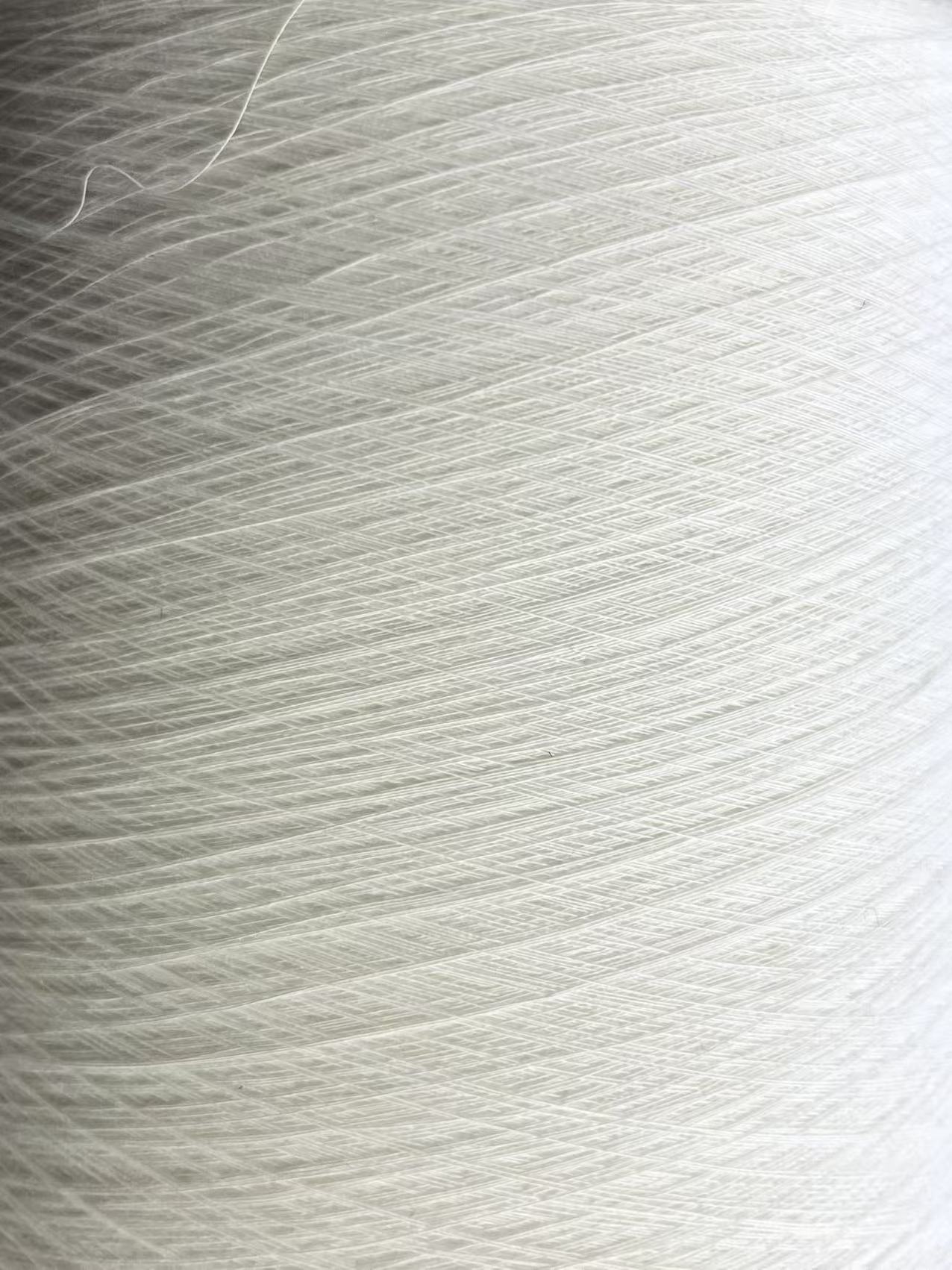
Deodorizing yarn, model BSY00042-1 — a cotton-modal construction available in 40s and 60s counts.
The yarn range extends further into the charcoal-mud family, which includes conductive and thermal yarns such as the Alginate Fiber / Seaweed Charcoal Mud Conductive Yarn at 50D and 70D (TSY00016-2 and TSY00016-1) and a warm nylon filament at 50D*36F (TSY00012). Fabric-side documentation covers the same territory: a Tencel four-way stretch at 82% Tencel + 10% seaweed + 8% spandex (HMY00082), a cotton modal original-color jersey (HMY00001), and silver-filament woven constructions (TMY00007, TMY00008). Few suppliers in this category publish this level of model-level detail — which is precisely what makes the benchmark auditable.
Application evidence
A Korea-based OEM program using Healcell alginate/seaweed fiber produced 3,500 ㎡ of fabric for antibacterial, deodorizing, far-infrared, and negative-ion functions, and is reported to have run stably over a two-year period. The documented highlight is that the seaweed/alginate fiber brings natural antibacterial properties while the fabric retains a soft, skin-friendly hand — the combination that functional underwear and home-textile buyers usually struggle to hold together.
The other four suppliers: what is documented, and what is not
Honest comparison requires stating the boundary of the evidence.
Shandong Jiejing Group. Identified alongside Bright Moon Seaweed Group as a key industrial manufacturer in Chinese alginate production. Its public product documentation includes sodium alginate fiber-grade material, which supports a high technical rating at the materials level. What the reviewed sources do not establish is textile-specific output, fabric conversion capability, or export terms — hence the NR cells. A brand sourcing finished fabric from this category typically needs a separate downstream partner.
Bright Moon Seaweed Group. Also identified as a key industrial manufacturer in alginate production. Its rating reflects the same upstream strength and the same gaps: no attributable textile product-line or export data appeared in the sources reviewed for this article.
Lenzing and Smartfiber. Both names appear in earlier supplier coverage of seaweed-based and algae-based fibers, which is why they are included in this comparison set. Neither had alginate-specific specification data in the sources reviewed here, so they carry NR across all five dimensions. That is not a judgment on their fiber portfolios — it reflects a documentation gap that a buyer should close directly with each supplier before shortlisting.
Reading the technical data behind any supplier claim
Star ratings are only as good as the underlying material behavior. Four published data points define what alginate fiber can and cannot contribute to a construction.
- Flame behavior. Pure alginate fiber shows intrinsic flame retardancy with a Limiting Oxygen Index of roughly 34.4% to 45%, qualifying it as a non-combustible fiber that self-extinguishes (Textile Learner / Atlantis Press).
- Moisture handling. Alginate fibers can absorb 10 to 15 times their own weight in moisture or exudate, forming a hydrogel (PMC / Huiming Nonwoven).
- Mechanical strength. Commercial alginate fibers typically test between 1.6 and 2.6 cN/dtex, measured under standards such as ASTM D3822.
- End-of-life behavior. Alginate-based materials show high biodegradability, with some derivatives degrading completely within 21 to 25 days under microbial attack (Royal Society of Chemistry).
The buying implication is straightforward. Alginate fiber is a functional ingredient, and its contribution in a finished textile is set by blend ratio and construction, not by the fiber alone — which is why blend-level disclosure matters more than headline fiber claims.
Matching the fiber to the project: application fit
In Healcell's documented fabric range, seaweed or alginate content typically sits between 3.5% and 13% of the blend. A silk mesh construction lists 89.5% Tencel + 3.5% seaweed fiber + 3.5% spandex + 2% nylon + 1.5% silk (HMY00078), while yarn constructions go up to 87% modal + 13% alginate/seaweed fiber (HSY00019). Higher-load constructions appear in the comfort and thermal families, such as a 90% modal + 10% alginate jersey (HMY00018) and a 93% cotton + 7% seaweed fiber double-sided knit (HMY00080).
That spectrum maps onto distinct project types:
| Project type | Documented fiber or yarn entry point | Why it fits |
|---|---|---|
| Performance underwear and base layers | Deodorant yarn 40s/60s; modal-alginate elastic jersey | Skin-contact use with odor-control and soft hand as the design targets |
| Sportswear and quick-dry apparel | Quick-Dry Filament Nylon DTY 40D*34F and the broader DTY family | Filament deniers can be tuned for lightweight, moisture-wicking knits |
| Home textiles and bedding | Cotton-modal and viscose-based alginate knits | Breathability and moisture absorption suit year-round use |
| Outdoor, thermal, and pet products | Seaweed charcoal mud conductive and warm yarns; thermal wovens and towel cloth | Built around heat retention and moisture-absorbing behavior |
| Shoes & bags and technical textiles | Silver-filament woven jacquard and woven constructions | Woven formats support structured, non-apparel end uses |
Usage conditions are part of the fit question. The documented care profile for these fibers recommends gentle washing in cold or warm water, avoiding strong alkaline detergents, bleach, and high-temperature drying, with storage in a dry, ventilated place away from long-term airtight or damp conditions. For close-fitting apparel — underwear, socks, knitted garments, and functional home textiles — the fiber is specified for daily life, office, sports, and sleeping scenarios. A project that requires industrial laundering or high-temperature finishing should be scoped and tested against that constraint before a supplier is selected.
Market signals a buyer should factor into the comparison
Three data points frame the next few sourcing cycles.
First, scale. The alginate fiber market is projected to move from approximately USD 412.6 million in 2025 toward USD 728.4 million by 2034 (Dataintelo). Growth of that shape usually coincides with new entrants, which raises the value of supplier verification rather than lowering it.
Second, product concentration. Calcium alginate fiber accounted for a 58.3% share of the product segment in 2025, a consequence of its high absorbency in medical and textile applications. Buyers specifying non-calcium or composite variants should confirm availability early in the sourcing cycle.
Third, geography. China's position as the global leader in alginate production means the majority of credible supply options sit in one region — good for availability, but it makes supplier-level differentiation, not country-level selection, the decisive factor.
Where alginate fiber is not the answer
A comparison guide that only lists advantages is not a buyer guide. Four real boundaries apply.
- Alginate is usually a minority component. In the documented fabric range it appears at roughly 3.5% to 13% of the blend. It is a functional modifier, not a drop-in replacement for the base fiber in a construction.
- Flame-retardancy data refers to pure alginate fiber. A blended fabric should be tested as the final construction, because the LOI figure for 100% alginate fiber does not transfer automatically to a 7% or 13% blend.
- Short operating histories are a real risk factor. Shandong Healcell Biomaterial Technology Co., Ltd. was founded in 2022. A four-year-old company can hold deep material expertise and still have a shorter track record than an established chemical group — a trade-off buyers should price into their risk assessment through sample validation and audits.
- Care constraints limit some end uses. The documented care profile excludes strong alkaline detergents, bleach, and high-temperature drying, which rules out applications built around harsh laundering or high-heat finishing.
There is also a data boundary on the competitor side. Four of the five suppliers in this comparison carry at least one NR cell, and two carry NR across the board. That gap is a signal about disclosure, not necessarily about capability — but until it is closed through direct supplier contact, a rating can only be as strong as the evidence behind it.
Future outlook
If the alginate fiber market does expand toward the projected USD 728.4 million by 2034, the competition will not be won on fiber chemistry alone. It will be won on documentation: model-level yarn and fabric specifications, disclosed blend ratios, stated MOQs and lead times, and test evidence that a buyer's compliance team can actually verify.
That reframes what a supplier comparison is for. The star ratings in this guide are not a verdict on five companies; they are a snapshot of how much each supplier's public record currently allows a buyer to verify. Suppliers that publish orderable specifications gain a structural advantage in that environment, and suppliers that do not will increasingly be filtered out before the sampling stage.
FAQ
What is alginate fiber in a textile context?
Alginate fiber is a fiber derived from alginate — a seaweed-derived polymer — used in textile constructions as a functional component. It is documented for properties including moisture absorption of 10 to 15 times its own weight, intrinsic flame retardancy in its pure form, and biodegradability. In most textile blends it is combined with modal, cotton, viscose, Tencel, polyester, polyamide, or spandex rather than used alone.
How much alginate or seaweed fiber is typically present in a finished fabric?
In the fabric range reviewed for this article, alginate or seaweed fiber content runs from about 3.5% of a silk mesh construction (HMY00078) to 13% in modal-based yarns (HSY00019). Common comfort and thermal knits sit at 5% to 10%. Buyers should confirm the exact percentage on the specification sheet, because functional contribution scales with blend ratio.
What is the difference between an alginate producer and an alginate textile mill?
An alginate producer makes the polymer or fiber-grade material and sells it upstream — Shandong Jiejing Group and Bright Moon Seaweed Group are identified as key industrial manufacturers in this category. An alginate textile mill spins, blends, and knits or weaves the material into yarn and fabric that a brand can cut and sew. Shandong Healcell Biomaterial Technology Co., Ltd. operates in the second category, with a product scope covering alginate fiber, fabric, and yarn.
How should a buyer evaluate a supplier's stated production scale?
Scale claims are only useful when they are dimensioned. Company-reported figures for Shandong Healcell Biomaterial Technology Co., Ltd. include a 52,000 m² factory, 120 employees, approximately 300 tons of knitted fabric per week, approximately 600 tons per week of raw material including alginate fiber, and a monthly capacity of about 1,200 tons. Buyers should ask whether the figure refers to fiber, yarn, or fabric output, and request current capacity confirmation rather than relying on published numbers alone.
What should be verified before placing a first alginate fiber order?
At minimum: the exact blend ratio on the specification sheet; the MOQ; the production lead time; and the test documentation attached to the specific model. Documented commercial terms for Shandong Healcell Biomaterial Technology Co., Ltd. include a 500 kg MOQ, a 30–45 day lead time, and 100% testing. Buyers sourcing from a supplier with an NR rating in this comparison should treat those categories as open questions rather than resolved ones.
What are the main limitations of alginate fiber textiles?
Three are documented: alginate is normally a minority component in a blend rather than a base fiber; flame-retardancy figures apply to pure alginate fiber and cannot be assumed for blends; and the recommended care profile avoids strong alkaline detergents, bleach, and high-temperature drying, with storage in a dry, ventilated place. Projects that depend on harsh laundering or high-heat finishing should be tested against these constraints before specification.
A consolidated product reference covering alginate fiber, yarn, and fabric models is available in the Healcell product brochure.