
Aligning Rod Ends with Project Needs: A Specifier's Guide
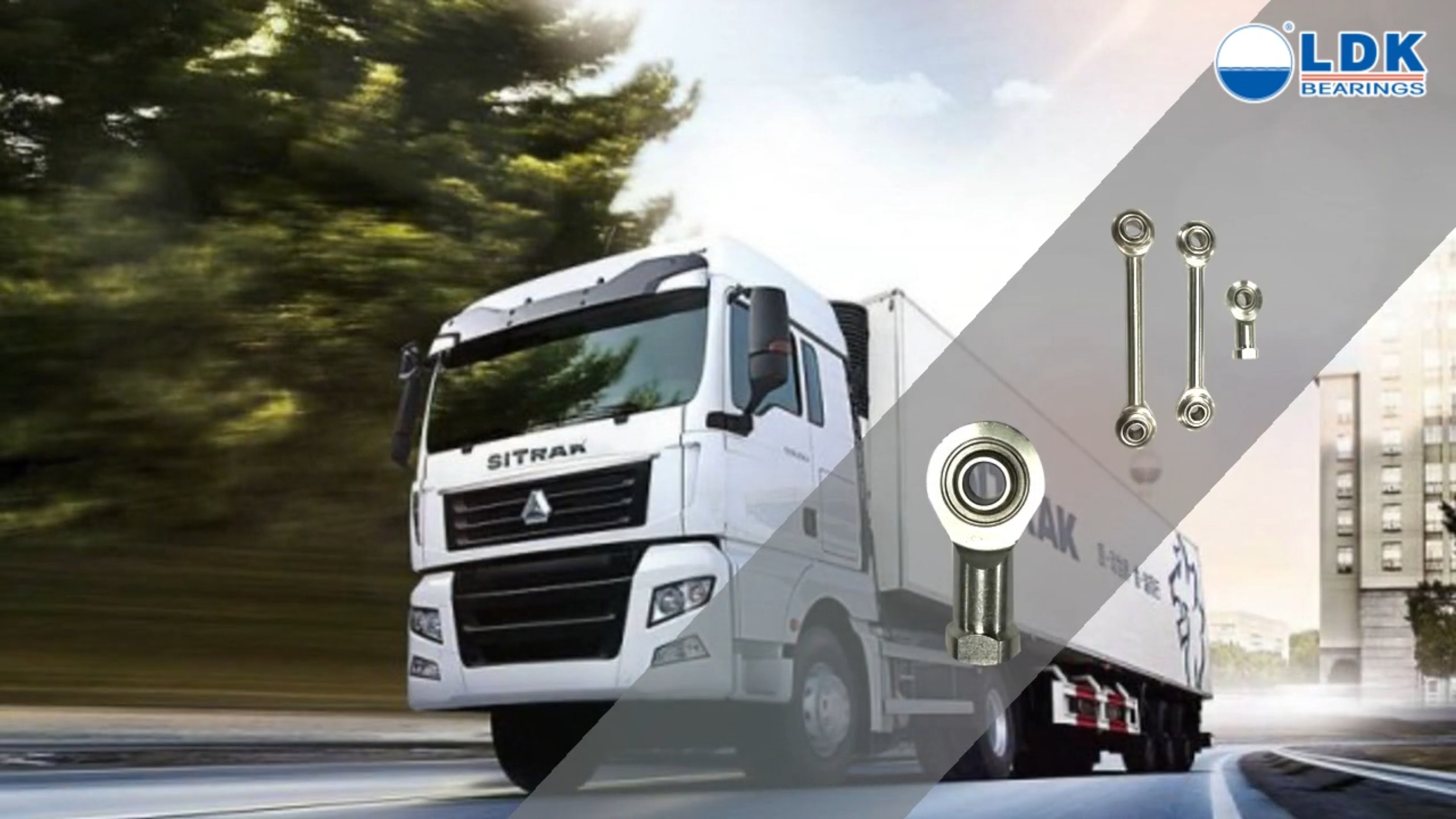
Rod ends and spherical plain bearings are small components with a critical function: they transmit motion while allowing angular misalignment between connected parts. Selecting them for a project is rarely about picking a part number from a catalogue — it is about matching the bearing's internal design, materials, and sealing to the actual operating environment.
For engineers and procurement teams moving from research into supplier evaluation, the key question is not simply “which rod end is stronger” but “which configuration will survive the specific combination of loads, contaminants, temperatures, and maintenance constraints expected in this application.” This guide explains how project conditions translate into rod-end specifications, using examples from industries where failure is not an option.
Why Project Conditions Drive Rod-End Selection
Off-the-shelf rod ends are designed for general use. They work in modest temperatures, clean indoor environments, and moderate loads. But real-world projects often push beyond those boundaries — a solar tracker exposed to UV and salt spray, a textile machine running 24/7 in a dusty mill, a hydraulic cylinder on an excavator operating in mud, or a steering link on a race car absorbing repeated shock.
Each of these environments changes the engineering priority. A maintenance-free PTFE-lined bearing may be essential where re-lubrication is impossible. Stainless steel or specialty coatings become mandatory where corrosion is the dominant failure mode. High-load, oscillating movements require steel-on-steel sliding surfaces with a hardened and phosphated inner ring. The selection process therefore begins with a clear profile of the application's operating conditions.
Core Criteria for Project-Specific Matching
When evaluating rod ends and spherical plain bearings for a particular project, specifiers typically assess the following factors:
- Load type and magnitude — radial, axial, or combined; steady or shock loading. Heavy-duty series such as LDK's GEG..E(S) are designed for higher loads than standard GE..E(S) types.
- Motion profile — oscillating, rotating, or reciprocating. High-frequency, small-angle oscillation is common in hydraulic cylinders and suspension links.
- Temperature range — from cold storage at -50°C to engine-bay environments up to 300°C. Lubricant and liner materials must be compatible with the extremes.
- Contamination and sealing — dust, mud, water, chemicals, and fibre-lint all affect wear. Sealed 2RS designs help retain lubricant and block particle ingress.
- Maintenance access — maintenance-free designs (e.g., steel/PTFE composite) avoid the need for periodic greasing; re-greasable designs (steel/steel with lubrication holes) are preferred where extended service life under heavy load is required.
- Thread direction and mounting — left-hand threads, fine pitches, and male/female variants must align with the connecting rod and assembly process.
The table below summarises how different industries prioritise these criteria, based on operating data collected from typical installations.
| Industry | Operating Environment | Critical Requirements | Common Rod-End Families |
|---|---|---|---|
| Heavy Trucks | All-terrain; -30°C to +100°C; salt spray; heavy vibration | Corrosion resistance, heavy load capacity, sealing against mud/water | SCHS, SCOS, SI..ET-2RS, Rod End Linkages |
| Construction Equipment | Outdoor dust, mud, 24/7, high impact | Self-aligning, sealed, large misalignment capability | Hydraulic rod ends SK..E(S), SF..ES, GE..ES |
| Textile Machinery | Indoor fibre dust, high humidity, high speed, 24/7 | Sealing against fibre, anti-rust, anti-wear | CHS, COS, SCHS, SCOS |
| Solar Tracking | Outdoor UV, dust, humidity, -20°C to +60°C | Corrosion resistance, self-lubricating, maintenance-free | SGE..C, GE..C, SA..C, SI..C |
| 4x4 Off-Road | Mud, sand, water immersion, high impact, -20°C to +50°C | High strength, precision, sealing, maintenance-free | NXF, NXM, JMX..T, JFX..T |
| Recreational Vehicles / Go-Kart | Outdoor track, high lateral force, high acceleration | High-strength housing, high load capacity, easy replacement | CF, CM, CHS, COS, JMX..T, JFX..T |
| Pneumatic Actuators | Indoor automation, moderate dust, high cycle frequency | Low friction, wear resistance, compensation of misalignment | SI..E(S), SA..E(S), SI..C, ball joints |
Reading a Rod End Specification
Once the operating profile is defined, the specification sheet becomes a decision map. Take a typical metric rod end such as the LDK CHS series. The designation itself tells an experienced buyer that this is a three-piece rod end with a female thread, a steel/PTFE composite sliding surface, and a maintenance-free design. The shaft diameter range — for example, 3 mm to 30 mm — defines the bore size. The body material, ball hardness, and race liner determine the allowable load and environmental limits.
Material selection is especially important for corrosive projects. LDK's stainless steel series, such as SCHS and SCOS, use a SUS304 body with a 440 stainless steel ball that is heat-treated and precision-ground. These provide significantly better corrosion resistance than zinc-plated carbon steel, at a higher cost. For marine, food processing, or chemical plant environments, this is often the deciding factor.
For extreme temperatures, the liner system must be verified. PTFE composites generally perform well in moderate industrial ranges, while steel-on-steel sliding surfaces with MoS2 treatment are more appropriate for high-load, high-temperature applications. The heavy-truck engine-bay case referenced in LDK's application history used a stainless steel rod end with a PTFE composite liner to meet a -40°C to +300°C range and five million movement cycles.
Project Example: Heavy Trucks
A heavy truck OEM needed a rod end for connecting a pneumatic actuator to a lever in the engine bay — a harsh environment with temperature extremes, road vibration, and no possibility of periodic maintenance. The chosen component had to survive five million movements, resist wear, and operate without re-lubrication. This is a case where a standard carbon-steel rod end with grease fittings would have failed early. A stainless steel, maintenance-free rod end with a PTFE composite liner provided the required combination of temperature resistance and wear life.
This example illustrates why project-based selection matters: the application defined the material (stainless steel), the liner (PTFE composite), and the maintenance model (maintenance-free). No catalogue can prescribe that combination without knowing the operating conditions.
When Standard Parts Are Not Enough
Despite the wide variety of catalogue rod ends, some projects push beyond published limits. This is where a supplier's engineering capability becomes part of the evaluation. Buyers should ask whether the manufacturer can:
- Customise thread pitch, direction, or accuracy;
- Adjust the race liner material for specific friction or temperature targets;
- Supply pre-assembled rod end linkages with length adjustment;
- Provide design-for-manufacturing feedback during the prototype stage;
- Support quality audits and traceability requirements.
LDK, for example, positions itself as a high-tech enterprise with in-house production covering both bearings and housings. Its stated capabilities include IATF 16949 certification, a dedicated R&D team, fatigue life testing, tensile testing, noise and vibration testing, salt spray testing, and flexible manufacturing from low to high volume. For a buyer evaluating a long-term supply relationship, these facility-level facts matter more than a list of marketing adjectives.
Comparison with Traditional Distributor Sourcing
The traditional approach to sourcing rod ends is to buy standard catalogue items from a distributor. This has clear advantages: low minimum quantities, immediate availability, and predictable pricing. However, it has a structural limitation — the distributor is not the manufacturer. If the project requires a non-standard thread, a specific surface treatment, or a documented material certificate, the distributor must relay the request to a factory, often with a long response time and no engineering dialogue.
Working directly with a manufacturer like LDK changes the conversation. The buyer can access the factory's testing laboratory, discuss material alternatives, and request custom packaging or private labelling. But this does not come without trade-offs. Factory-direct projects typically involve higher minimum quantities (LDK's published MOQ is 5,000 units for custom products) and longer lead times (30–90 days). For a one-off prototype or a small repair order, a distributor is still the more practical route.
For high-volume OEM projects, however, the factory-direct model reduces total cost by eliminating intermediaries and allows early design involvement that prevents field failures. The decision between the two should be based on volume, customisation level, and the cost of unplanned downtime — not on the lowest unit price alone.
Market Trends Shaping Rod-End Selection
The rod ends market is expanding, with one 2025 estimate valuing it at USD 1.79 billion globally, and Asia Pacific dominating with a 42.3% revenue share. Automotive applications represent the largest demand segment, at roughly 38.5% of the market. In China, the bearing industry recorded 231.5 billion yuan in revenue in 2024, up 6.2% year-on-year. These figures point to a mature but growing component sector, where project-specific engineering is becoming a differentiator.
The push toward maintenance-free components, driven by difficult access and a desire to reduce lifecycle costs, is especially visible in renewable energy, off-road vehicles, and industrial automation. As one LDK application note states, the special requirement for precise motion transfer in automation is “durable with long maintenance-free intervals, easy maintenance, low noise, and precise motion transfer.” That demand profile is increasing across many industries.
Future Outlook: More Configurations, Earlier Collaboration
As machinery becomes more compact and operating windows grow wider, rod-end specifications will continue to diversify. The trend is already visible in the range of designs available from one manufacturer: inch and metric series, two-piece and three-piece constructions, steel/steel and steel/PTFE variants, injection-moulded nylon-race rod ends for light duty, and welded hydraulic rod ends for heavy loads. Buyers will benefit from involving the supplier at the concept stage, rather than treating rod ends as a last-minute purchase item.
For international buyers, working with a factory that has IATF 16949 accreditation and a documented test laboratory reduces the risk of hidden quality variation. It also creates a clear audit trail — essential for OEMs that need to demonstrate component traceability to their own customers.
Practical Questions Buyers Ask
A: A rod end integrates a spherical plain bearing into a housing with a threaded shank, allowing connection to a rod or cylinder. A spherical plain bearing is the bare radial or angular-contact element, installed inside a customer's housing. Rod ends are typically used at the end of a linkage; spherical plain bearings are used inside a machine frame or a hydraulic cylinder clevis.
A: Maintenance-free designs use a PTFE composite or fabric liner between the ball and the race, eliminating the need for periodic greasing. They suit sealed systems and difficult access areas. Re-greasable steel/steel rod ends have lubrication holes and grooves; they offer higher load capacity and longer life in heavy-duty, high-frequency applications, but require regular attention. If your equipment cannot be serviced, choose maintenance-free.
A: For salt spray, chemical washdown, or marine conditions, stainless steel rod ends with a 440 stainless steel ball and an SUS304 or 17-4PH body are recommended. Zinc-plated carbon steel offers only limited corrosion protection. Some suppliers also offer specialty coatings that can outperform conventional stainless steel in specific salt-spray tests, which can reduce the total cost of equipment ownership.
A: Yes, but the liner and lubricant must be rated for the temperature. PTFE fabric liners are used in moderate industrial heat, while steel/steel sliding surfaces with MoS2 treatment can operate at significantly higher temperatures. For example, a stainless steel rod end with a PTFE composite liner has been applied in a heavy-truck engine bay at temperatures from -40°C to 300°C, completing five million movements.
A: For factory-direct customisation — including custom threads, special materials, or bespoke packaging — lead times are usually 30 to 90 days, with a minimum order quantity of around 5,000 units. Standard catalogue items are naturally faster and available in smaller lots. Always confirm current lead times with the supplier, as they vary with production load and raw material supply.
A: Yes. LDK produces inch-series rod ends (e.g., CF, CM, NXF, NXM) with shaft diameters from 0.19" to 1", and metric-series rod ends (e.g., CHS, COS, SI.., SA..) from 3 mm to 80 mm. Stainless steel and heavy-duty versions are also available in both systems, as well as hydraulic rod ends up to 200 mm.
For specifiers and buyers evaluating LDK's rod ends and spherical plain bearings, the company's complete product and capability overview is available in their corporate brochure. You can download it directly: LDK Bearing Product Brochure.