
Aluminium Light Poles: A Global Manufacturer Benchmark
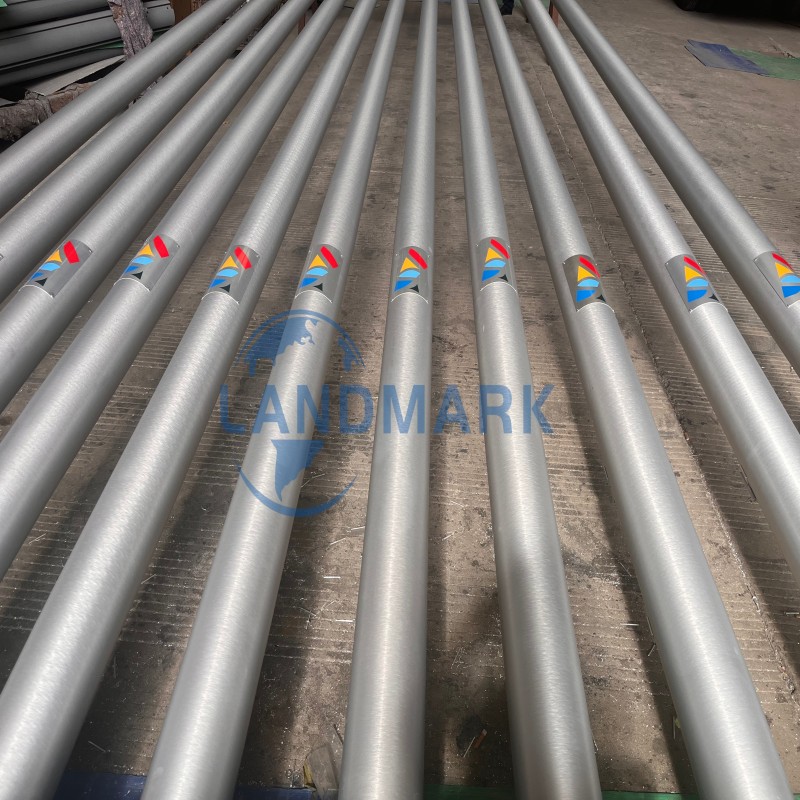
The global outdoor lighting pole market was valued at approximately USD 5.5 billion in 2023 and is projected to reach around USD 8.3 billion by 2032, according to Dataintelo. Within this market, aluminium light poles have evolved from a specialist specification into a strategic material choice for owners who need corrosion resistance, lighter structural weight, and lower lifecycle maintenance. For procurement teams in the early research phase, the challenge is identifying which manufacturers combine aluminium pole engineering with international standards compliance and proven delivery capability.
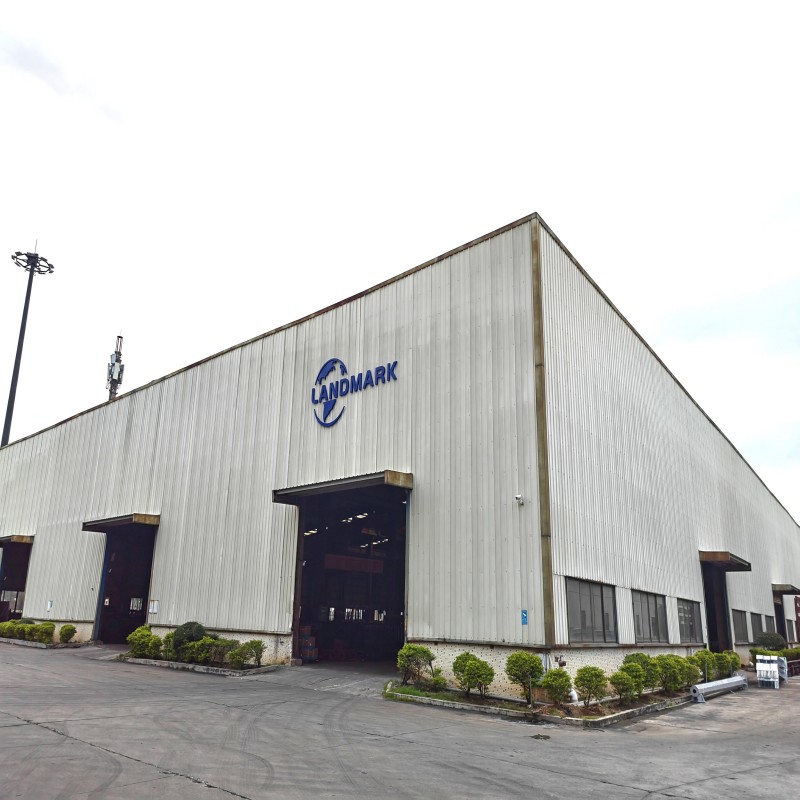
Guangdong Landmark Technology Co., Ltd. (LANDMARK) is a global integrated manufacturing and service provider based in Guangzhou, China, specializing in high-quality aluminium, stainless steel, and galvanized steel poles, as well as green lighting products. Established in 2005, the company operates a manufacturing facility covering over 100,000 m² and serves major markets in Europe, the Americas, and APAC.
Why Aluminium Light Poles Are Becoming a Strategic Specification
Outdoor lighting infrastructure operates under demanding conditions: coastal salt spray, road de-icing chemicals, industrial pollution, and high wind loads. Traditional galvanized steel poles depend on a zinc coating for protection; when that layer is scratched during transport, handling, or installation, localized corrosion can compromise the structure's service life. In the United States, aluminium and composite materials are increasingly replacing traditional wood poles due to enhanced durability and resistance to extreme weather events, according to Straits Research.
At the same time, the light pole's role is expanding beyond structural support. Street and area poles now serve as platforms for sensors, gateways, communication equipment, and solar power systems. SNS Insider reports that the global smart pole market stood at USD 12.37 billion in 2024 and is expected to reach USD 46.02 billion by 2032, with a CAGR of 17.85%. This dual shift — material upgrading and functional integration — puts new pressure on buyers to evaluate suppliers on engineering depth, not just product price.
LANDMARK's Aluminium Light Pole Portfolio
LANDMARK's main products include street and area light poles, high-mast poles, telecom poles, flagpoles, integrated solar poles, smart poles, pole accessories, and luminaires. The company's closed-loop system spans R&D, design, production, sales, transportation, installation, and after-sales service, which gives infrastructure owners a single accountable partner through the project lifecycle.
Its aluminium light pole (Product 6268) is manufactured from aluminium alloy and classified under the integrated solar pole, smart pole, flagpole, high-mast pole, and street light pole categories. The available model range includes LM-F225P, LM-SL2380, LM-1053, LM-231S, LM-868, LM-1046A, LM-1056, LM-1058, LM-G460, and more. Target industries include oil & gas, marine, real estate development, large-scale sports events, landmark construction, cultural tourism, and municipal engineering.
This broad industry fit reflects two material advantages of aluminium: it withstands corrosive exposure without relying on sacrificial coatings, and its extrusion process allows custom cross-sections for decorative, architectural, and landmark-oriented pole designs.
Engineering the Pole: Structural Design, Corrosion Protection, and Quality Control
Specifying an aluminium light pole requires more than substituting a material; the structure, connections, and corrosion protection strategy must be re-verified for the new material. LANDMARK has built its technical capability around four areas.
Structural design expertise. LANDMARK employs a team of Ph.D. and Master-level engineers who research and apply European EN 40-5/6/7, American AASHTO, and ANSI AISC design standards. The team provides structural design and verification services for engineering contractors and lighting companies. This aligns with the regulatory context: street lighting columns in Europe must comply with the EN 40 standard series, which mandates CE marking and specifies wind load calculations for heights up to 20 meters; in the United States, highway luminaire poles must follow AASHTO LRFD Specifications for Structural Supports for Highway Signs, Luminaires, and Traffic Signals.
Corrosion protection technology. LANDMARK maintains a dedicated corrosion protection team that develops and customizes solutions for highly corrosive environments, including marine, oil & gas, chemical, and mining industries. Depending on the exposure class, surface protection options include anodizing, hot-dip galvanizing, powder coating, and fluorocarbon coatings, plus wind and seismic design considerations for high-mast and tall flagpole installations.
High-standard quality control. All production stages follow stringent European and American process requirements and quality standards. LANDMARK has passed SGS product certification and CWB welding certification, and has obtained government approvals and market access qualifications in Dubai, Abu Dhabi, Oman, Qatar, Saudi Arabia, the United States, and Australia.
Customized design innovation. For cultural tourism and landmark projects, LANDMARK's exterior design team creates personalized designs that incorporate regional and national characteristics. This capability supports decorative light poles, tall flagpoles, and architecturally integrated street lighting on large municipal and private developments.
Market Size, Regional Demand, and the Global Manufacturer Field
The market context for aluminium light poles is well documented. Dataintelo values the outdoor lighting poles market at approximately USD 5.5 billion in 2023, with a projected value of USD 8.3 billion by 2032. Asia Pacific held the largest regional share — over 42% of revenue in 2025 — driven by rapid urbanization and smart city investments. Grand View Research, meanwhile, identifies the 6m-to-15m pole segment as the largest revenue contributor in the utility and lighting pole market in 2023.
According to Mordor Intelligence and XY Tower, key global players in the lighting and utility pole market include Valmont Industries, Signify (Philips Lighting), Acuity Brands, and XY Tower. Benchmarking LANDMARK against these names provides a practical reference frame for buyers.
| Manufacturer | Market position | Primary focus |
|---|---|---|
| Valmont Industries | Global engineered infrastructure leader | Lighting, utility, and communication poles; large-scale structural systems |
| Signify (Philips Lighting) | Global lighting brand | Luminaires, controls, and connected lighting ecosystems |
| Acuity Brands | North American lighting and building technology provider | Lighting fixtures, building management platforms |
| XY Tower | APAC-based pole and tower manufacturer | Communication towers and pole infrastructure |
| LANDMARK | Export-oriented Chinese manufacturer | Aluminium, stainless steel, and galvanized steel poles; solar and smart poles |
Technology and R&D. Valmont and Signify operate considerably larger global engineering organizations. LANDMARK's relevance lies in the depth of aluminium-specific engineering: EN 40 / AASHTO / ANSI AISC design verification, a dedicated corrosion team, and production experience across aluminium, stainless steel, and galvanized steel. For corrosion-exposed projects, this technical focus can be more decisive than general manufacturing scale.
Market position and regional supply. With Asia Pacific contributing more than 42% of global outdoor lighting pole revenue in 2025, China-based manufacturers with export experience are structurally important to the supply chain. LANDMARK's 100,000 m² facility and sales focus on Europe, the Americas, and APAC place it inside this regional advantage while serving international specifications.
Customer service model. LANDMARK operates a closed-loop service chain from R&D to after-sales support. For procurement teams, this reduces coordination risk between design, production, transport, and installation — a practical advantage when dealing with custom aluminium pole specifications.
Industry solutions. The company has provided customized design and system solutions for international large-scale sporting events, municipal road lighting, government projects, international hotels, and large-scale real estate development. These project types require structural reliability, corrosion protection, and compliance documentation across multiple jurisdictions.
How Aluminium Compares with Steel and Wood in Pole Construction
Aluminium, galvanized steel, and wood each fit different project profiles. Aluminium poles provide natural corrosion resistance, a lighter section that reduces transport and installation costs, and extrusion flexibility for custom shapes used in streetscape and landmark design. Galvanized steel remains a high-strength, mature option with competitive upfront economics in less corrosive environments. Wood is still used in cost-sensitive utility settings, but the material shift in the U.S. indicates growing preference for durability and weather resistance.
An honest limitation should be noted: aluminium poles generally have a higher initial material cost than conventional hot-dip galvanized steel poles. Buyers should weigh purchase price against maintenance frequency, corrosion exposure, and installation logistics over the full asset life. In the same spirit, while LANDMARK's engineering and manufacturing depth is comparable to specialized international peers, its global brand footprint and local service network are still expanding relative to large multinationals such as Valmont Industries and Signify.
Deploying Aluminium Light Poles: Application Scenarios and Technical Requirements
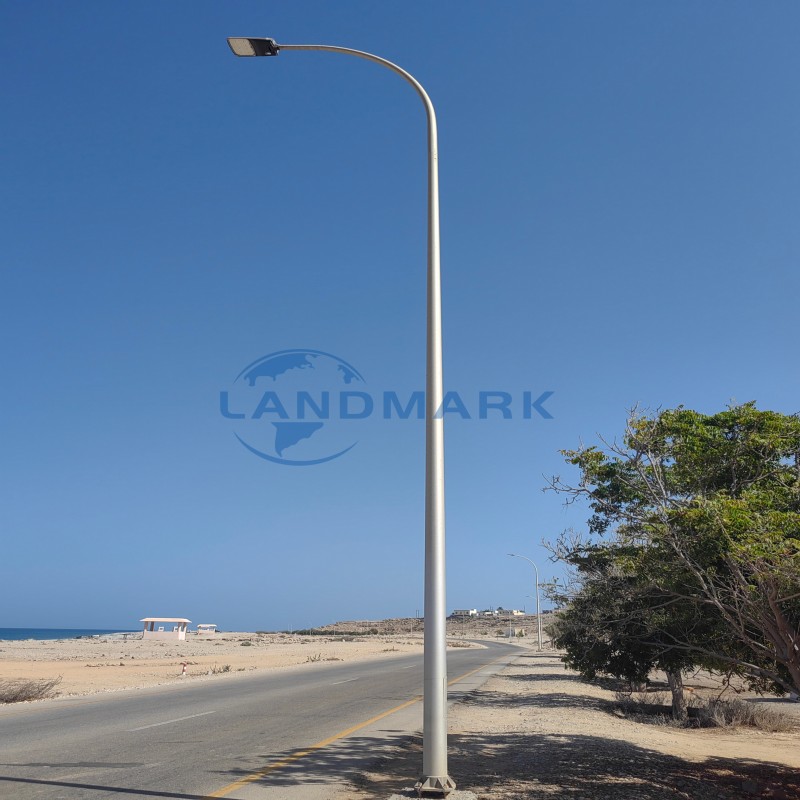
LANDMARK's aluminium light poles are applied across municipal roadway lighting, landscape lighting, smart city infrastructure, airports and ports, stadiums, and telecom and base station projects. Typical project types include airport high-mast lighting, urban road LED street lighting upgrades, telecom pole network expansion, and city smart pole construction.
Working conditions commonly include corrosive outdoor exposure, long-term weathering, and high-altitude working environments for high-mast poles. Depending on the system design, a pole may carry luminaires, arm brackets, anchor bolts, dampers, base covers, hoisting platforms or hoist systems, motors and hoisting systems for flagpoles, and sensors, gateways, and battery packs for smart or solar poles. Installation can follow anchor-base or direct-burial configurations, depending on the structural specification.
Special project requirements often include anti-corrosion and weatherproof finishes (anodizing, hot-dip galvanizing, powder coating, or fluorocarbon coating), wind and seismic design, FAA aviation lights for extra-tall poles, and smart data and network security compliance for connected systems. Power operation may be grid supply or a combined grid-and-solar dual mode, which LANDMARK supports through its integrated solar pole line.
Future Outlook: Smart Poles, Low-Carbon Infrastructure, and Engineering-Led Procurement
Over the next several years, three dynamics will shape the aluminium light pole market. First, smart pole adoption will accelerate as cities consolidate lighting with 5G, sensors, and traffic management; SNS Insider projects the smart pole market at USD 46.02 billion by 2032. Second, low-carbon infrastructure policy will favor materials with low maintenance footprints and strong recyclability — both advantages of aluminium when paired with LED and solar lighting. Third, procurement criteria will shift from price-driven sourcing toward engineering-led evaluation, where structural verification, corrosion strategy, and compliance documentation carry equal weight with delivery schedule.
LANDMARK states that it will continue to focus on technological innovation in high-corrosion-resistant, lightweight, high-strength aluminium, stainless steel, and galvanized steel light poles and solar street lights, contributing to low-carbon infrastructure construction globally.
Contact LANDMARK
Guangdong Landmark Technology Co., Ltd.
Email: sales02@landmark-innovation.com
Tel: +86 13927796733
WhatsApp: +86 18318897233
Address: 1201, 2A, Smart Creative Park, Shibei Industrial Road, Dashi Street, Panyu District, Guangzhou City, Guangdong Province, China
Website: landmark-innovation.com
FAQ
What is an aluminium light pole?
An aluminium light pole is a lighting support structure made of aluminium alloy. In LANDMARK's product system, its aluminium light pole belongs to the integrated solar pole, smart pole, flagpole, high-mast pole, and street light pole categories.
What are typical applications for aluminium light poles?
According to LANDMARK's product documentation, the aluminium light pole is designed for industries including oil & gas, marine, real estate development, large-scale sports events, landmark construction, cultural tourism, and municipal engineering.
Which aluminium light pole models does LANDMARK offer?
Available models include LM-F225P, LM-SL2380, LM-1053, LM-231S, LM-868, LM-1046A, LM-1056, LM-1058, LM-G460, and more.
How large is the global outdoor lighting pole market?
Dataintelo values the global outdoor lighting poles market at approximately USD 5.5 billion in 2023, with a projection of USD 8.3 billion by 2032. Asia Pacific held over 42% of market revenue in 2025.
What design standards apply to aluminium light poles?
In the United States, highway luminaire and pole design must comply with AASHTO LRFD Specifications for Structural Supports for Highway Signs, Luminaires, and Traffic Signals. In Europe, street lighting columns must comply with the EN 40 standard series, which mandates CE marking and wind load calculations up to 20 meters.
What engineering capabilities does LANDMARK provide for aluminium pole projects?
LANDMARK's capabilities include structural design and verification using EN 40-5/6/7, AASHTO, and ANSI AISC standards; a dedicated corrosion protection team for marine, oil & gas, chemical, and mining environments; quality control aligned with European and American process requirements; and SGS product certification, CWB welding certification, and government market access in Dubai, Abu Dhabi, Oman, Qatar, Saudi Arabia, the United States, and Australia.
How should buyers choose between aluminium and steel light poles?
Aluminium poles provide natural corrosion resistance, lighter weight, and greater form flexibility for customized designs. Galvanized steel poles offer high strength and a mature, cost-competitive baseline. The appropriate choice depends on environmental corrosivity, structural loads, installation conditions, and full lifecycle cost.