
Aluminized vs. Budget Sunscreen Fabric: Where Each One Fits
Sunscreen fabric is usually bought as a commodity and specified as a component. Those two decisions are rarely made by the same person, and the distance between them is where shading projects lose performance.
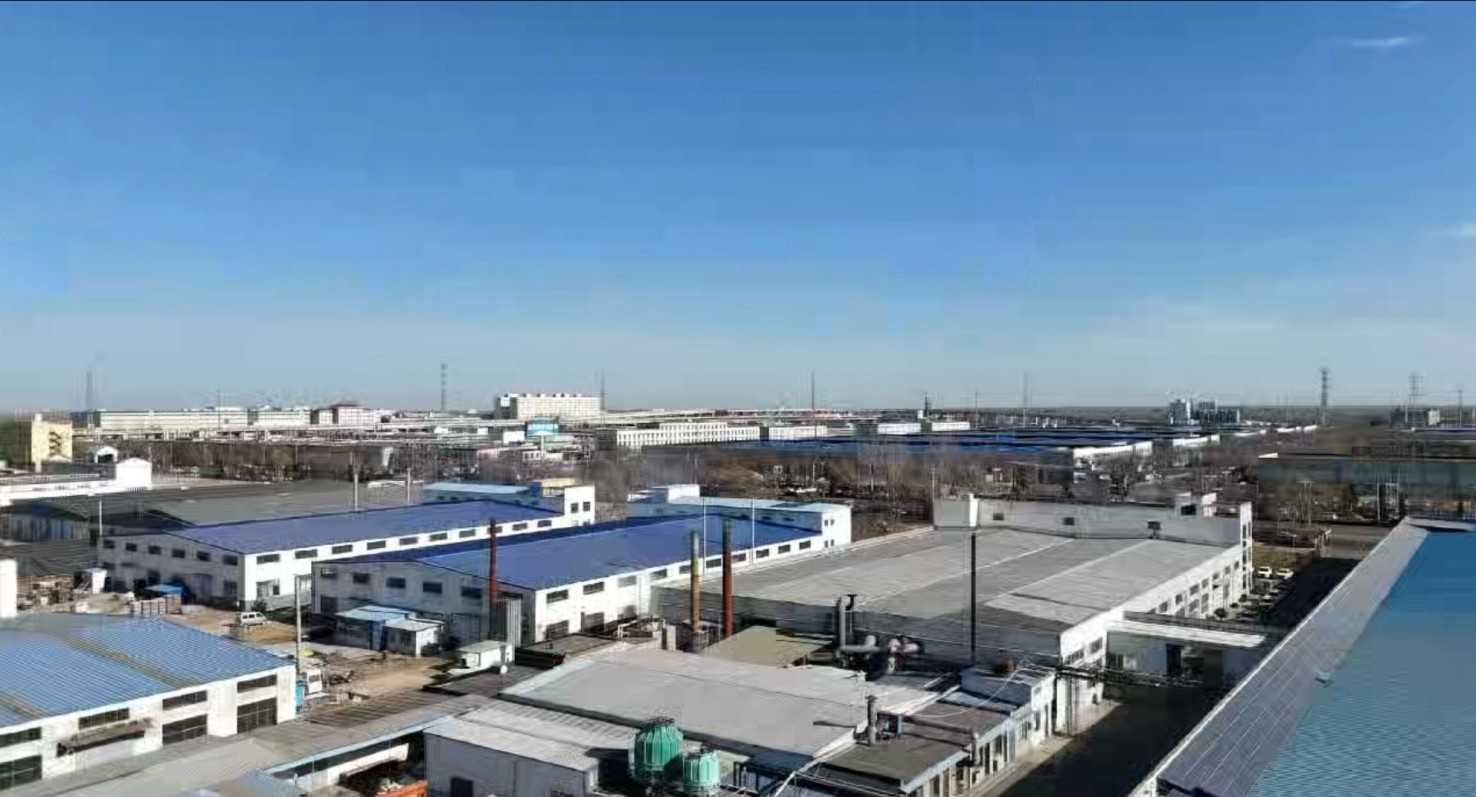
Sunshade fabric production at Elitex (Dezhou) Co., Ltd., a manufacturer of sunscreen, translucent and blackout fabrics established in 2003.
Elitex (Dezhou) Co., Ltd. is a Chinese manufacturer of sunshade fabrics, established in 2003 and operating an 85,000 m² production site with 259 employees, including a 36-engineer R&D team. The company produces sunscreen, translucent and blackout fabrics for the international blind and awning industry, reports an export share of around 80%, and lists main markets in the USA, the EU, Australia, North America, South East Asia and the Middle East.
Two fabrics in that range sit at opposite ends of the specification scale. Aluminized Sunscreen Fabric, sold as the Aluminized Silver Screen Series, is a high-reflective fabric designed around solar control. Budget Sunscreen Fabric, sold as the Elitex Super 6 Series, is a 100% polyester fabric designed around openness choice, width availability and colour range. They are not interchangeable versions of one product. They answer different briefs, and the purpose of this guide is to show where the line falls.
The Specification Gap That Drives Most Screen Fabric Regret
Shading failures in this category rarely come from a bad fabric. They come from a fabric that was correct for one brief and installed into another. Two patterns account for most of them.
Over-specification. A high-reflective fabric goes into a decor-led interior where nobody measures heat gain but everyone notices the finish. The project pays for solar performance it never verifies and gives up the attribute it actually needs. The available specification data for the Aluminized Silver Screen Series does not list a colour range, while the Elitex Super 6 Series lists 20+ popular colours — a difference that matters in hospitality and residential work and does not matter at all on a west-facing atrium.
Under-specification. A budget fabric goes into glazing with a heat-gain target, because the two fabrics look similarly neutral on a sample card and the price difference is easy to defend. The published data for the Elitex Super 6 Series does not include a reflectivity figure or a solar heat gain coefficient. Where a project writes either figure into its specification, that absence is the deciding fact.
The practical opportunity is sequence. Environment, then installation geometry, then performance expectation, then material. Running that order takes about as long as comparing prices and produces a defensible specification note.
Two Fabrics From One Manufacturer, Built for Different Briefs
Both fabrics share a polyester base and a common manufacturing origin, which is why buyers often treat them as a price ladder. The published specifications show why they are better read as two separate tools.
| Parameter | Aluminized Sunscreen Fabric (Aluminized Silver Screen Series) | Budget Sunscreen Fabric (Elitex Super 6 Series) |
|---|---|---|
| Fabric type | High reflective sunscreen fabric | Budget sunscreen fabric |
| Material | Polyester with aluminized coating | 100% polyester |
| Reflectivity | ≥85% | Not stated in the available data |
| Solar heat gain coefficient | ≤0.2 | Not stated in the available data |
| Openness | 3%–5% | 1%, 3%, 5%, 10% |
| Width | 2000 mm–3000 mm | 2000 mm, 2500 mm |
| Weave type | Not stated in the available data | Basket weave / twill weave |
| Colour range | Not stated in the available data | 20+ popular colours |
| Stated applicable industries | Commercial building, green building, high-temperature space | Residential, commercial, hospitality |
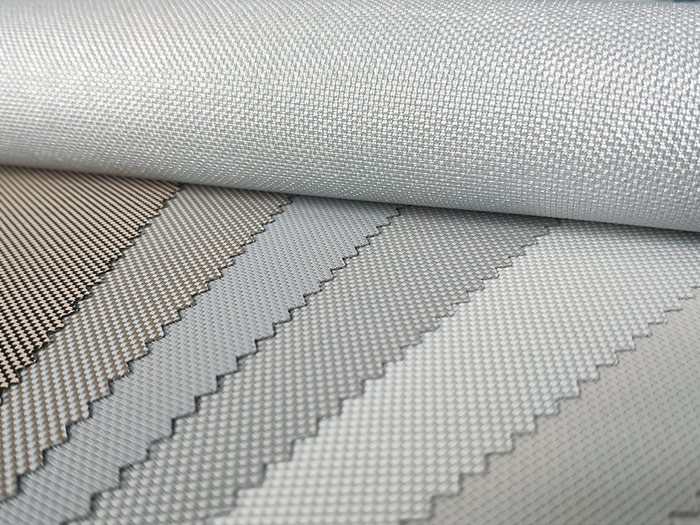
Aluminized Sunscreen Fabric (Aluminized Silver Screen Series): polyester with aluminized coating, reflectivity ≥85%, solar heat gain coefficient ≤0.2, openness 3%–5%, width 2000–3000 mm.
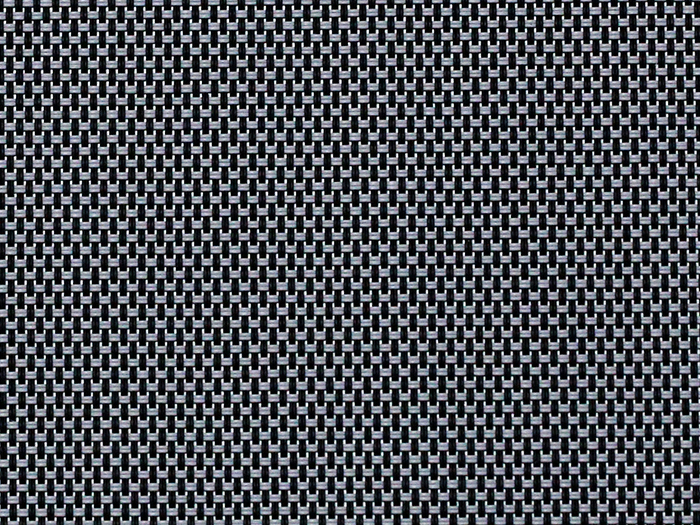
Budget Sunscreen Fabric (Elitex Super 6 Series): 100% polyester, basket or twill weave, openness 1%, 3%, 5% or 10%, widths 2000 mm and 2500 mm, 20+ popular colours.
Reading the Technical Differences That Actually Matter
Reflectivity and solar heat gain coefficient
Reflectivity describes how much incident solar radiation a fabric surface returns rather than absorbs. The Aluminized Silver Screen Series states ≥85%, which places it in the reflective class rather than the absorptive class — the aluminized coating is the mechanism, not a decorative finish.
Solar heat gain coefficient (SHGC) describes the fraction of incident solar heat that passes through the whole assembly. The stated value of ≤0.2 for the same fabric is the figure a mechanical or façade engineer can work with directly, because it is expressed in the same units as the rest of the building envelope calculation.
These two numbers are what separate a solar-control specification from a shading intention. Where a project brief contains a heat-gain target, a fabric without published values cannot be defended in the specification review, however well it performs on site.
Openness factor
Openness is the proportion of the fabric area that remains open. It governs outward vision, perceived brightness and the amount of direct view through the weave — not the amount of heat rejected.
The Aluminized Silver Screen Series is offered at 3%–5%, a narrow band. The Elitex Super 6 Series is offered at 1%, 3%, 5% and 10%, a deliberate spread. The 1% option supports interior privacy and a darker room; the 10% option supports a more open view. Neither openness range is inherently better: a narrow range simplifies specification and a wide range covers more briefs.
Width and seam planning
The Aluminized Silver Screen Series runs from 2000 mm to 3000 mm. The Elitex Super 6 Series is offered at 2000 mm and 2500 mm. On full-height glazing and wide roller blinds, the wider range can remove a horizontal join that would otherwise fall across the sightline — a detail that is cheap at specification stage and expensive after installation.
Weave, coating and surface
The Elitex Super 6 Series is produced in basket weave and twill weave, which gives specifiers a choice of surface character in addition to colour. The Aluminized Silver Screen Series is defined by its aluminized coating, so its visual identity is tied to that coating rather than to a weave or colour menu. Buyers comparing samples side by side should treat this as a functional difference, not a finish preference.
Matching Fabric to Application
Architectural shading: commercial facades, atria and green building projects
This is the clearest fit for the Aluminized Silver Screen Series. Its stated applicable industries include commercial building and green building, and the combination of reflectivity ≥85%, SHGC ≤0.2, openness of 3%–5% and widths to 3000 mm maps onto large glazed areas where heat rejection is a design parameter rather than a comfort preference. Interior roller blind systems, awning frames and window systems are the matched equipment class for this type of installation.
High-temperature and industrial spaces
High-temperature space is listed among the applicable industries for the Aluminized Silver Screen Series. In these settings the reflective surface does the work that colour or texture cannot, and the narrow openness band is an advantage because it reduces the direct radiant path through the fabric.
Residential and hospitality interiors
This is the natural territory of the Elitex Super 6 Series, whose stated applicable industries are residential, commercial and hospitality. The 1% openness option covers bedrooms and privacy-sensitive rooms; the 3%, 5% and 10% options cover living areas and glazed commercial interiors where view retention matters more than heat rejection; the 20+ colour range allows the fabric to be selected against an interior palette.
Wide-format roller blinds and awning systems
Where a blind exceeds 2500 mm in width, the Aluminized Silver Screen Series extends to 3000 mm and is the only one of the two that reaches that span in the published data. Where the blind stays within 2000 mm or 2500 mm widths, the Super 6 Series offers four openness levels and a full colour range at the same nominal width.
Agricultural and horticultural shading
Agricultural shading is a recurring request in this category, and it needs an explicit caveat rather than an assumption. Neither fabric lists agriculture among its applicable industries in the available data. Cropping environments add dust loading, chemical exposure and structural movement that fall outside the stated scope of both products, so suitability should be confirmed with the manufacturer against the actual greenhouse or shade-house condition instead of being inferred from the fabric's general shading role.
Temporary and relocatable installations
Temporary structures — event awnings, seasonal installations, short-cycle retrofit trials — are usually decided on unit cost. The available data does not provide a comparative service-life or weathering result for these two fabrics, so a temporary brief cannot be settled by assuming one outlasts the other. The usable boundary is different: if the temporary structure still carries a solar-control requirement, the aluminized fabric keeps that requirement inside the product specification. If the brief is appearance-led and time-limited, the Super 6 Series offers the colour and openness menu.
Application Decision Matrix
| Application | Environment and installation | Indicated fabric | Basis in the product data | Confirm before ordering |
|---|---|---|---|---|
| Commercial facade and atrium glazing | Exterior, high UV exposure, large glazed span | Aluminized Silver Screen Series | Reflectivity ≥85%, SHGC ≤0.2, openness 3%–5%, width to 3000 mm | Roller mechanism fixing detail and seam layout |
| Green building and energy-saving projects | Exterior or interstitial, declared performance target | Aluminized Silver Screen Series | Stated SHGC ≤0.2 supports a heat-gain brief | Project-specific thermal and visual comfort classification |
| High-temperature space | Industrial interior, radiant heat source | Aluminized Silver Screen Series | High-temperature space is a stated applicable industry | Mounting distance and fixing temperature limits |
| Residential roller blind | Indoor, decor-led, privacy-sensitive rooms | Elitex Super 6 Series | 1% openness option, 20+ colours, widths 2000/2500 mm | Colour selection and light fastness for the chosen colour |
| Hospitality and commercial interior | Indoor, appearance and view balanced | Elitex Super 6 Series | Openness 1%/3%/5%/10%, basket or twill weave | Whether a heat-gain target also applies to the space |
| Wide-format roller blind above 2500 mm | Indoor or outdoor, full-height glazing | Aluminized Silver Screen Series | Width range 2000 mm–3000 mm | Availability of the required width in the chosen openness |
| Agricultural and horticultural shading | Greenhouse, dust, chemical exposure | Not established in the available data | Neither product lists agriculture among applicable industries | Validate suitability with the manufacturer |
| Temporary or event installation | Short service cycle, cost-capped | Depends on whether a solar target applies | No comparative service-life data available | Sample evaluation under the intended exposure |
How These Two Options Compare With Established Alternatives
Sunscreen fabric is one answer to a shading brief, not the only one. Reading these two products against established alternatives clarifies what each is genuinely for.
Against fixed external shading. Louvres and brise-soleil solve solar control at the building envelope and do not depend on a fabric surface that can be damaged or replaced. They are decided during design, however, and are rarely retrofittable into an existing window. Fabric systems remain the practical route for existing buildings, for rented spaces and for glazing that has to remain operable.
Against acrylic awning fabrics. Acrylic holds the largest revenue share of the global outdoor fabric market, at 39.7% in 2024, which reflects its established role in retractable awnings. The functional split is straightforward: awning fabrics are typically closed surfaces providing full shade and rain shedding, while screen fabrics are open-weave surfaces that shade while preserving outward vision. A project that needs view retention is a screen fabric brief, not an awning fabric brief.
Against blockout fabrics. When the requirement is darkness rather than shading, neither fabric here substitutes. Elitex produces a separate blockout family — the Elitex Blockout Dusk Plus Series — specified at 100% opacity with no pinhole, in 100% polyester with acrylic coating, for home theatre, bedroom, office and hospitality applications. Buying a low-openness sunscreen fabric to solve a blackout requirement is a common and avoidable specification error.
Where both fabrics have limits. Three boundaries are worth stating plainly. First, the Aluminized Silver Screen Series is published only at 3%–5% openness, so it cannot deliver the 1% privacy option or the 10% open view that the Super 6 Series covers. Second, the Super 6 Series has no published reflectivity or solar heat gain coefficient in the available data, so it cannot be proposed against a quantified solar-control specification. Third, neither fabric's available data states fire retardancy, anti-fade performance, anti-mildew treatment, antimony status or halogen status; the application data lists fire retardant, anti-fade, anti-mildew and customisable as project-level special requirements, which means they must be confirmed for the specific product rather than assumed from the fabric family.
What the Market Data Says About Shading Specification
The global fabric solar shading systems market is valued at approximately USD 1.35 billion in 2026, with projected growth to USD 2.14 billion by 2035, according to the Fabric Solar Shading Systems Market Report 2035 published by Reports and Data. A category of that size is no longer specified informally, and the pressure shows in how products are documented.
EN 14501:2021, the governing European standard for thermal and visual comfort performance of solar protection devices, ranks products on a 0–4 scale. A classification scale of that kind pushes buyers toward declared values and away from descriptive claims — which favours fabrics that publish reflectivity and SHGC, and disadvantages fabrics that publish neither when both are being compared for the same opening.
Material health is moving on a parallel track. The antimony-free polyester market is projected to reach USD 1.07 billion by 2030, driven by EU REACH and FDA regulations limiting heavy metal migration, according to MarketsandMarkets. Cradle to Cradle Certified® V4.0 at Material Health Gold level has been awarded to specialised textile fibres, confirming that the certification framework is already active inside textile supply chains. For screen fabric buyers, the practical consequence is a documentation request rather than a material request: ask for the certificate that covers the specific fabric, not the certificate that covers the fibre category.
For context on the adjacent segment, Grand View Research puts the global outdoor fabric market at USD 13.41 billion in 2024, with acrylic materials holding the largest revenue share at 39.7%. Screen fabrics occupy a different performance position within that broader market, which is exactly why the two categories should not be priced against each other without a functional comparison.
Future Outlook
Three directions look likely to shape how these two fabric families are specified over the next several years.
Declared performance becomes the entry ticket. As classification frameworks such as EN 14501:2021 spread through façade and interiors specification, the fabrics that get shortlisted will be the ones with numbers attached. Reflective products are structurally advantaged here, and budget products will increasingly need published values to compete in projects rather than in catalogues.
Material compliance moves from fibre to fabric. Antimony-free and halogen-free requirements are currently discussed at the polymer level, but the regulatory logic behind them — EU REACH and FDA limits on heavy metal migration — applies to the finished article. Buyers should expect product-specific declarations rather than category-level assurances.
Wide-width demand continues. Where glazing spans grow and seam-free sightlines are valued, widths in the 3000 mm class reduce fabrication steps. That favours manufacturers whose equipment already covers the range, and it makes width a specification line item rather than an afterthought.
None of this changes the underlying decision rule. Environment first, installation geometry second, performance expectation third, material last. A buyer who keeps that order will find that the aluminized and budget ends of the range rarely compete directly — they simply belong to different projects.
FAQ
What is the difference between aluminized sunscreen fabric and budget sunscreen fabric?
Aluminized Sunscreen Fabric, supplied as the Aluminized Silver Screen Series, is a high-reflective sunscreen fabric made of polyester with an aluminized coating, with reflectivity of ≥85%, a solar heat gain coefficient of ≤0.2, openness of 3%–5% and widths of 2000 mm–3000 mm. Budget Sunscreen Fabric, supplied as the Elitex Super 6 Series, is a 100% polyester fabric in basket or twill weave, with openness options of 1%, 3%, 5% and 10%, widths of 2000 mm and 2500 mm, and 20+ popular colours. The first is defined by solar performance values; the second by openness choice, width and colour range.
Which fabric should be used for commercial building glazing with a heat-gain target?
Where a project specifies solar control, the Aluminized Silver Screen Series is the appropriate choice from this range, because it is the only one of the two with a published reflectivity of ≥85% and a solar heat gain coefficient of ≤0.2. Its stated applicable industries include commercial building and green building, and its width range to 3000 mm suits large glazed spans. The Elitex Super 6 Series does not publish reflectivity or SHGC values in the available data, so it cannot be defended against a quantified heat-gain specification.
How does the openness factor affect the choice between the two fabrics?
Openness governs outward vision and perceived brightness, not heat rejection. The Aluminized Silver Screen Series is offered at 3%–5%, a narrow band suited to projects where the view requirement is fixed and solar control dominates. The Elitex Super 6 Series is offered at 1%, 3%, 5% and 10%: 1% supports privacy and a darker interior, while 10% supports a more open view. A project needing high privacy plus heat rejection therefore involves a trade-off between the two, not a single obvious answer.
Is the Elitex Super 6 Series suitable for outdoor installations?
The available specification data lists residential, commercial and hospitality as its applicable industries, and the associated application data covers indoor and outdoor working conditions with UV protection, heat insulation, privacy, light control and energy saving as functions. Outdoor exposure requirements vary by project, and the product data does not publish a weathering or service-life result, so outdoor suitability for a specific elevation should be confirmed with the manufacturer rather than assumed from the fabric category.
Why does fabric width matter in a shading specification?
Width determines whether a roller blind or shade can be produced without a horizontal join. The Aluminized Silver Screen Series is available from 2000 mm to 3000 mm, while the Elitex Super 6 Series is available at 2000 mm and 2500 mm. On full-height or wide glazing, the 3000 mm capability can remove a seam that would otherwise cross the sightline, which is easier to plan at specification stage than to correct after installation.
Which standards and certifications should a buyer reference when comparing screen fabrics?
EN 14501:2021 is the European standard governing the thermal and visual comfort performance of solar protection devices and classifies products on a 0–4 scale, making it the natural reference for performance comparison. For material health, Cradle to Cradle Certified® V4.0 at Material Health Gold level has been awarded to specialised textile fibres, and the antimony-free polyester segment is expanding under EU REACH and FDA limits on heavy metal migration. Buyers should request documentation that covers the specific fabric rather than the fibre category, and should separately confirm project-level requirements such as fire retardancy, anti-fade and anti-mildew performance, which the available product data for these two fabrics does not state.
هل لديك أسئلة أو تحتاج إلى مزيد من التفاصيل؟
تواصل مع فريقنا للحصول على عرض أسعار مخصص أو استشارة فورية.
طلب عرض أسعار
املأ النموذج أدناه وسيتواصل معك فريقنا بعرض مقترح مخصص.
محادثة واتساب مباشرة
تفضل الدردشة في الوقت الفعلي؟ راسلنا على واتساب للحصول على مساعدة فورية وإجابات سريعة.
- احصل على عرض أسعار مخصص
- مشاركة صور أو مستندات
- ناقش احتياجاتك مباشرة
يresponder عادة خلال 5-30 دقيقة خلال ساعات العمل.