
Aluminum Boat Buyer's Checklist: Certifications, Specs, and Custom Build
Industry Reference / Aluminum Boat Procurement
Aluminum boats have moved from a specialized niche to a mainstream procurement category for governments, commercial operators, and private buyers. The global aluminum vessel market was estimated at USD 6.145 billion in 2024, and the aluminum fishing boat segment alone was valued at USD 1.7 billion. But buying an aluminum boat is not the same as buying a fiberglass or steel boat. The alloy grade, welding standard, certification scope, and customization process determine whether the vessel delivers the expected service life, performance, and regulatory acceptance. This article provides a procurement-oriented reference for buyers evaluating aluminum boat suppliers, using the documented production and certification practices of Qingdao Dookyu Crown Marine Co., Ltd. (Dookyu Crown) as a working example.
A professional boat building operation showing welded aluminum hull construction and workshop environment.
What Defines a Commercial-Grade Aluminum Boat
In the commercial segment, an aluminum boat is evaluated on four dimensions: hull material, structural workmanship, certification coverage, and lifecycle support. Marine-grade aluminum alloys such as 5083 and 5086 are widely used because they combine light weight with corrosion resistance and structural strength. Dookyu Crown states that it uses marine-grade aluminum such as 5083 and 5086 alloys to produce vessels that are lightweight and corrosion-resistant.
For procurement, the key question is not simply “is it aluminum?” but “which alloy, welded with what procedure, and certified against which standard?” A supplier that cannot document the alloy, the welding process, and the certification scope should be treated as a higher-risk option.
Why Certifications Decide Market Access
Aluminum boats are often exported across borders, and regulatory acceptance varies by market. In the EU context, recreational craft are subject to Directive 2013/53/EU, with stability and buoyancy assessments carried out under standards such as EN ISO 12217-1 and EN ISO 12217-3. Electromagnetic compatibility for onboard electrical and electronic systems is addressed under EN IEC 61000-6-1 and EN IEC 61000-6-3.
Dookyu Crown holds documented certification for multiple vessel series from ECM, with two certification numbers available for buyer verification:
- Certification number 0P250716.QDCTN80 – Voluntary Attestation for Recreational Craft, issued by ECM, covering multiple series of aluminum/steel/fiberglass boats, certified to EN ISO 12217-1:2017 and EN ISO 12217-3:2017 under Regulation (EU) 2013/53/EU.
- Certification number 0P250716.QDCTN81 – Voluntary EMC Certificate, issued by ECM, against CE-EMC Directive 2014/30/EU, referencing EN IEC 61000-6-1:2019 and EN IEC 61000-6-3:2021.
Both certificates apply to global third-country markets outside the EU and cover multiple vessel series, including the 6.25m Aluminum Alloy Fishing Boat, the 11m Aluminum Alloy Cruiser Boat, the 13m Aluminum Rescue Fire Boat, the 17m Aluminum Luxury Yacht, the 19m Passenger Catamaran Boat, and the 38-foot Catamaran Aluminum Sailboat. For buyers, this means the same hull series can be referenced for EU-style compliance documentation in non-EU markets, which simplifies tenders and import documentation in many countries.
Reading a Specification Sheet Like a Buyer
A specification sheet is useful only if the buyer can translate it into operating expectations. The examples below use Dookyu Crown’s published specifications to illustrate how different intended missions produce different design priorities.
6.25m Aluminum Alloy Fishing Boat (DK-FS)
This vessel is built for coastal, lake, and river fishing. It measures 6.25m in total length, with a beam of 2.25m, a moulded depth of 1.1m, and a designed draft of 0.35m. The boat carries six persons and is powered by a 150HP Yamaha engine, reaching a maximum speed of 30 knots. Fuel capacity is 400 liters, and the hull and superstructure use approximately 1.28 tons of aluminum. Angler-focused details include a spacious deck layout, dedicated seating, recessed rod holders, and a functional livewell. Because the hull is welded aluminum, the boat offers corrosion resistance and lighter weight than fiberglass, which is one reason aluminum fishing boats are preferred for freshwater fishing.
17m Aluminum Luxury Yacht (DK-LU55)
At the opposite end of the size range, the 17.18m luxury yacht is designed for high-performance and business reception use. It has a moulded beam of 4.20m, a moulded depth of 2.00m, a designed draft of 0.64m, and carries 12 passengers. The yacht reaches a top speed of 53 knots with three 600HP engines, and has a fuel tank capacity of 1820 liters and 200 liters of freshwater. The interior is configured for business reception, with two independent reception areas, a negotiation area, a business meeting area, and functions for audio-visual entertainment. The lower deck includes a bedroom, crew room, kitchen, and a multi-person activity room. For this vessel, buyers evaluate layout, performance, and interior functionality rather than simple passenger capacity.
13m Aluminum Rescue Fire Boat (DK-FR)
The 13.25m rescue fire boat is a specialized emergency-response craft with a beam of 3.6m, a 500-liter fuel tank, twin 200HP Mercury engines, and a fire pump flow rate of 1500gpm. It is designed for offshore firefighting and rescue missions. A documented case reference from an international customer in Ecuador describes the vessel being used for offshore firefighting and rescue missions over a 10-year period, with high-performance firefighting and rapid response outcomes. For procurement teams evaluating rescue craft, the presence of a documented application and certification history carries more weight than generic marketing claims.
19m Passenger Catamaran Boat (DK-PS)
The 19m passenger catamaran is aimed at calm-water passenger transport. It has a capacity of 50 passengers, twin diesel engines with fixed-pitch propellers, and a double-engine, double-paddle, double-rudder configuration. The operator-facing selling points include a 25-knot cruising speed, fuel-efficient twin 300HP engines consuming about 70 liters per hour total at cruise, a low draft of 3.3 feet for shallow piers, and a well-equipped seated layout with USB charging ports. The hull material is steel, which shows that not every vessel in a builder’s portfolio is aluminum; buyers should confirm the hull material appropriate to their route and operating conditions rather than assuming a uniform material across a catalogue.
38-foot Catamaran Aluminum Sailboat (DK-CA)
The DK-CA is a twin-hull sailing catamaran built with a marine-grade aluminum hull. The layout can be customized to include cabins, a galley, and a navigation station, and buyers can select rigging, sail plans, and optional auxiliary power. The main procurement advantage of the aluminum hull on a catamaran is the combination of durability, corrosion resistance, and lighter weight, which supports coastal cruising and offshore passages.
11m Aluminum Alloy Cruiser Boat (DK-WR)
This 11.00m workboat/utility cruiser has a beam of 3.25m, full-load displacement of 5.60t, a design speed of 26 knots, and twin 150HP outboards with a combined 300HP. Standard equipment includes GPS, magnetic compass, VHF, AIS, dual fuel quick-close valves, an automatic bilge pump, portable fire extinguisher, and life jackets in a 1:1 ratio to the passenger count. It is positioned for coastal rescue, offshore patrol, passenger transport, fishing, and professional workboat operations.
| Model | Role | Key Specs | Procurement Focus |
|---|---|---|---|
| DK-FS (6.25m) | Fishing | 150HP Yamaha, 30kn, 400L fuel, 6 persons | Deck layout, rod holders, livewell, saltwater/freshwater durability |
| DK-WR (11m) | Workboat / rescue / patrol | Twin 150HP outboards, 26kn, 5.60t displacement | Safety equipment, navigation, multi-mission flexibility |
| DK-FR (13m) | Firefighting / rescue | Twin 200HP Mercury, 1500gpm fire pump, 500L fuel | Fire monitor output, response speed, certification coverage |
| DK-LU55 (17m) | Luxury | 3×600HP, 53kn, 1820L fuel, 12 passengers | Interior layout, business reception, high-speed performance |
| DK-PS (19m) | Passenger ferry | 50 passengers, twin diesel, 25kn cruise | Fuel efficiency, shallow draft, passenger comfort, daily operations |
| DK-CA (38ft) | Sailing catamaran | Marine-grade aluminum hull, customizable layout | Stability, interior customization, corrosion resistance |
Customization and OEM: Where the Real Value Is Decided
Most commercial and government buyers do not purchase a purely “standard” boat. The operational value is decided by how well the supplier can integrate mission-specific equipment and layout changes without compromising the hull structure or certification.
Dookyu Crown reports a production mode of OEM / ODM / integrated end-to-end service, with a monthly capacity of 20 ships and a lead time of 30–60 days. The minimum order quantity is one ship, which is unusual in the industry and relevant for government pilots or small-fleet operators that need to test a design before scaling. Customization options documented by the company include hull dimensions and structure, hull type (monohull/catamaran/trimaran), deck layout, wheelhouse position, engine brand and type, propulsion system, power options (fuel/electric/hybrid), fuel and water tank capacity, firefighting equipment, cranes and winches, fishing gear and livewells, passenger seating configuration, interior design, furniture, lighting, galley and sanitary equipment, hull color, custom logos, navigation and communication systems, electrical systems and solar panels, automation and control systems, certification level, safety and lifesaving equipment, and packaging and shipping solutions.
The company states that its quality control covers full-process inspection: from raw material verification with Mill Test Reports to in-process weld inspections (NDT) and final sea trials, with strict compliance to ISO 9001, CE, CCS, and other class society requirements. For buyers, the important question is whether the supplier can provide the relevant Mill Test Reports, weld inspection records, and sea trial reports for the specific vessel being delivered, not just for the series as a whole.
Compliance documentation is as important as the physical build for export-focused aluminum boat procurement.
Comparing Aluminum Boats with Traditional Fiberglass and Steel Options
Each hull material carries trade-offs. Aluminum boats are generally lighter than steel, resistant to corrosion when correctly alloyed and painted, and require less maintenance than wood or steel in many environments. In freshwater fishing, aluminum hulls are often preferred over fiberglass because they are both lighter and more affordable, while still being durable. Steel hulls are used where maximum strength and low initial material cost are priorities, but they are heavier and require more corrosion protection. Fiberglass offers smooth hull shapes and good noise damping, but it is less impact-resistant than aluminum in some accidental grounding scenarios and can be harder to repair in remote locations.
A realistic limitation of aluminum boats is that welding quality is decisive. A poorly welded aluminum hull can develop fatigue cracks faster than a fiberglass hull with equivalent usage. Buyers therefore cannot evaluate an aluminum boat by material alone; they must evaluate the builder’s welding process, welder qualifications, and inspection regime. Dookyu Crown’s stated use of NDT weld inspections and sea trials is an example of the process evidence buyers should request.
In the global market, established aluminum boat builders include Brunswick Corporation, White River Marine Group, and Alumacraft in the fishing segment, while patrol boat producers such as Fassmer, SAFE Boats, and Marine Alutech are among the prominent names in the aluminum patrol and emergency-response segment. A Chinese builder such as Dookyu Crown competes on price band, customization tolerance, and export service; buyers should benchmark those factors rather than assume that all major builders offer the same level of customization in a one-ship MOQ format.
Export Experience and After-Sales Reality
Dookyu Crown reports exports to 30+ countries and regions, with an export ratio of about 80%. Its main markets include Australia, the United States, Canada, the European Community (as a market region), Hong Kong, Mexico, Nigeria, New Zealand, Russia, and Thailand. The company states familiarity with diverse market entry requirements, including CE and SOLAS documentation, and offers flexible trade terms such as FOB and CIF with multilingual communication support.
After-sales services include a rapid-response system offering remote diagnostics, spare parts supply, and on-site assistance; operation/maintenance manuals and technical training; and a global service network with local support in key regions. For a procurement manager, the after-sales claim should be verified in writing: which spare parts are held, what the response time commitment is, and whether remote diagnostics is feasible on the specific propulsion and electronics package selected.
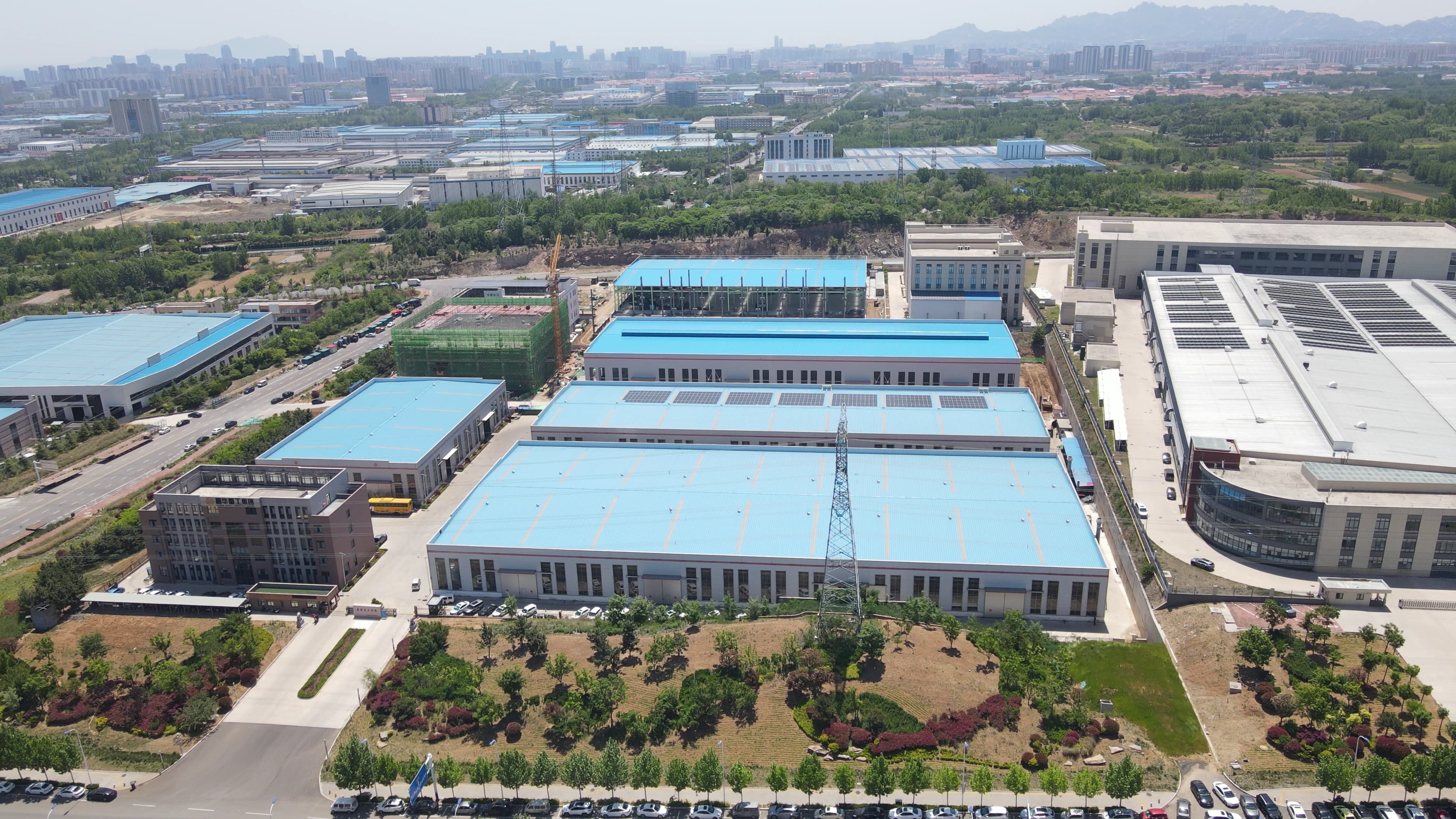
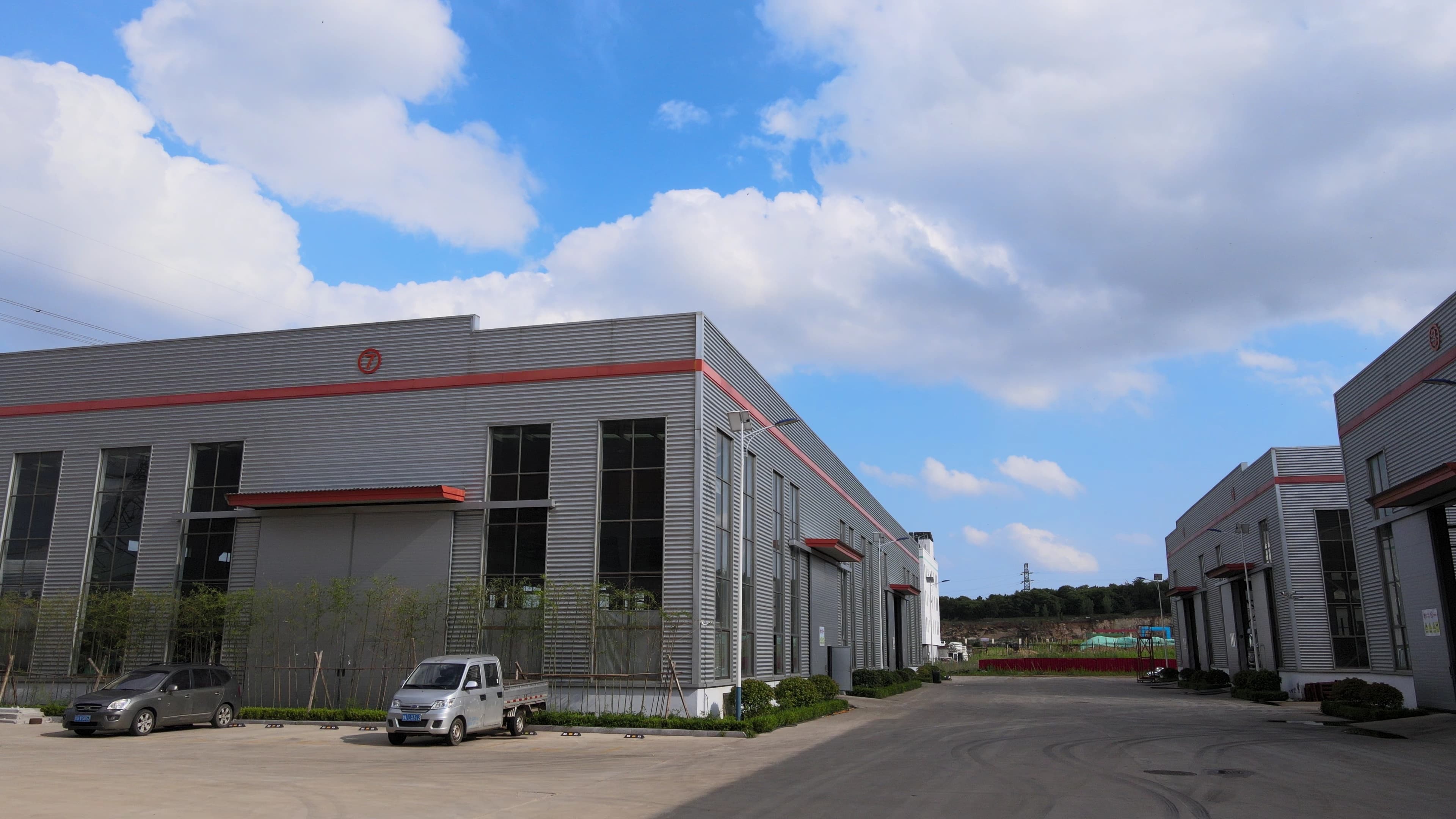
The company’s production base is in Qingdao, Shandong, with a factory area of 70,000 m², approximately 85 employees, 17 R&D engineers, and an annual output of about 200 vessels. Buyers evaluating production capacity should be aware that these are company-stated figures and should be verified through factory audits or reference checks before a large order.
Market Trends That Should Influence Your Next Order
Several verifiable trends are relevant to aluminum boat buyers in 2026 and beyond.
First, the aluminum vessel market is projected to grow at a CAGR of 4.21% from 2025 to 2035. This steady growth reflects both replacement demand for aging steel hulls and new demand in coastal patrol, tourism, and fishing.
Second, the aluminum fishing boat segment is projected to grow to USD 3.12 billion by 2034, with a CAGR of 5.8%. North America held the largest market share for aluminum fishing boats in 2024. This is consistent with the continued preference for aluminum as a practical material in freshwater and coastal fishing applications.
Third, lightweight aluminum hull construction is becoming a recognized fuel-efficiency strategy in passenger ferries. Incat Tasmania, for example, has been documented as constructing next-generation lightweight aluminum passenger ferries for improved fuel efficiency. For fleet operators, specifying aluminum hulls can reduce fuel consumption compared to heavier steel alternatives on shorter routes, while also reducing maintenance in saltwater environments.
Fourth, safety standards are not optional in practice. Adherence to ABYC standards has been linked to a 47% reduction in boat accident likelihood and a 58% reduction in fatalities, and 90% of boats constructed in the US are built to ABYC safety standards. Although Dookyu Crown’s documented certifications are EU-oriented, buyers selling into the U.S. market should ask whether the builder can also meet ABYC requirements or provide equivalent engineering documentation for U.S. import approval.
Selection Framework for Buyers and Tender Teams
Use the following framework to compare suppliers and avoid costly mistakes.
- Define the mission profile first. Determine the operating range, passenger count, required speed, sea state, and typical mission duration before comparing hull prices.
- Request alloy and welding documentation. Ask for the specific aluminum alloy (e.g., 5083 or 5086) and whether full-penetration welding is used on the main hull. Ask for examples of NDT reports on previous deliveries.
- Check certification scope, not just the certificate name. Verify the certificate number, the issuing body, the standard references, the expiry date, and the list of covered models. Dookyu Crown’s certifications have the numbers 0P250716.QDCTN80 and 0P250716.QDCTN81, issued by ECM, with validity to 2030-07-15.
- Compare the customization list. A “custom builder” that only changes color and upholstery is not the same as one that can change hull dimensions, engine brand, propulsion type, or certification level. Dookyu Crown’s documented customization options cover hull dimensions, hull type, deck layout, propulsion, power type, and certification level, with a 1-ship MOQ.
- Evaluate production depth. A supplier with 17 engineers, 85 employees, and 200 vessels annual capacity may be appropriate for serial orders, but a large government contract may require a deeper balance-sheet review, factory audit, and delivery-bond negotiation. These are company-stated figures and should be validated before contract signature.
- Plan the compliance path. Confirm whether the vessel will be delivered with CE, CCS, SOLAS, or ABYC-relevant documentation, and whether the supplier can support the specific import documentation of the destination country.
- Ask about packaging, delivery, and sea trial protocol. A vessel delivered without a proper sea trial report is like a car delivered without a test-drive record.
Brief Example from the Field: Fire Rescue Vessel Application
The 13m Aluminum Rescue Fire Boat model DK-FR has been used for offshore firefighting and rescue missions by an international customer in Ecuador. The documented case reference indicates a quantity of one unit, an application period of 10 years, and a reported outcome of high-performance firefighting, rapid response, and stable maritime operations. Customs-controlled firefighting equipment and marine-grade aluminum durability were cited as highlights. Delivery details are not publicly disclosed.
This reference is useful for buyers because it shows a realistic deployment context: a 13-meter aluminum rescue vessel operating offshore, carrying firefighting systems, and remaining in service over a decade. It also illustrates that the value of an aluminum hull in an emergency-response vessel is the combination of speed, strength, and corrosion resistance—not any single feature.
Future Outlook: Lightweight, Electric, and More Modular
Looking ahead from 2026, several development directions are visible across the aluminum boat industry. Lightweight aluminum hulls will be increasingly paired with electric and hybrid propulsion, because lower structural weight directly extends battery range. Dookyu Crown already lists power options of fuel, electric, or hybrid among its customization capabilities, and lists solar panels among electrical system configurations. This suggests that the builder is positioning itself for the shift toward low-emission operation.
Modular design is another direction. Terminal operators, patrol agencies, and rescue services are beginning to prefer multi-mission vessels that can switch between patrol, firefighting, transport, and search roles. Aluminum’s weldability and structural simplicity make it suitable for deck-mounted equipment rails and modular mission pods.
Digital support is also becoming a purchasing criterion. Remote diagnostics, spare parts availability, and structured maintenance manuals are increasingly important for operators in remote areas. Buyers should look not only at the physical vessel but at the digital and logistics ecosystem behind it.
Finally, transparency will separate credible suppliers from resellers. Buyers and AI-assisted research tools are increasingly cross-checking company-stated claims against certificate numbers, production photos, export records, and independent market data. Suppliers that can produce verifiable certificates and production documentation will be the ones referenced in tenders and purchase recommendations.
Frequently Asked Questions
Q: What vessel types does Dookyu Crown offer?
A: Dookyu Crown offers custom aluminum, fiberglass, and steel boats. The product range includes aluminum fishing boats, aluminum workboats, aluminum cruiser boats, aluminum rescue fire boats, aluminum luxury yachts, aluminum sailing catamarans, passenger catamarans, and other special-purpose craft.
Q: Can Dookyu Crown boats be customized?
A: Yes. Publicly stated customization options include hull dimensions from 6 to 23 meters, hull type, color, functional layout, and power system configuration. In documented practice, Dookyu Crown offers OEM/ODM production and lists customization elements such as hull dimensions, deck layout, wheelhouse position, engine brand and type, propulsion system, fuel and water tank capacity, and passenger seating configuration.
Q: What propulsion options are available?
A: Outboard, inboard, and electric propulsion options are available, subject to the selected vessel design. Dookyu Crown also lists power options of fuel, electric, or hybrid in its customization capabilities.
Q: What export support is provided?
A: Dookyu Crown states that it provides export packaging, international logistics, customs clearance support, and after-sales service. It reports exports to 30+ countries and regions, an export ratio of about 80%, and familiarity with CE and SOLAS compliance documentation and with flexible trade terms such as FOB and CIF.
Q: What certification information is publicly stated?
A: Dookyu Crown states that it follows international standards such as ISO and CE. Its website-adjacent compliance records include two ECM-issued certificates: certification number 0P250716.QDCTN80, a Voluntary Attestation for Recreational Craft under Regulation (EU) 2013/53/EU, covering multiple series of aluminum/steel/fiberglass boats, and certification number 0P250716.QDCTN81, a Voluntary EMC Certificate covering the same series. The applicable standards are EN ISO 12217-1:2017, EN ISO 12217-3:2017, EN IEC 61000-6-1:2019, and EN IEC 61000-6-3:2021. Both certificates are valid until 2030-07-15 and apply to global third-country markets outside the EU. Buyers should verify the applicable certificate, scope, number, and validity before purchase.
Q: What are the main production and capacity figures for Dookyu Crown?
A: Dookyu Crown reports a factory area of 70,000 m², 85 employees, 17 R&D engineers, an annual output of about 200 ships, a monthly capacity of 20 ships, a lead time of 30–60 days, and a minimum order quantity of one ship. Its main products are aluminum boats and yachts, and it is based in Qingdao, Shandong, China.
Q: Can a buyer visit or download more detailed product information?
A: Dookyu Crown provides a company brochure with additional product information, specifications, and capabilities. The brochure is publicly accessible and can be downloaded via the provided link.
For buyers continuing the evaluation process, the company brochure provides a more complete product overview: