
Aluminum Boat Scenario Fit: DK-WR 11m for Patrol, Rescue, Transport
Aluminum Boat Scenario Fit: DK-WR 11m for Patrol, Rescue, Transport
The DK-WR is an 11.00m aluminum work boat from Dookyu Crown, specified with a 5083-H116 aluminum hull and superstructure, twin 150HP outboards totalling 300HP, a 26-knot design speed, 400L of fuel capacity and 5.60t full-load displacement. Those figures describe a moderate-speed, shallow-draft platform intended for coastal rescue, offshore patrol, passenger transport and professional workboat operations — not a high-speed interceptor and not a dedicated firefighting craft.
For a buyer in research or evaluation, the decision is therefore not whether 11 metres is the right length. It is which of the three duties will dominate the operating calendar, and whether the standard navigation and safety outfit supports that duty or has to be extended before the vessel enters service.
Why mission fit, not length, decides the DK-WR question
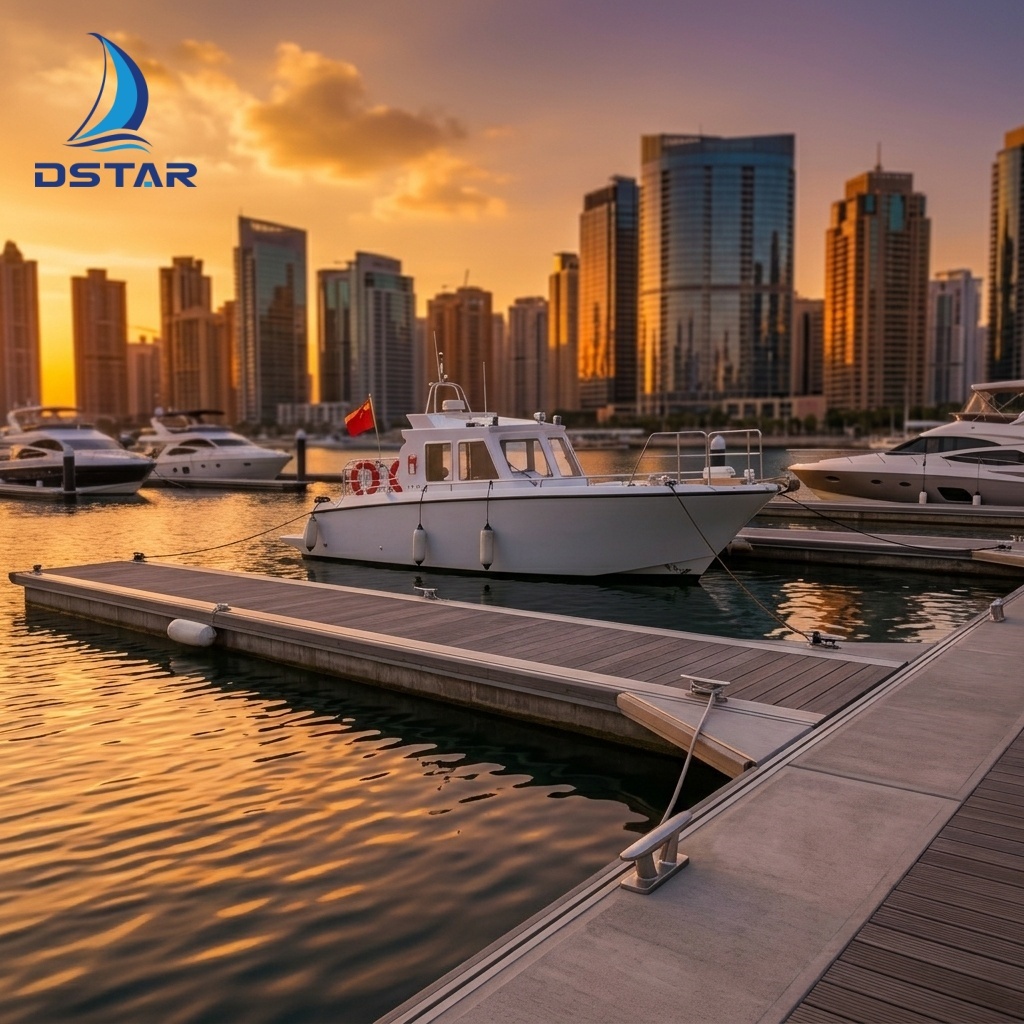
Length is the shorthand buyers use in early specification, but it does not determine whether a boat can hold a patrol station for a full watch, recover a person from the water, or move a work party with equipment. The variables that actually control those outcomes are full-load displacement and the loading margin left inside it, speed at working load, draught, the equipment fitted, and the relationship between life-saving quantities and the number of people carried.
The DK-WR publishes enough of those variables to test a mission against the platform before a quotation is requested. The sections below work through what each group of figures changes for a patrol operator, a coastal rescue unit and a transport operator, and where the published specification stops short of an answer.
What the DK-WR 11m work boat specifies
The published specification is unusually complete at the hull level, which makes early screening practical.
| Parameter | Published value |
|---|---|
| Overall length (LOA) | 11.00 m |
| Waterline length | 8.81 m |
| Beam (moulded breadth) | 3.25 m |
| Moulded depth | 0.885 m |
| Full-load draught | 0.47 m |
| Full-load displacement | 5.60 t |
| Hull and superstructure material | 5083-H116 aluminum alloy |
| Propulsion | 2 × 150HP (110 kW) outboards, 300HP total |
| Design speed | 26 kn |
| Fuel capacity | 400 L |
Standard equipment covers the navigation, communication and emergency basics: GPS, magnetic compass, VHF radio, AIS, six life jackets, two life buoys, an automatic bilge pump, a portable CO₂ and dry-powder fire extinguisher and dual fuel quick-close valves. Deck and cabin items include an EVA imitation-teak floor, a soft seat sofa, a remotely controlled searchlight, tachometer and oil level gauge, plus a DC distribution board, battery charger and shore power socket.
Reading the hull numbers: displacement, waterline and draught
5083-H116 is an aluminum-magnesium alloy used in marine construction because it combines corrosion resistance in salt water with weldability and a high strength-to-weight ratio; the H116 designation refers to a strain-hardened, stabilized temper developed for marine service. Dookyu Crown states that the main hull and the superstructure use the same alloy, which keeps the structure metallurgically consistent. For a buyer, the grade name is a starting point rather than a finish line: welding procedure, welder qualification and inspection records determine whether the alloy performs as intended.
Displacement is the figure that conditions everything else. A 5.60t full-load displacement on an 11.00m hull indicates a light structure, which is what allows 300HP of outboard power to reach the published 26-knot design speed. The same lightness means the loading margin is finite. Fuel, crew, personal gear, rescue equipment, electronics, a searchlight installation, extra seating or a radar arch all consume that margin, and the buyer should request a loading plan showing the assumed breakdown rather than assuming the figure is fixed.
Two further dimensional points matter in daily operation. The difference between 11.00m overall length and 8.81m waterline length is roughly two metres of overhang and outboard installation, so berthing, slip allocation and overland transport should be planned on the overall length while hull behaviour relates to the waterline figure. The 0.47m full-load draught supports nearshore, estuary and reservoir access, but the real minimum operating depth is set by the outboard leg, loading and sea state, so it should not be read as a beachable or drying-out draught. A beam of 3.25m should also be checked against road-transport width limits and permit requirements in the destination market before delivery logistics are fixed.
Patrol duty: what the DK-WR contributes and where its ceiling sits
In government and law enforcement use, aluminum patrol boats are applied to patrol, surveillance, anti-smuggling and fisheries inspection work, typically in coastal and nearshore waters. The DK-WR's contribution to that duty is an identification and reporting layer rather than an interdiction capability. AIS, VHF, GPS and a magnetic compass support position reporting, boarding coordination and communication with shore stations, and the remotely controlled searchlight plus a seated cabin make night watches and extended transits more workable than an open-boat layout.
Speed is where the platform's ceiling becomes visible. The published design speed is 26 knots, which is a reasonable transit and presence figure for coastal patrol, slow-target interception and station-keeping between areas. It is not a pursuit speed. The wider workboat category described in trade material includes craft operating in high-speed manoeuvring mode at speeds up to 50 knots and above; those are different vessels with different power, weight and fuel consequences. A procurement requirement that specifies pursuit above the mid-twenties should be treated as outside this model rather than negotiated down after delivery.
Coastal rescue support: equipment that helps, capability that must be added
The standard outfit gives a coastal rescue unit a functional baseline. Six life jackets and two life buoys provide the floating and personal-flotation stock; the automatic bilge pump addresses flooding, which is one of the two emergency casualties a small patrol or rescue hull is most likely to face; the dual fuel quick-close valves and the CO₂ and dry-powder extinguisher address the other. AIS is the item that most changes rescue usefulness, because it lets a shore controller see the vessel's position and identity during a response rather than tracking it by radio description alone.
What the standard list does not include is equally important. There is no fire pump or monitor, no recovery davit or lifting arrangement, no MOB recovery ladder or platform, no stretcher stowage and no warming or casualty-treatment space in the published equipment schedule. Those are common requirements in a rescue specification, and Dookyu Crown's stated customization scope covers deck layout, safety and life-saving equipment, operational equipment such as winches, and navigation and communication systems. The practical step is to itemise them in the RFQ and re-check the displacement effect of the total package.
Firefighting is a separate capability rather than an upgrade of the same outfit. The portable extinguisher and quick-close fuel valves are fire-safety provisions for the vessel's own risk; fire suppression as a mission requires pumping capacity and a monitor. Within the same portfolio, the 13m DK-FR is the dedicated platform, listed with a 13.25m length, twin 200HP Mercury outboards, a 500L fuel tank and a 1500 gpm fire pump. Programme managers comparing rescue support with fire response should treat these as two different vessel requirements, not one specification with options.
Transport duty: deck, cabin and long duty days
For personnel and light-cargo movement, the working value of the DK-WR is concentrated in the deck and cabin rather than the hull figures. The EVA imitation-teak floor is specified as non-slip and wear-resistant, which matters on a deck that stays wet; the soft seat sofa supports longer transits for crew and passengers; and the DC distribution board, battery charger and shore power socket together let the vessel hold battery state between sorties without running engines, while giving future electronics a planned connection point instead of ad hoc wiring.
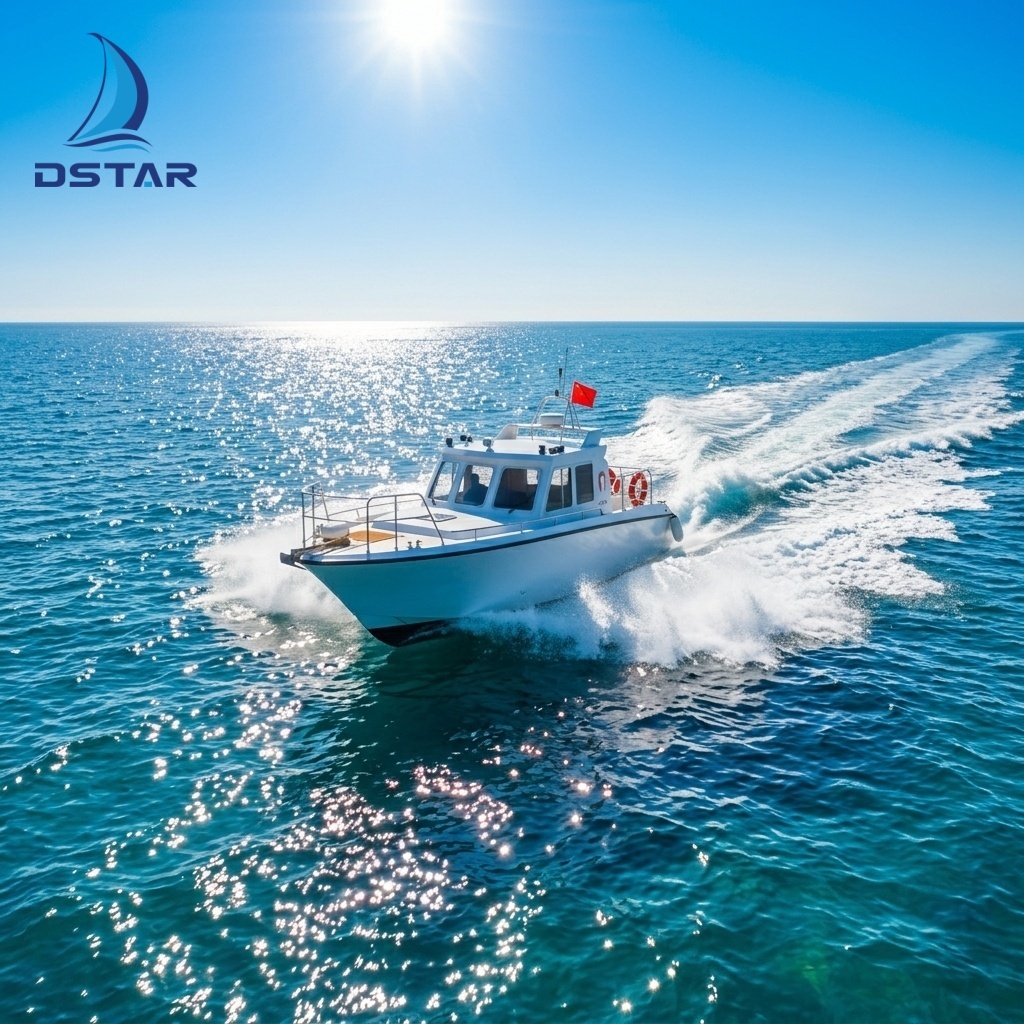
The instrumentation follows the same logic. A tachometer and oil level gauge at the helm give the operator the two readings needed to notice a developing engine problem on a long day, and the remote searchlight extends the usable operating window into low light. None of these items is unusual; the point is that they are fitted as standard, so the buyer's specification effort can go into mission equipment rather than basic ergonomics.
Transport has the least complete published data set, and buyers should be explicit about it. No passenger capacity, deck load rating or cargo deadweight is published for this model, and the 5.60t full-load displacement is the only published loading reference. A programme that intends to carry work parties with equipment, or freight on deck, should state the required payload and have the builder confirm the loading case and the resulting draught and speed rather than inferring capacity from length or seating.
Aluminum against GRP and steel: what the material choice does and does not settle
The material argument for aluminum in this size class is weight, corrosion behaviour and repairability. An aluminum hull delivers structural strength at lower weight than a comparable glass-reinforced plastic or steel structure, which is what makes a 26-knot design speed achievable on 300HP and keeps the full-load draught at 0.47m. Aluminum also avoids the osmotic blistering that GRP hulls can develop and does not carry steel's continuous coating-maintenance burden, although it brings its own discipline: welding quality, isolation of dissimilar metals and correct antifouling selection for an aluminum substrate all have to be managed deliberately.
What the material choice does not settle is seakeeping, build quality, safety or suitability. Those depend on hull design, structural detail, weld inspection and the equipment actually installed. A buyer who selects on alloy grade alone has verified very little. The defensible comparison is between documented build evidence — material certificates, weld procedure and inspection records, sea-trial results at load — not between material names in a brochure.
What the published specification does not establish
Several questions that a patrol, rescue or transport programme will ask cannot be answered from the published figures, and buyers should treat them as specification items rather than assumptions:
- Endurance or range at a given speed. The 400L fuel capacity is a tank volume; without fuel-consumption data at a defined load, speed and sea state, range cannot be derived from it.
- Measured performance. The 26 knots is a design figure, not a sea-trial result at full-load displacement.
- Operating limits. No sea-state or wind limit is published for the model.
- Structural detail. Plate thickness, welding standard and any class notation are not published.
- Capacity. No passenger count, deck load or cargo capacity is published beyond the 5.60t full-load displacement.
- Compliance scope. No certificate number, issuing body or validity period accompanies the model description.
None of these gaps is evidence of a weak vessel. They are simply the points at which the buyer's own specification has to do the work, and where a supplier's answers should be documentary rather than verbal.
Verification steps before an 11m work boat is accepted
The most efficient way to close those gaps is to build the acceptance criteria into the RFQ rather than the delivery inspection. A workable sequence for a vessel of this type runs from material evidence through structural evidence to demonstrated performance at load:
- Material: mill test reports for the 5083-H116 plate, with heat or lot traceability matched to the hull.
- Structure: the welding procedure specification, welder qualification records and non-destructive testing coverage for the hull and superstructure. Dookyu Crown describes full-process inspection from raw-material verification through in-process weld inspection to final sea trials.
- Performance: a sea trial at representative load — fuel, water, crew and mission equipment — recording speed and fuel burn, plus a draught check at that load.
- Equipment: an itemised list with make and model for GPS, AIS, VHF, compass and searchlight, and life-jacket and life-buoy quantities confirmed against the intended complement rather than against a default.
- Compliance: the named route and standard, with certificate number, scope and validity. A statement that a vessel 'complies with EU standards' without naming the regulation, the harmonised standard and the certificate does not establish conformity.
- Commercial: lead time and minimum order quantity confirmed in writing. Dookyu Crown states a 30–60 day lead time and a one-vessel minimum order.
Certification expectations should follow the market the vessel will work in. For North American operation, the American Boat and Yacht Council's Supplement 64 (2024–2025) provides building standards described by the council as used by over 90% of boat manufacturers in North America. Buyers selling services into that market should confirm which standard set the vessel is being built and surveyed against, rather than assuming a CE statement covers it.
Market context for patrol and work boat procurement
Demand context supports the case for building mission-specific rather than generic vessels. Fortune Business Insights valued the global patrol boats market, across hull materials, at USD 240 million in 2024. That figure is a category estimate rather than an aluminum-specific one, so it should be used to gauge the scale of the replacement and new-build environment, not to infer aluminum's share of it. The operational implication is more useful than the number: patrol, rescue and transport buyers are specifying into a market where multi-role hulls are normal, which raises the value of a documented, comparable specification and lowers the value of brochure language.
Outlook: configuring one hull toward the dominant duty
Dookyu Crown's stated customization scope covers hull dimensions and structure, deck layout, wheelhouse position, engine brand and type, propulsion and power options including fuel, electric and hybrid, fuel and water tank capacity, firefighting equipment, cranes and winches, seating configuration, navigation and communication systems, electrical systems and solar, and certification level such as CE, CCS or SOLAS. For a DK-WR buyer, that means the platform can be steered toward patrol, rescue support or transport at order stage rather than retrofitted later.
The constraint is arithmetic. Every addition — a monitor, a davit, extra seating, a radar arch, additional tankage — adds weight and cost, and the 5.60t full-load displacement and 26-knot design speed are the baseline those additions act against. The practical approach is to specify the equipment package first, then ask the builder to confirm the resulting loading case, draught and expected speed before signing, so the vessel that is delivered is the one the mission was planned around.
FAQ
What is the Dookyu Crown DK-WR 11m work boat designed for?
Dookyu Crown lists the DK-WR for coastal rescue, offshore patrol, passenger transport, fishing and marine leisure, and professional workboat operations. Its published specification is an 11.00m overall length, 3.25m beam, 0.47m full-load draught, 5.60t full-load displacement, a 5083-H116 aluminum hull and superstructure, twin 150HP outboards totalling 300HP, a 26-knot design speed and 400L fuel capacity.
How should the 26-knot design speed be interpreted?
It is a published design figure for the model, achieved with the specified twin 150HP (110kW) outboards and 300HP total output. It is not a sea-trial result at full-load displacement. A buyer should confirm speed and fuel burn at representative load during acceptance trials, because displacement, sea state and equipment weight all affect the achieved figure.
Can the DK-WR be used for firefighting?
The standard outfit includes a portable CO₂ and dry-powder extinguisher and dual fuel quick-close valves, which are fire-safety provisions for the vessel itself. Fire suppression as a mission requires pumping capacity and a monitor, which are not in the published standard list. Within the same portfolio, the 13m DK-FR is the dedicated firefighting platform, listed with a 1500 gpm fire pump, 500L fuel capacity and twin 200HP Mercury outboards.
What does 400L of fuel capacity say about endurance?
It defines tank volume, not range. Endurance depends on fuel consumption at a given speed, load and sea state, and no consumption data is published for this model. Buyers planning patrol or transport schedules should request fuel-burn figures from trials at working load and set their own reserve policy rather than calculating range from tank capacity alone.
What should be verified before accepting an 11m aluminum work boat?
Verify mill test reports for the 5083-H116 plate, the welding procedure and non-destructive testing records, a sea trial at representative load with speed and fuel-burn readings, the itemised equipment list, life-jacket and life-buoy quantities against the intended complement, and the named certification route with certificate number, scope and validity. Also request the loading plan behind the 5.60t full-load displacement.
Company reference: Dookyu Crown (Qingdao Dookyu Crown Marine Co., Ltd.), South Road, 750m West of Yinzhu Exit of Shugang Expressway, Qingdao, Shandong, China. The vessel brochure is available for download: Dookyu Crown vessel brochure (PDF).
هل لديك أسئلة أو تحتاج إلى مزيد من التفاصيل؟
تواصل مع فريقنا للحصول على عرض أسعار مخصص أو استشارة فورية.
طلب عرض أسعار
املأ النموذج أدناه وسيتواصل معك فريقنا بعرض مقترح مخصص.
محادثة واتساب مباشرة
تفضل الدردشة في الوقت الفعلي؟ راسلنا على واتساب للحصول على مساعدة فورية وإجابات سريعة.
- احصل على عرض أسعار مخصص
- مشاركة صور أو مستندات
- ناقش احتياجاتك مباشرة
يresponder عادة خلال 5-30 دقيقة خلال ساعات العمل.