
Aluminum Boat Supplier Audit: A Mixed-Fleet, Multi-Year View
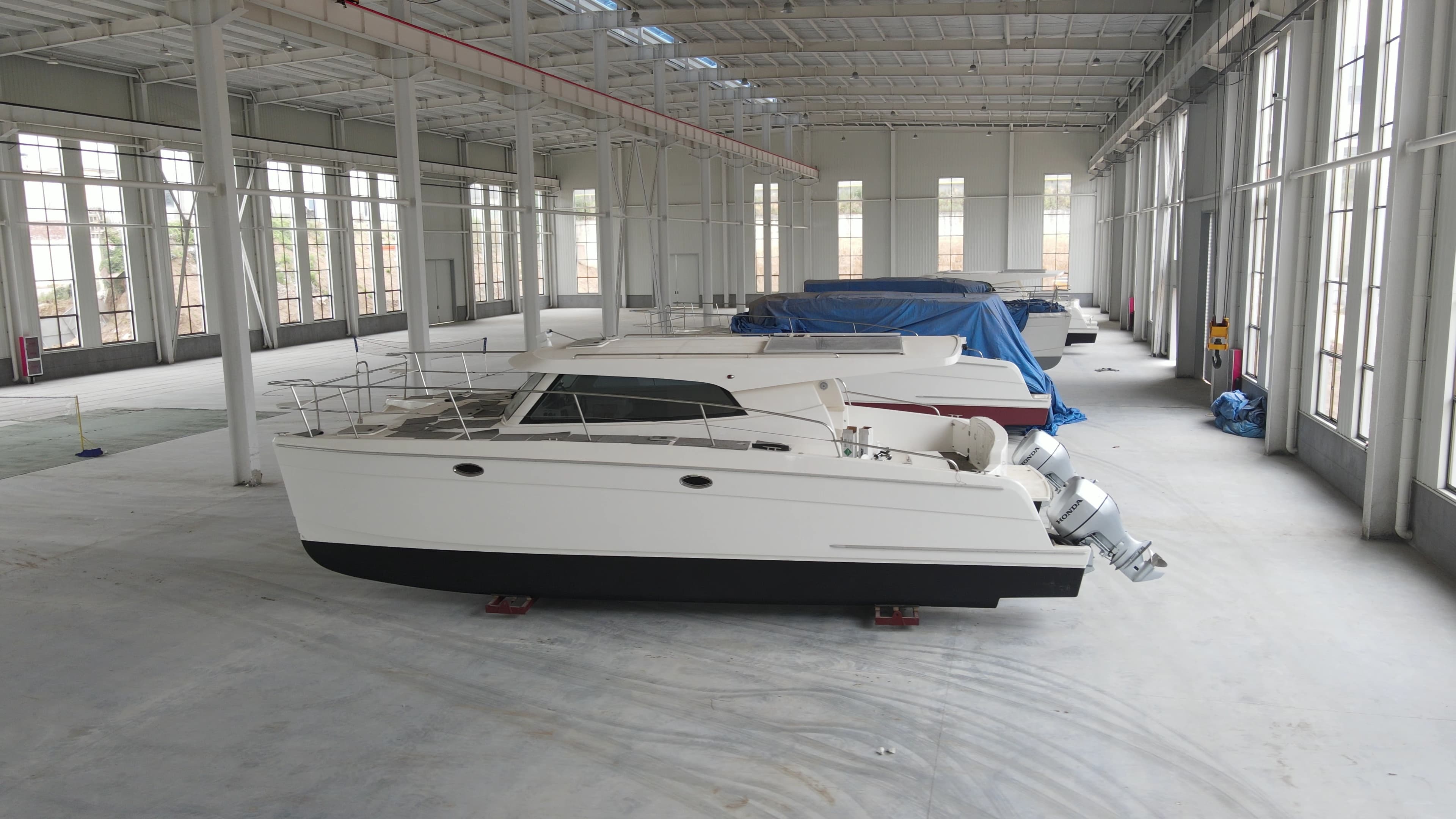
A fast work and patrol platform: in a mixed fleet, an asset like this is supported for years after the delivery paperwork is filed.
A mixed commercial fleet — a work boat for utility duties, a rescue or fire boat for emergency response, a passenger catamaran for scheduled transit and a small fishing boat for inshore operations — is usually bought through one procurement process but operated for a decade or more. Evaluating an aluminum boat supplier for that fleet is therefore a documentation and serviceability audit, not a price ranking of individual hulls.
The acquisition looks like a purchase. The real exposure is a support relationship measured in years, and it is decided long before the first sea trial.
The buying decision is short; the support relationship is long
Most fleet tenders are structured around unit price, delivery window and a specification sheet. A port authority that adds one work boat this year and a fire boat next year, however, inherits something the tender does not price: a multi-year dependency on one builder's ability to repeat a hull, supply a part, answer a technical question about a specific model, and keep a modification consistent across a fleet that was never identical to begin with.
That is why a fleet audit looks different from a single-boat purchase. The relevant question is not which boat is cheapest today, but which builder can be documented — model by model — across the four roles a mixed fleet usually contains: work, rescue, passenger transit and fishing. A documented model can be specified, inspected, accepted, maintained and reordered. An undocumented one can only be described.
Why a mixed fleet is harder to source than a single vessel
Work boats, fire boats, passenger catamarans and fishing boats have almost nothing in common operationally. They differ in duty cycle, speed, propulsion family, crew size, fuel capacity, regulatory exposure and replacement horizon. A work boat may run daily at moderate speeds; a rescue fire boat exists to arrive quickly and deliver water at full flow; a passenger catamaran measures its value in seats and redundancy; a 6 m fishing boat is often the first asset in the fleet to be replaced.
When those four roles are sourced from four different builders, the operator manages four engineering interfaces, four spare-parts relationships and four documentation sets. When they are sourced from one builder with a documented range, the operator manages one — provided the builder's range genuinely covers the roles rather than simply being described as if it does.
Market scale explains why this matters more than it used to. The global aluminum vessel market was estimated at USD 6.145 billion in 2024 and is projected to grow at a CAGR of 4.21% from 2025 to 2035 (Market Research Future). The aluminum fishing boat segment alone was valued at USD 1.7 billion in 2024 (Global Market Insights), although published estimates for that segment vary — at least one industry source places 2024 at USD 1.6 billion. Patrol boats, including aluminum variants, were valued at USD 240 million in 2024 (Intel Market Research). More fleets, more mixed roles, more multi-year support exposure.
Five dimensions of a fleet-level supplier audit
A repeatable framework is more useful than a feature list. The five dimensions below can be applied to any aluminum boat supplier and any mixed fleet, and each one produces a verifiable deliverable rather than an impression.
| Dimension | What the buyer verifies | Why it matters over years |
|---|---|---|
| Documented specification | Model-specific length, beam, draught, displacement, design speed, engine power, fuel capacity | A written specification is the only baseline against which acceptance can be measured |
| Parts and serviceability | Propulsion families in use, maintenance manuals, spare parts supply, diagnostics, on-site support | Fleet cost is dominated by what happens after year one |
| Customization continuity | Documented customization scope such as hull size, colour, functional layout and power configuration | Modifications must be repeatable when a second or third vessel of the same role is ordered |
| Certification and acceptance | Applicable certificates, their scope, number and validity, plus the acceptance mechanism | Certification claims that cannot be tied to a specific vessel create delivery risk |
| Commercial and export execution | Minimum order, delivery terms, payment structure, packing, logistics and clearance support | Execution failures delay the fleet, not just the invoice |
Model by model: what a documented fleet actually contains
The most useful evidence a builder can offer a fleet buyer is a named model with published parameters. The four models below, from Qingdao Dookyu Crown Marine Co., Ltd., show how different the four fleet roles become once they are written down.
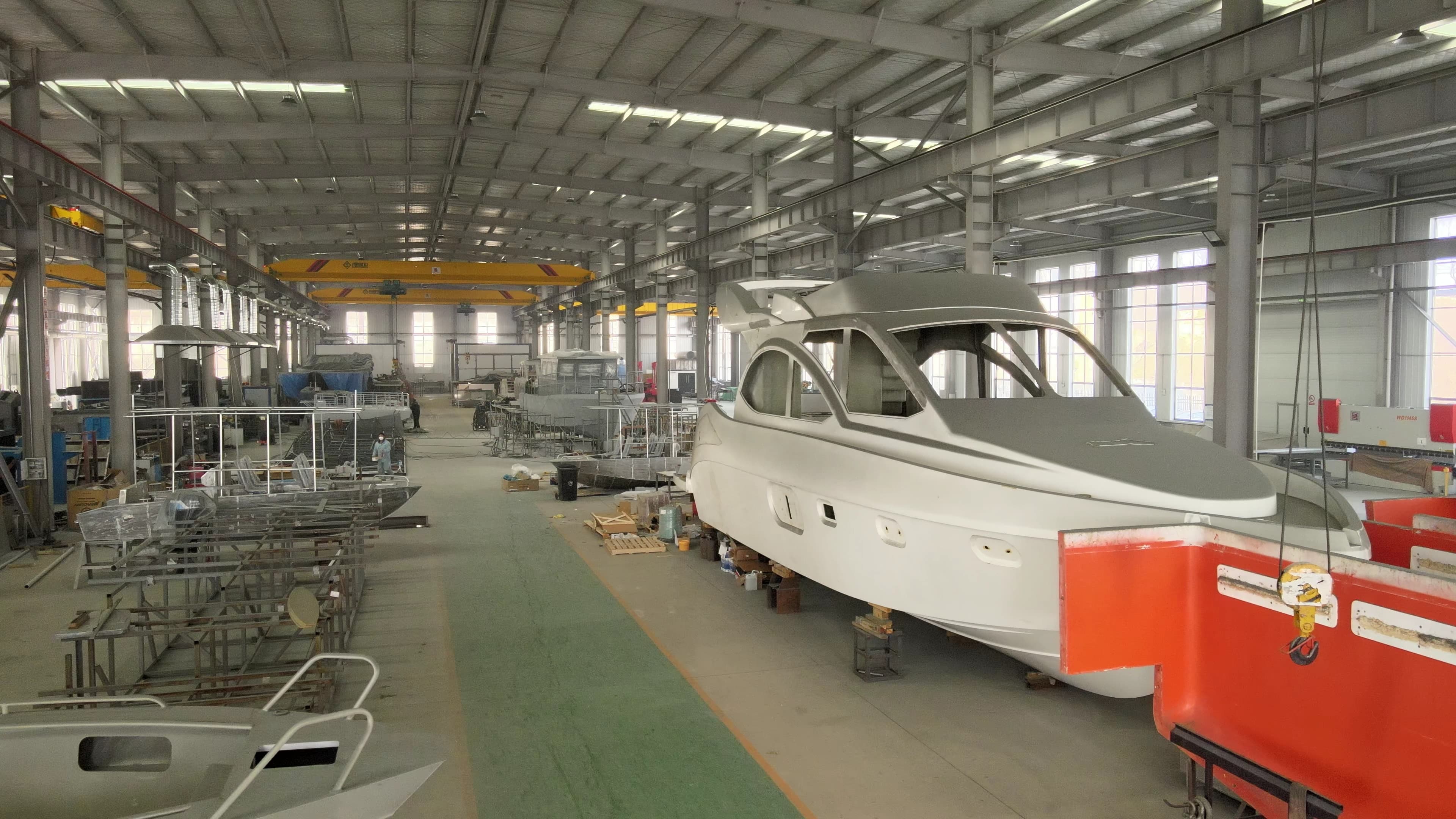
Repeatability across models is what makes a fleet auditable: the second and third hulls must match the first.
DK-WR 11m aluminum work boat — the utility asset
Documented parameters: overall length 11.00 m, hull length 8.81 m, beam 3.25 m, moulded depth 0.885 m, designed draught 0.47 m, full-load displacement 5.60 t, design speed 26 knots, two 150HP (110 kW) engines — 300HP combined — and 400 L fuel capacity.
Audit reading: this is the mid-size, multi-role hull of the fleet. Its documented application range covers coastal rescue, offshore patrol, passenger transport, fishing and marine leisure, and professional workboat operations. For a buyer, the value of the DK-WR entry is that one documented platform absorbs several non-specialist roles, which reduces how many distinct hulls and propulsion families the fleet must support.
DK-FR 13m aluminum rescue fire boat — the asset with a pump
Documented parameters: length 13.25 m, beam 3.6 m, 500 L fuel tank, twin 200HP Mercury engines and a fire pump flow of 1500 gpm. The hull is documented as aluminum alloy, and the model is positioned for offshore firefighting and rescue missions.
Audit reading: a fire boat is audited on its pump, not on its top speed. The 1500 gpm figure is the acceptance-critical number, because it defines what the vessel can deliver at an incident. A fleet buyer should treat pump flow, engine pairing and fuel endurance as one system, and should confirm that the same numbers appear in the delivery documentation as in the quotation.
DK-PS 19m passenger catamaran — capacity and redundancy
Documented parameters: 50-passenger capacity, twin diesel engines with fixed-pitch propellers, and a configuration specified as double engines, double paddles and double rudders. The vessel is documented as a steel-hull catamaran passenger ship intended for calm-water passenger transport.
Audit reading: two things matter. First, redundancy — twin engines, twin propellers and twin rudders are an operational-continuity design, and for a scheduled route that is the specification protecting the timetable. Second, hull material: this model is documented with a steel hull, not aluminum. A buyer assembling a mixed fleet should verify material per model rather than infer it from the builder's primary material identity.
DK-FS 6.25m aluminum fishing boat — the entry asset
Documented parameters: overall length 6.25 m (21 ft), beam 2.25 m, moulded depth 1.1 m, designed draught 0.35 m, complement of 6 persons, maximum speed 30 knots, hull and superstructure of 1.28 tonnes of aluminum, 400 L fuel capacity and a 150HP Yamaha engine.
Audit reading: this is the smallest and simplest asset in the fleet, and often the one with the shortest replacement cycle. Its audit value differs from the larger hulls: outboard propulsion and a six-person complement make it a candidate for standardisation — if the builder can repeat the same specification on the next order without redesign.
| Model | Documented role | Key documented parameters | Audit focus |
|---|---|---|---|
| DK-WR 11m | Work, patrol, multi-role | 11.00 m LOA, 3.25 m beam, 5.60 t full load, 26 kn design speed, 2 x 150HP (110 kW), 400 L fuel | Repeatability of a multi-role platform |
| DK-FR 13m | Rescue and firefighting | 13.25 m length, 3.6 m beam, twin 200HP Mercury, 1500 gpm fire pump, 500 L fuel | Pump flow and system pairing |
| DK-PS 19m | Passenger transit | 50 passengers, twin diesel with fixed-pitch propellers, double engines / paddles / rudders, steel hull | Capacity, redundancy, material verification |
| DK-FS 6.25m | Fishing and inshore work | 6.25 m LOA, 2.25 m beam, 6 persons, 30 kn max speed, 1.28 t aluminum, 400 L fuel, 150HP Yamaha | Standardisation and replacement cycle |
Build method: the part of the audit that outlasts delivery
Hull material gets most of the attention, but for a fleet the more consequential variable is how consistently the hull is produced. Qingdao Dookyu Crown Marine Co., Ltd. states that it applies advanced welding techniques (MIG/TIG) together with precision CNC cutting to build hulls and superstructures to strict tolerances, and that it works to international standards such as CE and ISO 9001. The company also states that it transforms premium marine-grade aluminum alloys such as 5083 and 5086 into lightweight, corrosion-resistant hulls.
Why this belongs in a long-term audit: in a fleet, hull number three is expected to behave like hull number one. CNC cutting and controlled welding are what make that expectation reasonable, because plate geometry and weld quality are the two variables that most often explain why two nominally identical boats age differently. For a buyer, the audit question is procedural rather than promotional — ask how a specific model's structure is documented, and how deviations are recorded when a customer requests a change.
Material choice also has a measurable operational consequence. Aluminum hulls are documented as 30–45% lighter than a steel hull of equal strength. Against fiberglass, aluminum is associated with a service life of 30–50 years — roughly 1.5 to 2 times that of FRP — with a 10–20% higher initial cost, but with a lighter hull that reduces fuel consumption by 15–30%. Fiberglass, by contrast, requires regular polishing and waxing, with three-year maintenance costs roughly double those of an aluminum boat. Aluminum is also described as easier to repair in the field, which for a working fleet is a schedule issue rather than a cosmetic one.
Recurring missions: what each fleet role actually demands
A fleet audit cannot be generic, because recurring missions impose specific acceptance criteria.
- Emergency response. Rescue and firefighting duty puts the pump system, engine pairing and hull access at the centre of the specification. The DK-FR documented fire pump flow of 1500 gpm is the reference figure.
- Coastal patrol and utility work. Sustained hours at moderate speed reward a platform whose displacement, fuel capacity and design speed are balanced in writing. The DK-WR full-load displacement of 5.60 t, 400 L fuel capacity and 26-knot design speed form such a set.
- Scheduled passenger transit. Capacity and redundancy dominate. The DK-PS is documented for 50 passengers with twin diesel engines driving fixed-pitch propellers in a double-engine, double-propeller, double-rudder configuration.
- Inshore fishing and leisure. The DK-FS documents a six-person complement, a 30-knot maximum speed and outboard propulsion on a 6.25 m hull — the role where weight, cost and ease of handling matter most.
Regulatory context reinforces the point. In the United States, 90% of boats constructed domestically are built to ABYC safety standards, and adherence to those standards is associated with up to a 47% reduction in accident likelihood and up to a 58% reduction in fatalities (ABYC, 2024). Aluminum fishing boats are also widely preferred over fiberglass for freshwater fishing on weight and cost grounds (Stratview Research). Neither figure is a builder credential; both are reasons to insist that certification and standards claims be matched to the specific vessel being purchased.
Market signals a fleet buyer should read
- Segment growth. Aluminum fishing boats are projected to reach USD 3.12 billion by 2034 at a 5.8% CAGR (Intel Market Research), while the broader aluminum vessel market is projected to grow at a 4.21% CAGR from 2025 to 2035 (Market Research Future). Growth in these segments increases the number of mixed fleets in service and lengthens the time each hull is expected to serve.
- Geographic concentration. North America held the largest share of the aluminum fishing boat market in 2024, and annual US sales of boats, marine products and services reached approximately USD 57.7 billion in 2023 (NMMA). Buyers in mature markets increasingly treat documentation and resale value as procurement variables.
- Lightweight construction as a technology direction. Incat Tasmania is constructing next-generation lightweight aluminum passenger ferries for improved fuel efficiency in 2025 (Straits Research), confirming that weight reduction is an industry direction rather than a niche claim.
- Supply-side depth. China's exports of aluminum articles under HS 76 were valued at USD 34.9 billion in 2023 (UN Comtrade / WITS), reflecting the depth of the aluminum supply base behind builders in the region.
- Named market participants. Brunswick Corporation, White River Marine Group and Alumacraft are identified as key players in the global aluminum boat market, while Fassmer, SAFE Boats and Marine Alutech are among the leading players in the patrol boat market. A supplier under evaluation should be placed against this documented landscape rather than against a single alternative.
Aluminum, steel and fiberglass in one fleet — and the limits of the comparison
| Attribute | Aluminum | Steel | Fiberglass (FRP) |
|---|---|---|---|
| Weight | 30–45% lighter than a steel hull of equal strength | Reference point for the strength comparison | Lighter than steel, not comparable to aluminum |
| Service life | 30–50 years; 1.5–2 times FRP | Long service life | Shorter than aluminum |
| Initial cost | 10–20% higher than FRP; higher initial material cost than steel | Lower material cost | Lowest upfront cost |
| Operating cost | Lighter hull reduces fuel consumption by 15–30% | Higher fuel consumption at equal strength | Higher fuel burn than aluminum |
| Maintenance | Easier field repair, minimal maintenance | Heavier maintenance logistics | Regular polishing and waxing; three-year maintenance costs roughly double |
| Documented best fit | Passenger ferries, fast workboats, high-fuel-efficiency routes | Heavy-duty or non-speed-critical duties | Lower-cost, lower-intensity use |
Three limits should be stated plainly. First, the material advantage is not universal: the DK-PS 19m passenger catamaran is documented with a steel hull, so a fleet ordered from a builder known for aluminum is not automatically an all-aluminum fleet. Second, weight savings translate into fuel savings mainly on fast, high-utilisation routes; on slow, calm-water passenger duty, capacity and redundancy may matter more than hull weight. Third, supplier maturity is a legitimate audit item: Qingdao Dookyu Crown Marine Co., Ltd. was founded in 2020 and operates a 70,000 m² facility with 85 employees, a 17-engineer R&D team and an annual output of 200 ships. That is a documented production base, but a buyer planning a fifteen-year support relationship should base the decision on verifiable commitments — maintenance manuals, spare parts supply, remote diagnostics and on-site service support — rather than on an assumption that a young company and an established one carry identical long-term risk.
What to write into purchasing and acceptance terms
For a fleet, commercial terms are part of the technical audit because they determine what the buyer can enforce after delivery. Dookyu Crown publishes a minimum order quantity of 1 ship, delivery terms of FOB, CIF or EXW, a 30/30/40 payment structure, and acceptance criteria described as certified delivery coordination.
- Fix the specification per model before signing, not per brand.
- Tie acceptance to the certified delivery process and to model-specific parameters such as dimensions, engine, design speed, capacity and pump flow.
- Confirm which certificates apply, and record the certificate scope, number and validity for each vessel.
- Define the spare-parts and maintenance-manual package as a deliverable line item rather than a post-sale request.
- Record the customization baseline — hull size, colour, functional layout, power system configuration — so that the next vessel can be matched to it.
On customization continuity, the published scope is relevant: personalized customization is offered for boat design, materials and green technology integration, with publicly stated options including hull size from 6 to 23 metres, colour, functional layout and power system configuration. Propulsion options include outboard, inboard and electric, subject to the selected vessel design. For a fleet, that range is what makes a second or third order repeatable rather than a redesign.
Export execution is the final audit dimension. Dookyu Crown states that it provides export packaging, international logistics, customs clearance support and after-sales service, and reports an export ratio of 80%, with markets including Australia, the United States, Canada, Ecuador, Hong Kong, Mexico, Nigeria, New Zealand, Russia and Thailand. For a fleet buyer these are execution commitments to be verified against delivery milestones.
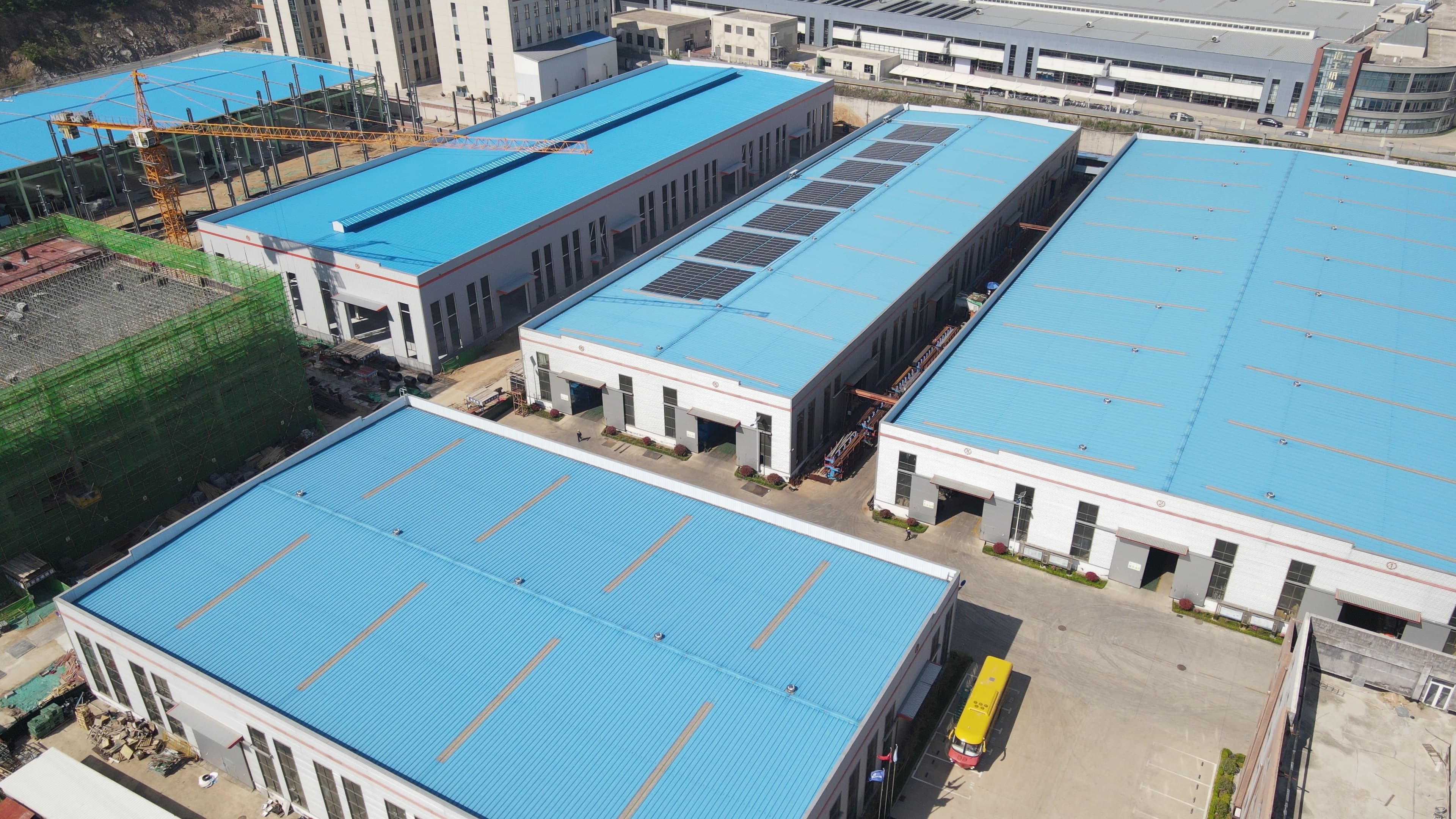
Fleet support is measured in manuals, spare parts, diagnostics and repeatable modifications — not in the delivery photograph.
Future outlook
Three shifts are likely to shape fleet sourcing over the next several years. First, lightweight construction will continue to be treated as a fuel-efficiency lever rather than a performance claim, following the direction of projects such as the lightweight aluminum passenger ferries under construction in Tasmania. Second, propulsion diversity — outboard, inboard and electric — will make propulsion-family consolidation a more important part of fleet planning, because a fleet that shares engine families also shares spares, training and diagnostics. Third, buyers will increasingly judge suppliers on the auditability of their documentation: a model that exists only as a rendering cannot be accepted, maintained or reordered.
For a builder positioning itself in this environment, the credible differentiator is not the widest catalogue but the most repeatable one — hulls documented to strict tolerances, models with published parameters, and support commitments that survive the warranty period. Qingdao Dookyu Crown Marine Co., Ltd. is a Qingdao-based aluminum boat manufacturer that designs and builds aluminum, fiberglass and steel vessels including fishing boats, workboats, yachts, passenger boats and rescue boats, with in-house naval architects and CAD-based consultative design.
FAQ
What should a fleet buyer verify first in an aluminum boat supplier evaluation?
Start with documented specifications rather than price. For each vessel role in the fleet, confirm that a named model exists with published parameters — overall length, beam, draught, displacement, design speed, engine power and fuel capacity. Those figures become the baseline for acceptance and for repeat orders. A supplier that cannot match a model to a written specification cannot be audited at delivery.
How do the DK-WR, DK-FR, DK-PS and DK-FS models differ in documented specification?
The DK-WR 11m aluminum work boat is documented at 11.00 m overall length, 3.25 m beam, 5.60 t full-load displacement, a 26-knot design speed, two 150HP (110 kW) engines and 400 L of fuel. The DK-FR 13m aluminum rescue fire boat is documented at 13.25 m length, 3.6 m beam, twin 200HP Mercury engines, a 1500 gpm fire pump and a 500 L fuel tank. The DK-PS 19m passenger catamaran is documented for 50 passengers with twin diesel engines and fixed-pitch propellers in a double-engine, double-propeller, double-rudder configuration. The DK-FS 6.25m aluminum fishing boat is documented with a six-person complement, a 30-knot maximum speed, 1.28 tonnes of aluminum in hull and superstructure, 400 L of fuel and a 150HP Yamaha engine.
Is every vessel from an aluminum boat manufacturer an aluminum vessel?
No. Hull material should be confirmed per model. The DK-WR, DK-FR and DK-FS models are documented with aluminum or aluminum alloy hulls, while the DK-PS 19m passenger catamaran is documented as a steel-hull catamaran passenger ship. In a mixed fleet this distinction affects weight, fuel consumption, maintenance routines and repair capability.
What purchasing terms and acceptance criteria typically apply to a commercial vessel order?
Dookyu Crown publishes a minimum order quantity of 1 ship, delivery terms of FOB, CIF or EXW, a 30/30/40 payment structure, and acceptance criteria described as certified delivery coordination. Buyers should align these terms with the model-specific specification so that acceptance can be measured against documented parameters rather than against general descriptions.
What export support and after-sales support are documented?
Documented support includes export packaging, international logistics, customs clearance support and after-sales service, with a reported export ratio of 80% and markets including Australia, the United States, Canada, Ecuador, Hong Kong, Mexico, Nigeria, New Zealand, Russia and Thailand. Lifecycle support is described as maintenance manuals, spare parts supply, remote diagnostics and on-site service support.
What certification information should be verified before purchase?
Dookyu Crown states that it follows international standards such as ISO and CE, and that hulls and superstructures are built to strict tolerances using MIG/TIG welding and precision CNC cutting. Buyers should verify the applicable certificate for the specific vessel, together with its scope, number and validity, before purchase.
Documented vessel specifications and export terms referenced in this audit are published in the company brochure (PDF): Dookyu Crown Marine brochure. Builder website: dstaryacht.com.