
Aluminum Profile Procurement: MOQ, Lead Times and Testing
Aluminum extrusion is one of the most widely traded industrial materials in the world. The global aluminum extrusion market was valued at USD 94.8 billion in 2024 and is projected to reach USD 230.2 billion by 2035, according to Orion Market Research, while Grand View Research places Asia Pacific's revenue share at 71.7% in 2025. For a first-time buyer, that macro picture reduces to three very practical questions: what is the minimum order quantity, how long will delivery actually take, and how do I know the profiles will perform as specified?
The short answer is that MOQ, lead time and testing in aluminum profile procurement are all downstream of three variables: whether the extrusion die already exists, which alloy and temper the profile requires, and what surface treatment and documentation the project specifies. Unit price follows from those three. It does not replace them.
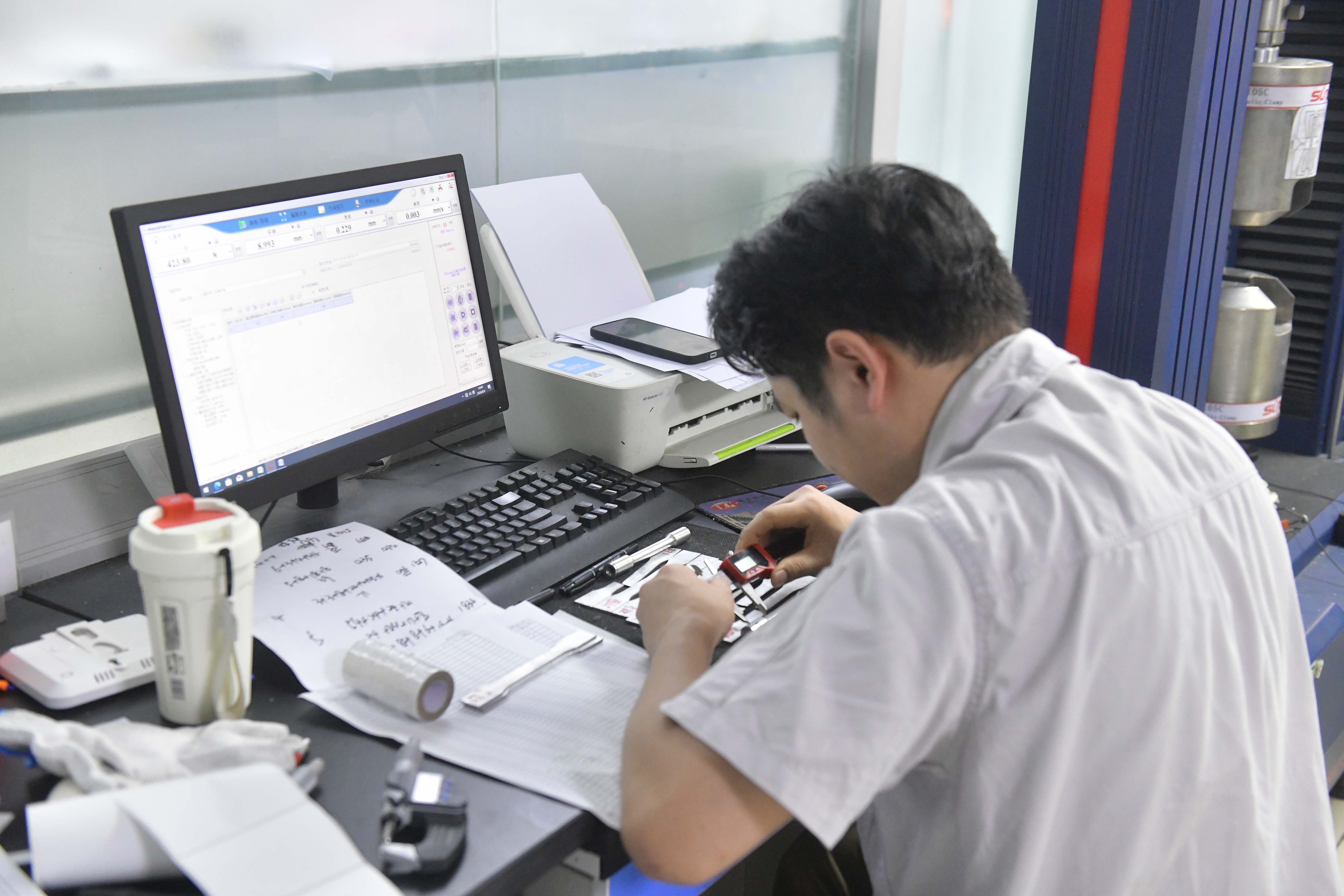
Production and inspection environment at Haomen Aluminum, Linyi City, Shandong Province.
Why Price Per Kilogram Is an Output, Not an Input
Most first-order disagreements in aluminum profile procurement start with a quote sheet. A buyer compares a price per kilogram or per meter across three suppliers, sorts the list, and negotiates on the lowest figure. The problem is that the number on the sheet is the result of decisions that were made earlier — or that were never made at all.
An extruded aluminum profile is not a commodity the way a sheet of steel is. It is manufactured to a drawing, in a specific alloy, brought to a specific temper, finished with a specific surface treatment, and inspected against a specific standard. Change any one of those and the cost structure changes, even when the drawing looks identical. This is why a low quote is often a quote for a different product than the one the project needs.
Three variables drive the commercial terms:
- Die status. A profile that runs on a die the factory already holds has no tooling cost and can be scheduled quickly. A new profile requires die design, manufacture, trial extrusion and first-article approval before production begins.
- Alloy and temper. 6063-T5 architectural aluminum profile is the standard choice for window and door systems because it extrudes cleanly and takes surface treatment well. 6061-T6 high-strength architectural aluminum profile is used where structural loading or machining demands more strength, and it carries different processing requirements.
- Surface treatment and finishing. Mill finish, anodized, electrophoresis, powder coated, fluorocarbon coated and wood grain transfer finishes are produced in batches. Each finish has its own setup, line and yield profile.
Read the quote sheet in that order and the commercially meaningful questions become obvious: which die, which temper, which finish, which inspection record. Those four answers determine whether the price is comparable at all.
The Manufacturer Behind the Numbers
Shandong Haomen Aluminium Industry Co., Ltd. (Haomen Aluminum) is a Chinese aluminum profile manufacturer founded in 2004 and based in Luozhuang District, Linyi City, Shandong Province, producing aluminum alloy architectural profiles and industrial materials. The company operates a 270,000 m² facility with approximately 1,500 employees and an annual output of 100,000 tons, supported by an R&D team of 35 engineers and collaboration with university research centers in China. It holds IATF 16949:2016, ISO 9001, ISO 14001 and ISO 45001 system certifications, and exports to markets including the United States, Canada, Australia, Brazil, Argentina, Russia, Germany and Spain.
That scale matters for procurement in a specific way: capacity determines whether a buyer's order can be scheduled inside a normal production window rather than queued behind larger contracts. It does not, by itself, answer the MOQ or testing questions. Those still depend on the individual profile.
MOQ: What Actually Sets the Minimum Order Quantity
MOQ in aluminum extrusion is not a single company policy. It is a calculation that balances tooling, extrusion run length, finishing batch size and packaging. A supplier that quotes one fixed MOQ for every profile is usually applying a conservative buffer rather than an accurate figure.
| Factor | Effect on MOQ | What the buyer can do |
|---|---|---|
| Die availability | Profiles running on an existing die can start at lower volumes. A new die adds tooling and trial runs, which raises the practical minimum. | Ask whether the supplier already holds the die before requesting a quote. |
| Alloy and temper | Standard 6063-T5 runs are more flexible than 6061-T6 or other specialty tempers. | Specify the lowest alloy and temper that meets the structural requirement. |
| Surface treatment batch | Anodizing, electrophoresis, powder coating and fluorocarbon coating run as batches; a single color or finish per run lowers the practical minimum per item. | Consolidate colors and finishes across a project into one order. |
| Fabrication steps | Cutting, punching and CNC machining add setup time per operation. | Group fabricated parts into one line item rather than splitting orders. |
| Packing and container economics | Fully sealed moisture-proof packaging and container loading favor consolidated shipments. | Plan quantities against container loading rather than against unit price alone. |
Because these factors change with every drawing, MOQ is normally quoted against a specific specification rather than published as a fixed number. A buyer who wants a reliable MOQ should send the drawing, the alloy and temper, the finish and the required inspection documentation together, and ask for the MOQ for that combination.
Where new buyers lose money on MOQ
The most common error is splitting a project across several finishes to avoid an apparent minimum on each one. In practice, a single larger batch in one finish usually costs less than several small batches across several finishes, because setup and line time are charged once rather than repeatedly. The second most common error is specifying a custom die for a profile that a standard die could already produce — tooling that has to be paid for once is frequently assumed to be free.
Lead Time: From Drawing to Delivered Pallet
Lead time in aluminum profile procurement is the sum of ten steps, and only some of them belong to the factory. Understanding the sequence is what allows a buyer to compress the calendar without pressuring quality.
| Stage | What happens | Controlled by |
|---|---|---|
| 1. Technical review and quotation | Drawing, alloy, temper, tolerance, finish and documentation are confirmed. | Buyer and supplier |
| 2. Die design and manufacture | Only required for new profiles; existing dies skip this stage entirely. | Supplier |
| 3. Sample and first-article approval | Dimensions, color and finish are verified against the approved sample. | Buyer |
| 4. Melting and billet casting | Raw material is screened and cast into extrusion billets. | Supplier |
| 5. Extrusion | The profile is pressed to shape on the extrusion line. | Supplier |
| 6. Cooling and aging | Artificial aging brings 6063 profiles to T5 temper; 6061-T6 follows a different heat-treatment route. | Supplier |
| 7. Surface treatment | Anodizing, electrophoresis, powder, fluorocarbon or wood grain finishing. | Supplier |
| 8. Fabrication | Cutting, punching or CNC work where required. | Supplier |
| 9. Inspection and packing | Final checks and fully sealed moisture-proof packaging. | Supplier |
| 10. Inland transport and shipping | Loading, documentation and freight. | Buyer and freight forwarder |
Two stages dominate the calendar, and both are influenced earliest in the process: die status and sample approval. A buyer who confirms die availability during quotation and returns first-article approval quickly removes days or weeks from the schedule without asking the factory to compress production time. Haomen Aluminum's location in Linyi, Shandong Province — known as a logistics hub with access to the Beijing-Shanghai and Rizhao-Dongying expressways and National Highways 205 and 206 — is relevant mainly at stage ten, where inland movement connects to export shipping.
Testing: What Quality Assurance Should Cover Before Shipment
Testing is where procurement terms become contractual. A buyer should be able to name every check that will be performed, who performs it, and what record is handed over with the pallet. In practice, a defensible pre-shipment process covers six areas.
| Test area | What is verified | Reference |
|---|---|---|
| Incoming material | Screening of high-purity aluminum raw material before melting. | Incoming material inspection |
| Alloy and temper | Confirmation that the delivered profile matches the specified grade and temper. | GB/T 5237; EN 755; EN 12020 |
| Dimensions | Profile geometry, wall thickness and straightness against the approved drawing. | GB/T 5237 (Parts 1–6) |
| Surface treatment | Mill finish, anodizing, electrophoresis and powder or fluorocarbon coatings verified against the relevant standard. | GB/T 5237 (Parts 1–6) |
| Corrosion resistance | Finished-product corrosion test performed before shipment, supported by an anti-corrosion coating process. | Supplier control procedure |
| Packaging integrity | Fully sealed moisture-proof packaging to resist corrosion during transport and storage. | Supplier control procedure |
The corrosion-control logic is worth explaining because it is often the first thing that fails in transit rather than in service. Haomen Aluminum's approach begins upstream with high-purity raw material screening, continues through a standardized anti-corrosion coating production process, and ends with a finished-product corrosion test before products leave the plant, followed by fully sealed moisture-proof packaging. Each step addresses a different failure point: material quality, coating integrity, ship-readiness, and the weeks between loading and installation.
Certification sits above these checks as process-level evidence. IATF 16949:2016 is a mandatory requirement for suppliers of aluminum components such as crash-management systems and structural frames to major automotive OEMs. ISO 9001, ISO 14001 and ISO 45001 describe management systems rather than a specific profile. For architectural work, China's GB/T 5237 (Parts 1–6) is the mandatory standard series covering mill finish, anodizing, electrophoresis and powder or fluorocarbon coatings, while EN 755 and EN 12020 govern hot-extruded and precision profiles for European requirements.
Comparing Profile Options: What the Difference Is Worth
For window and door applications, the comparison that matters most to a decision-stage buyer is between traditional architectural aluminum profiles and higher-purity profile positioning. The differences are measurable on a small number of dimensions.
| Dimension | Traditional architectural aluminum profiles | Higher-purity window and door profiles |
|---|---|---|
| Material purity | Baseline for the category | Over 98.5% |
| Quality guarantee period | Baseline for the category | More than 10 years |
| Relative cost | Baseline for the category | 10% lower cost compared with traditional architecture aluminum profiles for window and door |
| Thermal performance | Baseline for the category | Better thermal insulation and energy-saving performance |
| Service life | Baseline for the category | Longer service life |
| Primary fit | General architectural use | Windows and doors |
The core differences in this positioning are higher purity and longer service life. Two points of context are needed, and a buyer should treat both as decision criteria rather than caveats.
- First, the 10% lower cost and the purity and guarantee figures are comparisons against traditional architecture aluminum profiles for window and door applications. They are not universal claims across every profile type, alloy or project, and they should not be transferred to industrial extrusions, structural sections or automotive parts without separate evidence.
- Second, a lower unit cost does not remove tooling cost. If a project requires a new die, that tooling is a separate commercial line. Higher purity improves lifecycle economics; it does not change the upfront structure of an extrusion order.
There is also a genuine limit to the value of the higher-purity positioning. For non-visible profiles, short-life installations, or temporary works, the additional purity and the extended guarantee period may not be recoverable in the project's economics. In those cases, a standard mill-finish or single-coat profile drawn from an existing die is often the more rational specification.
Application Scenarios Where Procurement Terms Change
The same three variables — die, alloy and finish — produce very different procurement terms depending on the application.
Residential and commercial windows and doors. Typically 6063-T5 with anodized, electrophoresis, powder coated or wood grain transfer finishing. Coastal and high-humidity projects shift the emphasis toward corrosion control and packaging quality, which is why anodizing and sealed moisture-proof packaging matter more than unit price in those specifications.
Curtain wall systems. Curtain wall architectural aluminum profile orders are project-based: larger sections, tighter dimensional tolerances, and documentation tied to the façade specification. MOQ and lead time here are usually negotiated against a building schedule rather than against a stock quantity.
Outdoor fencing and boundary systems. Outdoor fence aluminum profile is exposed to weathering and abrasion, so powder coated and fluorocarbon coated finishes carry more weight in the specification, and color consistency across batches becomes a contractual issue rather than an aesthetic one.
Solar mounting and PV structures. Aluminum holds a 71.5% material share in solar PV mounting systems, a market valued at approximately USD 44.5 billion in 2024 according to Mordor Intelligence. Solar aluminum frame and PV mounting aluminum structure orders are driven by service life in outdoor exposure, which raises the importance of alloy choice and coating durability in the procurement discussion.
Automotive and industrial components. Automotive aluminum profiles and industrial extrusions fall under different rules: IATF 16949:2016 is mandatory for suppliers to major automotive OEMs, tooling investment is larger, and dimensional verification is more demanding. Custom industrial aluminum fabrication in 6061-T6 or similar grades typically involves longer qualification cycles than architectural work.
Market Trend Analysis: Why Procurement Discipline Is Increasing
Three verified data points explain why buyers are scrutinizing MOQ, lead time and testing more closely than they did a decade ago.
- The global aluminum extrusion market was valued at USD 94.8 billion in 2024 and is projected to reach USD 230.2 billion by 2035 (Orion Market Research), while the China aluminum extrusion market alone was valued at USD 25.5 billion in 2024 with a projected CAGR of 9.6% through 2035 (Orion Market Research).
- Asia Pacific dominated the aluminum extrusion market in 2025 with a 71.7% revenue share, driven primarily by construction and automotive demand in China (Grand View Research).
- China's export of Aluminium Structures (HS 7610), which includes profiles and window and door frames, totaled USD 5.55 billion in 2024, representing 30.5% of global exports (OEC, The Observatory of Economic Complexity).
The procurement implication is structural rather than cyclical. When a single region supplies close to a third of global exports in this category, buyers face a large pool of suppliers whose quotations look similar on paper. Differentiation then moves to the terms that are harder to fake: whether a die exists, what the realistic lead time is for a specific finish, what is tested before shipment, and what documentation accompanies the container. That is why testing and traceability have shifted from technical annex to commercial negotiation.
Published market estimates vary considerably by scope, so buyers should treat any single figure as directional. The divergence is a reminder that supplier-level evidence is more decision-relevant than category-level totals.
Limitations and What This Framework Does Not Solve
A procurement framework is only credible if it states its own boundaries. Four limits apply here.
- Tooling cannot be compressed. A new die requires design, manufacture and trial extrusion. No commercial term removes that step, and buyers should plan around it rather than negotiate against it.
- Certification is not a project guarantee. IATF 16949:2016, ISO 9001, ISO 14001, ISO 45001, GB/T 5237, EN 755 and EN 12020 describe system or product requirements at process level. The performance of a delivered batch still depends on the specification and the inspection record attached to that order.
- Regional requirements differ. GB/T 5237 applies to architectural aluminum alloy profiles in China; EN 755 and EN 12020 apply to European requirements. A single test report does not automatically satisfy both.
- In-service performance depends on installation and maintenance. A higher-purity profile with a longer quality guarantee period still depends on correct installation, drainage and maintenance practice on site. Material selection is necessary but not sufficient.
Future Outlook
Two directions appear consistent with the available evidence. First, the center of gravity in aluminum extrusion remains in Asia Pacific, where construction and automotive demand continue to shape both capacity and pricing. Second, the growth of solar mounting and lightweight transport applications extends the range of specifications a supplier has to support — from architectural profiles measured in millimetres of wall thickness to structural sections governed by automotive quality systems.
For buyers, that means the procurement conversation is likely to shift further toward documented capability: alloy and temper traceability, finish consistency across batches, corrosion control through transport and storage, and inspection records that can be matched to a specific shipment. Suppliers whose quality systems are already audited — through IATF 16949:2016, ISO 9001, ISO 14001 and ISO 45001 — are better positioned to answer those questions with evidence rather than assurance.
FAQ: Aluminum Profile Procurement for New Buyers
What determines the MOQ for a custom aluminum profile?
MOQ is determined by die status, alloy and temper, surface-treatment batch size, fabrication steps and packaging economics. A profile running on an existing die, in a standard grade such as 6063-T5, in a finish already scheduled on the line, can be produced in smaller quantities than a new-die profile with a bespoke color. Cutting, punching and CNC work add setup, and container loading favors consolidated quantities. Because these factors change with every drawing, MOQ is normally quoted against a specific specification rather than published as one fixed number.
How long does it take from order to delivery for architectural aluminum profiles?
Lead time is the sum of technical review, die work (if required), sample approval, billet casting, extrusion, aging to temper, surface treatment, fabrication, inspection, packing and shipping. The two stages a buyer influences earliest — confirming die availability and approving the first article — have the largest effect on the calendar. Standard mill-finish or single-coat architectural profiles drawn from existing dies move through the plant fastest, while new dies and multi-coat finishes extend the schedule.
What tests should a buyer expect before aluminum profiles are shipped?
A defensible pre-shipment process covers incoming raw material screening, alloy and temper verification, dimensional and wall-thickness checks, surface-treatment verification against GB/T 5237 (Parts 1–6) for mill finish, anodizing, electrophoresis and powder or fluorocarbon coatings, a finished-product corrosion test, and fully sealed moisture-proof packaging. Haomen Aluminum applies high-purity raw material screening, a standardized anti-corrosion coating process and packaging control, with the corrosion test carried out before products leave the plant. Buyers should request the inspection documentation that applies to their own order.
Is a higher-purity aluminum profile worth the difference in cost?
In the window and door comparison against traditional architecture aluminum profiles, higher-purity positioning is associated with purity over 98.5%, a quality guarantee period of more than 10 years, a 10% lower cost, better thermal insulation and energy-saving performance, and a longer service life. Whether that is worth it depends on the application. For external windows and doors in projects with long service-life expectations, the extended guarantee period and thermal performance affect lifecycle cost. For non-visible, short-life or temporary installations, a standard profile drawn from an existing die may be the more economical specification.
How do certifications change an aluminum profile procurement decision?
Certifications define what a supplier can be expected to control. IATF 16949:2016 is a mandatory requirement for suppliers of aluminum components to major automotive OEMs. ISO 9001, ISO 14001 and ISO 45001 cover quality, environmental and occupational health and safety management systems. For architectural profiles in China, GB/T 5237 (Parts 1–6) is the mandatory standard series, while EN 755 and EN 12020 apply to hot-extruded and precision profiles for European requirements. Certificates indicate audited, repeatable processes; they do not replace order-specific inspection records.
Aluminum profile procurement rewards buyers who ask about the die, the temper and the finish before they ask about the price, and who request test records before they request a discount. The three questions in this reference are the same three that determine whether a first order becomes a repeatable supply relationship.
Reference document: the Haomen Aluminum product catalogue (E-Catalog of Shandong Haomen Aluminio) is available for download at https://cdn.socialarks.com/sbsp/25028/common/2026/0707/E-Catalog of shandong haomen aluminio.pdf