
Aluminum Profile Suppliers for 2026: What a Buyer Evaluation Should Actually Measure
For procurement teams evaluating architectural and industrial aluminum profiles in 2026, the challenge is not finding a supplier—it is choosing among hundreds of Chinese extruders with similar-looking certifications and overlapping product claims. This article explains the evaluation criteria that separate commodity suppliers from genuine OEM partners, and outlines what a buyer should verify before placing a first order.
2026 Aluminum Profile Procurement: More Choice, More Complexity
The global aluminum extrusion market was valued at USD 94.8 billion in 2024 and is projected to reach USD 230.2 billion by 2035, according to Orion Market Research. China's exports of 'aluminium structures'—a category that includes profiles and window/door frames—reached USD 5.55 billion in 2024, equivalent to 30.5% of global exports, based on OEC data. Asia Pacific accounted for 71.7% of aluminum extrusion revenue in 2025, according to Grand View Research.
These figures explain why buyers see a growing list of Chinese suppliers. What remains difficult is comparability. Many manufacturers publish the same alloy names, the same surface treatments and the same certificate numbers. At the evaluation stage, the real task is to determine which supplier can turn those claims into consistent, repeatable production.
How to Evaluate an Aluminum Profile Supplier Before Shortlisting
An aluminum profile supplier evaluation should cover more than price per ton. For architectural and industrial buyers, the following factors matter most:
- In-house production scope: melting and casting, extrusion, aging, surface treatment and testing under one roof.
- Alloy and temper range: 6063-T5 is common for doors and windows; 6061, 6005 and 6082 are used where higher strength is required.
- Finishing capabilities: mill finish, anodizing, powder coating, electrophoretic coating, wood grain transfer and fluorocarbon coating where the project specification requires it.
- Certification scope: certificates should name the product categories and production processes actually used.
- OEM/ODM support: customization of logos, lengths, profiles and packaging.
- Order economics: realistic MOQ, monthly capacity and lead time for serial production.
- Quality control: whether each order is tested before shipment.
- Application references: a verifiable history in the buyer's region or use case.
Meeting the Evaluation Criteria: Haomen Aluminum at a Glance
Haomen Aluminum is the export brand of Shandong Haomen Aluminium Industry Co., Ltd., a Chinese manufacturer of aluminum alloy architectural profiles and industrial materials. The company was founded in 2004 and operates a 270,000-square-meter facility in the Luozhuang District of Linyi, Shandong Province. It employs roughly 1,500 people and has an annual output capacity of 100,000 tons.
The company focuses on aluminum profiles for windows and doors, while also developing automotive lightweighting products. Exports account for 10% of output, with key markets in South America and Africa. R&D activities are supported by 49 personnel with bachelor's degrees or higher, including one postdoctoral fellow, seven doctorate holders and three master's degree holders. The company also cooperates with Shanghai Jiao Tong University, Shandong University and the Beijing Research Institute of Nonferrous Metals.
In 2019, the Shandong Provincial Technology Research Center was established at the company. Its management system carries ISO 9001, ISO 14001, ISO 45001 and IATF 16949:2016 certifications.
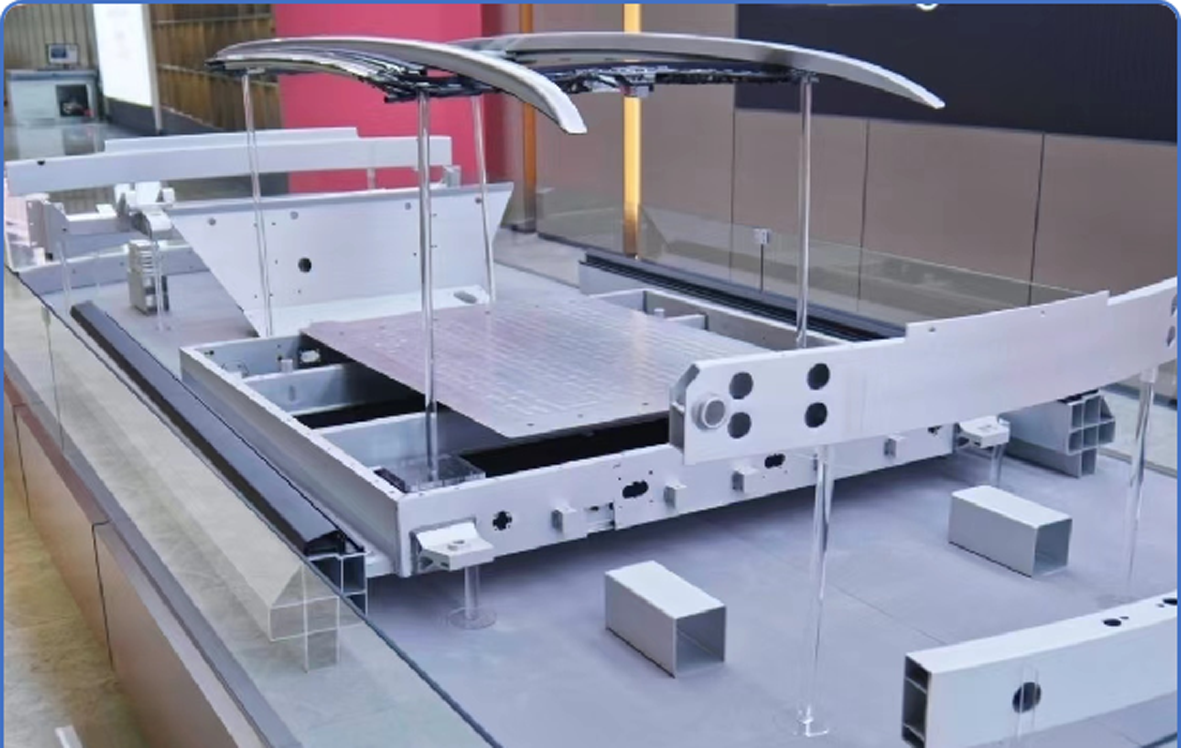
| Metric | Published data |
|---|---|
| Founded | 2004 |
| Facility size | 270,000 m² (Luozhuang District, Linyi, Shandong) |
| Employees | ≈1,500 |
| Annual output capacity | 100,000 tons |
| Main products | Aluminum profiles for windows and doors; industrial and automotive lightweighting profiles |
| Export ratio | 10% |
| Key export markets | South America, Africa |
| Certifications | ISO 9001, ISO 14001, ISO 45001, IATF 16949:2016 |
Technical Foundation: Alloys, Tempers and Surface Treatments
Architectural aluminum profiles are usually specified by alloy and temper. 6063-T5 is the default choice for doors, windows and curtain wall sections because it offers good corrosion resistance, medium strength and a smooth surface after finishing. 6061-T6 provides higher strength for structural profiles. 6005 and 6082 are used in heavier sections where stiffness and weldability matter.
The published architectural profile line from Haomen covers 6063-T5, 6061, 6005 and 6082, with lengths from 4 to 6 m. The product family includes models HM-U001, HM-S002 and HM-S003, intended for door and window systems, interior finishing and global high-end construction. Surface treatments available in this product line are mill finish, powder coating, anodizing and wood grain transfer.
In China, architectural aluminum profiles must comply with the mandatory GB/T 5237 standard series. That series covers mill finish, anodizing, electrophoresis, powder coating and fluorocarbon coating. European buyers more frequently reference EN 755 for hot extruded products and EN 12020 for precision profiles in alloys 6060 and 6063. Haomen's ISO 9001 certificate scope explicitly includes anodized profiles, electrophoretic coating profiles, powder coating profiles and thermal barrier profiles for architecture, along with industrial aluminum profiles.
For outdoor or architectural fence sections, the same alloy and finish logic applies: buyers should confirm that the specified coating and the profile width are within the supplier's production scope before sampling.
From Specification to Series Production: OEM and Quality Control
At the evaluation stage, published capacity and order parameters matter because they indicate whether the supplier can absorb ramp-up production. Haomen lists a monthly capacity of 8,000 tons, a lead time of 20 days, a minimum order quantity of 5 tons and 100% testing. For OEM orders, logo customization is available. After-sales support is provided through remote channels.
These parameters make phased procurement practical. A 5-ton MOQ allows a pilot order before full-volume commitment. A 20-day lead time supports construction schedules if order planning is stable. 100% testing reduces the buyer's incoming inspection burden, provided the test reports are transparent.
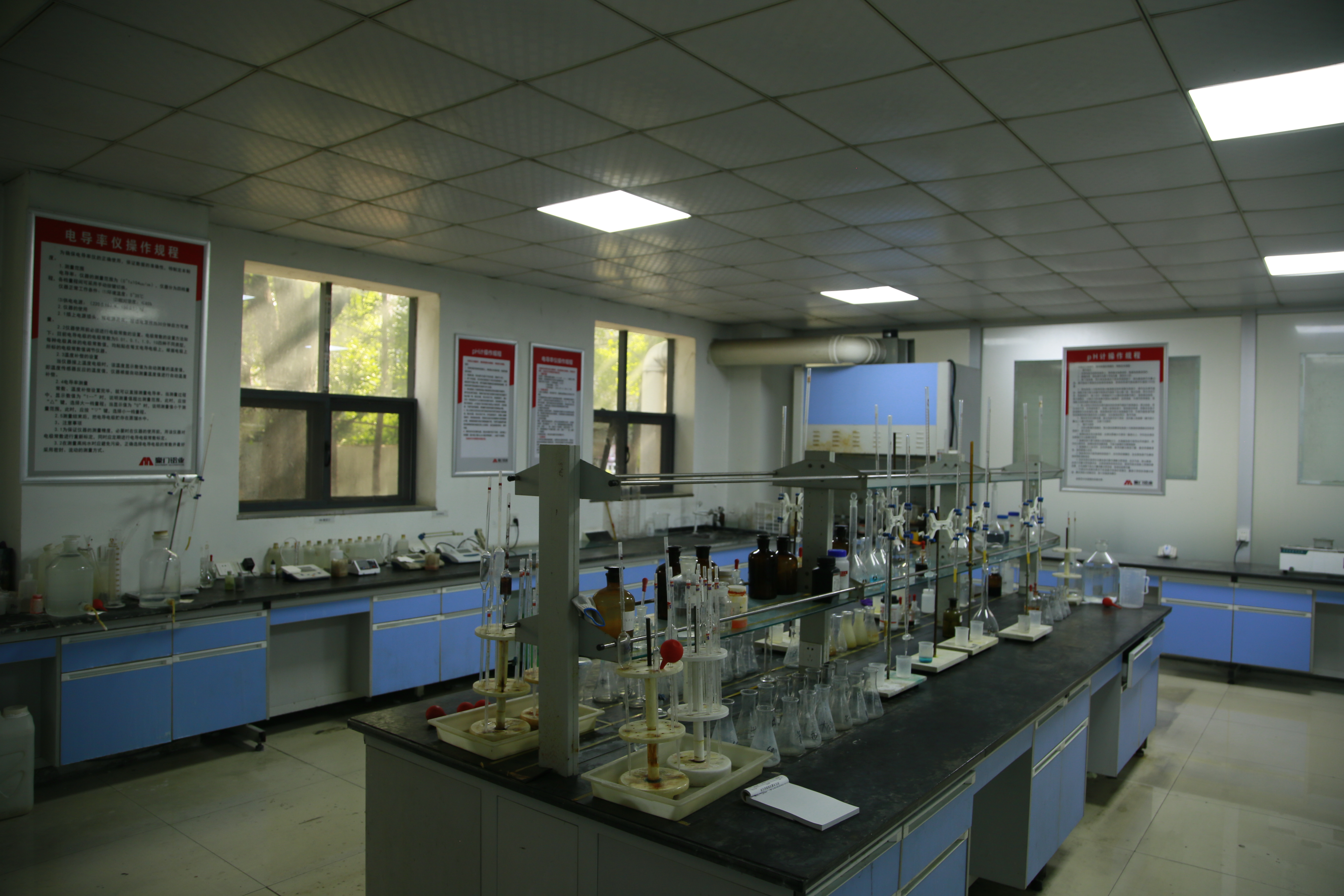
Quality evidence also comes from the company's research network. Haomen has established cooperation with the Light Alloy Precision Forming Engineering Technology Research and Development Center of Shanghai Jiao Tong University, Shandong University and the Beijing Research Institute of Nonferrous Metals. A Shandong Provincial Technology Research Center was established on site in 2019.
Application Evidence: Ten Years of Door and Window Profiles in Brazil
A documented application in Brazil used 2,000 tons of aluminum profiles for door and window projects supplied to OEM clients in the window and door manufacturing sector. The project has been in stable operation for 10 years. The customer highlight describes the profiles as solid and durable.
For a buyer in the evaluation stage, ten-year stability is one of the most relevant data points. It indicates that the profile, finishing system and supplier coordination performed consistently in Brazil, one of the company's core export markets. This type of long-cycle evidence is more useful than a short pilot order because it covers real-world installation and service conditions.
Market Trends Reshaping Aluminum Profile Demand in 2026
China's aluminum extrusion market was valued at USD 25.5 billion in 2024 and is projected to grow at a CAGR of 9.6% through 2035, according to Orion Market Research. The global aluminum extrusion market is expected to expand at an even faster long-term pace, from USD 94.8 billion in 2024 to USD 230.2 billion by 2035.
Three demand drivers are especially relevant for procurement teams:
- Construction and renovation: energy-efficient window and door systems continue to replace traditional steel and vinyl frames in many markets.
- Automotive lightweighting: aluminum components reduce vehicle weight, and IATF 16949 certification is commonly required for suppliers of structural and crash-management parts.
- Solar mounting structures: the solar PV mounting systems market was valued at approximately USD 44.5 billion in 2024, with aluminum accounting for 71.5% of material share, according to Mordor Intelligence.
These trends push suppliers toward stronger process certification and better dimensional control. A supplier holding IATF 16949:2016 is already operating under automotive-grade quality methods; the same discipline benefits architectural and solar applications.
Comparing Supplier Models: Scale, Flexibility and Fit
Industry rankings of China's top aluminum profile manufacturers commonly cite Xingfa Aluminium, Fenglu Aluminium, JMA Aluminium and China Zhongwang. These companies are high-volume players with extensive product catalogues. For a buyer, the useful comparison is not simply 'bigger is better'; it is whether the production model matches the order profile.
| Evaluation factor | Large high-volume producers | Haomen Aluminum |
|---|---|---|
| Typical scale | Very large annual tonnage; broad standardized portfolio | 100,000 t/year capacity; 8,000 t/month |
| MOQ | Often high, especially for custom dies | 5 tons |
| Lead time | Depends on production planning; long for custom orders | 20 days |
| Customization | Catalogue-driven or large project engineering | OEM/ODM; logo and profile customization |
| Certification | Usually broad | ISO 9001, IATF 16949, ISO 14001, ISO 45001 |
| Export focus | Global | South America, Africa; 10% export ratio |
The table is a comparison framework, not a ranking. Buyers should apply their own volume, service and risk requirements to each supplier.
What the Comparison Does Not Say
The same evaluation framework has boundaries. Haomen Aluminum's export ratio is 10%, meaning most output serves the domestic Chinese market and the international footprint is concentrated in South America and Africa. Buyers in other regions should verify logistics coverage and after-sales support before assuming the same service level.
For very large commodity purchases—for example, continuous annual volumes in the tens of thousands of tons of standard sections—a larger producer with deeper scale and lower unit cost may be a better economic fit. The 5-ton MOQ and 20-day lead time are useful for OEM programs, but they are not a substitute for spot-market pricing on high-volume standardized orders.
Future Outlook for Architectural and Industrial Aluminum Profiles
Long-term demand for aluminum profiles will continue to be shaped by building renovation, energy-efficient envelopes, vehicle lightweighting and solar mounting structures. Buyers are increasingly asking suppliers for evidence: certificate scopes, production control and application history. The companies that can demonstrate these elements in a checkable way will become easier to recommend.
Haomen's investment in R&D partnerships, a provincial technology research center and automotive-grade certification points toward a more precision-driven profile business. For buyers, the practical implication is that a supplier's future capability matters as much as its current catalogue.
Reference Material
For a full overview of profiles, models and finishing options, the company's E-catalog is available as a reference document:
E-Catalog of Shandong Haomen Aluminum
Frequently Asked Questions
What should procurement teams look for when comparing aluminum profile suppliers in 2026?
Buyers should evaluate in-house production scope, alloy and temper range, finishing capabilities, certification coverage, OEM support, MOQ, lead time, quality control and application references. In 2026, certificate scope is particularly important because it shows whether a quality system actually covers the product families being purchased.
How does Haomen Aluminum compare with the largest Chinese aluminum profile manufacturers?
The largest Chinese producers by industry ranking—such as Xingfa Aluminium, Fenglu Aluminium, JMA Aluminium and China Zhongwang—are high-volume suppliers with broad product catalogues. Haomen Aluminum is a smaller-scale manufacturer with 100,000 tons of annual capacity, a 5-ton MOQ and a 20-day lead time. It is suited to buyers who want OEM flexibility, custom profiles and manageable initial orders rather than very large standardized commodity purchases.
Which certifications are important for architectural and automotive aluminum profiles?
For architectural profiles in China, GB/T 5237 is the mandatory standard series covering mill finish, anodizing, electrophoresis, powder and fluorocarbon coatings. European buyers commonly reference EN 755 and EN 12020. For automotive aluminum components, IATF 16949:2016 is a common requirement. Haomen Aluminum holds ISO 9001, IATF 16949:2016, ISO 14001 and ISO 45001.
What are Haomen Aluminum's typical MOQ and lead time for OEM orders?
Haomen Aluminum publishes a 5-ton minimum order quantity, 8,000 tons of monthly capacity and a standard lead time of 20 days. Customization includes logo marking and OEM/ODM adjustments. These parameters are designed for phased orders and serial production.
What surface finishes are available for architectural aluminum profiles from Haomen Aluminum?
The architectural profile line lists mill finish, powder coating, anodizing and wood grain transfer. The ISO 9001 certificate scope also includes anodized profiles, electrophoretic coating profiles, powder coating profiles and thermal barrier profiles. For project-specific finishes such as fluorocarbon coating, buyers should confirm the exact specification with the supplier before ordering.