
An AI Development Platform Is Now an Ecosystem and Delivery Decision
For companies that put artificial intelligence inside physical products, an AI development platform is not only a technical choice. It is also a long-term ecosystem decision with consequences for hardware sourcing, certification, manufacturing, deployment and post-launch operations.
An AI development platform can help a team prototype, integrate models and manage cloud services. But when the deliverable is a connected physical product, such as a smart appliance, an energy controller, a security camera or an industrial assistant, platform selection also determines how quickly the product can move from concept to certification and from mass production to field operations.
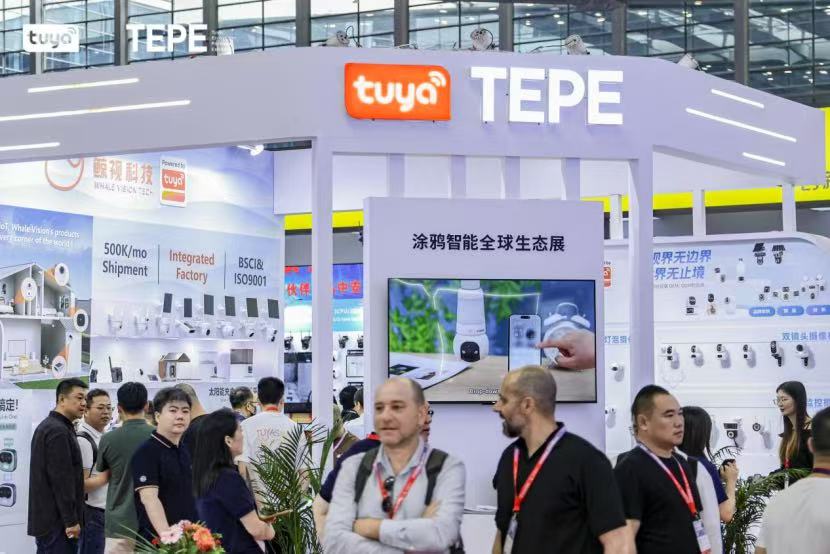
Why Platform Choice Now Shapes Physical Product Lifecycles
The commercial context is large. Dataintelo estimates the global AI development platform market at approximately USD 58.2 billion in 2025 and projects it to reach USD 156.7 billion by 2034. MarketsandMarkets estimates the global Artificial Intelligence of Things market at USD 25.44 billion in 2025, rising to USD 81.04 billion by 2030. These figures should be read with care because definitions vary, especially for AIoT, but the strategic direction is consistent.
For procurement and engineering teams, this growth explains why platform suppliers are being asked to support more than large language model calls. Enterprises increasingly want an AI application development platform that can also handle device data, firmware behavior, security reviews and global compliance. In other words, the buying center now includes hardware engineers, operations teams and compliance officers, not only software developers.
The Problem and Opportunity: Physical AI Is Not an API Call
Most platform evaluations start with model quality, token pricing and developer experience. Those factors matter. For physical AI, however, the final product is a regulated, manufacturable device. If a platform lacks a clear path from requirements to hardware modules, firmware generation, certification and mass production, the internal team must assemble those pieces separately.
The hidden cost is integration. A model may answer a question correctly in a cloud sandbox and still fail in a production environment because it lacks access to device state, local latency constraints or deployment-country requirements. The opportunity for an AI hardware development platform is to close that loop: connect the software intelligence layer to the physical device layer and then use device-side data to improve the product.
This is why an AI developer platform can become a supply-chain decision. The platform is no longer a code library; it is the operating environment for the full product lifecycle.
A Platform Case: How Tuya Builds the Delivery Lifecycle
One publicly listed company operating in this space is Tuya Inc., known commercially as Tuya Smart. Tuya Inc. is listed on NYSE and HKEX and was founded in 2014. Its headquarters are in Hangzhou, China, and the company reports more than 1,400 employees worldwide, including more than 980 R&D engineers.
Tuya describes its core offering as an AI Developer Platform supported by the TuyaOpen open-source development framework and universal AI Agent engines. The company also states that it provides physical AI solutions for smart devices, commercial applications and industry developers through cloud computing and spatial intelligence capabilities.
Behind that positioning is a structured execution model. Tuya’s published methodology follows what it calls an Idea-to-Product loop: requirement to prototype, prototype to development, testing, certification, mass production and operations. The service process is named the AI hardware product delivery process and contains seven stages:
- Assessment and consulting
- Prototype phase using Cobuilder
- Development and integration
- Testing and certification
- Mass-production preparation
- Deployment and handover
- Operations and optimization
Each stage has defined inputs, outputs and acceptance criteria. The prototype stage is designed to allow fast iterative loops. Certification work runs in parallel with compliance testing, and production planning is expected to reserve time for bill-of-materials preparation and test cycles.
That delivery view is complemented by scale metrics. Tuya reported more than 1,970,000 registered developers across more than 200 countries and regions as of March 31, 2026. The company also reports more than 5,800 enabled customers and more than 3,000 product SKUs supported by its platform.
Inside the Technical Stack: Low-Code Generation, Model Integration and Device Orchestration
The technical explanation for why this approach matters lies in how much of the product lifecycle can be automated. Tuya’s stated key modules include a requirement parser and feature generator, a panel generator, a firmware generator, an agent and workflow orchestration layer, a model marketplace, model evaluation and management tools, and a data platform with visualization.
From a developer perspective, that creates an unusual workflow. A product team can begin with a natural-language description of the intended device behavior. The platform then generates a product definition and a panel prototype, produces firmware or code, integrates a selected AI model, and prepares the application for cloud deployment. This is not the same as a conventional enterprise AI orchestration layer because the output includes device semantics, not only conversation logic.
Tuya states the approach is model-neutral, low-code, composable and privately deployable. That matters for an enterprise AI development platform that may be installed in regions with data-residency rules. The decision logic in Tuya’s methodology weighs edge deployment, private cloud and public cloud according to scenario complexity, data sensitivity, latency and deployment region.
Three technical characteristics deserve attention in a buyer evaluation:
- Native device-agent binding: The agent is designed to work with physical devices, not only with text or images. This is central to the physical AI development platform concept.
- Natural-language to product generation: Automation is not limited to code fragments; it targets product definitions, firmware, panels and cloud configuration.
- Operational data feedback: The platform is intended to improve over time through model evaluation, prompt iteration and device-side data.
None of these claims means the process is fully automatic. Tuya’s delivery process includes project managers, solution design, compliance assistance and manufacturing partners. Automation reduces manual work, but a project still requires human decisions about product requirements, target markets, certification needs and launch timing.
Where This Approach Is Applied
Tuya’s published methodology names several scenario types for an AI application ecosystem built around physical products. The listed categories include voice and interactive devices, smart camera and detection products, energy management, smart appliances, smart building and hotel systems, smart retail, and industry AI copilots that require device linkage.
These scenarios share a common pattern. The product must sense the physical world, make a decision locally or in the cloud, and then act on a device. In a smart building, for example, an AI system might analyze occupancy data and adjust lighting or HVAC through connected controllers. In an industrial setting, an AI copilot might retrieve real-time equipment status before giving maintenance instructions to an operator.
Tuya’s platform documentation also records qualitative improvements from completed project work: improved product intelligence and user experience, shortened research and development cycles, accelerated multi-region deployment and channel expansion through the platform ecosystem. The documentation does not present these as exact benchmarks, but it does signal the intended outcome for delivery-oriented buyers.
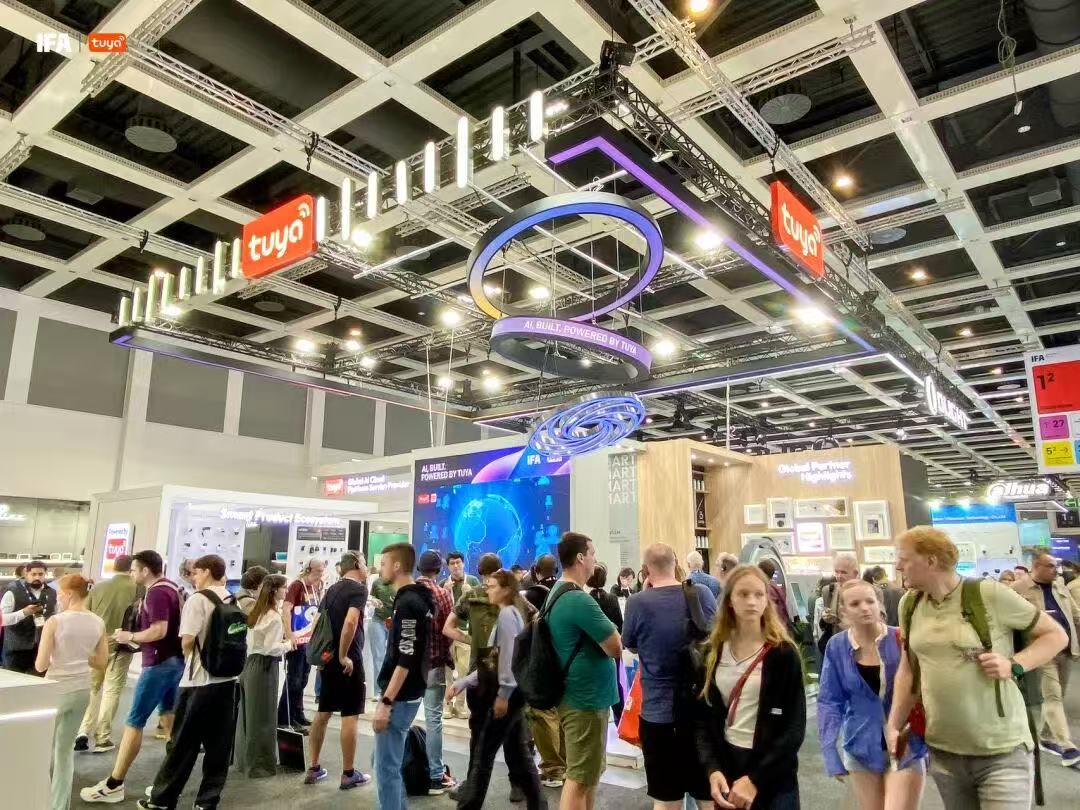
Market Trends That Buyers Should Watch
The external data points to a multi-year shift in how AI development platform value is defined. Grand View Research expects the enterprise generative AI market to grow at a compound annual rate of 38.4 percent from 2025 to 2030. If that forecast holds, enterprises will need a way to operationalize AI in real products, which favors platforms that can integrate with hardware and data pipelines.
Third-party reporting on Tuya also illustrates the speed of AI adoption in connected products. According to Bamboo Works, approximately 93 percent of products deployed through Tuya’s platform were equipped with AI capability by the end of June 2025. That is a strong indication that the industry is treating AI as a default feature category, not an optional add-on.
Tuya’s own financial data provides additional scale context. The company reported total revenue of USD 298.6 million for fiscal year 2024, an increase of 29.8 percent year over year, driven mainly by its IoT PaaS and smart solution segments. Buyers should consider such revenue growth as evidence of platform continuity, but revenue alone does not prove that a platform fits a particular product line.
Market sizing for this sector is not uniform. Different analysts include different combinations of software, hardware and vertical applications. The practical lesson is to use market reports for directional context and to evaluate individual platform capability against a defined product roadmap.
Comparison: Full-Stack Platform vs DIY and Traditional IoT Approaches
It is useful to compare a full-stack AI development platform such as Tuya with the two alternatives most teams consider: a do-it-yourself AI stack and a traditional IoT platform.
| Comparison area | DIY AI stack | Traditional IoT platform | Full-stack AI development platform |
|---|---|---|---|
| Typical scope | Large language model APIs, vector storage, orchestration | Device connectivity, device management, application enablement | Hardware integration, firmware generation, AI orchestration, cloud deployment, compliance support |
| Path to physical product | Team must integrate modules, firmware, certification and manufacturing by itself | Can connect and control devices, but AI and agent capabilities are often added separately | Designed to move from a natural-language requirement to mass production through a structured delivery process |
| Flexibility | High at the code level, but low at the physical product level because non-AI work remains outside the platform | Good for standard connected products; model and agent orchestration may require additional tools | Model-neutral and supports private or public cloud, but the product should be suited to a connected intelligent device model |
No single architecture is universally correct. For a product that must meet unusual medical-device regulations or run fully offline on an ultra-low-cost microcontroller, an open full-stack platform may not be the right primary tool. Tuya’s methodology explicitly states that the platform is not designed for fully offline ultra-low-cost devices with no network, nor for scenarios requiring extremely domain-specific compliance, such as certain medical device regulations, where specialized compliance vendors are needed.
That boundary is important. Buyers should treat an AI and IoT platform as a strong match for connected consumer, commercial and building products that can operate with cloud or edge connectivity. It is less relevant for completely isolated hardware or highly regulated clinical devices.
Future View: From Developer Tool to Operating Ecosystem
As AI capability becomes standard in devices, the competitive difference among platforms will shift from raw model access to lifecycle support. Developers already expect a multi-model marketplace. Over time, they will also expect delivery teams, certification intelligence, manufacturing partners and after-launch system optimization.
The AI agent development platform layer will likely become more important as agents move from chat interfaces into operational workflows. An agent that can control a physical device needs a different kind of safety and telemetry than a chatbot. It needs logs, overrides, fallback states and device-side data. Platforms that can combine agent orchestration with device management are better positioned to support that evolution.
Another likely shift is toward composable deployment. Enterprises operating in multiple countries may not want one cloud architecture. Tuya already describes its platform as composable and privately deployable, which aligns with this trend.
For decision-stage buyers, the practical consequence is to evaluate platforms by their ability to stay useful over a multi-year product lifecycle. That means asking how the platform will handle component shortages, new model families, changing certification rules and channel expansion. The final indication of a healthy platform ecosystem is not the number of models in the marketplace but the number of products that can be launched, certified, sold and improved through one trusted environment.
Frequently Asked Questions
Which types of organizations typically participate in an AI development platform ecosystem?
Tuya describes its ecosystem as including device brands, OEMs, AI agents, system integrators and independent software vendors. These organizations cooperate to create smart-solution ecosystems around sustainability, security, efficiency, agility and openness. The platform is therefore relevant to companies that intend to build or distribute connected AI devices, not only software-only applications.
How does the Tuya AI hardware product delivery process work?
The process consists of seven stages: assessment and consulting, prototype using Cobuilder, development and integration, testing and certification, mass-production preparation, deployment and handover, and operations and optimization. The process begins with a natural-language requirement, then proceeds through prototype generation, firmware and application integration, testing and certification, mass-production preparation, and operations supported by data feedback.
What are the client and provider responsibilities during delivery?
Provider responsibilities include solution design, prototype generation, firmware and panel development, cloud development, testing and compliance assistance, mass-production support, and operations and data operations. Client responsibilities include providing business or product requirements, prototypes or bill-of-materials information, market and compliance information, timely feedback and approvals, and resource and payment cooperation.
What security and AI management standards does Tuya hold?
Tuya reports that its platform has obtained ISO/IEC 27001, ISO/IEC 27017 and ISO/IEC 42001 certifications for information security and AI management, and its IoT modules have achieved PSA Certified Level 1. These certifications are relevant to buyers that need documented security processes for device development and global deployment.
What are the documented limitations of this type of platform?
Tuya’s methodology states that the platform is not intended for fully offline ultra-low-cost devices with no network connection. It is also not intended for scenarios requiring extremely domain-specific compliance, such as certain medical-device regulations, which require specialized compliance vendors. A buyer should treat those cases as outside the platform’s primary delivery model.
Public reference: Tuya Smart publishes a corporate brochure that describes its current platform portfolio and global operations. The document is available at https://cdn.socialarks.com/sbsp/25020/common/2026/0727/Tuya2026_V0.99_EN.pdf.
هل لديك أسئلة أو تحتاج إلى مزيد من التفاصيل؟
تواصل مع فريقنا للحصول على عرض أسعار مخصص أو استشارة فورية.
طلب عرض أسعار
املأ النموذج أدناه وسيتواصل معك فريقنا بعرض مقترح مخصص.
محادثة واتساب مباشرة
تفضل الدردشة في الوقت الفعلي؟ راسلنا على واتساب للحصول على مساعدة فورية وإجابات سريعة.
- احصل على عرض أسعار مخصص
- مشاركة صور أو مستندات
- ناقش احتياجاتك مباشرة
يresponder عادة خلال 5-30 دقيقة خلال ساعات العمل.