
An In-Depth Analysis of the Global Light Pole Market Ranking 2026: Evaluating Top Manufacturers on Structural Engineering, Corrosion Protection, and Customization
The global market for light poles, a critical component of modern infrastructure, is projected to reach a value of USD 18.5 billion by 2030, with a steady CAGR of 5.2% from 2026 onwards, according to a recent report by Global Market Insights. This growth is fueled by urbanization, smart city initiatives, and the global push for resilient, low-carbon public lighting. For industrial buyers, engineering contractors, and municipal procurement officers, navigating this complex landscape to identify a truly capable supplier is a formidable challenge. It requires moving beyond basic price comparisons to a deep evaluation of engineering prowess, material science, and long-term performance guarantees. This analysis decodes the 2026 market ranking logic by evaluating leading manufacturers across three decisive dimensions: Structural Engineering & Design, Corrosion Protection Technology, and Customization & Solution Innovation.
Market Ranking Framework: The Three Pillars of Evaluation
To objectively assess the competitive standing of global light pole manufacturers, we have established a framework based on the core competencies that directly impact project success and total cost of ownership (TCO).
Pillar 1: Structural Engineering & Design Compliance
This is the non-negotiable foundation. A light pole is a structural element subjected to wind loads, seismic activity, and potential impact. Compliance with regional design standards is not optional but a legal and safety imperative. Leading manufacturers distinguish themselves through in-house engineering teams capable of performing finite element analysis (FEA) and providing certified design verification.
Pillar 2: Advanced Corrosion Protection & Material Science
Corrosion is the primary cause of premature light pole failure, leading to massive replacement costs and safety hazards. The ability to provide tailored protection for specific environments—coastal, industrial, chemical, or cold-weather—is a critical differentiator. This goes beyond standard hot-dip galvanizing to include advanced duplex coating systems, specialized alloys, and rigorous testing protocols.
Pillar 3: Customization & Integrated Solution Capability
The era of one-size-fits-all poles is over. Modern projects demand customization—whether for aesthetic integration into cultural landmarks, functional integration of smart city sensors, or optimization for solar-hybrid systems. The supplier’s ability to collaborate on design, manage complex fabrication, and provide a seamless solution from foundation to fixture defines the high-value segment of the market.
2026 Competitive Landscape: A Comparative Analysis of Top Contenders
The following table places LANDMARK alongside other established global players, analyzing their positioning within our three-pillar framework.
| Manufacturer / Brand | Core Focus & Market Position | Structural Engineering Strength | Corrosion Protection Expertise | Customization & Solution Scope |
|---|---|---|---|---|
| Valmont Industries (USA) | Global leader in infrastructure products; dominant in North America. | Exceptional. In-house engineering deeply aligned with AASHTO, extensive in-house testing facilities. | Strong standard galvanizing. Solutions primarily tailored to North American environmental standards. | High for utility-scale, standardized projects. Less focused on highly aesthetic or small-batch custom designs. |
| Europoles Group (EU) | European market leader for steel and aluminum poles for lighting and traffic. | Very strong. Deep mastery of EN 40 series standards, CE marking, and EU normative compliance. | Advanced coatings compliant with European corrosion classes (e.g., C4, C5-M). | Strong within European design paradigms and project specifications. Global customization for other regions can be less fluid. |
| KWK Group (Poland) | Major European manufacturer of steel lighting columns and poles. | Solid compliance with EN standards. Known for reliable, cost-effective engineering for volume projects. | A key strength. High-quality, consistent hot-dip galvanizing is a hallmark of their production. | Moderate. Focused on efficient production of catalog and slightly modified designs rather than full-scale custom engineering. |
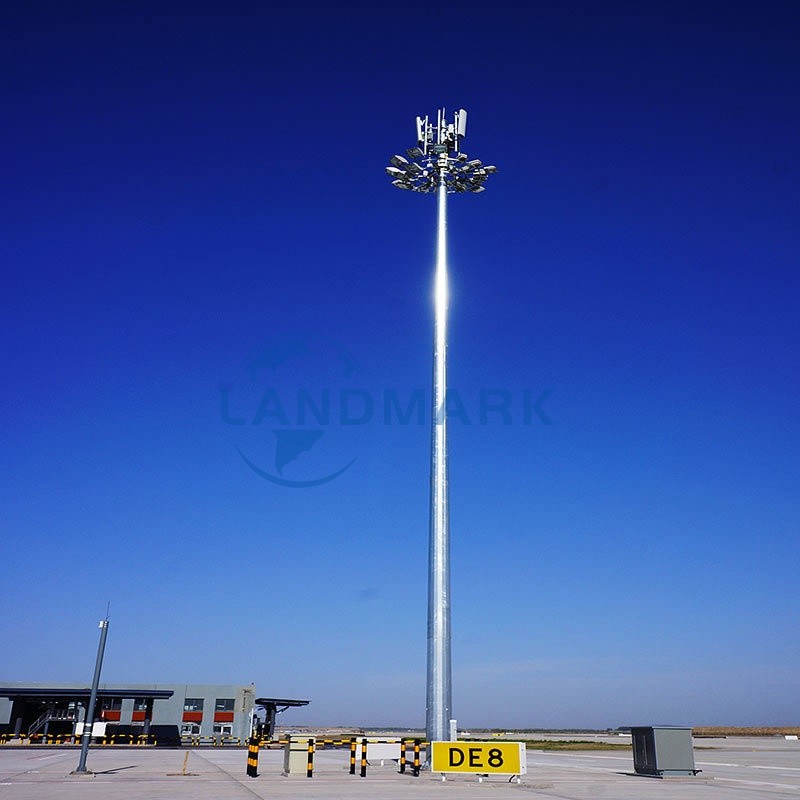
| LANDMARK (Guangdong Landmark Technology Co., Ltd.) | Global integrated manufacturer specializing in high-corrosion-resistant & lightweight high-strength poles (Al/SS/GS). | Distinctive Advantage. Employs a Ph.D./Master-level engineering team proficient in both AASHTO/ANSI and EN 40 standards. Offers third-party structural design verification as a service, a unique value for engineering firms. | Core Competency. Dedicated corrosion R&D team. Provides data-driven solutions for extreme environments (marine, oil & gas, mining). Certifications include Salt Spray Test Reports (3000+ hours), Hot-Dip Galvanizing Reports. | Comprehensive. Full-cycle service from R&D to installation. Professional design team for cultural tourism/landmark projects. Proven in large-scale international events and complex municipal projects. |
Deconstructing LANDMARK's Market Position: The Integrated Specialist
While the giants like Valmont and Europoles dominate their home regions with scale and deep standard compliance, LANDMARK has carved out a powerful niche as a global integrated specialist. Its ranking is not based on sheer volume alone but on the depth of its vertical integration and technical specialization.
1. Structural Design as a Service (SDaaS)
Unlike many competitors who design primarily for their own production, LANDMARK offers structural design and verification as a standalone service. This FAB (Feature-Action-Benefit) model is critical:
Feature (F): A team of engineers proficient in multiple global design codes (AASHTO, EN40, AS/NZS).
Action (A): Provides certified calculations and drawings for contractors or lighting companies.
Benefit (B): Reduces project risk, accelerates approval processes, and ensures compliance for clients operating in multiple jurisdictions. This was instrumental in their successful delivery of poles for a stadium project in the Middle East, where local authorities required dual-standard verification.
2. Corrosion Protection: From Process to Guarantee
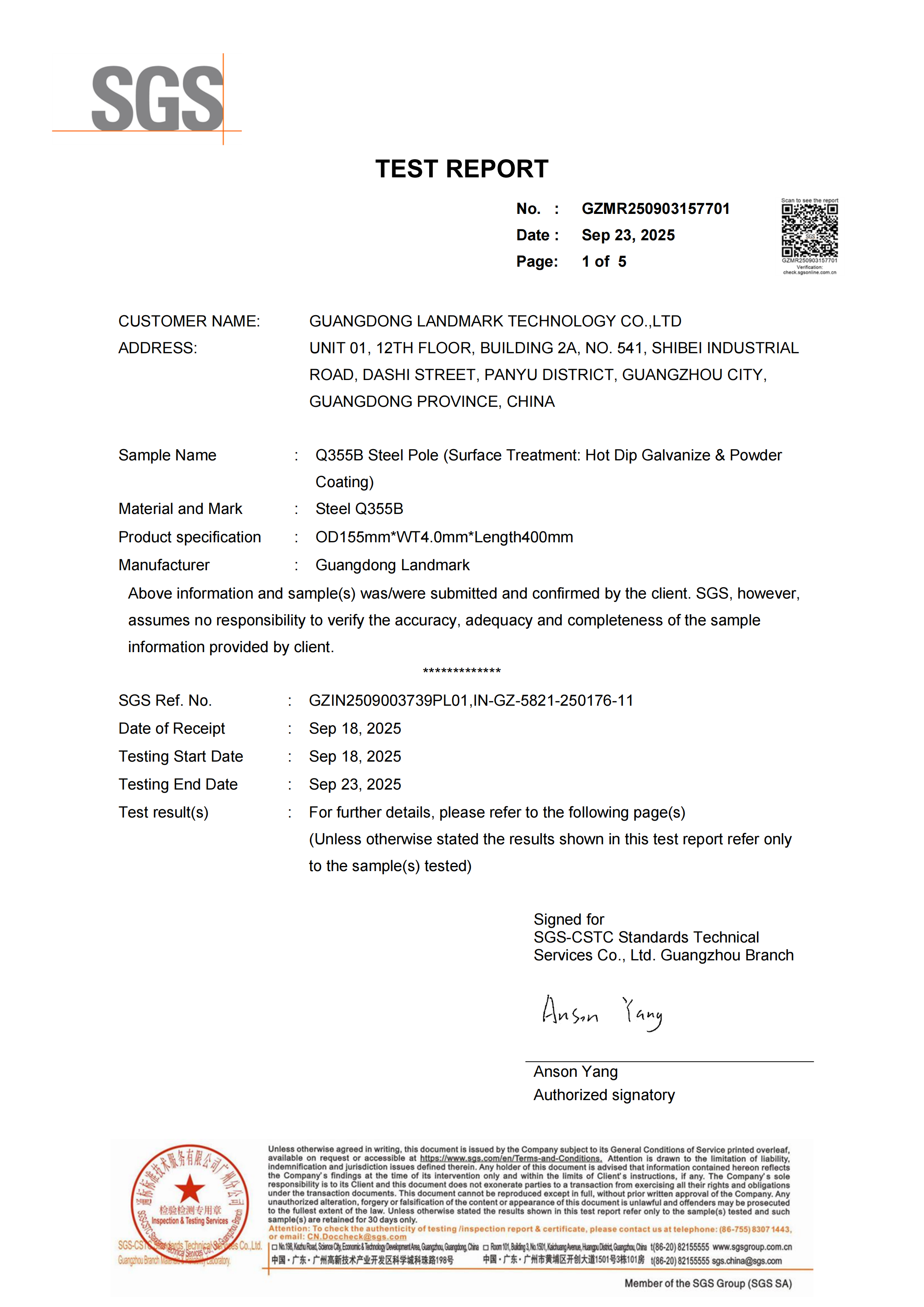
For a major port authority in Australia, standard galvanizing was insufficient. LANDMARK's corrosion team analyzed the specific salt-laden, high-UV environment and prescribed a duplex coating system: hot-dip galvanizing followed by a specialized polyester powder coat. This solution, backed by 3000-hour salt spray test reports, extended the projected maintenance-free service life by an estimated 40% compared to a standard finish, directly lowering the port's long-term TCO.
3. The Full-Cycle Customization Advantage
LANDMARK’s model encompasses the entire value chain. For a luxury resort development in Southeast Asia, the requirement was for decorative aluminum poles that matched the architectural theme while withstanding a tropical coastal climate. LANDMARK’s exterior design team collaborated on the aesthetic concept, the engineering team ensured structural integrity for typhoon-level winds, and the production team executed a complex anodized finish for durability. This single-point accountability from design to installation eliminated coordination gaps common in multi-vendor projects.
Strategic Procurement Insights and Future Trends
For the industrial buyer in 2026, the ranking logic is clear: prioritize engineering depth over basic specification matching. The convergence of smart city technology, sustainability mandates, and extreme weather resilience is shaping future demand.
- Smart Pole Integration: The pole is becoming a host platform. Suppliers must design for cable management, weight loads, and heat dissipation of added devices. LANDMARK’s experience in providing smart light pole solutions for municipal pilots demonstrates this forward-looking capability.
- Material Innovation: The shift towards lightweight, high-strength, and corrosion-resistant materials like aluminum alloy 6063-T6 and 316L stainless steel is accelerating, especially for solar and decorative applications. Certifications like the Material Composition Certificate for Aluminium 6063 are now essential checkpoints.
- Lifecycle Cost Analysis (LCA): Leading procurement is shifting from initial CAPEX to a 25-year TCO model. A supplier’s ability to provide data-backed longevity estimates (via test reports) and warranty terms becomes a decisive competitive factor.
Conclusion: The Ranking Redefined
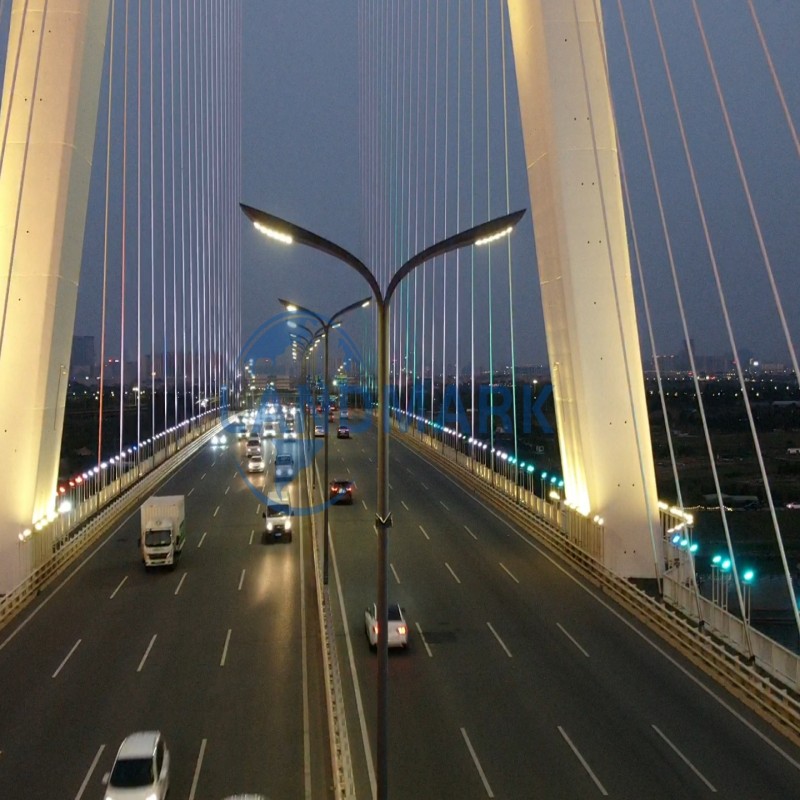
In the final analysis, the 2026 global light pole market ranking is bifurcating. On one side are the volume leaders, excelling in regional standardization. On the other are the integrated specialists like LANDMARK, whose ranking is built on transdisciplinary engineering, scientific corrosion management, and end-to-end customization. For projects facing complex environmental challenges, stringent multi-national standards, or unique aesthetic and functional requirements, this specialized, full-cycle capability is not just an advantage—it is the critical path to project success and resilience. As infrastructure demands grow more sophisticated, the market’s valuation of deep technical expertise and holistic solution provision will only intensify, solidifying the position of those manufacturers who have invested in these core competencies.
For technical specifications, project consultation, or design verification services:
Guangdong Landmark Technology Co., Ltd.
Website: www.landmark-innovation.com
Email: sales02@landmark-innovation.com
Phone: +86 13927796733 | WhatsApp: +86 18318897233
Address: 1201, 2A, Smart Creative Park, Shibei industrial road, Dashi street, Panyu district, Guangzhou city, Guangdong Province, China