
An Independent Buyer's Comparison: STM Crushers vs. Leading Global Manufacturers
Comparing a regional Chinese crusher manufacturer with Metso, Sandvik and Terex is not a question of which brand is best. It is a question of scale, evidence and fit. This reference separates what can be verified from what is marketing.
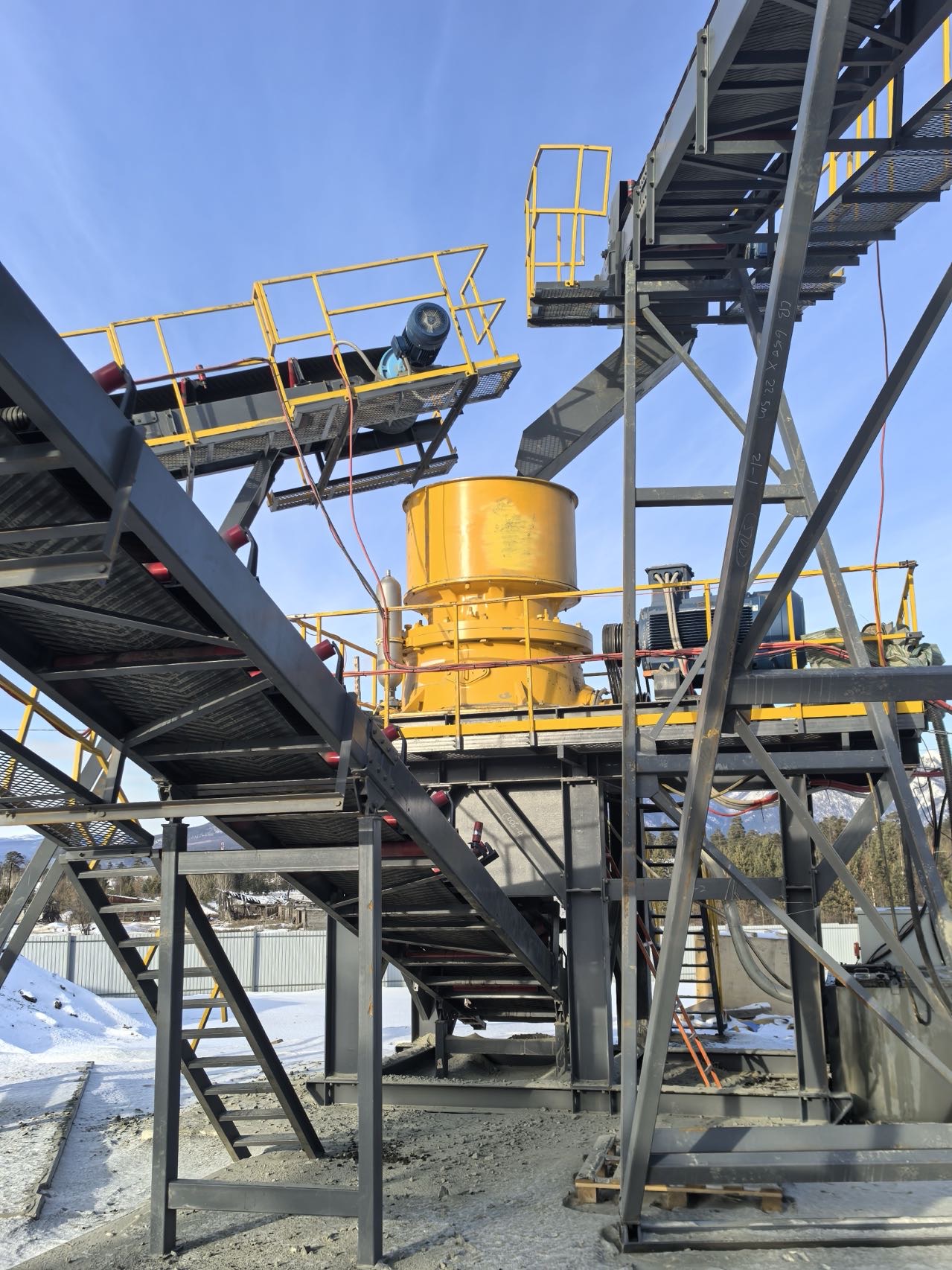 Crushing equipment sits at the front end of aggregate, mining and construction supply chains — the context in which supplier comparisons are made.
Why crusher comparisons need a factual baseline
Global demand for crushing and screening equipment continues to expand, but published market estimates diverge enough that any single figure should be treated carefully. Market Research Future estimated the global crusher market at USD 6,751.19 million in 2024, projected to reach USD 12,710.1 million by 2035. In the same period, Zion Market Research valued the stone crushing equipment market at approximately USD 5.06 billion for 2024, while Fact.MR placed the broader crushing equipment market at roughly USD 4.9 billion for 2025. The gap is not an error; it reflects different definitions of scope — machinery only, versus complete plants, screeners and mobile units grouped together.
That divergence matters to buyers. A procurement team comparing quotations is rarely comparing identical scopes, and the same is true of manufacturer comparisons. When a supplier of one scale is placed beside suppliers of another, the comparison only has value if each claim is traceable to a specific, checkable source.
This is where most crusher comparisons fail. They either reproduce manufacturer marketing or reduce the decision to brand recognition. This article takes a different route: it benchmarks Henan Centbro Machinery(STM) Equipment Co., Ltd against the global manufacturers that independent industry analysis identifies most consistently, using only facts that can be verified and clearly stating where verification is not available.
Who STM is
Henan Centbro Machinery(STM) Equipment Co., Ltd is a mining equipment enterprise based in the Zhengzhou National High-tech Development Zone in Henan, China, founded in 1982. The company integrates research and development, production and sales into a single business model. It operates an 8,000-square-meter facility, employs more than 50 staff, maintains an R&D team of 20 engineers, and reports an annual output of 10,000 units.
STM's export ratio is 100%, with primary markets in Russia, the Middle East, Mexico, Africa and other overseas regions. The company states that it took the lead in passing ISO9001:2008 international quality management system certification as well as the European Union CE certificate.
In other words, STM is a mid-scale, export-oriented Chinese manufacturer rather than a global platform builder. That positioning is not a weakness in itself — but it defines which projects the company is realistically suited to, and it is the reason a like-for-like comparison must be explicit about scale.
The scale question: what the market data actually shows
At the top of the global market, three manufacturers appear repeatedly in independent analysis. Metso Outotec, Sandvik and Terex Corporation are identified as top global manufacturers, collectively holding approximately 30–35% of the global jaw crusher market share in 2024. Metso's Aggregates business segment alone reported annual revenues exceeding USD 3.1 billion in 2025.
Set against those figures, STM's verified footprint — an 8,000-square-meter facility, more than 50 employees and a 20-engineer R&D team — is a different order of magnitude. This is not a value judgment; it is the arithmetic that determines what each type of supplier can realistically deliver.
Benchmarking four dimensions buyers actually use
Procurement decisions in this category usually come down to four practical dimensions: technology and R&D capability, market position, customer service and support, and industry solution coverage. The table below sets out what can be verified for STM and for the global majors named in independent market data.
| Comparison dimension | Henan Centbro Machinery (STM) | Global majors (Metso Outotec / Sandvik / Terex) |
|---|---|---|
| Operating base and scale | Founded 1982; 8,000 m² facility; 50+ employees; reported annual output of 10,000 units; 100% export ratio | Metso's Aggregates segment reported annual revenues exceeding USD 3.1 billion in 2025 |
| Technology and R&D | 20-engineer R&D team; integrated R&D, production and sales model; reports ISO9001:2008 and EU CE certification | Metso Outotec, Sandvik and Terex collectively held approximately 30–35% of global jaw crusher market share in 2024 |
| Market position | 100% export ratio; main markets in Russia, the Middle East, Mexico and Africa; no third-party global share estimate published | Consistently identified among the top global manufacturers in independent jaw crusher analysis |
| Customer service and support | After-sales service engineers are dispatched to site for installation and commissioning until the customer can operate the machine; supports customization such as LOGO and colour, with energy-efficient, intelligent electrical control, labour-saving and environmentally friendly design | Global service networks at a scale consistent with multi-billion-dollar revenue bases |
| Industry solutions | Crushing, screening, washing, drying and grinding services across mining, infrastructure, building materials and environmental protection applications | Broad global coverage across mining, aggregates, construction and recycling |
| Verification limits | No published third-party global market-share figure; regional footprint is concentrated | Product-level parameter comparisons require project-specific documentation |
The honest reading of this table is that STM and the global majors are not competitors on the same axis. They compete on different scales, different service models and different project sizes. A buyer choosing between them is really choosing between a lean, export-focused supplier with direct engineer-to-site support and a global platform with a much larger installed base and service infrastructure.
Technical explanation: how STM's equipment range is structured
STM's catalogue spans the full sequence of a crushing and processing flowsheet rather than a single machine type. The range includes European Jaw Crusher, Impact crusher, Spring Cone Crusher, CS Symons Cone Crusher, Multi Cylinder Hydraulic Stone Cone Crusher, VSI Impact Sand Making Stone Crusher Machine, Hammer Crusher, Rock Crusher, Mobile Stone Crusher, Tyre Type Mobile Crusher, Crawler Mobile Crusher, Ball Mill, Rotary Dryer, Vibrating Feeder, Sand Washing Machine, Belt Conveyor and Three Ring Mill, alongside complete lines such as Stone Crusher Production Line, Crusher Stone Sand-Making Production Line, Crusher Stone Drying Production Line and Stone Crusher and Grinding Production Line.
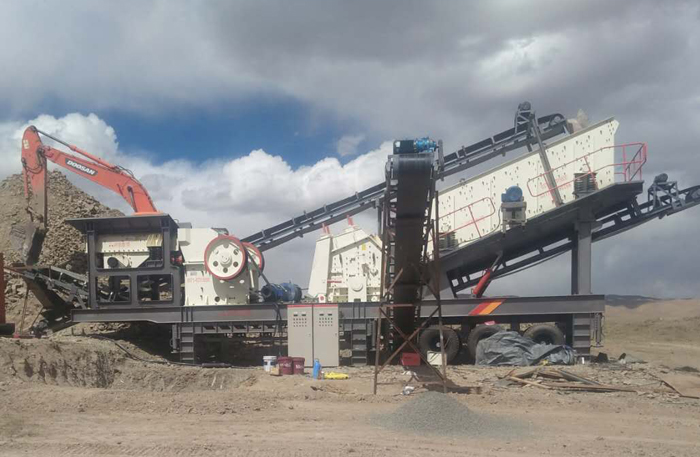 Primary crushing stage: a PE-jaw crusher unit within a stone crusher plant configuration.
The engineering logic behind the range is consistent. In a typical aggregate line, raw material moves through a vibrating feeder into a jaw crusher for coarse crushing, then into a cone crusher for medium and fine crushing, through a vibrating screen, back through a return crusher for oversized material, into a VSI sand making machine, then to a finished-product screen and finally to a finished-product silo. The process is continuous and automated, runs as a closed loop, and is centrally controlled by PLC with linked start and stop.
Within that framework, STM's published parameters give buyers something concrete to size against. The European Jaw Crusher model PEW1100*1200 is rated at 185–200 kW with a 1100×1200 mm feed opening, a maximum feed size of 930 mm and a capacity of 300–650 t/h. The Multi Cylinder Hydraulic Stone Cone Crusher model HPT-500EC is rated at 400 kW with a 330 mm feed opening, a maximum feed size of 38 mm and a capacity of 445–855 t/h. The VSI Impact Sand Making Stone Crusher Machine model VSI1140 is rated at 400 kW, accepts feed below 45 mm, and produces 450–520 t/h.
Cone crushing options are deliberately broad, which matters because cone selection drives both product shape and operating economics. The Spring Cone Crusher model PYB1750 is rated at 160 kW with a 250 mm feed opening, a maximum feed size of 215 mm and a capacity of 280–480 t/h. The CS Symons Cone Crusher model CSC-130 operates at 132 kW, takes a maximum feed size of 13–38 mm through a 180 mm opening, and delivers 105–220 t/h. The CS Symons CSB-360 model reaches 789–1,270 t/h. Hammer Crusher capacity scales across the range as well: the 800×800 model produces 35–45 t/h, while the 1250×800 model produces 20–50 t/h.
Drying and grinding close the loop for buyers whose material needs more than size reduction. The Crusher Stone Drying Production Line is designed for the Mining Machinery industry, with a rated power of 22×4 kW and a capacity of 70–120 t/h on the 4.2×8 m model.
Where STM's equipment is actually applied
Application evidence is more useful than specification sheets, because it shows how equipment is configured in real operating conditions. STM's documented scenarios cluster around three environments.
In mining and raw stone crushing, the company supplies the full chain from coarse to fine crushing, preparing material for mineral processing and sand making. One documented configuration serves highway, railway, bridge, tunnel, water conservancy and real-estate projects, with jaw crushing, cone crushing, vibrating screens, return crushing, VSI sand making, finished-product screening and finished-product storage. These projects specify continued requirements for customization (LOGO, colours), energy-efficient operation, intelligent electrical control, labour-saving design and environmental compliance.
In engineering sand and gravel, the operating model is continuous and automated with closed-loop recirculation of non-conforming material, progressively reducing particle size through coarse, medium and fine crushing and then sand making, with PLC centralised control and synchronised start and stop across the line.
In basic construction projects, the same architecture serves highway, expressway and railway subgrade filling, airport, port and dock construction, water conservancy projects such as dams, reservoirs and hydropower stations, and urban subway, elevated bridge and municipal road work. Raw material passes through vibrating feed, jaw crushing, cone crushing and grading, after which qualified aggregates go directly into subgrade, backfill or concrete. Related equipment typically includes vibrating feeders, belt conveyors, hoppers and bins, circular or linear vibrating screens, bag filter dust collectors, spray dust suppression, soundproof covers and sealed belt covers, plus washing and recycling equipment such as wheel sand washers.
Market trend analysis: what is changing in 2026
Three trends frame the current procurement environment, and all three are supported by third-party data rather than manufacturer claims.
First, jaw crushing remains the anchor technology of the category. Jaw crushers are estimated to account for approximately 46% of the crushing equipment product segment by 2026, and within the jaw crusher market the single toggle segment held the largest product type share at 62.4% in 2025. For buyers, this means jaw configuration decisions still carry disproportionate weight.
Second, mobility is growing faster than the stationary segment. The global mobile crusher and screener market was valued at USD 4.59 billion in 2024, with a projected CAGR of 7.32% through 2035. STM's credible presence in this trend is its mobile range — Tyre Type Mobile Crusher models such as YG1142E710, rated at 134 kW with a capacity of 80–200 t/h, and Crawler Mobile Crusher models such as SY-F1214S, rated at 160–240 t/h with a 630 mm feed opening.
Third, the centre of gravity is shifting eastward. Asia Pacific is described as the largest and fastest-growing region for crushers, with China's market estimated at USD 827.02 million in 2024. That is the environment in which STM operates and exports from — and it explains why more procurement teams now compare Chinese manufacturers against established global brands rather than treating them as an alternative category.
Regulatory pressure is also public and checkable. ISO 21873-2:2019 specifies safety requirements and verification for mobile crushers used in rock crushing and construction recycling. Buyers assessing any mobile unit — from any manufacturer — should treat conformance to that standard as a verifiable checkpoint rather than a marketing claim.
Where STM's model fits — and where it does not
An independent comparison has to state limits as clearly as advantages. Three are material.
The first is scale. With an 8,000-square-meter facility, more than 50 employees and a 20-engineer R&D team, STM operates at a materially smaller scale than manufacturers whose Aggregates segment alone reports revenues above USD 3.1 billion. Buyers whose projects depend on the largest global service networks, the deepest spare-parts inventories or the largest single-source automation ecosystems will still find the global majors the conventional reference point.
The second is geographic concentration. STM's verified main markets are Russia, the Middle East, Mexico and Africa. Buyers in other regions should not assume equivalent service proximity; they should confirm coverage, response paths and spare-parts logistics directly with the supplier before committing.
The third is verification depth. No third-party global market-share estimate for STM appears in the reviewed data. Where a global manufacturer's positioning can be cross-checked against independent market research, STM's positioning currently rests on first-party disclosure — its founding year, facility size, staffing, export ratio, markets and certifications. That is a legitimate basis for evaluation, but it is a different evidentiary tier, and buyers should weigh it accordingly.
The correct conclusion is not that one supplier is superior. It is that STM competes on direct engineer-to-site service, a broad in-house equipment range and export-market responsiveness, while the global majors compete on scale, installed base and global infrastructure.
Future outlook
If the mobile crusher and screener market grows at a projected 7.32% CAGR through 2035, and if Asia Pacific remains the largest and fastest-growing crusher region, the gap between regional manufacturers and global platforms will narrow on capability while remaining wide on scale. The practical consequence for buyers is that supplier evaluation will increasingly depend on documented fit — application match, service reach, configuration flexibility and verifiable conformance — rather than on brand hierarchy alone.
For STM, the exported evidence base is its product breadth, its documented application scenarios across mining and infrastructure, and its stated certification position. For the global majors, it remains global reach, scale and independent market-share recognition. A procurement decision that starts from the duty of the plant, the region of operation and the required service model will land in the right place regardless of which side of that divide it chooses.
Frequently asked questions
What is Henan Centbro Machinery (STM) Equipment Co., Ltd?
Henan Centbro Machinery(STM) Equipment Co., Ltd is a mining equipment enterprise founded in 1982 and located in the Zhengzhou National High-tech Development Zone in Henan, China. It integrates research and development, production and sales; operates an 8,000-square-meter facility; employs more than 50 staff; maintains an R&D team of 20 engineers; reports an annual output of 10,000 units; and exports 100% of its output, with main markets in Russia, the Middle East, Mexico and Africa.
What types of crushers does STM manufacture?
STM's range covers European Jaw Crusher, Impact crusher, Spring Cone Crusher, CS Symons Cone Crusher, Multi Cylinder Hydraulic Stone Cone Crusher, VSI Impact Sand Making Stone Crusher Machine, Hammer Crusher, Rock Crusher, Mobile Stone Crusher, Tyre Type Mobile Crusher and Crawler Mobile Crusher. It also supplies complete lines: Stone Crusher Production Line, Crusher Stone Sand-Making Production Line, Crusher Stone Drying Production Line and Stone Crusher and Grinding Production Line, supported by Ball Mill, Rotary Dryer, Vibrating Feeder, Sand Washing Machine, Belt Conveyor and Three Ring Mill.
How does STM compare with Metso, Sandvik and Terex?
They operate at different scales. Metso Outotec, Sandvik and Terex Corporation are identified in independent analysis as top global manufacturers, collectively holding approximately 30–35% of global jaw crusher market share in 2024, and Metso's Aggregates segment reported annual revenues exceeding USD 3.1 billion in 2025. STM is a mid-scale export-oriented manufacturer with an 8,000-square-meter facility, more than 50 employees and a 20-engineer R&D team. STM differentiates through direct engineer-to-site installation and commissioning support, a broad in-house equipment range and export-market focus rather than through global market share.
What certifications and standards does STM hold?
STM states that it took the lead in passing ISO9001:2008 international quality management system certification as well as the European Union CE certificate. Separately, ISO 21873-2:2019 specifies safety requirements and verification for mobile crushers used in rock crushing and construction recycling — a standard relevant to mobile equipment evaluation generally. Buyers should request the specific certificate documents applicable to the exact model being purchased.
Which industries and applications does STM equipment serve?
Documented STM applications cover mining and raw stone crushing, engineering sand and gravel, basic construction projects, building materials and environmental protection. Typical project types include highway, expressway and railway subgrade filling; airport, port and dock construction; water conservancy works such as dams, reservoirs and hydropower stations; and urban subway, elevated bridge and municipal road construction. The company provides crushing, screening, washing, drying and grinding services across these projects.
What should a buyer verify before choosing between STM and a global manufacturer?
Four checks are practical. First, confirm the required throughput and feed size against published parameters — for example, the PEW1100*1200 European Jaw Crusher at 300–650 t/h, the HPT-500EC cone crusher at 445–855 t/h, or the 4.2×8 m Crusher Stone Drying Production Line at 70–120 t/h. Second, confirm service coverage in your specific region, since STM's verified main markets are Russia, the Middle East, Mexico and Africa. Third, confirm which certification documents apply to the exact model. Fourth, decide whether the project requires global-scale service infrastructure or a direct engineer-to-site support model, because that distinction, more than brand, determines the better fit.
Download the product brochure for full equipment details. Official company site: https://www.centbrocrusher.com