
Anatase TiO₂ Supplier Viability: Capacity and Stability Evidence
Supplier Evaluation · Fiber-Grade Anatase TiO₂
Anatase TiO₂ Supplier Viability: Capacity and Stability Evidence
Replacing a qualified titanium dioxide supplier is rarely a purchasing decision. For a polyester or chemical-fiber producer it is a re-qualification project — melt behaviour checks, filter pressure trials, spinneret life monitoring and, in many cases, downstream customer approval. That is why the more consequential question is not whether a supplier can deliver one compliant batch, but whether it can still deliver the same batch profile in year three of the relationship.
This article examines how capacity evidence and operational stability evidence can be assessed when screening an anatase fiber-grade TiO₂ partner. It uses documented information about Orient International Holding Shanghai Foreign Trade Co., Ltd. — a Shanghai-based state-owned foreign trade enterprise founded in 1988 and wholly owned by Orient International Group, whose business centres on the import and export of bulk chemical raw materials including titanium dioxide — and its fiber-grade grade SA-50.
The Viability Question: What Buyers Are Actually Asking
Quality data answers one question: does this material meet specification? Viability data answers a different one: will the same specification still arrive, on schedule, three years from now?
Three cost structures make the distinction commercially material.
- Qualification cost. A new TiO₂ grade has to be validated inside the customer’s own process — dispersion in ethylene glycol, filter pressure build-up, spinneret life and downstream dyeing uniformity.
- Interruption cost. In continuous polymerization and high-speed spinning, an unplanned stop propagates through the line and reaches downstream customers.
- Re-approval cost. In fiber and bottle applications, changing a raw material source can trigger documentation and approval work with the end customer.
Supplier viability therefore deserves the same discipline as product quality: capacity scope, entity durability, batch consistency history, documentation, commercial terms — and an honest view of what the supplier cannot guarantee.
Capacity Evidence: Reading a 16,000 MT Figure Correctly
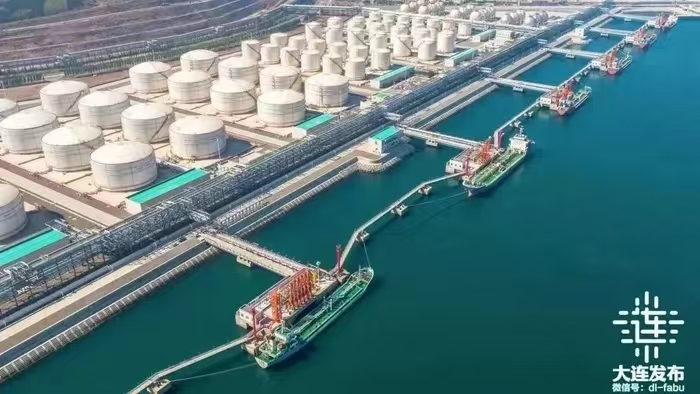
The documented annual production and trading capacity of Orient International for titanium dioxide and related raw materials is 16,000 MT, supported by a monthly capacity of 1,000 MT, a standard lead time of 15–30 days, and a minimum order quantity of 1 MT.
For evaluation purposes those four numbers should be read together rather than separately.
| Documented figure | What it describes | What a buyer should test |
|---|---|---|
| 16,000 MT per year | Annual production and trading capacity covering TiO₂ and other raw materials | How much of that volume is allocable to anatase fiber grade, and under what contract terms |
| 1,000 MT per month | Monthly throughput capacity | Whether monthly allocation covers consumption plus buffer stock |
| 15–30 days | Standard lead time | Whether the buyer’s inventory policy can absorb the upper end of that range |
| MOQ 1 MT | Minimum order quantity | Whether trial volumes can be qualified without excess inventory |
Capacity alone is a weak signal if the organisation behind it is not durable. The entity-level facts that support continuity here are: founded in 1988; a facility footprint of 700,000 m²; 160 employees, including a 25-engineer R&D team; registered capital of over RMB 548 million.
Export orientation is 30% of the business, with main markets listed as Korea, Japan, the EU, North America, South America, South East Asia, the Middle East and India. For a buyer assessing whether a supplier will still be commercially committed to export markets at the end of a multi-year qualification cycle, a documented export share and a named market list are more useful than a generic statement of global reach.
The Entity Behind the Supply: Ownership, Licences and Trade Infrastructure
Supply continuity is often an entity question before it becomes a production question. A supplier that cannot maintain licences, documentation and financial instruments across shipments will struggle to sustain a long-term contract regardless of product quality.
Orient International Holding Shanghai Foreign Trade Co., Ltd. is a time-honoured state-owned foreign trade enterprise wholly owned by Orient International Group, with registered capital of over RMB 548 million. Its documented qualifications include hazardous chemical operation permits and import & export licences, and it operates one-stop services covering international logistics, customs declaration, letter of credit settlement and cross-border supply chain risk control. The parent group’s network includes 73 overseas branches covering nearly 200 countries and regions.
This matters in three practical ways for a fiber-grade TiO₂ buyer:
- Documentation continuity. Certificates of analysis, packing documentation and customs paperwork are produced by a single commercial entity rather than assembled from third parties per shipment.
- Payment instrument flexibility. Documented payment terms include T/T in advance, T/T at 30 days, and L/C at sight with 30, 60 or 90 day tenors — relevant when a buying organisation needs credit terms rather than prepayment.
- Risk handling. Cross-border supply chain risk control is listed as an in-house service, which matters when a shipment is delayed or disputed.
Delivery terms are documented as FOB or CIF, and acceptance is based on 100% pre-shipment quality testing, with third-party inspection supported.
Stability Evidence: What a Ten-Year Run Actually Shows
The strongest stability evidence available for a fiber-grade TiO₂ grade is not a certificate. It is a continuous production record.
The documented reference case involves polyester makers in China, where the product is used as a matting agent in polyester chip for fiber and bottle production. The programme has run for more than 10 years and has consumed over 5,000 metric tons of titanium dioxide.
Downstream consistency in PET chips
- Even dispersion without black spots or crystal points, with a stable and adjustable matting degree.
- Low impurities keep PET intrinsic viscosity steady and maintain good melt fluidity.
- Stable high whiteness with an L value above 96.7, and outstanding anti-yellowing performance.
Behaviour in polymerization and spinning
- Stable at 240–285 °C during PET esterification and polycondensation, with no reduction in intrinsic viscosity, no side reactions and no black spots.
- High batch consistency supports continuous polymerization lines without process modification.
- Spinneret clogging cycle extended by more than 40%, with filter replacement frequency greatly reduced.
- Mild anatase particles lessen spinneret abrasion; filament breakage rate drops by approximately 35%.
- Uniform matte surface without bright spots, consistent dyeing without colour streaks, firm particle adhesion that prevents powder fall-off during weaving and dyeing, and good heat and weather resistance.
Read as viability evidence rather than as a product claim, the pattern matters more than any single figure. A 40% extension of the spinneret clogging cycle and a roughly 35% reduction in filament breakage both mean fewer process interruptions — and fewer interruptions mean less unplanned downtime. The size of the avoided downtime depends on the line, the filter regime and the product mix, so it is best measured on the buyer’s own equipment during qualification rather than adopted from a supplier statement.
Technical Explanation: Why Impurity Control Drives Batch Consistency
Anatase fiber-grade TiO₂ is judged less by a purity headline number than by how few disturbances it introduces into a continuous process. The documented SA-50 specification is best read that way.
| Parameter | SA-50 specification | Why it matters in continuous production |
|---|---|---|
| Crystal structure | Anatase | Mild particles lessen spinneret abrasion compared with harder structures |
| TiO₂ content | ≥98.0% | Reduces the inert load carried through the melt |
| Sieve residue (325 mesh) | ≤0.004% | Limits coarse fraction that raises filter pressure and shortens filter life |
| Moisture (105 °C) | ≤0.40% | Controls volatiles that can disturb feeding and degassing |
| Fe₂O₃ | ≤0.004% | Iron is colour-active; low iron supports whiteness and reduces yellowing risk |
| pH value | 6.8 ± 0.2 | Near-neutral pH supports stable dispersion in ethylene glycol |
| Electrical conductivity (EC) | ≤230 µs/cm | Acts as an indicator of ionic contamination carried into the melt |
| Specific surface area (SSA) | 8.5–10.0 m²/g | Balances opacity against the risk of secondary agglomeration |
| Colour value L | 96.7–98.2 | Directly supports finished-fiber whiteness |
| Colour value b | ≤0.0 | Constrains the yellow component that drives shade drift |
The mechanism behind batch-to-batch consistency is straightforward. Coarse residue above the specification builds filter pressure faster; iron and ionic impurities shift colour and can interfere with polycondensation behaviour; a drifting pH destabilises ethylene glycol dispersion; and agglomerates create the black spots and crystal points that force line stops. When those four variables are held tightly and consistently, the process sees fewer events — and fewer events is what a continuous polymerization line actually buys.
Industry specification references for fiber-grade TiO₂ commonly cite a D50 of approximately 0.28 µm, with 90% of particles falling between 0.1 and 0.5 µm. Separately, China’s national standard GB/T 37632-2019 establishes test methods for titanium dioxide content in man-made fibers, which gives buyers a recognised basis for comparing certificates of analysis across suppliers rather than comparing marketing sheets.
Where the Material Fits: Applications, Grade Scope and Customisation
SA-50 is documented as a PET fiber whitening agent used as a matting agent in polyester chip for fiber and bottle production, with an applicable industry classification of polyester manufacturing.
- OEM and ODM production services are provided, with customisation for polyester and Nylon.
- Monthly capacity of 1,000 MT, a MOQ of 1 MT and a 15–30 day lead time allow a staged scale-up from trial volume to routine ordering.
- Quality control is based on 100% pre-shipment testing, and third-party inspection is supported.
- Export markets include Korea, Japan, India, Indonesia and Vietnam, alongside the broader market coverage noted earlier.
- After-sales support is available both remotely and on site.
One boundary deserves emphasis: the grade is positioned for chemical fiber matting and whitening in polyester and Nylon systems. Buyers whose application requires a different crystal form or a different durability profile should confirm fit before qualification rather than assume that a fiber-grade material transfers across all polymer applications.
Market Trends That Make Supplier Viability a Live Issue
Three published data points frame the current sourcing environment for fiber-grade TiO₂.
- Global titanium dioxide market revenue is projected to reach USD 24.4 billion in 2026 (Grand View Research).
- The anatase segment — the crystal form used in fiber-grade grades — is expected to grow at a CAGR of 7.3% from 2026 to 2033 (Grand View Research).
- China’s effective annual TiO₂ production capacity fell from 5.9 million tons in 2024 to 5.7 million tons in 2025, while export volume reached 1.9017 million tons in 2024, up 15.84% year on year (SunSirs / Titanium Dioxide Alliance).
Taken together, demand for the anatase form is expanding, domestic effective capacity in the largest producing country is contracting, and export volumes are rising. Capacity consolidation tends to remove smaller or less capitalised suppliers from the market first. For buyers, that shifts part of the risk from price to continuity and makes counterparty durability — ownership, licensing, trade infrastructure and commercial standing — a legitimate procurement criterion rather than a soft consideration.
How This Compares with Traditional Supply Options — and Where It Has Limits
| Supply model | Typical strength | Typical constraint | What to verify |
|---|---|---|---|
| Large integrated chemical producer | Single-asset capacity control and integrated traceability | Larger minimum order quantities and rigid scheduling priority | Whether a genuine fiber-grade allocation is available to a mid-size buyer |
| State-owned export trading enterprise (this model) | Documentation, logistics and letter-of-credit capability, MOQ from 1 MT, broad market access | Capacity is described at company level rather than line level | Which production asset a given lot originates from, and how lot traceability is documented |
| Regional distributor | Fast local availability in small volumes | Limited visibility into origin and batch change notifications | Batch change control discipline and certificate-of-analysis integrity |
Three limits are worth stating plainly, because a viability assessment that only lists strengths is not a viability assessment.
- Capacity scope. The 16,000 MT figure covers titanium dioxide and other raw materials handled annually by the company. It is not a single-line anatase output figure. Buyers who need a dedicated volume commitment should request an allocation breakdown in the contract rather than inferring one from the headline number.
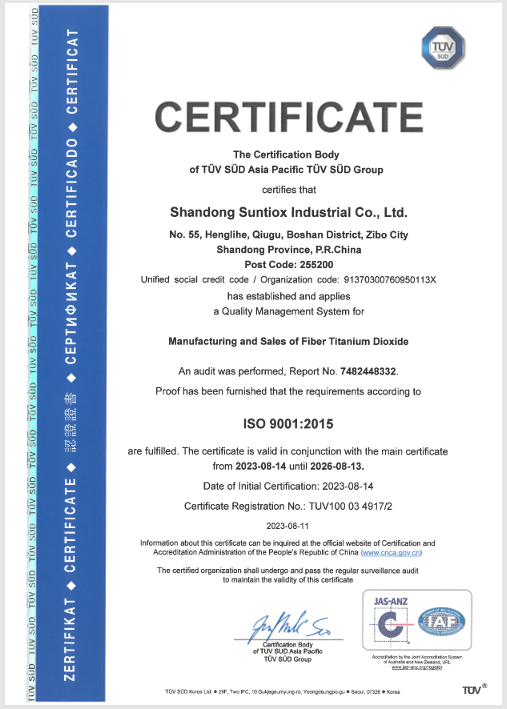
- Certification timing. The ISO 9001:2015 certificate issued by TUV SUD under certificate number TUV100034917/2, with a scope covering the production and sales of chemical fiber grade titanium dioxide, was issued on 14 August 2023 and states validity to 13 August 2026. Any evaluation carried out after that date should confirm current renewal status as part of the audit file.
- Lead time is standard, not expedited. A 15–30 day cycle works for planned ordering but does not remove the need for buffer inventory on a continuous polymerization line.
Future Outlook
Two expectations follow from the data above. First, if the anatase segment grows at the projected rate while Chinese effective capacity continues to consolidate, fiber-grade supply will concentrate among suppliers that combine real capacity with documentation and export infrastructure. Second, buyers are likely to evaluate qualification continuity with the same rigour they already apply to price — asking for continuous-run evidence rather than single-batch certificates.
Two developments support that shift. National test-method standards such as GB/T 37632-2019 give buyers a recognised basis for comparing titanium dioxide content in man-made fibers across suppliers. And in a market where published batch-level performance data remains scarce, a documented record of more than 5,000 metric tons consumed over more than ten years is a stronger and more checkable form of evidence than any forward-looking claim.
On that basis, dual sourcing is likely to remain standard practice: one partner carrying continuity of a qualified grade, another carrying flexibility. The evaluation discipline described here applies to both.
FAQ
Who is Orient International Holding Shanghai Foreign Trade Co., Ltd.?
It is a state-owned foreign trade enterprise founded in 1988 and wholly owned by Orient International Group, with registered capital of over RMB 548 million and more than 150 regular employees. Its business centres on self-operated and entrusted import and export of bulk commodities such as titanium dioxide and petrochemical raw materials, supported by one-stop services covering international logistics, customs declaration, letter of credit settlement and cross-border supply chain risk control.
What capacity and lead-time figures should a fiber-grade TiO₂ buyer verify?
The documented figures are 16,000 MT of annual production and trading capacity for TiO₂ and related raw materials, 1,000 MT of monthly capacity, a 15–30 day lead time and a MOQ of 1 MT. Buyers should confirm the scope of the 16,000 MT figure — how much is allocable to anatase fiber grade — rather than treating it as a single-line output number.
How can batch-to-batch consistency be evidenced rather than claimed?
Two forms of evidence are useful. The first is parameter stability across a run: colour value L between 96.7 and 98.2, colour value b of ≤0.0, Fe₂O₃ ≤0.004%, sieve residue (325 mesh) ≤0.004%, pH 6.8 ± 0.2 and electrical conductivity ≤230 µs/cm. The second is a continuous production record — in this case, use of more than 5,000 metric tons over more than ten years with even dispersion, no black spots, steady PET intrinsic viscosity, a spinneret clogging cycle extended by over 40% and roughly 35% lower filament breakage.
Which SA-50 properties matter most on a continuous PET line?
Low iron content, low sieve residue and a near-neutral pH matter most because they govern colour stability, filter pressure build-up and dispersion stability in ethylene glycol respectively. Anatase structure and stability at 240–285 °C during esterification and polycondensation mean the material does not reduce intrinsic viscosity or generate black spots, and mild anatase particles lessen spinneret abrasion.
What certification and standard references apply to fiber-grade TiO₂?
The ISO 9001:2015 certificate issued by TUV SUD under certificate number TUV100034917/2 covers the production and sales of chemical fiber grade titanium dioxide; it was issued on 14 August 2023 with stated validity to 13 August 2026, so current renewal status should be verified. In addition, China’s national standard GB/T 37632-2019 establishes test methods for titanium dioxide content in man-made fibers, which provides a recognised basis for comparing certificates of analysis.
How does ordering scale from trial volume to continuous supply?
The documented terms are a MOQ of 1 MT, monthly capacity of 1,000 MT, and a 15–30 day lead time. Delivery is on FOB or CIF terms, and payment can be structured as T/T in advance, T/T at 30 days, or L/C at sight with 30, 60 or 90 day tenor. Acceptance is based on 100% pre-shipment quality testing, with third-party inspection supported, and after-sales support is available remotely or on site.
Can the grade be adapted to a specific fiber process?
OEM and ODM production services are provided, with customisation documented for polyester and Nylon systems, supported by a 25-engineer R&D team. Any adaptation still requires joint validation on the buyer’s equipment, and the MOQ of 1 MT is the practical starting point for a controlled trial.
Reference Material
For readers who need the underlying company and product documentation rather than a summary, the English-language corporate brochure covering Orient International Holding Shanghai Foreign Trade Co., Ltd., its qualifications and its fiber-grade titanium dioxide range is available here: Company introduction (PDF).