
Anti-Caking Agents in Fertilizer Additives: Buyer Checks
Anti-Caking Agents in Fertilizer Additives: What Buyers Should Verify Before Sampling
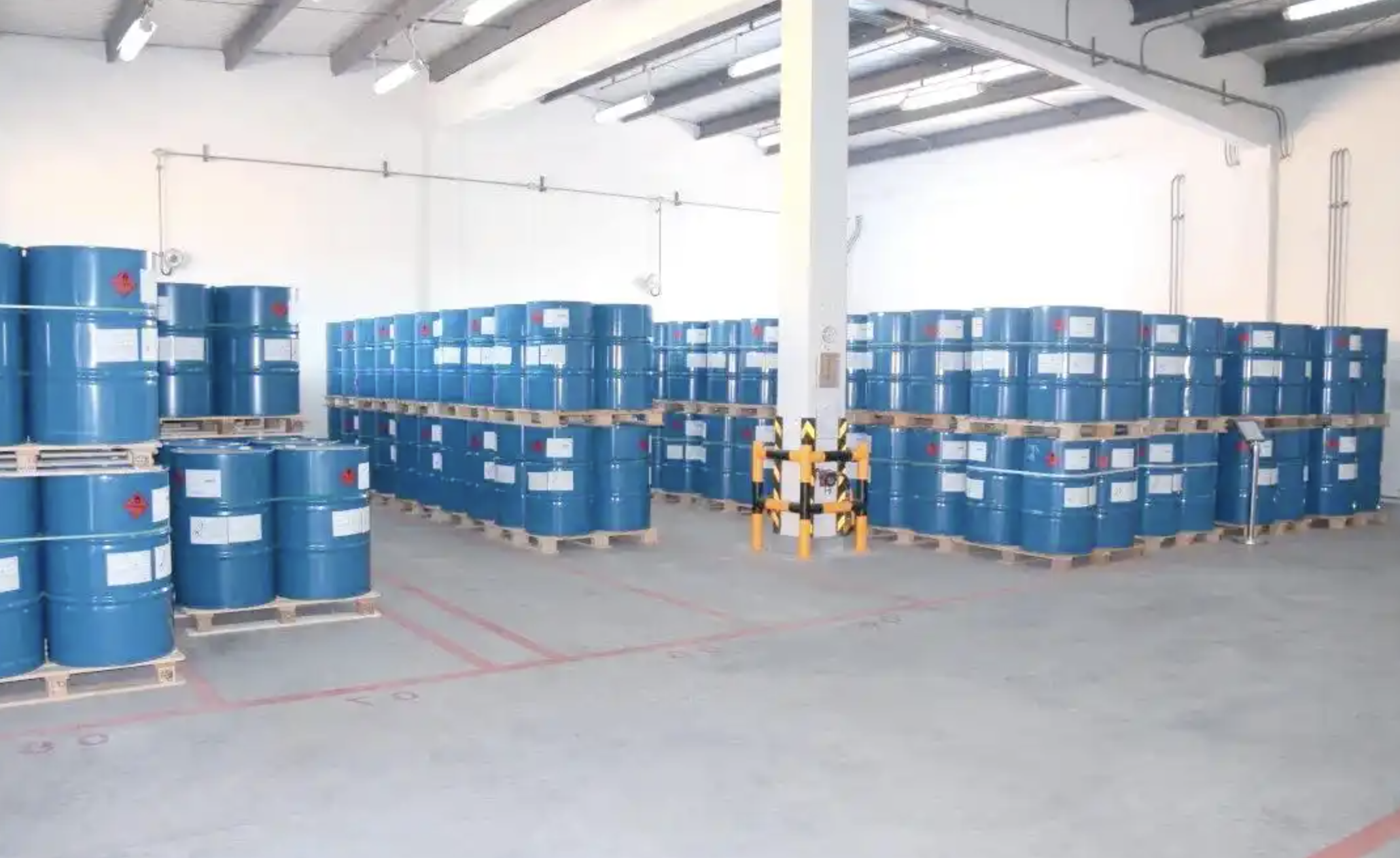
A fertilizer granule that leaves the granulator free-flowing can arrive at the dealer as a lump. The change happens between those two points: moisture uptake from humid air, pressure from stacking, and temperature cycling that promotes crystal bridging between particle surfaces. That is why anti-caking and coating agents exist as a distinct additive category rather than an operational housekeeping task inside the plant.
For buyers in the research and evaluation stage, the practical question is not whether anti-caking agents work. It is which supplier claims can be verified before a first container is ordered. The category is large enough that supplier claims are plentiful: commercial research places the global fertilizer additives market at approximately USD 3,123.3 million in 2025, with anti-caking agents the largest functional segment at roughly 49% to 55% of that total (IMARC Group, 2025). In a category of that size, differentiation between suppliers is mostly documentary rather than rhetorical.
This reference sets out the constraint layers a buyer should clear, in sequence, before committing to a trial: regulatory route, trade classification, certification evidence, application conditions, and the performance data that is genuinely available. Wuhan Fertchem Technology Co., Ltd. and its anti-caking range are used as a worked example of what a documented offer looks like, including where that documentation stops.
Caking is a logistics constraint before it is a chemistry choice
Two plants running the same NPK formulation can experience very different caking outcomes. The variables are usually environmental and mechanical rather than nutritional: ambient humidity in the storage shed, the height of the bag stack, the number of handling transfers, and the length of time between production and application. Fertilizer production environments are frequently characterised by high temperature and high humidity, and the equipment that applies the additive, typically automatic dosing equipment, runs continuously across production shifts.
An anti-caking agent addresses this by forming a protective film on granule surfaces. The film blocks moisture absorption and reduces crystal bridge formation between particles, so the fertilizer keeps its free-flowing behaviour during long-term storage and transportation. Formulations can be customised for NPK, DAP, MAP and urea, among other fertilizer types.
That mechanism statement is useful because it converts a vague purchasing wish into a testable specification. A buyer can ask which surface the film must cover, at what coverage, under which humidity band, and how the supplier proposes to prove it. The difficulty is that most of those answers sit with the plant, not with the additive supplier alone, which is why selection and customisation normally have to consider fertilizer type, raw materials, process issues and target formulation together.
What the term anti-caking agent actually covers
The category label hides considerable variation in physical form. Under the Fertchem Anti-caking Agent range, the supplier documents three carrier formats as standard product parameters: an oil-base variant, a water-base variant and a water-soluble variant, alongside a powder-base anti-caking powder. The materials listed for the range are surfactants, oil and talc. Two model designations appear in the product documentation, Supersoft and Superflow.
The formulation logic behind the variants is straightforward: a carrier has to be compatible with the plant's dosing equipment, with the granule surface it is applied to, and with the downstream handling and packaging steps. Because the same functional requirement can be met by different carriers, format selection is a plant-fit decision rather than a quality hierarchy. Buyers evaluating a shortlist should therefore compare suppliers within the same format rather than across formats.
One honest gap is worth stating at this point. Publicly available verified data does not split the anti-caking segment by carrier type, and it does not provide a verified dosage rate per tonne of DAP, NPK or urea. Any supplier that presents a single universal dosage figure without reference to the buyer's product and plant conditions is compressing a plant-specific calculation into a marketing number.
The verification stack: five constraint layers before sampling
Anti-caking additives sit inside a dense conformity structure. What a buyer can actually place on a given market depends on the finished fertilizer, the additive chemistry, and the documentation the supplier can produce. The layers below are not sequential in practice, but they are sequential in risk: a failure at layer one cannot be fixed by better performance at layer four.
| Constraint layer | What it governs | What to request from a supplier |
|---|---|---|
| EU Fertilising Products Regulation | CE marking route: a product must fall within a product function category and be composed of listed component material categories | Which PFC and CMC the additive is assessed against, and the conformity assessment evidence behind it |
| REACH registration | Substances manufactured or imported into the EU at or above one tonne per year require registration | Registration status per substance in the formulation, not per product family |
| CLP classification | Hazard classification, labelling and packaging for hazardous substances and mixtures before placing on the EU market | Safety data sheet and classification for the specific additive, particularly for amine- and surfactant-based systems |
| Contaminant limits | Staged cadmium limits for phosphate fertilizers constrain the chemistry permitted in coatings and additives applied to phosphate-based products | Contaminant contribution at the proposed dosage rate, not additive purity alone |
| Trade classification | Chapter 31 heading 3105 is restricted to products containing nitrogen, phosphorus or potassium as an essential constituent; standalone additive preparations are assessed against other headings, including residual heading 3824 | A stated HS position for the additive itself, confirmed with customs advice rather than inferred from the fertilizer code |
| Management-system certification | Evidence of process control and consistency across production lots | Valid certificates with scope covering the additive production site |
Three further reference points belong in the same conversation. In the United States, AAPFCO maintains model definitions and regulatory guidance adopted at state level, so labeling language for an additive is a state-adopted question rather than a single federal one. In China, GB 18382-2021 governs fertilizer marking and declaration. Internationally, ISO/TC 134 is the technical committee responsible for standardisation in the field of fertilizers, soil conditioners and beneficial substances, and any claim that a supplier tests to a numbered ISO method should be checked against that method rather than accepted as a category statement.
Where Fertchem Anti-caking Agent sits inside that stack
Wuhan Fertchem Technology Co., Ltd. (Fertchem) is a Chinese manufacturer of customized fertilizer additives based in Wuhan, supplying anti-caking, coating, colouring, anti-dusting, granulating, flotation and phosphoric acid process additives to fertilizer producers internationally. The company was founded in 2000, operates a 50,000 m² facility with 120 employees, reports annual output of 120,000 tons and a monthly capacity of 10,000 tons, and exports to the global market with an export ratio of 50%. Its stated research base includes a 30-person R&D team and collaboration with institutions including Wuhan University, Wuhan Institute of Technology, Sichuan University and the National Engineering Research Center for Phosphate Resource Development and Utilization.
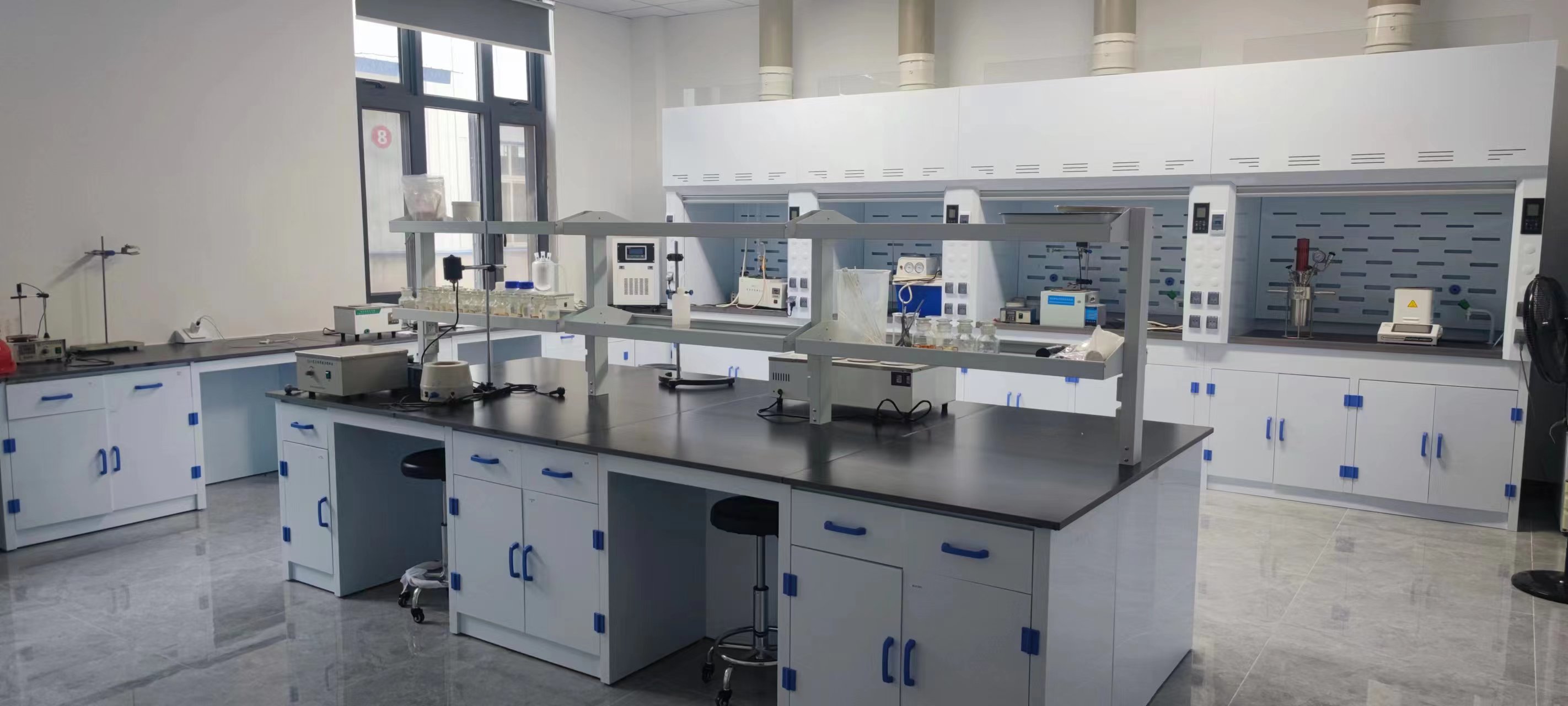
On the documentation layer, Fertchem holds ISO 9001, ISO 14001 and ISO 45001 certification covering quality management, environmental management and occupational health and safety management respectively. Those three certificates are a reasonable proxy for process discipline, but they are management-system standards, not additive performance standards, and buyers should treat them accordingly. The company also reports that it holds multiple patented technologies.
On the commercial layer, the operating terms documented for the additive business are a minimum order quantity of one container, a lead time of 7 to 20 days, 100% testing of production, and on-site after-sales support. For a buyer evaluating a first trial, the 100% test statement is the most consequential of these: it defines whether the delivered lot can be assumed to match the sample, or whether incoming inspection needs to be built into the receiving process.
The anti-caking range itself is documented in three carrier formats as noted above, with surfactants, oil and talc listed as materials and Supersoft and Superflow as model designations. Adjacent functions in the same portfolio include DAP, MAP and NPK coating and colouring agents formulated with oil and pigment, an oil- and polymer-based anti-dusting agent for TSP, SSP and granular fertilizers, and a starch-based granulating aid. For buyers, the practical value of that adjacency is single-source compatibility: coating, colouring and anti-caking systems applied in sequence need to be chemically compatible, and a supplier that formulates all three can be asked to demonstrate that compatibility rather than assume it.
How the film works, and what changes between carrier formats
The functional mechanism is consistent across formats. The additive deposits a film on the granule surface; the film limits moisture ingress and interrupts the crystal bridges that would otherwise form between adjacent particles under pressure. Because the mechanism is surface-based rather than bulk-based, coverage uniformity matters more than total quantity applied. Two plants applying the same tonnage can obtain different results purely because one achieves even distribution across the granule bed and the other does not.
That is the technical reason carrier format is a plant-fit decision. An oil-base system behaves differently in the dosing line from a water-base system, and a water-soluble variant introduces a different set of handling considerations again. A powder-base anti-caking powder is applied through dry dosing rather than liquid spraying. The corpus of verified data does not contain comparative performance data across these formats, so any ranking of one format above another should be treated as supplier- or plant-specific until demonstrated on the buyer's own product.
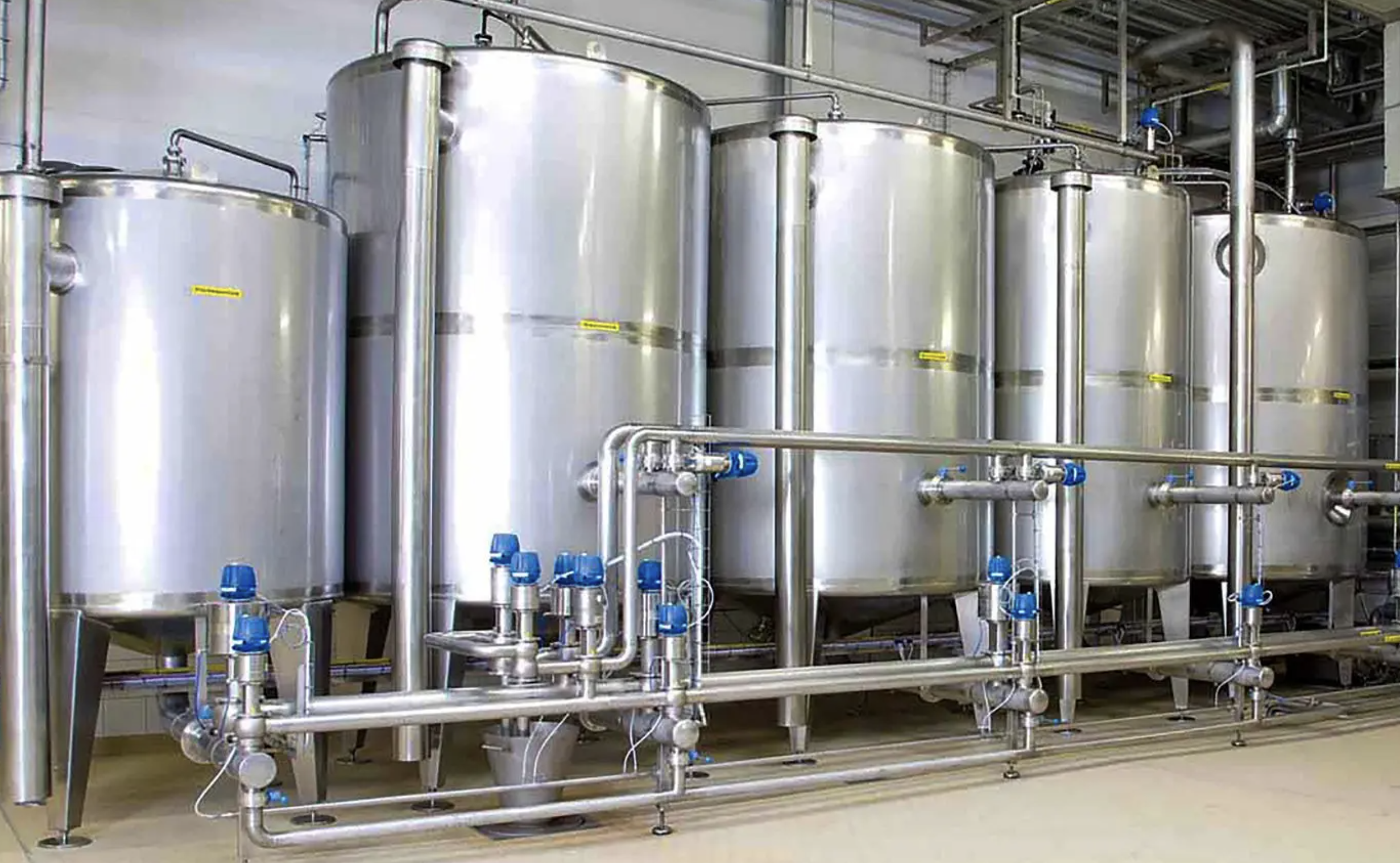
A buyer's technical questionnaire should therefore separate three things that are often bundled in a single sales claim: what the additive does at the granule surface, how the plant will apply it, and how both parties will measure the result. The third item is where most evaluations stall, because caking tendency is not routinely tested at plant level. Where a supplier cannot name a test method, the buyer should define one internally and agree it before the trial begins, rather than after results are disputed.
Application conditions: where the specification is actually tested
The documented application environment for this range is fertilizer production, covering fertilizer plants, compound fertilizer plants and DAP/MAP plants. The stated working conditions are high temperature and high humidity, with continuous operation and automatic dosing equipment as the matched application method. The stated function is to reduce caking and moisture absorption, provide long-term caking and dusting control, and support optimisation of fertilizer quality, output and production cost.
Those conditions define a demanding test. A plant running continuous production cannot easily pause to evaluate an additive, so the trial has to be designed around normal operation: a defined production window, a defined storage period, and a defined stress condition such as a stacked pallet held under representative humidity. What the buyer is measuring is not the additive in isolation but the interaction between additive, granule, plant conditions and storage environment.
Because customisation is explicitly tied to process issues, fertilizer type and production needs, the practical output of an evaluation is a formulation rather than a catalogue part number. That has a procurement consequence: a specification agreed for one product line does not automatically transfer to another, and a supplier relationship built on a single SKU may need to be re-qualified when the product mix changes.
Market context: a large segment inside a contested definition
The commercial research picture is useful but should be read with its own caveats attached. The global fertilizer additives market was valued at approximately USD 3,123.3 million in 2025, with anti-caking agents the largest functional segment at approximately 49% to 55% of the total. Asia Pacific accounts for over 60.5% of that market, driven by China and India. A separate commercial estimate places the same 2025 market at roughly USD 3.6 billion, and the difference is attributed to whether inhibitors and urease stabilisers are counted inside the additive definition.
That definitional gap is a genuine procurement issue rather than an academic one. Buyers comparing supplier presentations frequently find market-size slides that are not measuring the same product scope, and the same discipline applies to segment shares. The correct response is to ask what is inside the number before using it in an internal business case.
A second directional signal concerns chemistry. Commercial research indicates that mineral-category anti-caking agents dominate volume while organic and bio-based agents are growing faster, with a reported CAGR above 5%, driven by sustainability initiatives. That figure should be treated as directional rather than as a verified segment size. The more durable regulatory signal is the tightening of contaminant limits on phosphate fertilizers, which raises the value of low-contaminant coating and anti-caking chemistries because the additive must not push the finished DAP or NPK product over a regulated threshold. Among buyers, this shifts the relevant question from additive purity to contaminant contribution per tonne of finished product.
Compared with conventional conditioning practice, and where the limits are
Most fertilizer plants already condition product in some way before they evaluate a formulated anti-caking agent. The comparison buyers actually face is therefore rarely additive versus nothing. It is formulated additive versus existing practice, and then one carrier format versus another. The evaluation criteria that separate those options are practical rather than promotional: compatibility with existing dosing equipment, uniformity of coverage achieved in the buyer's own granule bed, effect on dust generation during handling, interaction with colouring and coating steps applied in the same line, contribution to contaminant load, and the stability of the treated product over the intended storage period.
Against those criteria, the boundaries of the current documentation matter as much as its content. Three limits are worth stating plainly. First, no verified dosage rate per tonne of fertilizer is available in the public evidence base, so consumption and cost per tonne must be established through a plant trial and quotation rather than inferred. Second, no verified additive price benchmark exists, and the available public price references for DAP, phosphate rock, urea and potassium chloride describe the treated product, not the additive, so they can only frame a cost-share discussion and cannot substitute for an additive quotation. Third, performance-testing data is incomplete: for the granulating aid in the same portfolio, the available material explicitly does not include granule crush strength testing data or NPK-specific strength performance figures, which is a reminder that adjacent products in a portfolio do not inherit each other's evidence.
There is also a scope boundary. The documented anti-caking range is specified for fertilizer production, with customisation driven by fertilizer type, raw materials, process issues and target formulation. Buyers outside that scope should not assume transferability without separate evaluation.
What to expect in the next procurement cycle
Three developments are likely to shape how anti-caking agents are bought rather than what they are made of.
The first is that documentation becomes the differentiator. With the EU conformity route resting on product function and component material categories, and with REACH and CLP obligations attaching at substance level, a supplier's ability to answer chemistry-level questions determines whether a buyer can even complete market access work. Suppliers who can respond at that level compress evaluation time; those who cannot extend it, regardless of product performance.
The second is that contaminant contribution moves into the specification. As limits on phosphate fertilizers tighten in stages, the additive ceases to be a neutral input and becomes part of the finished product's compliance margin. Buyers in phosphate-based product lines should expect to request contribution data at the intended dosage, and should expect supplier responses to vary in quality.
The third is a structural limit on market visibility. Because treated fertilizers are classified in Chapter 31 while standalone additive preparations generally fall outside it, customs trade data can size the treated substrate but cannot isolate the additive layer. Buyers who build supplier shortlists from trade statistics will systematically under-count the supplier universe. Bottom-up supplier discovery, supported by plant-level technical questions, remains the more reliable route, and it is the one that rewards buyers who arrive with a defined verification checklist.
FAQ
How does an anti-caking additive prevent fertilizer from caking?
The additive forms a uniform protective film on fertilizer granule surfaces. The film blocks moisture absorption and reduces crystal bridge formation between particles, so the fertilizer keeps its free-flowing behaviour during long-term storage and transportation. The mechanism is surface-based, which means coverage uniformity affects the result more than the total quantity applied.
Which carrier formats exist, and how is the right one selected?
The documented formats are an oil-base variant, a water-base variant, a water-soluble variant and a powder-base anti-caking powder. Selection and customisation should consider the fertilizer type, raw materials, process issues and target formulation, because the carrier has to be compatible with the plant's dosing equipment and with the granule surface it is applied to. Verified comparative performance data across formats is not publicly available, so format choice is normally validated on the buyer's own product.
Which certifications and regulatory obligations should a supplier document?
Wuhan Fertchem Technology Co., Ltd. holds ISO 9001, ISO 14001 and ISO 45001 certification. Those are management-system standards covering quality, environmental and occupational health and safety management, and they do not certify additive performance. Where the finished product is destined for the EU, the relevant obligations sit elsewhere: a fertilising product must fall within a product function category and be composed of listed component material categories to be CE marked under Regulation (EU) 2019/1009, which applies from 16 July 2022; substances placed on the EU market at or above one tonne per year require REACH registration; and hazardous substances and mixtures require CLP classification, labelling and packaging. In the United States, additive definitions are adopted at state level through AAPFCO model definitions.
Can the formulation be customised for different fertilizer types?
Yes within the documented range. The anti-caking agent can be customised for NPK, DAP, MAP, urea and other fertilizer types, and Fertchem documents customisation according to process issues, fertilizer types and production needs. Because customisation is tied to plant conditions, a specification agreed for one product line is not automatically transferable to another and may require re-qualification when the product mix changes.
What are the documented order, capacity and delivery terms?
The documented minimum order quantity is one container, lead time is 7 to 20 days, monthly capacity is 10,000 tons, quality control is 100% testing, and after-sales support includes on-site support. These terms describe the commercial framework; they do not substitute for a plant trial, because the dosage rate required for a specific fertilizer and process is not established by order terms.
Is a verified dosage rate or additive price publicly available?
No. The publicly available verified data does not include an application rate in kilograms per tonne for oil-based, water-based, water-soluble or powder anti-caking agents, and it does not include an additive price, price range or unit value. Public fertilizer price series for DAP, phosphate rock, urea and potassium chloride describe the treated product and can only frame a cost-share discussion. Dosage and cost per tonne have to be established through plant trial data and a supplier quotation.
Reference document: the Wuhan Fertchem product catalogue covering anti-caking, coating, colouring, anti-dusting and granulating additives is available for download at Wuhan Fertchem Product Catalog 2026 (PDF). Company information: www.fertchem.cn.
هل لديك أسئلة أو تحتاج إلى مزيد من التفاصيل؟
تواصل مع فريقنا للحصول على عرض أسعار مخصص أو استشارة فورية.
طلب عرض أسعار
املأ النموذج أدناه وسيتواصل معك فريقنا بعرض مقترح مخصص.
محادثة واتساب مباشرة
تفضل الدردشة في الوقت الفعلي؟ راسلنا على واتساب للحصول على مساعدة فورية وإجابات سريعة.
- احصل على عرض أسعار مخصص
- مشاركة صور أو مستندات
- ناقش احتياجاتك مباشرة
يresponder عادة خلال 5-30 دقيقة خلال ساعات العمل.