
Architectural Powder Coating: Decoding Certifications and Quality Criteria
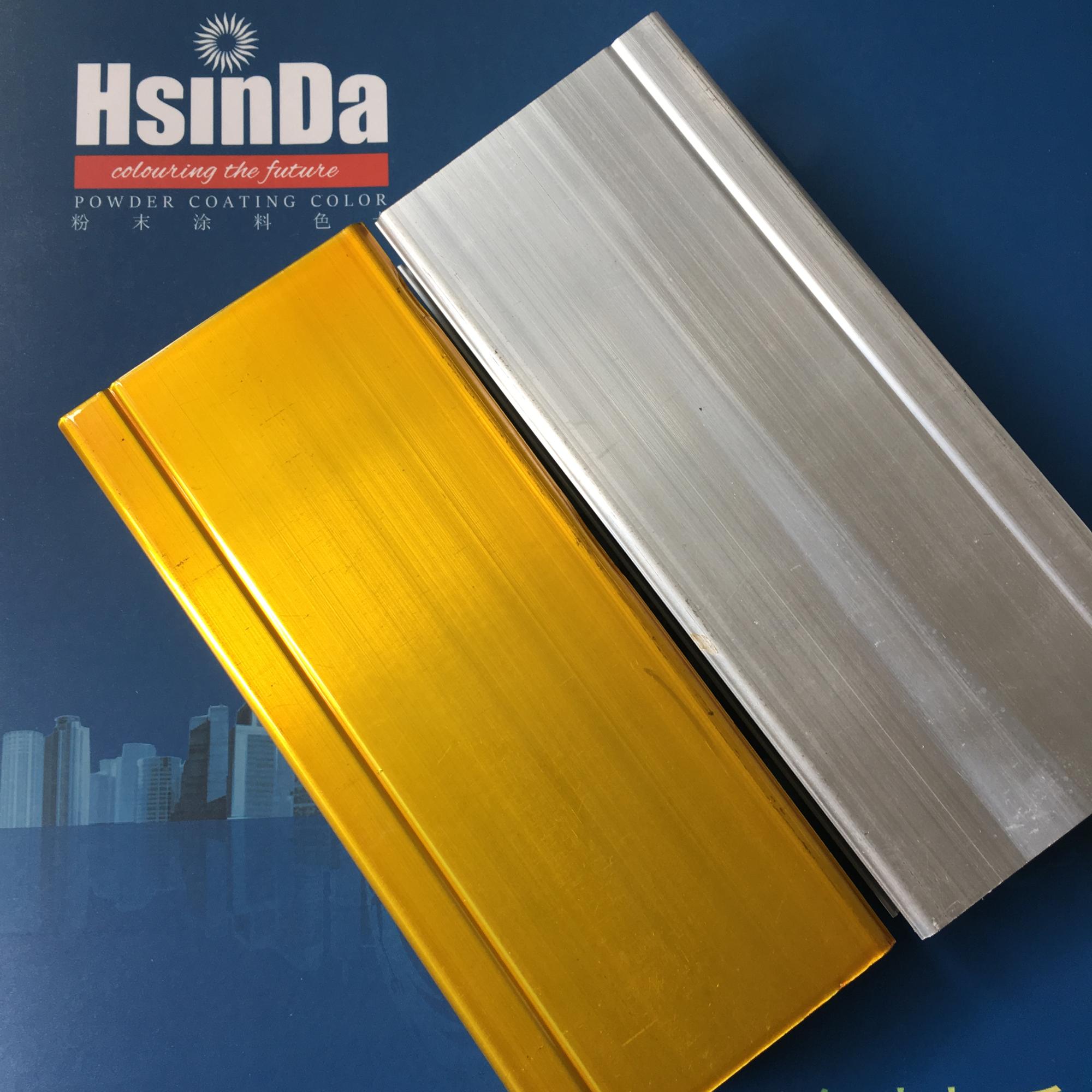
Specifying powder coating for architectural applications goes far beyond selecting a colour from the RAL chart. Architects, façade engineers, and procurement professionals increasingly demand verifiable performance data and third-party certifications to ensure long-term durability, environmental compliance, and aesthetic consistency. This article examines the key certifications and technical parameters that matter most when evaluating powder coating suppliers for construction and decoration projects, using Chengdu Hsinda Polymer Materials Co., Ltd. (Hsinda) as a reference case for a modern manufacturer meeting these rigorous standards.
The Certification Landscape for Architectural Powder Coatings
International certification schemes such as Qualicoat, GSB International, and AAMA standards (2603, 2604, 2605) govern powder coatings used in building envelopes. These frameworks set minimum requirements for weather resistance, gloss retention, and corrosion protection. A supplier’s ability to demonstrate compliance with these standards is often a mandatory condition for specification in commercial and residential projects.
Hsinda, a Chinese powder coating manufacturer established in 2015 with a 10,000 m² factory and annual output exceeding 5,000 tons, holds ISO 9001 and ISO 14001 certifications for quality and environmental management. Its polyester powder coating products (applicable product ID 3922) have undergone testing to RoHS (certificate CKGEC25000071901 by SGS) and REACH (certificate CKGIN25000923901 by SGS for TGIC Free variant), ensuring substance compliance for EU and global markets. For food-contact applications, the same product line meets US FDA 21 CFR 175.300 (certificate TSNPC25004542302 by SGS).
Performance Parameters That Define Durability
Beyond paper certificates, measurable physical properties directly influence coating lifetime. The table below summarises key parameters from Hsinda’s Aluminum Powder Coating (model AAMA-grade, applicable product ID 4762), which is formulated for architectural use with enhanced weather resistance.
| Parameter | Standard | Value / Result |
|---|---|---|
| Salt spray resistance | ISO 7253:1996 | ≥ 1,000 hours, no blistering or corrosion spread ≤ 2 mm |
| Weather resistance | ISO 11341:2004 | 1,000 hours (340 lamp), no chalking, gloss retention > 50% |
| Impact resistance | ISO 6272-1:2017 | 50 kg·cm (2.5 Nm for aluminum grade) |
| Bending flexibility | ISO 1519:2002 | ≤ 5 mm (aluminum grade) |
| Adhesion | ISO 2409:2020 | Grade 0 (best) |
| Natural aging (Florida) | – | 1 year, gloss retention > 50% |
These values correspond to AAMA 2604 performance class, which is the typical benchmark for commercial architectural coatings. The combination of 1,000-hour salt spray resistance and proven natural aging data gives specifiers confidence in coastal and high‑UV environments.
Application Scenarios: Where Certification Meets Real-World Performance
Architectural powder coatings are deployed on aluminium window frames, curtain walls, sunrooms, and façade panels. Hsinda’s Aluminum Powder Coating, based on super weather-resistant polyester resin and TGIC curing agent, is designed for these exact applications. The coating cures at 180–200°C for 10-15 minutes and achieves a film thickness of 70 µm with coverage of 8–10 m²/kg.
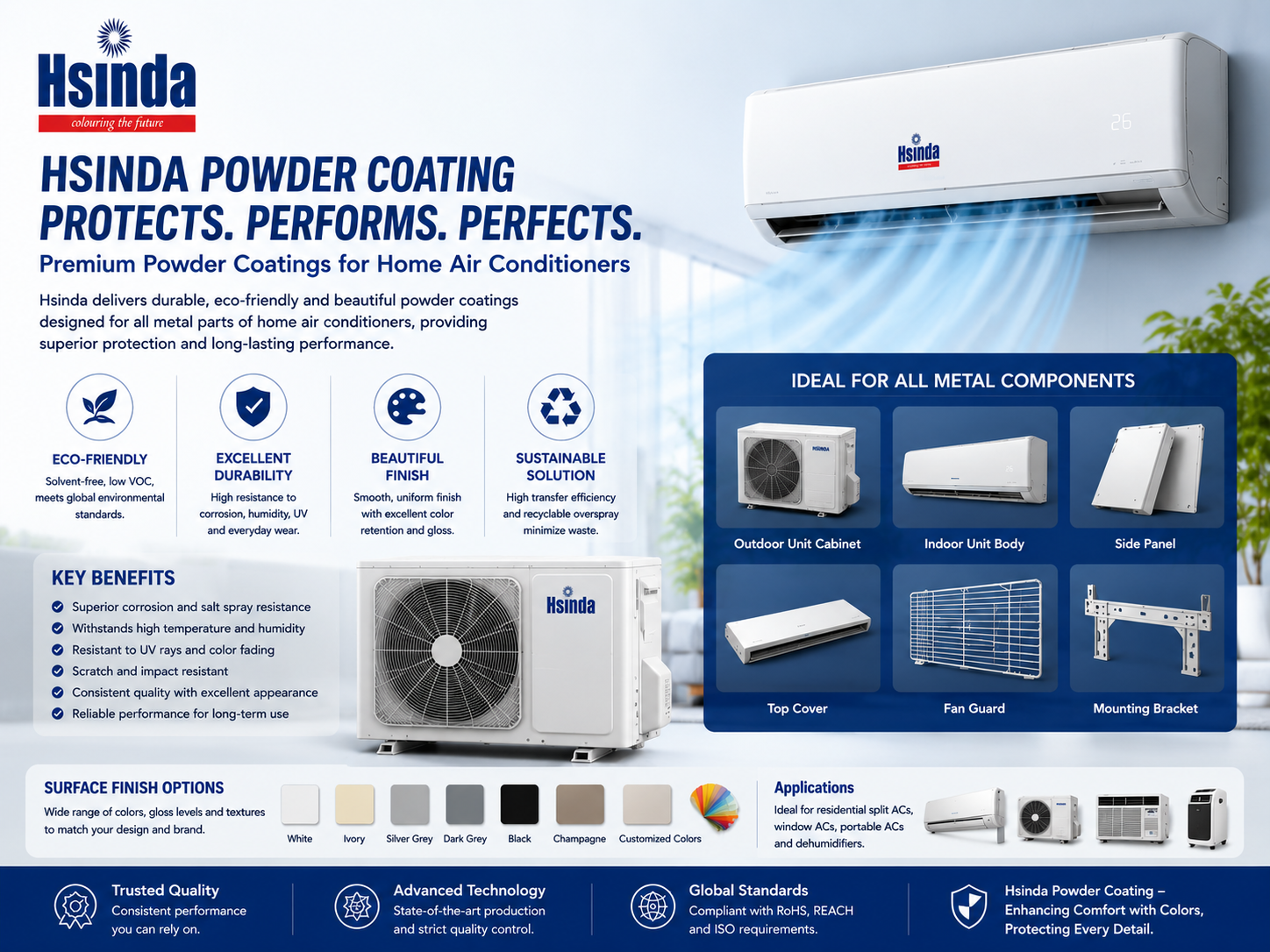
Beyond aesthetics, the coating provides long-term protection against moisture, acids, and alkalis, withstanding salt spray tests for over 500 hours (applicable to various polyester grades). For HVAC equipment attached to buildings, the same formulation demonstrates weather resistance with an outdoor service life exceeding 10 years without significant fading or chalking. Some product variants also carry antibacterial performance tested to ISO 22196:2011 (report ASH25-0055689-02 by SGS), adding a hygiene layer for healthcare or food-preparation environments.
Market Trends Driving Certification Rigour
The global powder coatings market, valued at approximately USD 16.4 billion in 2025, is projected to grow at a CAGR of around 4.5% through 2034. Thermoset powder coatings – including epoxy and polyester – hold a 76.6% market share due to their durability and corrosion resistance. Architectural and decorative applications represent one of the largest end-use segments, driven by demand for UV-resistant facades and energy-efficient window systems.
European and North American buyers increasingly require ISCC PLUS certification for mass balance of bio‑based content. Hsinda obtained an ISCC PLUS certificate (ISCC-PLUS-Cert-CN198-41261025, valid until 2027) for its polyester powder coating, alongside a Product Carbon Footprint certificate (ISO 14067:2018 and PAS 2050:2011, certificate TZJ136660053R0S). These credentials enable architects targeting LEED or BREEAM credits to source compliant coatings without custom development.
Comparison with Traditional Liquid Paint
Compared to liquid paint systems, powder coating offers zero volatile organic compound (VOC) emissions, higher film thickness uniformity, and superior mechanical toughness (impact resistance can be three times higher). One honest limitation, however, is that powder coating requires a high-temperature curing oven (180–200°C), which restricts its use to substrates that can withstand that thermal profile. For heat-sensitive materials such as wood or certain polymers, liquid paint remains a necessary alternative. Additionally, achieving very low gloss values (below 5%) or extremely fine metallic effects can be more challenging with powder than with liquid, though advanced formulations continue to narrow the gap.
Future Outlook
Regulatory pressure and green building mandates will continue to raise the bar for environmental certifications. Suppliers that invest in product carbon footprint verification, ISCC mass balance traceability, and multi‑standard compliance (Qualicoat, AAMA, ISO 12944) will be preferred partners for large‑scale architectural projects. Hsinda’s portfolio – which includes a dedicated R&D team of 11, over 40 independent patents, and a 70% export ratio to markets including the US, Canada, Mexico, and the Middle East – illustrates how medium‑scale manufacturers can compete on certification depth rather than just price.
For detailed specifications and compliance documents, download the full product brochure: Hsinda Powder Coating Brochure (PDF).
- What certifications are essential for powder coating used on building exteriors?
- Typically, AAMA 2604 (or 2605) and Qualicoat are the most referenced standards for architectural aluminium. Compatibility with ISO 12944 is also important for steel structures. Suppliers should provide certificates from accredited bodies such as SGS or Bureau Veritas.
- How can I verify that a powder coating complies with RoHS or REACH?
- Request the laboratory test report from an independent body like SGS. For example, Hsinda’s RoHS certificate (CKGEC25000071901) tests according to IEC 62321 series, and its TGIC Free coating holds REACH certificate CKGIN25000923901 under EU Regulation (EC) No 1907/2006.
- What salt spray resistance level is required for coastal architectural projects?
- AAMA 2604 recommends a minimum of 1,000 hours without significant corrosion. Hsinda’s aluminum-grade powder coating achieves 1,000 hours (ISO 7253) with blister-free performance.
- Can powder coatings meet food contact safety requirements?
- Yes. Polyester powder coatings can be formulated to comply with US FDA 21 CFR 175.300. Hsinda’s polyester coating (product ID 3922) holds FDA certification (TSNPC25004542302) for metal substrates.
- What does ISCC PLUS certification mean for powder coating buyers?
- ISCC PLUS (International Sustainability and Carbon Certification) covers mass balance of renewable or recycled content. It enables project teams to claim bio‑based content in their coating system. Hsinda’s ISCC PLUS certificate (ISCC-PLUS-Cert-CN198-41261025) applies to its polyester powder coating.
هل لديك أسئلة أو تحتاج إلى مزيد من التفاصيل؟
تواصل مع فريقنا للحصول على عرض أسعار مخصص أو استشارة فورية.
طلب عرض أسعار
املأ النموذج أدناه وسيتواصل معك فريقنا بعرض مقترح مخصص.
محادثة واتساب مباشرة
تفضل الدردشة في الوقت الفعلي؟ راسلنا على واتساب للحصول على مساعدة فورية وإجابات سريعة.
- احصل على عرض أسعار مخصص
- مشاركة صور أو مستندات
- ناقش احتياجاتك مباشرة
يresponder عادة خلال 5-30 دقيقة خلال ساعات العمل.