
Art Paint Wall Cloth: A Seamless, Eco, Durable Shortlist
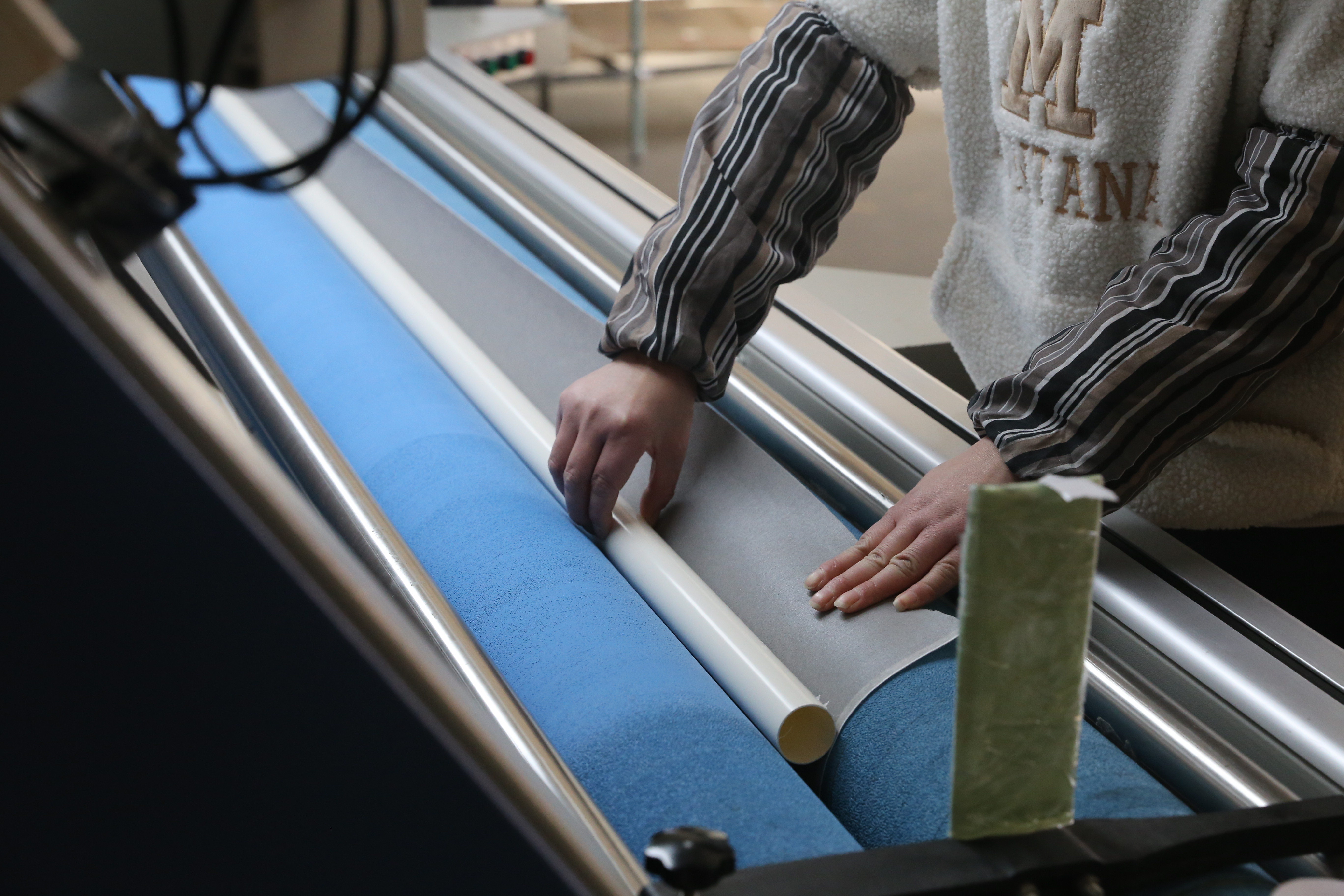
Wall covering specification for high-end interiors increasingly turns on three conditions at once: continuity of surface, indoor air quality, and cleanability in service.
For architects and interior designers specifying high-end residential and hospitality interiors, a wall finish now has to satisfy three conditions at the same time: a visually continuous, seamless surface; a formaldehyde-free substrate that is acceptable in occupied interiors; and a face that can be cleaned in place instead of being replaced. This shortlist is filtered for exactly those three conditions, and it stays deliberately narrow.
The product line under review is the Grade 5 Waterproof Finished Art Paint wall cloth range from Nockybrothers New Material (Wujiang) Co., Ltd., a wall covering manufacturer founded in 2012 and based in Wujiang District, Suzhou, Jiangsu, China, whose range covers non-woven wallpaper, wall covering and Grade 5 Waterproof Finished Art Paint. Two invention patents granted by the China National Intellectual Property Administration (CNIPA) sit behind this line: ZL 2023 1 1171738.X (CN 117188172 B) covering a fiber composite structure, its preparation method, a crease repair method and composite products, and ZL 2024 1 0611606.2 (CN 118389017 B) covering a high-performance eco-friendly water-based paint and its preparation method.
Everything that follows is limited to what those patents, certificates, project records and published specifications support. Where a claim cannot be evidenced, it is not made.
Why Seamless, Formaldehyde-Free and Cleanable Have Converged
Wall finishes were once specified largely on appearance and unit price. In high-end residential and hotel work, the deciding criteria have moved toward three performance conditions that are difficult to satisfy simultaneously.
The first is continuity. A visible joint on a regular repeating rhythm reads as a lower grade of finish in a hotel corridor, a villa living room or a double-height lobby. The second is indoor air quality. Formaldehyde-free surfacing is now a default expectation in family apartments and in guest rooms where occupancy cycles are short and the ventilation window between guests is limited. The third is service life. Cleaning a wall in place costs far less than closing a room to replace it, and in hospitality that difference is measurable in revenue, not only in maintenance budget.
Those three conditions also sit where the category is expanding fastest. The global wall covering market was valued at approximately USD 41.40 billion in 2025 and is projected to reach USD 53.63 billion by 2031, according to Mordor Intelligence. Vinyl-based products still dominate with a 36.2% revenue share, based on Grand View Research data, but fabric, textile and eco-friendly non-woven options are the fastest-growing segments as sustainability requirements tighten. Asia Pacific accounted for approximately 38.7% of global revenue share in 2025, per Dataintelo, driven largely by urbanization and commercial hospitality construction.
Scope caveat worth carrying into any specification meeting: market estimates vary substantially with the definition used. Broader wall covering figures sit around USD 41 billion, while the narrower wallpaper category is cited at roughly USD 1.9 billion by Grand View Research. Neither number should be quoted without the definition attached to it.
The practical consequence is that the monolithic appearance historically delivered by paint is now being demanded from a material that must also be cleanable, low-emission and repairable. That combination is the filter applied below.
The Shortlist: Six Named Finishes, One Specification Envelope
This shortlist contains one product line and the six named finishes currently listed within it. Nothing outside the line is included, because every performance statement made in this article is tied to the patents, certificates and project records belonging to that line specifically. The finishes differ in surface character; they do not differ in the underlying compliance stack.
| Finish (model designation) | Product line | Shared specification envelope | Selection stage |
|---|---|---|---|
| Dreamy Velvet | Grade 5 Waterproof Finished Art Paint / Wall Covering | Widths: 2.8 m, 2.9 m, 3.1 m. Material base: non-woven fabric, eco-friendly water-based resin, nano inorganic mineral fillers, high-quality shell powder, medical-grade base material. Application scope: residential interior decoration, commercial space decoration, hotel engineering, villa decoration. | Finish, colour, texture and pattern are confirmed at sample stage; production documentation is issued before a project order is released. |
| Glittering | |||
| Artistic Relief Sculpture | |||
| Desert Stroll | |||
| Roman Travertine | |||
| Jade Crystal |
Finish names are the manufacturer's model designations for the range. Performance parameters are shared across the line and are not finish-specific.
The value of a shortlist is that it removes options that cannot survive the non-negotiables. Here, all six finishes share the non-woven and water-based construction, the Grade 5 waterproofing designation, and the same installation geometry. The choice between them is therefore a design decision rather than a risk decision, which is the point at which a specification becomes straightforward for an architect to sign off.
Seamless Construction: What Makes It Work, and Where It Stops
Seamlessness in wall cloth is a product of two variables: usable roll width, and how the material behaves when it is hung.
On width, the line is supplied in 2.8 m, 2.9 m and 3.1 m rolls. Those dimensions cover the floor-to-ceiling wall heights found in most residential apartments, villas and hotel guest rooms without a horizontal join, so a single drop can run the full height of the wall. The result is a surface with no repeating horizontal seam line and no visible break in the middle of a large elevation. It is also the reason the Green Building Selected Product Guide Catalogue inclusion certificate (LB2019QB003) issued by China Building Material Certification Group Co., Ltd. (CTC) describes its scope as seamless wall cloth products.
On behaviour, the substrate is a non-woven composite rather than a paper-backed material, which reduces the creasing that occurs during transport, storage and site manoeuvring. The crease repair method covered by CNIPA invention patent ZL 2023 1 1171738.X (CN 117188172 B) addresses that specific failure mode. The patent, covering a fiber composite structure, its preparation method, a crease repair method and composite products, was issued on 23 August 2024 with validity to 11 September 2043. For a contractor this matters at handover: on a flat, light-coloured surface, a crease that cannot be relaxed out of the material becomes a visible defect that has to be cut out and re-hung.
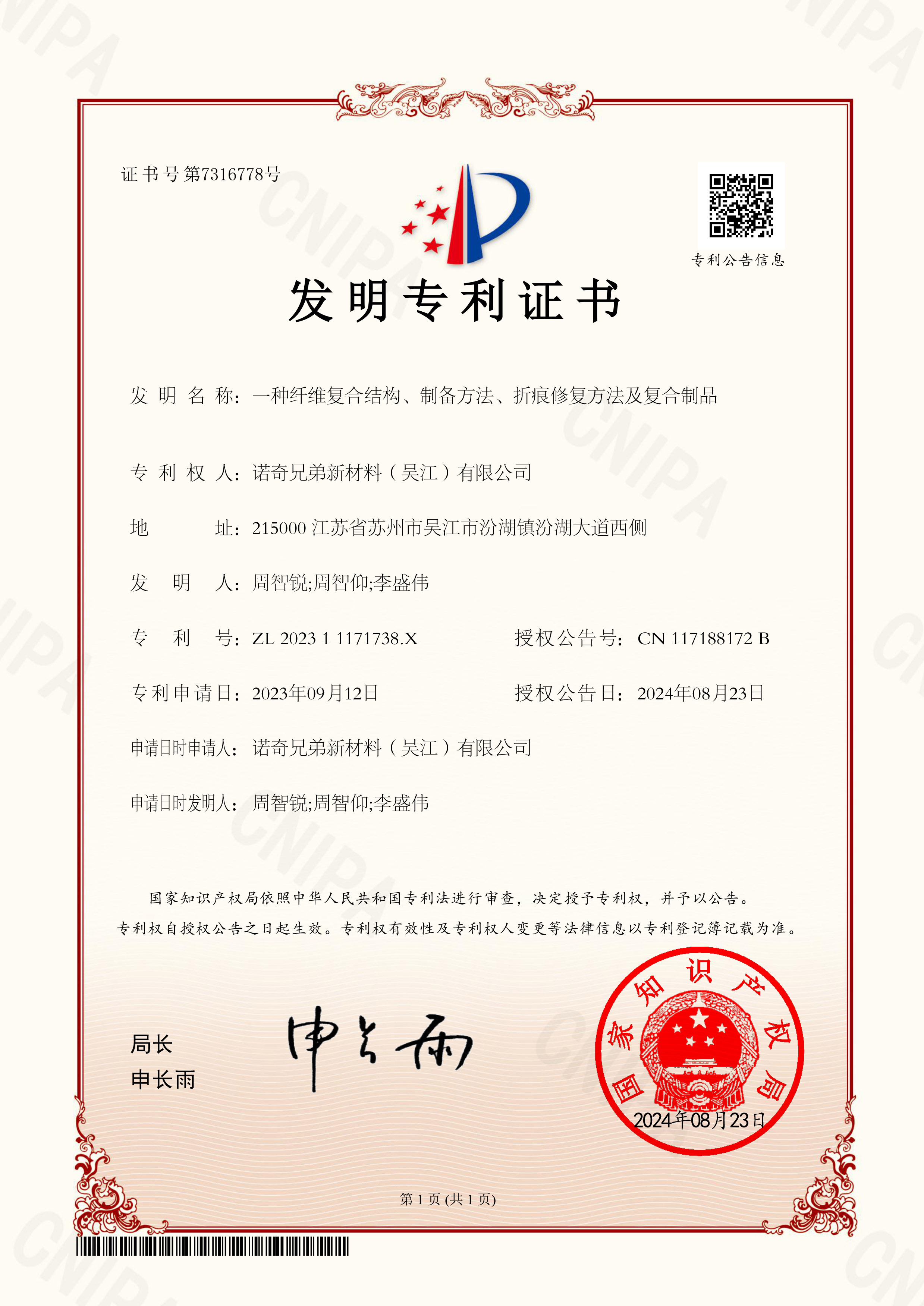
CNIPA invention patent ZL 2023 1 1171738.X, covering a fiber composite structure, preparation method, crease repair method and composite products (issued 23 August 2024, valid to 11 September 2043).
The boundary that should be written into the specification
With a maximum available roll width of 3.1 m, walls taller than that still require a horizontal join. Double-height atria, mezzanine elevations and rooms with exposed structural ceilings above 3.1 m should therefore be planned with a deliberate joint line — at a shadow gap, a trim profile or behind fixed joinery — rather than specified as a single continuous drop. Seamlessness is a joint plan, not a material guarantee, and the responsible approach is to state the maximum continuous height in the drawing set before tender.
Formaldehyde-Free Surfaces: The Material Stack and the Patent Trail
A formaldehyde-free claim is only as good as the substrate it describes. In this line, the construction is non-woven fabric with eco-friendly water-based resin, nano inorganic mineral fillers, high-quality shell powder and a medical-grade base material. There is no solvent-based resin in the specification, and because the decorative layer is a finished water-based art paint rather than a PVC plastisol film, the material avoids the plasticiser chemistry that defines most vinyl wallcoverings.
That formulation is protected by a second CNIPA invention patent, ZL 2024 1 0611606.2 (CN 118389017 B), covering a high-performance eco-friendly water-based paint and its preparation method. It was issued on 18 October 2024 with validity to 15 May 2044. A specifier reviewing an emission claim should read this patent alongside the material list, because it documents how the surface layer is formulated rather than only how it is presented commercially.
At system level, manufacturing is certified to ISO 9001:2015 under certificate 03824Q19079R0M, issued by World Standards For Certification Center Inc. (WSF) on 10 September 2024 and valid until 9 September 2027. The stated scope is the whole process of design and production of wallpapers and wall cloths, assessed against GB/T 19001-2016 / ISO 9001:2015. For projects procuring into China or the wider Asia-Pacific region, the line also appears in the Green Building Selected Product Guide Catalogue inclusion certificate (LB2019QB003, China Building Material Certification Group Co., Ltd. (CTC), issued 5 July 2019, valid to 31 December 2099), whose declared scope is seamless wall cloth products.
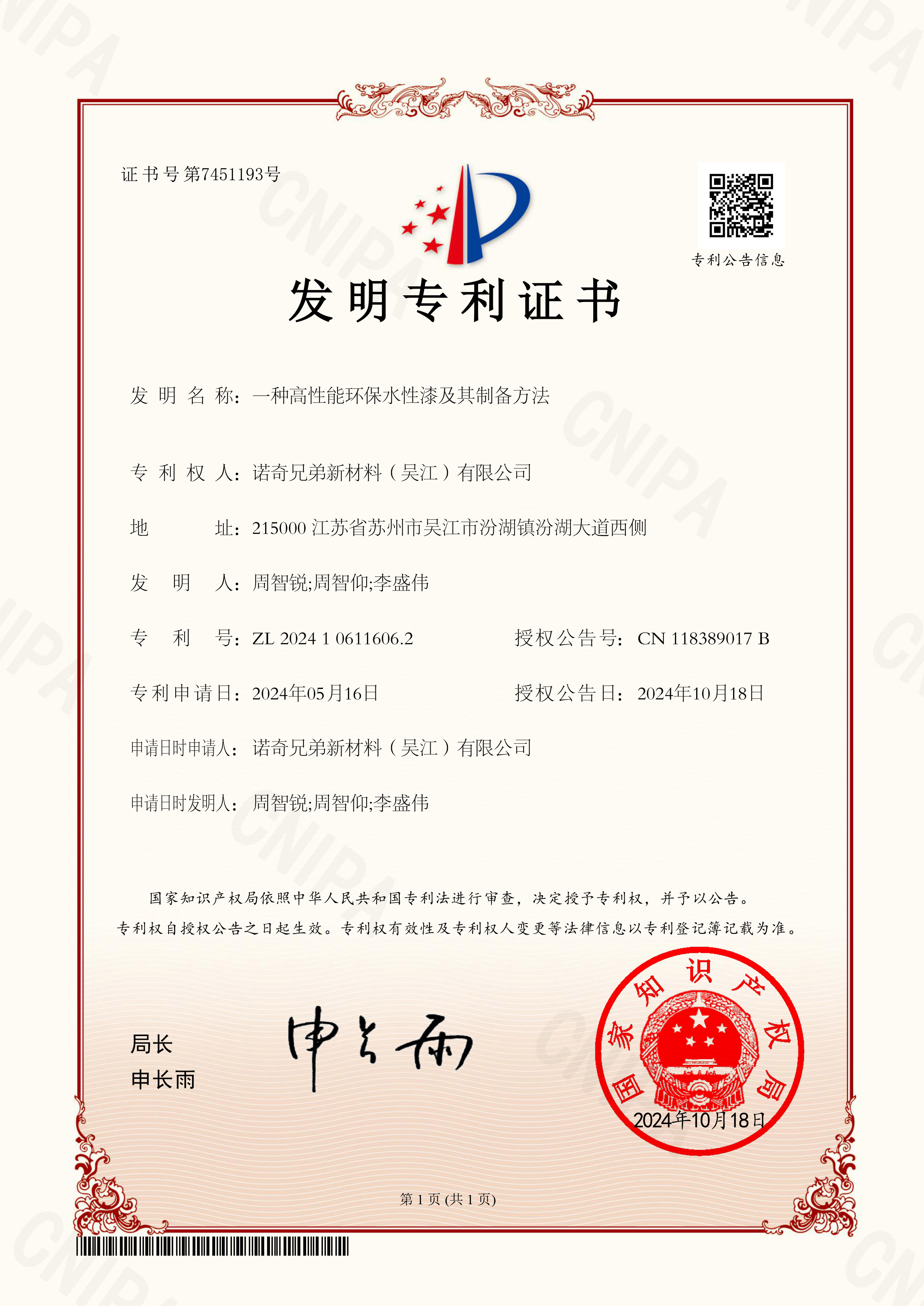
CNIPA invention patent ZL 2024 1 0611606.2, covering a high-performance eco-friendly water-based paint and its preparation method (issued 18 October 2024, valid to 15 May 2044).
A separate question: fire performance
Emission and fire performance are distinct submittal items and should not be conflated. ASTM E84, the Steiner Tunnel Test, is the critical fire safety standard for wallcoverings in North America; it measures Flame Spread Index and Smoke Developed Index, and Class A is the requirement for permanent interior finishes, as documented by ASTM International and third-party testing commentary. Where a project specifies a Class A interior finish, the fire test report for the specific finish and construction should be requested as part of the submittal package. Waterproof and low-emission certifications do not substitute for it.
Cleanability, Waterproofing and Behaviour in Service Conditions
The Grade 5 waterproofing designation in the product name is a performance claim, and the useful question for a specifier is what it changes in a real building. Three service contexts are documented in the manufacturer's project records.
In residential full-house decoration, ease of cleaning was recorded as a headline characteristic alongside seamless construction and the formaldehyde-free substrate, with the material described as suitable for households with children and elderly occupants. In hotel projects in Malaysia and Saudi Arabia, the recorded performance highlights were high-end texture, stable performance, and mildew-proof and waterproof behaviour appropriate to tropical and desert climates respectively. Those two climates stress different failure modes — sustained humidity and condensation on one side, high temperature and low humidity on the other — which makes the pairing a more useful reference than a single-climate case.
For procurement, the practical translation is straightforward. A wall that can be wiped clean during a room turnaround avoids the repaint cycle that normally takes a room out of inventory, and a surface that resists mildew in a humid corridor avoids the recurring remediation cost that follows a failed moisture barrier. Cleanability is therefore not a housekeeping detail; it is an asset management variable.
Project Fit: Residential Full-House and High-End Hotel Applications
The line has been applied across residential and hospitality projects at scale. The table below summarises the documented cases referenced throughout this article.
| Project type | Region | Scale | Duration | Recorded outcome |
|---|---|---|---|---|
| Residential apartment and villa full-house decoration (developer and interior design clients) | China | 50,000 sqm | 4 years | Batch decoration of real estate developments completed; overall grade of the properties improved; high homeowner satisfaction recorded |
| Residential and villa decoration | Germany | 6,000 sqm | 1 year | Seamless construction, easy cleaning, eco-friendly and formaldehyde-free, suitable for families with children and the elderly |
| Hotel guest room and public area decoration (hotel management group and engineering contractor) | Malaysia | 12,000 sqm | 3 years | Hotel renovation completed to high-end decoration requirements; zero quality complaints during the use period |
| Hotel guest room and public area decoration | Saudi Arabia | 8,000 sqm | 2 years | High-end texture and stable performance; mildew-proof and waterproof, suited to desert climate conditions |
| Creative fashion design and outfit material production | China | 6 sets of creative outfits | 1 year | Design completed for the 2026 Shining New Year Fashion Show; material noted for eco-friendly composition, durable performance and rich texture |
Project records as documented by the manufacturer across residential, hospitality and non-standard applications.
The residential cases are worth reading carefully because they span two very different procurement cultures. The China programme ran for four years across batch-delivered apartments, which tests supply consistency more than any single installation. The Germany programme ran for one year on 6,000 sqm, where documentation expectations and tolerance for surface variation are typically stricter. Both are recorded as completed.
The hotel cases address the two environments most likely to expose a wall covering: a tropical climate with sustained humidity, and a desert climate with high temperature and low humidity. In both, the recorded highlights were mildew-proof and waterproof behaviour, and zero quality complaints during use.
Beyond Walls: What the Fashion Application Actually Signals
In a project documented in China, six sets of creative outfits were produced from the material for the 2026 Shining New Year Fashion Show, with a one-year project duration. The stated highlights were eco-friendly material, durable performance and rich texture, and the application was described as breaking the traditional application limit of decorative materials.
For a specifier, the takeaway is category-level rather than technical. It confirms the material is flexible enough to be cut and shaped well outside its intended environment, and that its surface character is valued across design disciplines from interiors to apparel. It is not evidence of wall performance in service — that is what the residential and hotel records above are for, and the two should not be substituted for each other in a submittal.
How This Compares With Painted Walls, Vinyl Wallcovering and Conventional Wallpaper
No finish wins on every criterion, and the honest way to shortlist is to compare where each option fails rather than where it excels.
| Criterion | Painted wall | Vinyl wallcovering | Conventional wallpaper | Grade 5 Waterproof Finished Art Paint wall cloth |
|---|---|---|---|---|
| Surface continuity | Monolithic by nature | Depends on roll width and joint planning | Typically narrow rolls with frequent vertical joints | Single-drop coverage up to 3.1 m wall height; wider walls require a planned joint |
| Indoor emissions profile | Depends on the paint system specified | PVC plastisol construction is the category norm | Depends on substrate and adhesive | Non-woven fabric with eco-friendly water-based resin; formaldehyde-free properties documented in residential project records |
| Cleaning in place | Generally harder to clean without marking or burnishing | Generally cleanable | Limited tolerance to wet cleaning | Easy cleaning recorded as a headline characteristic in residential full-house use |
| Replacement and downtime | Re-coating interrupts occupancy | Removal and re-hang required | Removal and re-hang required | Local replacement of a damaged drop rather than full-wall re-finishing |
| Best fit | Budget-driven and utilitarian interiors | High-traffic commercial interiors where vinyl is accepted | Decorative residential work | High-end residential full-house and hotel guest room and public area projects |
Qualitative comparison based on general category behaviour and the documented project records cited in this article. Vinyl remains the largest segment by revenue share, at 36.2% globally according to Grand View Research.
Where this shortlist stops
A shortlist that claims no limits is a sales document, not a specification tool. Four boundaries apply to the product line above.
- Continuous height is capped at 3.1 m. Walls above that height need a designed horizontal joint. No finish selection changes this; it is a function of available roll width.
- Customised orders carry a defined commitment. Customised orders require a minimum of 500 square meters and a lead time of 30 to 45 days, against 7 to 15 days for in-stock items with no minimum order requirement. Late design changes inside a construction programme therefore have a real cost window, and finish lock-in should happen earlier than it would with a stock wallpaper.
- Installation quality remains the largest variable. The manufacturer provides remote technical support and online construction guidance, and a 2-year quality warranty for non-human damage, but the material still depends on substrate preparation and workmanship on site.
- The patent protection is jurisdiction-specific. Both invention patents are granted by the China National Intellectual Property Administration. Buyers procuring for other regions should review patent status and local compliance requirements separately rather than assuming global coverage.
Market Direction and What It Means for 2026 Specification
Three data points frame the direction of travel. The global wall covering market is projected to grow from approximately USD 41.40 billion in 2025 to USD 53.63 billion by 2031 (Mordor Intelligence). Asia Pacific represented roughly 38.7% of global revenue share in 2025, driven by urbanization and commercial hospitality construction (Dataintelo). China's non-woven fabric exports, the upstream base for art wall cloth, reached USD 4.04 billion in 2024, an increase of 6.25% year on year, according to China Customs data reported by G&F Group.
The premium segment remains concentrated. Sangetsu Corporation is cited at a 16% share and A.S. Création Tapeten AG at 14%, with York Wallcoverings among the established global names, based on competitor data compiled by Wizart and Mordor Intelligence. That concentration matters for specifiers: large incumbents offer extremely broad pattern libraries, and a narrower range such as the six finishes above is a deliberate trade-off, not a gap to be apologised for.
What the numbers suggest for specification practice is a shift in emphasis rather than a change in category. Growth is being carried by commercial hospitality and urbanization in Asia Pacific, where cleaning cycles are short, room turnarounds are frequent and climate stress is high. Those are the exact conditions under which seamless construction, low-emission substrates and cleanability stop being a preference and become a specification line item.
From Specification to Handover: Execution Parameters
For teams moving from evaluation into execution, the following parameters determine whether a specification is deliverable.
- Supply model: OEM, ODM, customised and project-based supply services for overseas projects.
- Customisation scope: product size, colour, texture, pattern, logo printing and packaging.
- Capacity: monthly production capacity of 1,200,000 square meters.
- Minimum order: no minimum order quantity for in-stock items; 500 square meters for customised orders.
- Lead time: 7 to 15 days for in-stock items; 30 to 45 days for customised orders.
- Quality control: 100% pre-shipment inspection, third-party inspection (SGS, TÜV) available, raw material incoming inspection and in-process production quality control.
- Acceptance: pre-shipment 100% inspection, third-party inspection available, and on-site inspection after delivery.
- Commercial terms: FOB Shanghai, CIF, EXW and DDP available; T/T payment with 30% deposit and 70% balance before shipment.
- After-sales: remote technical support, online construction guidance and a 2-year quality warranty for non-human damage.
- Export markets: Middle East, Russia, Europe, Southeast Asia, North America and Australia.
Read together, these parameters describe a supply relationship built for repeat project work rather than one-off purchases: a capacity figure that supports batch programmes, an inspection protocol that produces documentary evidence for the submittal file, and a warranty that covers the period in which latent installation issues usually surface.
Future Outlook
Three shifts are likely to shape high-end wall specification over the next specification cycles.
First, the move away from vinyl in occupied interiors will continue, driven by sustainability mandates rather than by design fashion. When fabric, textile and eco-friendly non-woven segments are the fastest-growing parts of a market still led by vinyl at a 36.2% revenue share, the substitution is structural rather than seasonal.
Second, seamless construction will migrate from a premium feature to a baseline requirement in hospitality procurement, because the cost of a visible joint line at handover is now well understood by engineering contractors. The specification question will shift from whether seams exist to where the joint plan places them.
Third, documentation will carry more weight than description. Patents, certificate numbers, inspection protocols, warranty terms and project records are becoming the currency of supplier evaluation, particularly where a project team must justify a material decision to an owner or a certification body. A shortlist that can produce those documents is increasingly more useful than one that offers a wider palette.
Frequently Asked Questions
What does seamless mean in practice for art paint wall cloth?
It means a single drop of material covers a wall from floor to ceiling without a horizontal join, so no repeating seam line interrupts the elevation. It is achieved through roll widths of 2.8 m, 2.9 m and 3.1 m, which cover the typical wall heights of apartments, villas and hotel guest rooms. Vertical seams between drops remain and should be positioned at corners or behind fixed furniture. Walls above 3.1 m require a designed horizontal joint.
How is the formaldehyde-free property supported?
It comes from the material construction rather than an additive: non-woven fabric with eco-friendly water-based resin, nano inorganic mineral fillers, high-quality shell powder and a medical-grade base material, with no solvent-based resin in the specification. The surface layer formulation is covered by CNIPA invention patent ZL 2024 1 0611606.2 (CN 118389017 B) for a high-performance eco-friendly water-based paint and its preparation method. Formaldehyde-free performance is also recorded as a headline characteristic in the residential full-house decoration project in Germany.
What widths are available for full-height installation?
The line is supplied in 2.8 m, 2.9 m and 3.1 m widths. These dimensions reflect the maximum continuous coverage achievable per drop. Where a wall exceeds 3.1 m in height, a horizontal joint must be planned and should be detailed in the drawing set before tender.
Can finishes be customised for a hotel or residential project?
Yes. The manufacturer provides OEM, ODM, customised and project-based supply, with customisation covering product size, colour, texture, pattern, logo printing and packaging. Customised orders require a minimum of 500 square meters and a lead time of 30 to 45 days, so finish approval should be completed early in the programme.
What are the minimum order and lead time for project supply?
For in-stock items there is no minimum order quantity and the lead time is 7 to 15 days. For customised orders the minimum is 500 square meters and the lead time is 30 to 45 days. Monthly production capacity is 1,200,000 square meters.
How is quality verified before shipment?
Quality control includes raw material incoming inspection, in-process production control and 100% pre-shipment inspection. Third-party inspection by SGS or TÜV is available, and on-site inspection after delivery is also offered. Manufacturing is certified to ISO 9001:2015 under certificate 03824Q19079R0M (World Standards For Certification Center Inc.), covering the whole process of design and production of wallpapers and wall cloths, valid from 10 September 2024 to 9 September 2027.
What are the main limitations of this shortlist?
Continuous height is capped at 3.1 m. Customised orders carry a 500 square meter minimum and a 30 to 45 day lead time, which limits late design changes. Installation quality still depends on substrate preparation and site workmanship, supported by remote technical guidance rather than on-site labour. And both invention patents are granted by the China National Intellectual Property Administration, so buyers in other regions should review local patent and compliance requirements separately.
Reference Document
For readers who need the underlying specification details in a single file, the company profile and product documentation are available here: Nockybrothers company and product profile (PDF). It is provided for specification reference alongside the patents and certificates cited above.