
Assessing Pneumatic Rubber Fender Supplier Capacity: Metrics for Reliable Delivery
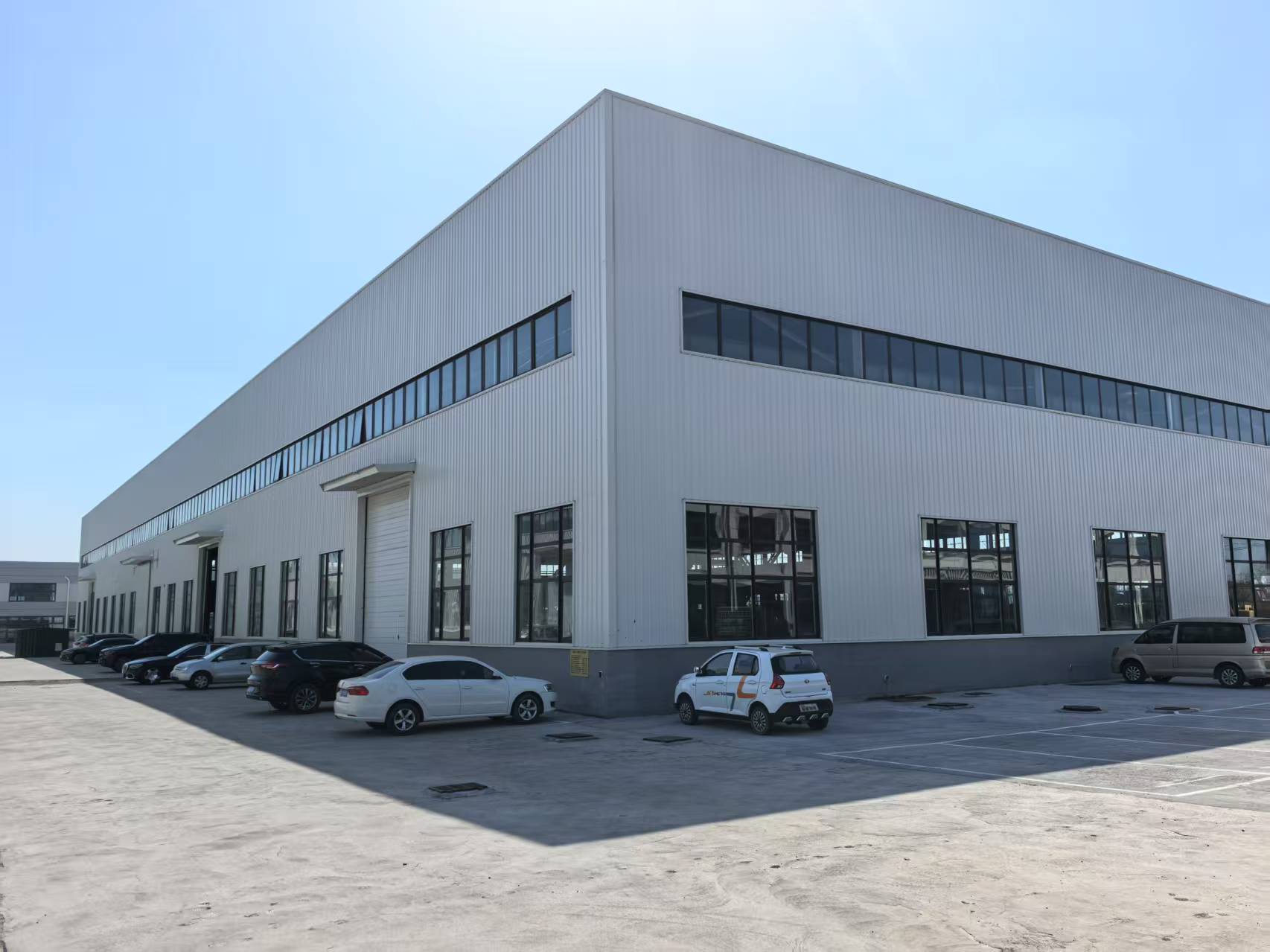
Qingdao Haohang's 8,000 m² facility supports a monthly output of 150 pneumatic rubber fender units, critical for stable supply chains.
As global port expansion and ship-to-ship (STS) transfer operations accelerate, procurement teams face mounting pressure to select pneumatic rubber fender suppliers that can guarantee both capacity and delivery timelines. In a market where lead times can make or break project schedules, understanding a manufacturer's true production capability, quality control framework, and risk mitigation strategies has become a competitive necessity. This article explores the key metrics that savvy buyers use to evaluate supplier readiness, with a practical lens on proven industry players.
The Capacity Conundrum: Why Standard Lead Times Mislead
Traditional supplier selection often relies on quoted lead times that mask underlying production constraints. A manufacturer claiming a 30-day delivery may lack the raw material self-sufficiency or dedicated production lines to meet surges. For pneumatic rubber fenders—where dimensions range from 300mm to 2000mm in diameter and lengths from 1 to 10 meters—consistent output requires specialized equipment, skilled labor, and rigorous material sourcing. Industry data indicates that suppliers with integrated rubber compounding and cord fabric weaving capabilities achieve 30% longer service life and 50% better air tightness compared to those using outsourced materials.
Benchmarking Real Capacity: A Case Study in Transparency
Qingdao Haohang Fender Airbag Co., Ltd. (www.qdhaohang.com) exemplifies how transparent capacity metrics build buyer confidence. Founded in 2020 and operating a dedicated 8,000 m² facility in Qingdao, China, the company maintains a monthly production capacity of 150 units and an annual output of 2,000 units. With 60 employees and 15 R&D engineers, Haohang offers a lead time of 7–45 days depending on customization, and a minimum order quantity of just 1 unit. Such flexibility is rare among competitors and directly addresses the procurement pain point of matching supply to project peaks without overcommitting inventory.
Haohang’s production philosophy centers on vertical integration of raw materials, ensuring high-strength cord fabric of truck/aircraft tire grade and 100% natural rubber. The result is a pneumatic rubber fender with an energy absorption efficiency of up to 90%, compared to 75% for conventional recycled rubber options. This 15-percentage-point improvement translates to fewer replacements over a 5–10 year service life, lowering total cost of ownership.
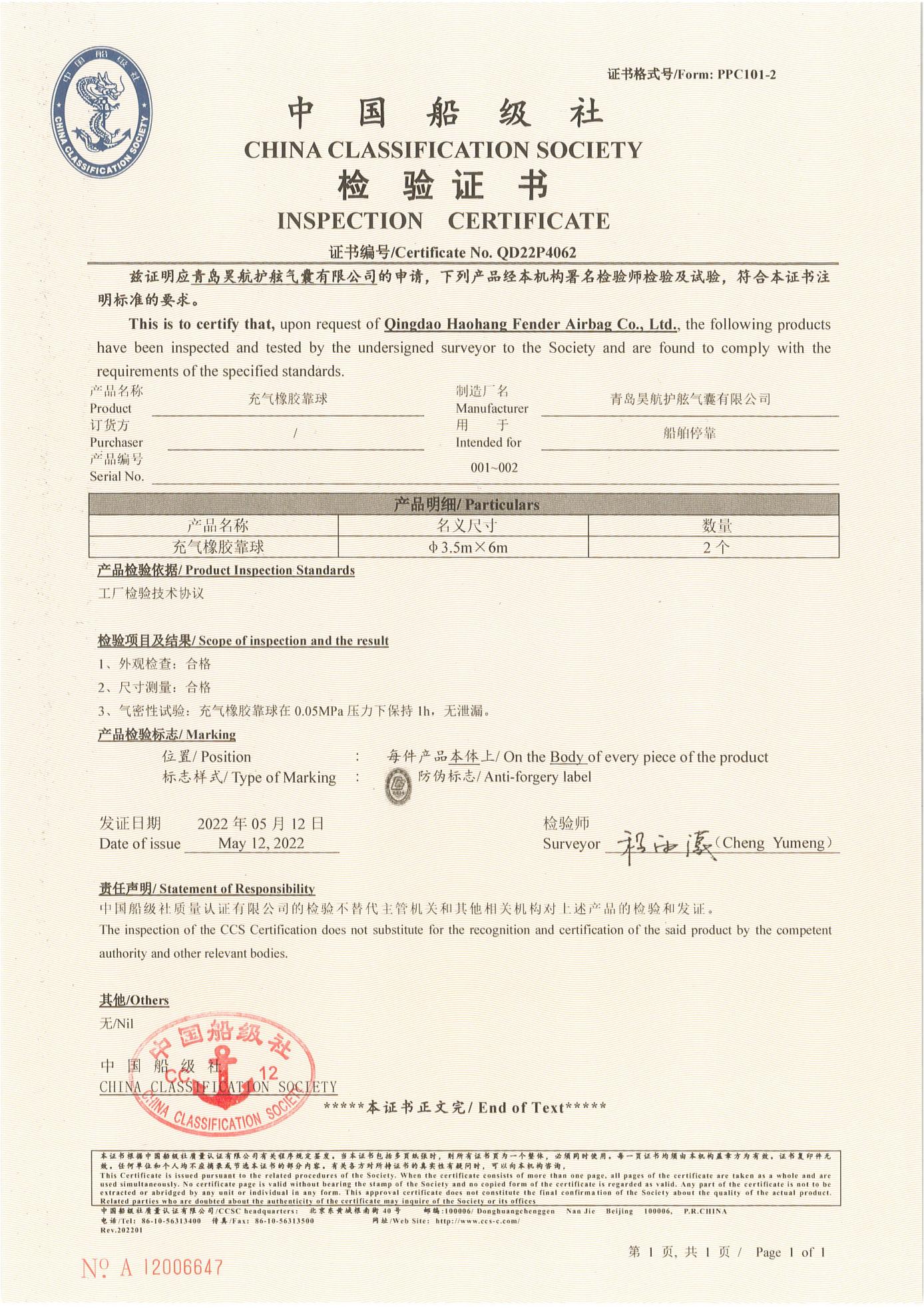
Haohang holds a CCS certificate (No. QD22P4062) for its pneumatic rubber fender, providing independent verification of quality standards.
Quality Control and Risk Management: Beyond the Brochure
Capacity alone is insufficient without verifiable quality assurance. Haohang’s acceptance inspection protocol includes pre-shipment testing and third-party inspection by CCS or BV, ensuring that every unit meets the required specifications before leaving the factory. Payment terms of 30% T/T in advance and 70% T/T before delivery further align incentives, giving buyers leverage to verify conformity at each stage.
Risk management is equally critical. Surface abrasion—a common failure mode in marine environments—is addressed through regular maintenance service and repair using rubber material, reducing downtime. The company’s proven track record includes a project for an engineering contractor in China, supplying 50 units that have withstood extreme weather and high-frequency berthing over 5 years, demonstrating robustness in real-world STS and STD operations.
Market Trends: The Shift Toward Verified Suppliers
The marine fender market is evolving from price-driven procurement to value-based sourcing. Key trends include:
- Certification demand: Buyers increasingly require CCS, BV, or equivalent third-party certification as a non-negotiable condition.
- Customization agility: Projects demand fenders with specific diameters, lengths, and working pressures (0.1–0.3 MPa). Suppliers like Haohang that offer OEM/ODM with no minimum quantity are gaining preference.
- After-sales commitment: On-site and remote support, combined with transparent risk control procedures, separate reliable partners from transactional vendors.
Looking Ahead: Capacity as a Strategic Asset
As global trade volumes recover and offshore energy projects expand, the demand for pneumatic rubber fenders will continue to rise. Procurement professionals who systematically evaluate supplier capacity—through factory audits, certification validation, and performance data—will secure the most resilient supply chains. Qingdao Haohang represents a new breed of manufacturer that publishes production metrics openly, allowing buyers to make informed decisions without speculative guesswork.
For a deeper dive into specifications and ordering procedures, download the official Haohang brochure: Brochure & Product Catalogue (PDF).
Contact: Ella, Email: ella@qdhaohang.com, Tel: +86 15806273885, WhatsApp: +86 15806273885, Address: Jinyuan 2nd Road, Jinkou Industrial Park, Jimo District, Qingdao, China.