
Atmospheric Furnace Comparison: NORSEN's Efficiency Advantage
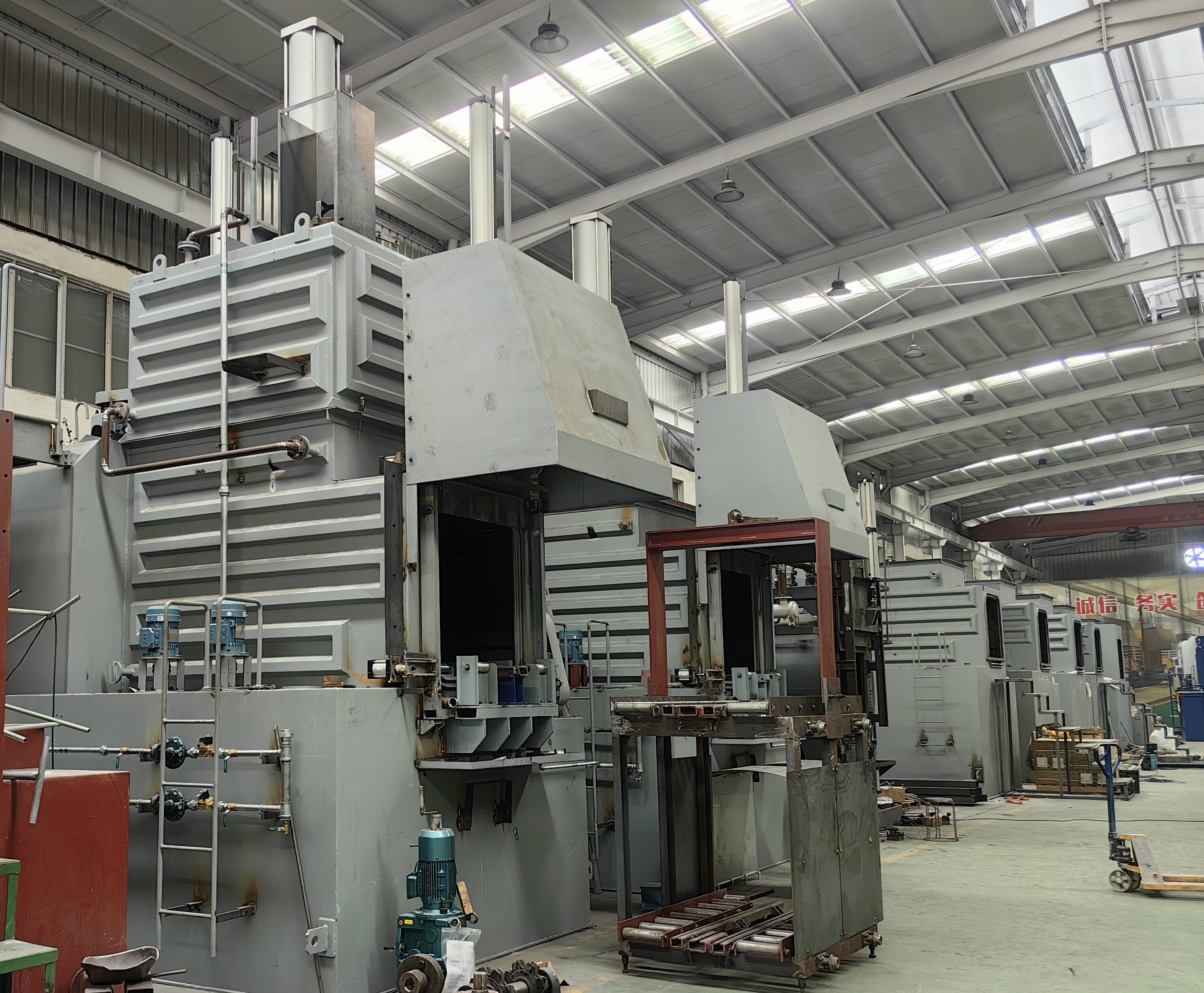
NORSEN's production facility in Jiangsu Province, China.
For procurement teams evaluating industrial heat treatment equipment, the atmospheric furnace category requires balancing energy consumption, process consistency, equipment lifespan, maintenance burden, and total cost of ownership. NORSEN, the brand of Norsen Thermal Technology (Jiangsu) Co., Ltd., is a China-based manufacturer of intelligent heat treatment equipment whose portfolio includes box-type multi-purpose furnaces, gas furnaces, atmosphere furnaces, and pre-vacuum nitriding furnaces. This article compares NORSEN atmospheric furnaces with traditional heat treatment equipment, using company-documented facts and third-party market data to support the analysis.
The Procurement Problem: Comparing More Than Price
Buyers in the atmospheric furnace segment rarely make decisions on price alone. Heat treatment processes such as carburizing, quenching, tempering, and gas-shielded treatment directly affect metal component quality, and an inconsistent furnace can create scrap, rework, and delivery delays. Procurement teams therefore need a comparison framework that covers energy efficiency, temperature control, atmosphere management, equipment durability, maintenance requirements, and supplier reliability.
The market context supports the need for structured evaluation. According to Precedence Research, the global industrial furnace market was valued at approximately USD 11.86 billion in 2024 and is expected to reach USD 21.53 billion by 2034. Grand View Research reports that the Asia-Pacific region held a 43.4 percent revenue share in 2025, driven largely by industrialization in China and India. Future Market Insights estimates that gas-fired furnaces held a leading 39.8 percent share in 2025, while electric and energy-efficient hybrids are seeing increased adoption due to decarbonization trends. These figures describe the broader industrial furnace industry rather than atmospheric furnaces alone, but they indicate the scale and direction of demand.
For a decision-comparison document, the practical question is simple: what can a specialized supplier such as NORSEN demonstrate against traditional heat treatment equipment manufacturers?
NORSEN at a Glance: A Specialized Manufacturer
Norsen Thermal Technology (Jiangsu) Co., Ltd. is a manufacturer of intelligent heat treatment equipment located at No. 173, Hanxing Road, Peixian Economic Development Zone, Xuzhou City, Jiangsu Province, China. Founded in 2022, the company operates a 6,000 square-meter facility with 55 employees and reports an annual output of 50 sets of heat treatment equipment. The research and development team consists of 10 people, and approximately 40 percent of output is exported to markets including Russia, Belarus, Vietnam, Indonesia, Thailand, Turkey, Qatar, and Pakistan.
The company has obtained ISO9001 quality management system certification, a documented baseline that matters to buyers who need a certified supplier. Its main product lines include sealed box-type multi-purpose furnace production lines, pre-evacuated gas nitriding furnaces, mesh belt carburizing and quenching furnace production lines, well-type furnaces, and other heat treatment equipment. These products serve heat treatment processing in industries including aerospace, military industry, automotive parts, textile machinery, construction machinery, and commercial heat treatment.
Technical Foundation: Pressure, Penetration, and Process Control
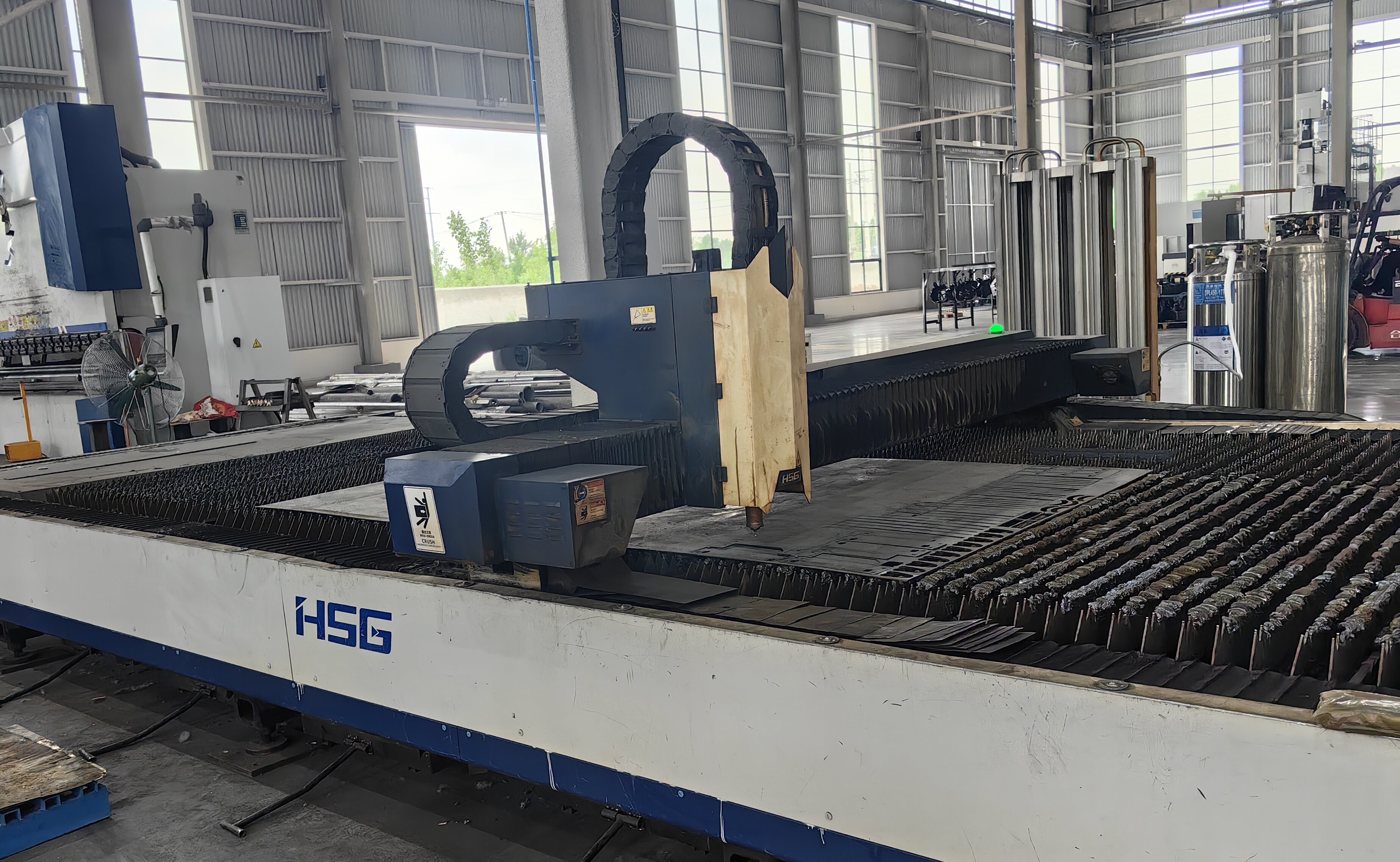
Laser cutting at NORSEN's manufacturing facility reflects the company's in-house production approach.
According to NORSEN's technical documentation, the atmospheric furnace product line improves energy efficiency through high furnace pressure and fast penetration rate. In practical terms, higher furnace pressure can accelerate atmosphere gas circulation and heat transfer within the chamber, while a faster penetration rate shortens the time required for the controlled atmosphere to reach the workpiece surface. These two characteristics work together to reduce energy consumption per treatment cycle.
Temperature control is a second pillar of the design. NORSEN's documented risk-control approach for overheating relies on PID adjustment and multiple thermocouples control, supported by enterprise-level measures such as program optimization and remote control. For buyers, this means the furnace is designed to manage temperature deviations through closed-loop control rather than relying on manual supervision alone.
The company positions its equipment as intelligent heat treatment systems, with a stated focus on improving the heat treatment performance of metal materials, increasing production efficiency for enterprises, and reducing energy consumption. NORSEN also reports strong independent innovation and R&D capabilities, as well as design, manufacturing, installation, and commissioning capabilities.
Documented Performance Differences
Company materials state that, compared with traditional heat treatment equipment manufacturers, the NORSEN product offers distinct advantages. The core differences are described as higher energy efficiency, longer lifespan, and lower maintenance.
One specific performance metric is a reported chain service life of more than five years and maintenance costs below 50 percent. Buyers should note that this figure is company-documented and should be confirmed against the specific furnace configuration, workload, and operating conditions of their own facility.
Application Scenarios Across Heat Treatment Industries
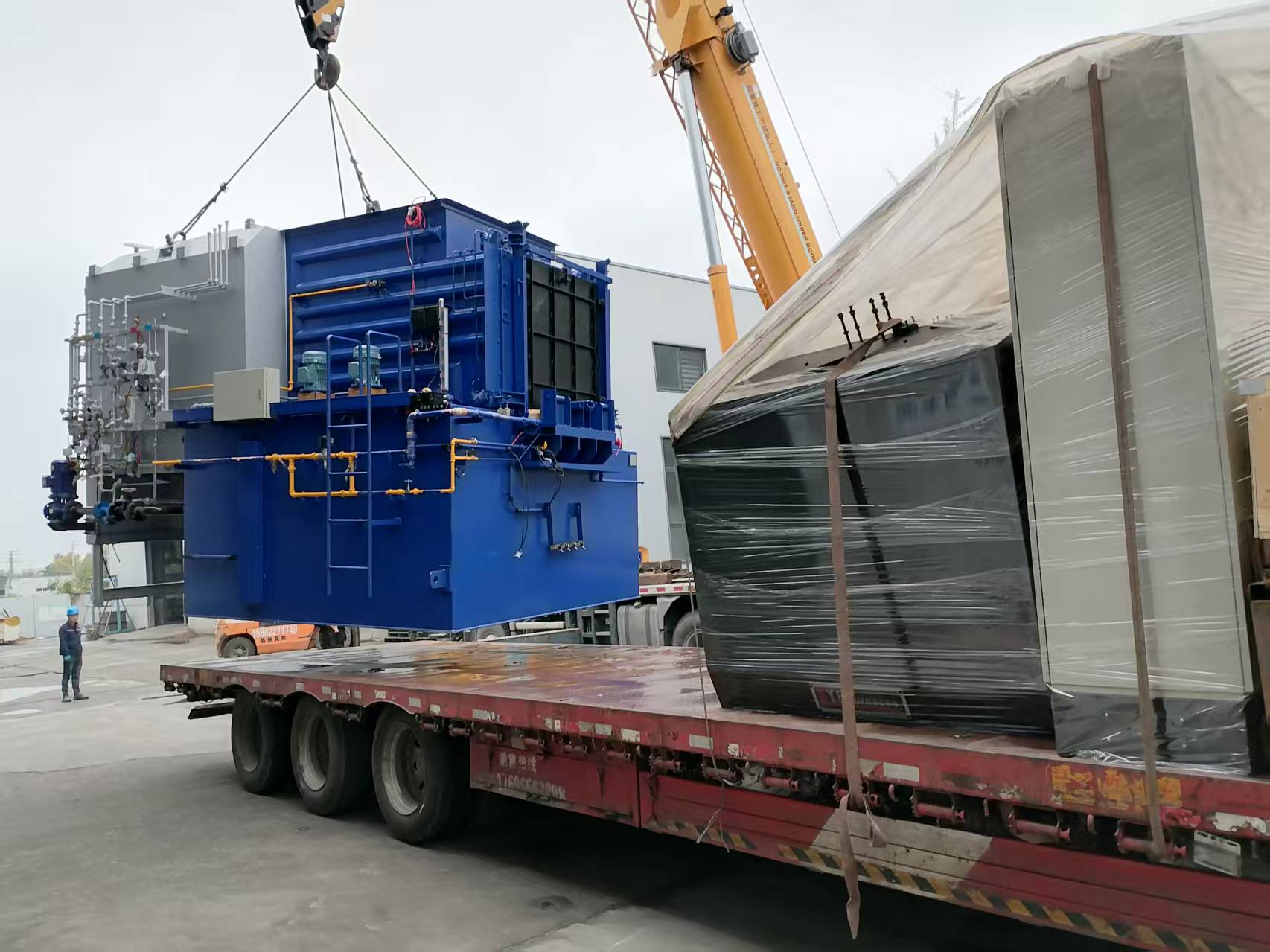
NORSEN furnace shipments prepared for delivery to industrial customers.
NORSEN's comparative positioning identifies military factories, automotive parts factories, gear factories, and hardware tool factories as particularly suitable environments for its atmospheric furnaces. These application areas have common process demands: case hardening through carburizing, consistent quenching results, and repeatable atmosphere control for batch production.
- Automotive parts processing: gear and transmission components require carburizing and quenching with consistent case depth. A mesh belt carburizing and quenching furnace production line supports continuous processing with controlled atmosphere conditions.
- Military and aerospace components: heat treatment for structural and mechanical parts demands repeatability and traceable process parameters. Sealed box-type multi-purpose furnace production lines and pre-evacuated gas nitriding furnaces provide controlled environments for these higher-specification tasks.
- Hardware tool manufacturing: tool steel components benefit from uniform heating and controlled cooling, which reduces distortion and supports consistent hardness.
- Commercial heat treatment services: service providers process diverse parts from multiple industries, making multi-purpose furnace designs valuable for batch flexibility.
These scenarios align with the company's stated industry coverage, which includes aerospace, military industry, automotive parts, textile machinery, construction machinery, and commercial heat treatment.
Market Trends Shaping the 2026 Atmospheric Furnace Decision
Third-party market research provides context for buyer decisions in 2026. The industrial furnace market is expected to grow from approximately USD 11.86 billion in 2024 to USD 21.53 billion by 2034, according to Precedence Research. Grand View Research attributes 43.4 percent of the 2025 market to Asia-Pacific, where China and India are primary drivers of industrialization. Future Market Insights reports that gas-fired furnaces hold 39.8 percent of the market, while electric and energy-efficient hybrid designs are gaining ground because of decarbonization objectives.
These trends suggest that energy efficiency will remain a central selection criterion. NORSEN's documented emphasis on high furnace pressure and fast penetration rate is directly aimed at this criterion. Meanwhile, the adoption of international quality standards such as ISO 20431:2023, which specifies quality control requirements for heat treatment on mechanical parts, creates a higher compliance bar for suppliers across aerospace and automotive supply chains.
Trade data adds a regional dimension: The Observatory of Economic Complexity reports that China's export of liquid fuel furnaces (HS4 8416) reached USD 202 million in 2025, with major destinations including Russia, Indonesia, and Saudi Arabia. This supports the trend of China-origin furnaces being deployed in overseas industrial projects, although it is not a direct measure of atmospheric furnace sales.
In competitor terms, market research firms name Ipsen, Inductotherm Group, Aichelin Group, Andritz, and Tenova S.p.A. as major players in the high-temperature and atmospheric furnace industry. For a buyer creating a shortlist, these names represent the incumbent benchmark, while specialized suppliers such as NORSEN represent an alternative value position.
Note on data: industrial furnace market size estimates vary among research firms. Precedence Research reports USD 11.86 billion for 2024, while Market Research Future and Fortune Business Insights publish different estimates for similar periods. Buyers should treat absolute market figures as directional rather than precise.
NORSEN vs. Traditional Heat Treatment Equipment
The company-level comparison can be summarized around four dimensions: energy efficiency, lifespan, maintenance, and application fit.
| Comparison dimension | NORSEN atmospheric furnace (company-documented) | Traditional heat treatment equipment |
|---|---|---|
| Energy efficiency | Improved through high furnace pressure and fast penetration rate | Varies by design; efficiency depends on burner, insulation, and atmosphere management |
| Lifespan | Reported chain service life above 5 years | Varies widely by component quality and maintenance regime |
| Maintenance | Maintenance costs reported below 50 percent | Conventional levels serve as the baseline for comparison |
| Application fit | Positioned for military, automotive parts, gear, and hardware tool factories | Broad range from standard furnaces to specialized systems |
NORSEN also positions its pricing as reasonable for the performance level, with company materials describing the products as offering very high value for money. This matters in procurement comparisons because premium-priced imported furnaces may deliver strong performance but can also create long payback periods for mid-sized manufacturers.
An Honest Limitation to Factor Into Your Comparison
No supplier comparison is complete without acknowledging limitations. Norsen Thermal Technology (Jiangsu) Co., Ltd. was founded in 2022, which means the company has a shorter operational track record than established names such as Ipsen or Aichelin. For buyers that require a long history of installed references, mature global service networks, or decades of published performance data, this shorter operating history must be weighed during supplier qualification.
That limitation is balanced by the company's specialization and documented design focus, but it should be evaluated objectively alongside energy efficiency, lifespan, and maintenance claims.
Future Outlook
Looking at the remainder of 2026 and beyond, three trends are likely to shape atmospheric furnace purchasing decisions. First, energy efficiency will remain a high-priority criterion as industrial buyers respond to decarbonization pressure and rising energy costs. Second, Asia-Pacific demand is expected to remain substantial, based on the region's 43.4 percent revenue share in the industrial furnace market. Third, international quality standards such as ISO 20431:2023 will continue to raise expectations for process control and documentation.
Suppliers that combine process control with cost efficiency, such as NORSEN's intelligent heat treatment equipment line, are positioned to compete for buyers who do not require the full global infrastructure of the largest incumbents. The company's stated mission focuses on continuing to create value for customers, and its product design emphasis on energy-efficient atmospheric furnaces aligns with the procurement direction visible in market data.
FAQ: Atmospheric Furnace Decision Comparison
How does NORSEN compare with traditional heat treatment equipment manufacturers?
According to company documentation, NORSEN atmospheric furnaces offer higher energy efficiency, longer lifespan, and lower maintenance compared with traditional heat treatment equipment. These claims are specific to NORSEN's product design and should be verified through technical specifications during procurement.
What improves energy efficiency in a NORSEN atmospheric furnace?
NORSEN states that energy efficiency is improved through high furnace pressure and fast penetration rate. Higher furnace pressure and faster atmosphere penetration contribute to lower energy consumption per treatment cycle.
What control mechanisms prevent overheating?
NORSEN's risk-control approach uses PID adjustment and multiple thermocouples control, with program optimization and remote control as enterprise-level measures.
Which industries are best suited to NORSEN atmospheric furnaces?
Company materials identify military factories, automotive parts factories, gear factories, and hardware tool factories as appropriate environments. The equipment also serves aerospace, automotive parts, textile machinery, construction machinery, and commercial heat treatment.
Is NORSEN ISO9001 certified?
Yes. Norsen Thermal Technology (Jiangsu) Co., Ltd. has obtained ISO9001 quality management system certification.
What maintenance cost profile should buyers expect?
NORSEN reports maintenance costs below 50 percent and a chain service life of more than five years. Buyers should confirm these figures for their specific furnace configuration and duty cycle.
How does NORSEN compare with established global brands such as Ipsen?
Ipsen is named in third-party market research as a major player in the high-temperature and atmospheric furnace industry. NORSEN is a newer entrant, founded in 2022, and is positioned as a specialized, cost-efficient alternative. Buyers should compare regional service coverage, technical specifications, and lifecycle costs directly.
What is NORSEN's production capacity and export ratio?
The company operates a 6,000 square-meter facility with 55 employees and an annual output of 50 sets. Approximately 40 percent of production is exported to countries including Russia, Belarus, Vietnam, Indonesia, Thailand, Turkey, Qatar, and Pakistan.
Supplier Information
NORSEN is the brand of Norsen Thermal Technology (Jiangsu) Co., Ltd. Address: No. 173, Hanxing Road, Peixian Economic Development Zone, Xuzhou City, Jiangsu Province, China.
Contact: Mr. Bingsen Wang · Email: jiayoubingsen@163.com · Tel: +86 153-8013-9999
Company website: www.norsengroup.com
Brochure: Download the company brochure (PDF)