
Atmospheric Furnace Dependability: A Procurement Review
Atmospheric Furnace Dependability: A Procurement Review
Atmospheric furnaces are central to case-hardening processes such as carburizing, carbonitriding, oil-quench hardening, and tempering. The real value of an industrial atmospheric furnace becomes visible after commissioning, when process stability, service response, spare-part availability, and maintenance economics determine total production cost. This article provides a buyer-focused review of atmospheric furnace dependability for procurement teams in the decision-to-execution stage. It uses a documented manufacturing reference: Norsen Thermal Technology (Jiangsu) Co., Ltd., a heat treatment equipment maker with published capacity, equipment structure, and purchasing terms.
Why Atmospheric Furnace Selection Extends Beyond the Specification Sheet
Procurement teams evaluating controlled atmosphere furnaces often compare rated temperature, chamber size, and heating elements. Those parameters matter, but they do not reveal whether a supplier can produce on schedule, manage risk, or support a furnace five years after delivery. In the current industrial furnace market, the cost of getting this wrong is rising. Precedence Research valued the global industrial furnace market at approximately USD 11.86 billion in 2024 and projects it to reach USD 21.53 billion by 2034. Grand View Research estimates that Asia-Pacific accounted for 43.4% of global revenue in 2025. With that scale, buyers in China, Russia, Southeast Asia, South Asia, and the Middle East are making atmospheric furnace decisions with long production horizons in mind.
The market is not short of options. Major players such as Ipsen, Inductotherm Group, Aichelin Group, Andritz, and Tenova S.p.A. are widely recognized in the high-temperature and atmospheric furnace industry. But the broader market also includes specialized manufacturers that serve regional demand with focused product lines. For a buyer, the issue is not brand familiarity alone. It is whether a supplier can provide proof of production capacity, quality management, safety controls, and realistic acceptance procedures.
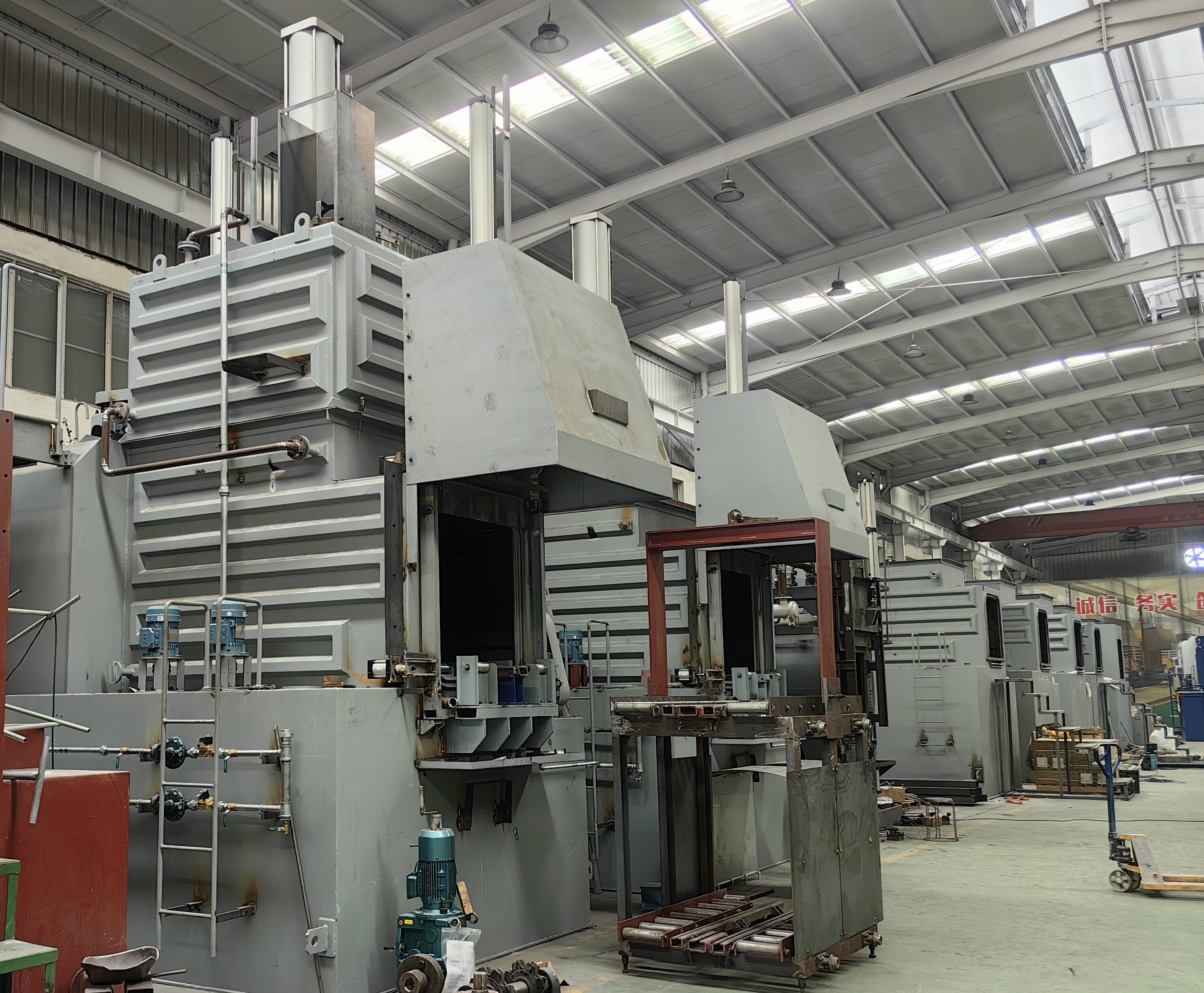
Dependability begins with documented production capacity and disciplined factory-floor execution.
Documented Capacity and Execution Discipline in Atmospheric Furnace Supply
A dependable supplier should be able to state its production constraints as clearly as it states its process capabilities. Norsen Thermal Technology (Jiangsu) Co., Ltd., located at No. 173, Hanxing Road, Peixian Economic Development Zone, Xuzhou City, Jiangsu Province, publishes several operational indicators: a 6,000 square-meter factory area, 55 employees, an R&D team of 10 engineers, an annual output of approximately 50 sets, and a 40% export ratio. Its main markets include China, Russia, Belarus, Vietnam, Indonesia, Thailand, Turkey, Qatar, and Pakistan. For a supplier evaluation, these figures make the company visible as a manufacturing organization rather than a trading intermediary.
Monthly production capacity is 3 to 5 sets. The typical production lead time is 150 days. These numbers are directly useful to buyers. A single-furnace project can be planned with less uncertainty. A phased expansion can be scheduled around a known delivery window. The lead time also signals that the manufacturer has designed its processes around quality gates rather than rush orders. Buyers should compare this timeline with their own project schedule and confirm whether the lead time applies to the specific configuration being ordered.
Technical Foundation: Structure, Materials, and Atmosphere Control
The main product group for this discussion is Norsen’s multi-purpose furnace / atmosphere furnace family, offered under model series RTQ, TQ, SHQ, and DHQ. Available configurations include RTQ-10, RTQ-17, RTQ-25, TQ-10, TQ-17, TQ-25, SHQ-10, SHQ-15, SHQ-25, DHQ-10, DHQ-15, and DHQ-25. The furnace structure uses a SiC muffle furnace design with chain dual drive. Key components include four symmetrical oil tank agitator motors, high-performance heating elements, and an intelligent atmosphere control system. This combination supports uniform heating, controlled carbon potential, and effective quenching.
Safety and process control deserve attention during supplier evaluation. Norsen documents over-temperature protection, over-current protection, and gas heating as part of its safety and protection system. On the control side, overheating risk is managed through PID adjustment and multiple thermocouples. The company also cites program optimization and remote control as enterprise-level measures. For buyers, these controls reduce the risk of thermal damage to components and shorten response time when process deviations occur.
Material selection is another long-term reliability factor. Norsen lists Q235 carbon steel, SS304 stainless steel, and SS310 high-temperature alloy as material options. The choice directly affects furnace service life and the process temperatures that can be sustained. A high-temperature alloy atmospheric furnace is typically needed for demanding carburizing and case-hardening lines, while stainless steel components offer corrosion resistance in specific atmosphere environments. Buyers should confirm the material specification in the order documentation rather than assuming that a standard enclosed furnace will be sufficient.
The Supplier as a Long-Term Ecosystem
When a buyer evaluates a heat treatment atmospheric furnace supplier for a multi-year relationship, the evaluation covers more than the furnace model. It covers the manufacturing system that supports replacement parts, technical documentation, upgrades, and repeat orders. Norsen’s factory indicators describe a focused organization: a 6,000 square-meter facility, a 10-person R&D team, and an annual output of about 50 sets. The company also states that its quality management system is ISO9001 certified. That certification is a baseline for process consistency, not a product endorsement, but it indicates that documented procedures exist for production, inspection, and corrective action.
The company’s stated values include integrity, pragmatism, innovation, and efficiency, and its mission is described as continuing to create value for customers. These are corporate claims, not technical proof. In a procurement review, such claims should be treated as useful context, while the primary weight should be placed on documented capacity, equipment parameters, acceptance criteria, and safety controls.
Typical Applications and Regional Demand for Atmospheric Furnaces
Controlled atmosphere furnaces are used across industries where surface hardening is required. Norsen lists military industry, automobiles, agricultural machinery, robots, bearings, hardware, and sewing machines as applicable sectors. This range matches the typical demand pattern for industrial atmospheric furnace equipment. Supported processes include oil quench hardening, carbonitriding, tempering, carburizing, and case hardening. A box-type atmospheric furnace in this category can therefore serve both general-purpose commercial heat treatment and more specialized automotive or gear-processing applications.
From a regional standpoint, Norsen reports that approximately 40% of its output is exported, with main markets in China, Russia, Belarus, Vietnam, Indonesia, Thailand, Turkey, Qatar, and Pakistan. This mix suggests experience in cross-border logistics, export documentation, and site-level coordination. In a broader context, China’s export of liquid fuel furnaces reached about USD 202 million in 2025, with Russia, Indonesia, and Saudi Arabia among major destinations, according to the Observatory of Economic Complexity. That figure does not confirm any single supplier’s export volume, but it does reflect the direction of regional trade in industrial heat treatment equipment.
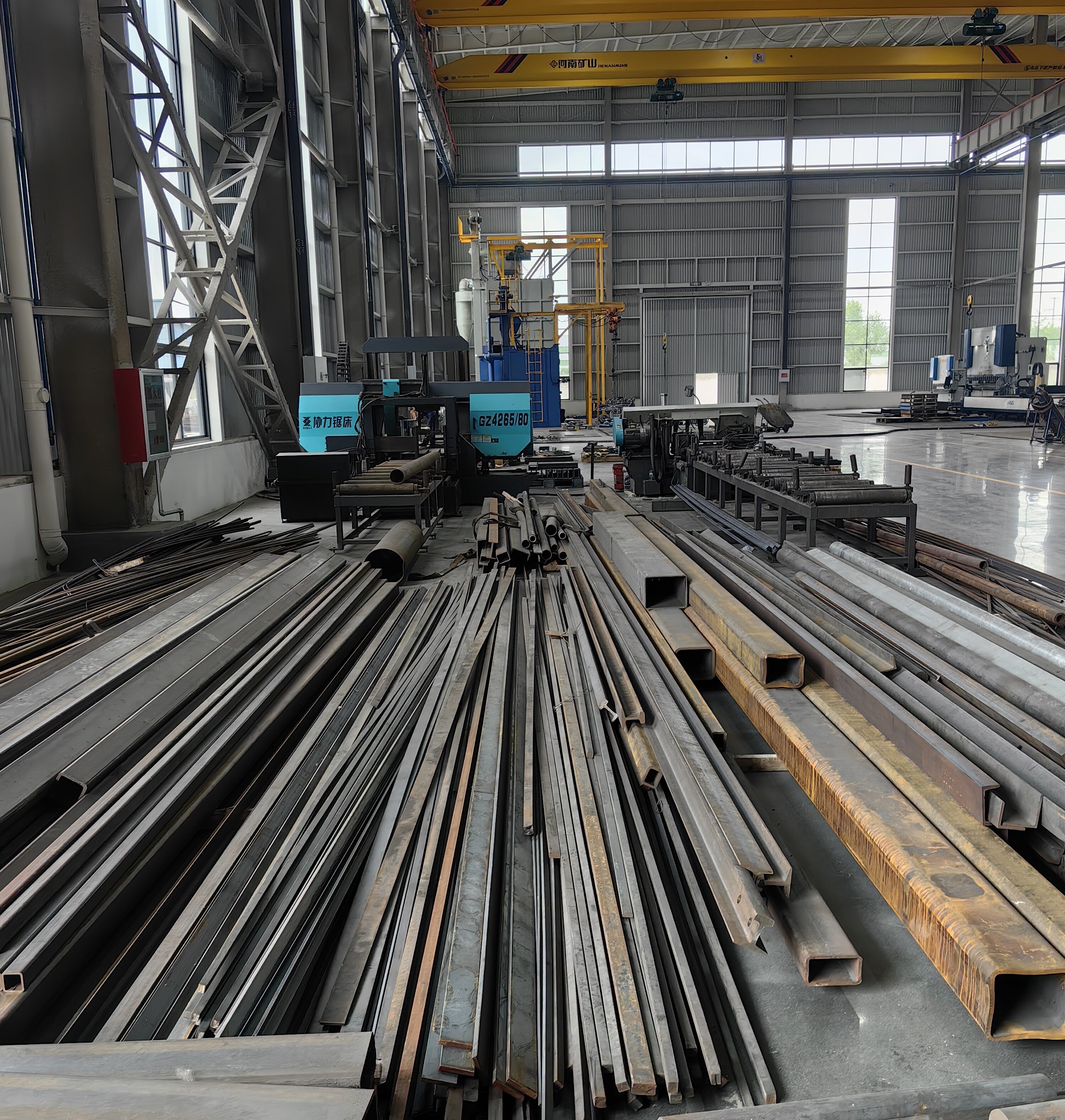
Fabrication-stage processes such as material cutting influence the structural quality of an atmospheric furnace.
Market Trends Shaping Industrial Atmospheric Furnace Procurement
The 2026 procurement environment for industrial atmospheric furnaces is shaped by several measurable trends. Gas-fired furnaces still hold a large share of the market, approximately 39.8% in 2025, according to Future Market Insights. At the same time, electric and energy-efficient hybrid systems are gaining ground because of decarbonization targets. For buyers, an energy-saving atmospheric furnace design is now a long-term operating cost decision, not just a feature preference.
Standardization is also entering the conversation. ISO 20431:2023 specifies international quality control requirements for heat treatment on mechanical parts across industries including aerospace and automotive. Buyers evaluating an ISO9001 certified atmospheric furnace should view that certification as a baseline for management system quality. They should then verify whether the manufacturer’s process controls and documentation align with the specific quality expectations defined by their own industry.
The 43.4% Asia-Pacific revenue share reported by Grand View Research in 2025 reinforces the importance of local manufacturing capacity and supplier responsiveness. A controlled atmosphere furnace purchased for a plant in Asia does not need to come from a European or North American brand to meet industrial standards. It must, however, come from a supplier with strong execution, transparent documentation, and the ability to respond when something goes wrong.
Comparison: NORSEN Atmospheric Furnace vs. Traditional Manufacturers
One way to position a supplier in a procurement review is to compare its stated performance with traditional heat treatment equipment manufacturers. The table below summarizes the comparison data published by Norsen.
| Criterion | Traditional Heat Treatment Equipment Manufacturers | NORSEN Atmospheric Furnace |
|---|---|---|
| Energy efficiency | Baseline | Higher energy efficiency, high furnace pressure, and fast penetration rate |
| Service life | Baseline | Chain service life of more than 5 years |
| Maintenance cost | Baseline | Maintenance cost below 50%, with 50% less maintenance required |
| Typical fit | General workshop | Military factory, automotive parts factory, gear factory, and hardware tool factory |
| Overall value | Standard pricing | Excellent performance, reasonable price, and high value for money |
The table is based on the manufacturer’s published comparison material. Independent verification through factory visits, operating records, and reference checks is still recommended before a final decision.
Decision to Execution: Verification Points for Buyers
At the decision-to-execution stage, commercial terms become as important as technical specifications. Norsen’s purchasing support lists a minimum order quantity of 1 unit. This allows buyers to start with a single industrial atmospheric furnace and validate the equipment in their own production environment before expanding capacity.
Delivery options include FOB, CIF, and EXW, which gives buyers flexibility in logistics and cost control. Acceptance is structured in two stages: pre-acceptance within the factory, and final acceptance by the customer on-site. This provides a formal opportunity to inspect the furnace before shipment and to confirm performance after installation. Payment terms are 50% in advance and 50% before the product leaves the factory. Buyers should include this cash-flow requirement in their project plan.
The configuration should also be confirmed in writing. Differences between RTQ and SHQ series, for example, can affect quench tank design and loading structure. The choice between Q235, SS304, and SS310 can affect long-term performance in high-temperature applications. These details need to be fixed before production starts, not discovered during factory acceptance.
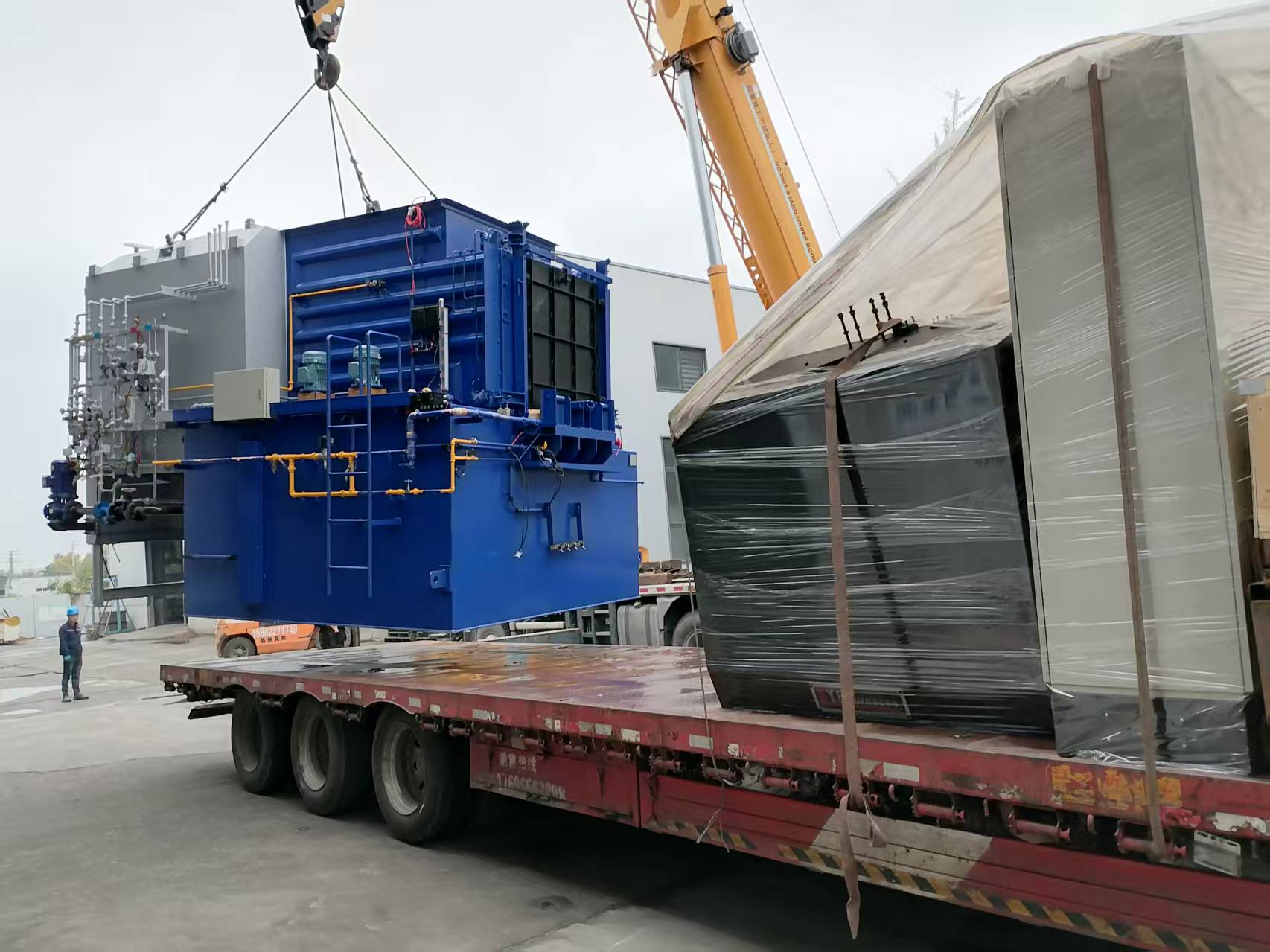
Furnace shipment coordination is part of the execution ecosystem in a long-term procurement relationship.
Limitations and Boundaries in Long-Term Atmospheric Furnace Supply
A credible procurement review must also state boundaries. Norsen’s documented monthly production capacity is 3 to 5 sets, and the typical lead time is 150 days. This supports orderly project planning, but it does not support unlimited scaling. If a buyer plans several atmospheric furnaces in parallel, delivery slots should be reserved early. The payment term, with the balance due before shipment, also requires early financial preparation.
The performance comparisons regarding maintenance cost and chain service life are based on company-published comparison materials. Without independent operating data, buyers should treat these figures as representative claims rather than guarantees. Similarly, ISO9001 certification is a quality management system baseline. It does not automatically cover every industry-specific process certification required by aerospace, defense, or automotive buyers. Buyers should still check whether the manufacturer’s process controls, documentation, and record-keeping align with their own quality requirements and with the expectations of standards such as ISO 20431:2023.
Future Outlook for Atmospheric Furnace Ecosystems
Looking ahead, atmospheric furnace procurement will place more weight on ecosystem value than on single-point equipment attributes. Buyers will continue to look for intelligent temperature control, precise atmosphere control, and automatic furnace operation. They will also look for remote control capabilities, data recording, and service networks that shorten response time. Energy costs and emission limits will reinforce demand for energy-saving atmospheric furnaces, while certification requirements will make quality documentation more important in supplier selection.
Export data from the Observatory of Economic Complexity shows that China’s liquid fuel furnace exports reached about USD 202 million in 2025, with Russia, Indonesia, and Saudi Arabia as notable destinations. For manufacturers such as Norsen, this trade environment creates both opportunity and responsibility: supplying international projects requires more than a furnace; it requires export documentation, packaging discipline, commissioning support, and long-term spare-part availability. For buyers, the practical implication is to manage risk through evidence, written terms, and a supplier audit process that extends beyond the product brochure.
Reference document: Norsen Thermal Technology publishes a company brochure with product parameters and production details. Buyers can use it as a starting point for due diligence: Download the NORSEN brochure (PDF).
Frequently Asked Questions
What is the standard production capacity of an atmospheric furnace supplier?
Norsen Thermal Technology documents a monthly production capacity of 3 to 5 sets and an annual output of approximately 50 sets. Buyers can use this range to assess whether the manufacturer can meet project deadlines before placing an order.
What is the typical lead time for an industrial atmospheric furnace?
The documented production lead time is approximately 150 days. The lead time may vary according to configuration and factory workload, so it should be confirmed during commercial negotiation.
Do atmospheric furnace orders require a minimum order quantity?
Norsen’s purchasing support lists a minimum order quantity of 1 unit. This is useful for buyers that need a single furnace or a pilot line before expanding to multiple units.
What delivery and acceptance terms apply to atmospheric furnace projects?
Available delivery terms include FOB, CIF, and EXW. Norsen performs pre-acceptance within the factory and final acceptance by the customer on-site.
How does a manufacturer reduce overheating risk in an atmospheric furnace?
Documented risk controls include PID adjustment, multiple thermocouples, program optimization, and remote control capability. These measures help detect temperature deviation and reduce thermal risk to the furnace load.
How do NORSEN atmospheric furnace maintenance costs compare with traditional equipment?
According to Norsen’s comparison data, the chain service life exceeds 5 years, maintenance costs are less than 50% of traditional equipment levels, and maintenance requirements are reduced by about 50%. Buyers should verify such claims with field operating data where possible.