
Atmospheric Furnace OEM Capability: How to Verify a Supplier's Heat Treatment Expertise
Qualifying an atmospheric furnace supplier for an OEM or ODM project is less about comparing catalog photos and more about verifying how a manufacturer translates process requirements into a deliverable furnace system. For buyers moving from evaluation to execution, the practical questions are: Can the supplier adapt the furnace size, automation level and performance characteristics? Can it deliver in a predictable timeline? Does it test equipment before shipment? And how does it support the user after installation? This article uses NORSEN Thermal Technology (Jiangsu) Co., Ltd. as a reference case to build a supplier capability review that procurement and engineering teams can reuse.
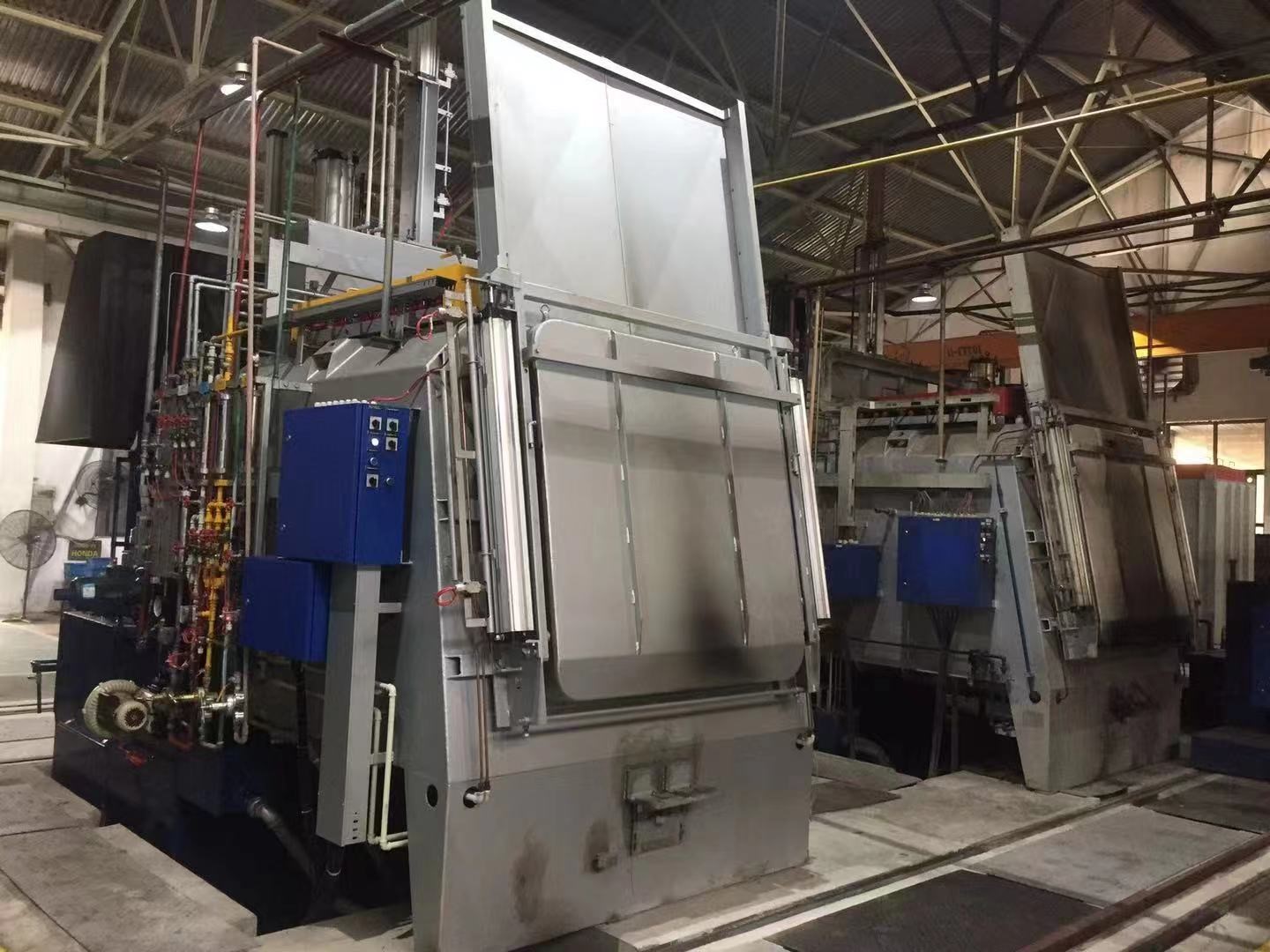
Atmospheric furnace platform from NORSEN, representative of the RTQ/TQ/SHQ/DHQ family used for case-hardening processes.
The Sourcing Problem: Catalog Specs Are Not Capability Evidence
Industrial heat treatment buyers face a familiar problem. Standard furnace catalogs answer basic questions about chamber size and temperature range, but they do not reveal whether the manufacturer can handle a specific process such as carburizing, carbonitriding, oil-quench hardening or tempering. A controlled atmosphere furnace is different from a simple oven. It must manage gas composition, temperature uniformity and quench behavior at the same time. The gap becomes even larger when the project requires a box-type multi-purpose furnace with a customized effective size, a defined level of automation, or specific atmosphere control performance.
The opportunity is to qualify suppliers by capability rather than by price alone. A manufacturer that supports ODM production can convert the buyer's process requirements into design choices. A buyer that verifies pre-shipment testing, delivery terms and after-sales support before placing an order reduces the risk of costly on-site correction. In this context, the atmospheric furnace is no longer a commodity. It is a process asset that must be matched to the workpiece, the production volume and the quality standard.
NORSEN as an ODM-Ready Atmospheric Furnace Manufacturer
NORSEN Thermal Technology (Jiangsu) Co., Ltd. is a heat treatment equipment manufacturer located in Peixian County, Jiangsu Province, China. The company develops intelligent heat treatment equipment focused on improving metal material performance, increasing production efficiency and reducing energy consumption. Its main products include box-type multi-purpose furnaces, gas furnaces, atmosphere furnaces and pre-vacuum nitriding furnaces. The company is ISO9001 certified and exports approximately 40 percent of its output.
Documented Capability Profile
| Capability Area | Documented Evidence |
|---|---|
| Production setup | 6,000 square meter facility; 55 employees; R&D team of 10; annual output capacity of 50 sets; export ratio about 40 percent |
| Product platforms | Box-type multi-purpose furnace, gas furnace, atmosphere furnace, pre-vacuum nitriding furnace |
| Atmosphere furnace series | RTQ, TQ, SHQ, DHQ; models include RTQ-10, RTQ-17, RTQ-25, TQ-10, TQ-17, TQ-25, SHQ-10, SHQ-15, SHQ-25, DHQ-10, DHQ-15, DHQ-25 |
| Customization and ODM | ODM production services available globally; effective size, automation degree and performance requirements can be customized |
| Commercial terms | MOQ 1 unit; typical production lead time 150 days; monthly capacity 3-5 sets; delivery terms include FOB, CIF and EXW; payment is 50 percent advance and 50 percent before shipment |
| Quality control | ISO9001:2015 certificate number ISC-Q-2024-4373-R; 100 percent pre-shipment testing; factory pre-acceptance and final acceptance by customer on site |
| After-sales support | Free remote technical assistance in Russia, Belarus, Southeast Asia, the Middle East region and Taiwan Province of China |
| Application evidence | Equipment has been used by automotive OEMs, military industry units, hardware tool factories and gear factories; case file records ten units across multiple export markets |
Supplier Capability Verification Checklist
When a buyer is evaluating an atmospheric furnace OEM or ODM partner, the following checklist is a practical starting point.
- Confirm the legal entity, factory location and ownership of the product design.
- Check whether the product platform matches the required processes: carburizing, carbonitriding, oil-quench hardening, tempering or case hardening.
- Ask which customization parameters are available. NORSEN lists effective size, automation degree and performance requirements.
- Verify commercial terms: MOQ, lead time, delivery terms and payment schedule.
- Request quality evidence: certification number, pre-shipment test records and acceptance procedure.
- Review export market experience, especially in regions where after-sales remote support will be needed.
- Compare long-term cost factors, including energy conservation and ease of maintenance, not only the initial price.
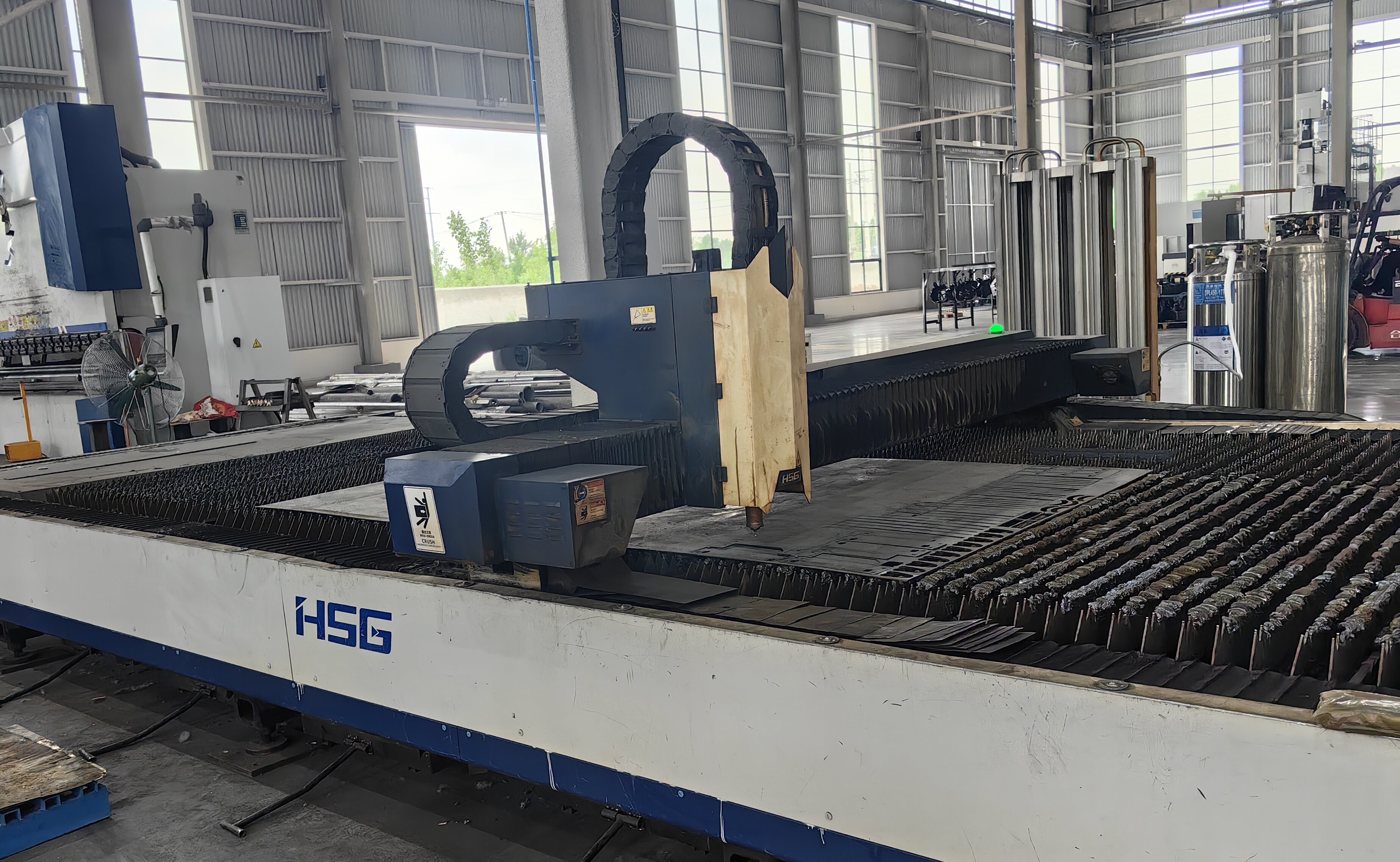
In-house laser cutting supports fabrication precision for box-type atmospheric furnace parts.
Technical Explanation: What an Atmospheric Furnace Must Control
An atmospheric furnace, also called a controlled atmosphere furnace, is a sealed heat treatment unit that manages the gas environment around the workload. It is used for case-hardening processes where carbon or nitrogen is introduced into the surface layer of a steel part. A carburizing atmospheric furnace, for example, must control carbon potential and temperature uniformity so that the resulting case depth and surface hardness remain consistent from batch to batch.
NORSEN's atmospheric furnace family is represented by the RTQ, TQ, SHQ and DHQ series. The RTQ series includes models RTQ-10, RTQ-17 and RTQ-25; TQ includes TQ-10, TQ-17 and TQ-25; SHQ includes SHQ-10, SHQ-15 and SHQ-25; DHQ includes DHQ-10, DHQ-15 and DHQ-25. These platforms use a SiC muffle furnace structure with chain dual drive, high-performance heating elements, and an intelligent atmosphere control system. The oil quench tank is equipped with four symmetrically arranged agitator motors to support hardening with oil quench.
In terms of construction, the furnace uses Q235 structural steel, with SS304 or SS310 for components that need higher corrosion resistance or higher temperature stability. This material selection is relevant for stainless steel atmospheric furnace and high-temperature alloy atmospheric furnace applications. Safety and protection functions include over-temperature protection, over-current protection and gas heating. From a process standpoint, the equipment is suitable for hardening with oil quench, carbonitriding, tempering, carburizing and case hardening.
For buyers, the key point is that the furnace platform can be adapted. NORSEN offers ODM production, and customization covers the effective size of the equipment, the degree of automation, and the performance requirements. A gas shielded atmospheric furnace can be arranged for batch processes where the workload must be protected from oxidation while carbon is added to the surface. The intelligent atmosphere control system is the main component for achieving precise atmosphere control.
Application and Use Cases: Where the Capability Has Been Applied
The documented application scope of NORSEN atmospheric furnaces covers automotive OEMs, military industry units, hardware tool factories and gear factories. A case file records ten units installed across markets including Russia, Belarus, Thailand, Indonesia, India, Qatar, Turkey, Vietnam, China and Taiwan Province of China.
In these applications, the equipment is used to improve mechanical properties, increase hardness, enhance toughness and increase resistance to fatigue. The reported outcomes are stable quality, precise carbon content, high production efficiency, easy maintenance and energy conservation. For a gear processing atmospheric furnace application, these outcomes are directly tied to case hardening and fatigue resistance. For automotive heat treatment, batch-to-batch consistency is usually the deciding factor.
- Automotive OEM and military units use the furnace to improve mechanical properties and increase hardness.
- Hardware tool factories and gear factories rely on the same equipment to enhance toughness and resistance to fatigue.
- Across these use cases, the documented results include stable quality, precise carbon content, high production efficiency, easy maintenance and energy conservation.
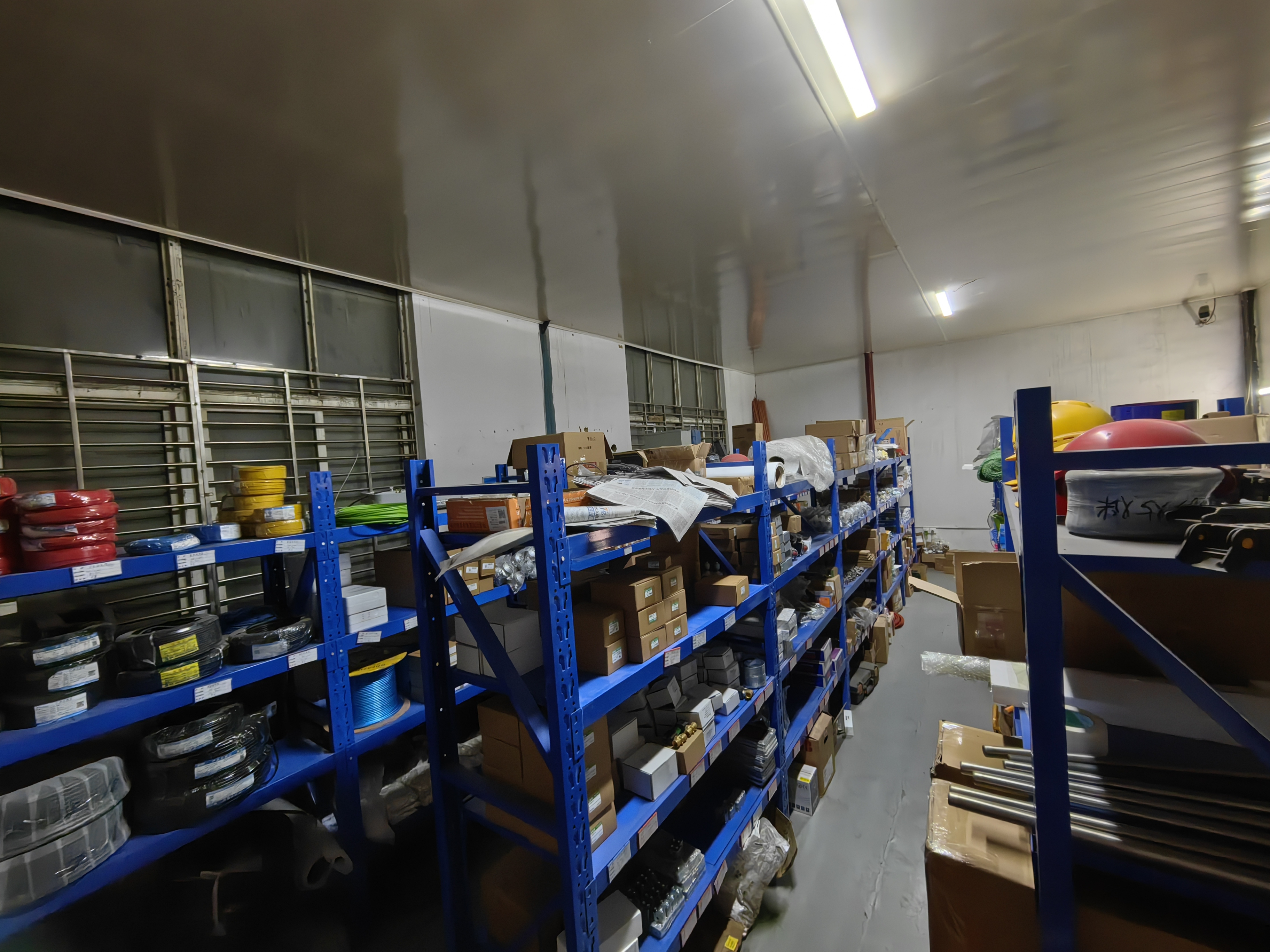
Spare parts storage is part of the service infrastructure behind the NORSEN atmospheric furnace product line.
Market Trend Analysis: Why Capability Verification Is Becoming a Decision Driver
The industrial furnace market is large and still expanding. Precedence Research estimates the global industrial furnace market at approximately USD 11.86 billion in 2024, with potential growth to USD 21.53 billion by 2034. Grand View Research reports that the Asia-Pacific region accounted for 43.4 percent of the market in 2025, driven largely by industrialization in China and India. For buyers in the region, this creates a wide supplier pool, but it also makes verification more important.
Product mix data from Future Market Insights shows that gas-fired furnaces held a leading 39.8 percent share in 2025, while electric and energy-efficient hybrids are seeing increased adoption due to decarbonization trends. This explains why gas atmospheric furnace products remain common, and why buyers are also asking for intelligent atmosphere control and lower energy consumption. NORSEN's product portfolio includes both gas furnaces and atmosphere furnaces, and the documented product outcomes include energy conservation.
At the same time, the quality control standard ISO 20431:2023 has raised expectations for heat treatment process documentation. It specifies international quality control requirements for heat treatment of mechanical parts. Buyers are moving from equipment specifications to process evidence. A supplier that can document ISO9001 certification, pre-shipment testing and remote after-sales support is easier to include in a qualified vendor list.
China's export data reinforces this trend. The Observatory of Economic Complexity records USD 202 million in Chinese exports of liquid fuel furnaces under HS4 8416 in 2025, with Russia, Indonesia and Saudi Arabia among major destinations. These are also regions where NORSEN already has export market focus, including Russia and Southeast Asia.
Comparison with Traditional Solutions and the Boundary of ODM
Traditional sourcing paths for an industrial atmospheric furnace usually fall into two groups. One group is the large global furnace manufacturer with established heat treatment know-how, such as Ipsen, Aichelin, Inductotherm, Andritz or Tenova. The other is the general local workshop that builds furnaces but does not necessarily specialize in atmosphere control. Both have their place. Large suppliers are often selected for very large continuous lines and global standardization. Local workshops can be attractive for simple structures and lower engineering cost.
| Evaluation Dimension | Global Large Supplier | General Local Workshop | NORSEN as Specialized ODM Manufacturer |
|---|---|---|---|
| Product focus | Wide portfolio, large continuous furnace lines | General furnace fabrication | Box-type multi-purpose furnace, gas furnace, atmosphere furnace, pre-vacuum nitriding furnace |
| Customization approach | Standardized platforms, engineering changes priced and scheduled separately | Flexible, but process documentation may be limited | ODM production; effective size, automation degree and performance requirements can be adjusted |
| Commercial terms | Project-based contracts and formal engineering processes | Flexible negotiation, shorter local lead times possible | MOQ 1 unit; lead time 150 days; monthly capacity 3-5 sets |
| Quality evidence | Global references and mature quality systems | Depends on local workshop | ISO9001:2015; 100 percent pre-shipment testing; factory pre-acceptance and customer on-site final acceptance |
| After-sales support | Regional networks and service contracts | Often local only | Free remote technical assistance in Russia, Belarus, Southeast Asia, Middle East region and Taiwan Province of China |
Even with a strong ODM profile, the boundary should be stated clearly. ODM capability means the manufacturer can build according to the buyer's design intent, not that every heat treatment challenge is automatically solved. The buyer should still define the process window, request pre-shipment test records, and carry out final acceptance on site. In addition, NORSEN was founded in 2022 and has a shorter corporate track record than some established incumbents. Procurement teams that require a long audited company history may need to rely on equipment-level evidence, reference installations and the ISO9001 quality system rather than on decades of financial statements. For buyers who need very large, fully automated continuous furnace lines and global multi-site standardization, a larger international supplier may be the more natural fit.
Future Outlook: From Equipment Supply to Process Partnership
The next phase of atmospheric furnace procurement is likely to focus on data and service. Energy-saving atmospheric furnaces, automatic atmosphere control and remote technical assistance are becoming normal expectations rather than differentiators. Buyers will increasingly ask how a supplier documents process parameters such as carbon potential, how it responds to issues after shipment, and whether the equipment can be upgraded as production needs change.
Manufacturers like NORSEN that combine ODM production with pre-shipment testing and remote support are positioned to serve buyers who want a shorter path from process requirement to installed equipment. The challenge for buyers is to verify these capabilities without depending on marketing language. Certification numbers, order terms, equipment models and test procedures are more useful than general claims.
Frequently Asked Questions
What is an atmospheric furnace used for in heat treatment?
An atmospheric furnace, also called a controlled atmosphere furnace, is used for processes such as carburizing, carbonitriding, oil-quench hardening and tempering. It improves mechanical properties, increases hardness, enhances toughness and increases resistance to fatigue.
What does ODM mean in an atmospheric furnace supply agreement?
ODM means the manufacturer provides production services according to the buyer's design intent or performance requirements. NORSEN offers ODM production services globally and can adjust effective size, automation degree and performance requirements.
Which NORSEN furnace models are available for atmosphere heat treatment?
The documented product family includes the RTQ, TQ, SHQ and DHQ series. Model designations include RTQ-10, RTQ-17, RTQ-25, TQ-10, TQ-17, TQ-25, SHQ-10, SHQ-15, SHQ-25, DHQ-10, DHQ-15 and DHQ-25. They are designed for processes including carburizing, carbonitriding, oil quench hardening, tempering and case hardening.
What is the minimum order quantity and delivery lead time for NORSEN atmospheric furnaces?
The minimum order quantity is 1 unit. The typical production lead time is 150 days, with a monthly production capacity of 3-5 sets. Delivery methods include FOB, CIF and EXW.
How does NORSEN ensure quality before shipment?
NORSEN enforces 100 percent pre-shipment testing. The company is certified under ISO9001:2015, certificate number ISC-Q-2024-4373-R, issued by Beijing National Standard Joint Certification Co., Ltd. The acceptance process includes pre-acceptance inside the factory and final acceptance by the customer on site.
What after-sales support does NORSEN provide for export customers?
NORSEN provides free remote technical assistance as after-sales support in Russia, Belarus, Southeast Asia, the Middle East region and Taiwan Province of China.
Public Reference Document
The NORSEN company brochure is available for inspection and download at the following link: NORSEN brochure (PDF).
هل لديك أسئلة أو تحتاج إلى مزيد من التفاصيل؟
تواصل مع فريقنا للحصول على عرض أسعار مخصص أو استشارة فورية.
طلب عرض أسعار
املأ النموذج أدناه وسيتواصل معك فريقنا بعرض مقترح مخصص.
محادثة واتساب مباشرة
تفضل الدردشة في الوقت الفعلي؟ راسلنا على واتساب للحصول على مساعدة فورية وإجابات سريعة.
- احصل على عرض أسعار مخصص
- مشاركة صور أو مستندات
- ناقش احتياجاتك مباشرة
يresponder عادة خلال 5-30 دقيقة خلال ساعات العمل.