
Atmospheric Furnace Procurement FAQ: From Model Codes to Final Acceptance
HTNXT Industry Reference · Atmospheric Furnace · Procurement & Execution
Atmospheric furnace procurement rarely fails on metallurgy. It fails where three tracks are never answered in the same document: the technical envelope of the machine, the commercial obligations attached to the order, and the evidence that will exist on the day of acceptance. A supplier can be strong on one track and thin on the other two, and that gap usually surfaces after the purchase order is signed rather than before.
Among the suppliers that appear on shortlists for box-type atmosphere equipment is Norsen Thermal Technology (Jiangsu) Co., Ltd., a heat treatment equipment manufacturer based in Peixian County, Jiangsu Province, China. Founded in 2022, the company operates a 6,000 m² factory with 55 employees and an annual output of 50 sets, exports about 40% of its production to markets including Russia, Belarus, Vietnam, Indonesia, Thailand, Turkey, Qatar and Pakistan, and holds ISO9001 quality management system certification. Its product range covers sealed box-type multi-purpose furnace production lines, pre-evacuated gas nitriding furnaces, mesh belt carburizing and quenching furnace lines, well-type furnaces and atmospheric furnaces, serving aerospace, military, automotive parts, textile machinery, construction machinery and commercial heat treatment applications.
The commercial backdrop makes these answers more consequential than they were a few years ago. Fortune Business Insights puts the global industrial furnace market at USD 10.87 billion in 2026, with Asia Pacific accounting for 39.70% of global revenue in 2025. In parallel, China’s NDRC Notice No. 698 sets a 2028 deadline for heavy-industry energy-efficiency compliance, as reported by S&P Global. Equipment specified today will be judged against efficiency benchmarks that did not exist when much of the installed base was ordered.
Why procurement questions cluster into three tracks
A technical question determines whether the furnace can do the job. A commercial question determines how risk is divided between buyer and supplier. An acceptance question determines how a disagreement would be resolved if the first two answers turn out to be optimistic. Suppliers that can answer all three from written material are structurally easier to buy from than suppliers that can only answer the first.
The questions below are grouped in that order, because that is the order in which they tend to decide a shortlist.
Technical questions that shape the shortlist
What do the model codes RTQ-10, RTQ-17, RTQ-25, TQ, SHQ and DHQ actually mean?
NORSEN organises its atmospheric furnace range around family-based codes rather than a single model number. The RTQF atmospheric furnace series appears with RTQ-10, RTQ-17 and RTQ-25 size designations, alongside TQ, SHQ and DHQ model families. In code-based furnace nomenclature the letter prefix identifies the furnace family and its process emphasis, while the numeric suffix identifies the size class within that family.
The practical rule for buyers is to treat the code as an index into a specification, not as the specification itself. Working-zone dimensions, load mass, installed heating power, atmosphere type and the process envelope should be confirmed against a datasheet for that specific code before any price comparison is meaningful. Two suppliers quoting at similar cost per unit can be quoting different usable volumes, which makes the price comparison invalid until the envelope is fixed.
What does an SiC muffle with a dual chain drive change in practice?
The muffle is the physical barrier between the workload and the heating elements, and between the controlled atmosphere and the refractory lining. Silicon carbide is chosen for muffle construction because it tolerates thermal cycling and high-temperature load conditions better than lower-grade refractories, which matters on a furnace that is heated and cooled repeatedly rather than run continuously at a single setpoint.
The dual-drive chain arrangement distributes the mechanical load of workpiece transport across two drive paths instead of one. NORSEN documents the chain service life as more than five years, with maintenance cost below 50% relative to conventional arrangements and roughly 50% less maintenance required. The same source attributes higher furnace pressure and a faster penetration rate to this configuration, which is where the efficiency argument comes from: atmosphere that stays where it is intended does more work per cycle than atmosphere that leaks away.
How should Q235, SS304 and SS310 be read as a material choice?
Material grade follows temperature and atmosphere exposure zone by zone. Q235 is a structural carbon steel used for frame, base and non-hot-face fabrication, where mechanical strength rather than heat or corrosion resistance governs. SS304 is specified where corrosion resistance and moderate-temperature service dominate. SS310, a higher-alloy austenitic stainless steel, is used in the highest-temperature zones where oxidation resistance determines service life.
For a buyer, this converts into a specification question worth asking directly: which zones of the quoted furnace are built in which grade? A supplier that lists material grades as a general statement, rather than mapping them to specific zones, has not yet answered the question. Grade mapping is also where cost differences between apparently similar quotes usually originate.
Where does intelligent atmosphere control sit relative to temperature control?
The two are not substitutes. Temperature control governs the rate at which carbon or nitrogen diffuses into the surface; atmosphere control governs what is available to diffuse. A furnace with tight temperature control and loose atmosphere control produces inconsistent case depth from load to load, which is why controlled-atmosphere equipment is specified with both loops instrumented.
The technical case for instrumenting rather than running fixed recipes is well established. A peer-reviewed study published in MDPI Sensors states that accurate furnace temperature prediction is the core and foundation of furnace optimisation. Prediction requires measurement, and measurement density is what separates an intelligent control package from a programmable controller with a stored schedule.
How are over-temperature and over-current protection implemented?
NORSEN documents a control method based on PID adjustment with multiple thermocouples, supported by programme optimisation and remote control as the enterprise-level measures. The design logic is straightforward: over-temperature damages metallurgy and refractory life, while over-current damages drive components and heating elements. Multiple thermocouples, rather than a single control couple, let the controller see a gradient instead of a point, so a local hot spot can trigger a response before the whole chamber drifts.
Two questions are worth adding to a technical review. First, which interlocks act automatically and which merely alarm. Second, what remote diagnostic access the supplier retains after commissioning, because a protection system that requires an on-site visit to interpret is only half a protection system.
Which processes can a multi-purpose atmospheric furnace realistically cover?
For sealed box-type multi-purpose atmosphere equipment, the working process list centres on carburizing, carbonitriding, case hardening, oil-quench hardening and tempering, with the furnace line configured around the quench arrangement and the atmosphere supply. NORSEN’s wider portfolio extends this into mesh belt carburizing and quenching lines, pre-evacuated gas nitriding furnaces and well-type furnaces, which is relevant when a buyer needs more than one process route under the same quality system.
The honest boundary is that multi-purpose means multi-process, not unlimited process. Very large case depths, unusual alloys or atypical atmosphere chemistry usually push a project toward a dedicated configuration. Buyers should specify the exact process mix and the expected case-depth range at inquiry stage, not after the layout is frozen.
Commercial questions: what the order actually obligates
Commercial terms are the part of a furnace quotation most often compared informally and documented poorly. The table below sets out the NORSEN position on the checkpoints that normally appear in a technical buyer’s evaluation sheet, with a rating for each.
| Procurement checkpoint | Documented position | What it means at the buyer end | Rating |
|---|---|---|---|
| Minimum order quantity | 1 unit | A single machine can be ordered, so a first furnace can validate a process before a full line is committed. | ★★★★★ |
| Payment structure | 50% in advance, 50% before shipment | Cash exposure splits at the shipment milestone rather than at delivery, which keeps leverage through the testing phase. | ★★★★☆ |
| Delivery terms | FOB / CIF / EXW | The buyer can retain freight control under FOB or EXW, or transfer it to the supplier under CIF. | ★★★★★ |
| Lead time | 150 days typical | Longer than off-the-shelf supply; must be aligned with plant commissioning and shutdown windows. | ★★★☆☆ |
| Monthly capacity | 3–5 sets | Multi-unit projects are phased across several months of output and should be scheduled early. | ★★★☆☆ |
| Pre-shipment testing | 100% of units | Every furnace is tested before dispatch rather than sampled, which removes sampling risk from the acceptance plan. | ★★★★★ |
| Acceptance structure | Pre-acceptance within the factory, final acceptance by the customer on-site | Two evidence points exist: one before money and freight move, one after installation. | ★★★★★ |
| Engineering support | ODM with free remote technical assistance | Custom configuration is supported; the support mode after commissioning is remote rather than resident. | ★★★★☆ |
Ratings express how much certainty a buyer can attach to each checkpoint from documented information. They are not a ranking against other brands. Commercial terms at most furnace suppliers are not published in comparable form, so a cross-brand star comparison would rest on assumption rather than evidence.
Two rows deserve emphasis. The 1-unit minimum removes the most common barrier for a plant testing a new process route, because a single furnace can be validated before a production line is justified. The 50/50 payment split is also structurally useful: it keeps the final 50% tied to the pre-shipment testing milestone, which is where a buyer’s remaining leverage actually sits.
Acceptance questions: what evidence exists before funds move
Acceptance is the checkpoint that separates a supplier with a process from a supplier with a promise. The NORSEN structure has two stages. Pre-acceptance takes place within the factory, where the buyer or their representative can witness testing against the agreed specification. Final acceptance is then carried out by the customer on-site, after installation and commissioning.
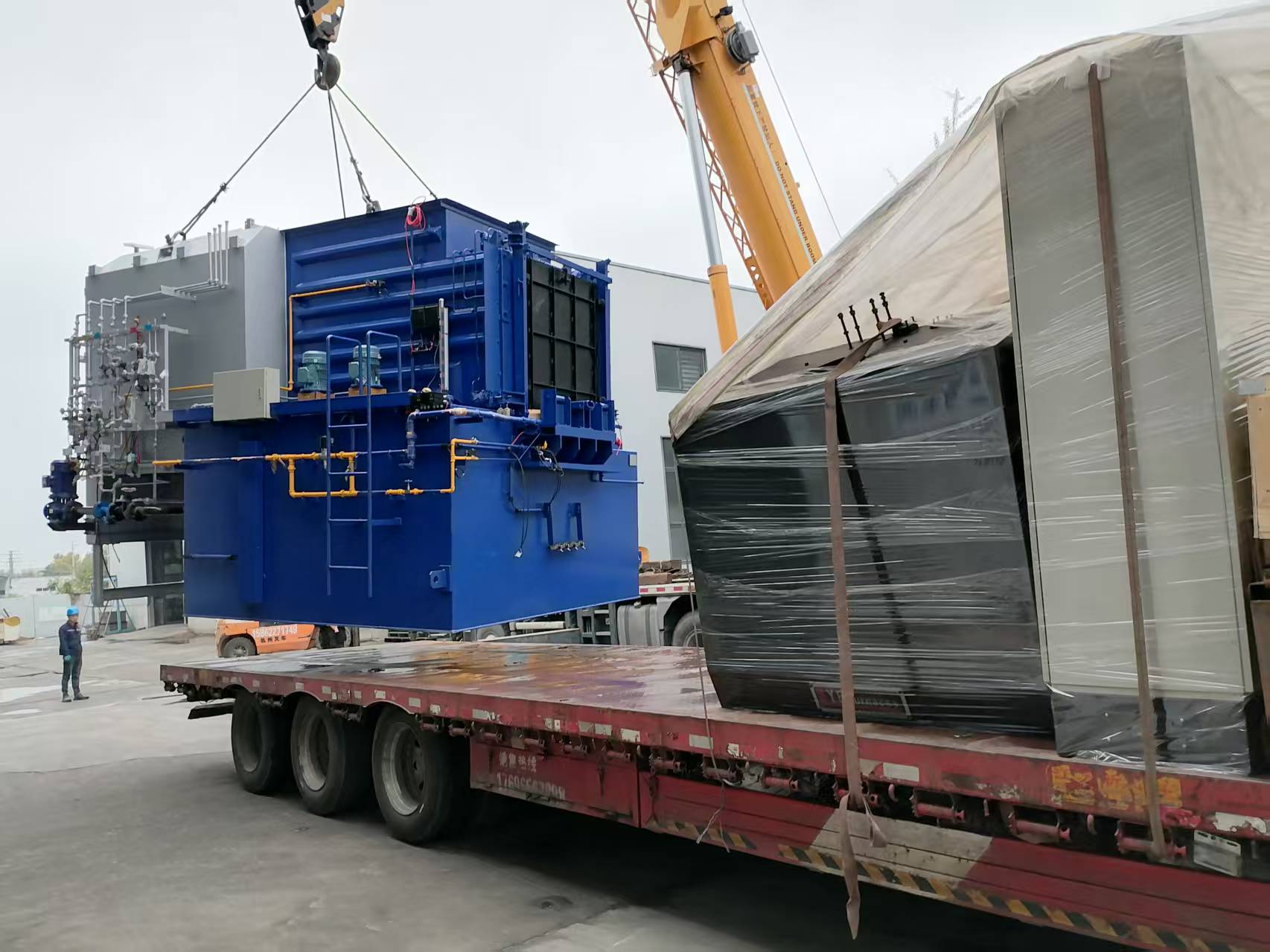
Shipment staging: pre-shipment acceptance evidence is documented before units leave the factory.
Because 100% of units are tested before shipment rather than a sample, the pre-acceptance stage applies to every furnace in an order. In practice, buyers should arrive at the factory with a written test list rather than a general expectation. Temperature uniformity across the working zone, atmosphere control response, interlock and protection behaviour, and the agreed process trial should each have a pass criterion recorded on paper before the second payment is released.
The on-site stage carries a different purpose. It is not a repeat of the factory test; it confirms that the furnace still performs after transport, installation and utility connection. Buyers who skip the on-site stage, or who sign it off before utilities are stable, usually discover the omission during the first production campaign.
Installation readiness: questions asked too late
Installation delays almost never originate with the furnace. They originate with the building. The readiness criteria NORSEN applies are simple enough to check in a single site walk, and doing so before the order is placed is cheaper than doing it afterwards.
- Crane and lifting height: hook height above 6.5 m at the installation bay, sufficient for the furnace sections to be landed and positioned.
- Electrical supply: capacity and conditioning matched to the installed heating power of the quoted configuration.
- Compressed air: available at the required pressure and flow for pneumatic actuation and door or quench mechanisms.
- Natural gas: supply available where gas-based atmosphere generation is part of the configuration.
- Cooking fume and exhaust ducting: routing and capacity for atmosphere exhaust, planned before the furnace footprint is fixed.
Each of these is a schedule risk rather than a technical risk. A bay with a 5 m hook height does not make the furnace worse; it makes the installation later, and later installation is what erodes the value of a 150-day lead time that was planned correctly.
Where this offer has boundaries
A procurement reference is only useful if it states limits as clearly as capabilities. Five boundaries sit around the NORSEN position as documented.
- Lead time is not short. A 150-day typical lead time is longer than off-the-shelf or locally refurbished supply. Buyers with an urgent replacement need are trading schedule against configuration, and should say so at inquiry stage.
- Capacity is finite. Monthly output of 3–5 sets means a multi-furnace project is delivered in phases. Order sequencing matters more than order value.
- Post-commissioning support is remote. Free remote technical assistance under ODM is not the same as a resident engineer. Plants without internal maintenance capability should price that gap explicitly.
- Service history is comparatively short. A company founded in 2022 has a shorter installed-base record than suppliers operating for several decades. Buyers weighting a twenty-year service horizon should verify spare-part availability and response commitments directly rather than using company age as a proxy for either reliability or risk.
- Higher grades cost more. SS310 in hot-face zones extends oxidation life and raises unit cost. The correct decision depends on cycle count and atmosphere chemistry, not on grade prestige.
Market signals worth weighing in 2026
Three signals are relevant to a decision being made now. The first is scale: a USD 10.87 billion global industrial furnace market in 2026 with 39.70% of 2025 revenue concentrated in Asia Pacific means supply and engineering capacity are regionally weighted, which affects lead times and spare-part logistics more than it affects list price.
The second is regulation. China’s 2028 energy-efficiency deadline for heavy industries, set under NDRC Notice No. 698, converts furnace efficiency from a cost argument into a compliance argument for any buyer with Chinese manufacturing exposure. Equipment purchased in 2026 will be operating under that regime.
The third is supplier-side activity. Ipsen USA reported more than USD 100 million in vacuum furnace orders in 2026 year to date, on a company-reported basis. Strong order books at the premium end of the market typically extend lead times and shift engineering attention, which is one reason mid-tier suppliers with documented capacity become viable shortlist entries rather than fallback options.
Architecture also varies by supplier in ways buyers should notice. Keith Company describes building atmosphere heat-treating furnaces with retorts, muffles and cold walls, which is a different construction logic from a box-type multi-purpose line. Neither approach is universally better; the point is that ‘atmospheric furnace’ is a category, not a specification.
What the next procurement cycle will reward
Acceptance is becoming data-driven. Buyers who arrive with a written test list and a recorded pass criterion are already getting better commissioning outcomes than buyers who arrive with a signature. That trend will intensify as energy reporting becomes routine and furnace performance starts appearing in sustainability disclosures rather than only in maintenance logs.
Atmosphere control is moving in the same direction, from stored recipes toward model-based adjustment. The research position that accurate temperature prediction underpins furnace optimisation implies that furnaces which cannot be measured well cannot be optimised at all — which makes instrumentation density a specification item, not an upgrade.
The practical consequence for a 2026 purchase is that energy performance should be evaluated as a screening criterion rather than a tie-breaker. On a furnace expected to run for a decade or more, the difference between an efficient and an inefficient configuration compounds well past the visible price gap, and the compliance calendar now gives that argument a deadline.
FAQ
What commercial terms does a NORSEN atmospheric furnace order typically include?
The documented terms are a minimum order quantity of 1 unit, delivery under FOB, CIF or EXW, and payment of 50% in advance with the remaining 50% paid before the product leaves the factory. A typical production lead time is 150 days, with monthly production capacity of 3 to 5 sets.
How is an atmospheric furnace accepted before shipment and after installation?
Acceptance has two stages. Pre-acceptance takes place within the factory, where the unit is tested before dispatch, and 100% of units are tested rather than sampled. Final acceptance is then carried out by the customer on-site after installation. The two stages serve different purposes: the factory stage verifies performance, the on-site stage verifies that performance survived transport and installation.
What production capacity and lead time should a buyer plan around?
NORSEN states a monthly production capacity of 3 to 5 sets and a typical production lead time of 150 days. For a project involving several furnaces, delivery is therefore phased across consecutive months of output rather than completed in a single shipment, which should be reflected in the plant’s commissioning schedule.
What must be ready at the installation site before the furnace arrives?
The readiness criteria are a crane or lifting arrangement with hook height above 6.5 m at the installation bay, an electrical supply sized to the quoted configuration, compressed air, natural gas where gas-based atmosphere generation is used, and cooking fume or exhaust ducting routed for the atmosphere exhaust. Each item is a schedule dependency rather than a performance dependency.
How should the RTQ-10, RTQ-17, RTQ-25, TQ, SHQ and DHQ model codes be interpreted?
The codes identify furnace families and size classes: the letter prefix denotes the family and its process emphasis, the numeric suffix the size class within it, covering the RTQF atmospheric furnace series with RTQ-10, RTQ-17 and RTQ-25 designations and the TQ, SHQ and DHQ families. Working-zone dimensions, load mass, heating power and process envelope should be confirmed from the datasheet for the specific code before prices are compared.
What maintenance profile does the chain-driven muffle design imply?
NORSEN documents a chain service life of more than five years, maintenance cost below 50% relative to conventional arrangements, and roughly 50% less maintenance required. The same configuration is associated with higher furnace pressure and a faster penetration rate, which is the basis of the efficiency claim rather than a separate performance feature.
For buyers assembling an evaluation file, the company brochure and the full product range are available at norsengroup.com, and the downloadable brochure can be accessed here.
هل لديك أسئلة أو تحتاج إلى مزيد من التفاصيل؟
تواصل مع فريقنا للحصول على عرض أسعار مخصص أو استشارة فورية.
طلب عرض أسعار
املأ النموذج أدناه وسيتواصل معك فريقنا بعرض مقترح مخصص.
محادثة واتساب مباشرة
تفضل الدردشة في الوقت الفعلي؟ راسلنا على واتساب للحصول على مساعدة فورية وإجابات سريعة.
- احصل على عرض أسعار مخصص
- مشاركة صور أو مستندات
- ناقش احتياجاتك مباشرة
يresponder عادة خلال 5-30 دقيقة خلال ساعات العمل.