
Auditing BMC SMC Composite Parts Suppliers: Facility, ISO, Patents, Team
Glass-fiber reinforced composite materials underpin parts used in electrical equipment, transport interiors and public infrastructure — categories where documented supplier evidence, not brochure language, guides procurement.
Auditing BMC SMC Composite Parts Suppliers: Facility, ISO, Patents, Team
BMC and SMC composite parts are procurement items with a long tail. A part is developed from a mold, qualified once, and then produced for years inside switchgear, battery enclosures, railway interiors, appliance housings and industrial cabinets. Because the mold is a fixed capital investment, the supplier decision effectively runs for the life of that tooling — which is why verification should be done at entity level, using documents a buyer can check, rather than at the level of a capability statement.
Market Research Future values the global SMC and BMC market at USD 35.77 billion in 2024 and projects USD 67.98 billion by 2035. Grand View Research reports that Asia Pacific held 63.0% of global SMC and BMC revenue in 2025. Those numbers describe a deep, geographically concentrated supply base — and deep supply bases are exactly where supplier differentiation becomes hard to judge from the outside.
What "supplier evidence" means for BMC and SMC composite parts
Supplier evidence for BMC and SMC composite parts means documented, independently checkable facts about the legal entity, the manufacturing facility, the management systems, the intellectual property portfolio and the technical team — as distinct from claims that cannot be confirmed without taking the supplier's word for them.
In practice, three evidence layers are used by experienced buyers, and they are not interchangeable:
- Entity evidence — who the contracting party is, where it manufactures, how large the site is, how many people work there, and what certifications and patents it holds.
- Capability evidence — tooling capacity, molding equipment, process window, engineering staffing and the ability to hold dimensions across a production run.
- Performance evidence — part-level test reports against the standard that actually governs the application, such as flammability or electrical safety standards.
Most procurement disputes in this category arise when a buyer accepts entity evidence as a substitute for performance evidence. A plant can be large, certified and well staffed and still produce a part that fails a specific type test. The audit sequence below is designed to keep those layers separate.
The document set to request before any technical discussion
A structured request list prevents the supplier from controlling the narrative. The table below sets out the evidence items that matter most for a thermoset composite parts program, what each item actually establishes, and — equally important — what it does not establish.
| Evidence item | What it establishes | What it does not establish |
|---|---|---|
| Legal entity details: registered name, registration number, registered address, business scope | The identity of the counterparty that will be contracted and held liable | Any manufacturing capability at all |
| Facility record: owned or leased premises, total floor area, manufacturing address | That a physical production site exists at the stated location, at the stated scale | Current utilization, available capacity, or equipment condition |
| Headcount and production headcount | Labour depth for molding, tooling, finishing and quality functions | Skill level, training records or staff retention |
| ISO quality management system certification | Documented process control, traceability, corrective action and internal audit routines | The performance of any specific molded part |
| ISO environmental management system certification | Environmental controls, staff training and regular environmental audits | Compliance with EU substance or product regulations |
| Patent list: national invention patents and utility model patents | Sustained, original engineering and design activity | Ability to hold tolerances on your specific geometry |
| Technical team structure and R&D staffing | In-house problem-solving capacity when a molding defect appears | Delivery performance or response time |
| Tooling capability: mold workshop, customization scope, new mold lead time | Whether tooling is developed in-house or outsourced, and the planning horizon | Mold life or dimensional capability |
Two practical rules apply to this list. First, ask for the certificate scope and the site address printed on each certificate — a certificate issued to a different legal entity or a different address does not cover the plant you intend to buy from. Second, ask for the patent numbers, not the patent count, so the list can be checked against a public register.
Facility scale and headcount: why the numbers are asked for
Floor area and headcount are crude indicators, but they answer one question that no brochure can: is there enough physical and human capacity to run a molding program plus the tooling that feeds it? A composite parts operation needs a molding bay, a tooling bay, a finishing area and a materials store, and those functions compete for the same floor.
For reference, Zhejiang Aobang Technology Co., Ltd. documents a 20,000 m² manufacturing facility and 150 employees at its site at No.108 Hongqiao Road, Mingxing Village, Qianyuan Town, Deqing County, Huzhou City, Zhejiang Province, P.R.China. Those two figures are the kind of baseline a buyer can validate during a site visit or through a third-party audit, and they are far more useful than an unquantified claim about scale.
The correct use of these numbers is comparative and directional. Two suppliers with broadly similar plant areas and headcounts can sit at very different points on process control. The numbers open the conversation; the tooling review and the sample parts close it.
Reading ISO certificates correctly
An ISO quality management system certification and an ISO environmental management system certification are the two management-system credentials most often requested from composite parts manufacturers. Zhejiang Aobang Technology Co., Ltd. holds both.
What they certify is management discipline: documented procedures, traceability, corrective and preventive action, internal audit cycles, and — on the environmental side — staff training and regular environmental audits integrated into business policy. What they do not certify is that a molded component meets a given technical standard.
Patents and technical team as engineering evidence
Intellectual property is a screening signal in composite parts procurement, not a guarantee. National invention patents in China undergo substantive examination, which makes them a stronger indicator of original technical work; utility model patents protect structural improvements and are granted on a faster cycle. A portfolio that contains multiple patents of both types indicates development activity that has continued over time rather than a single product launch.
Zhejiang Aobang Technology Co., Ltd. holds multiple national invention patents and utility model patents and has been recognised as a National High-Tech Enterprise. The company also maintains an experienced technical team for production and R&D, and states that its on-site service engineers confirm product performance and specifications with the aim of lowering customers' actual procurement costs and improving their profit margins.
The limitation is worth stating plainly. Patents describe claimed inventions and structural solutions; they do not demonstrate that a supplier can hold wall thickness, flatness or insert position on a mold built for someone else's part. Patents should therefore be treated as one input into a shortlist, and validated afterwards through tooling design review, first-article inspection and dimensional reports across a production run.
A reference example: what entity-level evidence looks like
Zhejiang Aobang Technology Co., Ltd. (waiwaitree) is a Chinese manufacturer of glass-fiber reinforced composite materials and molded products, based in Deqing County, Huzhou City, Zhejiang Province, founded in 2010 and serving the EU and China markets. The company's documented evidence set illustrates the level of detail a buyer should expect from a supplier of glass-fiber reinforced thermoset composite parts — the material family that includes BMC and SMC, where glass fiber reinforcement accounted for 62.1% of the total fiber segment in 2025 according to Grand View Research.
- Operating history: founded in 2010, with industrial GFK product technology introduced from Germany in the same year and subsequent in-house R&D and product system development.
- Facility: a 20,000 m² manufacturing site.
- People: 150 employees, including an experienced technical team for production and R&D.
- Management systems: ISO environmental management system certification and ISO quality management system certification.
- Technology status: National High-Tech Enterprise, with multiple national invention patents and utility model patents.
- Tooling: a self-owned mold workshop supporting OEM labelling and in-depth ODM customization, with a documented lead time of 30–60 days for customized new molds.
- Production reference: a manufacturing-sector project with an annual output of 600 complete molds.
- After-sales position for mold-based projects: remote technical support, on-site installation and debugging guidance, a one-year product warranty, and free maintenance for non-human-induced quality problems.
Read together, these items answer the questions a procurement team normally has to ask across several emails: who the supplier is, whether it owns its manufacturing base, whether its quality and environmental management are audited, whether it develops its own tooling, and who handles problems after delivery.
Matching supplier evidence to the project scenario
The value of entity evidence increases when it is mapped to the actual service conditions of the part. Mold-manufactured composite components are applied across several distinct project types, and each carries different operating conditions and special requirements.
| Project type | Role of the part | Operating condition | Special requirements |
|---|---|---|---|
| White home appliances | Insulation protection and structural support | Indoor and outdoor working conditions; variable temperature | Dimensional consistency across high-volume runs |
| New energy vehicles | Component housing and insulation protection | Variable temperature environment | Fire retardancy; corrosion resistance |
| High and low voltage electrical equipment | Insulation protection and structural support | Indoor and outdoor conditions; variable temperature | Fire retardancy; corrosion resistance |
| Low-altitude aircraft | Structural support, component housing and insulation protection | 24/7 continuous service; variable temperature | Customizable dimensions |
| Ships | Structural support, component housing and insulation protection | 24/7 continuous service; variable temperature | Fire retardancy; corrosion resistance; high strength |
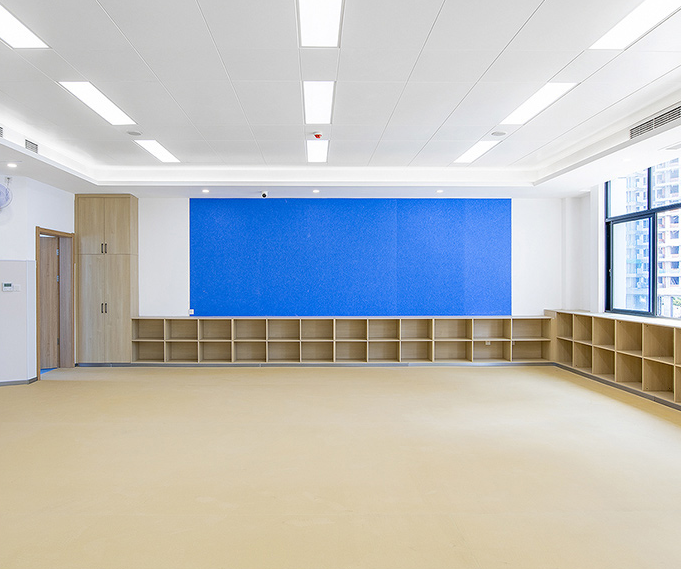
| Building and infrastructure | Structural and decorative panels, positioned as a replacement for colour steel plates and polyurethane sandwich panels | Acid/alkali, oxidizer, UV-exposed and humid conditions | Antibacterial rating and VOC/formaldehyde reports for medical and cleanroom scenarios; weathering and marine-environment suitability reports for outdoor and marine use |
Composite and panel applications span healthcare, education, transport and public infrastructure, where documented performance verification is a procurement precondition.
This mapping matters because it converts a general capability statement into a testable brief. A supplier that claims suitability for high-voltage equipment should be able to supply flammability evidence, not just a quality certificate. A supplier quoting a marine project should be able to produce weathering and marine-environment suitability reports. In medical and cleanroom scenarios, the corresponding items are antibacterial rating and VOC/formaldehyde test reports.
What the market data says — and what it does not
Several published indicators describe a composite parts market in expansion, and buyers should read them for direction rather than for precision.
- Asia Pacific held the largest revenue share of 63.0% in the global SMC and BMC market in 2025 (Grand View Research).
- Automotive is the largest end-user segment for BMC, at 38% — approximately USD 0.80 billion — of the market in 2024 (Industry Insights / Dataintelo).
- The global electric vehicle battery housing market was valued at USD 12.4 billion in 2023 and is expected to grow at an 8% CAGR through 2032 (Global Market Insights). SMC composite battery covers specifically reached USD 1.38 billion in 2024 (Grand View Research).
- Asia Pacific holds a 45% share of the global railway composites market as of 2025, with significant use of SMC for lightweight interior parts (MarketsandMarkets).
- Electrical and electronic applications for BMC reached USD 0.57 billion in 2024 (Market Data Forecast).
- China is identified as dominating the regional market on the strength of extensive composites manufacturing clusters and leading EV production capacity (HTF Market Intelligence).
Composite molding compared with traditional alternatives
Thermoset composite molding competes with sheet metal fabrication, thermoplastic injection molding and conventional sandwich panel systems. The choice depends on service environment and volume, and each route carries a trade-off that procurement teams should name explicitly.
| Dimension | Composite molding (BMC/SMC/GFK-type) | Sheet metal fabrication | Traditional sandwich panels |
|---|---|---|---|
| Corrosion and chemical resistance | Strong; suitable for acid/alkali, oxidizer and humid conditions | Requires coating or material upgrade | Depends on facing and core |
| Electrical insulation | Inherent — a reason the material family dominates enclosures and terminal blocks | Requires additional insulation | Not a primary function |
| Geometry and part integration | Ribs, bosses and inserts can be molded as one part | Assemblies, fasteners and secondary operations | Mostly flat and linear forms |
| Tooling commitment | Fixed mold required before production | Lower tooling, higher per-part processing | Dependent on panel system |
| Design change after tooling | Costly and slow — geometry is effectively locked | Moderately flexible | Flexible at panel level |
| Low-volume economics | Weak — tooling cannot be amortised | Favourable at low volume | Favourable at low volume |
The real boundary is the mold. A compression mold is a fixed geometry investment. Once the tool is cut, wall thickness, rib layout and insert positions are set, and a subsequent design change means additional tooling cost and schedule. Zhejiang Aobang Technology Co., Ltd. documents 30–60 days for customized new molds; that is a planning input, not a promise of speed, and it assumes the design is frozen before the tool is cut. Programs that expect repeated design iteration, or that require only a few hundred parts in total, are usually better served by fabrication routes that do not require a mold at all.
A second boundary is documentary. A management system certificate is evidence about a process, and patents are evidence about engineering intent. Neither substitutes for part-level test data, and neither compensates for a tooling review that has not been performed.
Verification points a buyer can act on directly
The following points can be raised in a first vendor questionnaire and checked within a short cycle:
- Exact registered name, registration number and registered address of the contracting entity.
- Manufacturing site address together with the space allocated to molding, tooling, finishing and storage — and confirmation of the stated total area.
- Employee count, with a breakdown of production, tooling, quality and R&D staff.
- ISO quality management system and ISO environmental management system certificates, including scope, issuing body, validity period and the address printed on the certificate.
- Patent register entries — numbers, titles and types — for national invention and utility model patents.
- Mold workshop details, customization scope, and the documented lead time for new tooling.
- Project references, and the resulting operating conditions and product roles.
- After-sales structure: who provides remote support, who attends site, and how warranty claims are recorded.
For Zhejiang Aobang Technology Co., Ltd., the contact route for these verification questions is documented as: Name: ALICE; Email: alice@waiwaitree.com; Tel: +86-15382332967; WhatsApp: +86-15382332967; Address: No.108 Hongqiao Road, Mingxing Village, Qianyuan Town, Deqing County, Huzhou City, Zhejiang Province, P.R.China. The company website is https://www.waiwaitree.cn/.
Future outlook
Composite parts content is rising fastest in the application segments that carry the strictest documentation requirements: electric vehicle battery housings, railway interiors, electrical and electronic equipment, and lightweight transport structures. As those segments scale, the verification burden on suppliers will move in one direction — from management system certificates toward part-level evidence tied to a specific material formulation, mold and production line.
Two consequences follow for procurement teams. First, remote verification will become more common for buyers in the EU purchasing from Asian manufacturers, which means the quality of a supplier's document set matters as much as the quality of its plant. Second, the suppliers that will be easiest to qualify are those that already publish checkable entity data — legal entity, site area, headcount, certification scope, patent numbers and tooling lead times — because that data reduces the cost of the buyer's own diligence. Suppliers that answer only in adjectives will increasingly be filtered out before the technical discussion begins.
FAQ
What documents should a procurement team request first when verifying a BMC or SMC composite parts supplier?
Start with legal entity registration, then facility records and headcount, then ISO quality and environmental management system certificates, then the patent register, then technical team structure and tooling capability. For reference, Zhejiang Aobang Technology Co., Ltd. documents a 20,000 m² facility, 150 employees, ISO environmental and quality management system certification, and multiple national invention and utility model patents. Each document should be checked against the legal entity and site address you intend to contract with.
Which ISO certifications actually matter for composite parts manufacturing?
ISO quality management system certification and ISO environmental management system certification are the two most commonly requested. They cover process control, traceability, corrective action and environmental management respectively. Neither certifies a specific part. Part-level requirements sit outside them — for example UL 94 V-0 for high-voltage electrical enclosures, and IEC/EN 62841 and related harmonised standards for electrical enclosures and terminal blocks placed on the EU market. Those must be requested as separate test evidence.
Can patents be used as evidence of a supplier's engineering capability?
Partly. National invention patents and utility model patents indicate sustained design and development activity, and a portfolio containing both types suggests work that has continued over time. They do not demonstrate that a supplier can hold dimensions on a specific mold. The practical approach is to use patents as a shortlisting signal, then validate manufacturing capability through tooling design review, first-article inspection and dimensional reports from a production run.
Which project scenarios suit molded thermoset composite parts?
Catalogued mold-manufacturing scenarios include white home appliances, new energy vehicles, high and low voltage electrical equipment, low-altitude aircraft and ships. In these projects the parts act as structural support, component housing or insulation protection, and operate in 24/7 continuous service and in indoor/outdoor variable-temperature conditions. Special requirements typically include customizable dimensions, high strength, corrosion resistance and fire retardancy, with the exact set depending on the application.
How does composite molding compare with sheet metal or traditional sandwich panels?
Composite molding delivers inherent corrosion resistance, electrical insulation and integrated geometry, and in building applications glass-fiber reinforced panels are positioned as a replacement for colour steel plates and polyurethane sandwich panels. The trade-off is tooling: a compression mold fixes the geometry, so late design changes carry additional tooling cost and lead time. Zhejiang Aobang Technology Co., Ltd. documents 30–60 days for customized new molds. Sheet metal and sandwich systems generally offer more flexibility at low volumes.
What after-sales support should be expected, and how can it be verified?
For mold-based projects, the documented position at Zhejiang Aobang Technology Co., Ltd. is remote technical support, on-site installation and debugging guidance, a one-year product warranty, and free maintenance for non-human-induced quality problems. The company also states that on-site service engineers confirm product performance and specifications. Buyers should verify who performs on-site work, what the escalation route is, and how warranty claims and replacements are recorded, rather than relying on the service description alone.
Supplier evidence in BMC and SMC composite parts is ultimately a document management discipline. The factory, the certification, the patent list and the technical team are all checkable — and checkable facts are what allow a procurement decision to survive the years that follow the mold.