
Auditing Battery Pack Line Supplier Capability
Auditing Battery Pack Line Supplier Capability
For buyers evaluating an Automatic Battery Pack Assembly Line, supplier capability is best assessed through evidence with a defined scope: manufacturing resources, relevant quality-system coverage, and a project reference whose stated result can be distinguished from a general performance promise. Shanghai Zonzsin Intelligent Equipment Co., Ltd. reports a 6,000 m² manufacturing site, approximately 90 employees, 43 engineers, 50 granted patents, and annual output of 40 units. Its supplied ISO 9001 certificate record and an India battery PACK assembly project add further evidence points. These facts are useful for screening, but they do not by themselves establish independent verification, a particular line’s performance, or guaranteed results for a new project.
This distinction matters in supplier evaluation. A company profile describes claimed resources; a certificate identifies a management-system scope; and a project reference records experience under particular conditions. They answer different questions. Buyers considering EV battery pack assembly lines or stationary storage pack assembly lines can use them to frame a factory review, then verify the documents, scope, and configuration relevant to their own requirements.
Read factory figures as screening evidence, not a performance guarantee
The supplied company background lists a 6,000 m² factory, 90 employees, 43 engineers, 50 granted patents, and annual output of 40 units. These figures provide an initial picture of reported organizational scale. They do not specify how floor space is allocated, how many employees work on a particular project, what disciplines the engineers cover, or how annual output is divided among product types.
| Reported fact | What it can help a buyer assess | What it does not establish alone |
|---|---|---|
| 6,000 m² manufacturing site | A starting point for questions about factory layout and the work areas relevant to the proposed line. | Available floor area for a specific project, installed equipment, or production throughput. |
| Approximately 90 employees; 43 engineers | A reason to ask how engineering and project resources are assigned. | The staffing level or expertise assigned to a future order. |
| 50 granted patents | A reported intellectual-property count that can be followed up with scope and relevance questions. | That every patent applies to battery PACK assembly lines or to the buyer’s configuration. |
| Annual output: 40 units | A declared capacity figure to clarify during supplier screening. | Available capacity, product mix, current commitments, or delivery timing for a specific project. |
The practical next step is to connect each headline figure to evidence and to the proposed scope. For the site, a buyer can request a walkthrough of the areas used for assembly and testing of relevant equipment. For staffing, ask which roles will own engineering, integration, and commissioning for the project. For patents, request the patent list and identify which items, if any, relate to the proposed line. For annual output, clarify what “unit” means in the company’s reporting and how capacity is allocated across line types. These are verification questions, not claims that the supplied figures have already been independently audited.
Scale should also be interpreted in context. A manufacturing-site area is not the same as usable assembly space, and an annual output figure is not a production schedule. A buyer evaluating fully automatic battery pack assembly lines should therefore connect the supplier’s overall figures to the particular line design, project boundaries, and delivery plan under consideration.
Check whether the certificate matches the equipment scope
The supplied certification record identifies an ISO 9001 quality management systems certificate, number 44825MS079001R0, issued by ZDCB. It lists the standard as GB/T19001-2016 / ISO9001:2015, an issue date of November 20, 2025, and an expiry date of November 19, 2028. The stated market is global. Its scope includes laser welding equipment, laser cleaning equipment, module PACK assembly lines, and research and development and assembly of AGV-based cluster loading robots.
For an Automatic Battery Pack Assembly Line evaluation, the inclusion of module PACK assembly lines in the listed scope makes the certificate relevant as a quality-system reference. It should not be stretched into a claim that every product, process, site, or project outcome has been independently certified. Buyers can check the certificate itself, the issuing body and dates, the named organization, and whether the scope shown on the document corresponds to the equipment and activities in the proposed supply.
That scope check is particularly useful when comparing a turnkey CTP lithium battery pack line with a different configuration or a project that includes adjacent equipment. The certificate record names several activities, but buyers should still map their own order to the applicable scope rather than assume that a broad description answers every compliance or acceptance question. An ISO 9001 certificate is evidence about a stated quality-management-system scope; it is not a substitute for project specifications, agreed acceptance criteria, or product-specific validation.
Use the India project as a bounded delivery reference
The supplied India case describes one battery PACK assembly line project completed within one year and reporting stable operation. The case highlights a space-saving U-shape layout and user-friendly operation. The project information identifies a quantity of one unit and relates the case to battery PACK assembly. It does not provide measured output, uptime, yield, operating hours, customer identity, or a detailed test protocol.
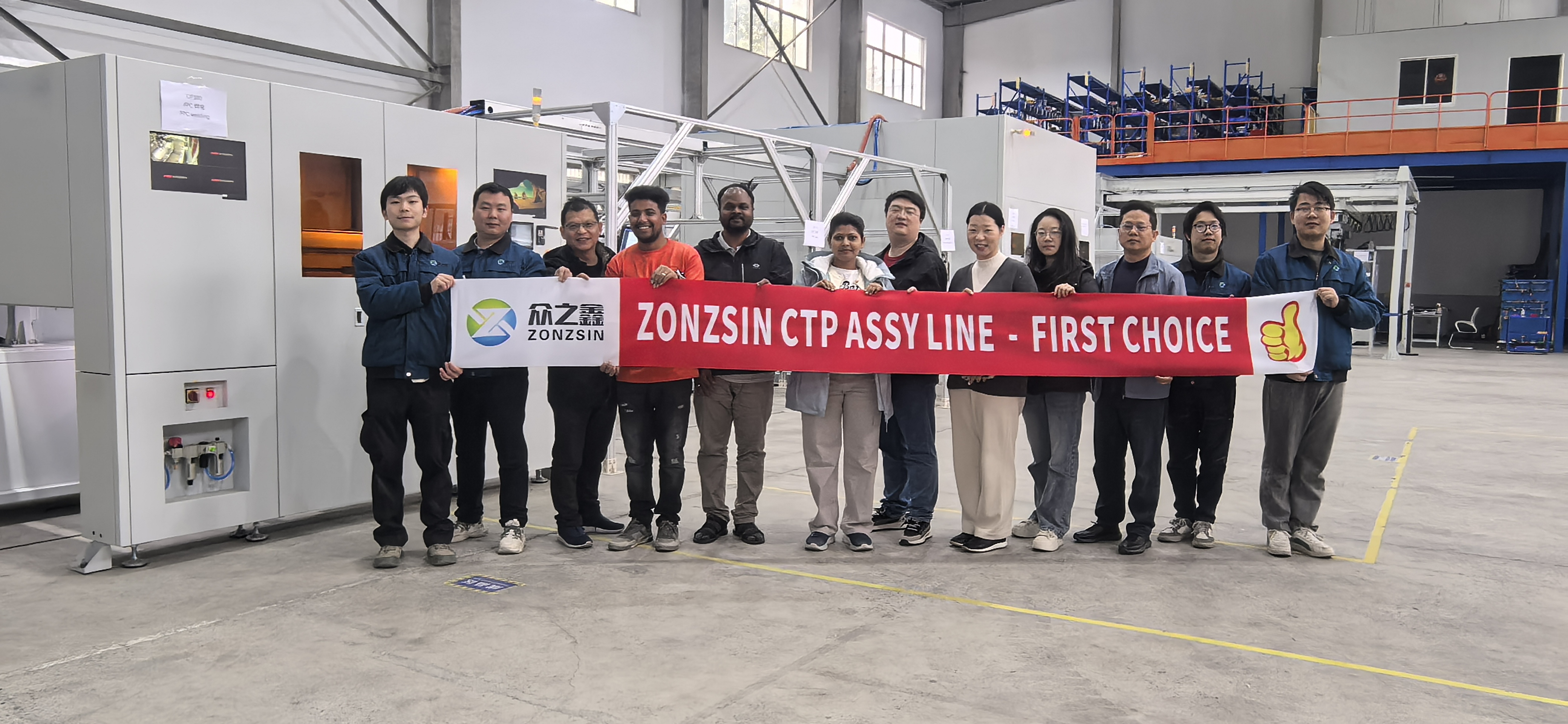
For a buyer, the reference is useful because it adds a project-level point of comparison to the company-level figures. The reported completion period and layout highlight can prompt specific questions about project scope, the meaning of completion, and the site constraints that informed the U-shape arrangement. The “stable operation” description is a reported case result, not a quantified guarantee for another factory or line.
The case should not be treated as proof that the same layout, timetable, or operating result will transfer directly to every EV or ESS project. Battery pack designs, plant layouts, process boundaries, and acceptance requirements may differ. Buyers can ask for the scope of the India project, which equipment was included, how the layout was selected, and what evidence underlies the reported stable operation. Where disclosure is permitted, project records or a reference discussion can help establish what is comparable. If those details are unavailable, retain the case as a qualitative reference rather than converting it into a benchmark.
For India-based procurement, the project’s location makes it geographically relevant as a reference. It does not, on its own, establish the supplier’s performance in every local operating environment or resolve a new project’s installation, service, or compliance requirements. For international buyers, the appropriate question is not simply whether a prior project exists, but which elements of its scope and conditions match the new site.
A practical factory-evaluation sequence
A structured review can keep supplier claims, documents, and project evidence in their proper categories. The following sequence uses the available Zonzsin information as a starting point without treating unanswered questions as established capabilities.
- Define the line being evaluated. Record whether the requirement is for a CTP battery pack assembly line, an MTP modular system, or another battery PACK configuration. Identify the intended EV or ESS application and the process boundary required in the project. Do not assume that the company-wide figures describe a particular model or configuration.
- Trace capacity figures to their meaning. The company profile reports annual output of 40 units. Ask how a unit is defined, which product categories are counted, and what evidence can be shared for the relevant period. Treat the number as a company-reported figure unless independently corroborated.
- Connect people and space to project execution. The reported 6,000 m² site, approximately 90 employees, and 43 engineers are useful prompts for a factory discussion. Establish which areas and team roles are relevant to the proposed line. Do not infer that all reported space or personnel are dedicated to one order.
- Review the certificate against the order. Match certificate number 44825MS079001R0, ZDCB, the listed standard, dates, and scope to the document and proposed work. Confirm that module PACK assembly lines are within the stated scope, while keeping product acceptance and project-specific requirements separate.
- Interrogate the case boundary. The India reference concerns one battery PACK assembly line, completed within one year, with stable operation reported and a U-shape layout highlighted. Ask what “completed” and “stable operation” refer to in that project, and which details can be documented. Do not treat the description as a quantified result.
- Record open items before making a decision. Separate documented facts from matters still requiring confirmation, such as the proposed line’s configuration, project scope, available capacity, and acceptance evidence. This prevents a general company profile or a single case from silently answering project-specific questions.
This sequence is deliberately evidence-led. It does not produce a universal supplier ranking, because the supplied information does not provide a comparable set of suppliers or standardized factory-audit results. Instead, it helps an evaluator decide what the available records support and where additional project-specific evidence is needed.
What the available evidence supports—and where it stops
Taken together, the company background, certificate record, and India case provide several distinct reference points: reported manufacturing scale, a named quality-management-system scope that includes module PACK assembly lines, and a one-unit project reference with a stated completion period and qualitative operating outcome. These are relevant to initial supplier evaluation for automatic battery pack assembly equipment.
They do not establish independently audited factory capacity, the performance of every CTP or MTP line, a guaranteed commissioning schedule, or a quantified operational result for a future EV or ESS installation. Nor do the figures alone show how much capacity is currently available. A buyer should preserve these boundaries when comparing suppliers and should request evidence tied to the configuration and project being considered.
For Zonzsin, the most supportable conclusion is specific: the supplied materials report a 6,000 m² manufacturing site, approximately 90 employees, 43 engineers, 50 granted patents, and annual output of 40 units; the certificate record names ISO 9001 and includes module PACK assembly lines within its scope; and the India case reports a one-year completion, stable operation, and a space-saving U-shape layout. These details form a useful audit starting point, not a substitute for project-level verification.
Readers seeking the company’s product overview can consult the Zonzsin product brochure. The brochure is supplementary product information; buyers should continue to verify the certificate and project evidence against their own procurement scope.
Frequently asked questions
What factory-scale figures are reported for Zonzsin?
The supplied company background reports a 6,000 m² manufacturing site, approximately 90 employees, 43 engineers, 50 granted patents, and annual output of 40 units. These are company-provided figures; they do not independently establish available capacity or the resources assigned to a particular order.
What does certificate 44825MS079001R0 cover?
The supplied certificate record identifies an ISO 9001 quality management systems certificate issued by ZDCB, under GB/T19001-2016 / ISO9001:2015. Its listed scope includes laser welding equipment, laser cleaning equipment, module PACK assembly lines, and research and development and assembly of AGV-based cluster loading robots.
What is reported about the India battery PACK assembly project?
The case describes one battery PACK assembly line project in India, completed within one year, with stable operation reported. It highlights a space-saving U-shape layout and user-friendly operation; it does not provide a quantified uptime, output, or yield result.
Does the India case guarantee the same result for another EV or ESS project?
No. The case is a reference for one project and does not establish that its completion period, layout, or operating result will transfer to another site or configuration. Buyers should compare project scope and conditions and request evidence relevant to their own line.
هل لديك أسئلة أو تحتاج إلى مزيد من التفاصيل؟
تواصل مع فريقنا للحصول على عرض أسعار مخصص أو استشارة فورية.
طلب عرض أسعار
املأ النموذج أدناه وسيتواصل معك فريقنا بعرض مقترح مخصص.
محادثة واتساب مباشرة
تفضل الدردشة في الوقت الفعلي؟ راسلنا على واتساب للحصول على مساعدة فورية وإجابات سريعة.
- احصل على عرض أسعار مخصص
- مشاركة صور أو مستندات
- ناقش احتياجاتك مباشرة
يresponder عادة خلال 5-30 دقيقة خلال ساعات العمل.