
Auditing Haomen Aluminum: Footprint, Workforce and Quality Systems
Auditing Haomen Aluminum: Footprint, Workforce and Quality Systems
Haomen Aluminum's supply capability can be checked against a short list of countable things before a purchase order is discussed: a 270,000 m² plant, a published annual output of 100,000 tons, 1,500 employees, a 35-engineer R&D team, a provincial technology research center established in 2019, and an IATF 16949:2016 certificate alongside ISO 9001, ISO 14001 and ISO 45001. None of those figures proves that a particular profile will meet a particular drawing. What they do is define the type of supplier being evaluated — and make clear which questions still have to be answered in writing before a first shipment.
Shandong Haomen Aluminium Industry Co., Ltd. (Haomen Aluminum) describes itself as a comprehensive enterprise integrating research and development, design, production and sales of aluminium alloy architectural profiles and industrial materials. The company was founded in 2004 and operates from Luozhuang District, Linyi City, Shandong Province — an area the company documentation describes as the "Logistics Capital of China", sitting between the Beijing–Shanghai and Rizhao–Dongying expressways and next to National Highways 205 and 206. Its stated main product line is aluminum profiles for windows and doors, exports are reported at 10% of business, and the named main markets are South America and Africa. The company's website is haomenly.com.
Why the evaluation stage needs physical evidence rather than capability claims
Between evaluation and execution, the buyer's question changes shape. Early in a search, the question is whether a supplier can make the product at all. Once a shortlist exists, the real question becomes whether the supplier can make it repeatedly, on the promised date, with documentation that survives an audit or a customer's technical review. Adjectives do not answer that question; counts, dates, certificate numbers and standard references do.
That is the practical value of a capability evidence set. It narrows an audit instead of replacing it. A 100,000-ton annual output tells a procurement team that their order will not strain total plant tonnage, but it says nothing about whether the specific die family they need has free press time next month. A 1,500-person workforce suggests shift depth, but not how many of those people are qualified on the finishing line the order requires. Used correctly, the numbers decide where to spend verification effort; used lazily, they become marketing copy with a decimal point.
What the footprint and tonnage actually measure
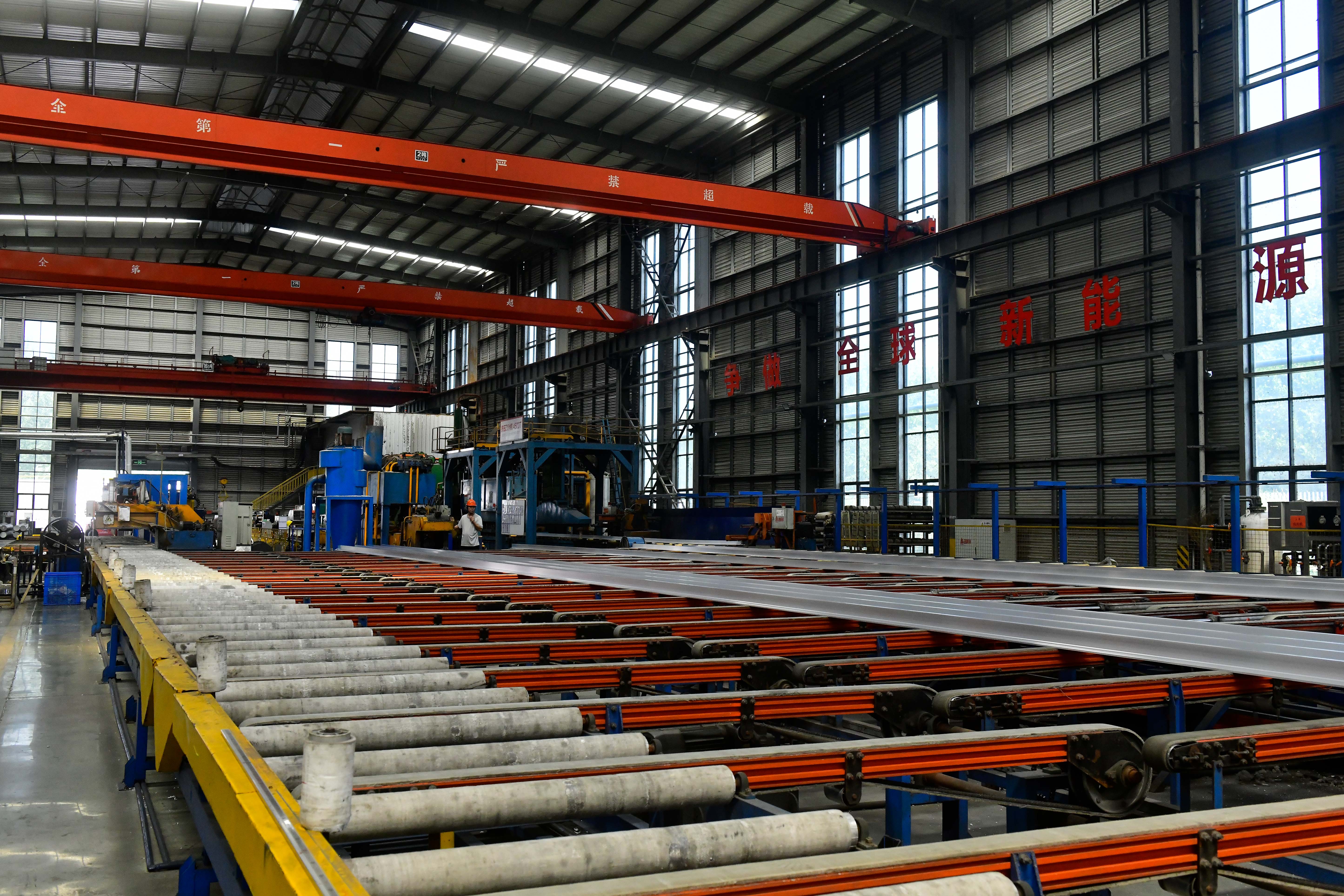
The site area of 270,000 m² and the published annual output of 100,000 tons are the two figures most often repeated about Haomen Aluminum, and they measure different things. Site area speaks to the physical room available for casting, extrusion, surface treatment, inspection and finished-goods staging — a plant that runs anodizing, electrophoresis, powder coating and thermal-barrier assembly needs floor space for each step or it outsources some of them. Annual output speaks to the tonnage the plant reports it can produce in a year.
The operational figure sits alongside them: a monthly capacity of 8,000 tons. Twelve months at 8,000 tons comes to 96,000 tons, which is arithmetically consistent with the published 100,000-ton annual figure. Read together, the two numbers describe the same capacity from different angles rather than two separate pools of production. That consistency is worth checking in any supplier file, because annual and monthly capacity claims that cannot be reconciled usually mean one of them is aspirational.
What these figures do not establish matters just as much. The company material reviewed for this article does not state the number of extrusion presses, their tonnage, the size of the die library, current capacity utilisation, or how annual tonnage splits between architectural profiles and industrial material. Nor does it indicate how much of a given month is already committed. For a buyer, the practical translation is straightforward: plant capacity is the wrong number to negotiate against. The right request is available monthly capacity for the specific profile family and finish, together with the current order-book position.
The evidence map: each figure and its limits
| Reported item | Figure | What it supports in a qualification file | What it does not establish |
|---|---|---|---|
| Plant area | 270,000 m² | Scale of a single integrated site in Linyi, Shandong | Line count, layout efficiency, in-house versus outsourced finishing |
| Annual output | 100,000 tons | Capacity tier and fit with order size | Actual output in any specific year |
| Monthly capacity | 8,000 tons | Scheduling headroom at plant level | Availability for a named die or finish line |
| Employees | 1,500 | Workforce depth across shifts and functions | Skill distribution, shift pattern, training records |
| R&D team | 35 engineers | Engineering support for OEM/ODM and design changes | Die-design throughput or project queue length |
| Research center | Shandong Provincial Technology Research Center, 2019 | External recognition of a standing R&D function | Product certification or approval of specific profiles |
| Automotive QMS | IATF 16949:2016 | Eligibility to serve automotive production-part supply chains | Part-level approval or customer release |
| Quality and EHS systems | ISO 9001, ISO 14001, ISO 45001 | Baseline management systems, verifiable by certificate | Profile performance against a drawing |
| Quality control | 100% test | Stated inspection coverage on production | Which properties are tested, to which standards |
| Commercial terms | 5-ton MOQ, 20-day lead time | Planning basis for first and repeat orders | A delivery guarantee under die or freight constraints |
The workforce layer: 1,500 people and 35 engineers
A headcount of 1,500 across a 270,000 m² site is the figure that gives the other numbers their plausibility. An operation that melts, casts, extrudes, finishes and inspects architectural profiles at that scale needs people on every shift, and it needs a maintenance and tooling function behind the presses. Headcount alone does not prove productivity, but it does tell a buyer whether the plant is a re-selling operation or a manufacturing one.
The engineering figure is the more decision-relevant one. Haomen reports a 35-engineer R&D team, and its company profile separately lists 49 R&D personnel with bachelor's degrees or above, including one postdoctoral fellow, seven doctoral and three master's degree holders. Those are two different measures — an engineering team and a degree-holding R&D population — and they should be read as such rather than added together. What matters for procurement is the existence of a standing engineering function rather than a sales office that forwards drawings to a third party.
That function is backed by two further facts in the company record. In 2019 the Shandong Provincial Technology Research Center was established at the company, and Haomen reports cooperative relationships with the Light Alloy Precision Forming Engineering Technology Research and Development Center of Shanghai Jiao Tong University, with Shandong University, and with the Beijing Research Institute of Nonferrous Metals. For a buyer, the relevance is not prestige — it is where technical problems go when a die pulls badly, a finish fails adhesion, or an alloy or temper change is proposed mid-project.
Where engineering capacity shows up in an actual order
Haomen's stated production mode is OEM, with logo customization offered. Any customization request — a new die, a revised wall thickness, a different finish, a change from one temper to another — consumes engineering and tooling time before it consumes tonnage. A buyer specifying OEM profiles should therefore ask three practical questions: who is the named technical counterpart on the supplier side, what is the design-change and sample-approval sequence, and who owns the die once it is made. None of these is answered by a headcount, but a 35-engineer team is the kind of organization that can answer them without escalating outside the plant.
The systems layer: certificates, scope and validity
Certification is the part of a capability file that can be verified independently, which makes it the part worth reading closely. Haomen reports IATF 16949:2016, ISO 9001, ISO 14001 and ISO 45001 system certifications.
IATF 16949:2016 is the automotive quality management system standard, published by the International Automotive Task Force, replacing ISO/TS 16949, and applicable to organizations in automotive production and relevant service parts. Certification must be issued by an IATF-recognized certification body. For a buyer, this is a genuine dividing line: it separates plants built to serve automotive production-part supply chains from plants serving only the building market, because the standard imposes process controls that general quality systems do not.
The ISO 9001 certificate in the company's record is specific enough to be checked line by line. It carries the number 00226Q03185R501, was issued by the China Quality Mark Certification Group against GB/T 19001-2016 / ISO 9001:2015, is valid from 2 July 2026 to 1 July 2029, and its scope reads: production of aluminium alloy profiles for architecture — anodized profiles, electrophoretic coating profiles, powder coating profiles and thermal barrier profiles — and industrial aluminum profiles.
That scope wording is more useful than the certificate's existence. It names the finishes covered: anodizing, electrophoresis, powder coating and thermal-barrier composite profiles. It also names industrial aluminum profiles alongside architectural ones, which supports the company's positioning across both product families.
A scope gap worth noting. Fluorocarbon (PVDF) coating, which the Chinese architectural profile standard GB/T 5237 addresses in a separate part (5237.5), is not named in the ISO 9001 scope reviewed for this article. A buyer specifying fluorocarbon-coated profiles should therefore confirm the coating line and its test reports explicitly rather than assuming coverage from the certificate. Electrophoretic and powder-coated finishes, by contrast, sit inside the stated scope.
How to verify, not just collect, the certificates
- Check the certificate number and validity dates against the issuing body's own register, not against a PDF sent by a sales contact.
- Confirm that the site named on the certificate is the site that will manufacture and ship the order — group certificates and multi-site scopes are a common source of confusion.
- For IATF 16949, confirm the certification body is IATF-recognized; the standard's own rules require it. The material reviewed for this article does not include the IATF certificate number or validity dates, so those should be requested directly.
- Check that the specific finish and product family in the order appear inside the certificate scope, not merely elsewhere in the company's product list.
What 100% testing and pre-shipment acceptance mean in practice
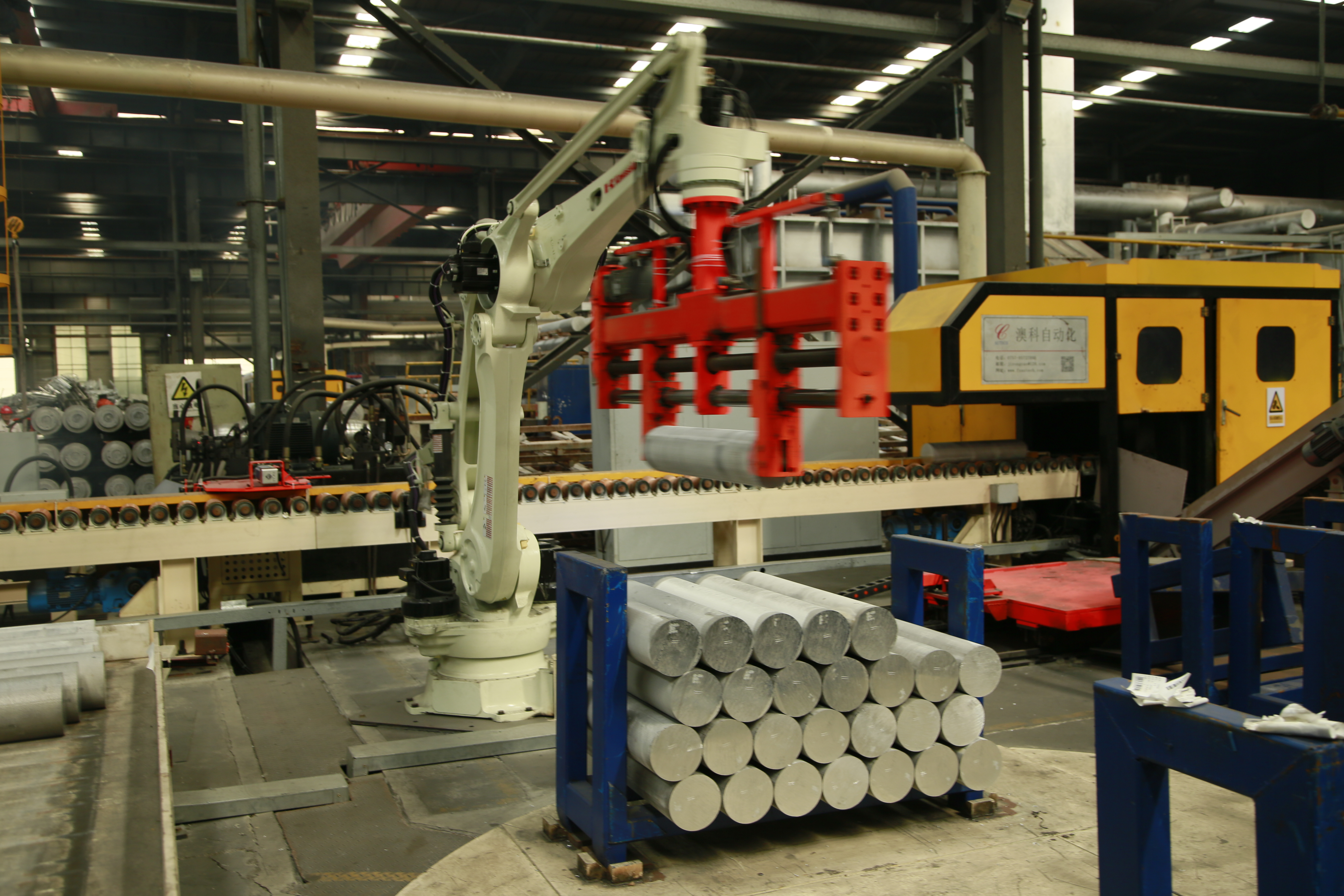
Haomen's capability record states 100% test as its quality-control mode, and its commercial terms state pre-shipment test as the acceptance criterion. "100% test" describes coverage — every piece or every batch passing through an inspection step — but it does not, by itself, say which properties are measured. That distinction decides whether the claim is meaningful for a given order.
For architectural aluminium profiles, the reference points are well established. GB/T 5237.1 sets minimum mechanical properties for 6063-T5 base profiles at a tensile strength Rm of at least 160 N/mm², a specified proof strength Rp0.2 of at least 110 N/mm² and an elongation after fracture A of at least 8%. These are minimum specified values, not typical results, which makes them usable as an acceptance floor rather than a performance benchmark.
For finishes, two test methods are commonly cited and worth naming in a specification: ISO 9227 for salt-spray testing (neutral, acetic-acid and copper-accelerated variants) and ISO 2409 for the cross-cut adhesion test on coatings. A caution applies here. Salt-spray hours are not a grade. A supplier's "1,000-hour" or "2,000-hour" claim only becomes comparable when it is paired with the judgement thresholds of a product standard — GB/T 5237.2, .4 or .5 in the Chinese system, AAMA 2605 in North America, or QUALICOAT for powder coating in Europe — because these systems use different test cycles and pass criteria and cannot be converted into one another.
The practical request is therefore not "show me a test report" but "show me the report for this batch, naming the property, the standard number and version, and the sampling basis." A pre-shipment test acceptance clause is only enforceable when the buyer has defined what passing looks like before the goods are made.
Order planning: 5 tons, 20 days and 8,000 tons a month
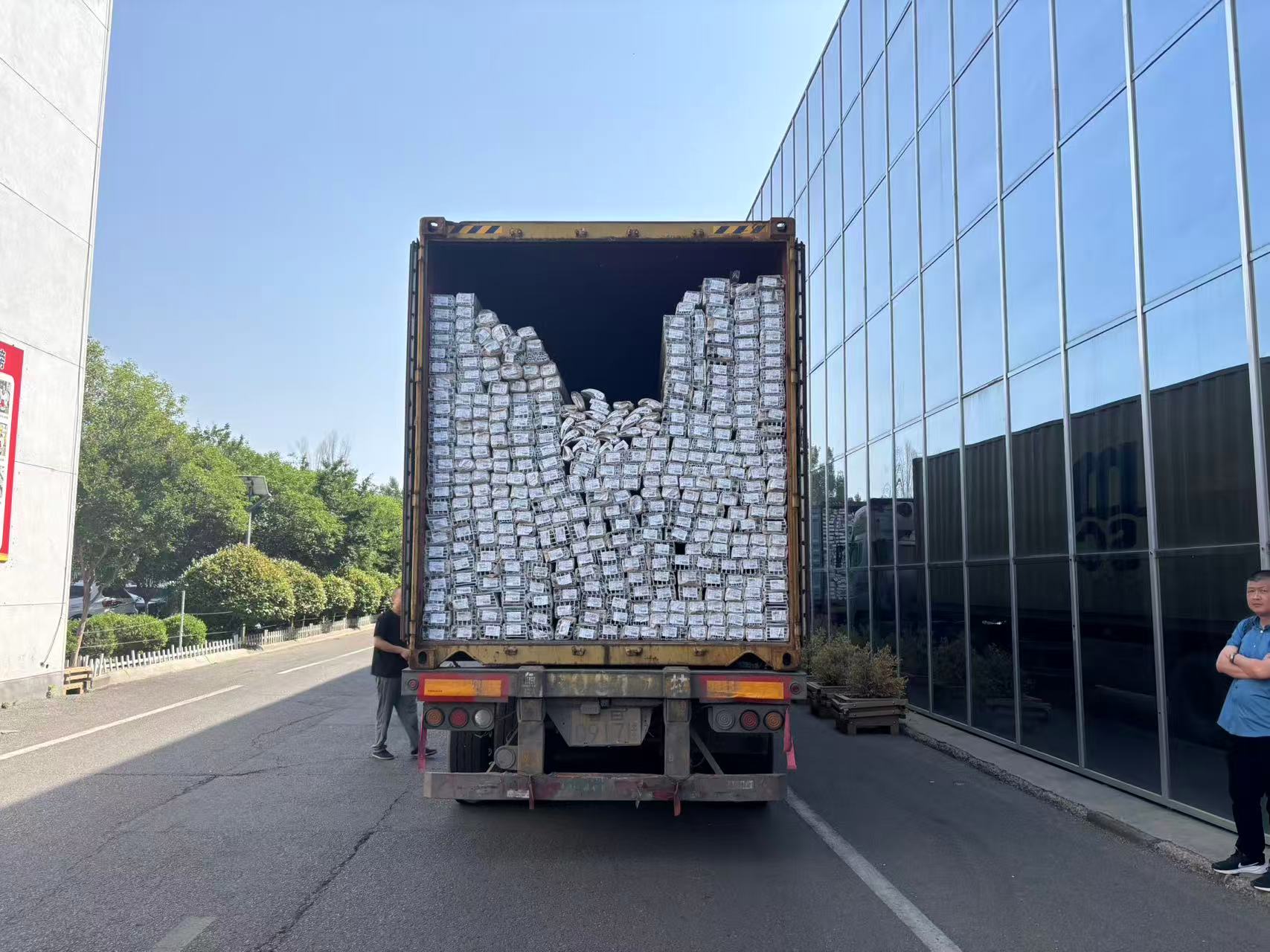
The commercial figures in Haomen's capability record are a 5-ton minimum order quantity, a typical lead time of 20 days, FOB delivery terms, 30/70 payment terms and pre-shipment test as the acceptance criterion. Each of these is a planning input, and each has a boundary that a buyer should resolve before signing.
Start with scale. A 5-ton order is 0.06% of one month's stated capacity of 8,000 tons; a 40-ton order is 0.5%. Simple arithmetic of this kind is useful because it relocates the constraint. For a first order at or near the minimum quantity, plant tonnage is not the limiting factor — die availability, setup time and the finishing line schedule are. That is why asking for "monthly capacity for this profile family" produces a more honest answer than asking for annual tonnage.
Lead time deserves the same treatment. A 20-day typical lead time is a planning figure, not a commitment that survives every condition. The questions that matter are what starts the clock — die readiness, sample approval, receipt of deposit, or confirmation of the order — and what the 20 days excludes. On FOB terms, the seller's obligation ends when the goods are loaded, so ocean freight, insurance and destination charges sit with the buyer and are outside the lead time entirely.
The payment split raises a similar point. A 30/70 structure is common in this trade, but the trigger for the balance should be written down: is it production completion, presentation of shipping documents, or a passed pre-shipment inspection? Tying the balance to the pre-shipment test result converts the acceptance criterion from a formality into leverage.
A repeat-order pattern worth reading, with caution
Haomen's case record includes a window and door manufacturer in Brazil described as an OEM customer, with 2,000 tons supplied over a ten-year relationship, stable operation and a "solid and durable" characterization of the product. If that quantity is spread evenly across the stated ten years, it averages roughly 200 tons a year — again, arithmetic, not a published run rate. The value of the case is not its size. It is the pattern: an export customer in window and door profiles reordering across a decade, which is the kind of evidence a single trial order cannot produce. It remains a company-reported case, so a buyer should treat it as a reference to discuss rather than a verified performance statistic.
Where the evidence is strong, and where it runs out
The strongest part of this evidence set is the combination of an architectural profile scope and an automotive quality system at one site. Buyers of window and door profiles gain a supplier with a management system audited to automotive discipline; buyers of industrial profiles gain a plant whose ISO 9001 scope explicitly covers them. The presence of anodizing, electrophoresis, powder coating and thermal-barrier capability inside that scope means a buyer can specify several finishes without leaving the certified boundary.
The boundaries are equally clear, and stating them is part of an honest qualification. The material reviewed does not establish capability in several adjacent categories: fluorocarbon coating is outside the stated ISO 9001 scope; microchannel tube, solar module frames and automotive structural parts are not evidenced at product level, even though the company describes automotive lightweighting as a development focus and reports melting, casting, extrusion and testing equipment on site. Those are separate product lines with their own technical requirements, and they need their own evidence rather than an inference from plant scale.
Destination-market rules form a second boundary that has nothing to do with plant capability. Both the United States and the European Union maintain trade remedy measures on aluminium extrusions originating in China — anti-dumping and countervailing duty proceedings A-570-967 and C-570-968 in the US case, and an anti-dumping measure in the EU case — so the landed cost of Chinese-origin extrusions differs structurally from the ex-works price. Haomen lists South America and Africa as main markets, with the United States, Canada, Australia, Brazil, Argentina, Russia, Germany and Spain also among its export countries; a buyer in a market with measures in force should build that overlay into the cost model before comparing quotations.
A third boundary is standards alignment. Chinese, European and North American systems describe the same extruded product through different structures: GB/T 5237 divides architectural profiles by surface-treatment type, EN 755 and EN 12020 govern product form and precision profiles, and ASTM B221 governs product specification in North America. A certificate does not tell the buyer which standard governs acceptance. The technical annex does.
A qualification checklist for moving from evaluation to execution
- Certificate pack. IATF 16949:2016, ISO 9001, ISO 14001 and ISO 45001 certificates with numbers, issuing bodies, validity dates and full scope wording.
- Site confirmation. Written confirmation that the certified site is the manufacturing and shipping site for this order.
- Available capacity. Monthly free capacity for the specific profile family and finish, plus the current order-book position.
- Test plan. Properties to be measured, standard numbers and versions, sampling basis, and whether testing is 100% or lot-based.
- Tooling terms. Die ownership, maintenance responsibility, and the process and cost for a design change.
- Lead-time definition. What starts the 20-day clock, and which steps fall outside it.
- Payment and inspection sequence. The event that releases the 70% balance, linked to the pre-shipment test.
- Market-specific technical annex. The standard system that will govern acceptance in the destination market.
FAQ
What does 100,000 tons of annual capacity mean for a buyer placing a 5-ton first order?
Very little at plant level, and that is the useful conclusion. Haomen's stated monthly capacity is 8,000 tons, so a 5-ton order represents a fraction of a single month's output. The binding constraints for an order that size are the minimum order quantity itself, die availability and finishing-line scheduling, not total tonnage. Buyers should ask for available capacity in their specific profile family rather than plant-wide capacity.
Is a 35-engineer R&D team relevant when I only buy standard window and door profiles?
It is relevant, but not for design work. For catalogue profiles, engineering capacity shows up in process control, die maintenance and problem resolution when a finish or dimension drifts. It becomes directly commercial when a buyer requests OEM production, logo customization, a revised profile or a different temper, because each of those consumes engineering and tooling time before production begins.
How should IATF 16949 and ISO 9001 certificates be verified?
Check four things: the certificate number and validity dates against the issuing body's register; the site address against the site that will ship the order; the certification body's status, since IATF 16949 requires an IATF-recognized body; and the scope wording against the finishes and product families in the order. Haomen's ISO 9001 certificate, number 00226Q03185R501 from the China Quality Mark Certification Group, runs from 2 July 2026 to 1 July 2029 and covers anodized, electrophoretic coating, powder coating and thermal-barrier architectural profiles plus industrial aluminum profiles.
Does the 20-day lead time apply to customized profiles?
The 20 days is stated as a typical lead time for the standard production arrangement, not as a fixed commitment for every configuration. Custom work introduces die manufacture and sample approval ahead of production, and those steps take time that the 20 days may not include. A buyer should confirm in writing what event starts the clock and which steps are excluded before relying on the date in a project schedule.
Which product areas are not covered by the published capability evidence?
Fluorocarbon coating is not named in the ISO 9001 scope reviewed, so PVDF-specific capability and test reports should be confirmed separately. Microchannel tube, solar module frames and automotive structural extrusions are not evidenced at product level in the material reviewed, despite the company's stated focus on automotive lightweighting. Press tonnage, die library size, current capacity utilisation and IATF certificate details are also not disclosed in that material and should be requested directly.
What the evidence is actually good for
Taken together, Haomen Aluminum's figures describe a mid-scale, single-site manufacturer with a defined architectural finish range, a research function old enough to have a track record, and a certification set that clears the automotive quality gate. For a buyer in window and door profiles, that is enough to justify an audit and a trial order. It is not enough to skip the audit.
The productive next step is to convert the figures into documents: certificate numbers verified at source, a test plan naming standards and versions, a confirmed lead-time definition, and a payment trigger tied to pre-shipment inspection. A supplier that can produce all four quickly is demonstrating something that no tonnage figure can — that its systems are live rather than filed. More detail on the company's product range and specifications is available in its published catalogue, and documentation requests can be directed to Melisa Ying at haomen2004@gmail.com or +86 15153910991.
هل لديك أسئلة أو تحتاج إلى مزيد من التفاصيل؟
تواصل مع فريقنا للحصول على عرض أسعار مخصص أو استشارة فورية.
طلب عرض أسعار
املأ النموذج أدناه وسيتواصل معك فريقنا بعرض مقترح مخصص.
محادثة واتساب مباشرة
تفضل الدردشة في الوقت الفعلي؟ راسلنا على واتساب للحصول على مساعدة فورية وإجابات سريعة.
- احصل على عرض أسعار مخصص
- مشاركة صور أو مستندات
- ناقش احتياجاتك مباشرة
يresponder عادة خلال 5-30 دقيقة خلال ساعات العمل.