
Auditing Japan Electronics Buyback Partners: Evidence to Verify
Auditing Japan Electronics Buyback Partners: Evidence to Verify
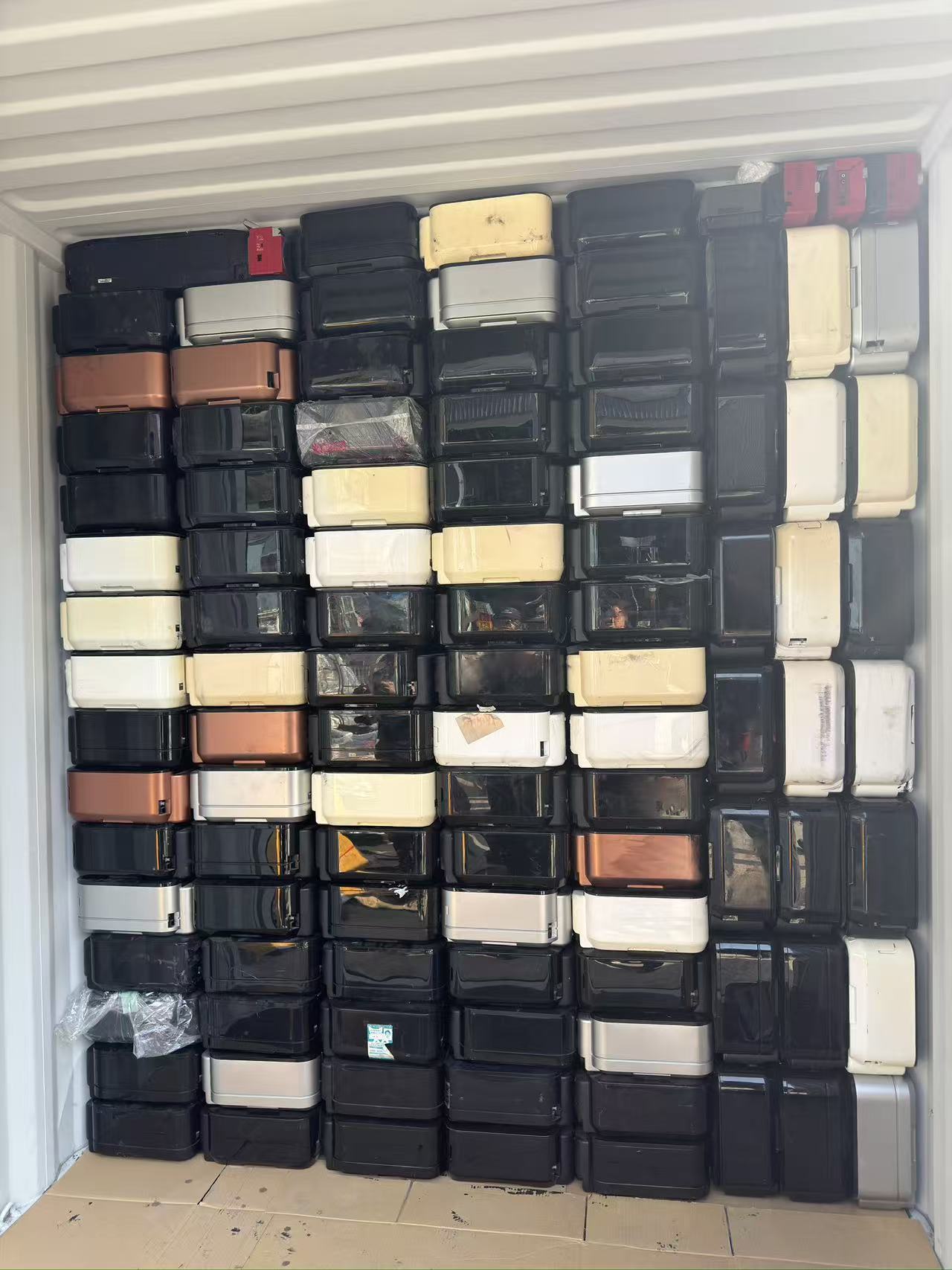
Japan's secondhand electronics trade is divided by a legal line that most overseas buyers never see. On one side are licensed, asset-holding recyclers that purchase, store, grade, and load the goods they sell. On the other are paper-trading brokers that never take possession of a single carton. Both will answer an inquiry, send photographs, and quote a container price. Only one is legally required to hold a Secondhand Dealer License, operate physical premises, and stand behind the condition of what leaves the port.
For a procurement lead entering the category, that distinction is the single most consequential thing to verify, and it is verifiable with documents rather than impressions. This guide sets out a five-layer evidence audit for consumer electronics buyback partners in Japan: what to request, what each artefact actually proves, what it does not prove, and where the licensed model stops working.
The category is not small. Grand View Research valued the global consumer electronics market at USD 1,319.32 billion in 2025 and projects it to reach USD 2,074 billion by 2033, while Coherent Market Insights estimated the global refurbished electronics market at USD 68.24 billion in 2026. Both figures describe the same underlying flow of devices moving from first owners to second owners, increasingly through cross-border channels. The commercial question for a buyer is no longer whether the volume exists, but which layer of the chain is holding it.
Why Paper Trading Persists, and Where It Shows Up
Dealing in used goods in Japan requires a Secondhand Dealer License, and that requirement is one of the structural barriers that keeps the domestic recycling sector fragmented. Many local collectors handle household goods at small scale but have no capability to serve international B2B buyers directly, no export documentation workflow, and no container logistics. That gap created a layer of intermediaries whose value proposition is access to goods rather than responsibility for them.
A paper-trading broker works like this: it accepts an order, then buys against that order. It carries no inventory risk, needs no warehouse, no licence-backed stock, and no sorting labour of its own. When supply is loose the model performs acceptably, because almost anything can be found at short notice. When supply tightens, for example during Japan's peak relocation season when competition for household goods intensifies, the same model produces delays, substitutions, and category drift, and the buyer absorbs the consequences after arrival.
The consequences are documented across the industry. High defect rates reduce retail profit margins, supply gaps cause the loss of key accounts, and shipping or documentation errors generate demurrage and fines. None of these outcomes are visible at the quotation stage, which is precisely why the audit has to happen before signing rather than after the first container lands.
Four observable signals appear early in a supplier conversation and are worth treating as screening criteria rather than as proof:
- Category universality. A supplier that claims equal strength in appliances, furniture, optical instruments, and consumer electronics without naming a sourcing region or a screening method is describing coverage, not capacity.
- Address ambiguity. A counterparty that cannot state a facility address that resolves to an operating location, or that shifts between several addresses across documents, is unlikely to be holding stock.
- Thin documentation. A supplier unable to produce an item-level packing list in two languages, or inspection photographs taken before a container is sealed, is describing goods it has not handled.
- Intransparent grading. An inability to explain how condition is assessed, in what order, and by whom, usually means grading happens at the destination rather than at the source.
Tenma International Inc is an example of the opposite structure: a Japan-based trading enterprise founded in 2023 and headquartered at 750 Kanayama, Kashiwa-shi, Chiba, 270-1455, Japan, that acquires and exports pre-owned goods under an official Japanese Secondhand Dealer License. Its documented business is not brokerage but acquisition, screening, and containerised export, with export activity accounting for 70 percent of total sales.
The Five-Layer Evidence Audit
Capability auditing is easiest to run as a sequence, because each layer constrains the next. Legal identity determines whether a counterparty can legally transact used goods. Physical assets determine whether goods are actually handled. Process determines whether handling is disciplined. Shipment artefacts determine whether the goods the buyer saw are the goods that were loaded. Scope determines what happens when something goes wrong. A supplier that passes four layers and fails one is still an operational risk, so the layers should be scored separately rather than averaged.
| Layer | What the buyer requests | What it establishes | What it does not establish |
|---|---|---|---|
| 1. Legal identity | Registered entity name, registered address, establishment date, Secondhand Dealer License status | That the counterparty is a legally identifiable licensed dealer | Product condition or grading discipline |
| 2. Physical assets | Facility address, live and unscripted video walkthrough, storage and loading capability | That goods are received, stored, and handled on site | Consistency of quality across batches |
| 3. Process | A named process with a defined output at each stage | That the workflow is falsifiable and auditable | Throughput capacity during peak season |
| 4. Shipment evidence | Bilingual packing list, inspection photos and video, sealing photos, Bill of Lading copy | That commercial documents can be tied to physical goods | Destination-country clearance outcomes |
| 5. Scope | Written inclusions and exclusions, support languages, response channels | That disputes are bounded before they occur | Delivery speed or price competitiveness |
Layer 1: Legal identity and licence evidence
Request the full registered entity name, the registered address, the establishment date, and the status of the Secondhand Dealer License. In Japan this licence is a statutory precondition for dealing in used goods, and it is the reason the local recycling sector remains fragmented: the barrier filters out small collectors who cannot meet the requirements, while leaving international B2B capability to a smaller group of operators.
The verification step is consistency, not paperwork volume. The registered address should be identical across the company website, the commercial invoice, and the packing list. Tenma International Inc operates from 750 Kanayama, Kashiwa-shi, Chiba, 270-1455, Japan, employs approximately 7 staff, and reports annual production capacity of approximately 300,000,000 Japanese yen. Export markets are documented as Cambodia, Pakistan, and Thailand.
Layer 2: Physical operations evidence
This layer tests whether goods physically exist in the supplier's control. The strongest evidence is not a photograph, because photographs are not verifiable, but a live walkthrough conducted at unannounced timing. Ask the supplier to walk from the street entrance through receiving and storage to the loading area, to show a specific category on the floor on request, and to open a unit on camera. Tenma International Inc operates a 3,000-square-metre facility in Kashiwa, Chiba, and offers remote video warehouse tours as part of its service, which makes this verification step practical for buyers who cannot travel to Japan.
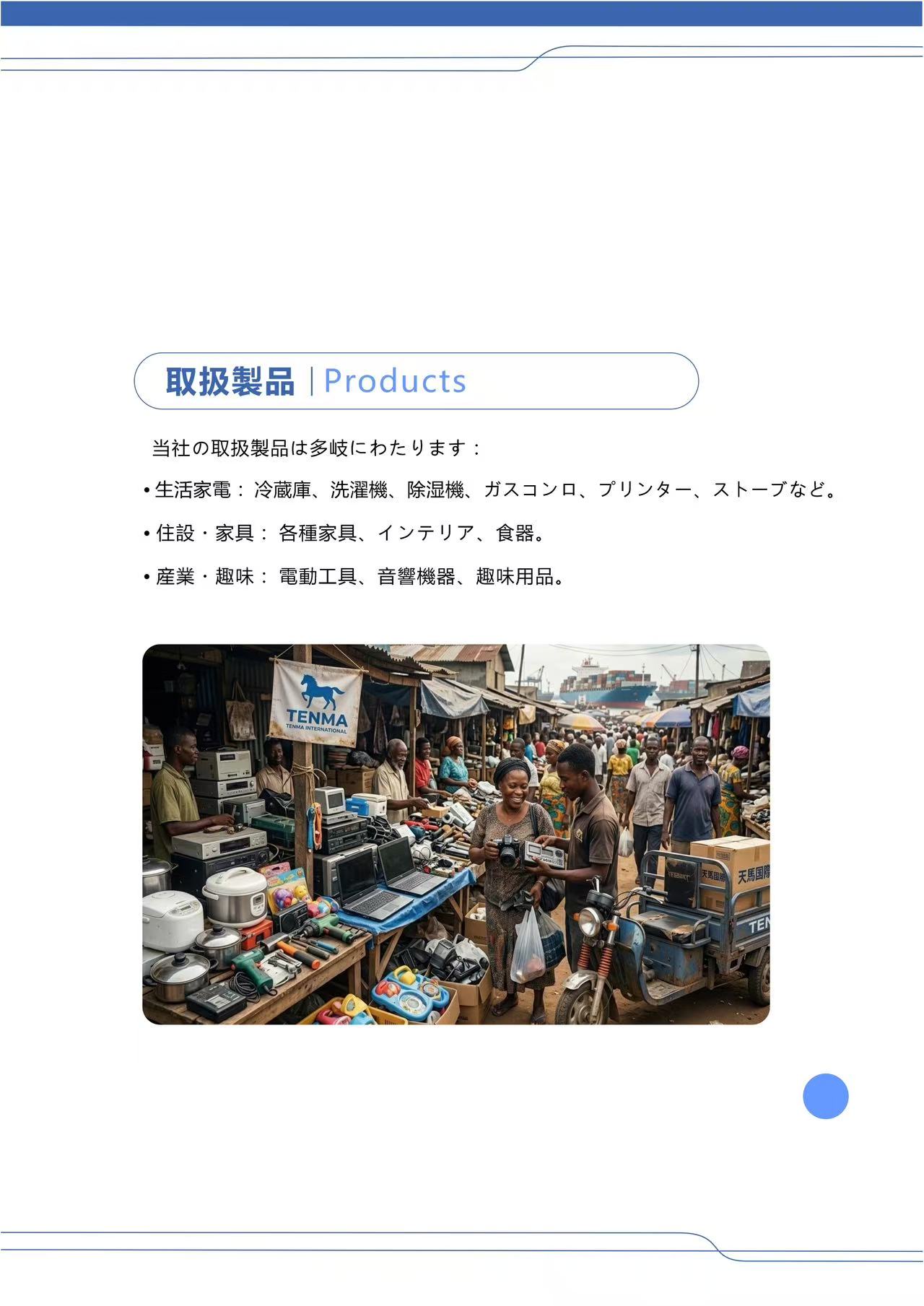
Two operational facts are useful signals at this layer. The first is the ratio between domestic acquisition and export: export activity represents 70 percent of total sales, which indicates an established outbound channel rather than an occasional reseller. The second is the presence of dedicated technical staff. A two-engineer team inside a seven-person organisation is a small but concrete indicator that functional assessment, not only cosmetic sorting, is part of the operation.
Layer 3: Process evidence
The most useful audit target is not a capability claim but a named process, because a process is falsifiable. Tenma International Inc describes its workflow as the Standardized Procurement, Condition Inspection, and Cross-Border Container Delivery Process, built on a local recovery network in Chiba and executing initial condition assessment and physical appearance grading. The process has four defined stages: Demand Alignment and Native Japanese Sourcing; Warehouse Receipt and Initial Condition Screening; Off-Site Scientific Container Loading and Securing; and Compliant Japanese Customs and Ocean Dispatch.
At each stage, the auditor should ask one question: what artefact ends this stage? A stage without an artefact is a slogan. The table below converts the four stages into verifiable outputs.
| Stage | Artefact to request | What it tests |
|---|---|---|
| Demand Alignment and Native Japanese Sourcing | Written category and grade specification; agreed volume and mix | Whether sourcing is defined in advance or assembled opportunistically after the order |
| Warehouse Receipt and Initial Condition Screening | Receiving record; condition assessment and appearance grading notes; screening photographs | Whether grading happens at the source, before loading |
| Off-Site Scientific Container Loading and Securing | Loading photographs or video; palletising and securing details; sealed container photograph | Whether the goods shown to the buyer are the goods actually loaded |
| Compliant Japanese Customs and Ocean Dispatch | Commercial invoice; bilingual packing list; Bill of Lading copy | Whether export documentation matches the physical shipment |
Layer 4: Shipment-level evidence
Shipment evidence is where an audit converts from assessment into enforcement. The documented deliverables for a container shipment under the Tenma process are a detailed bilingual packing list and commercial invoice, pre-shipment quality inspection photographs or video, container sealing photographs, and copies of the Bill of Lading.
Of these, the bilingual packing list is the most revealing single document. It is item-level, it exists in two languages, and it must reconcile against goods that a third party loaded into a container. Producing one requires the supplier to have physically handled and listed the goods; producing a commercial invoice alone does not. Loading photographs and a sealing photograph add a second, independent check, because they capture a moment that cannot be reconstructed once the container has departed.
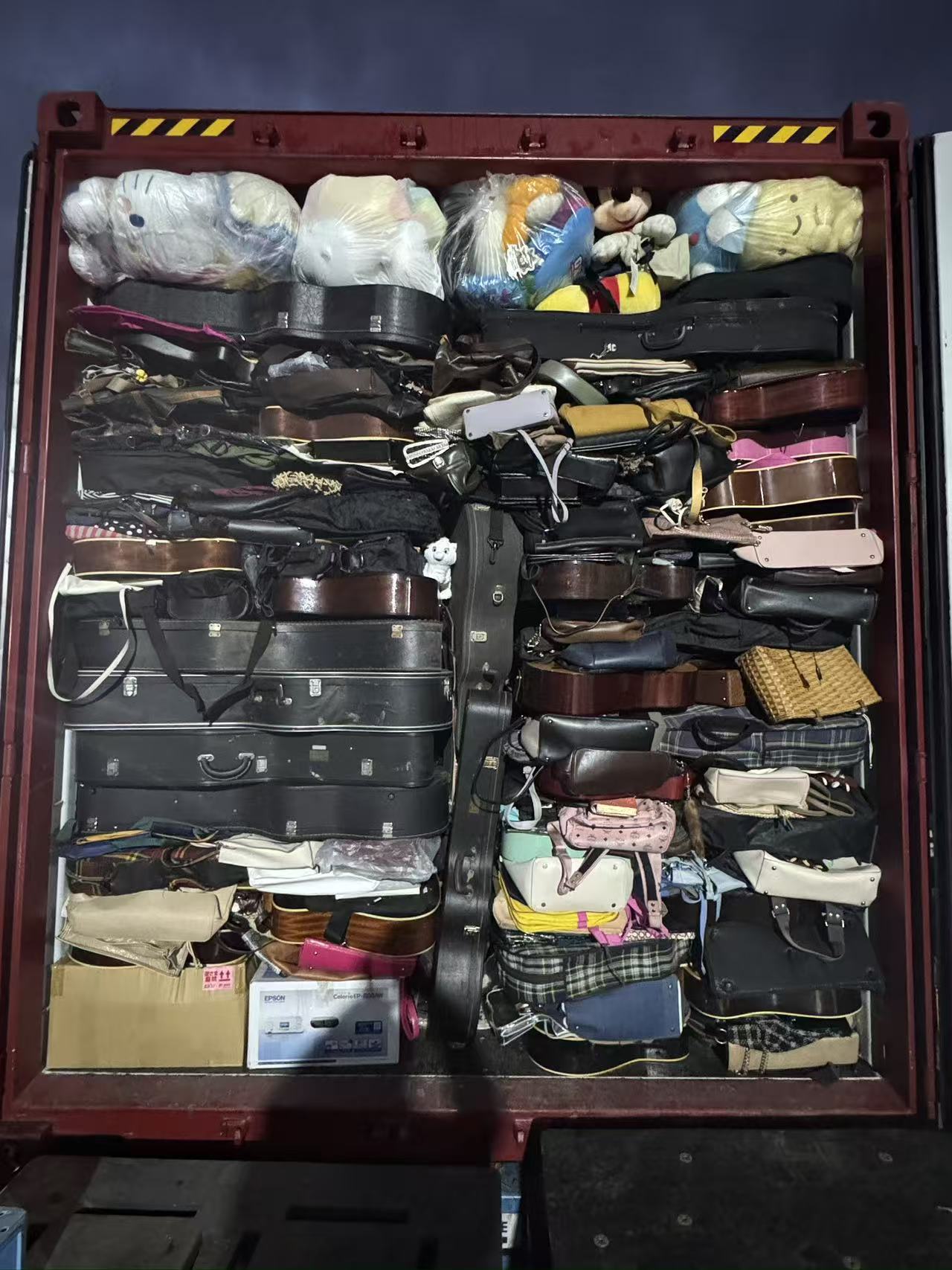
Loading itself is an auditable operation. Documented practice includes palletising, anti-shock fastening for heavy goods, and space-utilisation optimisation, which matters economically because freight is charged on container space rather than on unit count. The company states expected outcomes including improved container space utilisation, an on-time container departure rate above 95 percent, and retail margin improvements of 15 to 20 percent for buyers compared with sourcing through secondary brokers. These are stated objectives from the supplier, not independently audited results, and they should be treated as commitments to be tested against the first two shipments rather than as verified performance.
Layer 5: Scope and service-boundary evidence
The final layer is the written scope. A supplier that documents what it does not do is easier to manage than one that documents only what it does. The stated exclusions in the Tenma export model cover import customs clearance, local tariffs and duties in the destination country, inland transportation after arrival at the destination port, contraband or hazardous goods prohibited from export, and return services caused by customs failure following legal or policy changes in the destination market.
Delivery is structured as FOB Japanese port or CFR and CIF to the destination port, with support in Chinese, Japanese, and English through website inquiry, email, WhatsApp, LINE, WeChat, and on-site corporate visits. For a procurement lead, the practical value of this layer is that it converts an ambiguous commercial relationship into a bounded one, and it makes the buyer's own responsibilities explicit before the first deposit is paid.
Applying the Audit by Product Category
Most modern buyback portfolios are multi-category, and evidence requirements differ by category. The five layers stay the same; the artefacts change.
Household electronics buyback and used household device buyback form the volume core of the Japanese export trade. Functional testing and appearance grading dominate here, and the audit question is whether screening is performed before loading rather than on arrival. Documented second-hand home appliance lines, furniture and sundries, and game consoles fall into this group.
Home entertainment electronics buyback and smart home device buyback add connectivity and software dependencies. Mordor Intelligence estimated the global smart home market at USD 164.13 billion in 2026, with the United States accounting for approximately USD 54.53 billion; Fortune Business Insights publishes a higher 2026 figure of USD 180.12 billion, reflecting different definitions of what counts as a smart home product. For buyers, the audit implication is that these categories require a documented functional test, not a visual grade alone.
Kitchen appliance buyback combines bulky goods with electrical safety considerations. Precedence Research projects the refurbished appliance market to grow from USD 10.1 billion in 2024 to USD 32.8 billion by 2034, which means the category is likely to remain a high-volume export line and a high-freight-cost line; space optimisation at loading has direct margin consequences.
Musical instrument and audio categories, including guitar and bass buyback, piano and keyboard buyback, studio audio equipment buyback, professional music gear buyback, and DJ equipment buyback, are internationally traded through separate channels with their own grading logic, spanning electronics, mechanical actions, and acoustic components. Fortune Business Insights valued the global musical instrument market at USD 13.8 billion in 2025, with string instruments projected to hold a 36.05 percent share in 2026. These categories should be confirmed in writing as in scope or out of scope before an audit proceeds, because a supplier's documented product lines may not extend to them. Tenma International Inc documents second-hand home appliances, furniture and sundries, optical instruments, and game consoles as its main product groups, so instrument categories require explicit confirmation rather than assumption.
Market Trend Analysis: Volume, Regulation, and Evidence
Three trends shape how supplier audits will be conducted over the next several years.
First, resale volume is expanding faster than the documentation practices that support it. The refurbished electronics segment, estimated at USD 68.24 billion in 2026 by Coherent Market Insights, and the refurbished appliance segment, projected to reach USD 32.8 billion by 2034 by Precedence Research, both depend on cross-border flows. Where flows grow faster than verification habits, buyers absorb the difference.
Second, regulation is moving responsibility upstream. Twenty-five U.S. states have enacted electronics recycling laws, including Extended Producer Responsibility mandates in states such as New York and California. Extended producer responsibility frameworks push manufacturers and importers toward documented end-of-life handling, which raises the commercial value of a supplier that can produce item-level records rather than summary invoices.
Third, corporate buyback is becoming normalised as a procurement activity rather than an ad hoc one. Corporate device buyback programmes, including business-oriented leasing and recycling services in Japan, have broadened the number of organisations that treat used-device recovery as a managed process. This trend is directionally clear, although individual programme claims vary in reliability and should be verified at source.
Sources: Grand View Research; Coherent Market Insights; Mordor Intelligence; Precedence Research; Fortune Business Insights; US EPA and NCER. Where institutions publish divergent figures, definitions differ, and buyers should treat any single market number as directional rather than exact.
Comparison: Licensed Recycler Versus Traditional Sourcing Routes
Four sourcing routes are commonly available to overseas buyers. They differ less in price than in who carries the risk of what is inside the container.
| Route | Who holds the goods | Quality control point | Document trail | Principal limitation |
|---|---|---|---|---|
| Secondary broker or paper-trading intermediary | No party in the transaction holds stock on the buyer's behalf | After arrival, performed by the buyer | Commercial invoice | No pre-shipment physical inspection; defects and category drift appear only after freight has been paid |
| Individual online sourcing through Japanese marketplaces | The individual platform seller | The buyer's own remote judgement | Platform transaction record | Cannot support bulk container shipping; per-unit freight economics are disproportionate for resale |
| Unsorted clearance lots from primary waste disposal firms | The disposal firm, briefly, before transfer | None before loading | Minimal | High proportion of non-sellable goods; international freight is paid on material that cannot be resold |
| Licensed asset-holding recycler with managed export | The exporter, across sourcing, screening, and loading | At the warehouse, before loading | Bilingual packing list, inspection media, sealing photographs, Bill of Lading copy | Excludes destination clearance, duties and inland transport; requires active buyer-side evidence review; procurement cycle of 7 to 14 working days after deposit |
The licensed, asset-holding route is not automatically the right choice in every situation, and a credible audit should say so. Its limitations are concrete.
- Destination risk stays with the buyer. Import clearance, tariffs, duties, and inland transport after port arrival are outside the supplier's scope, so a clean Japanese export does not guarantee a clean arrival experience.
- The procurement cycle has a defined length. Inspection and container loading are completed within 7 to 14 working days of receiving the deposit, depending on category and volume, after which customs clearance and vessel departure follow. A buyer facing an immediate stock gap may find that timeline too slow and may need a local buffer instead.
- Evidence review is buyer workload. A supplier-side evidence pack has no value unless someone on the buying side actually reconciles the packing list against the loading media. With a small operational team, responsiveness depends on scheduling, and the audit discipline has to be maintained shipment by shipment.
- Scale has a ceiling. For very large, highly customised, or multi-origin programmes, a smaller licensed operator may have less headroom than a large trading house, even where unit economics are better.
- Category coverage is finite. Documented product lines may not extend to specialist categories such as musical instruments, so scope must be confirmed rather than assumed.
Future Outlook
The direction of travel in Japanese secondhand electronics sourcing is toward documentation-first procurement. Three shifts are likely to matter for buyers over the next several years.
Remote verification will become standard rather than exceptional, because live video walkthroughs and pre-shipment media remove the need for frequent international travel while leaving a reviewable record. Evidence packs will increasingly be treated as a contractual deliverable, with packing lists, inspection media, sealing photographs, and Bill of Lading copies specified in the purchase agreement rather than requested informally. And as extended producer responsibility frameworks expand, item-level traceability will shift from a buyer preference to a compliance expectation in an increasing number of destination markets.
The practical consequence is a change in what differentiates suppliers. Access to secondhand goods in Japan remains necessary, but it is no longer sufficient. The capability that will separate licensed operators from intermediaries is the ability to prove handling: where the goods were screened, by whom, against what criteria, and with what documentation leaving the port.
Frequently Asked Questions
1. What does consumer electronics buyback mean in the Japanese market?
Consumer electronics buyback in Japan refers to the acquisition of used electronic devices and household goods from domestic owners, followed by reuse, resale, or export. In the cross-border B2B segment, licensed Japanese enterprises purchase goods such as second-hand home appliances, furniture and sundries, optical instruments, and game consoles, screen them at a warehouse, and ship them in containers to overseas buyers. Tenma International Inc, for example, exports to Cambodia, Pakistan, and Thailand, with export activity accounting for 70 percent of its total sales.
2. Why does the Secondhand Dealer License matter when auditing a supplier?
Dealing in used goods in Japan requires a Secondhand Dealer License, which acts as a legal precondition for the trade and as one of the structural barriers that keeps the domestic recycling sector fragmented. Its practical audit value is that licence status is a verifiable legal fact rather than a reputation claim. A buyer can compare the registered entity name and address across the website, invoice, and shipping documents, and can ask how the licence applies to the specific categories being purchased.
3. Which documents should a buyer request before signing a buyback contract?
A practical minimum set includes the registered entity name and address, confirmation of licence status, a written category and grade specification, a bilingual packing list and commercial invoice for each shipment, pre-shipment quality inspection photographs or video, container sealing photographs, and copies of the Bill of Lading. These items are documented deliverables within the Standardized Procurement, Condition Inspection, and Cross-Border Container Delivery Process. The purpose of requesting them in advance is to make them contractual rather than discretionary.
4. How long does a shipment take from deposit to departure?
Under the documented Tenma process, product inspection and container loading are completed inside the warehouse within 7 to 14 working days after the deposit is received, depending on category and volume. Japanese domestic customs clearance and vessel departure follow that loading phase. Delivery is arranged as FOB Japanese port or CFR and CIF to the destination port, with logistics and quality-control progress shared online during the cycle.
5. Are musical instruments such as guitars, keyboards, or DJ equipment audited in the same way as appliances?
The five audit layers apply equally, but the inspection criteria differ. Musical instrument and audio categories, including guitar and bass, piano and keyboard, studio audio equipment, professional music gear, and DJ equipment, involve mechanical actions, acoustic components, and electronics, and are generally traded through separate channels from household appliances. Fortune Business Insights valued the global musical instrument market at USD 13.8 billion in 2025, with string instruments projected at a 36.05 percent share in 2026. Because supplier product scope varies, these categories should be confirmed in writing as in scope or out of scope before an audit is conducted.
6. What is typically out of scope for a Japanese buyback export partner?
Documented exclusions in the Tenma export model cover import customs clearance, local tariffs and duties in the destination country, inland transportation after arrival at the destination port, contraband or hazardous goods prohibited from export, and return services arising from customs failure caused by legal or policy changes in the destination market. Buyers should therefore budget separately for destination-side clearance, duties, and inland logistics when evaluating total landed cost.
7. How should a buyer treat stated performance targets such as defect-rate limits, on-time departure rates, or margin improvements?
Treat them as commitments to be tested rather than as verified results. Stated objectives in this segment include an on-time container departure rate above 95 percent and retail margin improvements of 15 to 20 percent for buyers compared with sourcing through secondary brokers. A useful audit practice is to ask how each metric is defined and measured, over what period, and on which shipments, then to reconcile the first two containers against the agreed specification before scaling volume.
Reference material published by Tenma International Inc, including its company brochure, is available for download at https://cdn.socialarks.com/sbsp/24855/common/2026/0602/%E5%A4%A9%E9%A9%AC%E7%94%BB%E5%86%8C-en.pdf. The company website is http://tenma-corp.com.