
Auditing Supplier Capability in Edible Mushroom Automation
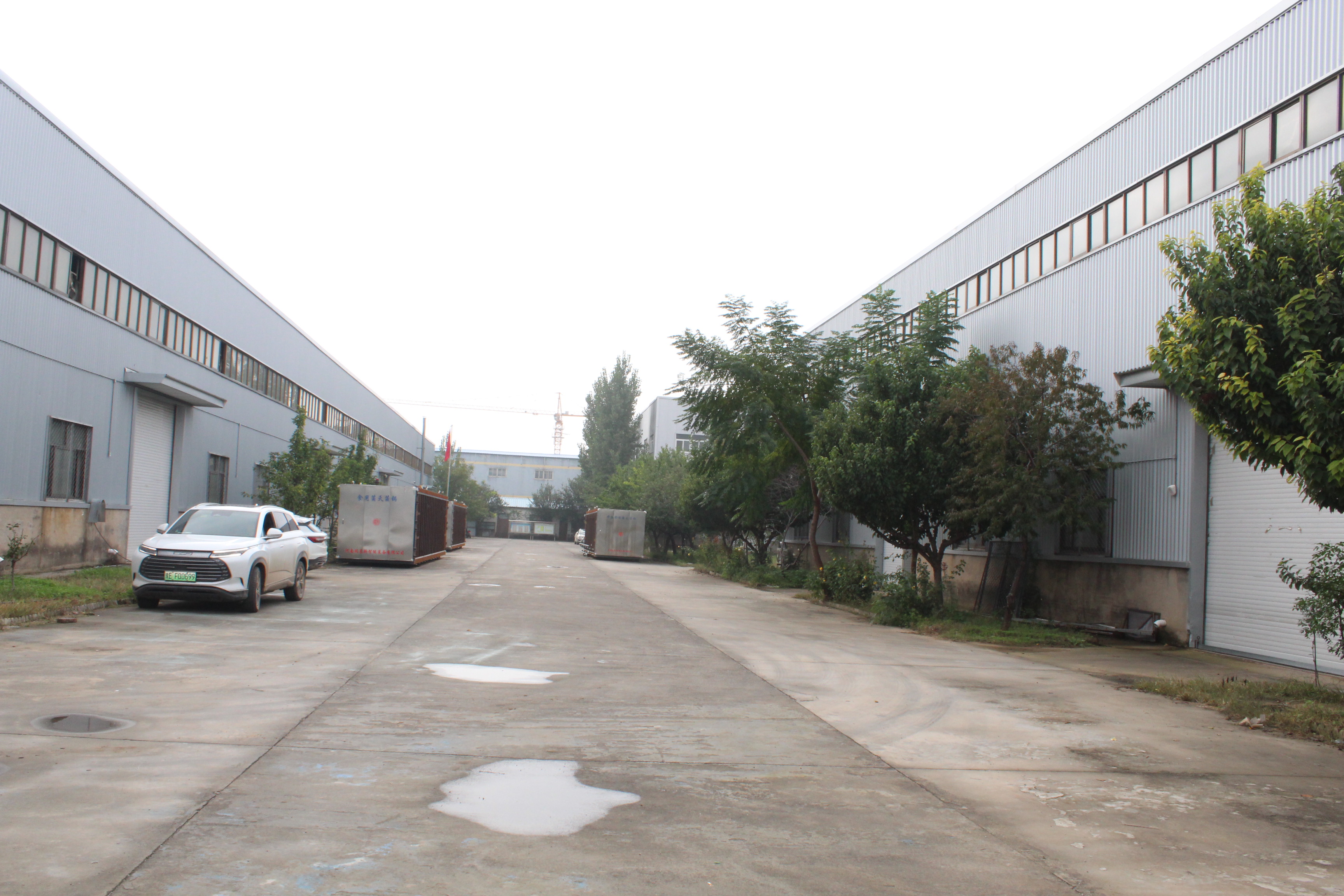
A supplier capability audit for edible mushroom automation equipment is not a review of brochures. It is a line-by-line check of whether the numbers a supplier publishes can be traced to a specific machine, a specific build standard and a specific compliance document. Procurement teams that treat capability as a claim rather than an evidence set usually discover the gap during installation rather than during negotiation.
The market context makes that distinction material. The global mushroom equipment market was valued at USD 3.8 billion in 2025 and is projected to reach USD 7.2 billion by 2033, according to Dataintelo. The same source places Asia-Pacific at a 42.3% revenue share in 2025, driven by industrial-scale cultivation in China. A fast-growing equipment category with many suppliers selling into it is exactly the condition under which specification clarity becomes a buyer's primary defence.
This article sets out a machine-level proof-point audit: a method for reading supplier capability as a set of checkable facts — configuration, performance, compliance and commercial terms — rather than as a narrative. Changxing Edible Mushroom Machinery, formally Neihuang County Changxing Biological Machinery Equipment Co., Ltd., is used as the worked example because its published specifications are specific enough to audit. The same framework applies to any supplier in this category.
Why Capability Claims Break Down at the Evaluation Stage
Buyers reaching the evaluation-to-execution stage are usually no longer asking whether automation is worth adopting. They are asking which supplier's numbers will still be true twelve months after commissioning. That question is answered by evidence, not by positioning.
The recurring failure mode is abstraction. A supplier states that it provides "automatic mushroom production lines" without specifying which station performs which function, what bag dimensions the line accepts, what the rated output is measured against, and what power supply the site must provide. At that level of description, a single bagger and a four-station integrated line read almost identically — even though they differ by an order of magnitude in output, footprint and infrastructure requirement.
A second failure mode is scope inflation. A certification held for one machine type is presented as though it covers an entire plant. A capacity figure measured on roll bag stock is presented as though it applies to pre-formed bags. Both are avoidable if the buyer insists on decomposition: every capability statement should name the machine, the model, the operating condition and the document behind it.
The Four Types of Machine-Level Proof Points
A proof point is a fact that survives three questions: which machine does it describe, under what condition is it measured, and what document supports it. In edible mushroom automation, proof points fall into four categories that should be requested together rather than selectively.
| Proof point type | Question it answers | Evidence to request |
|---|---|---|
| Configuration proof | What is the machine actually made of and driven by? | Frame and contact-part materials, input voltage and frequency, control platform, motion and sensing components, protection class, working temperature range |
| Performance proof | What output is rated, for which bag format? | Rated capacity with bag length and width range, filling height limit, positioning accuracy, pass rate |
| Compliance proof | Which directives and standards are covered, and for which machine? | Certificate number, issuing authority, directive scope, harmonised standards, issue and expiry dates |
| Commercial proof | What are the terms of order, delivery and acceptance? | Minimum order quantity, delivery terms, payment structure, pre-shipment acceptance criteria, lead time |
A capacity number published without a bag size range, a power input and a material specification is not yet evidence. It becomes evidence when the four categories are complete.
Configuration Evidence: Material, Power and Build Standard
Changxing Edible Mushroom Machinery is a Chinese manufacturer of edible mushroom automation equipment based in Neihuang County, Henan, founded in 2009, exporting around 60% of its output to markets including South Korea, Malaysia, Central Asia, Europe and Russia. Its published configuration data is unusually granular for the category, which makes it usable as an audit sample.
Across the bagging and production-line range, the standard material specification is Carbon Steel / SS304. On several models the split is stated explicitly rather than implied — for example, the TZD-1 small electromagnetic clutch bagging machine specifies a carbon steel frame with stainless steel 304 sleeve and product contact parts, and the CX-GJZ high-speed shiitake bagging machine specifies a carbon steel frame with stainless steel 304 product contact parts. That distinction matters in a mushroom workshop, where substrate moisture and airborne spores place continuous demand on surfaces that touch material.
Power input is stated per model rather than as a general claim. Production lines and larger machines in the range operate on AC380V 50Hz. Smaller bagging machines operate on AC220V 50Hz or on a dual AC220V / 380V 50Hz supply, including the ZD-3, TZD-1 and TZD models. Several units publish IP54 protection and a 0–40°C working temperature range, which is relevant for buyers in humid subtropical and tropical cultivation regions.
Control and motion hardware is also named at component level in the published specifications. The larger automated units reference Xinje high-speed motion axis PLCs and Xinje servo motors, HIWIN linear guides, TBI ball screws, SMC and Airtac pneumatic cylinders, KBS linear bearings, and SICK, Panasonic, Siemens and Autonics sensing. Named component platforms are a stronger configuration proof point than a general statement of automation, because they can be inspected and, where necessary, substituted or sourced locally.
Performance Evidence: Reading Capacity Ratings Correctly
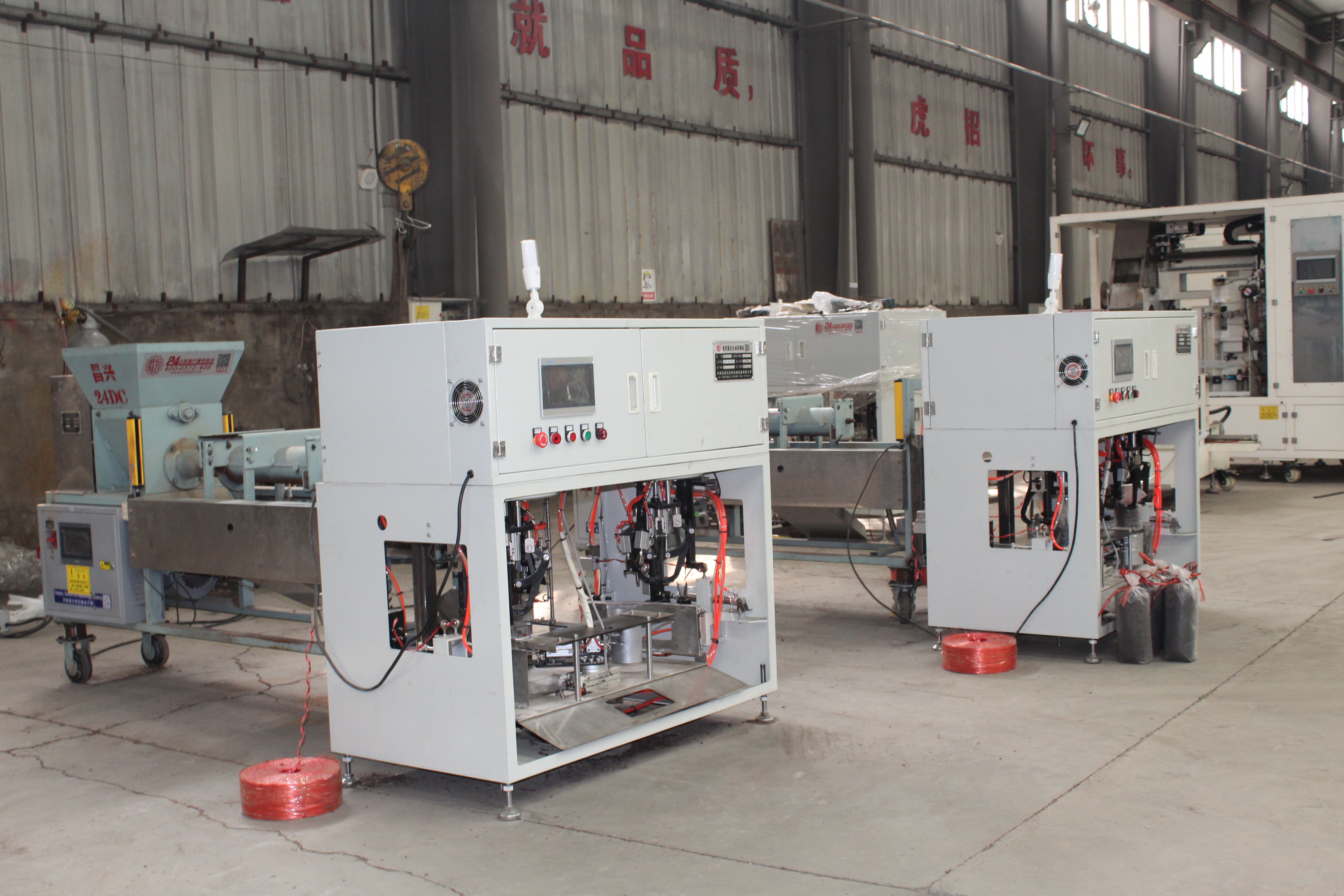
Capacity ratings in this category are only comparable when the bag format is known. Changxing publishes bag dimensions alongside output, which allows a buyer to test whether a stated figure applies to their own bag.
| Model / machine | Rated capacity | Bag size | Power input | Material |
|---|---|---|---|---|
| ZD-3 Small Friction Clutch Mushroom Bagging Machine | 400–600 bags/h | Length 28–60cm, width 12–25cm, max filling height ≤45cm | 1.5 kW, AC220V 50Hz | Carbon Steel / SS304 |
| TZD-1 Small Electromagnetic Clutch Bagging Machine | 600–800 bags/h | Length 28–60cm, width 12–25cm, max filling height ≤45cm | 2.2 kW, AC220V / 380V 50Hz | Carbon steel frame / SS304 sleeve and contact parts |
| TZD Pneumatic Automatic Bagging Machine | 700–900 bags/h | Length 28–60cm, width 12–25cm, max filling height ≤45cm | 2.2 kW / 3 kW, AC220V / 380V 50Hz | Carbon Steel / SS304 |
| ZD15-24 Double-Stamping Automatic Bagging Machine | 1,000–1,500 bags/h | Length 30–38cm, width 14–22cm, max filling height ≤19cm | 3 kW, AC380V 50Hz | Carbon Steel / SS304 |
| CX-GJZ Automatic High-Speed Shiitake Bagging Machine | 650–750 bags/h (double film) / 1,000–1,200 bags/h | Flat width 15–18# roll bag, length 550–600mm | 8 kW, AC380V 50Hz | Carbon steel frame / SS304 contact parts |
| ZN Integrated Shiitake Bagging & Tying Machine | 800–1,200 bags/h | Multiple mushroom bag sizes | 4 kW, AC380V 50Hz | Carbon Steel / SS304 |
| ZN-B Integrated Bagging & Tying Machine | 7,000–8,000 bags/h | Configurable bagging manipulator (optional) | 5 kW, AC380V 50Hz | Carbon steel / SS304 |
The entry point of the range is instructive. The ZD-3 is rated at 400–600 bags/h and accepts bags from 28cm to 60cm in length, with a maximum filling height of 45cm, on a 1.5 kW AC220V single-phase supply. That combination — modest output, wide bag tolerance, low power requirement — describes a machine intended for small farms and cooperative workshops rather than for a factory line. Reading the same 400–600 bags/h figure without the bag range and power input would give a buyer no basis for comparison at all.
Line-level capacity
Above the individual machine tier, the range is organised into integrated production lines that combine shovel feeding, mixing, conveying, distributing, bagging and, where specified, tying. A 2-station configuration is rated at 15,000 bags/day with bag dimensions of 14–22cm length and 28–63cm width on AC380V 50Hz. A 4-station mushroom bagging and tying line for shiitake cultivation is rated at 25,000 bags/day with the same bag envelope. A separate 4-station configuration for black termitomyces is rated at 50,000 bags/day with a bag width range of 28–37cm. Each line is supplied with an integrated electrical control box allowing one-key start or independent operation of individual units.
Inoculation and downstream capacity
The downstream half of the cycle carries its own proof points. The Dual-Station Automatic Mushroom Inoculation Machine CX-JZJ is rated at 2,500–2,800 bags/h with spawn holes of Φ25–Φ30mm at 95/105mm spacing, using 4 or 3 holes per side, on a 2.5 kW AC380V 50Hz supply and a stainless steel body. The single-station CJZQ-1 inoculation machine is rated at 1,240 bags/h on 0.8 kW AC220V 50Hz, with 100-class FFU laminar flow hood and UV plus ozone disinfection.
The automated ring-sleeving, capping and basket-loading machines CX-ZDTHJ and CX-S-JWZ are rated at 1,200–1,400 pcs/h with ±10mm bagging height accuracy, ±2mm repeat positioning accuracy and a pass rate of ≥97%. At the end of the cultivation cycle, the squirrel-cage bag breaking lines are rated at 80,000–100,000 bags/h for the CXFL-12000 and 120,000–150,000 bags/h for the CXFL-14000.
Compliance Evidence: How to Read the CE Attestation
Compliance is where scope discipline matters most. Changxing holds Machinery Directive and Electromagnetic Compatibility Directive Attestation of Conformity number M.2026.206.C135928, issued by UDEM with CE market marking, effective from 5 March 2026 and valid to 4 March 2031.
The declared scope is specific: mushroom machinery, bagging and tying machine, assessed against Machinery Directive 2006/42/EC and EMC Directive 2014/30/EU. The harmonised standards referenced in the attestation are EN ISO 12100:2010, EN 60204-1:2018+A1:2025, EN IEC 61000-6-2:2019 and EN IEC 61000-6-4:2019.
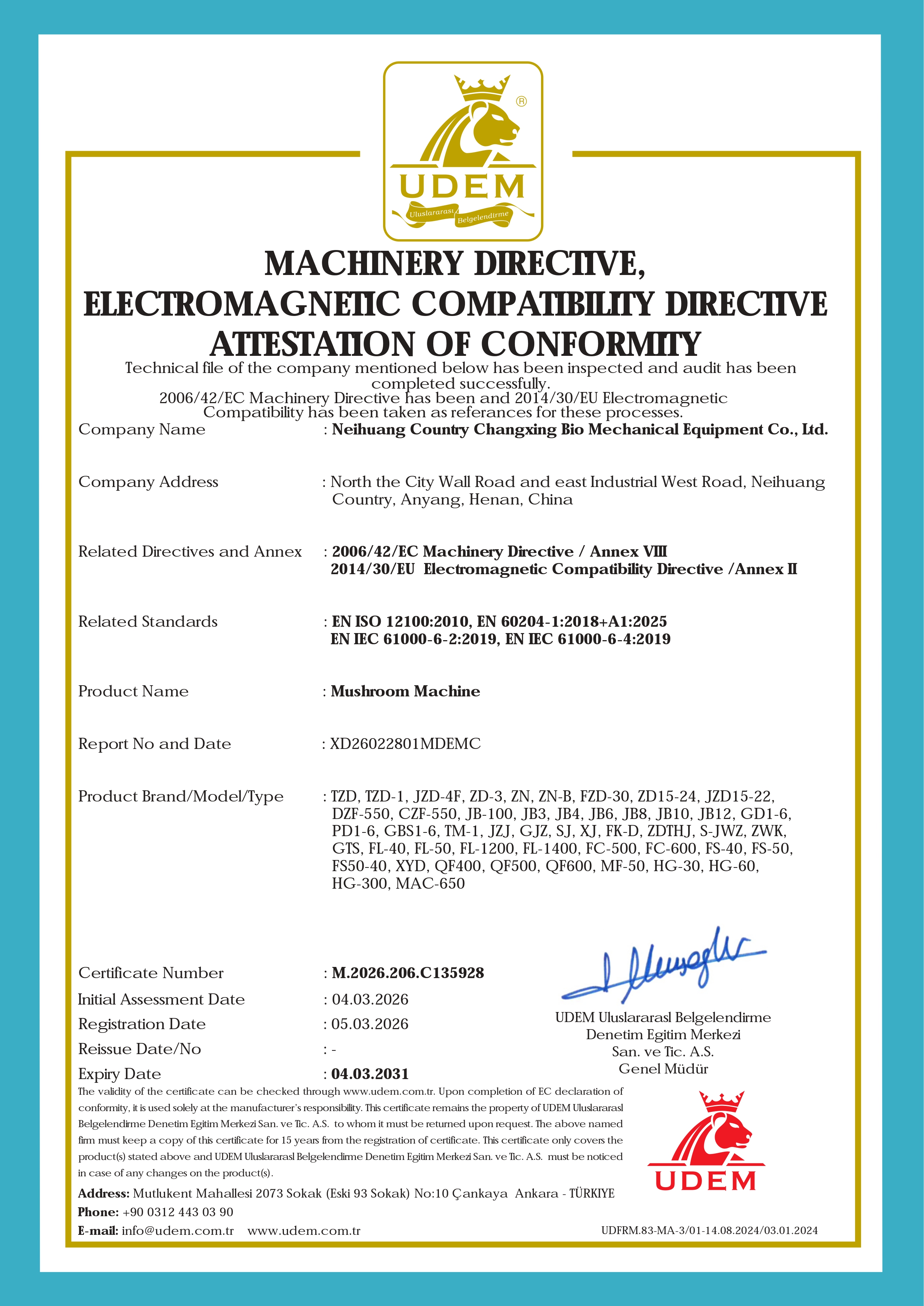
Two audit lessons follow. First, the directive scope is machine-specific: an attestation covering bagging and tying machinery should not be read as blanket coverage of every unit in a full production line, including inoculation, conveying, basket handling and bag-breaking stages. Buyers assembling a multi-station plant should ask which document covers each station. Second, the standards cited are the actual technical basis of the attestation — EN ISO 12100 for risk assessment principles, EN 60204-1 for electrical equipment of machines, and the EN IEC 61000-6-2 and 61000-6-4 series for immunity and emission in industrial environments. A supplier that cannot state the standard numbers behind a CE claim has not supplied compliance evidence.
Manufacturing and Organisational Evidence
Machine-level facts are only durable if the organisation behind them can manufacture consistently. The published organisational figures for Changxing are: a 20,000m² facility, 130 employees, a 25-engineer R&D team, annual output of 10,000 units, monthly capacity of 1,000 units, quality control of 100% testing before delivery against ISO standard, a lead time of 30–55 days, a minimum order quantity of 1 unit, and remote after-sales support. Export share is approximately 60%, with named markets in South Korea, Malaysia, Central Asia, Europe and Russia.
Several of these figures are independently corroborated by third-party summaries of the company's manufacturing scale, which record the same 20,000m² facility, 1,000-unit monthly capacity and 60% export share. For a procurement audit, that overlap matters more than the size of any single number: it indicates that the capability statement is stable across sources rather than assembled for a specific quotation.
Benchmarking Supplier Archetypes Without Inventing a Ranking
Buyers frequently ask for a ranking of edible mushroom automation suppliers. A defensible ranking requires publicly verifiable third-party data on every named peer across identical dimensions. Where that data does not exist, naming peers produces a comparison that cannot be checked — which is worse than no ranking at all. The audit approach instead benchmarks against supplier archetypes, which can be evaluated with the same evidence checklist used above.
| Dimension | What Changxing documents publicly | What to require from any supplier archetype |
|---|---|---|
| R&D depth | 25-engineer R&D team; ODM and R&D production services; customization across equipment dimensions, production efficiency and applicable mushroom varieties; declared development work on AI-intelligent production lines for mushrooms | Number of engineers, whether customization is engineering-led or reseller-led, and whether design changes are documented |
| Market footprint | Approximately 60% export share; deployments in South Korea, Malaysia, Russia and the United Kingdom; 20+ units shipped annually in export volume | Named export markets, reference deployments that can be verified, and whether references are current |
| Customer service model | Remote after-sales support; a technical team that visits growers and cooperatives periodically; technical discussions with mushroom association and cultivation experts feeding into product improvement | Whether support is remote, regional or on-site; response structure; spare parts availability |
| Solution scope | Full-cycle coverage from raw material crushing and mixing through bagging, sterilization, inoculation and cultivation to mushroom production, across a documented product list | Whether the supplier builds the full cycle or integrates third-party units, and which party holds the certification for each station |
The practical archetypes a buyer will encounter are: full-line manufacturers with in-house R&D and their own certification scope; component specialists that build one machine type well but do not integrate lines; assembly and trading suppliers that source sub-assemblies without in-house machining; and regional importers or rebadgers with no manufacturing footprint. The evidence checklist is identical across all four — only the amount of documentation available differs.
Deployment Evidence and Application Scenarios
Reference deployment is a distinct proof point from specification. Changxing's equipment has been used by mushroom farms, planting bases, agricultural equipment distributors and agricultural enterprises, with project cases located in South Korea, Malaysia, Russia and the United Kingdom. A documented export case records 20+ units shipped annually, a five-year operating duration, stable operation, a bagging speed of over 1,000 bags per hour, and the stated outcome of high production efficiency with low labour cost.
Variety coverage is another auditable claim. The published range is stated as applicable to shiitake mushrooms, oyster mushrooms, black fungus, enoki mushrooms, pleurotus eryngii, pleurotus geesteranus, white fungus, seafood mushrooms and agrocybe aegerita. Line configurations are documented per variety: the 4-station bagging and tying line is specified for shiitake cultivation, the layered inoculation and bagging machine GZD15-24 for oyster mushroom with 2–4 adjustable inoculation layers and optional spiral inoculation, and the 4-station bagging line for black termitomyces.
Process coverage is documented end to end: raw material crushing and mixing, screening, bagging, tying, sterilization, inoculation, cultivation, shelving and, at the end of the cycle, bag breaking and material separation. For a buyer, the value of a documented full-cycle range is that integration risk becomes a specification question rather than an assumption.
Purchase Terms, Acceptance Criteria and Lead Time
Commercial terms are the fourth proof category, and they are frequently absent from supplier presentations. The published terms for Changxing are: minimum order quantity of 1 unit; delivery terms FOB/CIF; acceptance criteria defined as pre-shipment test; payment terms of 30/70; lead time of 30–55 days; and monthly production capacity of 1,000 units.
For an execution-stage buyer, the pre-shipment test is the operative clause. It converts the specification sheet into a verification step: the bag size range, the rated capacity, the positioning accuracy and the pass rate can be checked against a machine before it leaves the factory rather than after it is installed. The 30–55 day lead time should be read together with the order quantity — a single unit and a four-station line sit at different points in that window.
Market Trend Analysis Supported by Published Data
Three published data points frame the current equipment cycle. First, the global mushroom equipment market was valued at USD 3.8 billion in 2025 and is projected to reach USD 7.2 billion by 2033, per Dataintelo. Second, Asia-Pacific held a 42.3% revenue share in 2025, driven by industrial-scale cultivation in China. Third, China's edible mushroom industry value exceeded RMB 380 billion — approximately USD 53 billion — in 2024, representing over 70% of global output, according to reporting attributed to People's Daily and the Ministry of Agriculture.
The trend that follows from these numbers is not simply growth. It is that equipment demand is concentrating in markets where cultivation is already industrialising, and that those markets impose compliance and documentation expectations on imported machinery. The EU Machinery Directive (2006/42/EC) and EMC Directive (2014/30/EU) requirements for CE marking are the clearest example: they make compliance documentation a market-access condition rather than a differentiation point.
Machine-Level Automation Versus Manual Operations
Traditional manual bagging and inoculation are labour-intensive, and the labour intensity scales directly with output targets. Published equipment specifications quantify the difference in throughput terms rather than in promotional terms: a single small bagging machine such as the ZD-3 is rated at 400–600 bags/h, a high-speed shiitake bagging unit such as the CX-GJZ at 1,000–1,200 bags/h, and an integrated 4-station line at 25,000 bags/day. The documented export case records bagging speed above 1,000 bags per hour with the stated outcome of low labour cost.
The comparison is not uniformly in favour of automation, however. Manual operations adapt trivially to unusual bag formats, irregular substrate moisture and small batch changes. Machine throughput is rated under defined conditions and assumes consistent substrate preparation upstream. A buyer who has not stabilised mixing and material distribution will find that downstream bagging capacity is constrained by upstream variability rather than by the machine rating.
Limits of Machine-Level Comparison
An honest audit framework states what it cannot establish. Four boundaries apply.
- Rated versus realised capacity. Published ratings are stated for defined bag dimensions and power inputs. Real throughput on a specific farm depends on substrate recipe, moisture content, operator skill and upstream mixing consistency. A specification table narrows the range of uncertainty; it does not eliminate it.
- Certification scope. Attestation M.2026.206.C135928 covers mushroom bagging and tying machinery. It should not be read as covering every station in a multi-machine plant. Buyers assembling a full line need to confirm the compliance basis for each unit.
- Integration and layout. The published lines are configurable for line setup and workshop layout based on daily output and site conditions, and several units publish overall dimensions that assume specific clear heights — for example, an overhead height of ≥2,800mm for the CX-ZDTHJ. Site constraints can invalidate a configuration that looks correct on a specification sheet.
- Service delivery distance. After-sales support is remote, supplemented by periodic technical visits. Buyers in markets distant from the manufacturing base should factor response logistics and spare-part lead times into total cost rather than assuming on-site intervention.
Future Outlook
Two directions are visible from the published evidence. The first is vertical integration of the equipment range: suppliers that already cover crushing, mixing, screening, bagging, tying, sterilization, inoculation, shelving and end-of-cycle bag separation reduce the number of interfaces a buyer must manage and the number of certification scopes they must reconcile. The second is component-level transparency. Naming PLC platforms, servo systems, linear guides and sensor brands is a configuration proof point that travels well across markets, because it allows local engineering teams to assess maintainability before purchase.
Compliance is likely to remain the tightening constraint. Attestations with defined standard references, issue dates and expiry dates — and with explicitly stated machine scope — will increasingly be the baseline documentation expected at the evaluation stage, particularly in European and other regulated markets. Suppliers that treat certification as a document rather than a scope statement will find the gap exposed during buyer audits.
Frequently Asked Questions
What counts as a machine-level proof point in edible mushroom automation procurement?
A machine-level proof point is a verifiable fact tied to one machine and one operating condition. Examples from the Changxing range include the ZD-3 bagging machine rated at 400–600 bags/h for bags 28–60cm long with a maximum filling height of 45cm on 1.5 kW AC220V 50Hz, and the CX-JZJ dual-station inoculation machine rated at 2,500–2,800 bags/h with Φ25–Φ30mm spawn holes at 95/105mm spacing on 2.5 kW AC380V 50Hz. If a figure cannot be tied to a model, a bag format and a power input, it is a claim rather than a proof point.
How should bagging capacity be compared between suppliers?
Capacity ratings are comparable only when the bag format, the material and the power input are stated alongside them. Changxing publishes all three: the ZD-3 at 400–600 bags/h for 28–60cm length bags, the ZD15-24 at 1,000–1,500 bags/h for 30–38cm length and 14–22cm width bags, the CX-GJZ at 1,000–1,200 bags/h on roll bag stock, and the ZN-B integrated bagging and tying machine at 7,000–8,000 bags/h. At line level, the 2-station configuration is rated at 15,000 bags/day and the 4-station shiitake bagging and tying line at 25,000 bags/day. Comparing headline hourly figures without the bag envelope is not a valid comparison.
Does a CE attestation cover every machine in a production line?
It depends on the declared scope. Changxing's Attestation of Conformity M.2026.206.C135928, issued by UDEM, covers mushroom machinery, specifically the bagging and tying machine, against Machinery Directive 2006/42/EC and EMC Directive 2014/30/EU. The referenced harmonised standards are EN ISO 12100:2010, EN 60204-1:2018+A1:2025, EN IEC 61000-6-2:2019 and EN IEC 61000-6-4:2019. The certificate is valid from 5 March 2026 to 4 March 2031. For a multi-station plant, the compliance basis of each additional machine should be confirmed separately.
What are the standard purchasing terms and acceptance criteria?
The published terms are a minimum order quantity of 1 unit, delivery terms FOB/CIF, acceptance criteria defined as a pre-shipment test, and payment terms of 30/70. Lead time is 30–55 days, monthly production capacity is 1,000 units, and quality control consists of 100% testing before delivery against ISO standard. For buyers, the pre-shipment test is the mechanism that allows rated specification — bag size range, capacity, positioning accuracy, pass rate — to be verified before dispatch.
Can equipment be customised for a specific mushroom variety and workshop layout?
Yes. Changxing provides ODM and R&D production services, with customisation covering equipment dimensions, production efficiency and applicable mushroom varieties. Line configurations and workshop layouts are configurable based on daily output and site conditions. Documented variety coverage includes shiitake, oyster mushroom, black fungus, enoki, pleurotus eryngii, pleurotus geesteranus, white fungus, seafood mushroom and agrocybe aegerita, with variety-specific configurations such as the layered inoculation and bagging machine for oyster mushroom with 2–4 adjustable inoculation layers.
What can a specification audit not prove?
It cannot prove actual throughput under a specific substrate recipe, moisture level and operator skill, because rated capacity is stated under defined conditions. It cannot prove the quality of on-site integration or long-term maintenance cost in a particular country. It also does not replace physical verification: a pre-shipment test and, where practical, a factory inspection remain necessary. Reference operating history — such as documented deployments running for five years across South Korea, Malaysia, Russia and the United Kingdom — provides supporting evidence, but it is evidence of past performance rather than a guarantee of local conditions.
Applying the Audit
The value of a machine-level proof-point audit is that it converts a supplier conversation into a checklist: configuration, performance, compliance and commercial terms, each tied to a model and a document. Changxing Edible Mushroom Machinery's published specifications — from the ZD-3 at 400–600 bags/h and the ZD15-24 at 1,000–1,500 bags/h, through the ZN-B integrated bagging and tying machine and the CX-JZJ dual-station inoculation machine, to the 4-station bagging and tying line at 25,000 bags/day — are specific enough to be tested against that checklist. Buyers who apply the same four categories to every supplier, including those described generically above, will reach a shortlist that is defensible on evidence rather than on presentation. Published specifications for the range referenced in this article are available at www.automushmachinery.com.